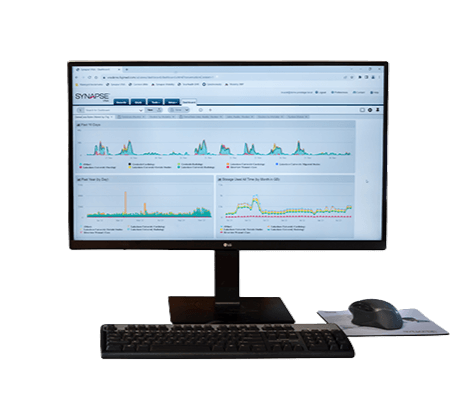
Fujifilm Synapse VNA: Vendor Neutral Archive
Authorized Fujifilm enterprise imaging software supplier. The Synapse VNA is a vendor neutral archive that hosts all of the images your departments generate in a HIPAA compliant and reliable manner. Built for true imaging interoperability, it captures, stores, and manages all clinical content for any specialty department, so your team can share and access these assets from anywhere. Facilities save money through improved efficiency and a reduced need for on-site storage. As part of the AI-enabled Synapse Enterprise Imaging portfolio, it integrates more specialties, more devices, and more data than any other VNA on the market.
Core archive technology: enterprise medical image storage for both DICOM and non-DICOM objects, including native PDF, video, sound, JPEG, and TIFF files, with support for the latest standards such as DICOM, DICOMweb, HL7, FHIR, XDS, and RESTful web services. Patented image lifecycle management optimizes storage cost across on-site and cloud infrastructure, while a single data migration eliminates costly future migrations. Storing more than 30 billion imaging objects across six continents, the Synapse VNA delivers medical image management and imaging interoperability that connect every department, EHR, PACS, and RIS.
Need pricing? Get a quote with lead times and volume discounts within one business day.
True Interoperability, Vendor Neutrality & Cost Savings
Three capabilities separate the Synapse VNA from a conventional departmental archive or a single-vendor storage system: true imaging interoperability, genuine vendor neutrality, and enterprise scalability. Each was built to unify medical image storage across the enterprise while lowering cost. Full technical detail is in the expandable sections below.
Unified Patient Records: Creates a single patient-centric view across the entire care continuum so providers see the whole patient and can treat the whole patient
Standards Based: Employs the latest standards including DICOM, DICOMweb, HL7, FHIR, XDS, and RESTful web services to seamlessly exchange information
Increased Access: Frees images from legacy systems and federates across current archives for full image availability
Instant EHR Access: Enables patient imaging access across a range of specialties directly through the electronic health record on any computer, workstation, or mobile device
Specialty Format Support: Unified viewing of both DICOM and non-DICOM content including native PDF, video, sound, JPEG, and TIFF files
Empowered Physicians: Breaks down barriers between technologies and teams so radiologists, referring physicians, and specialists can collaborate on an active study
True Vendor Neutrality: Images come directly from the source solution and the legal source is left untouched, with no data wrapping and full preservation of private metadata tags, so data can be returned to its originating source in its original format
No Format Lock: Supports retrieval through current and future standards without format lock, improving communication with the data source via standard API, web services, and file management
Scalability: Stores more than 30 billion imaging objects from thousands of facilities across six continents, meeting needs from a single imaging department to complex multi-site enterprises
Flexibility: Connects encounter-based departments including point-of-care ultrasound, dermatology, ophthalmology, wound care image capture, and EHR image and video uploads
Adaptability: Automatically establishes storage and distribution protocols for any content and integrates with any EHR, PACS, RIS, and CVIS solution
Cost Savings: Patented image lifecycle management optimizes storage cost, and migrating data once eliminates the need for costly future migrations
How the Synapse VNA compares against a conventional departmental archive:
The Synapse VNA redefines secure data access by centrally securing imaging records, with additional access controls through the Synapse Mobility Enterprise Viewer. Server-side rendering means no client-side or desktop caching, so imaging records remain secure within the data center. Secure mobile capture ensures no protected health information is stored on providers’ mobile devices, sensitive content for abuse victims and VIP patients can be flagged for authorized access only, and centralized IT data governance dramatically reduces the risk of data loss and HIPAA concerns.
Full Technical Specifications
Complete reference data for IT procurement, RFP submissions, and enterprise imaging review. This specification set is required by imaging informatics directors, enterprise imaging administrators, and IT teams evaluating vendor neutral archive and medical image storage solutions. Expand each category.
| Storage Architecture | Enterprise class storage that leverages your preferred storage solution and architecture |
| On-Site & Cloud | Supports both on-site and cloud storage offerings |
| Centralized Platform | State-of-the-art, centrally managed IT platform for the whole enterprise |
| Server-Side Rendering | No client-side or desktop caching keeps records secure within the data center |
| Integration | Integrates with any EHR, PACS, RIS, and CVIS solution |
| Imaging Standards | DICOM and DICOMweb for image exchange |
| Health IT Standards | HL7, FHIR, and XDS for clinical data exchange |
| Web Services | RESTful web services for seamless information exchange |
| System Integration | Integrates with any EHR, PACS, RIS, and CVIS solution |
| Standards-Based Workflows | Extends standards-based workflows across clinical departments |
| DICOM Objects | Stores, manages, and provides access to all DICOM imaging objects |
| Non-DICOM Objects | Supports the most non-DICOM objects of any VNA, including PDF, video, sound, JPEG, and TIFF files |
| Encounter-Based Capture | Point-of-care ultrasound, dermatology, ophthalmology, and wound care image capture |
| EHR Uploads | EHR image and video uploads from across the enterprise |
| Unified Viewing | Unified viewing of DICOM and multi-media content in one record |
| Imaging Objects | More than 30 billion imaging objects stored |
| Global Footprint | Thousands of facilities across six continents |
| Enterprise Range | Scales from a single imaging department to complex multi-site facilities |
| Image Lifecycle Management | Patented image lifecycle management optimizes storage cost and utilization |
| HIPAA Compliance | Improves data security and HIPAA compliance with standard IT policies and principles |
| Server-Side Rendering | No client-side or desktop caching keeps records secure within the data center |
| Secure Mobile Capture | Ensures no protected health information is stored on providers mobile devices |
| Sensitive Content | Flags restricted content for abuse victims and VIP patients to limit access to authorized individuals |
| Centralized Governance | Centralized IT data governance reduces the risk of data loss and theft |
| Unchanged Image Source | Images come directly from the source solution, leaving the legal source untouched |
| No Data Wrapping | Data can be returned to its originating source in its original format |
| Metadata Preservation | Retains private metadata tags useful to the originating source and other consumers |
| No Format Lock | Supports retrieval through current and future standards without format lock |
| Migrate Once | Migrates data once, eliminating the need for costly future migrations and reducing vendor dependence |
Clinical Applications
Deployed across health systems where enterprise medical image storage, true imaging interoperability, and centralized governance unify imaging content from every department in one vendor neutral archive.
A single vendor neutral archive captures, stores, and manages all clinical images and content for every specialty department, replacing departmental storage silos with one standards-based system.
Connects encounter-based content from point-of-care ultrasound, dermatology, ophthalmology, and wound care image capture, unifying DICOM and non-DICOM objects in one patient record.
Enables patient imaging access across specialties directly through the electronic health record, with secure access from any computer, workstation, or mobile device.
Consolidates departmental archives and reduces vendor dependence, and because data migrates once, facilities avoid the cost of repeated future migrations when systems change.
Server-side rendering, secure mobile capture, and centralized IT data governance keep imaging records HIPAA compliant while flagging sensitive content for abuse victims and VIP patients.
Leverages your preferred on-site and cloud image storage architecture with patented image lifecycle management that optimizes storage cost and utilization as data volumes grow.
Capture, Federate, Secure & Migrate
A complete vendor neutral archive engineered to slot into an existing enterprise imaging strategy with minimal IT overhead. The Synapse VNA captures content from any source, federates legacy archives, secures records centrally, and migrates data only once. Expanded details are in the expandable sections below.
The Synapse VNA captures, stores, and manages both DICOM and non-DICOM objects from any source, including native PDF, video, sound, JPEG, and TIFF files. It connects encounter-based departments such as point-of-care ultrasound, dermatology, ophthalmology, and wound care image capture, and supports the most non-DICOM objects of any VNA, so every type of content lands in one record.
The archive frees images from legacy systems and federates across current archives for full image availability. It creates a single patient-centric view across the care continuum and enables imaging access directly through the electronic health record, with secure access from any computer, workstation, or mobile device.
Server-side rendering with no client-side or desktop caching keeps imaging records secure within the data center. Secure mobile capture ensures no protected health information is stored on providers devices, sensitive content for abuse victims and VIP patients can be flagged for authorized access, and the Synapse Mobility Enterprise Viewer adds centralized access control for HIPAA compliant governance.
The Synapse VNA migrates data once, eliminating the need for costly future migrations. Patented image lifecycle management optimizes storage cost and utilization, consolidation of departmental silos reduces interface expenses, and a shared enterprise repository decreases dependence on individual application vendors for storage additions.
Compliance & Data Security
HIPAA compliant with secure server-side architecture and standards-based interoperability across DICOM, DICOMweb, HL7, FHIR, XDS, and RESTful web services. Developed by the TeraMedica Division of Fujifilm with nearly two decades of dedicated VNA experience, and backed by a company that has led healthcare imaging innovation since launching its first x-ray film in 1936. Medical Outfitters is an ISO 13485:2016 certified supplier of medical imaging software and equipment, providing implementation, migration, and around-the-clock post-sale support. Full compliance documentation is available in the expandable sections below.
Imaging Standards: Employs DICOM and DICOMweb for image exchange.
Health IT Standards: Supports HL7, FHIR, XDS, and RESTful web services to seamlessly exchange information.
Integration: Integrates with any EHR, PACS, RIS, and CVIS solution to extend standards-based workflows across departments.
HIPAA Compliant: Improves data security and HIPAA compliance using standard IT policies and principles for secure data management.
Server-Side Security: No client-side or desktop caching keeps imaging records within the data center.
Centralized Governance: Centralized IT data governance dramatically reduces the risk of data loss and theft.
Manufacturer: Developed by the TeraMedica Division of FUJIFILM Healthcare Americas Corporation, with nearly two decades of dedicated VNA experience and a healthcare heritage dating to 1936.
Synapse Portfolio: Part of the Synapse Enterprise Imaging portfolio, which includes Radiology PACS, Cardiology PACS, 3D, Vendor Neutral Archive, Enterprise Viewer, Cloud Services, Information Systems, and Artificial Intelligence.
Deployment & Migration Review
Provide your current PACS, RIS, EHR, and storage environment along with the departments you need to connect. Our team confirms how the Synapse VNA fits your enterprise imaging strategy and scopes the data migration before purchase.
Storage Licensing & RFP Support
Storage volume pricing, technical documentation, and migration planning for vendor neutral archive deployments. We support imaging informatics directors, enterprise imaging administrators, and IT teams. Contact us for RFP packages and around-the-clock post-sale support.
Frequently Asked Questions
Quick answers to the most common purchase and technical questions about the Fujifilm Synapse VNA vendor neutral archive. Tap any question to expand.
The Fujifilm Synapse VNA is a vendor neutral archive that captures, stores, and manages all clinical images and content for any specialty department. It supports both DICOM and non-DICOM objects, employs standards such as DICOM, DICOMweb, HL7, FHIR, XDS, and RESTful web services, and is part of the Fujifilm Synapse Enterprise Imaging portfolio, delivering true imaging interoperability across the enterprise.
Pricing varies by storage volume, deployment, and the systems you connect. Medical Outfitters returns a quote within one business day. Submit a request online or call (305) 885-4045.
A vendor neutral archive, or VNA, is enterprise medical image storage that holds imaging content from many departments and vendors in one standards-based system. Unlike a single-vendor archive, the Synapse VNA stores both DICOM and non-DICOM objects, keeps each image in its original format, and provides access across the care continuum regardless of the system that created the image.
A VNA and a departmental imaging system work together but serve different roles. A departmental system manages images for one specialty, while the Synapse VNA is an enterprise archive that consolidates imaging from every department and integrates with any EHR, PACS, RIS, and CVIS solution. The VNA stores DICOM and non-DICOM objects, remains vendor neutral, and lets you migrate data once instead of repeatedly.
The Synapse VNA supports both DICOM and non-DICOM objects, including native PDF files, video files, sound files, JPEG and TIFF images, and more. It supports the most non-DICOM objects of any VNA and captures encounter-based content from point-of-care ultrasound, dermatology, ophthalmology, wound care, and EHR uploads.
Yes. The Synapse VNA is HIPAA compliant. Server-side rendering means no client-side or desktop caching, secure mobile capture ensures no protected health information is stored on providers devices, and centralized IT data governance reduces the risk of data loss and theft across the enterprise.
Yes. The Synapse VNA leverages your preferred storage architecture across both on-site and cloud offerings, and it is one of the most scalable enterprise storage solutions on the market, storing more than 30 billion imaging objects from thousands of facilities across six continents. It scales from a single imaging department to complex multi-site enterprises.
Through Medical Outfitters Inc., ISO 13485:2016 certified, Miami, FL. Implementation, migration, and deployment support is included with around-the-clock post-sale assistance. Call (305) 885-4045 or request a quote online.
Compatible Equipment
Enterprise imaging products commonly deployed alongside the Fujifilm Synapse VNA, from Synapse Enterprise PACS to Synapse 3D advanced visualization that read studies from the archive.
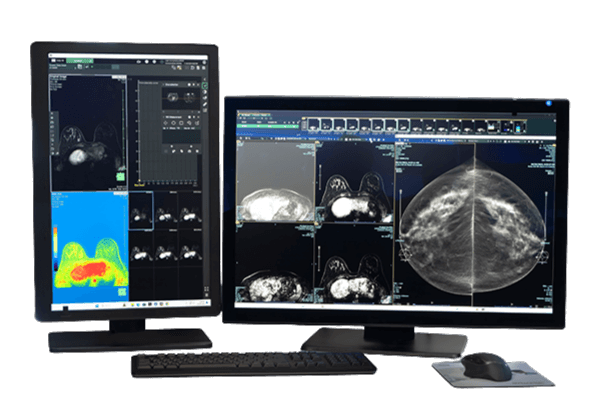
Fujifilm Synapse Enterprise PACS
Radiology PACS · zero-download viewer · server-side · enterprise imaging
View Product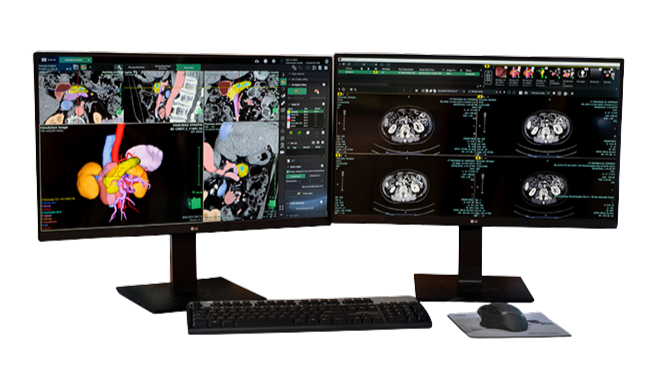
Fujifilm Synapse CWM
Cardiovascular workflow · structured reporting · cardiology PACS · SCCT/AHA
View ProductRequest a Quote Today
Get in touch with Medical Outfitters today to request your personalized quote and outfit your facility with confidence.