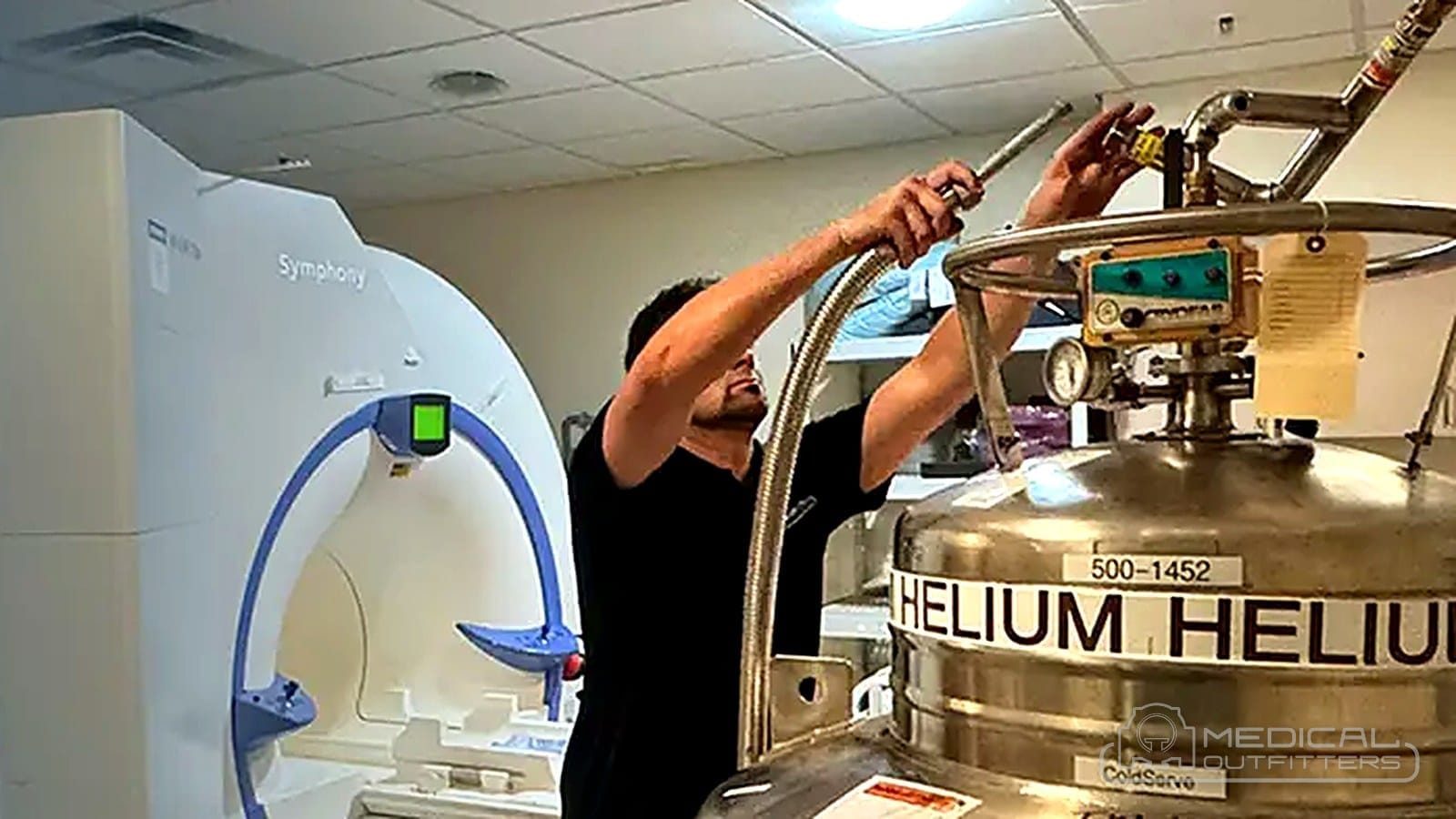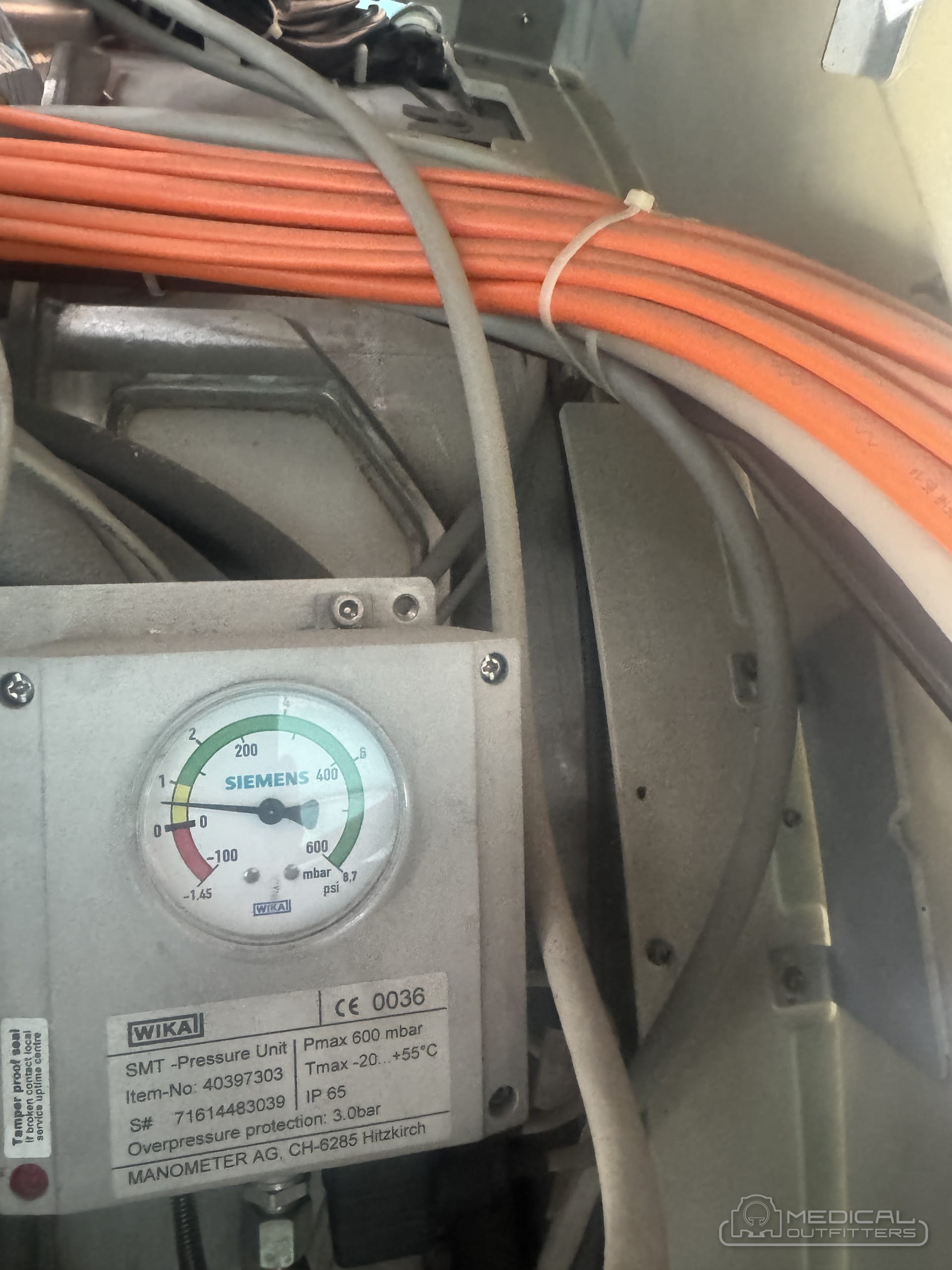
An MRI helium refill costs whatever the delivered price per litre is multiplied by the litres the magnet needs, plus the engineer’s time to transfer it. A routine top-off of a few hundred litres is a bill in the thousands to low tens of thousands of dollars. A full refill after an MRI quench, when a 1,000 to 2,000 litre vessel has emptied itself, is a five-figure invoice for the helium alone and can reach six figures once ramp-up, testing and lost scanning days are counted. The cheapest helium fill is the one a working cold head and a monitored magnet never need.
Helium is the one consumable that can turn an MRI from an asset into a liability in an afternoon, and it is also the one that a good maintenance routine almost entirely controls. Understanding why the MRI helium refill cost varies so much, and what drives each part of it, is the difference between a magnet that goes years without a fill and one that needs an emergency delivery every winter.
This guide is for the administrator who just received a helium quote, the radiology manager building next year’s budget, and the buyer weighing a superconducting magnet against a zero helium MRI. It covers how much helium a magnet holds and loses, what a fill involves, the price drivers, the MRI quench cost that creates the big bills, how to avoid them, and where the market is going with the Fujifilm zero-helium magnets.
- A magnet holds 1,000 to 2,000 litres of liquid helium at about minus 269 degrees Celsius.
- A zero-boil-off magnet with a working cold head loses almost none. An older magnet loses a slow trickle; a magnet with a failed cold head loses it fast.
- The refill bill is litres times price per litre plus labour and delivery. Top-offs are small; post-quench refills are the expensive ones.
- Cold-head replacement every three to five years is the single cheapest way to avoid a helium bill.
Medical Outfitters’ MRI cryogenic service team performs helium fills, cold-head replacements, magnet monitoring and quench recovery across the United States, Puerto Rico and the Caribbean, on the new Fujifilm and refurbished GE and Siemens systems we sell and on magnets from other vendors. The systems referred to below are on our MRI machines for sale page.
MRI Helium Refill Cost at a Glance
| Event | Helium involved | What else is on the invoice | Scale of the bill |
|---|---|---|---|
| Routine top-off, older magnet | 200 to 500 litres, typically every year | Delivery, transfer labour, dewar rental | Thousands to low tens of thousands |
| Cold head failure caught late | 300 to 600 litres to restore the level | New cold head, compressor service, emergency call-out | Tens of thousands |
| Full quench | 1,000 to 2,000 litres to refill an emptied vessel | Ramp-up, shimming, quench-pipe inspection, physicist tests, downtime | Five figures for helium; six figures all-in is common |
| Zero-boil-off magnet, healthy | Near zero per year | Cold head on schedule | The service contract |
| Sealed or zero-helium magnet | None | Cold head on schedule | The service contract |
The dollar figures are deliberately given as scales rather than prices. The delivered liquid helium price has moved by a factor of two or more within a few years during supply shortages, it varies with location, especially for islands, and it depends on volume and contract. Medical Outfitters quotes fills individually. The scale, though, is stable: top-offs are manageable, quench refills are not.
Why an MRI Needs Helium at All
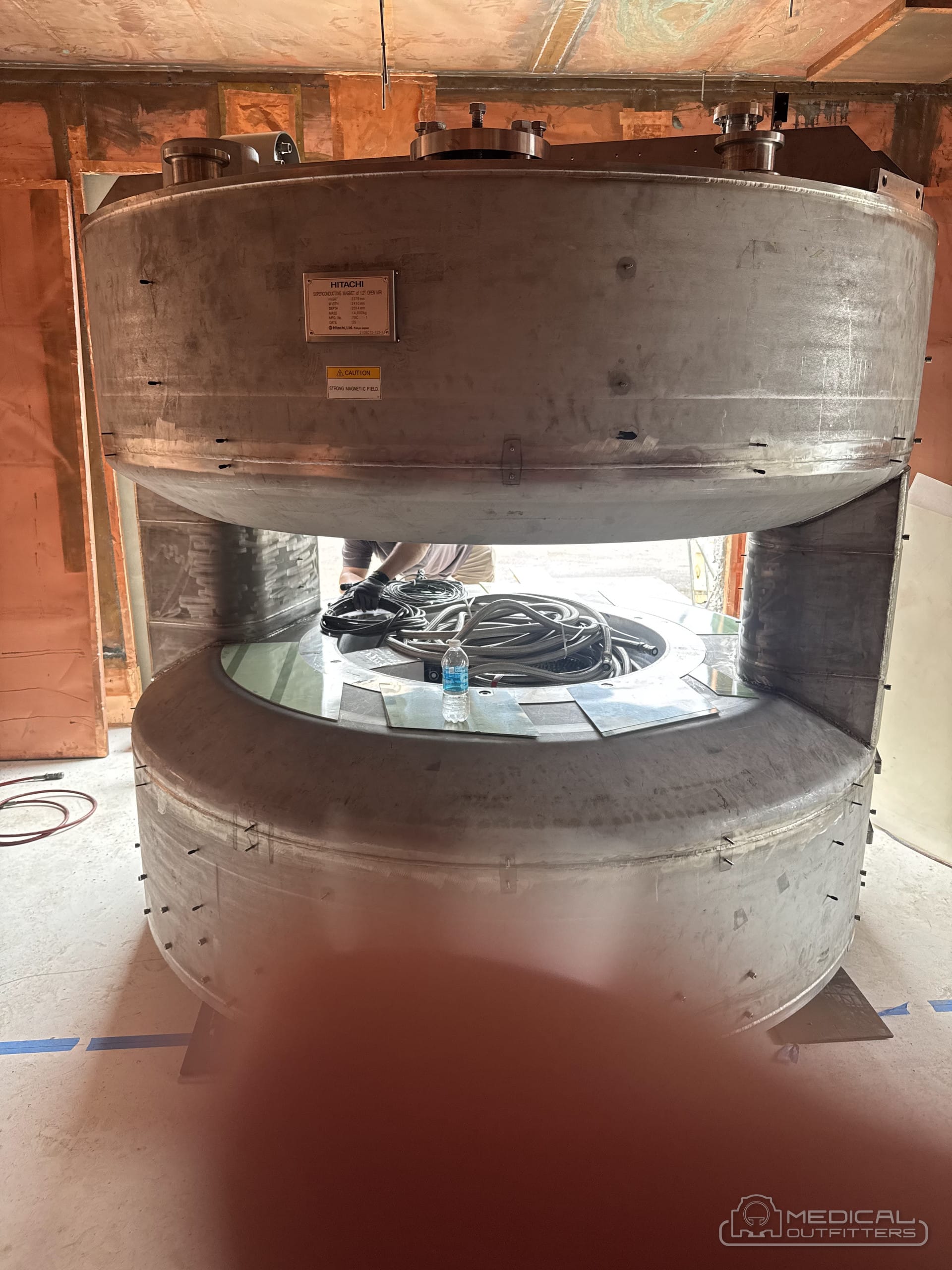
A superconducting MRI magnet carries several hundred amps around a coil with no electrical resistance, and it can only do that below a critical temperature a few degrees above absolute zero. Liquid helium, which boils at 4.2 kelvin, minus 269 degrees Celsius, is the only practical way to hold the coil there. The coil sits in a helium bath inside a vacuum-insulated vessel, the cryostat, and as long as it stays cold the current, and the field, persist indefinitely.
Heat leaks in anyway, through the supports, the wiring and the radiation shields, and every watt of it boils helium. Older magnets vented that boil-off to the atmosphere and were topped off regularly. Since the mid-2000s most magnets are zero-boil-off: a cold head, a two-stage cryocooler driven by a compressor, recondenses the helium gas back into the bath, so the level stays flat for years. The cold head is a mechanical refrigerator with moving parts, and it wears. When it stops, the magnet reverts to boiling off helium until someone notices.
The other way helium leaves a magnet is an MRI quench: the coil warms past its critical temperature, its resistance returns, the stored energy heats the helium, and the whole bath boils off through the quench pipe in a minute or two. Our guide to what an MRI quench is covers the event; this article covers what it costs to recover from.
How Much Helium Each Event Takes
The routine top-off. A magnet that vents drops a few percent a month, and a zero-boil-off magnet whose cold head is losing efficiency drops a few percent a year. The engineer tops it off before the level reaches the manufacturer’s minimum, typically a few hundred litres at a time.
The late-caught cold head. When a cold head fails and nobody is watching the level, the magnet boils off helium at the rate its heat leak allows. A month unnoticed is several hundred litres, and if the level falls far enough the magnet quenches. As our cryogenic service page puts it, the failure almost never starts with the helium. It starts with the cold head.
The quench. The vessel empties. Refilling it means cooling the cryostat back down, which itself boils off helium, then filling to the operating level: 1,000 to 2,000 litres delivered, more used, and a ramp-up, shim and test sequence that takes days.
The healthy zero-boil-off magnet. A few litres a year, if that. This is the normal state of a well-maintained modern magnet, and it is why helium is a maintenance question rather than a budget line for most owners.
MRI Quench Cost: Why the Refill After a Quench Is the Expensive One
An MRI quench cost has four parts, and the helium is only the first. The helium itself is 1,000 to 2,000 litres delivered, at whatever the liquid helium price is that month, plus transfer losses. The recovery is a cold-head check, a cool-down, the fill, a ramp-up over several hours and a shim to bring the field back to homogeneity. The testing is the physicist’s phantom series before the first patient. And the downtime is a week or more without revenue while all of that happens, which for a busy magnet is the largest line of the four. A quench pipe that was blocked or undersized adds a fifth: repairs to the room.
The MRI quench button is behind most avoidable quenches. It exists for the situations where the field itself threatens life: a person pinned to the magnet by a ferrous object, or a fire or emergency in which responders must enter the magnet room with ferrous equipment. It should be covered, labelled and understood by every person in the suite. Pressing it for a routine fire alarm, a power failure or a noise empties the magnet for nothing. Training, a cover on the button, and an annual quench-pipe inspection are the three cheapest lines in any MRI service plan.
What Drives the Price of an MRI Helium Fill
- Price per litre. The helium cost per litre follows supply: helium is a finite by-product of natural gas extraction from a handful of sources worldwide, and MRI is one of its largest uses. Supply shortages pushed delivered prices up sharply in 2022 and 2023, and the loss of Qatar’s Ras Laffan output in March 2026 took roughly a third of world supply offline. At the time of writing prices are at record levels, with delivered liquid helium quoted at roughly 30 to 55 dollars a litre against 15 to 20 before the crisis, and suppliers are rationing deliveries, in some cases to about half of normal monthly allocations. A contract price through a service provider is usually better than a spot purchase during a shortage.
- Delivery. Liquid helium ships in vacuum-insulated dewars that lose product in transit. A site an hour from a supplier pays less per litre delivered than one a day away, and an island site pays for the crossing and the losses on it.
- Transfer losses. Filling a magnet is not like filling a tank. Cooling the transfer line and the neck of the cryostat boils off part of the delivery, so more litres are bought than end up in the magnet.
- Labour and urgency. A scheduled fill by an engineer already on site for preventive maintenance is cheap. An emergency call-out on a weekend to a magnet losing helium is not.
- What else the magnet needs. A fill that follows a cold head failure needs a cold head; a fill that follows a quench needs a ramp-up, shimming, a quench-pipe inspection and physicist testing. The helium is often the smaller part of those invoices.
Budget the magnet, not the helium. Owners who budget a helium line every year usually have a magnet that should not need one. Budget the cold head replacement, the chiller maintenance and a monthly look at the level instead, and the helium line disappears for most years. Our guide to how long an MRI machine lasts puts the cold head in the context of the rest of the system.
How to Avoid the Helium Bill
Every one of these is cheaper than a fill, and together they prevent nearly all of them.
Watch the level and the cold-head hours. The magnet reports its helium level and the cold head its running hours. Log both monthly and look at the trend. A level that has started to fall is a cold head or a chiller telling you something weeks before it becomes an emergency.
Replace the cold head on schedule. Three to five years, on hours, before it fails. It is the single scheduled item in the calendar that decides whether the magnet keeps its helium, and skipping it to save a service visit is the most expensive economy in MRI ownership. Every refurbished magnet in the MO Select program ships with a new or rebuilt cold head for exactly that reason.
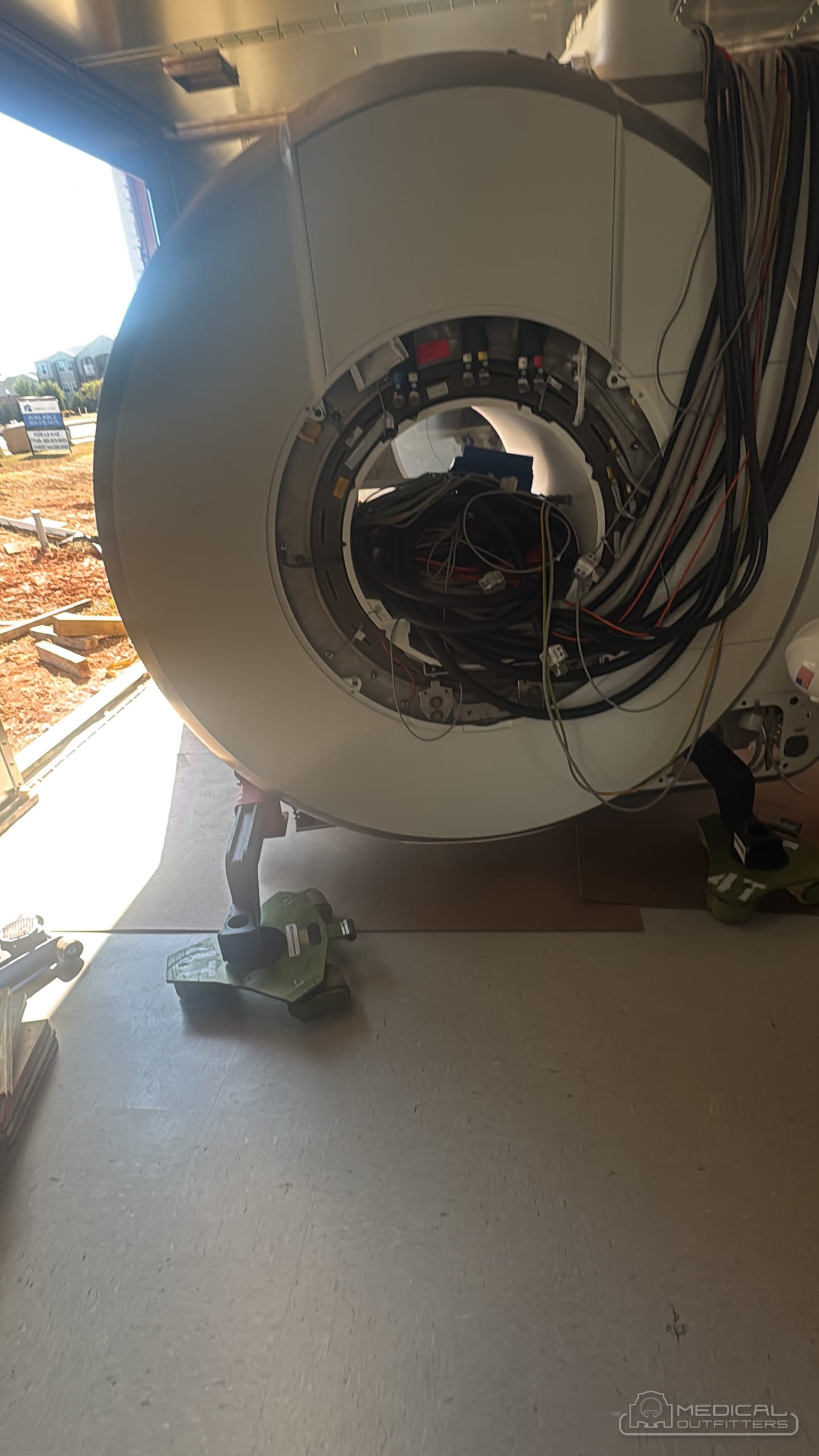
Keep the chiller in specification. The compressor that drives the cold head is usually water-cooled. Warm, dirty or insufficient chiller water shuts the compressor down on a thermal fault, the cold head stops, and the magnet starts boiling. Chiller maintenance is helium maintenance, and chiller performance is one of the routine checks in Medical Outfitters’ MRI service plans.
Protect the quench button. Covered, labelled, and used only when the field itself threatens life. See the quench cost section above.
Maintain the quench pipe. A blocked or damaged quench pipe turns a quench into a room full of helium gas. Annual inspection is standard practice, what the ACR’s MR safety manual expects a facility’s cryogen policy to schedule, and a safety necessity.
Plan the next magnet with helium in mind. When the system is replaced, the helium question can be removed altogether.
Zero Helium MRI: Fujifilm ECHELON Smart ZeroHelium
The manufacturers have answered the helium problem by designing it out. Sealed magnets hold a few litres of helium in a closed circuit that never needs topping off and cannot vent, so they need no quench pipe; Siemens and Philips both sell them. Fujifilm went further with the Echelon Smart ZeroHelium, a 1.5T system whose magnet is cooled by the cold head alone, with no liquid helium bath at all, which removes the fill, the quench pipe and the helium budget from the ownership equation entirely. The Echelon Smart with SynergyDrive brings the same platform’s workflow automation to the standard magnet.
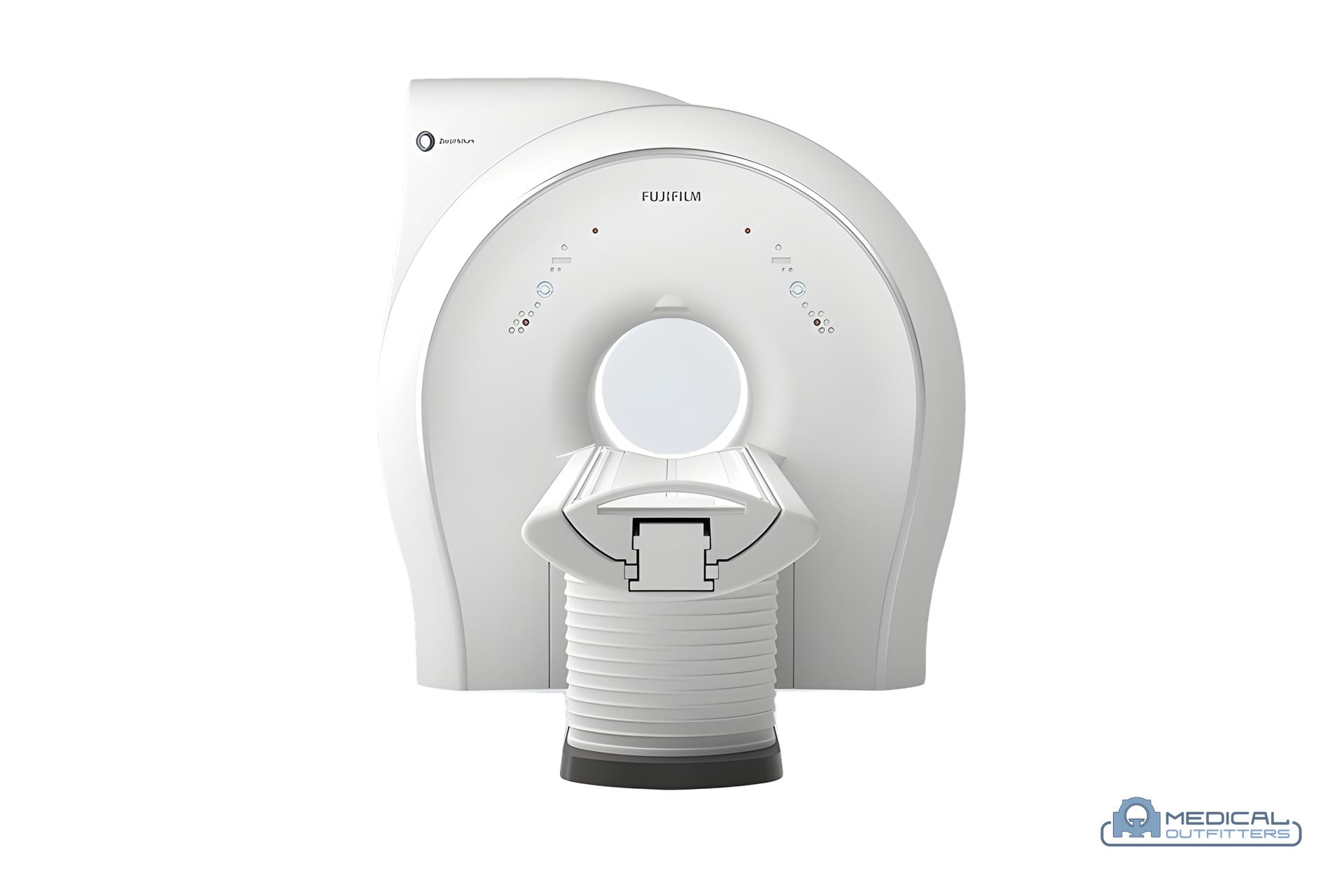
For sites where helium delivery is slow or costly, which describes many island sites in Puerto Rico and the Caribbean, a zero helium MRI is not a luxury but the sensible default. Low-field permanent-magnet open systems, the Fujifilm AIRIS Vento and APERTO Lucent, have never needed helium at all, and for the practices they suit that has always been part of the appeal. Our guide to wide-bore vs open vs closed MRI puts those choices side by side, and our note on MRI installation in Puerto Rico and the Caribbean explains why island buyers ask about helium first.
For everyone running a conventional superconducting magnet, which is most of the installed base and nearly all of the refurbished high-field market, helium remains a maintenance question, and a good service partner is the answer to it. A refurbished Siemens MAGNETOM Aera or GE Optima MR450w from MO Select arrives stripped, renewed where it needed renewing and tested against the manufacturer specification, with a full helium level and a cryogenic service team on call.
If you have a helium quote in hand, a magnet whose level is falling, or a magnet that has quenched, contact Medical Outfitters. We fill, monitor and recover magnets across the United States, Puerto Rico and the Caribbean, from our base in Florida, and our MRI machine cost and buying guide covers the ownership costs beyond helium.
- MRI helium fills and cryogenic service
- What is an MRI quench? Causes, costs and prevention
- Fujifilm Echelon Smart ZeroHelium MRI
- Fujifilm AIRIS Vento (permanent magnet, no helium)
- Fujifilm APERTO Lucent (no helium)
- MRI machines for sale
- MO Select refurbished MRI, tested to manufacturer specification
- MRI service contracts
- MRI machine cost guide
- MRI service in Puerto Rico and the Caribbean
- Get a helium fill quote
MRI Helium Refill Cost: Common Questions
How much does an MRI helium refill cost?
A routine top-off of a few hundred litres runs into the thousands to low tens of thousands of dollars, driven by the price per litre, delivery to the site and the engineer's time. A full refill after a quench, 1,000 to 2,000 litres plus ramp-up and testing, is a five-figure event and can reach six figures with the downtime.
How much helium does an MRI machine hold?
A superconducting MRI magnet holds roughly 1,000 to 2,000 litres of liquid helium at about minus 269 degrees Celsius. Modern zero-boil-off magnets recondense the gas so the level stays stable for years; older magnets lose a slow trickle that must be topped up.
How often does an MRI need a helium refill?
A zero-boil-off magnet with a working cold head may never need one. Older venting magnets need a top-off about once a year, some more often, and zero-boil-off magnets with a tired cold head need one every few years. Any magnet needs a fill after a quench or after a cold head or chiller failure that went unnoticed.
Why is liquid helium so expensive?
Helium is a finite by-product of natural gas extraction from a handful of sources worldwide, and MRI is one of its largest uses. Supply disruptions, most recently the March 2026 loss of Ras Laffan output in Qatar that took roughly a third of world supply offline and left suppliers rationing deliveries, have pushed prices to record levels, and the specialist transport and transfer equipment adds to the delivered cost.
What is a zero-helium MRI?
A zero-helium MRI uses a sealed magnet cooled by a cold head with little or no liquid helium bath, so it never needs a refill and has no quench pipe. The Fujifilm Echelon Smart ZeroHelium is the example Medical Outfitters sells new; Siemens and Philips have sealed low-helium designs as well.
Does Medical Outfitters do helium fills?
Yes. Medical Outfitters' cryogenic service team performs helium fills, cold head replacements, magnet monitoring and quench recovery for MRI systems across the United States, Puerto Rico and the Caribbean, on our own systems and on magnets from other vendors.
Related Articles