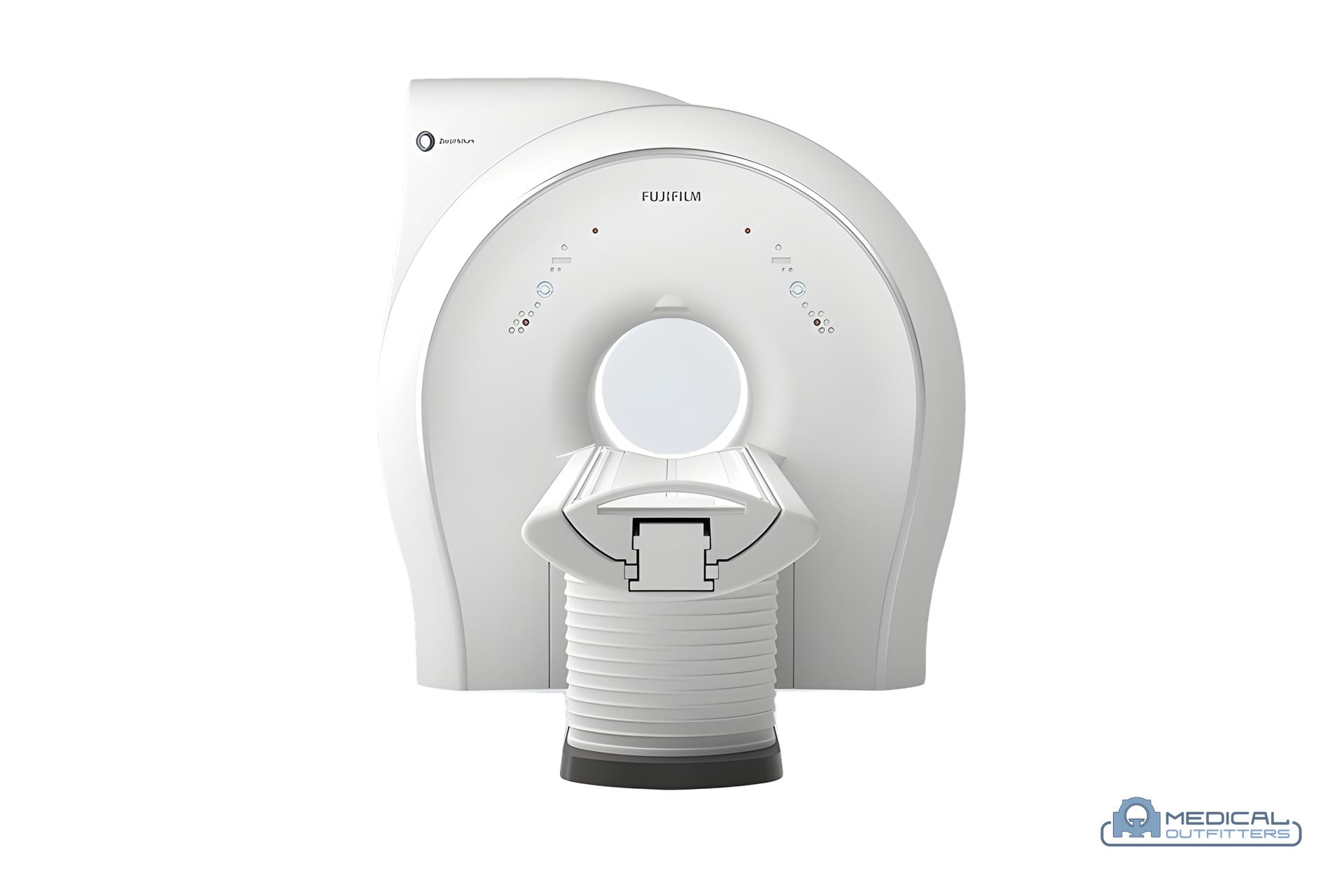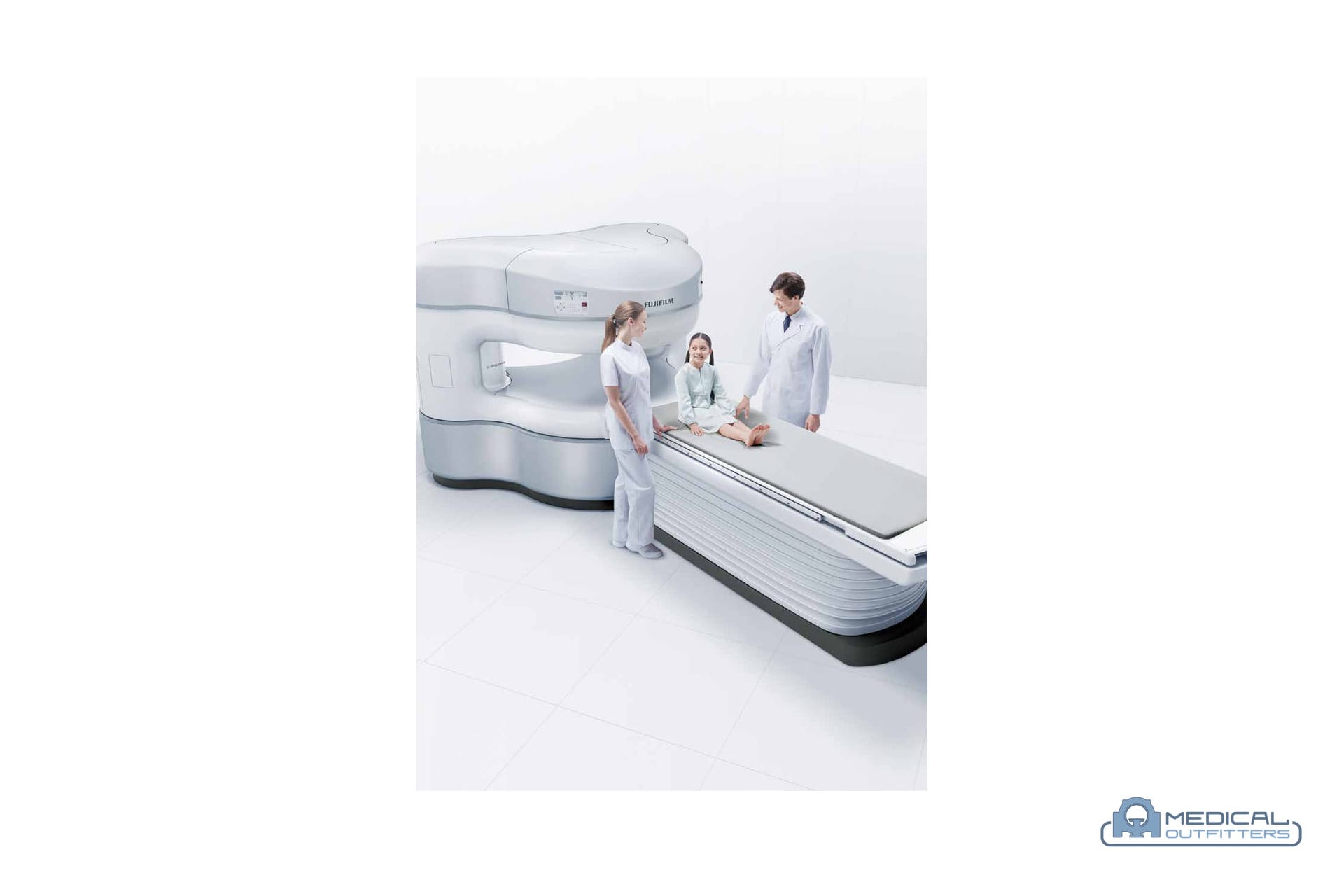
How long does an MRI machine last? An MRI machine lasts 10 to 15 years in its first installation, and the superconducting magnet at the heart of it lasts 20 to 25 years or more. The gap between those two numbers is the whole story of MRI machine lifespan: the magnet almost never wears out, but the cold head, gradient amplifiers, RF coils and console around it do, and the manufacturer stops supporting the software long before the magnet stops working.
That gap is also why a used MRI machine or a refurbished MRI is a rational purchase. A 1.5T system that is eight to twelve years old, with a new cold head, tested gradients, current software and a written warranty, typically delivers another seven to twelve years of clinical service. It is the same reason a well-run hospital MRI scanner can pass its twentieth birthday still producing images its radiologists sign off on.
This guide is written for the people who own or are about to own an MRI scanner: the administrator deciding whether to fund a replacement, the radiology manager tracking downtime, and the buyer weighing a new Fujifilm system against a refurbished GE or Siemens magnet. It covers how long each subsystem lasts, what shortens or extends the average life of an MRI machine, which upgrades add years, the signs that say replace rather than repair, and the MRI maintenance calendar that gets a magnet to year fifteen.
- 10 to 15 years is the average MRI machine lifespan with one owner; the magnet itself runs 20 to 25 years or more.
- The cold head is the part that wears out first. It is replaced every three to five years, and skipping it is how magnets lose helium.
- Software support ends before the hardware does. In our experience, manufacturer end-of-support, not image quality, is what retires most MRI scanners.
- Replace when a year of service, parts and downtime costs more than 12 to 15 percent of a replacement system, or when the OEM has ended parts support.
Medical Outfitters sells new Fujifilm and Esaote MRI systems as an authorized dealer, sells refurbished GE and Siemens magnets through its MO Select program, and services, fills and moves magnets with its own cryogenic and field-engineering crews across the United States, Puerto Rico and the Caribbean. Everything below reflects what those engineers see in the field, and every system mentioned is on our MRI machines for sale page.
MRI Machine Lifespan at a Glance
| Stage | Typical span | What limits it | What to plan for |
|---|---|---|---|
| First installation, new MRI system | 10 to 15 years | OEM software end-of-support, console age, referrer expectations | Console and coil refresh around year 7; replacement decision around year 12 |
| Second life, refurbished MRI machine | 7 to 12 years | Parts availability for the platform, cold head and gradient condition | Buy with a new cold head, a full coil set and a written warranty |
| Superconducting magnet | 20 to 25+ years | Helium management, quench history, shim stability | Cold head on schedule, helium monitoring, quench-pipe inspection |
| Permanent-magnet open MRI (0.3 to 0.4T) | 15 to 20 years | Electronics and software only; no cryogens | Console refresh; the magnet needs no helium or cold head |
| OEM parts and software support | About 10 to 12 years after the platform launches | Manufacturer end-of-life notices | Third-party and dealer support extends this by 5 to 10 years on GE and Siemens platforms |
Two things to keep in mind when you read the table. First, the ranges assume the scanner was serviced on schedule; a magnet that has quenched twice and lost its cold head for a season is a different asset. Second, “how long does an MRI machine last” and “how long should we keep ours” are different questions. Many systems could run to year twenty. Whether they should depends on what the referrers expect and what the service bills say.
What Wears Out on an MRI Scanner, and When
An MRI scanner is a superconducting magnet surrounded by five other machines: a cryogenic system that keeps the magnet cold, a gradient system that encodes position, an RF system that excites and receives the signal, a computer that reconstructs the images, and a patient handling system. Each has its own service life, and the shortest one sets the MRI maintenance calendar.
The magnet: 20 to 25 years and counting
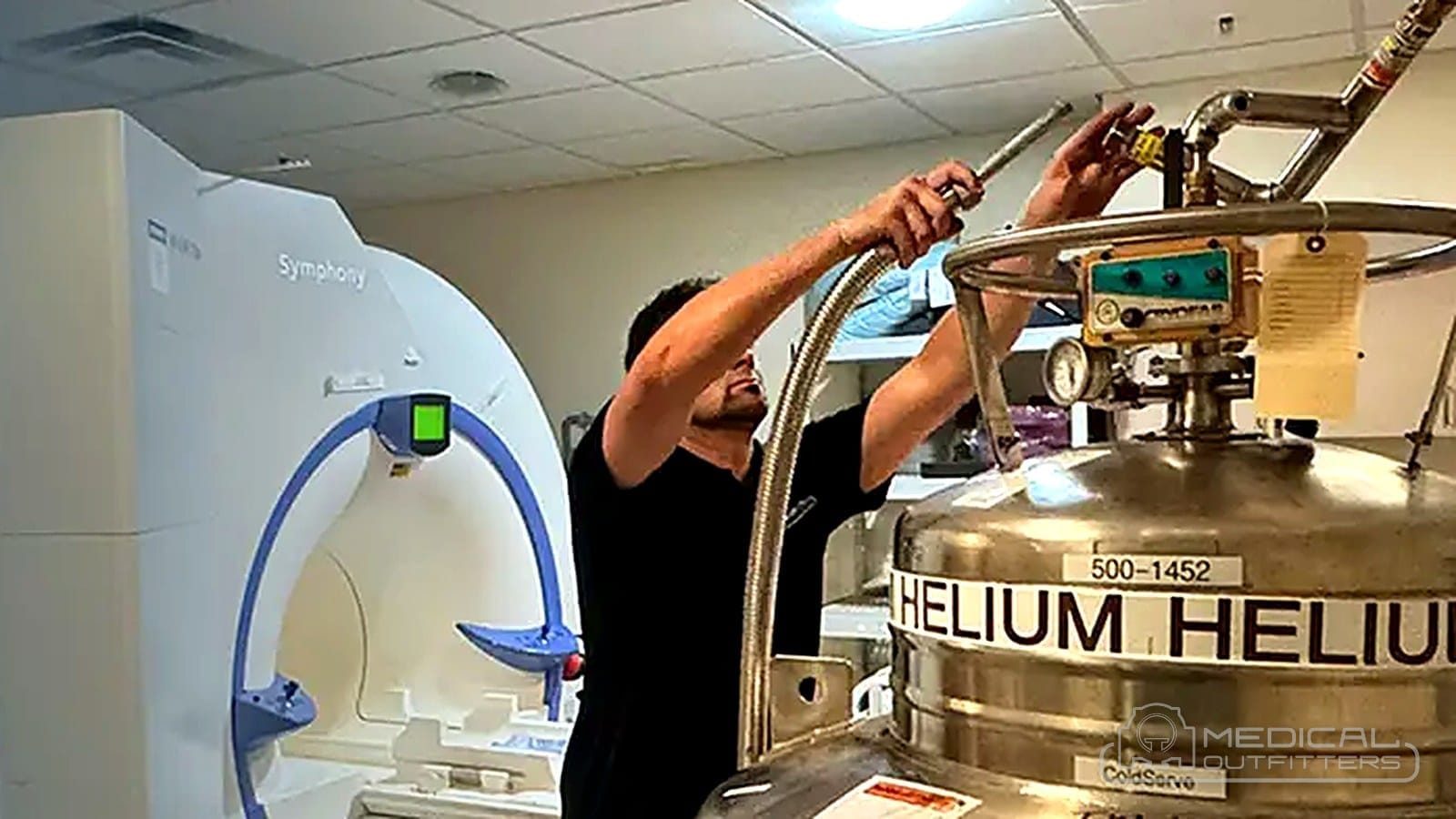
The superconducting coil sits in a bath of liquid helium at about minus 269 degrees Celsius and carries its current with no resistance, so nothing in it wears. Magnets built in the late 1990s are still at field today. What ages a magnet is what happens around it: a quench that dumps 1,000 to 2,000 litres of helium, a cold head left to fail so the helium boils away, or years of poor shimming that leave the field less homogeneous than it should be. Our guide to what an MRI quench is explains the one event that can genuinely shorten a magnet’s life, and the newest magnets remove the risk altogether: the Fujifilm Echelon Smart ZeroHelium has no liquid helium bath to lose.
The cryogenic system: the cold head is the clock
The cold head, or cryocooler, is a small two-stage refrigerator that recondenses helium gas back into liquid. It has moving parts, it runs continuously, and it wears out in three to five years. Behind it sit a helium compressor, usually rebuilt at eight to ten years, and a water chiller that lasts ten to fifteen. When a cold head fails and nobody notices, the helium level drops, and if it drops far enough the magnet quenches. Nearly every expensive helium bill we see traces back to a cold head or a chiller that was allowed to run out of spec. Medical Outfitters’ MRI cryogenic service exists largely to keep that clock wound.
Gradients: 8 to 12 years
The gradient coils inside the bore and the amplifiers in the equipment room take the hardest electrical punishment in the system. They switch hundreds of amps thousands of times per scan, and amplifier modules, power supplies and cooling loops fail progressively. Gradient performance rarely fails outright; it degrades into artifacts, eddy-current problems and sequences that no longer run at their rated speed. On a used MRI machine, the gradient amplifiers are the subsystem most worth asking the seller about.
RF coils: 5 to 8 years, mostly by accident
Surface, head, spine and body coils do not have a fixed life; they fail from handling. Cables get crushed by table movement, connectors wear, housings crack, and a coil dropped once produces artifacts forever. A busy department replaces or repairs several coils over a scanner’s life, which is why the coil inventory that comes with a used MRI matters as much as the magnet’s age.
Console, computer and software: 5 to 7 years
The host computer and reconstruction engine are ordinary computers, and they age like ordinary computers. Disks fill, operating systems fall out of support, network security requirements move on, and the manufacturer’s software releases stop including the platform. In our experience this is the subsystem that retires most MRI scanners: an image quality that is still fine, on a computer that the hospital’s IT department will no longer allow on the network.
What Shortens or Extends MRI Machine Lifespan
Two identical magnets installed in the same year can be five years apart in condition by the time they are ten. The difference is rarely the manufacturer. It is the site and the MRI service behind it.
- Duty cycle. A hospital scanner running sixteen hours a day ages its gradients, amplifiers and coils roughly twice as fast as an outpatient unit running eight. The cold head runs around the clock on both, so its clock is calendar hours. Plan the service intervals on hours, not years.
- Chiller water and room temperature. Warm or dirty chiller water stops the compressor, and the compressor stopping is how helium is lost. An equipment room that runs hot shortens the life of every amplifier in it.
- Power quality. Brownouts and surges damage gradient amplifiers and the console. A conditioned supply and a UPS on the electronics is cheap insurance in Puerto Rico, the Caribbean and anywhere the grid is uncertain; our guide to MRI installation in Puerto Rico and the Caribbean covers the site side.
- Helium management. Monthly logging of the helium level and cold head hours turns a quench into a maintenance ticket instead of an emergency.
- Service quality. Preventive MRI maintenance done on schedule by engineers trained on the platform, with genuine or tested parts, is the single largest determinant of MRI scanner life expectancy. Medical Outfitters’ MRI service and repair contracts are built around that calendar.
- Quench history. A magnet that has never quenched is a better asset than one that has quenched twice, even if both are at field today. Ask for the log.
Our 12 to 15 percent rule of thumb. Add up a year of service contract, out-of-contract parts, cryogens and the revenue lost to downtime. When that total passes 12 to 15 percent of what a replacement system would cost, the replacement is paying for itself. In our experience most scanners cross that line somewhere between year twelve and year sixteen.
MRI Upgrades That Add Years to a Scanner
Because the magnet outlasts everything else, an MRI is unusually upgradeable. The subsystems that age fastest are the ones that can be swapped, and the manufacturers built their platforms around that fact.
| Upgrade | What it fixes | Years added | When it makes sense |
|---|---|---|---|
| Console and software refresh | Unsupported operating system, slow reconstruction, missing sequences | 4 to 6 | Magnet and gradients healthy; OEM still releases software for the platform |
| Coil package | Artifacts, missing channels, referrals lost to limited coverage | 3 to 5 | Any time; multichannel coils transform an older 1.5T system |
| Gradient amplifier rebuild or upgrade | Eddy-current artifacts, sequences running below rated speed | 5 to 8 | Year 8 to 12 on high-duty systems |
| AI reconstruction (SwiftMR) | Scan time and image noise on an older magnet | Throughput, not years | When referrers want faster exams and the magnet is otherwise sound |
| Cold head and compressor | Helium loss, quench risk | Restores the baseline | Every 3 to 5 years, non-negotiable |
The AI upgrade deserves a note. SwiftMR is vendor-neutral deep-learning reconstruction that runs alongside the scanner’s own software and cuts scan time by up to half at equal or better image quality. On a ten-year-old 1.5T system it closes much of the throughput gap to a new scanner without touching the magnet. It does not fix an unsupported console, so pair it with the software refresh if the OEM still offers one. Fujifilm builds the same idea into its current platforms: the Echelon Smart with SynergyDrive automates positioning, scanning and post-processing so that an outpatient center gets more exams out of each hour of magnet time.
Signs It Is Time to Replace an MRI Machine
None of the signs below is the magnet reaching a birthday. They are the signals our engineers and our customers’ radiology managers actually use.
- The manufacturer has ended parts or software support for the platform, and third-party parts are getting scarce or expensive.
- Helium loss is no longer fixed by a cold head change. A magnet that keeps losing helium after the cryogenic system is renewed has a vessel or shield problem that is rarely worth chasing.
- Downtime is showing up in the referral pattern. When the orthopedic group down the road sends its knees elsewhere because your scanner is booked out or down, the scanner is costing more than its service bill.
- Sequences the referrers now expect are not available on the platform at any price: modern diffusion, fast MSK protocols, cardiac, prostate.
- The IT department will not keep the console on the network because its operating system is out of support.
- The 12 to 15 percent rule has been true for two years running.
When the answer is replace, the choice is between a new MRI system and a refurbished one, and it is not a choice between good and cheap. A new Fujifilm ECHELON Smart with SynergyDrive brings AI-assisted workflow and a compact footprint, the Echelon Smart ZeroHelium removes the cryogen question entirely, and the Oasis Velocity 1.2T open MRI wins the bariatric and claustrophobic patients a tunnel magnet turns away. A refurbished Siemens MAGNETOM Aera or GE Signa HDxt from MO Select costs a fraction of that and, rebuilt properly, has a decade in it. Our MRI machine cost and buying guide puts the two paths side by side, and the refurbished versus OEM certified guide explains what a proper rebuild includes.
Used MRI Machine or New: What Lifespan Means for the Purchase
A used MRI machine is a bet that the magnet will outlast the subsystems you are paying to have renewed. It is a good bet when three things are true: the platform is still supported by the OEM or by a deep third-party parts market, the cryogenic system has been renewed, and the seller stands behind the system with a warranty and its own engineers.
The GE and Siemens platforms from the mid-2000s onward, the Signa HDxt, Optima MR450w and Discovery MR750w on the GE side and the MAGNETOM Espree, Aera and Skyra on the Siemens side, meet the first test comfortably. They were built in large numbers, parts are plentiful and the third-party service market is deep. Confirm the OEM’s current support status for the specific platform and software level before you buy. That is why they make up the refurbished medical imaging equipment Medical Outfitters sells under MO Select. Each arrives with a new or rebuilt cold head, a tested coil set, current software, a written warranty, and installation by our own rigging and engineering crews.
A new MRI machine is the better bet when the site is remote, helium delivery is difficult, or the program will run the scanner hard for fifteen years: the current Fujifilm lineup starts with a new magnet and a software platform at the beginning of its support life rather than the middle. Either way, the question to ask any seller is not “how old is it” but “what has been renewed, what is the helium and quench history, and who answers the phone when the cold head stops.” A twelve-year-old magnet with honest answers to those questions is a better purchase than a seven-year-old magnet without them. If you are on the other side of that transaction, our note on who buys used medical imaging equipment explains how we value an MRI scanner that is coming out of service.
The MRI Maintenance Calendar That Gets a Scanner to Year Fifteen
| Interval | Task | Why it matters for lifespan |
|---|---|---|
| Monthly | Log helium level, cold head hours, chiller temperature and flow; walk the equipment room | Catches the cold head and chiller problems that cause helium loss |
| Quarterly | Preventive maintenance visit: filters, coil inspection, table, RF door contacts, image QA | Finds coil and table faults before they become artifacts and downtime |
| Annually | Physicist testing to ACR criteria, quench-pipe inspection, gradient calibration, software patches | Keeps accreditation and image quality on record; protects the magnet |
| Every 3 to 5 years | Cold head replacement; compressor service; console storage refresh | The single scheduled item that decides whether the magnet keeps its helium |
| Years 7 to 10 | Console and software refresh, coil package review, gradient amplifier assessment | Buys the second half of the scanner’s life |
If you would like a second opinion on a specific scanner, whether to keep it, upgrade it, or replace it, Medical Outfitters’ engineers will review the service history and helium log and give you a straight answer. Contact us with the model and installation year, or request a quote on any MRI machine for sale on our MRI page, including delivery and installation across the US, Puerto Rico and the Caribbean and, for local buyers, our MRI machines for sale in Florida page.
- MRI machines for sale: new, refurbished and used
- Fujifilm Echelon Smart ZeroHelium MRI
- Fujifilm Oasis Velocity 1.2T open MRI
- SwiftMR AI reconstruction upgrade
- MO Select refurbished MRI and CT systems
- MRI machine cost and buying guide
- MRI cryogenic service and helium fills
- MRI service and repair contracts
- What is an MRI quench?
- Refurbished medical imaging equipment
- Ask an engineer about your MRI
How Long Does an MRI Machine Last? Common Questions
How long does an MRI machine last?
Most MRI machines run 10 to 15 years in their first installation. The superconducting magnet itself can last 20 to 25 years or more, which is why a refurbished 1.5T system that is 8 to 12 years old still has a decade of useful life when the cold head, gradients and console are serviced or refreshed.
What part of an MRI wears out first?
The cold head, the small cryocooler that keeps the helium cold, wears out first and is replaced every three to five years. RF coils are next, usually from handling damage. Gradient amplifiers and the console computer follow at 8 to 12 years.
How do I know when to replace an MRI instead of repairing it?
Replace when the manufacturer has ended parts and software support, when the magnet is losing helium faster than a cold head change can fix, or when a year of repairs and downtime costs more than 12 to 15 percent of a replacement system. Image quality that no longer meets referrer expectations is the other trigger.
Does a refurbished MRI last as long as a new one?
A refurbished MRI does not reset the clock on the magnet, but a properly refurbished system with a new cold head, tested gradients, updated software and a written warranty typically delivers 7 to 12 more years. Medical Outfitters' MO Select systems are refurbished to that standard and installed by our own engineers.
Can an old MRI be upgraded instead of replaced?
Often, yes. Console and software upgrades, new coils, gradient upgrades and AI reconstruction tools such as SwiftMR extend life and improve throughput. Upgrades stop making sense when the OEM no longer supports the platform or when the magnet's helium system is failing.
How long does a 3T MRI last compared with a 1.5T?
The physics is the same, so a 3T magnet lasts as long as a 1.5T magnet. In practice 3T systems are often replaced sooner, because the buyers who choose 3T tend to be the hospitals and academic centers that want the newest gradients and sequences.
Related Articles