
Who buys used medical imaging equipment? We do, and we remove it ourselves. Medical Outfitters is a medical imaging equipment supplier based in Miami, Florida. We purchase MRI, CT, PET/CT, C-arm, mammography, X-ray, ultrasound and DEXA systems across the United States, Puerto Rico and the Caribbean.
Several kinds of company will buy a used scanner, and they are not equivalent. The second half of our answer is the part sellers underestimate. Most companies who will buy your scanner are brokers, and a broker expects you to arrange the de-installation and rigging. We do that work with our own crews. It is usually the difference between a sale price and a net figure. When you sell imaging equipment, that is the question that decides what you actually keep.
Tell us what you have and we will come back with an offer. The rest of this page explains who else buys this equipment, what determines what yours is worth, and what to have ready.
Who Buys Used Medical Imaging Equipment?
Six kinds of buyer exist, and they do not want the same things. Knowing which one you are talking to explains the offer you get.
- Refurbishers and resellers Buy working systems to recondition and resell. Pay the most for desirable, well-supported platforms. This is what we are.
- Brokers Buy nothing. They find a buyer and take a margin, and the removal is your problem.
- Parts harvesters Buy for components. The right home for an end-of-support or badly damaged system, but the offer reflects that.
- Auction and listing sites You do the work, you carry the risk, and the timeline is open-ended.
- Hospitals buying direct Rare, slow, and usually only for a system they already run.
- Manufacturer trade-in programmes Simple, tied to a new purchase, and the value is folded into a deal you cannot see the parts of.
The distinction that matters is whether the buyer is an end buyer or a middleman. We resell what we buy through our own inventory, so we are pricing a system we intend to own, not a margin on someone else’s transaction.
What We Buy
| Modality | Notes |
|---|---|
| MRI | Open, wide bore and standard bore, 0.3T to 3T, working or quenched |
| CT | All slice counts. Tube condition drives the offer |
| PET/CT | Including systems needing decommissioning support |
| C-arm | Image intensifier and flat panel |
| Mammography | 2D and 3D tomosynthesis |
| X-ray | Digital radiography rooms, detectors, portables |
| Ultrasound | Consoles and probes. Probes hold much of the value |
| DEXA | Bone densitometry systems |
Some sellers arrive with one modality in mind. If you want to sell used X-ray equipment specifically, the detector usually carries most of the value and its condition decides the offer. On ultrasound it is the probes.
Whole departments as well as single systems. If you are closing, consolidating or replacing a fleet, it is usually simpler to move the lot in one transaction than to sell piece by piece.
What Determines What Your Equipment Is Worth
- Make, model and platform support A widely installed, still-supported platform has a deep parts pool and real resale demand. A rare or end-of-support model can be newer and worth less
- Software version and licensed options Options are often licensed rather than installed, and they do not always transfer. This moves numbers more than sellers expect
- Usage, not age Tube exposures on a CT, cold head hours on an MRI, probe condition on ultrasound. A lightly used older system can beat a hammered newer one
- Condition and known faults Including whether an MRI magnet has ever quenched
- How it comes out of the building Floor level, door and corridor widths, crane access, whether a wall has to be opened. This is the factor most often left out of a valuation and it can be the largest single line
- Location Freight from a mainland site and freight from an island are not comparable costs
For context on what these systems sell for once refurbished, our MRI cost and price guide publishes the ranges, and our guide to refurbished versus OEM certified equipment explains what a buyer does to a system after purchase.
Who Actually Removes It?
This is the question worth asking any buyer before you accept an offer, because the answer decides what you actually net.
We de-install, ramp down, disconnect, cable, package, rig and load the system with our own crews. On a recent Philips Intera Achieva 1.5T removal that meant inspection of the system, disconnection, the cabling job, ramping down, packaging, rigging and loading into containers, as documented here. We also handle the cryogenics where a magnet is involved and the freight and logistics afterwards.
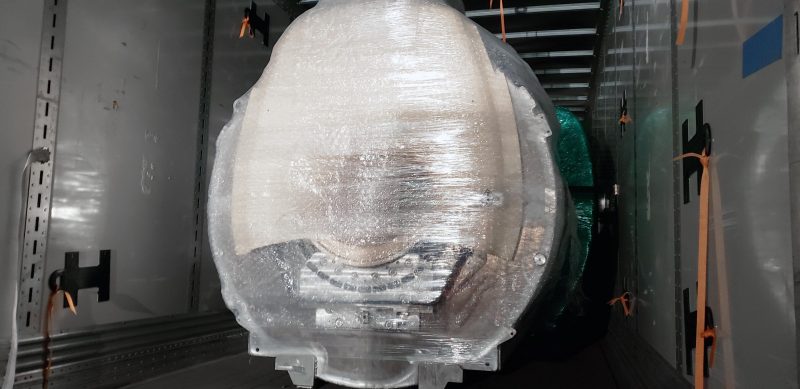
If a buyer subcontracts the removal, the crew who arrive have no relationship with the people who made you the offer. When something is not as described on the day, that gap becomes yours. Our full de-installation and rigging service and our project record are both public.
What to Have Ready Before You Ask for an Offer
- Make, model and year
- Software version and licensed options
- Usage counts Tube exposures, cold head hours, scan seconds
- Condition and any known faults Including anything intermittent
- Photographs The system, the room, and the route out
- Location and access Floor level, door widths, lift or crane access
- Service records If you have them
- Your timeline When the room has to be clear
Send what you have rather than waiting until the list is complete. A partial picture is enough to establish whether there is a deal worth pursuing. Start here.
One point on terminology, because it affects who can legally do what. Servicing and refurbishing a device are not the same as remanufacturing it. Remanufacturing changes the device beyond its original specification and carries manufacturer obligations. The FDA sets out that distinction, and it is worth knowing which one a buyer intends.
Buying rather than selling? Our used C-arm buying guide covers the checks that matter on a used system.
Frequently Asked Questions
Selling Used Imaging Equipment: Common Questions
Who buys used medical imaging equipment?
Refurbishers and resellers, equipment brokers, parts harvesters, auction and listing sites, other hospitals buying direct, and manufacturers running trade-in programmes. Medical Outfitters is a medical imaging equipment supplier in Miami, Florida. It buys used MRI, CT, PET/CT, C-arm, mammography, X-ray, ultrasound and DEXA systems, and removes them with its own crews rather than asking the seller to arrange it.
How much is my used MRI or CT scanner worth?
Value is driven by make and model, age, software version and licensed options, condition and usage counts. Parts support and how easily the system comes out of the building matter just as much. Two identical scanners can be worth very different amounts. One is on a ground floor with door access; the other is three floors up behind a wall that has to come out.
Do I have to arrange de-installation myself?
Not with us. We de-install, ramp down, disconnect, cable, package, rig and load the system ourselves. Most buyers in this market are brokers who expect the seller to arrange removal. That is where sale prices quietly turn into net costs.
What do you need to give me an offer?
Make and model, year of manufacture, software version and licensed options. Current condition and any known faults. Usage counts such as tube exposures or cold head hours. The location, the route out of the building, and photographs. Recent service records help. If you do not have all of it, send what you have.
Will you buy a system that is not working?
Often yes. A system with a failed tube, a quenched magnet or a dead detector still has value. It is in the parts and in the platform itself. Tell us what is wrong rather than leaving it out; a known fault is easier to price than a surprise found on site.
Do you buy equipment outside the United States?
Yes. We operate across the United States, Puerto Rico and the Caribbean, and we hold a Puerto Rico legal entity. Cross-border removals add customs and freight steps. Tell us the location early, because it affects both the offer and the timetable.
How long does the process take?
The offer is usually quick once we have the system details. The removal is scheduled around your clinical calendar. Basic MRI magnet rigging jobs are normally completed within three to five hours, depending on the weight. What sets the overall timetable is when you can release the room.
