How much does an MRI scan cost? Like every imaging exam, the answer depends on three things: who is paying (Medicare, a commercial insurer or the patient in cash), where the scan is done (a freestanding imaging center, a mobile unit, a hospital outpatient department or an emergency room) and what is scanned (a knee or lumbar spine without contrast sits at the low end, a brain with and without contrast or an abdomen sits at the high end). MRI is the most expensive of the common outpatient imaging exams, and it also has the widest price spread: the same brain MRI can be billed at $500 in one building and more than $3,000 in another across town, on a scanner of the same field strength. This guide lays out the 2026 MRI scan cost by body part, by setting and by payer, explains what Medicare pays and why hospitals charge more, shows what contrast adds, and then turns to the facility side: what the MRI machine behind the exam costs and how many scans it takes to pay for it.
Medical Outfitters sells new Fujifilm and Esaote MRI systems as an authorized dealer and refurbished GE and Siemens systems through MO Select, and installs and services them across the United States, Puerto Rico and the Caribbean. We wrote this for both sides of the price: the patient or practice manager trying to make sense of an MRI bill, and the imaging center owner, hospital administrator or radiology manager deciding whether a scanner will earn back its cost. If you are pricing the machine rather than the exam, the MRI machine cost and price guide has the full bands by field strength.
- Without insurance: about $400 to $1,200 at an independent imaging center, $1,500 to $3,500 at a hospital outpatient department and $350 to $900 on a mobile MRI unit (CoveredUSA, May 2026).
- Medicare: $191.72 for a lumbar spine MRI without contrast and $316.97 for a brain MRI with and without contrast under the 2026 physician fee schedule (CareRoute); the patient pays 20 percent after the $283 Part B deductible.
- With commercial insurance: negotiated MRI prices averaged 307 percent of Medicare in the Health Care Cost Institute’s April 2026 brief, and insured patients typically owe $75 to $500 out of pocket (CareRoute).
- Contrast: gadolinium contrast adds roughly $200 to $500 to the bill, per both CareRoute and CoveredUSA.
- The scanner: $475,000 to $975,000 for a refurbished 1.5T MRI and $1,200,000 to $2,000,000 for a new one, delivered, installed and warrantied, per the Medical Outfitters MRI cost guide; Medicare pays the same per exam on either.
How Much Does an MRI Scan Cost in 2026? Prices by Body Part and Setting
Start with the cash price, because it is the number most people mean when they ask how much is an MRI scan. CoveredUSA’s May 2026 national pricing guide, which draws on the CMS 2026 Medicare fee schedules, hospital price-transparency files and FAIR Health data, puts an MRI at $400 to $3,500 without insurance: about $400 to $1,200 at an independent imaging center, $1,500 to $3,500 in a hospital outpatient department and $350 to $900 on a mobile MRI unit. CareRoute’s February 2026 MRI cost guide, built on CMS fee schedules, Healthcare Bluebook fair-price estimates and national self-pay databases, lands on the same $400 to $3,500 overall range and puts freestanding centers 40 to 70 percent below hospitals for the same exam.
The body part moves the price next. A knee or shoulder MRI is a single joint with a dedicated coil and a short protocol; a brain with and without contrast, an abdomen or a cardiac study takes longer, uses more sequences and often needs an injection. CareRoute’s 2026 self-pay ranges by body part are in the table below.
| MRI exam | Common CPT code | Imaging center, self-pay | Hospital, self-pay |
|---|---|---|---|
| Brain | 70551 / 70553 | $400 to $1,000 | $1,500 to $3,500 |
| Knee | 73721 | $400 to $800 | $1,000 to $2,500 |
| Lumbar spine | 72148 | $500 to $1,000 | $1,500 to $3,000 |
| Shoulder | 73221 | $400 to $800 | $1,000 to $2,500 |
| Abdomen and pelvis | 74183 / 72197 | $500 to $1,200 | $1,500 to $3,500 |
| Cardiac | 75557 and related | $700 to $1,500 | $2,000 to $3,500 |
Source: CareRoute, “How Much Does an MRI Cost?” (updated February 2026), self-pay ranges by body part. Codes are the common CPT codes for each exam. Insured patients pay a share of a negotiated rate instead of these prices, which the next sections explain.
Two patterns in those numbers matter more than any single figure, and both come down to imaging center vs hospital pricing. First, the hospital column runs two to three times the imaging-center column for the identical exam, which the Health Care Cost Institute’s April 2026 imaging brief confirms nationally: in its 2022 commercial claims data, Level 1 imaging averaged $227 at hospital outpatient departments against $61 in physician offices, and Level 4 imaging $1,416 against $387, about 3.7 times higher in the hospital. Second, every number in the table is a list or cash price, not what Medicare or an insurer actually pays. Those payment rates are much lower and much more uniform, and they are where the MRI cost question gets a firm answer.
What Medicare Pays for an MRI: The Fee Schedule and the Hospital Rate
Medicare MRI payment works two different ways depending on where the exam is done, and those two numbers anchor every other MRI price in the market. In a freestanding imaging center or a physician office, the scan is paid under the Medicare Physician Fee Schedule as one global payment that covers both the technical component (the scanner, the technologist, the room, the coils and the supplies) and the professional component (the radiologist’s reading). For 2026 the fee schedule’s conversion factor is $33.4009 per relative value unit, per CMS. CareRoute’s CPT lookups built on it put the national payment for a lumbar spine MRI without contrast (CPT 72148, 5.61 RVUs) at $191.72 and for a brain MRI with and without contrast (CPT 70553, 9.49 RVUs) at $316.97. CoveredUSA’s May 2026 CPT guide gives the non-facility Medicare range for the other common codes: about $230 to $260 for a brain MRI without contrast (70551), $190 to $215 for a knee (73721), $200 to $225 for a shoulder (73221) and $300 to $380 for an abdomen with and without contrast (74183). Geographic adjustments move all of these a few percent either way.
In a hospital outpatient department, Medicare splits the bill. The radiologist’s reading is paid from the fee schedule at the facility rate, about $57.49 for a lumbar spine MRI per CareRoute, and the hospital is paid separately for the technical side under the Hospital Outpatient Prospective Payment System. CMS set the 2026 outpatient conversion factor at $91.415 and kept the seven imaging payment groups without structural change, according to the American College of Radiology’s summary of the final rule released November 21, 2025. MRI codes sit in the upper imaging levels: Level 3 imaging without contrast, the group where a brain MRI without contrast is assigned, pays $243.77 in 2026, and imaging with contrast pays $356.43 at Level 2 and $800.90 at Level 3. Add the radiologist’s fee to the hospital’s payment and Medicare’s total for a hospital-based MRI is above the imaging-center rate for the same code, which is the starting point for the larger gap that commercial prices show.
Three Medicare rules sit behind these rates and matter to anyone who owns a scanner. Since January 1, 2012, a non-hospital facility must be accredited by a CMS-designated body (the ACR, the IAC, RadSite or The Joint Commission) to bill Medicare for the technical component of MRI, per CMS. The payment is the same whatever the age of the scanner, so long as the site is accredited and the images meet the accrediting body’s phantom and clinical image standards. And because MRI is on the CMS list of shoppable services, a hospital must publish what it charges for it, which the self-pay section below covers.
MRI Cost With Insurance: Deductibles, Coinsurance and Copays
For an insured patient the cost of an MRI is the negotiated rate between the facility and the insurer, and the bill is a share of that rate set by the plan. Under Original Medicare the arithmetic is fixed: Part B pays 80 percent of the approved amount and the patient pays 20 percent after the annual Part B deductible, which CMS set at $283 for 2026. On the national fee-schedule rates above, CareRoute puts the Medicare patient’s share of a lumbar spine MRI at $38.34, and 20 percent of a $316.97 brain MRI with and without contrast is about $63. A Medicare Supplement plan usually covers that 20 percent; a Medicare Advantage plan replaces it with the plan’s own advanced-imaging copay, stated in its summary of benefits.
Commercial insurance pays far more than Medicare for MRI, and passes more of it to the patient. The Health Care Cost Institute’s April 2026 brief, using 2022 employer-sponsored insurance claims, found MRI prices averaging 307 percent of Medicare nationally, against 257 percent for CT, and estimated that paying Medicare rates would have lowered employer spending on MRI by $6 billion. CareRoute puts typical commercial negotiated rates at 150 to 300 percent of Medicare, or about $475 to $950 for a brain MRI with and without contrast; CoveredUSA puts the same exam at $450 to $900 and a lumbar spine MRI at $275 to $550. How much of that reaches the patient depends on the plan:
- Copay plan, deductible met: a flat advanced-imaging copay, $100 to $300 per CareRoute.
- Coinsurance plan, deductible met: typically 20 percent of the negotiated rate, $95 to $190 on a brain MRI with and without contrast and $60 to $180 on a lumbar spine MRI, per CareRoute.
- High-deductible plan, deductible not met: the full negotiated rate until the deductible is satisfied, which CareRoute puts at $300 to $1,800 for a lumbar spine MRI depending on the setting.
The hospital setting adds a line. When an MRI is done in a hospital outpatient department, the hospital’s facility fee, which CareRoute puts at $500 to $1,500 or more, is billed on top of the professional fee and carries its own cost sharing. That is why two patients with the same plan and the same scan can see bills a thousand dollars apart, and why insurers increasingly steer members to freestanding centers for scheduled MRI. Prior authorization is the other hurdle: most commercial plans require it for MRI, and a scan done without it can be denied, leaving the patient with the cash price. CareRoute’s overall range for an insured patient’s out-of-pocket MRI cost, all plan types together, is $75 to $500.
MRI Cost Without Insurance: Cash Prices, Chargemasters and Your Rights
A self-pay patient faces two very different numbers. The chargemaster price is the hospital’s list price, the one printed on an itemized bill before any discount. CoveredUSA’s May 2026 CPT guide puts hospital chargemaster prices at $1,000 to $18,000 for a brain MRI with and without contrast and $600 to $3,500 for a lumbar spine MRI, and cites Health Affairs research finding list prices 164 percent above negotiated rates on average. The cash or self-pay price is what the same facility accepts from a patient paying directly, and CoveredUSA puts it 30 to 50 percent below the chargemaster: $1,000 to $5,000 for the brain exam at a hospital against $400 to $1,000 at a freestanding center. CareRoute lists the average provider charge for the brain exam at $1,911.21, about six times the Medicare rate. Nobody should pay a chargemaster price for a scheduled MRI, and the first question to ask any facility is its self-pay rate.
Two federal rules give the self-pay patient leverage. Under the CMS Hospital Price Transparency rule, in force since January 1, 2021, every hospital must publish a machine-readable file of its standard charges, including the gross charge, the discounted cash price and the payer-specific negotiated rates, plus a consumer-friendly list of 300 shoppable services that includes MRI exams. Penalties start at $300 a day for hospitals of 30 beds or fewer and $10 per bed per day, capped at $5,500 a day, for larger hospitals, per CMS. Compliance is uneven: a 2022 JAMA Network Open study of 89 leading children’s hospitals found only 39 percent fully compliant, and CoveredUSA reports that a 2024 HHS Office of Inspector General audit found 37 of 100 hospitals failing at least one requirement.
The second rule is the No Surprises Act, in force since January 1, 2022. Any provider or facility that schedules a service for an uninsured or self-pay patient must give a written Good Faith Estimate of the expected charges, within one business day of scheduling when the appointment is three to nine business days away and within three business days when it is further out, according to CMS. If the final bill exceeds the estimate by $400 or more, the patient can take it to the federal patient-provider dispute resolution process. For an MRI, the estimate should list the scan, the contrast, the radiologist’s read and any facility fee separately.
The practical sequence for a self-pay patient is short. Ask the ordering physician for the exact CPT code and whether contrast is needed. Call two or three accredited freestanding imaging centers and the hospital, and ask each for its self-pay price for that code, all-in, including the read. Ask about prompt-pay discounts for payment on the day. Ask whether the center runs an open or a closed scanner if claustrophobia is a concern, because the scheduling changes. Then book the lowest all-in price at a site your physician will accept images from.
MRI With Contrast or Without: Why the Same Body Part Has Two Prices
Most MRI exams exist in a without-contrast version, a with-contrast version and a with-and-without version, each with its own CPT code, and the contrast versions cost more. CareRoute and CoveredUSA both put the difference at roughly $200 to $500 at cash prices. The reasons are mechanical. The gadolinium-based contrast agent is a drug, billed separately. Injecting it needs an IV, often a power injector and more technologist time, and some sites screen kidney function before injecting, which can add a lab charge. The exam takes longer because the same sequences are run before and after the injection. Medicare’s rates show the step: the 2026 fee schedule pays $316.97 for a brain MRI with and without contrast (70553) against about $230 to $260 for the same brain without contrast (70551), per CareRoute and CoveredUSA.
Whether a scan needs contrast is a clinical decision. Most musculoskeletal MRI, the knee, shoulder and lumbar spine exams that make up much of an imaging center’s schedule, is done without contrast. Contrast is used when the question is about tumors, infection, inflammation, multiple sclerosis activity, postoperative spine changes or blood vessels, where the agent makes the abnormality stand out. RadiologyInfo, the patient site of the ACR and the RSNA, notes that gadolinium agents are less likely to cause an allergic reaction than the iodine-based agents used in CT, and that very small amounts can remain in the body after multiple MRI exams, which is part of why radiologists use it only when it changes the answer. A patient quoted a contrast price for a question that does not need it can ask the ordering physician whether the non-contrast code is appropriate; a patient who needs contrast should not shop it away. The same trade-off for CT is covered in our guide to CT with contrast versus without.
For the facility, contrast changes the schedule more than the revenue. A with-and-without exam occupies the magnet longer than a single non-contrast series, so a center that runs a high share of contrast studies fits fewer exams into a day on the same scanner. That is one of the reasons scan time and software matter so much in an MRI purchase: newer acceleration software, such as the Swift MR image acceleration we offer, is sold on the promise of shorter protocols and more exams per day.
Why MRI Prices Vary So Much From One Building to the Next
The cost of MRI exams spreads wider than almost any other common medical service. A March 2023 JAMA Network Open study of price-transparency data from 2,630 hospitals, reported by AuntMinnie, found a median commercial price of $1,900 for a brain MRI and a mean of $2,268, and found that within the same hospital referral region nonprofit hospitals charged $387 more and government hospitals $537 more than for-profit hospitals. CoveredUSA cites a study of 274 hospitals in 46 states that put the median hospital cash price for a brain MRI at about $2,200, against $400 to $1,000 at freestanding centers. Four things explain most of the spread.
Site of service. The hospital outpatient payment system pays a facility fee that the physician fee schedule does not, and commercial insurers negotiate from the hospital’s higher base. A hospital also carries an emergency department, round-the-clock staffing and uncompensated care in its cost structure, and imaging prices help carry them. A freestanding center carries none of that and competes on price.
Negotiating power. A health system with most of the beds in a region negotiates higher rates from every insurer than an independent center can, and the rates are specific to each plan, which is why one hospital’s transparency file shows a different MRI price for every insurer it accepts.
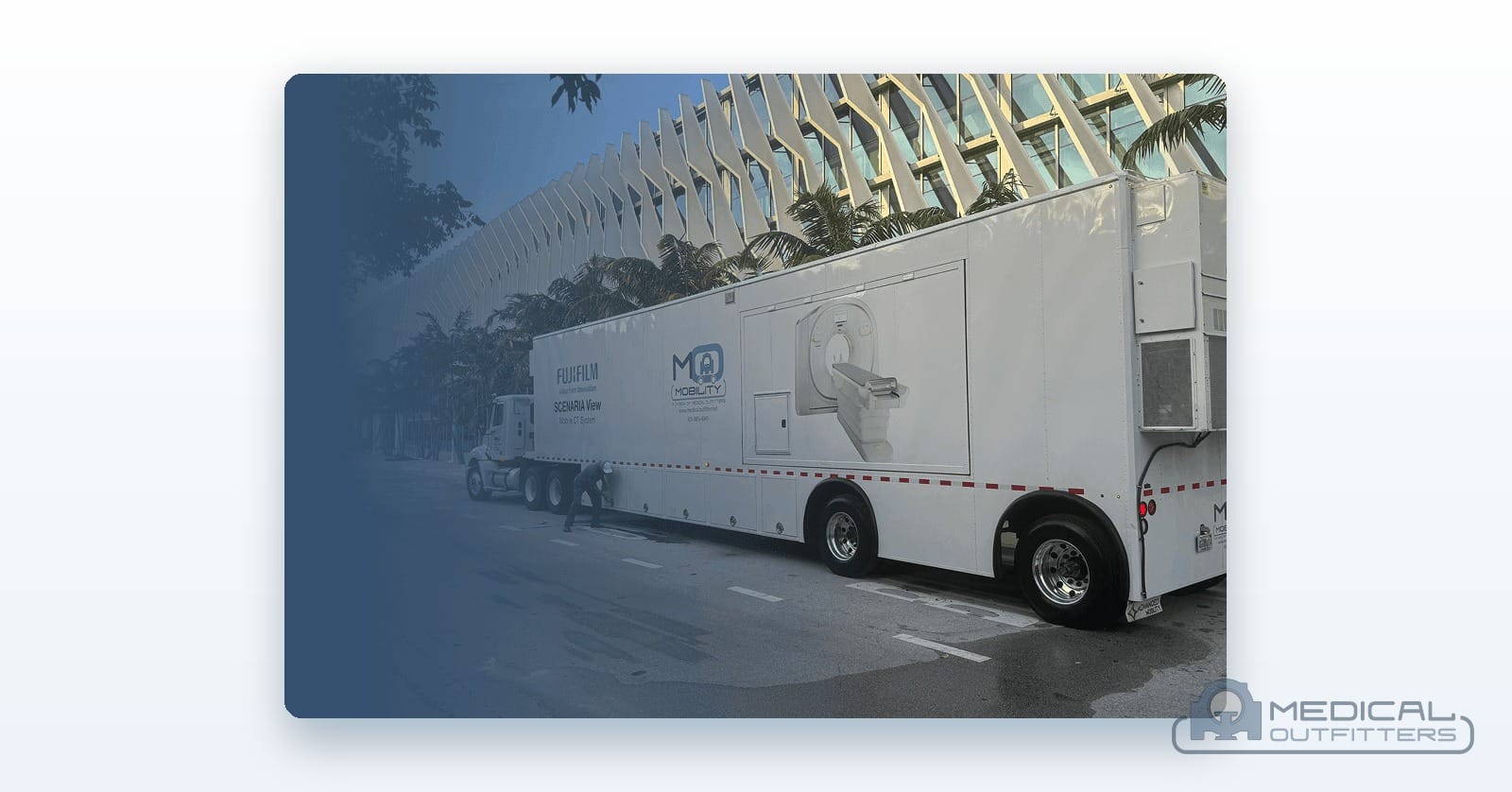
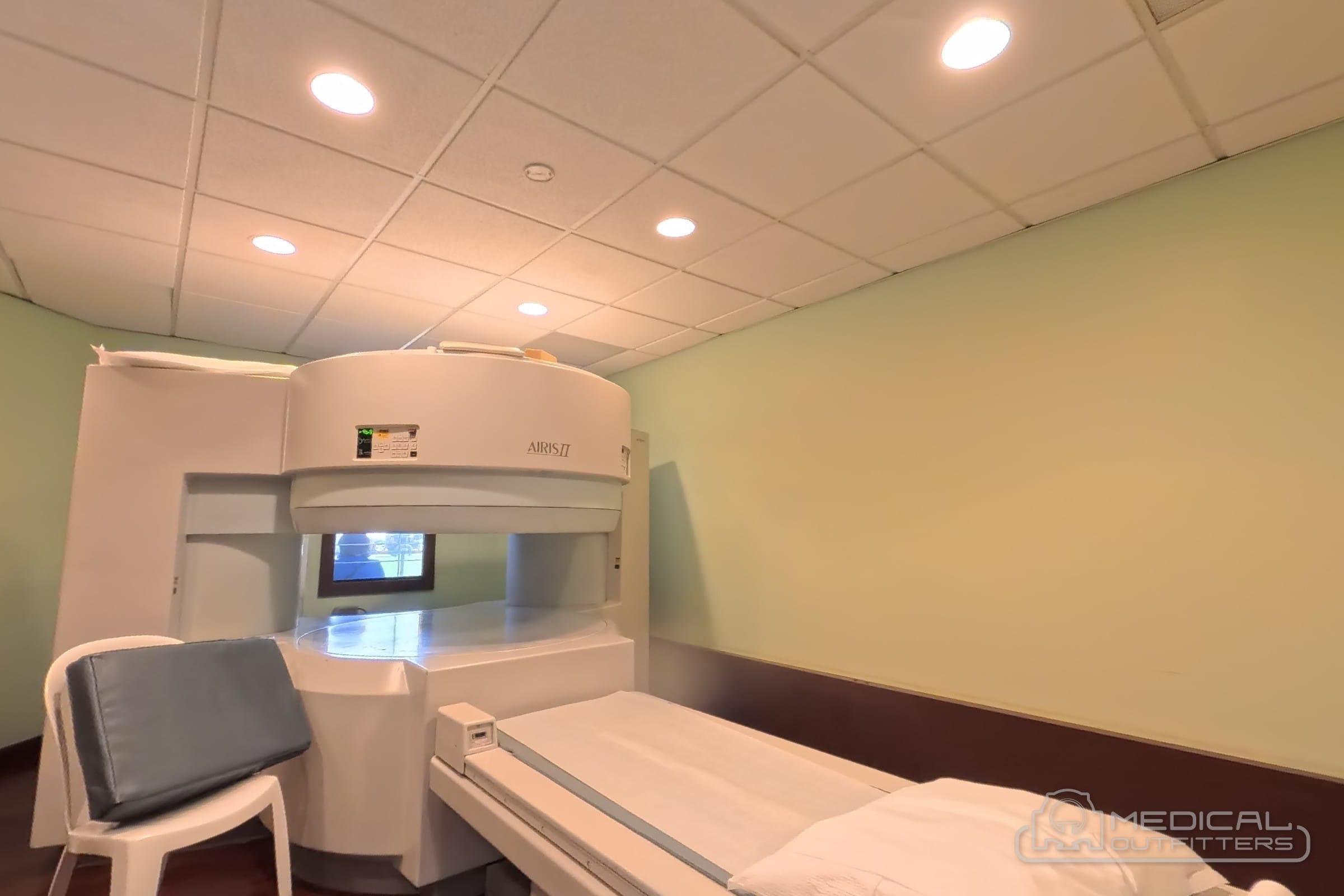
The scanner and the format. Field strength and design change the schedule more than the price. A 3T system is preferred for some neuro, prostate and musculoskeletal work, an open or wide-bore system serves claustrophobic and larger patients, and mobile MRI trailers serve rural hospitals part-time at the lower $350 to $900 cash range CoveredUSA reports. Medicare pays the same code rate on all of them. Our comparisons of 1.5T versus 3T MRI and wide-bore, open and closed MRI cover what each format earns and costs.
What is in the price. Some quotes include the radiologist’s read, the contrast and the facility fee; others leave one or more out. A low headline number that excludes the read is not a lower price. The Good Faith Estimate exists to make the components visible, and any buyer, patient or payer, should compare all-in figures only.
For a facility planning a scanner, the lesson is the same one the CT market teaches: reimbursement per exam is a known, slowly moving number set by CMS and a handful of insurers, while volume, setting and scan time are decided by the facility. That is where the economics of the machine are won.
What the MRI Machine Costs and How the Scan Pays for It
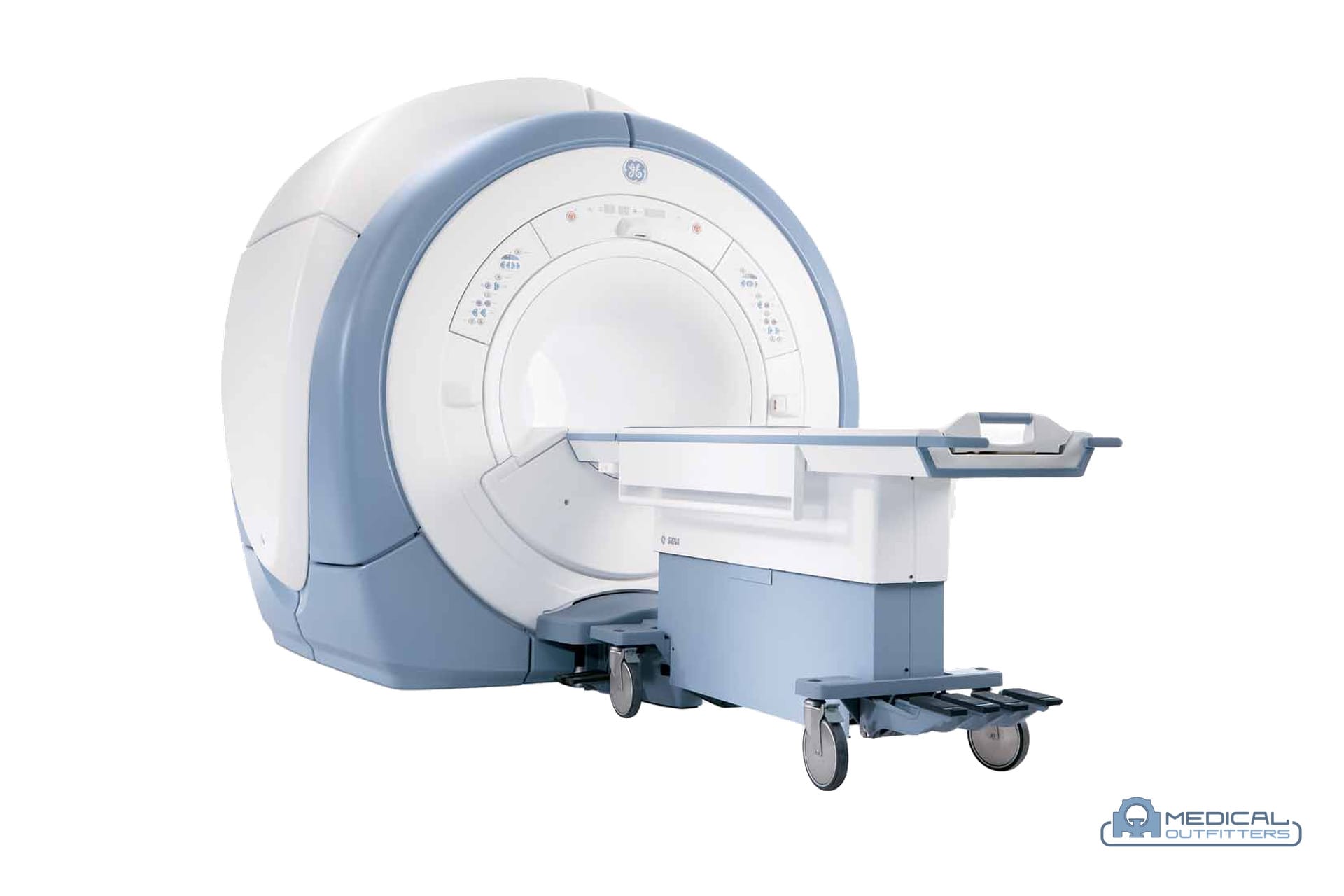
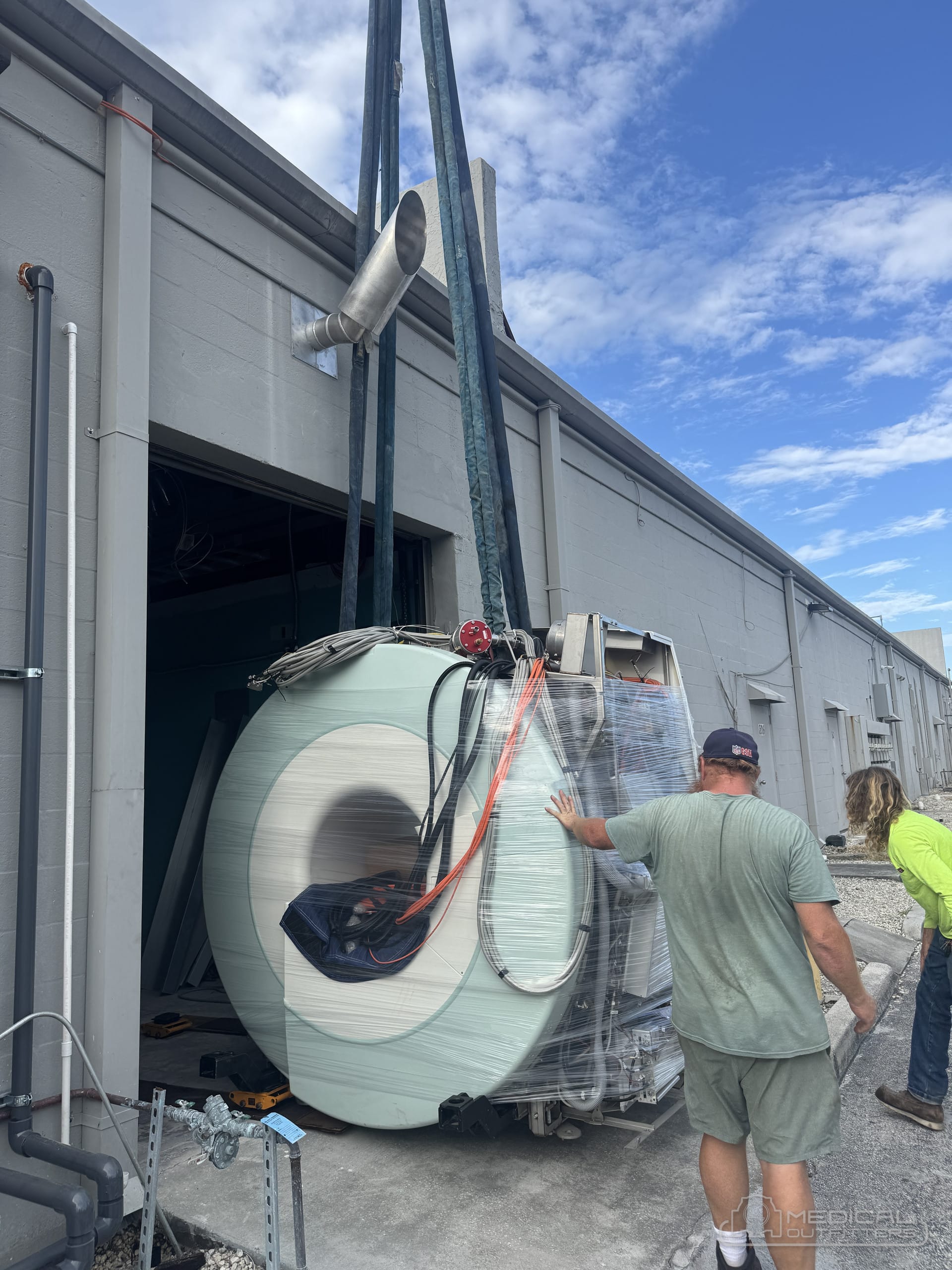
Every MRI price above is revenue to the facility that owns the magnet, and the magnet is the most expensive single system an imaging facility buys. The Medical Outfitters MRI machine cost guide puts the system price, delivered, installed and warrantied, at $300,000 to $525,000 for a refurbished open or low-field MRI, $475,000 to $975,000 for a refurbished 1.5T and $1,000,000 to $1,900,000 for a refurbished 3T, against $600,000 to $950,000, $1,200,000 to $2,000,000 and $2,100,000 to $3,700,000 new. A certified refurbished MRI typically saves 40 to 60 percent against new, per the same guide. Those are Medical Outfitters all-in figures and they sit above the equipment-only prices published elsewhere; the RF-shielded room, the chiller, rigging, the first helium fill and the service contract are quoted per project.
The payback arithmetic is the reason outpatient MRI keeps moving to freestanding centers. Take a refurbished 1.5T at $725,000, the middle of the guide’s band, and two levels of net revenue per exam after the radiologist’s read: $200, close to the 2026 Medicare fee-schedule rate for a knee or lumbar spine, and $300, closer to a brain with and without contrast or a commercial blend. At $200 net the equipment line is recovered after about 3,625 exams; at $300 net, after about 2,420. On a five-day schedule of about 21.7 scanning days a month, that is roughly 14 months at twelve exams a day and $200 net, or about 9 months at $300 net. The chart below is our arithmetic on the guide’s band and shows the equipment line only: service, cryogens, staff, the room and the radiologist sit on top.
Volume is the lever because an MRI’s fixed costs run whether or not it scans. The Medical Outfitters cost guide lists them: cryogens for a superconducting magnet, a cold head and a chiller that must run continuously, a service contract priced against the platform and the response time, power drawn around the clock, coil repair and replacement, and accreditation and quality assurance. The cost nobody budgets for is a quench, which vents the helium and stops the magnet until it is refilled and ramped back up; our guides to MRI quench and helium refill cost cover both. Our MRI service team handles cryogenics, cold heads and coil repair, including on systems bought elsewhere.
For a facility choosing between new and refurbished, the exam price often settles it. Medicare pays the same rate for a lumbar spine MRI, $191.72 at an imaging center under the 2026 fee schedule per CareRoute, whether the images come from a new 1.5T or a refurbished one, so for routine musculoskeletal, spine and brain work a refurbished system earns the same revenue per exam at roughly half the purchase price. A new system earns its premium in the newest software, scan acceleration, a long factory warranty and, on sealed designs, freedom from helium refills. Model-level pricing for the common refurbished platforms is in our GE Optima MR450w, Siemens MAGNETOM Espree and Siemens MAGNETOM Aera price guides, and what to check before buying one is in the used MRI machine buying guide.
Pricing the Scan and the Scanner With Medical Outfitters
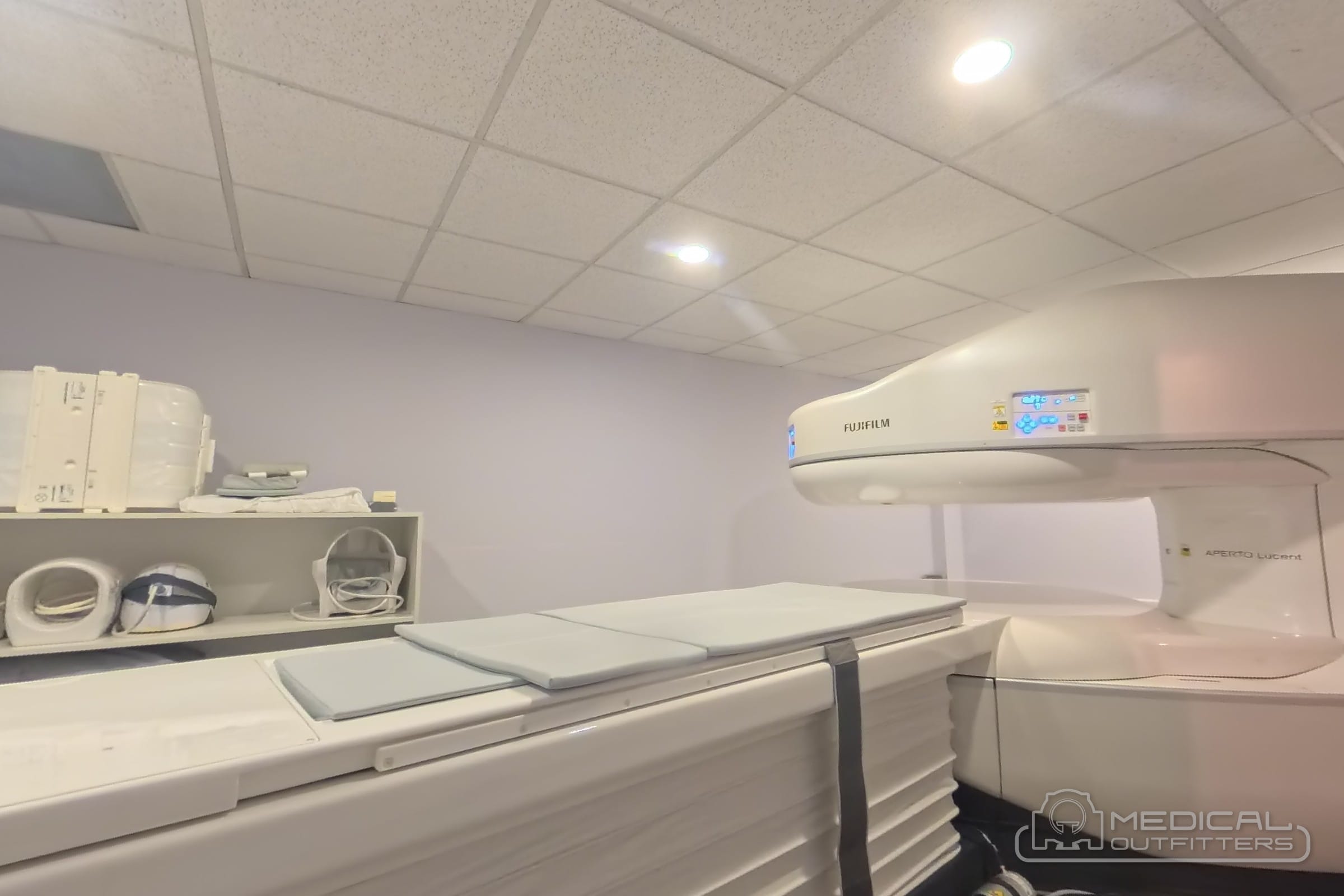
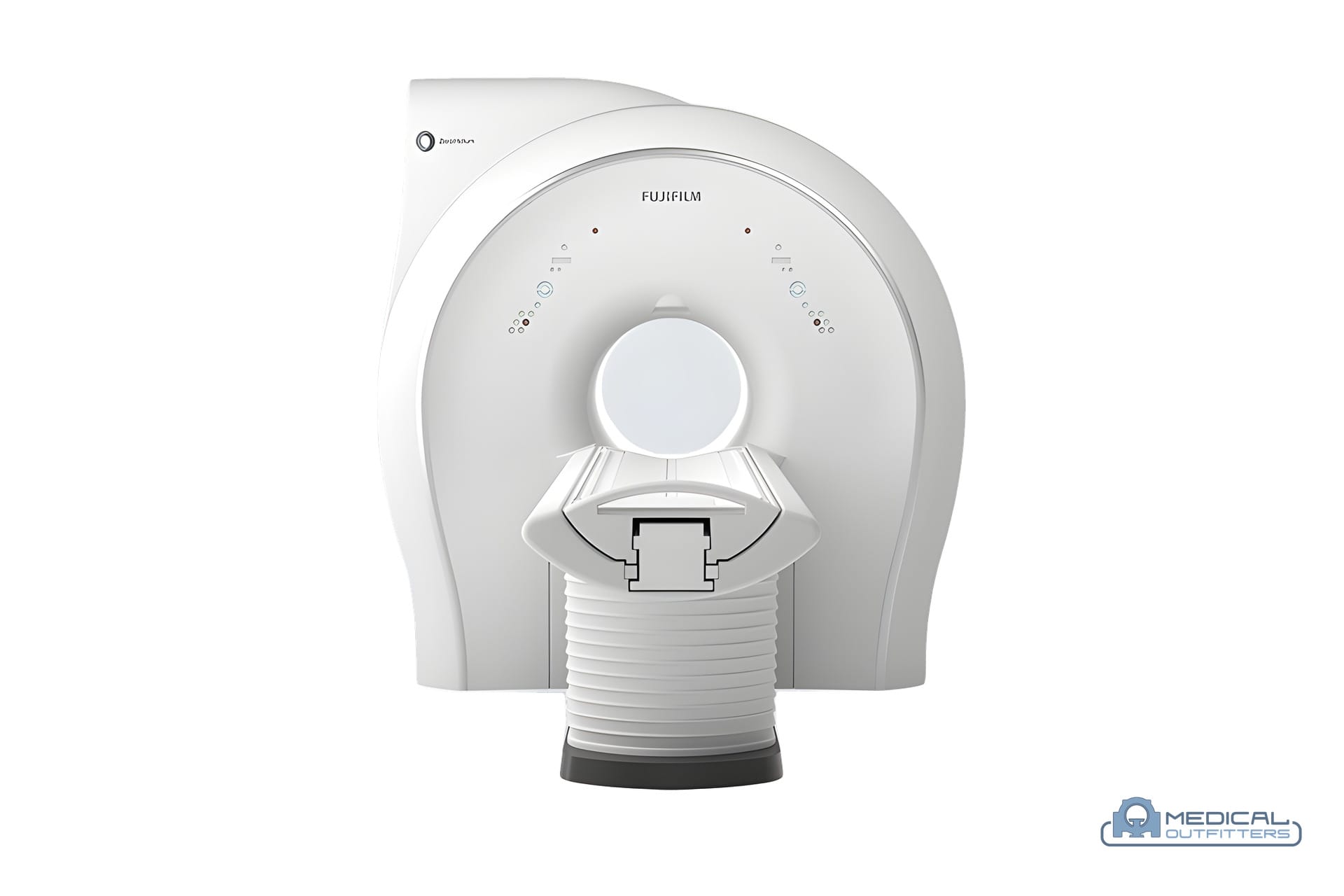
If you arrived here as a patient, the short version is to ask for the CPT code, call an accredited freestanding imaging center for its self-pay price, and insist on a Good Faith Estimate. If you arrived as a facility owner or radiology manager, the exam prices on this page are your revenue side, and the MRI machine cost and price guide is the cost side: bands by field strength, what a quote includes and what it costs to run a magnet. Current systems are in our MRI machines for sale, refurbished GE and Siemens units are on the used MRI machines page, the MO Select standard is described on the refurbished imaging equipment page, and the new Fujifilm line includes the ECHELON Smart ZeroHelium and the open APERTO Lucent. The same question for CT is answered in how much a CT scan costs. Send us your expected exams per day and payer mix and we will run the payback on a specific system, delivered, installed and warrantied: contact Medical Outfitters.
- CoveredUSA, “MRI Cost (CPT 70553, 72148)”, May 16, 2026: cash, chargemaster and commercial ranges by CPT code, Medicare non-facility ranges, Health Affairs markup figure, OIG audit figure. coveredusa.org
- CoveredUSA, MRI cost guide, May 2026: national ranges by setting including mobile MRI and the contrast add-on, as cited in the Medical Outfitters MRI cost guide. coveredusa.org
- CareRoute, “How Much Does an MRI Cost?” (February 2026) and CPT 70553 and 72148 pages: self-pay ranges by body part, 2026 Medicare payments and RVUs, commercial multiples, copay and coinsurance ranges. careroute.ai
- American College of Radiology, “CY 2026 HOPPS Final Rule Preliminary Summary”: 2026 outpatient conversion factor and imaging APC payment rates. acr.org
- Health Care Cost Institute, imaging price brief, April 2026: MRI commercial prices at 307 percent of Medicare and hospital outpatient versus office imaging prices. healthcostinstitute.org
- AuntMinnie, “Government, nonprofit hospitals aren’t cheaper for brain MRI”, March 2023, reporting a JAMA Network Open study of 2,630 hospitals. auntminnie.com
- CMS, No Surprises Act Good Faith Estimate requirements and the Hospital Price Transparency rule. cms.gov
- RadiologyInfo (ACR and RSNA), body MRI: gadolinium contrast safety notes. radiologyinfo.org
- Medical Outfitters, MRI Machine Cost and Price Guide (2026): system price bands by field strength, refurbished savings, running costs. medicaloutfitters.com
- MRI machine cost and price guide (2026)
- MRI machines for sale: new Fujifilm and Esaote, refurbished GE and Siemens
- Used and refurbished MRI machines for sale
- MRI service, repair and maintenance
- Refurbished medical imaging equipment: the MO Select standard
- 1.5T vs 3T MRI: which field strength to buy
- Wide-bore vs open vs closed MRI
- Used MRI machine buying guide
- Mobile MRI: buy or rent?
- How much does a CT scan cost in 2026?
- MRI vs CT scan: how the two exams differ
- GE Optima MR450w 1.5T MRI price guide
- Siemens MAGNETOM Espree 1.5T MRI price guide
- Siemens MAGNETOM Aera 1.5T MRI price guide
- Run the payback on a specific MRI system
MRI Scan Cost: Common Questions
How much does an MRI scan cost in 2026?
About $400 to $3,500 without insurance, according to CoveredUSA's May 2026 national pricing guide: roughly $400 to $1,200 at an independent imaging center, $1,500 to $3,500 in a hospital outpatient department and $350 to $900 on a mobile MRI unit. Medicare pays $191.72 for a lumbar spine MRI and $316.97 for a brain MRI with and without contrast under its 2026 fee schedule, per CareRoute, and insured patients typically owe $75 to $500 out of pocket.
How much is an MRI without insurance?
Ask for the self-pay price, not the list price. CoveredUSA's May 2026 CPT guide puts a brain MRI with and without contrast at $400 to $1,000 at a freestanding center against hospital chargemaster prices of $1,000 to $18,000, and a lumbar spine MRI at $300 to $900 freestanding against $600 to $3,500 on a hospital list. Under the No Surprises Act every self-pay patient is entitled to a written Good Faith Estimate before the scan, and a bill $400 or more above it can be disputed.
How much does an MRI cost with insurance?
A share of the rate your insurer negotiated. The Health Care Cost Institute's April 2026 brief found commercial MRI prices averaging 307 percent of Medicare, and CareRoute puts a brain MRI with and without contrast at about $475 to $950 negotiated. With the deductible met you pay a copay of about $100 to $300 or 20 percent coinsurance of about $95 to $190; under an unmet high deductible you pay the full negotiated rate. A hospital adds a facility fee with its own cost sharing.
How much does Medicare pay for an MRI?
Under the 2026 Medicare Physician Fee Schedule, at a conversion factor of $33.4009, CareRoute puts the national payment at $191.72 for a lumbar spine MRI without contrast and $316.97 for a brain MRI with and without contrast, and CoveredUSA puts a brain without contrast at about $230 to $260 and a knee at $190 to $215. The patient pays 20 percent after the $283 Part B deductible. In a hospital outpatient department the hospital is paid an APC rate and the radiologist bills the read separately.
Why does an MRI cost more at a hospital than at an imaging center?
Because the hospital is paid under a different system and negotiates from a higher base. Medicare pays hospitals a facility payment under the outpatient prospective payment system that freestanding centers do not receive, and the Health Care Cost Institute found hospital outpatient imaging prices about 3.7 times office prices in 2022 commercial claims. A March 2023 JAMA Network Open study of 2,630 hospitals put the median commercial brain MRI price at $1,900. The magnet and the images can be the same.
How much more does an MRI with contrast cost?
About $200 to $500 more than the same exam without contrast at cash prices, according to both CareRoute and CoveredUSA. The gadolinium agent is billed as a separate drug, the injection needs an IV and more technologist time, and the exam takes longer because sequences are repeated after the injection. Medicare's 2026 rates show the step: $316.97 for a brain MRI with and without contrast against about $230 to $260 for the brain without contrast.
How much does the MRI machine itself cost?
The Medical Outfitters MRI cost guide puts a refurbished open or low-field system at $300,000 to $525,000, a refurbished 1.5T at $475,000 to $975,000 and a refurbished 3T at $1,000,000 to $1,900,000, against $600,000 to $950,000, $1,200,000 to $2,000,000 and $2,100,000 to $3,700,000 new, all delivered, installed and warrantied. Siting, the RF-shielded room, the chiller, the first helium fill and the service contract are quoted per project. GE and Siemens come refurbished through MO Select; Fujifilm and Esaote are sold new.
How many MRI scans does it take to pay for a scanner?
On our arithmetic for a refurbished 1.5T at $725,000, the middle of the Medical Outfitters guide's band, the equipment line is recovered after about 3,625 exams at $200 net revenue per exam or about 2,420 at $300 net. At twelve exams a day, five days a week, that is roughly 14 months or 9 months. Cryogens, the cold head and chiller, the service contract, staff and the room sit on top, so build the running costs into the purchase decision.
Related Articles