A used MRI machine is the largest equipment purchase most imaging centers will make, and the listing tells you the least about it. Two 1.5T scanners with the same badge and year can differ by a cold head, a helium refill, half a coil set and a software release, and any one of those is a five or six-figure line. This used MRI machine buying guide takes the checks in the order a buyer should make them: what a used MRI costs by field strength and model, the magnet and its helium history, the cold head, compressor and chiller that keep the helium in, the coils that actually make the images, the software level, gradients and licenses, the inspection day and the service file, and what siting, rigging and installation add before the first patient. Every number names its source, and every price here is a planning figure, not a quote.
Medical Outfitters sells new Fujifilm and Esaote MRI systems as an authorized dealer and refurbished GE and Siemens MRI systems through MO Select, its in-house refurbishment program, as described on the MRI machines for sale page. Its own engineers deliver, install and service them across the United States, Puerto Rico and the Caribbean, and its cryogenics team handles helium and cold heads on systems bought elsewhere too. This guide is written for imaging center owners, hospital administrators, radiology managers and physician groups weighing used MRI machines for sale against a refurbished system with a warranty, or against new.
- Price: refurbished open $300,000 to $525,000, 1.5T $475,000 to $975,000, 3T $1,000,000 to $1,900,000, delivered, installed and warrantied (Medical Outfitters MRI cost guide, 2026).
- The magnet first: any quench or ramp-down, the helium level on the day, and whether it is a boil-off, zero boil-off or sealed design decide the running cost more than the year does.
- Cold head and chiller: the cold head is replaced every three to five years (Medical Outfitters helium guide); ask for its hours and the compressor and chiller service log.
- Coils and software: the coil list, channel count, software release and licensed packages set the price inside the band, and licenses do not always transfer (Medical Outfitters MRI cost guide).
- The project: RF room, quench vent, floor loading and the route in; a superconducting MRI move runs four to eight weeks door to door (Medical Outfitters relocation guide).
Used MRI Machine Price in 2026: By Field Strength and by Model
Field strength sets the band and condition sets the column. The Medical Outfitters MRI machine cost and price guide, with price ranges reviewed in September 2026, puts a refurbished open or low-field system at $300,000 to $525,000, a refurbished 1.5T at $475,000 to $975,000 and a refurbished 3T at $1,000,000 to $1,900,000, against $600,000 to $950,000, $1,200,000 to $2,000,000 and $2,100,000 to $3,700,000 new. The guide states that a certified refurbished MRI typically saves 40 to 60 percent against new, and that equipment-only figures published elsewhere read lower because they leave out delivery, rigging, installation and current tariffs.
The model guides on the site narrow those bands once the configuration is known, and they are the quickest way to read any list of used MRI machines for sale, because the same price movers apply to every unit.
| Platform | Field and bore | Refurbished, installed (MO guide) | What moves it inside the range |
|---|---|---|---|
| Hitachi AIRIS II, Elite, Vento | 0.3T open, permanent magnet | $300,000 to $525,000 | Console generation, coil set |
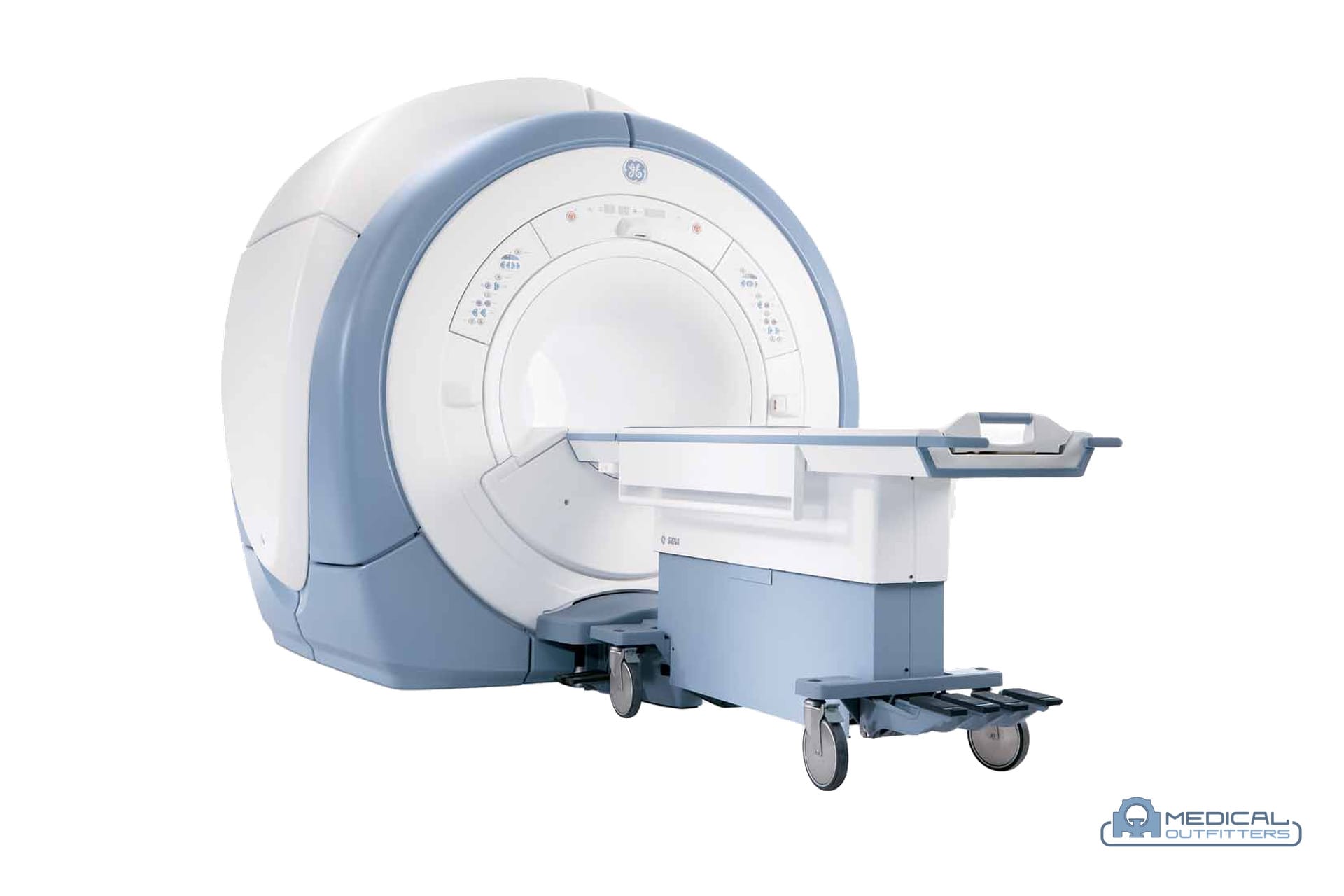
| GE Signa HDxt | 1.5T, 60 cm | $475,000 to $675,000 | 8 or 16 channels; 15.x, 16.x or 23.x software |
| Siemens MAGNETOM Espree | 1.5T, 70 cm | $475,000 to $700,000 | Tim configuration; B15, B17 or B19 software |
| GE Optima MR450w | 1.5T, 70 cm | $600,000 to $900,000 | GEM or standard coils; DV release |
| Siemens MAGNETOM Aera | 1.5T, 70 cm | $650,000 to $975,000 | XJ or XQ gradients; D13 to E11 software |
| Philips Ingenia 1.5T | 1.5T, 70 cm | $600,000 to $975,000 | Release and SmartPath Evolution status |
| Siemens MAGNETOM Skyra | 3T, 70 cm | $1,000,000 to $1,600,000 | 48, 64 or 128 channels; software |
| GE Discovery MR750w | 3T, 70 cm | $1,100,000 to $1,750,000 | GEM, DV release, advanced packages |
Source: the Medical Outfitters model price guides for each platform (2026). GE and Siemens systems are refurbished through MO Select; Philips and Hitachi systems are sourced refurbished on request and are not sold new by Medical Outfitters.
Pick the field strength from the referral mix before shortlisting any used MRI machine for sale. The cost guide describes 1.5T as the field strength for the majority of routine and advanced imaging, 3T for the finest detail in neuro and musculoskeletal work, and open and low-field systems for claustrophobic, pediatric and bariatric patients. Our 1.5T vs 3T MRI and wide-bore vs open vs closed MRI guides work through that choice, and the MRI manufacturers compared guide maps the platforms to the brands. The rest of this guide is about what separates two used MRI machines of the same field strength.
Magnet and Helium History on a Used MRI Machine
The magnet is the one part of a used MRI that almost never wears out, and its history is still the first thing to ask about. The Medical Outfitters guide to how long an MRI machine lasts puts a superconducting magnet’s life at 20 to 25 years or more, against 10 to 15 years for the system around it in its first installation, and says a 1.5T system eight to twelve years old with a new cold head, tested gradients, current software and a written warranty typically delivers another seven to twelve years. What a buyer needs to know is how that magnet has been treated.
Ask three questions in writing. Has the magnet ever quenched, and if so, when, why and who ramped it back up? Has it been ramped down for a move or a service event, and how many times? What is the helium level today, and what has it done over the last twelve months? The used MRI page on this site lists quench or ramp-down history, helium boil-off rate and cold head hours as the first group of checks, and the MRI quench guide explains why: a quench empties the vessel and the system is down until it is refilled, ramped and shimmed.
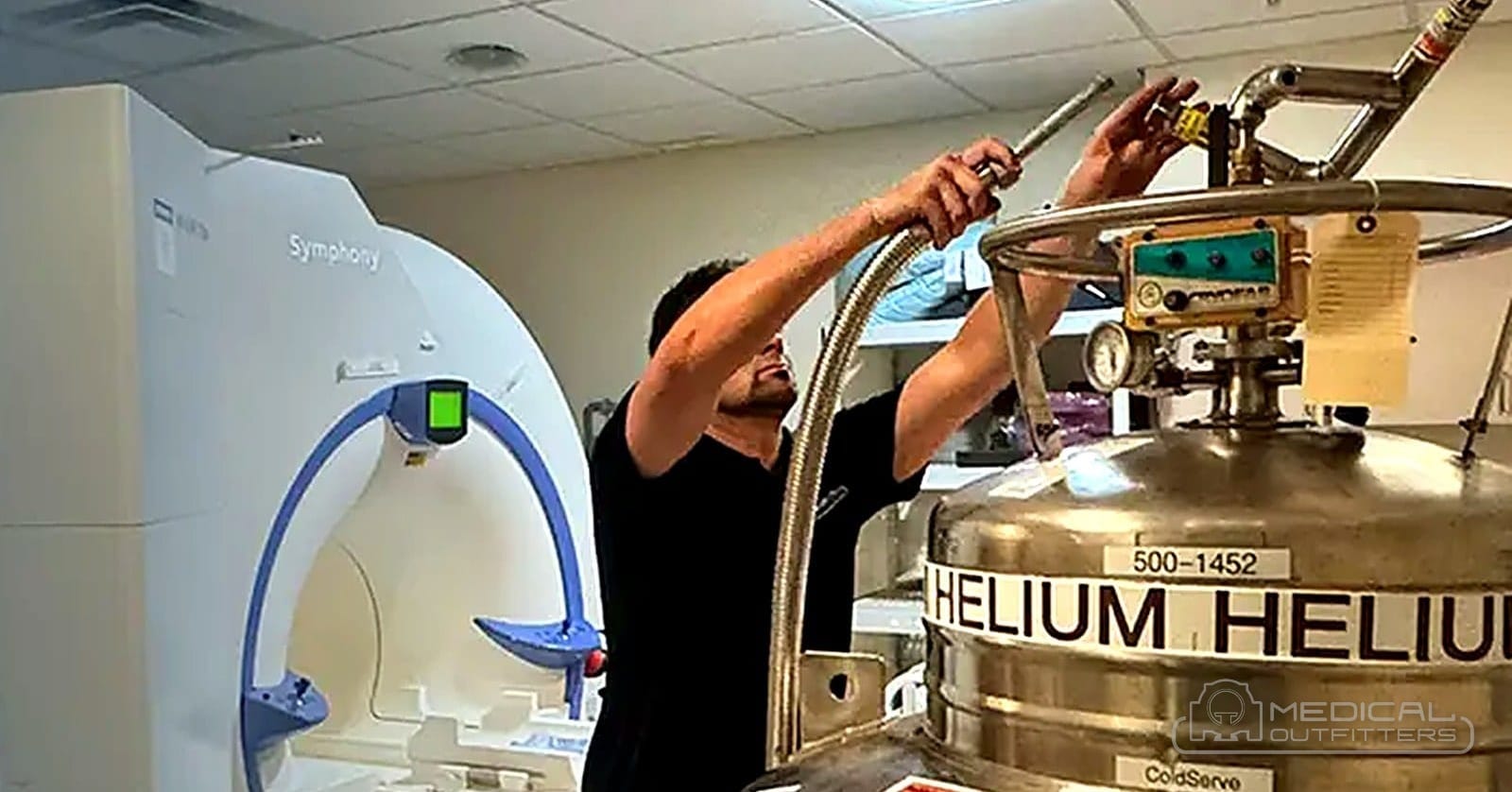
The size of that bill is set by the helium. The Medical Outfitters guide to what an MRI helium refill costs states that a conventional magnet holds 1,000 to 2,000 liters of liquid helium at about minus 269 degrees Celsius, that a routine top-off on an older magnet is 200 to 500 liters, typically every year, and that a full refill after a quench is a five-figure helium bill that commonly reaches six figures all-in with ramp-up, testing and downtime. The same guide notes that the March 2026 loss of Ras Laffan output in Qatar took roughly a third of world helium supply offline and pushed prices to record levels.
That makes the magnet design a price question. Older magnets boil off continuously and need scheduled refills. Zero boil-off designs recondense helium with a cryocooler, so the level holds as long as the cold head and compressor work; the Medical Outfitters model guides describe the Siemens Aera, Espree and Skyra and the Philips Ingenia’s HeliumSave magnet this way, and note that the GE Signa HDxt is not zero boil-off on every build. Sealed designs go further: Philips states its BlueSeal magnet holds seven liters of liquid helium sealed in at the factory, and Siemens Healthineers states its DryCool technology on the MAGNETOM Flow cuts the helium needed for cooling to 0.7 liters from as much as 1,500. Permanent-magnet open systems such as the Hitachi AIRIS use none.
On a zero boil-off magnet, a falling helium level is a symptom, not a habit: the Aera and Espree guides on this site both state that it points to a cold head or compressor problem. Ask for the helium log, not a single reading.
Cold Head, Compressor and Chiller: The Parts That Keep the Helium In
The cold head is the small cryocooler on top of the magnet that recondenses the helium, and it is the wear part that decides whether a used MRI keeps its charge. The Medical Outfitters helium guide lists cold head replacement every three to five years among its six habits for avoiding a helium bill, before the bearing noise and the ice announce the failure, and its lifespan guide calls the cold head and compressor service every three to five years non-negotiable. A cold head failure caught late, the helium guide adds, costs 300 to 600 liters of helium to restore the level, plus the new cold head, compressor service and an emergency call-out.
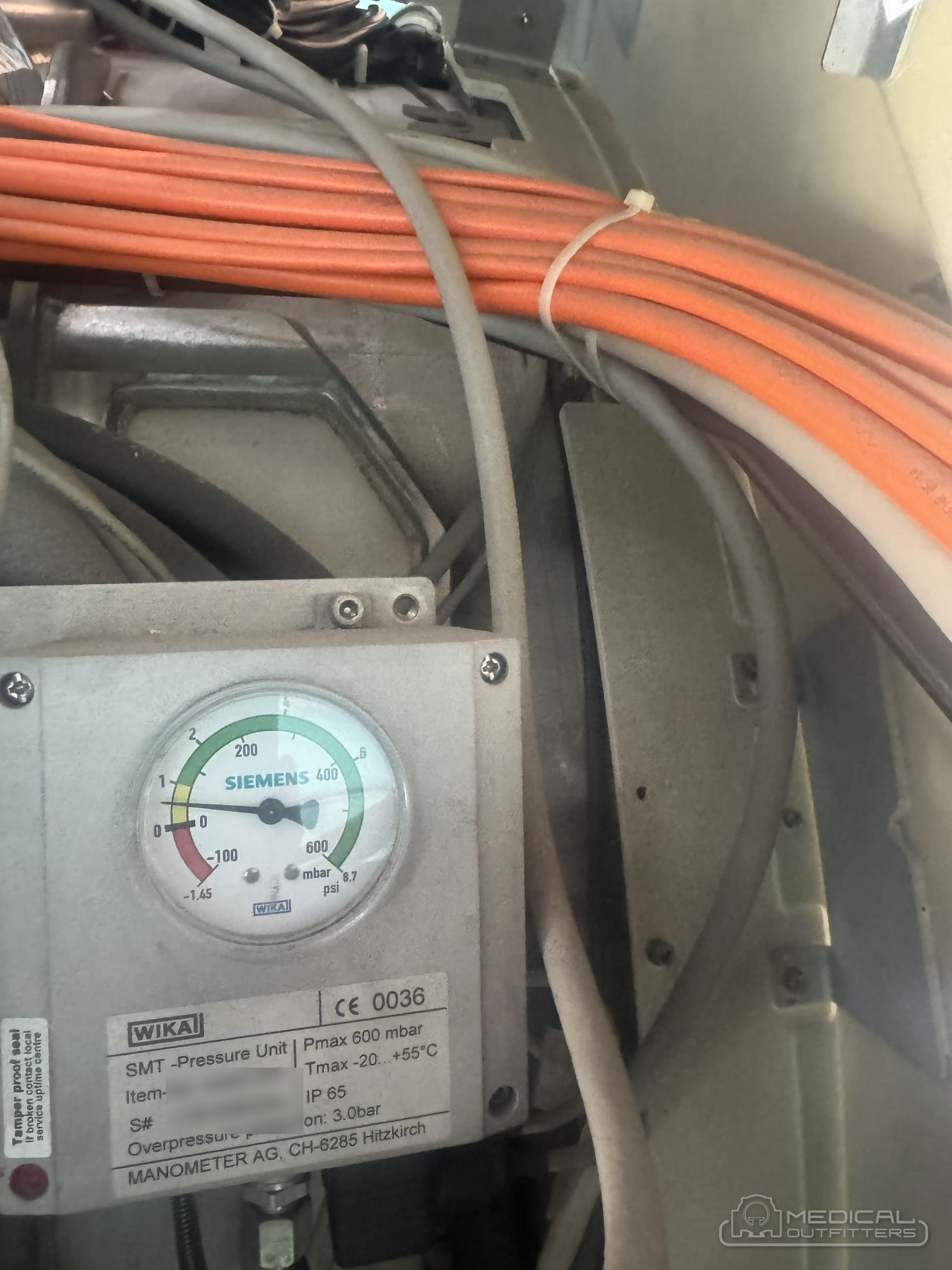
Ask the seller for the date of the last cold head replacement and its hours since, the compressor’s service record including the adsorber, and the chiller’s history. The chiller runs continuously, because the compressor that drives the cold head needs cooling water around the clock, and the helium guide states the chain plainly: water flow or temperature out of specification stops the compressor, and the helium follows. On site, listen to the cold head for its regular rhythmic chirp, look for ice on the sleeve, and read the compressor pressures and chiller flow from the panels. The MRI service page lists cold head hours, compressor pressures, chiller flow, temperatures and filters, and the water and glycol loop among what a maintenance visit checks, and lists magnet deicing among its cryogenic services.
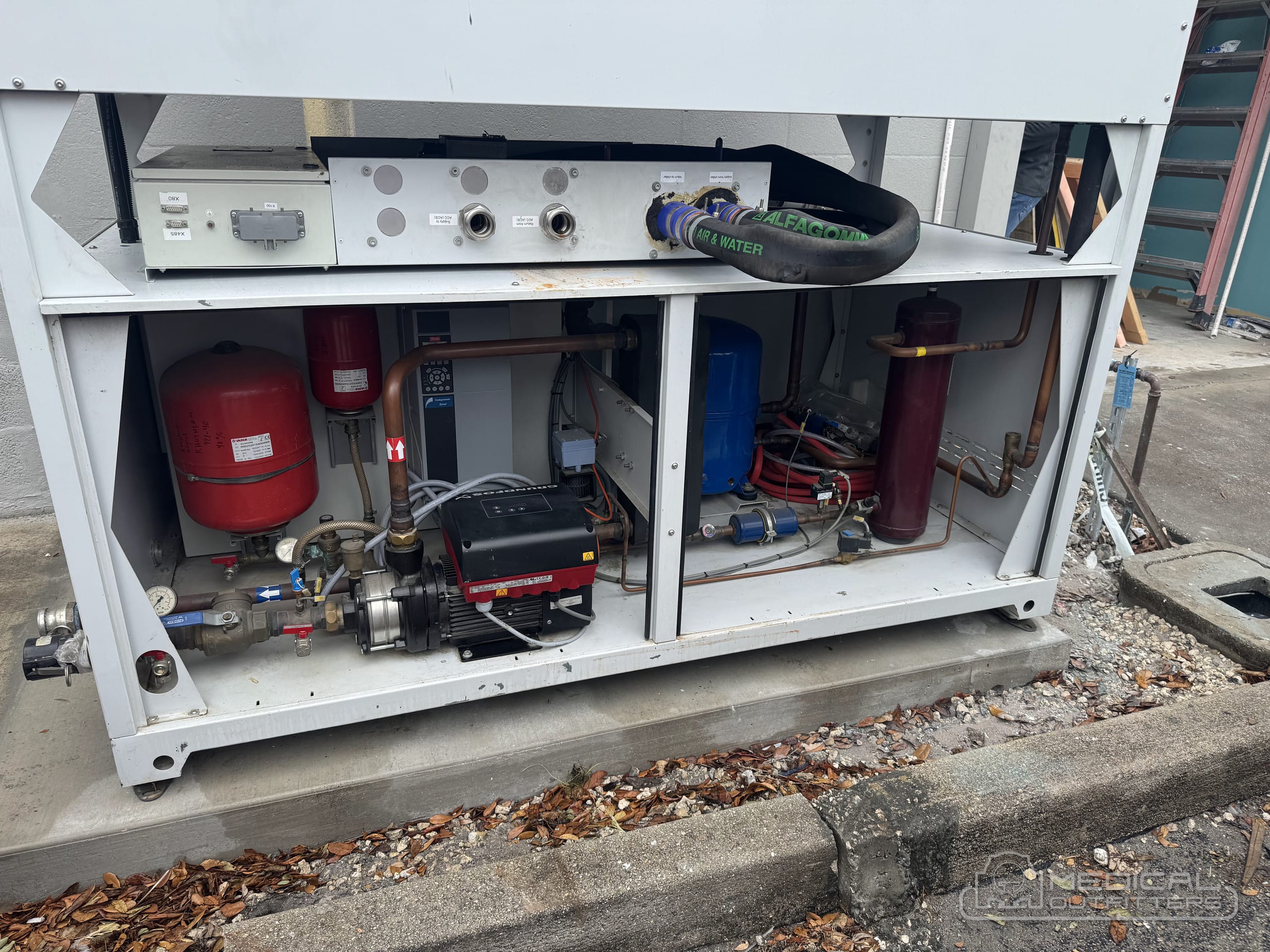
The chiller is also a siting item. A used MRI whose chiller stays behind at the seller’s site, or is too old to move, is a used MRI that needs a chiller, and the cost guide lists the chiller as “sometimes quoted separately, always required.” Confirm in writing whether the chiller, the compressor and the cold head travel with the system, and their condition.
Price the cold head into the offer. A documented recent replacement is worth paying for, which is how every MRI model guide on this site describes it, and a magnet with no cold head record should be priced as if the replacement is due. If the cold head will be replaced as part of the purchase, get the date and the part on the quote, and settle whether the warranty or the first service contract covers it. The cryogenic services page describes how Medical Outfitters handles helium fills and cold heads, including on systems bought elsewhere.
The Coil Set and Channel Count on a Refurbished MRI Machine
The MRI coil set is the part of a used MRI most often left out of a comparison, and the MRI cost guide puts the reason simply: the magnet creates the field and the coils receive the signal, so a system quoted with three coils and the same system quoted with eight are not the same purchase. Head, neck, spine, body, shoulder, knee, wrist, breast and cardiac coils are separate items, and the guide states that coils are specific to the platform and often to the software version, so a coil from a different generation may not work at all.
Ask for the coil list that ships with the unit, by name and part number, with each coil’s channel count, and test them, not the brochure list. The used MRI page on this site makes the same point: the exact coils that ship with the unit, tested. The channel count matters because more receive channels read more coil elements at once, which generally means better signal and faster imaging, and the cost guide adds that a high channel count is wasted if the coils to use it are not included. The model guides give the scale: a GE Signa HDxt was built with 8 or 16 receive channels, a GE Optima MR450w has 32, and a Siemens MAGNETOM Skyra was built with 48, 64 or 128, fixed at build.
Two platform details change the coil conversation. On the GE Optima MR450w and Discovery MR750w, the GEM configuration builds a posterior array into the table and pairs it with lightweight anterior arrays, so most exams run without repositioning coils, and GEM is decided at build. On the Siemens Aera and Skyra, Tim 4G coils and the licensed Dot engines go together, and the Aera guide states that software, coils and Dot licenses are confirmed per unit before quoting.
Coils are also the component most often damaged in service. The lifespan guide puts RF coil life at five to eight years, mostly by accident, and the cost guide notes that coils are handled every day and dropped occasionally. Look at every cable and connector, ask for the coil repair history, and ask what a replacement costs for the two coils you will use most. Coil repair is usually cheaper than replacement, and it is work Medical Outfitters does in-house as part of its service and repairs.
Software Level, Gradients, Licenses and Support Status
Software ends more MRI systems than magnets do. The cost guide’s section on end of life separates three dates: end of sale, which has no effect on an owner; end of support, when manufacturer software updates and service stop and third-party service usually continues; and end of parts, which it calls the real constraint. That is why it says platform support status matters more than year of manufacture, and that a newer system on a dead platform is a worse buy than an older one that everybody still stocks parts for. The lifespan guide puts OEM parts and software support at about 10 to 12 years after a platform launches, extended by five to ten years by third-party and dealer support on GE and Siemens platforms.
The release. Every platform circulates at several software levels, and the later ones carry more sequences and support more coils. The model guides list them: syngo MR B15, B17 and B19 on the Espree, with B19 the level most buyers want; D13 through E11 and later on the Aera and Skyra; 15.x, 16.x and 23.x on the Signa HDxt, with 23.x carrying the widest sequence library; DV releases on the Optima MR450w and Discovery MR750w; and R5 releases on the Philips Ingenia, where the SmartPath Evolution upgrade matters too. Ask for the release in writing and check it on the console.
The licenses. Cardiac, neuro, spectroscopy and advanced vascular packages are licensed, priced separately and, as the cost guide states, do not always transfer with a used system. Print the license list from the console, get written confirmation from the dealer or manufacturer that each one transfers to the new owner, and ask for the service keys a field engineer will need.
The gradients. Gradient strength and slew rate are fixed at build and set what sequences the system can run at speed. The Aera guide gives the example: XJ gradients at 33 mT/m and 125 T/m/s or XQ at 45 mT/m and 200 T/m/s, fixed for the life of the system, which makes it the first question to ask about an Aera. The lifespan guide puts gradient amplifier life at 8 to 12 years and lists eddy-current artifacts and sequences running below rated speed as the signs of trouble.
The operating system. The console runs a version of Windows, and Microsoft’s lifecycle page states that Windows 10 Home and Pro reached end of support on October 14, 2025. An older console will still scan patients and connect to a PACS, but it may fail a hospital network security review, and the fix is a console or software upgrade if the manufacturer offers one for the platform. The lifespan guide puts console, computer and software life at five to seven years. For an open system, the AIRIS guide adds a practical check: confirm the release, the DICOM connectivity and whether spares exist for the console hardware.
Inspection Day: Phantom Images, the Service File and the Paperwork
Watch the system scan. The American College of Radiology’s MRI accreditation program, which most outpatient buyers will need, builds its image-quality test around a phantom: the ACR’s large phantom testing instructions, revised February 6, 2026, require the phantom images to be acquired with a head coil routinely used for clinical brain imaging on that scanner, and the large phantom carries resolution patterns of 1.1, 1.0 and 0.9 millimeters. Ask the seller to run the ACR protocol and a routine clinical head protocol on the head coil you will use while you watch, with a medical physicist or a field engineer reading the images; the ACR’s accreditation testing overview, revised April 17, 2026, accepts phantom exams performed within 14 months, so a recent physicist survey is the paperwork to ask for alongside. Then export a study and read the DICOM header for the station name, software version and coil names, and compare them with what the seller has told you.
Look for what the images say about the parts. Artifacts or missing elements on one coil point at the coil, ghosting and distortion that persist across coils point at the gradients or the shim, and noise across every image can be RF interference from a damaged room. Our used imaging equipment inspection checklist covers the same tests for every modality.
Then read the service file. Every preventive-maintenance report, repair invoice, cold head and helium record and error log the seller has, from a single provider with no gaps, is the best evidence of a well-kept magnet there is; a missing file is a risk you are pricing. Confirm the seller owns the system outright, since leased or financed systems cannot be sold clean, and that the serial number matches the title and the file. Finally, remember that accreditation does not travel with the machine. The CMS advanced diagnostic imaging rule requires a supplier billing Medicare for the technical component of MRI to be accredited by one of four approved organizations, the American College of Radiology, the Intersocietal Accreditation Commission, The Joint Commission or RadSite; the CMS page states the requirement does not apply to hospitals or critical access hospitals, and CMS’s own guidance describes the accreditation as given to the facility for each modality, not attached to the machine.
Siting, Rigging and Moving a Used MRI Machine
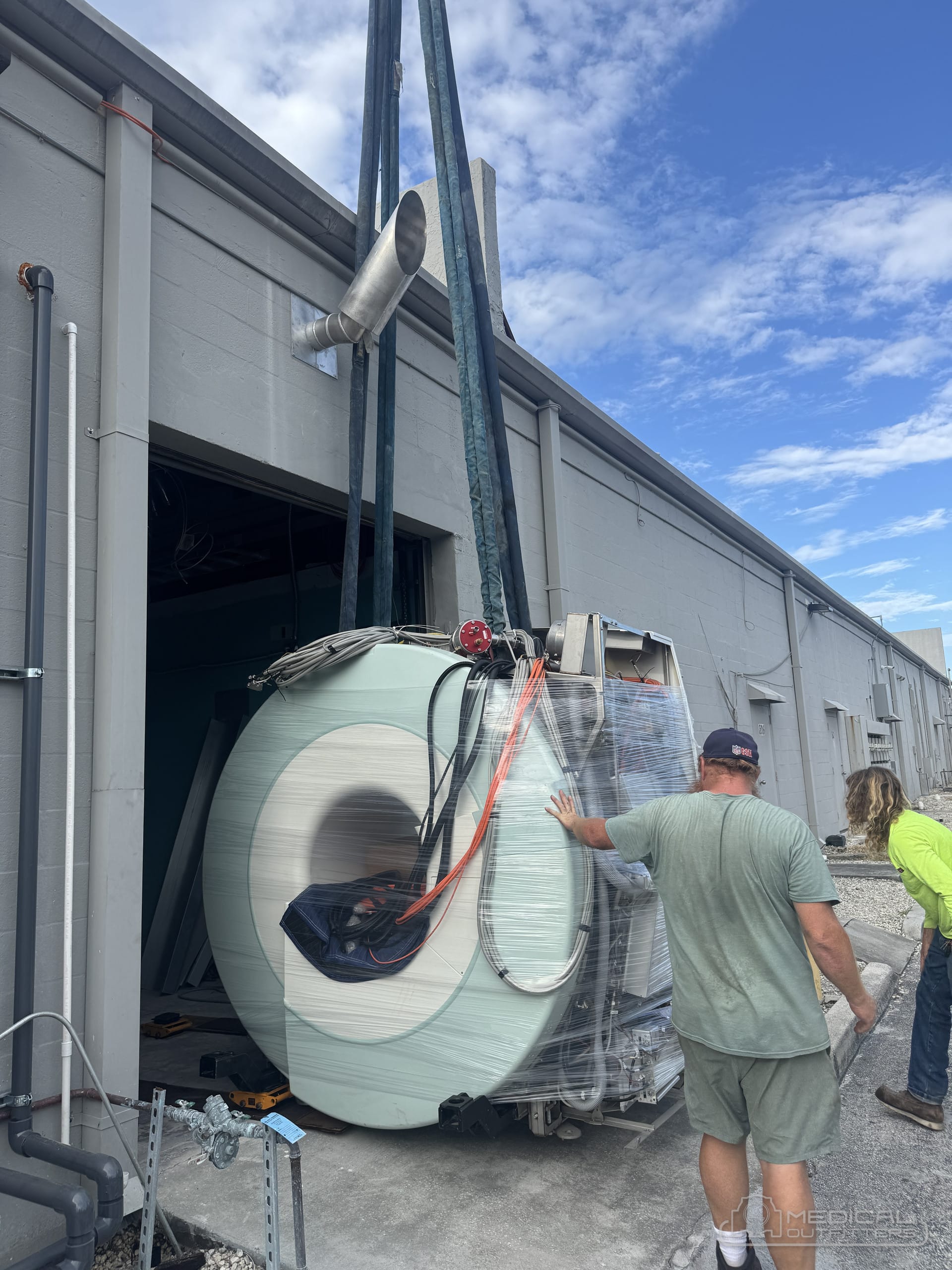
The used MRI page on this site puts it in one line: a used MRI is bought twice, once as a machine and once as a project. The Medical Outfitters guide to how to move an MRI or CT scanner lays out the sequence: a site survey and route at both ends, magnet ramp-down and a helium plan, de-installation of coils, table, cables and covers, rigging the magnet out, transport on an air-ride, climate-controlled trailer with the cryogen level watched, rigging in and placement on isolation pads, ramp-up and shimming, then coil tuning, gradient calibration, ACR phantom tests and physicist sign-off. The same guide puts the magnet at roughly 3 to 5 metric tons at 1.5T and 6 to 8 at 3T, and the move at four to eight weeks door to door before any construction at the new site.
The new room has to be ready for that magnet. The cost guide lists what MRI siting involves: an RF-shielded enclosure, a magnetic fringe field whose five-gauss line falls inside space you control, floor loading taken from that model’s site planning drawing, a quench vent routed to outside air, chiller and mechanical plant, and a route in through doors, corridors or a wall opening or crane. Our guide to MRI room shielding requirements covers the room, and the cost guide states that siting, RF shielding, cryogens and structural work are quoted per project, because they depend on the building rather than the machine.
Budget the move with the machine. The relocation guide puts de-installation, rigging and transport of a 1.5T MRI in the tens of thousands of dollars and a full relocation with a new RF room, helium, ramp-up and calibration in the low six figures, driven by distance, crane access, helium volume and whether the shield room already exists. For island sites, freight, import handling and engineer travel are added, as our notes on MRI installation in Puerto Rico and the Caribbean explain. Medical Outfitters does this work through its own installation, rigging and de-installation team.
Used vs Refurbished MRI Machines: What MO Select and the Warranty Include
The difference between a used MRI machine and a refurbished MRI machine is who has done the checks above and who carries the risk afterwards. The MRI cost guide describes three conditions. As-is used: the magnet is tested as it stands, the cold head, helium level and coil set are sold in their current condition and the buyer arranges service and cryogens, which suits a site with an engineer on contract and a cryogen budget and is, in the guide’s words, the wrong first magnet for a new imaging center. Cosmetic refurbishment: repainted covers and a new table pad; price it as used. Certified refurbished, the MO Select standard: inspected, cryo-tested, image quality verified against specification, cold head, coils and worn parts addressed, ramped up, calibrated and installed by Medical Outfitters crews, and covered by a written parts and labor warranty.
The used and refurbished MRI machines for sale page lists the current MO Select units, among them the Siemens MAGNETOM Aera, the GE Optima MR450w, the Siemens Espree and Skyra and the GE Signa HDxt and Discovery MR750w, and states that each one is tested against the manufacturer specification in the Miami facility, warrantied in writing before the order is signed, installed by the company’s own crews and backed by more than 20,000 parts in stock in Miami. The refurbished medical imaging equipment page sets out the program, and the guide to refurbished vs OEM certified imaging equipment explains what each term obliges a seller to do.
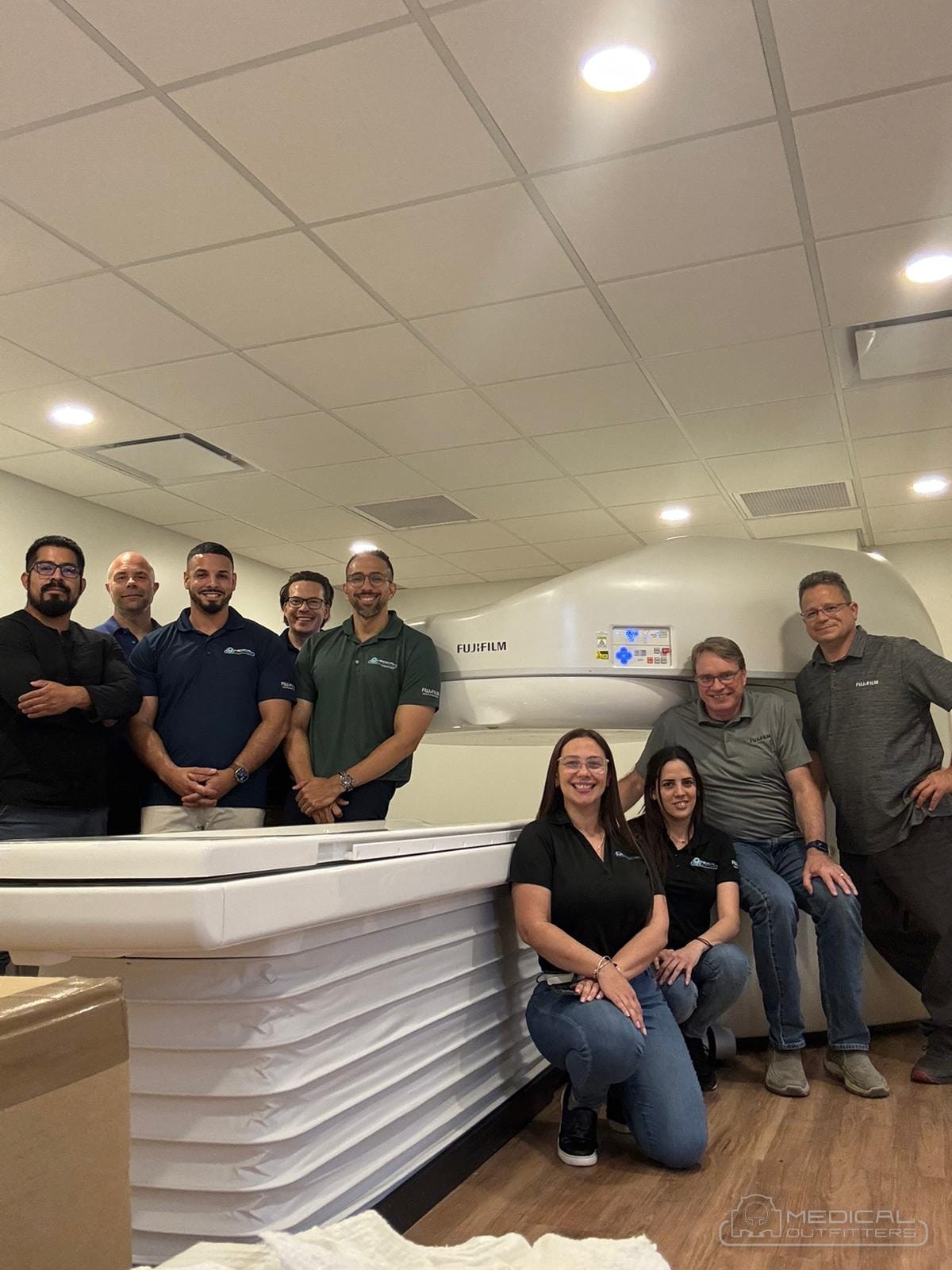
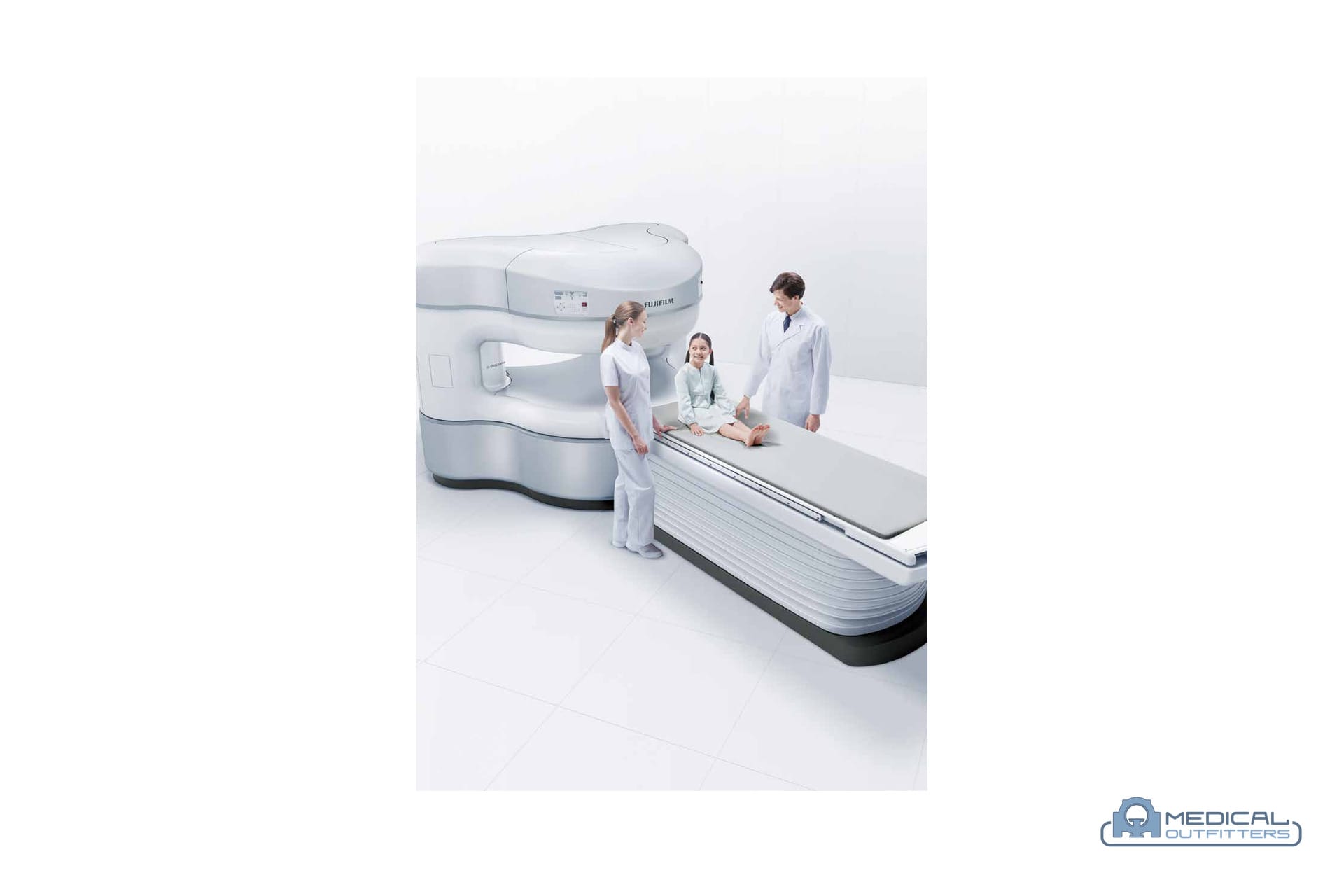
Compare the refurbished quote with a new one before signing. The cost guide’s new 1.5T band, $1,200,000 to $2,000,000, buys a current magnet, the latest coils and software and a full manufacturer warranty; Medical Outfitters sells the Fujifilm ECHELON Smart 1.5T family, including a ZeroHelium configuration, new as an authorized dealer, and the Fujifilm Oasis Velocity 1.2T open system in a certified pre-owned form. For capacity with an end date, the mobile MRI buy or rent guide prices the third route.
Whatever the route, write the comparison line by line, the way the model guides on this site do: field strength and bore, magnet design and helium history, cold head date and hours, chiller, every coil by name with channel counts, software release and licenses, gradient type, support status, service history, what the price includes from freight to training, and the warranty’s term and whether it covers coils and the cold head. A used MRI machine that scores well on every line at a lower price is a good purchase. One that scores well on the price alone is a cold head, a helium fill and a coil set waiting to be discovered.
Buying a Used or Refurbished MRI Machine With Medical Outfitters
Medical Outfitters sells refurbished GE and Siemens MRI systems through MO Select and new Fujifilm and Esaote systems as an authorized dealer, and delivers, installs and services every one across the United States, Puerto Rico and the Caribbean. The MRI machine cost guide gives the bands by field strength, the used MRI machines for sale page lists the current MO Select units, the MRI machines category covers new systems, and the MRI service page covers contracts with cold head, coil and cryogen coverage. The Siemens Aera, GE Optima MR450w and GE Signa HDxt price guides go model by model. Send us the model, serial number, software release, coil list and helium and cold head history of any used MRI you are considering, or the field strength and site you need, and we will quote a refurbished system delivered, installed and warrantied beside it: contact Medical Outfitters.
- Medical Outfitters, MRI Machine Cost and Price Guide (2026) and Used and Refurbished MRI Machines for Sale: refurbished and new bands, the 40 to 60 percent saving, price drivers, coils, end of life, siting, the three conditions and the MO Select terms. medicaloutfitters.com
- Medical Outfitters model price guides: Siemens MAGNETOM Aera, Espree and Skyra; GE Signa HDxt, Optima MR450w and Discovery MR750w; Philips Ingenia; Hitachi AIRIS: model ranges, software levels, channel counts, gradients and magnet designs. medicaloutfitters.com
- Medical Outfitters, What an MRI Helium Refill Costs, How Long Does an MRI Machine Last and How to Move an MRI or CT Scanner: helium volumes and refill events, cold head interval, component lifespans, support horizons, magnet weights, relocation steps, timelines and costs. medicaloutfitters.com
- Philips, BlueSeal magnet technology (November 29, 2022): seven liters of liquid helium sealed in at manufacture. philips.com
- Siemens Healthineers, MAGNETOM Flow press feature: DryCool technology, 0.7 liters of liquid helium against as much as 1,500. siemens-healthineers.com
- American College of Radiology, MRI Large Phantom Testing Instructions (revised February 6, 2026) and MRI Accreditation Testing Overview (revised April 17, 2026): clinical head coil requirement, resolution patterns, 14-month phantom window. accreditationsupport.acr.org
- CMS, Accreditation of Advanced Diagnostic Imaging Suppliers: the four approved organizations, MRI in scope, the hospital exemption; accreditation by facility and modality. cms.gov
- Microsoft, Windows 10 Home and Pro lifecycle: end of support October 14, 2025. learn.microsoft.com
- MRI machine cost and price guide (2026)
- Used and refurbished MRI machines for sale
- MRI machines for sale: new Fujifilm and Esaote, MO Select GE and Siemens
- Refurbished medical imaging equipment: the MO Select standard
- MRI service, repair and maintenance
- What an MRI helium refill costs
- What is an MRI quench
- How long does an MRI machine last
- How to move an MRI or CT scanner
- Used imaging equipment inspection checklist
- Siemens MAGNETOM Aera price guide
- GE Optima MR450w price guide
- GE Signa HDxt price guide
- Price a refurbished MRI machine
Used MRI Machines: Common Questions
How much does a used MRI machine cost?
About $300,000 to $525,000 for a refurbished open or low-field system, $475,000 to $975,000 for a refurbished 1.5T and $1,000,000 to $1,900,000 for a refurbished 3T in 2026, delivered, installed and warrantied, per the Medical Outfitters MRI cost guide. Inside each band the coil set, software release and licenses, gradient type, magnet and helium history and the platform's support status move the price. Equipment-only listings read lower because they leave out delivery, rigging and installation.
What should I check before buying a used MRI machine?
Start with the magnet: any quench or ramp-down, the helium level and its log, and the cold head's date and hours with the compressor and chiller records. Then the coils that actually ship, tested, with channel counts; the software release and which licenses transfer; the gradient type and the manufacturer's support status; phantom images on the clinical head coil; the full service file; and the room. Get the warranty terms, including coils and the cold head, in writing.
How do I check the helium on a used MRI?
Ask for the current helium level and the log for the last twelve months, not a single reading, plus the magnet's quench and ramp-down history. A conventional magnet boils off and is topped up, 200 to 500 liters a year on an older magnet per the Medical Outfitters helium guide. On a zero boil-off magnet such as a Siemens Aera or Espree, a falling level points to a cold head or compressor problem and should be priced in.
How often does an MRI cold head need replacing?
Every three to five years, according to the Medical Outfitters helium and lifespan guides, which call it the single scheduled item that decides whether the magnet keeps its helium. On a used MRI, ask for the date of the last replacement, its hours since, and the compressor and chiller service records. A cold head failure caught late costs 300 to 600 liters of helium to restore the level, plus the part and an emergency call-out.
Do software licenses and coils transfer with a used MRI?
Not automatically. Cardiac, neuro, spectroscopy and advanced vascular packages are licensed and do not always transfer, per the Medical Outfitters MRI cost guide, and coils are specific to the platform and often to the software version. Print the license list from the console, get written confirmation that each one transfers, and get the coil list by name and channel count, tested, rather than the brochure list.
How long will a used MRI machine last?
The Medical Outfitters lifespan guide puts a superconducting magnet at 20 to 25 years or more and says a 1.5T system eight to twelve years old, with a new cold head, tested gradients, current software and a written warranty, typically delivers another seven to twelve years. What usually ends a system is parts and software support, not the magnet, which is why support status matters more than the year of manufacture.
What does it cost to move and install a used MRI?
The Medical Outfitters relocation guide puts de-installation, rigging and transport of a 1.5T MRI in the tens of thousands of dollars and a full relocation with a new RF room, helium, ramp-up and calibration in the low six figures, over four to eight weeks door to door. The magnet weighs roughly 3 to 5 metric tons at 1.5T and 6 to 8 at 3T, and the room needs RF shielding, a quench vent and a planned route in.
What is the difference between a used and a refurbished MRI machine?
Who has done the checks and who carries the risk. An as-is used MRI is sold with its cold head, helium and coils in their current condition and the buyer arranges service and cryogens. A certified refurbished MRI under Medical Outfitters' MO Select standard is inspected, cryo-tested, verified against the manufacturer specification, has its cold head, coils and worn parts addressed, and is installed by the company's own crews with a written parts and labor warranty.
Related Articles