Used imaging equipment is inspected in six groups: the paperwork that proves what it is and where it has been, the physical condition of everything you can touch, performance tests against phantoms, the software version and the licences that must transfer with it, the cryogen history on an MRI, and the logistics and warranty that get it from the seller’s floor to yours. Twenty-four checks cover the six groups. Most take minutes, all of them can be done in a day, and together they separate a bargain from a liability.
The used medical imaging equipment market is where the value is. A refurbished or used MRI machine, CT scanner, ultrasound machine or X-ray system costs a fraction of a new one, and on the platforms that were built in large numbers it has a decade of supported life ahead of it. The same market is where the problems are: unsupported software, tubes at the end of their life, coils that were dropped, licences that do not transfer, and magnets with a quench nobody mentioned. None of that shows in a listing photograph. All of it shows in an inspection.
This used imaging equipment inspection checklist covers what Medical Outfitters checks before a system enters the MO Select refurbished program, written out so that a buyer can run it too, whether the system comes from us, from another dealer, or from a hospital across town. The first part covers the checks that apply to every modality; the second part covers the one consumable and one test that decide most of the remaining value in a used MRI, a used CT scanner, a used ultrasound machine and a used X-ray or C-arm.
- Paperwork first. Serial number, title, service history and the tube or magnet log. A seller who cannot produce them is telling you something.
- Test everything that is included. Every coil, every probe, every detector, on a phantom, before the price is agreed.
- Software and licences retire more systems than hardware. Confirm the version is supported and the options transfer.
- Get the logistics and warranty in writing. De-installation, transport, installation, calibration and response times.
Medical Outfitters sells inspected, refurbished GE and Siemens systems through MO Select and Fujifilm Certified Pre-Owned systems, buys systems coming out of service, and installs and services across the United States, Puerto Rico and the Caribbean. The refurbished medical imaging equipment page explains what the program includes; this article explains what the inspection behind it looks for.
The Full Used Imaging Equipment Inspection Checklist
Print it, take it to the site, and do not skip a group because the system looks clean. The systems that look best in the photographs are often the ones that hide the most.
Paperwork
Serial number. Read it off the system, not the listing, and confirm it against the title, the service reports and, where you can obtain it, the manufacturer’s installed-base record. A mismatch is the end of the conversation.
Service history. Ask for every preventive-maintenance report, repair invoice and error log the seller has. A complete file from one service provider is the best evidence of a well-kept system there is. Gaps are questions; a missing file is a risk you are pricing.
The consumable’s log. On a CT or X-ray system, the tube’s installation date and its scan seconds, mAs or exposure count. On an MRI, the helium level history, the cold head’s hours and last replacement, and any quench. On an ultrasound, the age of each transducer. This one number, per modality, decides most of the remaining value, and the second half of this guide covers it.
Title. Confirm the seller owns the system outright. Leased equipment, systems with a lender’s lien and systems still under an OEM financing agreement cannot be sold clean, and the buyer discovers it at de-installation.
Physical Inspection
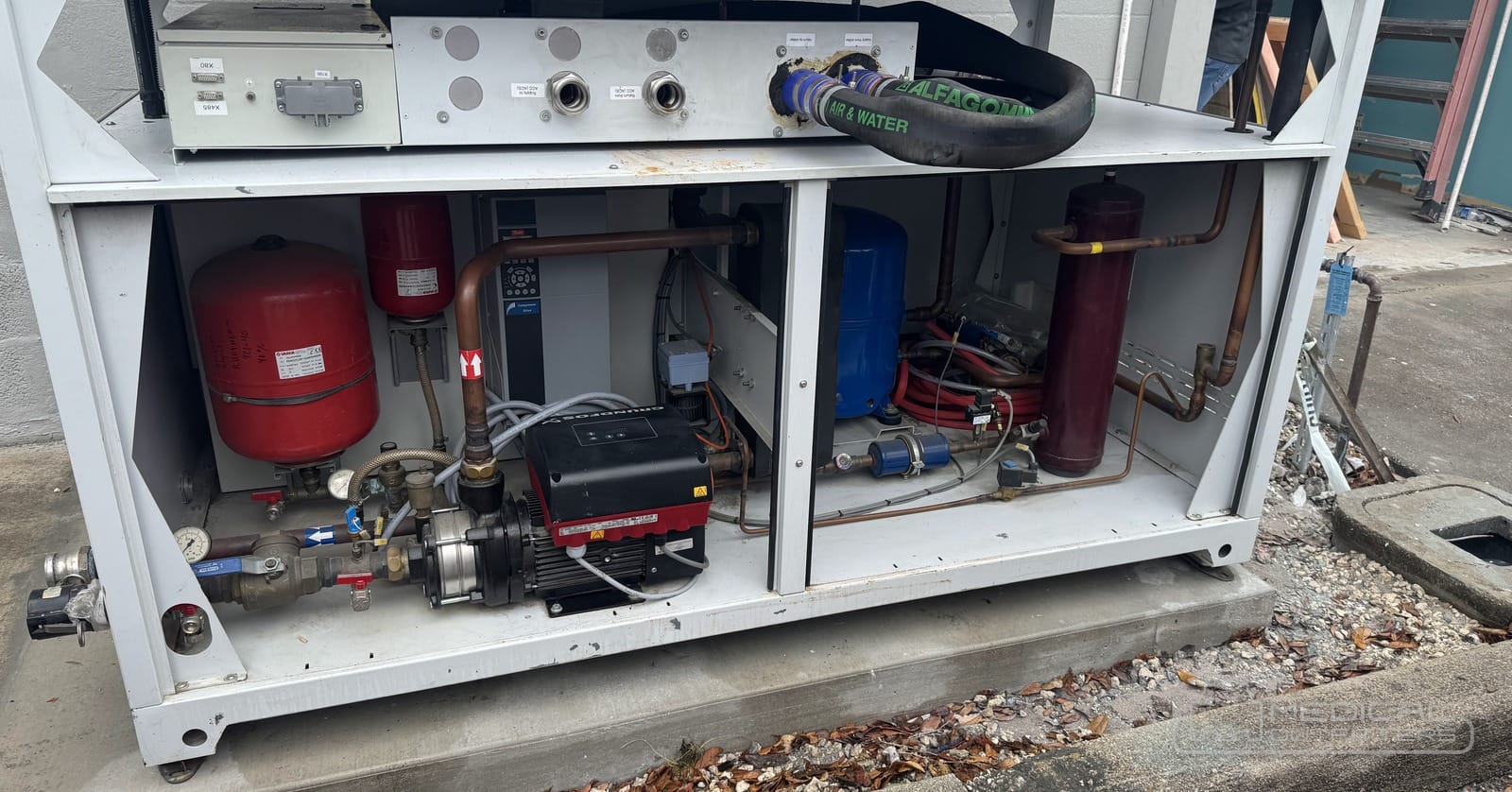
Walk the system with the covers open where the seller allows it. Gantry, magnet covers, table, cable trays, connectors and control panels: look for cracks, corrosion, water staining, evidence of a flood or a roof leak, rodent damage, and repairs that were improvised. Run the table through its full travel and listen. Check every cooling connection, hose and chiller line for leaks and for the crust that old leaks leave behind.
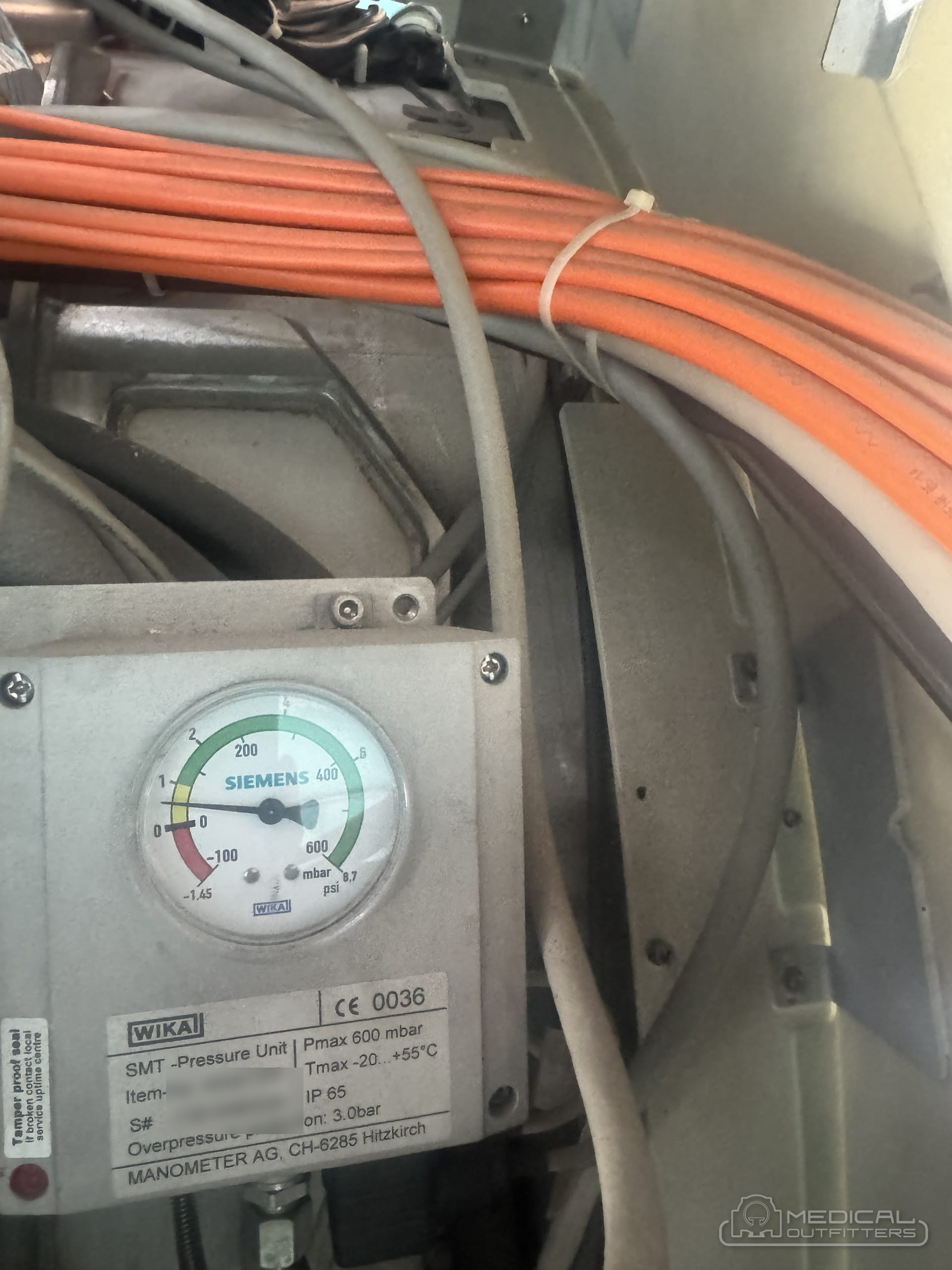
Then the parts that are sold with the system. Every RF coil, every transducer, every detector plate and every flat panel is inspected physically and then tested in Group 3. A coil with a crushed cable or a probe with a cracked lens is a part you are not buying, and the price should reflect it.
Performance Tests
Every modality has a phantom and an acceptance protocol, and the protocol exists so that a buyer does not have to rely on the seller’s word. Ask the seller to run the tests while you watch, or bring a physicist or a field engineer to run them.
- Used MRI. The ACR phantom series with the head coil, then an image with every coil included in the sale, looking for artifacts, signal dropout and noise. Confirm the field homogeneity and the gradient calibration from the service records.
- Used CT scanner. A water phantom for Hounsfield accuracy, noise and uniformity; a resolution phantom; a tube warm-up watched for arcing; and a look at the tube’s heat-unit behaviour under a long series.
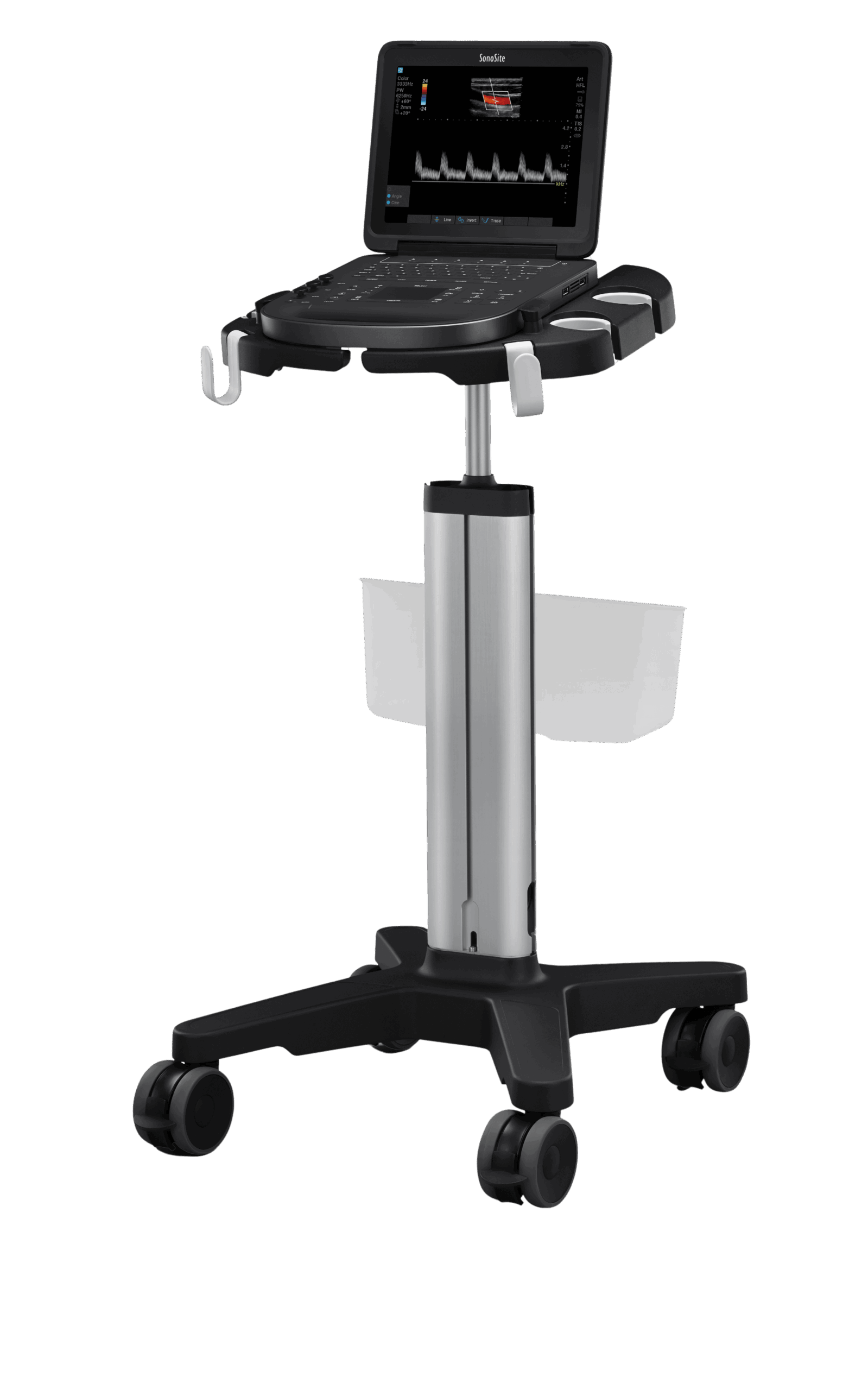
- Used ultrasound machine. A tissue-mimicking phantom with every transducer, looking for dropped elements, banding and shadowing, then each imaging mode: Doppler, harmonic, elastography if licensed.
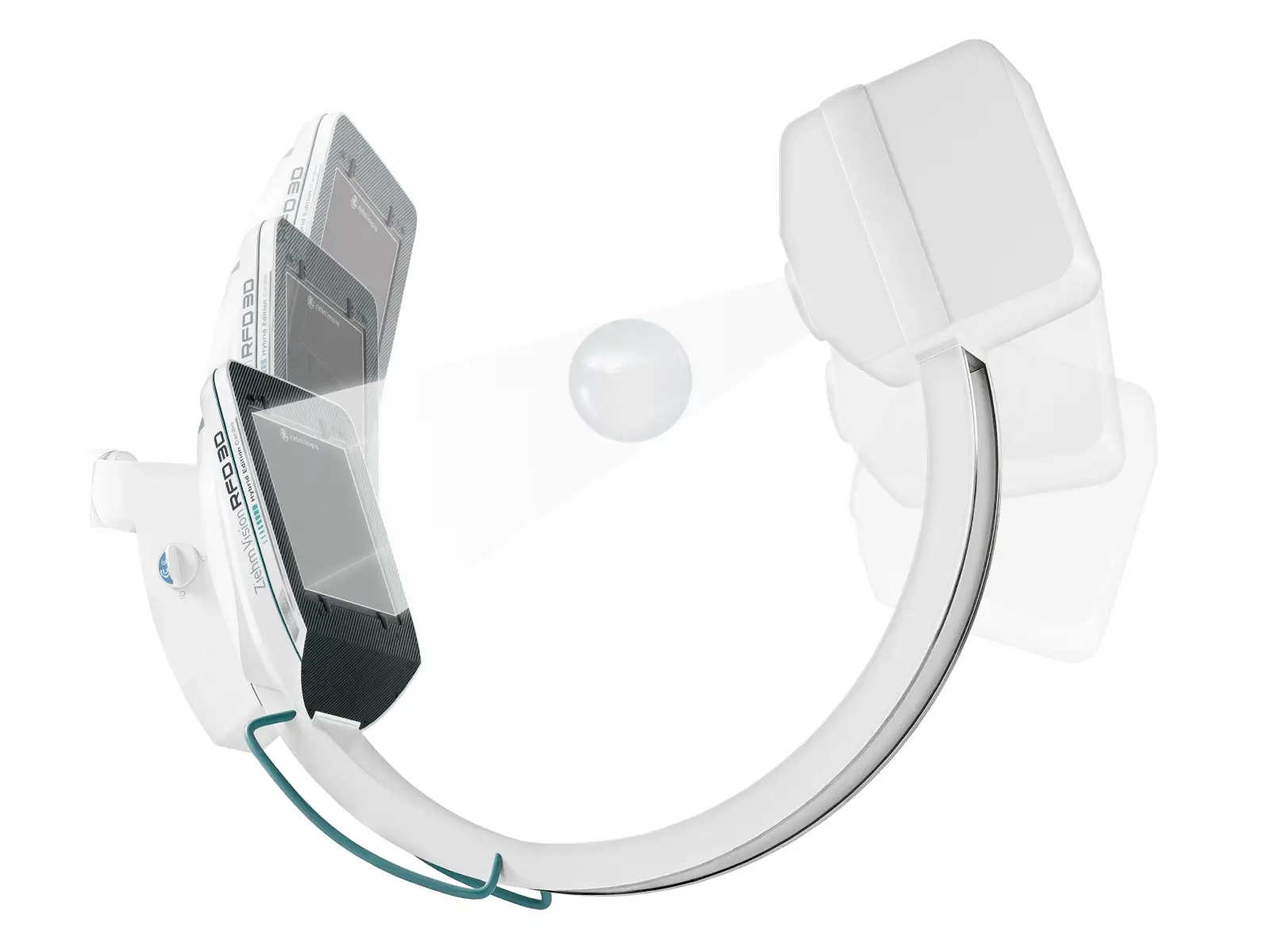
- Used X-ray, fluoroscopy and C-arm. An exposure and collimation test, an image-quality phantom on the detector or image intensifier, and a check that the dose reporting works.
- All modalities. Export an image to a PACS or a laptop DICOM viewer and read the header. Wrong station names, dates and calibration tags are a sign of a system that was moved or reset.
Our guides to the used C-arm buying guide and to where to buy refurbished ultrasound machines go deeper on those two modalities, and the ultrasound probe types and repair guide covers the transducer tests.
Software and Licences
Hardware rarely retires an imaging system. Software does. The console runs an operating system that the manufacturer supported for a time and the hospital’s IT department will tolerate for a shorter one; the application software has a version that the manufacturer still patches or does not; and the options, cardiac packages, iterative reconstruction, advanced sequences, elastography, 3D, are software licences tied to the serial number, and not every software licence transfers with a sale.
Confirm four things: the software version and whether it is supported; the operating system and whether it is supported; the list of licensed options, in writing, with confirmation from the manufacturer or the dealer that they transfer; and the presence of the service keys or passwords that a field engineer needs to maintain the system. A system missing any of them is a system with a bill attached, and the bill can approach the price of the system. Our guide to refurbished versus OEM certified equipment explains how the software question differs between a dealer refurbishment and a manufacturer one.
Cryogens: The Used MRI Group
A superconducting magnet adds four checks that no other modality has. The helium level and its trend over the last year, from the magnet’s own log or the service reports. The cold head’s hours and the date it was last replaced; three to five years is the interval, and a cold head past it is a fill waiting to happen. The quench history, explained: a magnet that has quenched can be a perfectly good magnet, but the buyer should know why it quenched and what was done afterwards. And the ramp-down and transport plan, in writing, from whoever will move it, because a magnet moved badly is a magnet that may never shim to specification again.
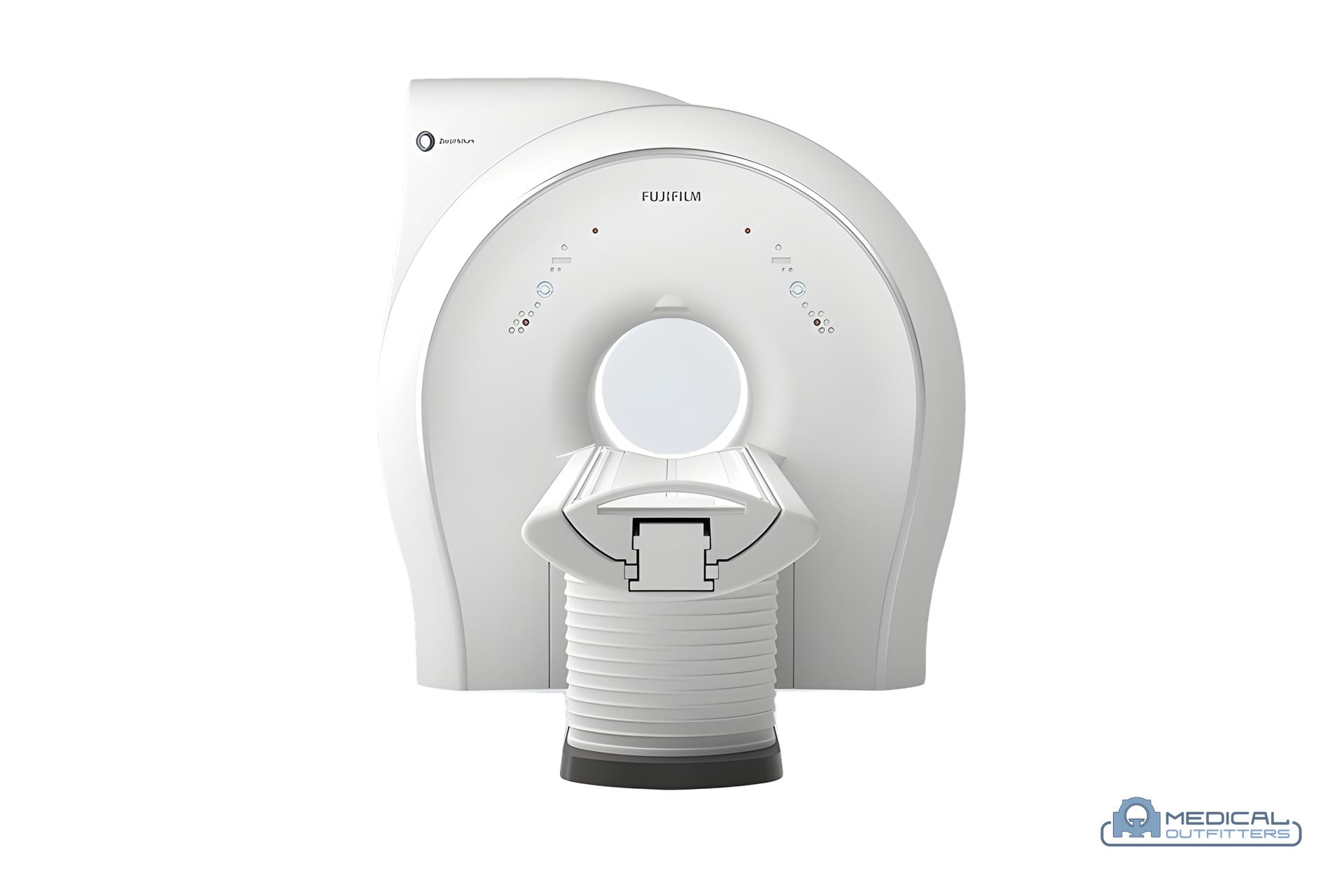
Our guides to what an MRI quench is, what an MRI helium refill costs and how long an MRI machine lasts cover the three questions in depth. The one used MRI that trims this group is one with a sealed or zero-helium magnet. The newest Fujifilm systems, such as the Echelon Smart ZeroHelium, will reach the used market in years to come with no fill history to check, though the cold head and compressor still need their hours and service record.
Logistics and Warranty
The price of a used system is the price of the system plus the price of getting it working in your room. Get five things in writing before agreeing the first number: who de-installs it and what that costs; who rigs and transports it and to what insured value; who installs, calibrates and trains; what the warranty covers, for how long, with what response time; and who answers the phone when it fails in month seven. Our guides to how to move an MRI or CT scanner and to installation, rigging and de-installation cover the first three.
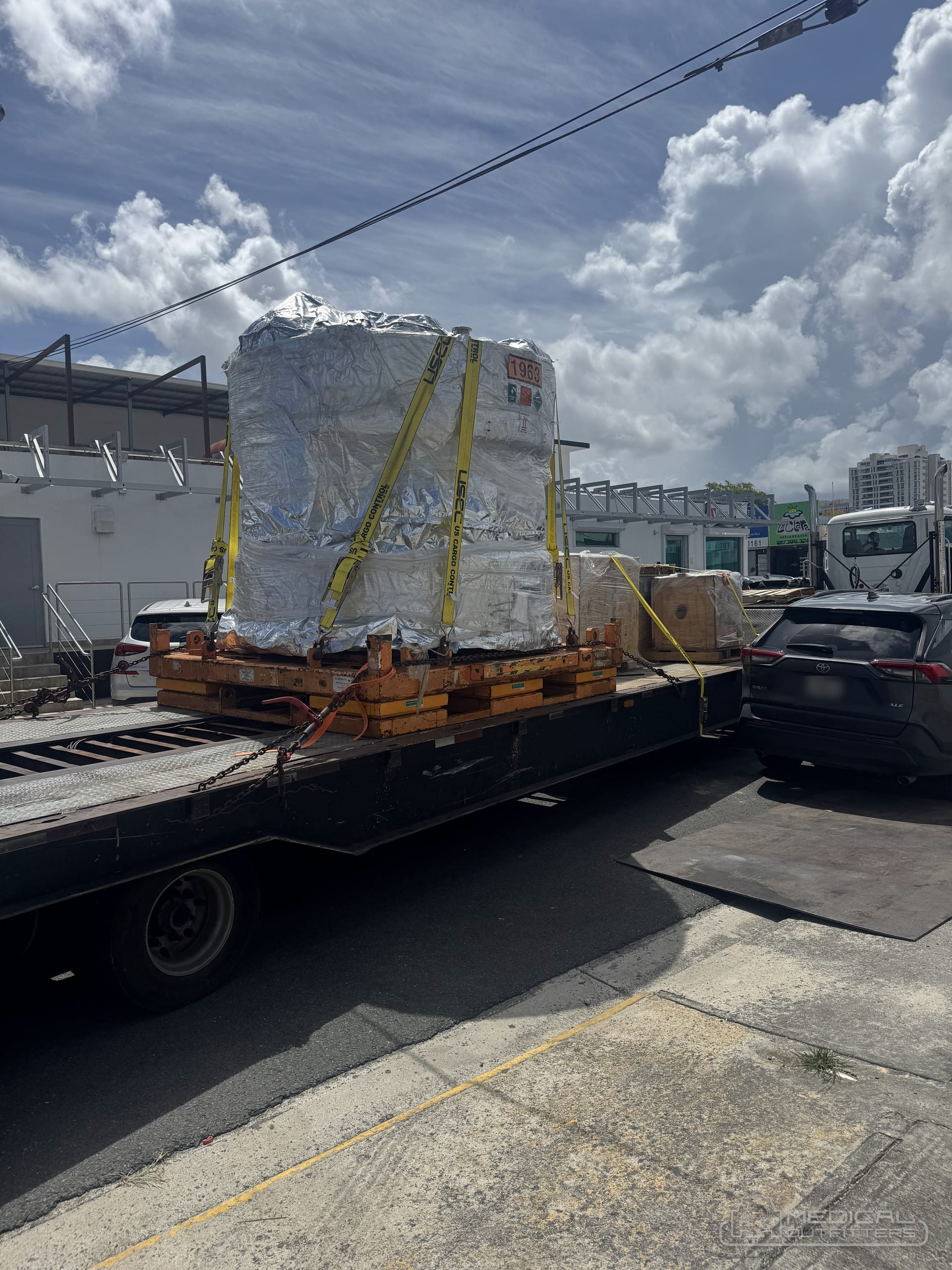
Dealer or private? A private or auction purchase is cheaper on the invoice and puts every item in this checklist on the buyer. A dealer that refurbishes, installs and warranties the system has already run the checklist and carries the risk. The difference in price between the two is usually smaller than the cost of one thing the checklist would have found.
Used MRI, CT, Ultrasound and X-Ray: The One Consumable and One Test That Matter Most
Used MRI machine: the cold head and the helium. Ask for the helium log and the cold head date before the visit. Run the ACR phantom with every coil. Walk away from an unexplained quench or a falling level the seller cannot account for. The refurbished Siemens MAGNETOM Aera and GE Signa HDxt on our MRI machines for sale page ship with a new or rebuilt cold head for exactly this reason.
Used CT scanner: the tube. Ask for the tube’s scan seconds and installation date. Run a water phantom. A tube near the end of its life without a warranty is the single biggest hidden cost in a used CT, and on a 64-slice system it can be a large fraction of the system’s price. Our CT scanner types by slice count guide explains what to expect at each tier, and the refurbished GE Optima CT660 and Siemens SOMATOM Scope on our CT scanners for sale page are sold with the tube count documented.
Used ultrasound machine: the transducers. Ask how many probes are included and how old each is. Scan a phantom with every one. Cracked lenses and dead elements are the deal-breakers, and probes are a large share of a used system’s value. See our ultrasound machines for sale page for what a properly documented system looks like.
Used X-ray and C-arm: the tube and the detector. Ask for the exposure count and the detector’s age. Run an exposure and image-quality test. An unsupported detector or an image intensifier at the end of its life is the deal-breaker; on a C-arm add the brakes, the battery and the arm’s movement. Our X-ray machines and C-arm machines pages cover both.
Buying Used Medical Imaging Equipment With the Checklist Done for You
Every system in the MO Select program has been through the six groups above, and the reports come with the system. Each is refurbished, delivered and installed by Medical Outfitters’ own crews and sold with a written warranty. And when the arithmetic favours new, which it does for remote sites, hard-running programs and anyone who wants a software platform at the start of its life, the new Fujifilm and Esaote systems on the same category pages, from the ECHELON Smart 1.5T MRI to the Supria True64 CT (128-slice reconstruction), are the comparison to make before signing for a used one.
If you are on the other side of the transaction, our note on who buys used medical imaging equipment explains how we value a system coming out of service, and the same checklist is what we run on it. For either direction, contact Medical Outfitters. We inspect, buy, refurbish, sell and install across the United States, Puerto Rico and the Caribbean, from our base in Florida.
- MO Select certified refurbished MRI and CT systems
- Refurbished medical imaging equipment
- Used and new MRI machines for sale
- Used and new CT scanners for sale
- Ultrasound machines for sale
- X-ray machines for sale
- C-arm machines for sale
- Refurbished vs OEM certified equipment
- Used C-arm buying guide
- Where to buy refurbished ultrasound machines
- Who buys used medical imaging equipment?
- De-installation, rigging and installation
- Ask us about a system you are considering
Used Imaging Equipment Inspection: Common Questions
What should I check before buying used medical imaging equipment?
Verify the paperwork (serial, title, service history), inspect the hardware, run phantom and artifact tests on every coil, probe or detector, confirm the software version and licences transfer, check helium and cold head history on an MRI, and get de-installation, transport, installation and warranty terms in writing.
What is the most important check on a used MRI?
Helium level and cold head history. A magnet that has been losing helium or has an unexplained quench in its log can cost more to recover than the discount you negotiated. Then run ACR phantom scans with every coil included in the sale.
What is the most important check on a used CT scanner?
The X-ray tube. Ask for the tube's scan seconds or mAs count and the date it was installed, then run a water phantom for Hounsfield accuracy, noise and uniformity. A tube near end of life without a warranty is the single biggest hidden cost in a used CT.
How do I test a used ultrasound machine?
Scan a phantom with every transducer included in the sale and look for dropped elements, banding and shadowing. Inspect each lens for cracks, check the cable strain reliefs, and confirm the software options such as elastography or 3D are licensed to the unit.
Should I buy used imaging equipment from a dealer or privately?
A dealer that refurbishes, installs and warranties the system removes most of the risk in this checklist. Private and auction purchases can be cheaper but leave the buyer responsible for de-installation, transport, installation and any fault found afterwards.
Does Medical Outfitters inspect the used systems it sells?
Yes. Every MO Select system is inspected against this checklist, refurbished, tested with phantoms, delivered and installed by Medical Outfitters' own crews and sold with a written warranty. The inspection and test reports are provided with the system.
Related Articles