
Buy a used C-arm on the condition of the tube and the detector, not on the year of manufacture. Those two components carry most of the cost and most of the risk, and they age by workload rather than by age. A used C-arm with a tired tube is not a bargain, whatever the hour count on the sticker says.
Medical Outfitters is a medical imaging equipment supplier based in Miami, Florida. We sell new and refurbished C-arm machines and service them with our own engineers across the United States, Puerto Rico and the Caribbean. We carry Ziehm, Orthoscan and Fujifilm systems.
This guide covers what a C-arm does and how to choose between a mini and a full-size system. It explains what an image intensifier gives up against a flat panel. And it sets out the checks that separate a good used C-arm from an expensive one. Current stock is in our C-arm machines category, and prices by class are in the C-arm machine cost guide.
What Is a C-Arm and What Is It Used For?
A C-arm is a mobile fluoroscopy system. The C-shaped arm carries an X-ray tube on one end and a detector on the other. It rotates around a patient who does not have to move. What it gives the surgeon is live imaging during the procedure rather than a picture afterwards.
That is the whole reason the format exists. C-arm fluoroscopy is used where a decision has to be made while the patient is still on the table. C-arm imaging happens during the procedure, not before it and not after it.
- Orthopaedics and trauma Fracture reduction, screw and nail placement, joint work
- Pain management Spinal injections and nerve blocks, where needle position has to be confirmed
- Vascular and endovascular Guidewire and catheter navigation
- Urology and GI Stone work, stent placement, contrast studies
- Cardiac Pacing leads and selected interventional work
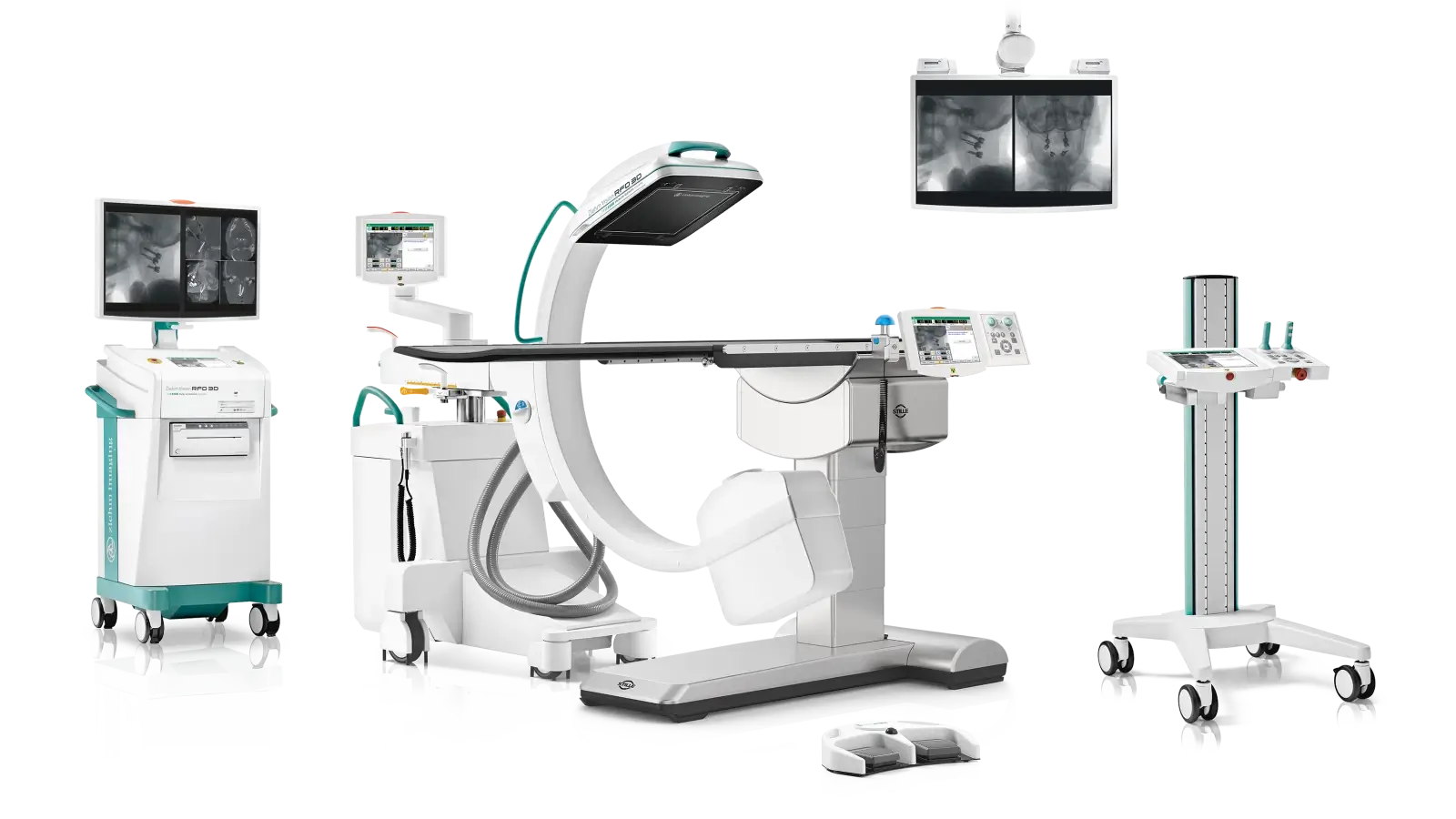
A surgical C-arm is a radiation producing device, operated a few feet from staff. Dose and shielding are part of the buying decision, not an afterthought. The FDA overview of fluoroscopy is a good plain reference on the modality and its risks, and the ACR radiology safety resources cover programme level practice.
Mini C-Arm or Full-Size Mobile C-Arm?
This is the first real decision, and getting it wrong is expensive in both directions. The two formats are not interchangeable.
When a mini C-arm is the right answer
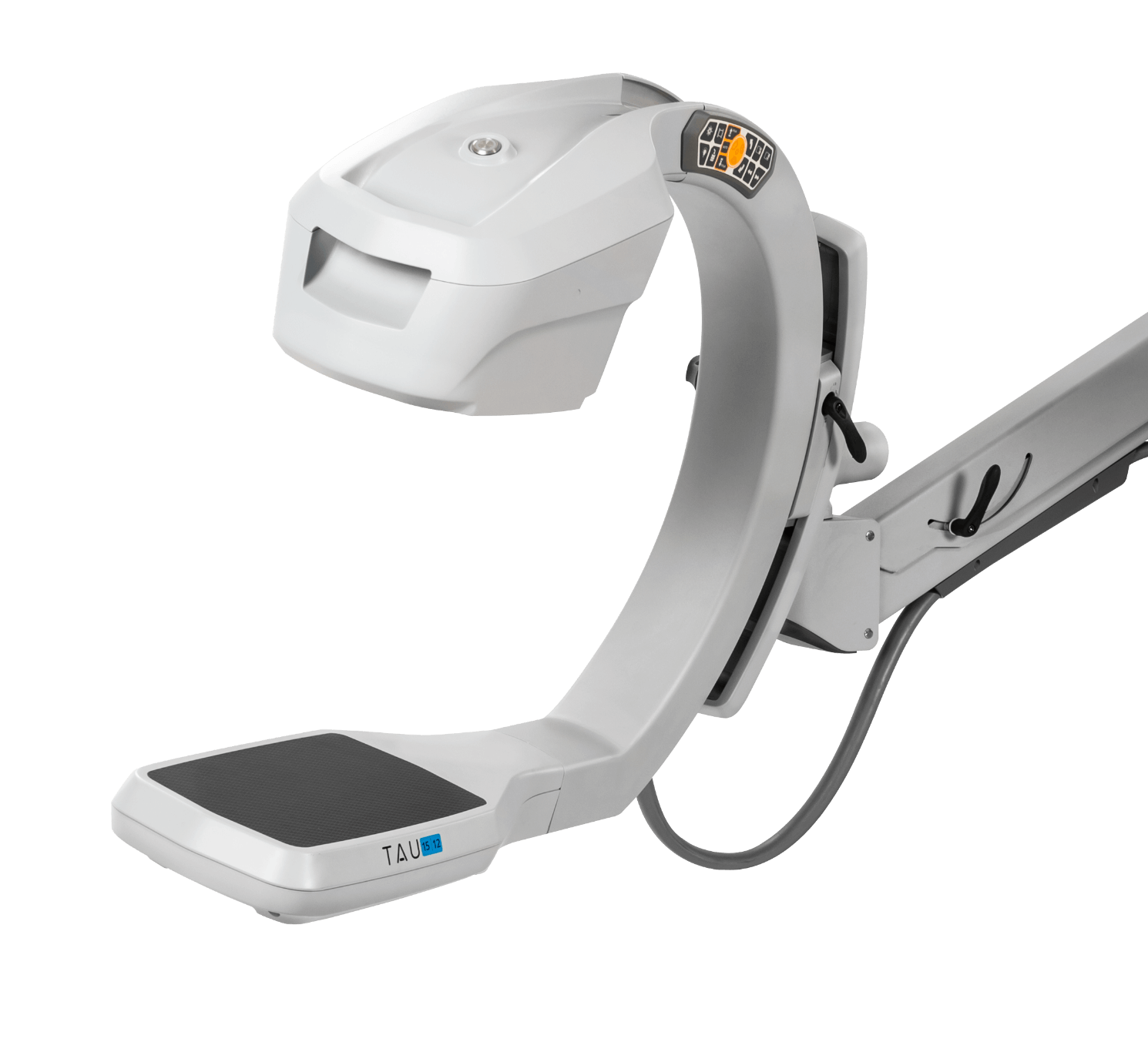
A mini C-arm, sometimes called an extremity C-arm, images hands, wrists, elbows, feet and ankles. The field of view is small and the dose is far lower than a full-size system. For a hand surgery practice, a podiatry clinic or an orthopaedic office, it is the correct tool. It is also cheaper to buy and to run.
Our Orthoscan mini C-arm range is the TAU 1512, the TAU 1515 and the TAU 2020. They differ mainly in detector size and field of view.
When you need a full-size system
Spine, hip, pelvis, vascular and general theatre work all need a full-size mobile C-arm. The tube is more powerful, the detector is larger and the arm geometry reaches across a full operating table. If your caseload includes anything above the wrist or ankle, a mini will not cover it.
Our full-size Ziehm C-arm range starts with the Ziehm Solo FD, a compact flat-panel system. It runs through the Ziehm Vision FD and Vision RFD to the Vision RFD 3D, where intraoperative 3D is needed. The Fujifilm FDR Cross, Persona C and Persona CS sit alongside them.
Buying a full-size system for extremity work is a common and costly mistake. So is buying a mini and discovering six months later that the caseload has grown past it.
Image Intensifier or Flat-Panel Detector?
This is the other structural choice, and on a used C-arm it drives both price and how long the system stays useful.
Image intensifier
The older analogue technology, and still perfectly serviceable. It is cheaper, it is well understood and parts are widely available. The trade-offs are real though. An intensifier loses brightness as it ages, the image is round rather than rectangular, and there is slight geometric distortion toward the edges.
Flat-panel detector
A flat panel gives a rectangular image with no geometric distortion, a wider dynamic range, and generally a lower dose for equivalent image quality. It costs more. On a system you intend to keep for years, it is usually the better buy.
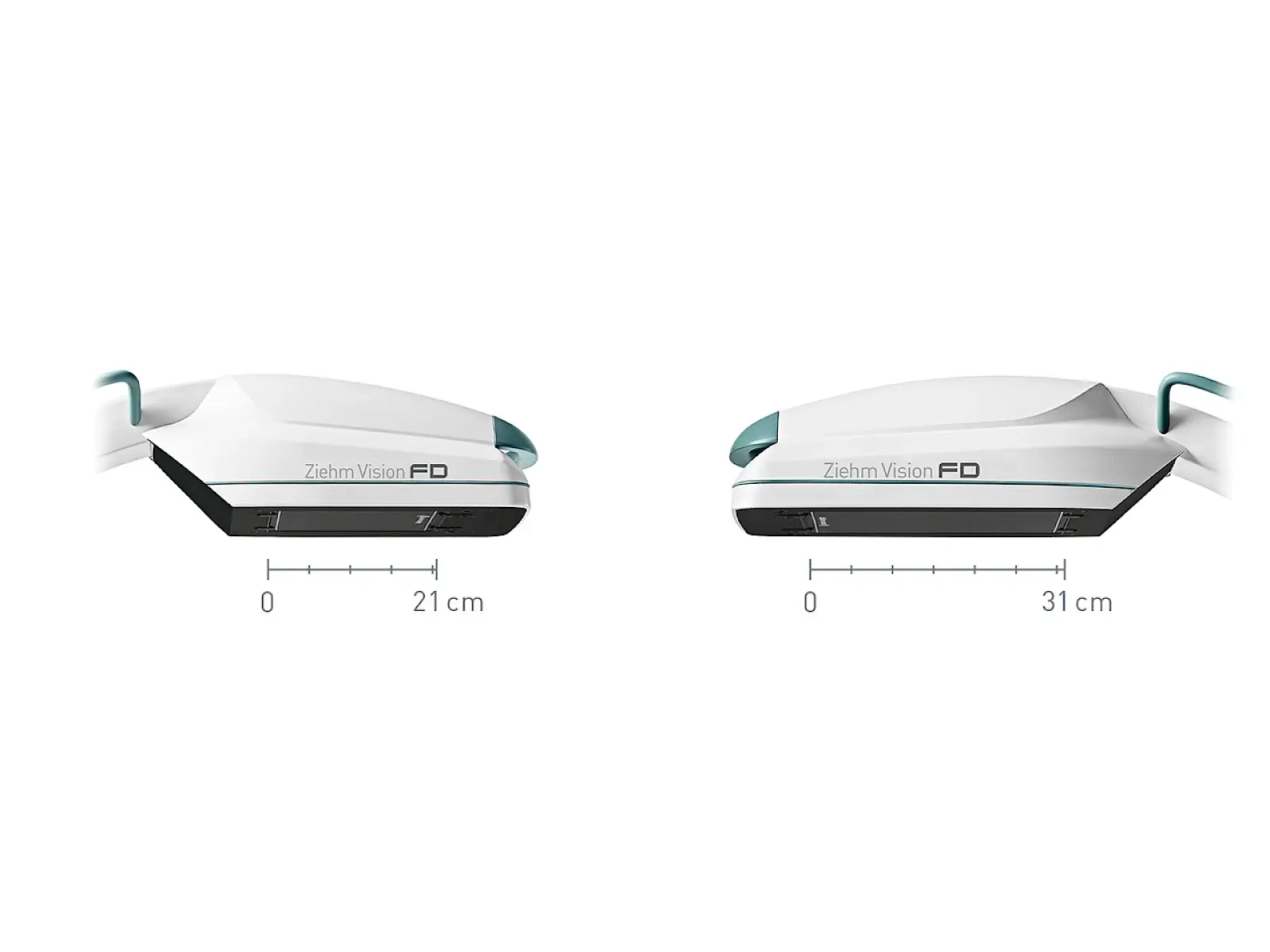
One caution when comparing quotes. On a used C-arm the condition of the detector you are actually buying matters more than which of the two technologies it is. A tired flat panel is a worse purchase than a healthy intensifier.
What Should You Check Before Buying a Used C-Arm?
This is the part that decides whether a used C-arm was a good buy. Work through it before you talk about price, not after.
- The X-ray tube Usage history and heat loading, not just age. This is the most expensive single component
- The detector Intensifier brightness or flat-panel condition, checked on a live image rather than a photograph
- Licensed software Vascular, cardiac and 3D packages are frequently licensed rather than installed, and they do not always transfer with the machine
- Dose and last physics survey Ask for the most recent report
- DICOM and connectivity Whether it will actually talk to your PACS
- Monitor cart and cabling Cheap to overlook, awkward to replace
- Parts and support status Whether the platform is still supported matters more than the year of manufacture
- Service history A system with records is worth more than one without, and the records tell you how it was used
Ask to see the C-arm generating live images. A still photograph tells you about the paintwork. The AAPM published reports are the reference for how imaging equipment performance is actually measured, if you want to go deeper than a visual inspection.
It is also worth understanding what the words in a listing mean. Refurbished, reconditioned and OEM certified are not the same thing and they do not carry the same obligations. Our guide to refurbished versus OEM certified imaging equipment sets out the difference.
What Does a Used C-Arm Cost?
The category is too wide for one number, because a mini C-arm, a full-size mobile system and a 3D capable system are three different price classes. As a general rule, a refurbished C-arm runs roughly 40 to 60 per cent below the new price of the same platform.
Full ranges by class are in our C-arm machine cost guide, which we keep current. Two things to hold onto when you compare quotes. First, establish what is included: monitor cart, software licences, warranty term, delivery and applications training are all sometimes quoted separately. Second, ask what a service contract costs before you sign, not after.
If you are replacing rather than adding, the system you are retiring may be worth something. We buy used medical imaging equipment as well as selling it.
Should You Rent or Buy a C-Arm?
Renting makes sense for a defined, short need. Covering a system that is out for repair, a temporary second theatre, a project with an end date, or a caseload you are still sizing. You pay a premium for flexibility and you give the machine back.
Buying wins on economics past a few months of steady use, and it is the only option if you need a specific configuration. The honest test is how many months of continuous use you expect. Past roughly six, rental is usually the more expensive path.
There is a third option people forget. If the need is periodic rather than constant, mobile imaging may fit better than either buying or renting a system that sits idle between sessions.
What About Parts, Service and Repair?
A C-arm is a working surgical tool, so the question is not whether it will need service but how quickly it can be back in theatre when it does. That is a question about the platform as much as about the supplier.
- Parts availability Narrows as a platform ages, and varies by manufacturer
- Tube and detector lead times The two components that put a system out of action longest
- Who holds the expertise Some faults are field repairable and some are not
- Response terms What the contract actually promises, in hours
We service and repair imaging equipment including systems we did not sell. It is worth asking about parts and support status for a specific model before you buy it, because that answer does not change after the invoice is paid.
How Does Delivery and Installation Work?
A mobile C-arm is much simpler to place than a fixed system. There is no magnet, no chiller and usually no construction. That does not make it trivial.
Access still has to be checked: door widths, lift capacity, floor route and thresholds. Shielding and room design have to suit the caseload, and that assessment belongs before installation rather than after. Applications training is what determines whether the system is used properly in its first month.
We handle delivery and logistics and installation and rigging as part of the job. For island projects, freight, import handling and engineer travel are planned in from the start. Our notes on installation in Puerto Rico and the Caribbean explain how that differs from a mainland delivery.
Our current C-arms for sale are listed in the C-arm machines category. If you want C-arm equipment matched to your caseload rather than to a stock list, tell us what you operate on and we will tell you what fits.
Buying a Used C-Arm: Common Questions
What is a C-arm machine used for?
A C-arm is a mobile fluoroscopy system that gives a surgeon live X-ray images during a procedure. The most common uses are orthopaedic and trauma surgery, pain management and spinal injections, vascular and endovascular work, urology, and cardiac procedures. The name comes from the C-shaped arm. It carries the X-ray tube on one end and the detector on the other. That lets the assembly rotate around the patient without moving them.
How much does a used C-arm cost?
It depends far more on the class of system than on its age. A mini or extremity C-arm, a full-size mobile C-arm and a 3D capable system are three different price classes. As a rule a refurbished C-arm runs roughly 40 to 60 per cent below the new price of the same platform. Current ranges by class are in our C-arm machine cost guide.
What should I check before buying a used C-arm?
Start with the X-ray tube and its usage history. Then check the condition of the image intensifier or flat-panel detector. Confirm which software options are licensed and whether they transfer. Look at the monitor cart and cabling, DICOM connectivity, dose settings and the last physics survey. Finally ask what service coverage and parts availability look like for that platform. Ask to see the system generating live images rather than only photographed.
Is a refurbished C-arm as good as a new one?
On the same platform, image quality is the same. Refurbishment restores a system to its original specification, it does not upgrade it. What you give up against new is the latest software generation and a long factory warranty. What you gain is a large reduction in price, and on a well chosen platform, parts and service support for years.
What is the difference between a mini C-arm and a full-size C-arm?
A mini C-arm is built for extremities, so hands, wrists, feet and ankles, and it uses a much smaller field of view and a much lower dose. A full-size mobile C-arm covers the whole body and is what you need for spine, hip, vascular and general theatre work. A mini C-arm cannot substitute for a full-size system, and a full-size system is heavier and more expensive than an extremity clinic usually needs.
What is the difference between an image intensifier and a flat-panel detector?
An image intensifier is the older analogue technology. It works well and it is cheaper, but it loses brightness as it ages and it distorts slightly at the edges. A flat-panel detector gives a rectangular image with no geometric distortion, a wider dynamic range and generally a lower dose for the same image. On a used C-arm the state of either one matters more than which type it is.
How long does a C-arm X-ray tube last?
Tube life is measured in exposures and heat loading rather than in years. A system used for short orthopaedic cases ages very differently from one running long vascular procedures. It is also one of the more expensive components to replace. Tube history should be part of the quote conversation, not a surprise later.
Can you rent a C-arm instead of buying one?
Renting suits short term needs, a single project, or covering a system that is out for repair. Buying is usually the better economics past a few months of continuous use. Covering a gap while a room is built, or while a system is out for service? Tell us the dates and the caseload. We will tell you honestly which way the numbers fall.
Which C-arm brands do you sell?
Ziehm, Orthoscan and Fujifilm. The Ziehm range runs from the Solo FD through the Vision FD and Vision RFD to the 3D capable Vision RFD 3D. Orthoscan covers the mini C-arms: the TAU 1512, TAU 1515 and TAU 2020. From Fujifilm we carry the FDR Cross, Persona C and Persona CS.
Do you service C-arms you did not sell?
Yes. Service and repair is a separate line of work from sales, and a good deal of what we look after was bought elsewhere. What matters is whether parts and expertise still exist for that platform, which is worth checking before you buy rather than after.
Are parts still available for older C-arms?
For most mainstream platforms yes, though availability narrows as a system ages and it varies a lot by manufacturer and model. Parts and support status matters more than the year of manufacture when you are choosing between two used C-arms.
What is a 3D C-arm?
A 3D C-arm rotates around the patient and reconstructs a cross sectional volume from the sequence of images. A surgeon can then check placement intraoperatively, instead of waiting for a post-operative CT. It is mainly used in spine, trauma and orthopaedic work. The Ziehm Vision RFD 3D is the 3D capable system in our range.
Does a C-arm need a shielded room?
A C-arm is a radiation producing device, so shielding, room design and staff protection have to be assessed for the space and the caseload. Requirements vary by jurisdiction and by how the room is used. Have it assessed before installation rather than after, because retrofitting shielding is the expensive way to find out.
How long does delivery and installation take?
A mobile C-arm is far simpler to place than a fixed system, so lead time is usually driven by transport and scheduling rather than by construction. Access, lift availability and floor route still need checking. We handle delivery, placement and applications training as part of the job.
Do you supply C-arms in Puerto Rico and the Caribbean?
Yes. We are Medical Outfitters Inc in Miami, Florida, with Medical Outfitters Puerto Rico LLC serving Puerto Rico and the wider Caribbean. Island delivery involves freight, import handling and engineer travel that mainland projects do not, and we plan for it rather than discovering it at the port.
