
Reviewed 23 September 2026. Physics, safety and price references on this page were checked against primary sources.
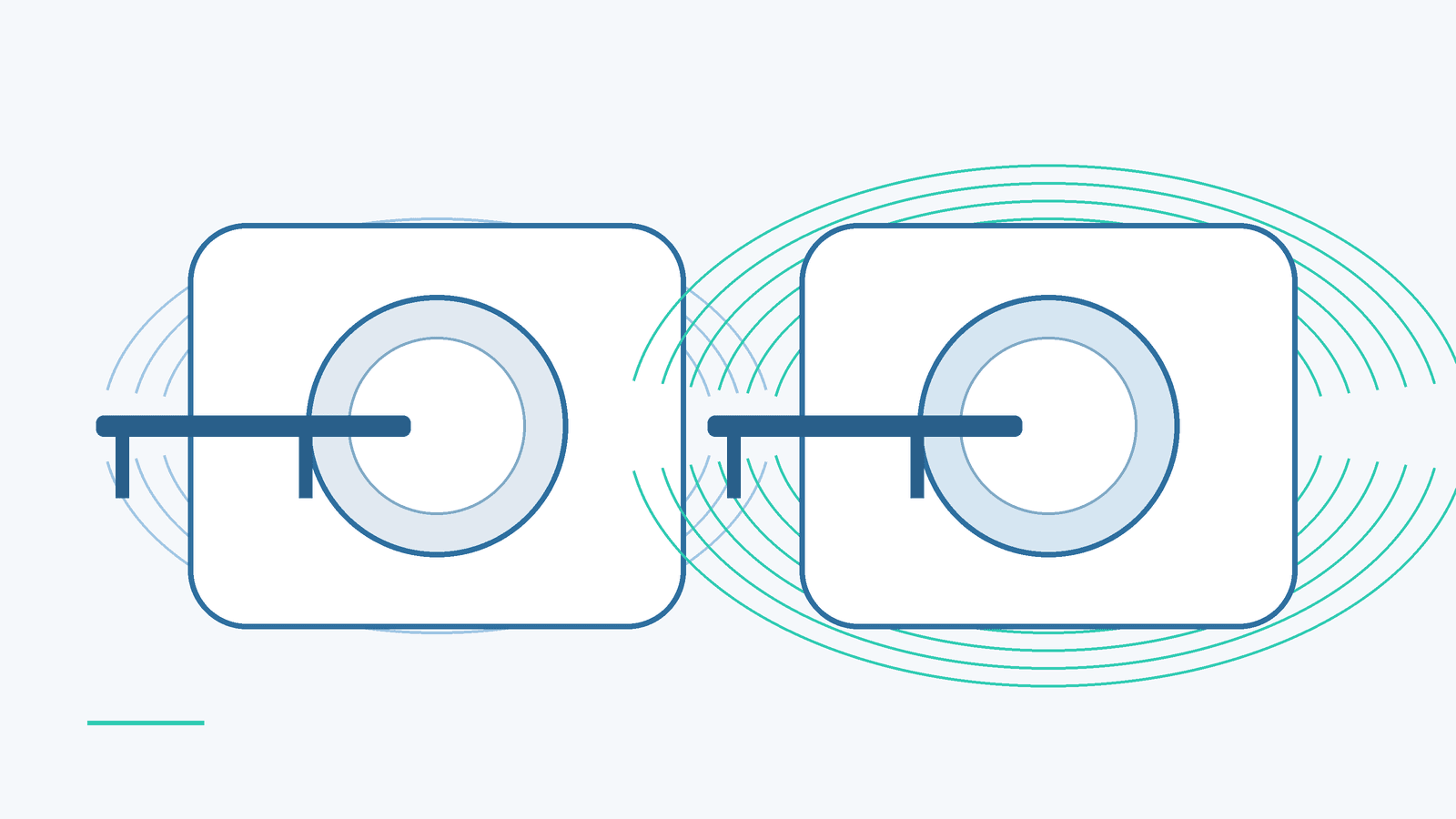
1.5T vs 3T MRI comes down to one trade. A 3T magnet gives roughly twice the signal of a 1.5T magnet, and the scanner spends that signal on finer detail, faster scans or both. In exchange it deposits about four times the radiofrequency energy in the patient, doubles the artifacts near metal and air, excludes patients whose implants are labelled for 1.5T only, and needs a bigger, heavier, more expensive installation. That is why 3T is the natural choice for neuro, musculoskeletal and prostate imaging, and why 1.5T remains the workhorse of most hospitals and imaging centres.
This guide is written for the people who have to choose: the imaging director, the practice owner and the hospital planner comparing a 1.5T MRI against a 3T MRI for a specific room, caseload and budget. It covers what tesla actually measures, what changes at 3T, where each field strength wins, what the two cost to buy and to site, and a decision framework you can apply to your own numbers. Medical Outfitters is a medical imaging equipment supplier based in Miami, Florida; we supply, install and service both field strengths, so the last section lists the systems we carry at each.
What Does Tesla Mean on an MRI Machine?
The tesla, abbreviated T, is the international unit of magnetic flux density, named after Nikola Tesla. It says how strong the scanner’s main static magnet is. The Earth’s field at the surface is about 0.00005 T, so a 1.5T magnet is roughly 30,000 times stronger and a 3T magnet roughly 60,000 times stronger. The unit has nothing to do with Tesla, Inc.; no car company makes MRI scanners.
Clinical scanners come in three broad classes. Low-field and open systems, from about 0.3T to 1.2T, use permanent or vertical-field magnets and trade signal for patient access. 1.5T is the most widely installed field strength in the world and the reference point for everything else. 3T is the high-field class for clinical use. Above that, 7T systems exist, and the first was cleared by the FDA for clinical brain and knee imaging in 2017, but they remain research and specialist tools. If you are new to how the images themselves are made, our guide to T1 vs T2 MRI covers signal weighting, and MRI vs CT covers how the modality differs from X-ray based imaging.
What Changes When You Double the Field Strength
Five things change, and everything else in the 1.5T vs 3T decision follows from them.
Signal. A stronger field aligns a larger fraction of the hydrogen nuclei in tissue, so the scanner has more signal to work with. In theory the signal-to-noise ratio doubles from 1.5T to 3T; in real scanners, once coil design, sequence limits and tissue effects are counted, the gain is usually between about 30 and 85 percent, as the CADTH review of 1.5T and 3T scanners and clinical reviews in Applied Radiology report. That extra signal is the whole reason to buy a 3T, and it can be spent three ways: thinner slices and smaller voxels, shorter scans at the same resolution, or a mix of both.
RF heating. The radiofrequency pulses that excite the nuclei deposit energy in the patient, measured as the specific absorption rate, SAR. SAR scales with the square of the field strength, so a 3T sequence deposits about four times the energy of the same sequence at 1.5T. Scanners manage this by lengthening repetition times, using lower flip angles and different pulse designs, which is why some fast spin echo and cardiac sequences do not simply run faster at 3T. It also feeds directly into implant safety, below.
Artifacts. Susceptibility artifact, the signal loss and distortion near metal, air and dense bone, scales with the field and is roughly twice as large at 3T. Chemical shift, the misregistration between fat and water signal, also doubles. Dielectric effects, the dark shading that appears in large fields of view because the RF wavelength in tissue shortens at 3T, are a 3T problem that 1.5T essentially does not have and that matters most in the abdomen and in larger patients. Modern 3T systems counter all three with multichannel transmit, better shimming and sequence design, but they are managed, not eliminated.
Relaxation. T1 relaxation times lengthen at 3T, which changes tissue contrast and, usefully, makes gadolinium enhancement more conspicuous at the same dose. Protocols written for 1.5T are re-tuned rather than copied when a site moves to 3T.
Forces and noise. The pull on a ferromagnetic object roughly doubles and the torque roughly quadruples at 3T, and the gradient coils, which switch against a stronger field, make more acoustic noise. The screening discipline described in our guide to what an MRI quench is applies at both field strengths; at 3T the consequences of a lapse are larger.
Where 3T Wins
- Brain. Thinner slices and higher contrast between grey and white matter; more sensitive detection of small lesions in multiple sclerosis and epilepsy; better time-of-flight angiography without contrast; functional MRI and spectroscopy that are marginal at 1.5T become routine.
- Prostate and pelvis. Multiparametric prostate MRI is the exam where 3T has most clearly changed practice, with the resolution to grade lesions and guide biopsy.
- Small joints, cartilage and ligaments. Wrist, ankle, elbow and the cartilage of the knee and hip, where sub-millimetre structures decide the report.
- Vascular and perfusion imaging. More signal means more time resolution for dynamic studies and cleaner non-contrast angiography.
- Throughput at equal quality. A busy centre can run 3T protocols shorter than the 1.5T equivalents and put more patients through the same room in a day, which changes the business case as much as the clinical one.
Where 1.5T Wins
- Patients with implants. Many pacemakers, defibrillators, neurostimulators, cochlear implants and older orthopaedic and spinal hardware are labelled MR Conditional at 1.5T only. A 1.5T scanner can image those patients; a 3T-only department has to send them elsewhere.
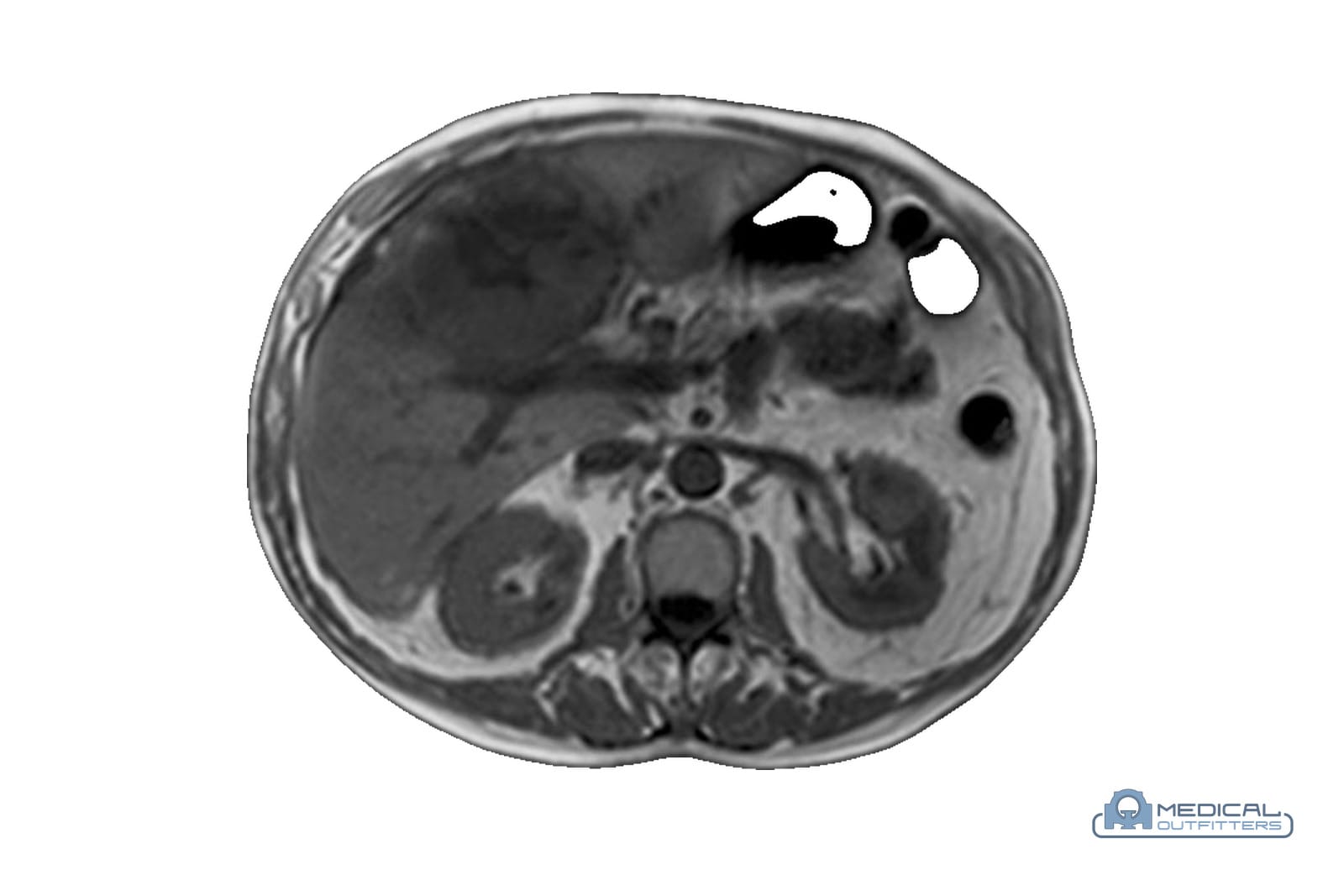
- Abdomen, liver and bowel. Dielectric shading, motion and susceptibility from bowel gas are all worse at 3T; abdominal imaging at 3T is done well, but it takes more work, and 1.5T is the easier field for it.
- Cardiac. SAR limits and off-resonance artifacts make some cardiac sequences harder at 3T, and many cardiac programmes still run on 1.5T by choice.
- Large, claustrophobic and paediatric patients. Wide-bore 1.5T systems with 70 cm openings and short magnets are the most forgiving scanners in the building. Our guides to wide bore MRI systems and wide bore vs open vs closed MRI cover the format choice.
- Metal in the field of view. Post-operative spines and joints image more cleanly at 1.5T because susceptibility artifact is half the size.
- Budget, room and first scanner. A refurbished 1.5T costs less than half of a 3T, sits in a smaller shielded room and is the right first MRI for almost every outpatient centre.
1.5T vs 3T MRI: Side-by-Side
| 1.5T MRI | 3T MRI | |
|---|---|---|
| Signal-to-noise | Baseline | Up to 2x in theory, about 1.3x to 1.85x in practice |
| Spatial resolution at equal time | Standard clinical | Finer: thinner slices, smaller voxels |
| RF heating (SAR) | Baseline | About 4x; managed by sequence design |
| Susceptibility and chemical shift artifact | Baseline | About 2x; dielectric shading appears |
| Implant compatibility | Widest; most MR Conditional devices labelled here | Only devices labelled for 3T |
| Best exams | General, abdominal, cardiac, implants, large patients | Neuro, prostate, small joints, vascular, research |
| Acoustic noise | Loud | Louder |
| Fringe field and shielding | Smaller footprint to control | Larger 5-gauss line; heavier magnet; more shielding |
| Refurbished, installed | $475,000 to $975,000 | $1,000,000 to $1,900,000 |
| New, installed | $1,200,000 to $2,000,000 | $2,100,000 to $3,700,000 |
Price ranges are Medical Outfitters all-in figures for a system delivered, installed and warrantied; every system is quoted individually. The physics figures are summarised from the CADTH review and Applied Radiology.
Safety, Implants and Screening at 3T
The magnet is always on at either field strength, and the screening discipline is identical: every person and every object entering the room is checked. What changes at 3T is the margin. The translational force on a ferromagnetic object roughly doubles and the torque roughly quadruples, and RF heating of conductive implants and leads is about four times higher. That is why device labelling is field-specific. An implant labelled MR Conditional at 1.5T has been tested under 1.5T conditions and nothing else; scanning it at 3T is an untested exposure. The FDA page on cochlear implants and MRI safety spells this out for cochlear implants, and the RSNA review of MRI in patients with cardiac devices summarises the evidence for pacemakers and defibrillators, many of which are labelled for 1.5T alone even when they are conditionally safe.
For a department this has two practical consequences. A 3T-only site needs a referral path for implant patients, and a site with both field strengths should route those patients to the 1.5T by policy rather than by memory. The FDA overview of MRI covers the general risks of the MR environment, and our MRI machine cost and buying guide has a section on the safety programme a new site needs.
Siting and Cost: What a 3T Adds to the Project
A 3T magnet stores about four times the energy of a 1.5T magnet of the same design, is heavier, and throws a larger fringe field. In practice that means a bigger volume to control around the room, more magnetic shielding where the 5-gauss line would otherwise cross a corridor or a floor above, an RF shielded enclosure sized for the system, heavier rigging and a floor that can take the load. Helium and cryogenic behaviour are a property of the individual magnet rather than the field strength, and our note on how long an MRI machine lasts covers what to check on any magnet, new or used.
On the machine itself, the gap is roughly two to one. From Medical Outfitters a refurbished 1.5T runs $475,000 to $975,000 and a new one $1,200,000 to $2,000,000; a refurbished 3T runs $1,000,000 to $1,900,000 and a new one $2,100,000 to $3,700,000, all delivered, installed and warrantied. What moves the price inside each band is the coil set, the software packages licensed, bore size and condition, which our MRI machine cost guide takes apart line by line. Refurbished units at both field strengths are listed on our used MRI machines for sale page. Installation, rigging, cryogenics and service are done by our own crews across the United States, Puerto Rico and the Caribbean; island projects add freight, import handling and engineer travel, covered in our notes on MRI installation in Puerto Rico and the Caribbean.
Which Field Strength Should Your Facility Buy?
Answer four questions and the choice usually makes itself.
- What do you scan most? If the caseload is neuro, musculoskeletal, prostate or oncology follow-up, 3T earns its price. If it is general imaging with a wide mix of patients, 1.5T covers it with fewer exclusions.
- Who do you scan? A population with many implanted devices, bariatric patients or children points to a wide-bore 1.5T. A referral base of orthopaedic surgeons and neurologists points to 3T.
- Is this your first MRI or your second? First scanner: 1.5T, almost always. Second scanner in a site that already runs a 1.5T: 3T, so the two complement each other and implant patients keep a home.
- Can the building take it? Fringe field, floor loading, the route in and the shielded room decide whether a 3T is possible before the budget does. A refurbished 3T in a room that cannot contain it is not a bargain.
If you are replacing an old 1.5T, the honest comparison is a modern refurbished 1.5T against a refurbished 3T, not old against new: the refurbished 1.5T of the current generation, with a 70 cm bore and a modern coil architecture, closes much of the image quality gap that people remember from a decade ago. And if a scanner has to move between sites, field strength is the least of the problem; see buying versus renting a mobile MRI.
1.5T and 3T MRI Models Compared
The field-strength decision becomes concrete when it is a choice between two systems. These are the 1.5T and 3T platforms most facilities shortlist, with Medical Outfitters ranges for refurbished systems delivered, installed and warrantied; each links to the model price guide with configurations and what to check.
| Model | Field | Bore | Refurbished range, 2026 | Where it fits |
|---|---|---|---|---|
| GE Signa HDxt | 1.5T | 60 cm | $475,000 to $675,000 | Lowest installed price for a hospital-grade 1.5T |
| Siemens MAGNETOM Espree | 1.5T | 70 cm | $475,000 to $700,000 | Value entry to a wide bore |
| GE Optima MR450w | 1.5T | 70 cm | $600,000 to $900,000 | GE ecosystem, GEM coils |
| Philips Ingenia 1.5T | 1.5T | 70 cm | $600,000 to $975,000 | Digital dStream coils |
| Siemens MAGNETOM Aera | 1.5T | 70 cm | $650,000 to $975,000 | Tim 4G, Dot workflow, widest supply |
| GE Signa HDxt 3T | 3T | 60 cm | $1,000,000 to $1,300,000 | Lowest-cost 3T |
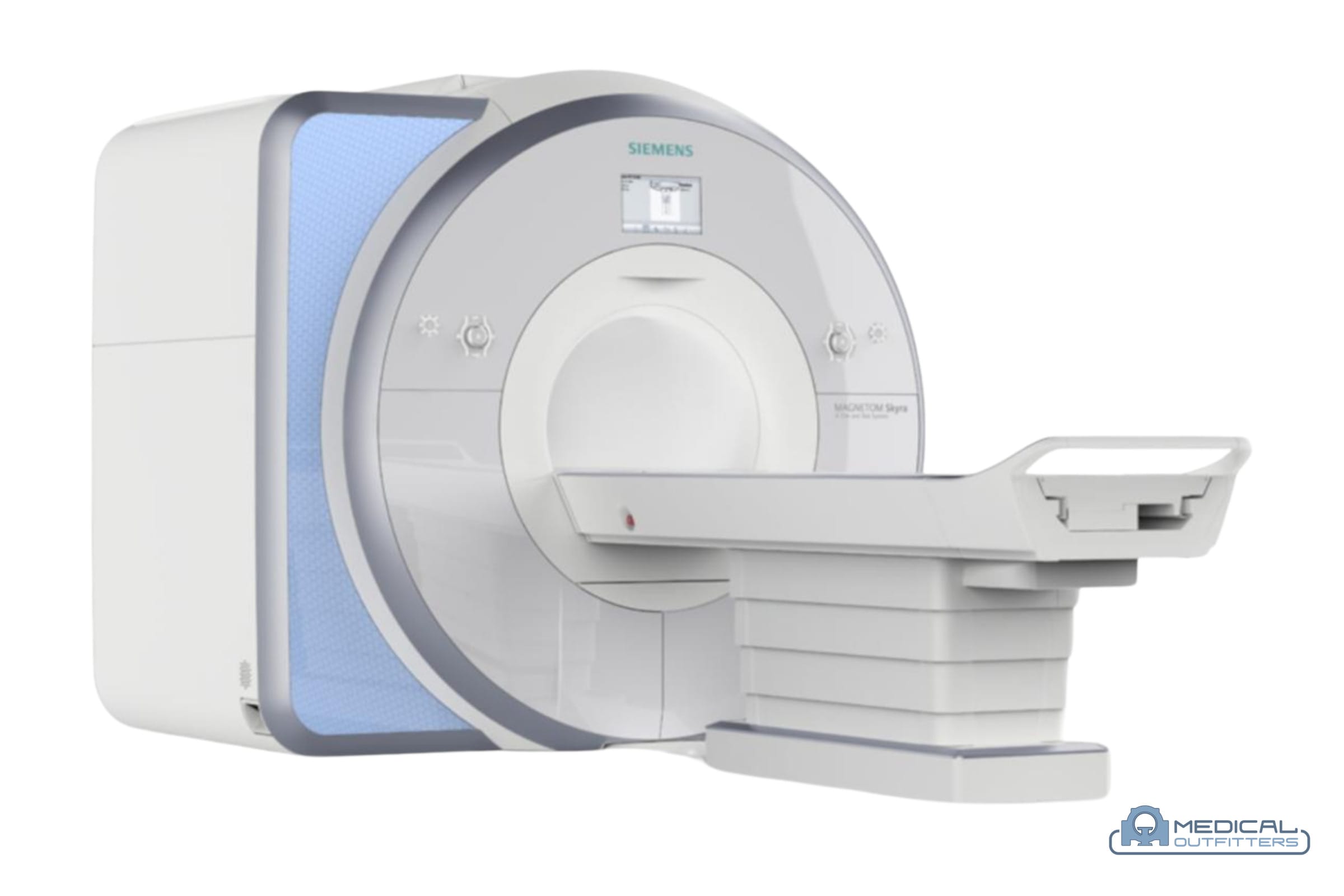
| Siemens MAGNETOM Skyra | 3T | 70 cm | $1,000,000 to $1,600,000 | Volume 3T with the largest installed base |
| Philips Ingenia 3.0T | 3T | 70 cm | $1,100,000 to $1,900,000 | Omega HP gradients, 55 cm field of view |
| GE Discovery MR750w | 3T | 70 cm | $1,100,000 to $1,750,000 | MultiDrive RF, 50 cm field of view |
New systems sit a band higher: $1,200,000 to $2,000,000 at 1.5T and $2,100,000 to $3,700,000 at 3T in our MRI cost guide. Read across the table and the pattern is plain: a 3T costs $350,000 to $1,000,000 more than the equivalent 1.5T on the same platform, before the 3T room, which is the premium the extra signal has to earn back.
1.5T and 3T MRI Systems We Carry
1.5T: the Fujifilm ECHELON Smart and ECHELON Smart ZeroHelium new as an authorized dealer, and refurbished under MO Select the Siemens MAGNETOM Aera, Siemens MAGNETOM Espree, GE Optima MR450w and GE Signa HDxt.
3T: the Siemens MAGNETOM Skyra and GE Discovery MR750w, both 70 cm wide-bore systems, refurbished under MO Select.
Open and low-field: the Fujifilm Oasis Velocity 1.2T open MRI, and Esaote extremity systems for orthopaedic practices. The full list, with what each is built for, is in our MRI machines category. Tell us what you scan and the room you have, and we will recommend two or three systems at the right field strength with delivery and installation included.
1.5T vs 3T MRI: Frequently Asked Questions
What is a 3T MRI?
A 3T MRI is a scanner whose main magnet produces a static field of 3 tesla, twice the 1.5 tesla of the most common clinical systems and roughly 60,000 times the magnetic field of the Earth. The stronger field aligns more hydrogen nuclei, which gives more signal, which the scanner spends on finer detail, faster scans or both.
Is a 3T MRI better than a 1.5T MRI?
For the brain, small joints, the prostate and any exam that lives on fine detail, yes. For patients with implants labelled for 1.5T only, for large patients, for cardiac and much abdominal work, 1.5T is often the better tool, because the price of the extra signal is four times the RF heating, twice the artifact and a magnet that is harder to site. Neither is better in general.
Does Tesla make MRI machines?
No. The tesla, written T, is the international unit of magnetic flux density, named after the engineer Nikola Tesla. It describes how strong a magnet is. Tesla, Inc., the car company, does not make MRI scanners. The manufacturers are Siemens Healthineers, GE HealthCare, Philips, Canon, Fujifilm and, for open and extremity systems, Esaote among others.
How much does a 1.5 tesla MRI machine cost?
A refurbished 1.5T MRI runs about $475,000 to $975,000 and a new one $1,200,000 to $2,000,000 from Medical Outfitters, delivered, installed and warrantied. The number inside the band is set by the coil set, the software licensed, bore size and condition; siting, RF shielding and cryogens are quoted per project.
How much does a 3.0 tesla MRI machine cost?
A refurbished 3T MRI runs about $1,000,000 to $1,900,000 and a new one $2,100,000 to $3,700,000, delivered, installed and warrantied. Add a larger shielded room, a bigger fringe field to control and heavier rigging, which is why 3T is usually a second system rather than a first.
Is 3T MRI safe with implants?
Only if the implant is labelled MR Conditional at 3T. Many pacemakers, neurostimulators, cochlear implants and older orthopaedic hardware were tested and labelled at 1.5T only, and the forces and heating at 3T are higher, so the device labelling must be checked against the exact field strength before the patient is scanned. The FDA and the device manufacturers publish the conditions.
Which is better for a brain MRI, 1.5T or 3T?
3T, in most cases. The extra signal buys thinner slices, better grey and white matter contrast, more sensitive detection of small lesions in multiple sclerosis and epilepsy, and better vascular and functional imaging. A well-run 1.5T still produces diagnostic brain studies every day, which is why community hospitals scan brains at 1.5T without controversy.
Which is better for a knee or shoulder MRI, 1.5T or 3T?
3T shows cartilage, labrum and small ligaments in finer detail, which matters in sports medicine and pre-surgical planning. For routine joint work a 1.5T with the right dedicated coil is entirely adequate, and for patients with metal hardware near the joint 1.5T often gives the cleaner image because susceptibility artifact is smaller.
Where are 7 tesla MRI scanners located in the USA?
At a small number of academic medical centres and research institutes. The first 7T scanner cleared by the FDA for clinical use, in 2017, is limited to brain and knee imaging, and 7T remains a research and specialist tool rather than a purchase a hospital or imaging centre would consider for routine work.
What field strength is an open MRI?
Most open MRI systems run between 0.3T and 1.2T, using a permanent or vertical-field magnet so the patient is not enclosed in a bore. The Fujifilm Oasis Velocity at 1.2T is the highest field open whole-body system, and extremity units from Esaote scan a joint at low field with no enclosure at all. They trade signal for access, which is the right trade for claustrophobic, paediatric and bariatric patients.
Send us the exams you run, the patients you see and the room you have. We will recommend 1.5T or 3T systems, new or refurbished, with an all-in quote that includes delivery, installation and training. Serving the US, Puerto Rico and the Caribbean.
Which 3T MRI models are available refurbished?
The Siemens MAGNETOM Skyra ($1,000,000 to $1,600,000), the GE Discovery MR750w ($1,100,000 to $1,750,000), the GE Signa HDxt 3T ($1,000,000 to $1,300,000) and the Philips Ingenia 3.0T ($1,100,000 to $1,900,000), delivered, installed and warrantied. Siemens and GE systems are refurbished through MO Select; Philips systems are sourced on request.
