
A wide bore MRI is a closed MRI with a bigger opening. The tunnel measures about 70 cm across instead of the standard 60 cm. That is the whole definition. What makes it interesting is what those 10 cm buy. You get most of the patient comfort an open system offers, without giving up the field strength open systems sacrifice.
This guide covers what the term actually means and whether the wider opening costs you image quality. It also compares wide bore against standard bore and against open MRI, explains what short bore and big bore mean, and sets out what these systems cost.
What Is a Wide Bore MRI?
The bore is the tunnel the patient goes into. On a conventional cylindrical scanner it is roughly 60 cm in diameter. A wide bore MRI machine opens that to about 70 cm, and usually pairs it with a wider table.
To put that in real numbers, the Siemens MAGNETOM Aera we refurbish through MO Select is a 1.5T system with a 70 cm wide bore and a table rated for patients up to 250 kg. That combination is what a modern wide bore system looks like: full field strength, noticeably more room, and no compromise in the magnet itself.
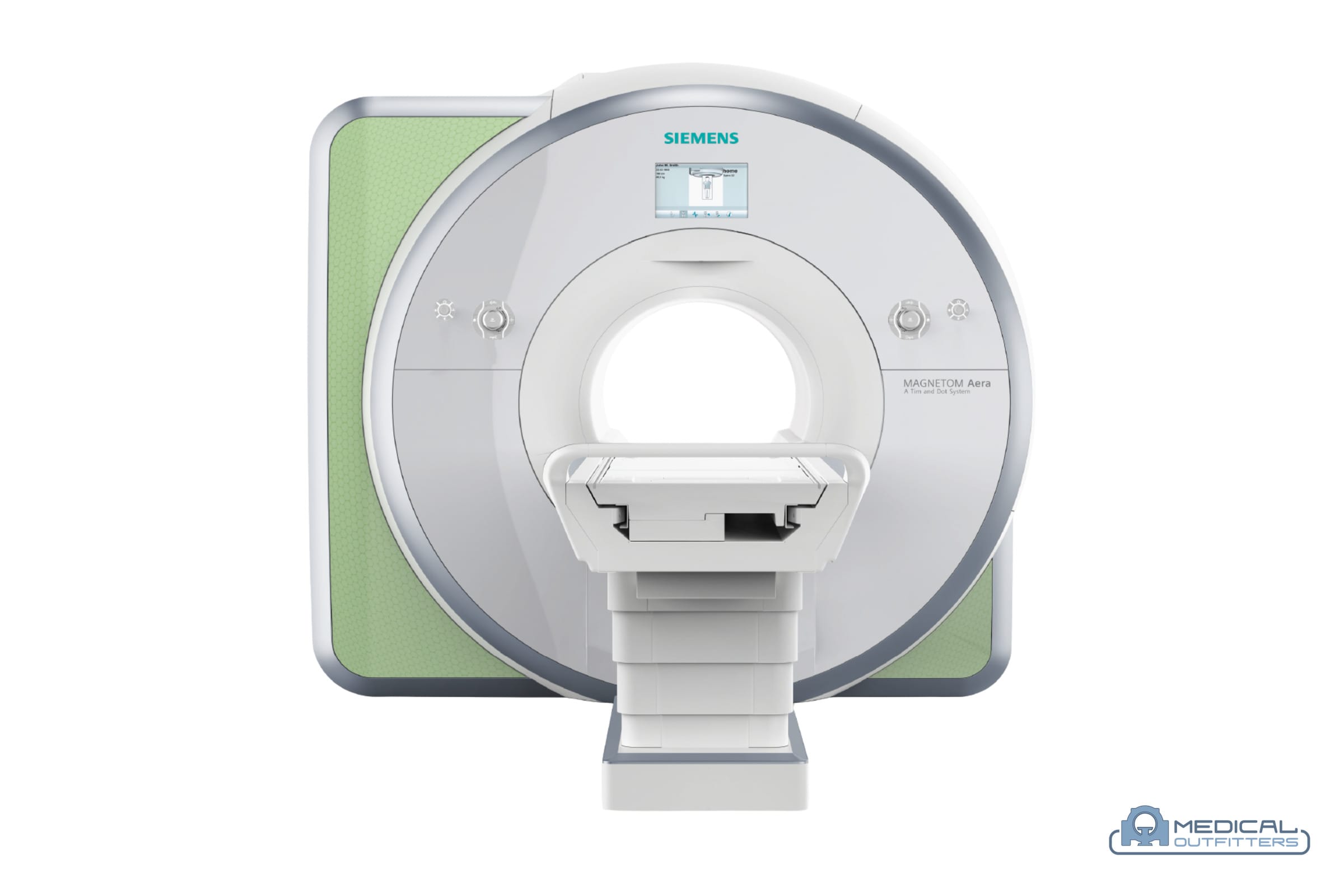
It is worth being precise about the word, because manufacturers are not. Wide bore, large bore and big bore are used more or less interchangeably for the same 70 cm class of system. Open bore is used for both wide bore systems and genuinely open ones, which is where most of the confusion in this category comes from.
Wide Bore MRI vs Standard Bore: What 10 cm Changes
The question behind wide bore MRI vs regular MRI is whether the extra room costs anything. On current systems the difference is small, and field strength, gradient specification and coil selection matter far more than bore diameter. Here is what actually differs.
| Factor | Standard bore | Wide bore |
|---|---|---|
| Bore diameter | About 60 cm | About 70 cm |
| Field strength | 1.5T or 3T | 1.5T or 3T |
| Image quality | Full | Comparable on modern systems, check gradient spec and coils |
| Claustrophobic patients | Frequent problem | Markedly better tolerated |
| Larger patients | Often cannot be scanned | Usually can |
| Cancelled or abandoned scans | Higher | Lower |
| Room requirement | Baseline | Slightly larger magnet footprint |
| Price | Baseline | Modest premium |
The line that matters commercially is the cancelled scan. A patient who will not go into a 60 cm tunnel is a lost appointment, a repeat referral and often a scan that goes to another facility. Wide bore turns a proportion of those back into completed studies, and that is usually where the premium pays for itself.
Does a Wide Bore MRI Produce Worse Images?
This is the objection worth addressing directly, because the answer depends on the specific system rather than on bore diameter alone.
Widening a bore makes it harder to keep the field uniform across the imaging volume. It also moves the gradient coils further from the patient. Manufacturers have addressed this with magnet design and shimming, and on current systems bore width is rarely the deciding factor in a purchase. Check the homogeneity and gradient figures on the specification sheet rather than assuming parity.
What still decides image quality is field strength, gradient specification, coil selection and how well the protocol is set up. A 70 cm 1.5T system with a good coil set will comfortably outperform a 60 cm system with a thin one. If you want the background on how the imaging itself works, the FDA overview of MRI is a reasonable starting point.
1.5T vs 3T Wide Bore MRI
It is available at both clinical field strengths. The choice between them is the same one you would make on a standard bore system.
- 1.5T wide bore The general workhorse. Broad clinical coverage, easier siting, lower running cost, and fewer artefact problems around implants and metal.
- 3T wide bore Roughly double the signal, which buys resolution and shorter scans. The usual choice for neurological, musculoskeletal and research work. More susceptible to susceptibility artefact and more demanding to site.
A 3T wide bore is the highest-specification combination in routine clinical use: the strongest field available alongside the roomier opening. If your case mix is heavily neuro or MSK and you also lose scans to claustrophobia, that is the configuration that solves both problems at once.
Wide Bore, Short Bore, Big Bore and Large Bore
These terms get used loosely, and two of them mean genuinely different things. The MRI bore is simply the opening, so most of these words describe the same measurement from different marketing angles.
- Wide bore The diameter of the opening, about 70 cm. You will also see it written as wide-bore MRI.
- Large bore MRI The same thing. A large bore MRI machine is a 70 cm system under another name.
- Big bore MRI Also the same thing. Common on older listings and on CT, where big bore has a more specific meaning.
- Short bore The length of the magnet, not its diameter. A short bore MRI lets many patients be scanned with their head outside the tunnel, which helps claustrophobia as much as width does.
- Open bore MRI Ambiguous, and the one that causes real confusion. An open bore MRI machine may be a wide bore closed system or a genuinely open one. Always ask which is meant before comparing prices.
- Closed bore Any cylindrical system, standard or wide.
Width and length are separate measurements, and a system can be wide, short, both or neither. For a nervous patient a short bore can matter more than a wide one, because how far into the tunnel their head goes is what they actually notice.
When you are reading listings, treat wide bore MRI machines, large bore and big bore as the same category and check the actual figure in centimetres. The number is the only part of the description that is standardised. A specification sheet that says 70 cm tells you more than any of these labels.
Wide Bore MRI vs Open MRI
These are the two answers to the same problem and they solve it very differently.
A wide open bore system keeps the cylinder and widens it. A true open MRI removes the cylinder and accepts a lower field strength as the price. The numbers from our own inventory make it concrete. A refurbished MAGNETOM Aera gives you a 70 cm bore at a full 1.5T, while the Oasis Velocity CPO, a genuinely open system, has a 44 cm patient aperture at 1.2T with completely open sides.
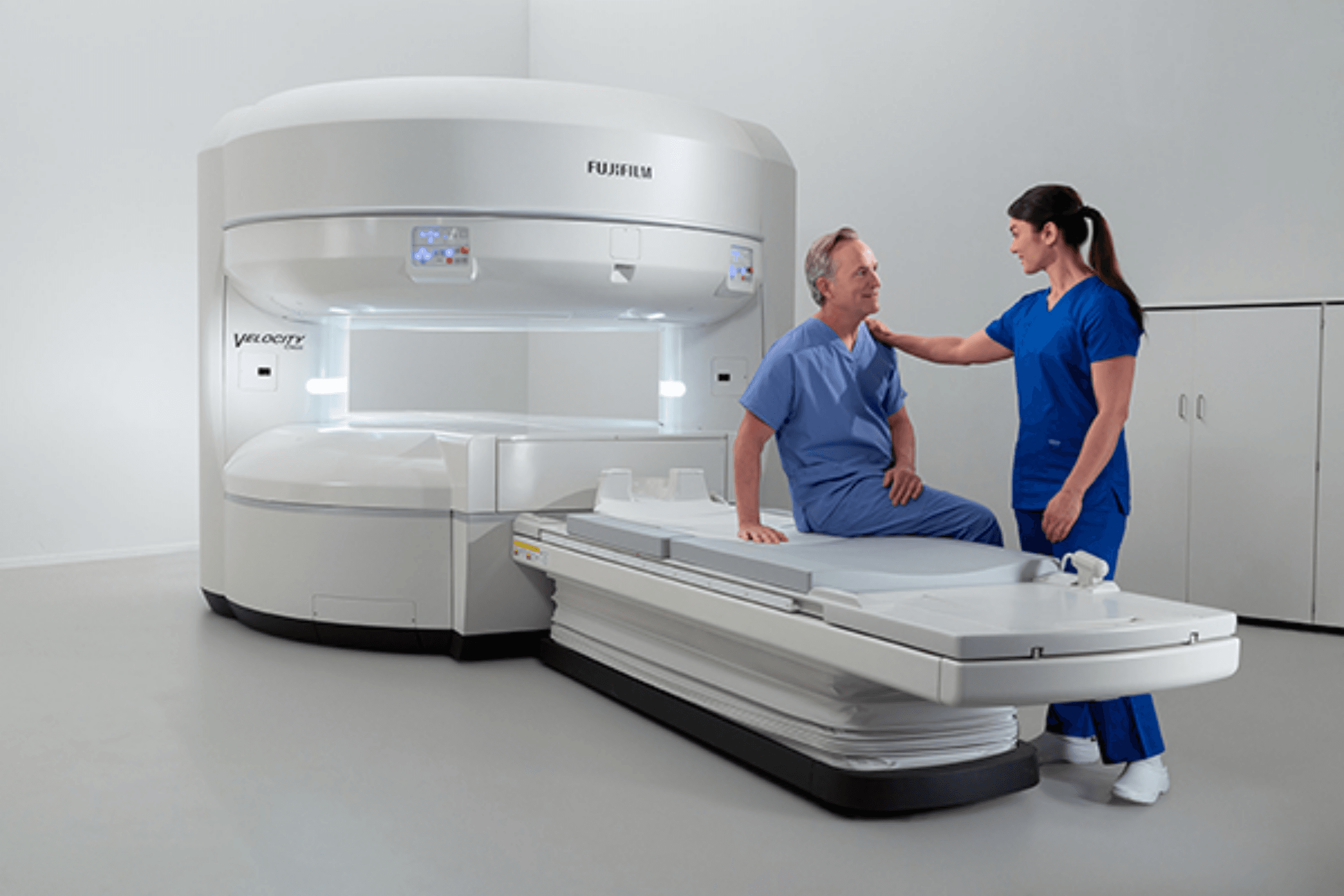
| Wide bore | Open MRI | |
|---|---|---|
| Structure | Closed cylinder, 70 cm | No tunnel, open sides |
| Field strength | 1.5T or 3T | 0.2T to 1.2T |
| Image quality | Full | Adequate for most routine work |
| Severe claustrophobia | Helps most patients | Best option |
| Very large patients | Usually fits | Best option |
| Weight-bearing imaging | Not possible | Possible on tilting systems |
| Helium and quench pipe | Required | None on permanent-magnet open systems, required on 1.2T superconducting open |
For most facilities weighing the two, wide bore is the better answer. You keep the diagnostic range and the throughput and solve most of the comfort problem. Open stays the right call for weight-bearing work, open-sided access, and the largest patients. Our open MRI versus closed MRI guide works through that decision in full.
Does a Wide Bore MRI Need a Bigger Room?
Less than people expect. The magnet is physically wider, but bore diameter is rarely the constraint that decides a room.
Siting is driven by the five gauss line, RF shielding, the cryogen vent route, floor loading and the path the magnet takes into the building. A room built for a standard 1.5T will often take a wide bore system with modest changes. The ACR guidance on MR safety sets out the zoning any installation has to satisfy regardless of bore size.
One line item disappears entirely on some systems. A sealed helium design such as the Echelon Smart ZeroHelium needs no quench pipe at all, which takes the vent route out of the siting problem. Our guide to what an MRI quench is explains why that pipe exists on conventional systems.
What Wide Bore MRI Systems Cost
These systems carry a modest premium over the standard bore equivalent at the same field strength. It is not a different price class. Our system price ranges:
| System type | Refurbished | New |
|---|---|---|
| Open / low-field MRI | $300,000 to $525,000 | $600,000 to $950,000 |
| 1.5T closed MRI | $475,000 to $975,000 | $1,200,000 to $2,000,000 |
| 3T closed MRI | $1,000,000 to $1,900,000 | $2,100,000 to $3,700,000 |
Wide bore systems sit within the 1.5T and 3T rows above. Full detail by modality is in our MRI machine cost and price guide. Delivery, rigging, installation and site work are quoted per project.
A refurbished wide bore system is usually the fastest route to one, and often the only way to get 3T wide bore inside a mid-range budget. Our guide to refurbished versus OEM certified equipment covers what to check before buying one, and current stock is on our MRI inventory page.
Is a Wide Bore MRI Right for Your Facility?
- Yes if you lose scans to claustrophobia or patient size and cannot afford to lose the field strength
- Yes if you are replacing a standard bore 1.5T anyway, because the premium is small relative to the project
- Consider 3T wide bore if your case mix is neurological or musculoskeletal and resolution matters
- Consider open instead if you need weight-bearing imaging, open-sided access, or you scan patients a 70 cm bore still will not take
- Standard bore is fine if your patient population tolerates it and budget is the binding constraint
If you want a specific system checked against your room and your case mix, tell us what you are trying to do. We install and service what we sell, so the answer will account for the building as well as the scanner.
Wide Bore MRI: Common Questions
What is a wide bore MRI?
A wide bore MRI is a closed MRI whose opening measures about 70 cm across instead of the standard 60 cm. It is still a cylinder and it still holds a full 1.5T or 3T field. The extra 10 cm is what makes it tolerable for anxious patients and physically possible for larger ones.
Is a wide bore MRI the same as an open MRI?
No. It is a closed system with a wider tunnel. An open MRI has no tunnel at all, with magnet poles above and below the patient. They are often confused because both are sold on patient comfort, but they differ in field strength, image quality and price.
Does a wide bore MRI produce worse images than a standard bore?
Not on modern systems. Widening the bore makes field homogeneity and gradient performance harder to achieve, and manufacturers address this with magnet design and shimming. Current 1.5T and 3T wide bore scanners are used for the same diagnostic work as their standard bore counterparts, and the difference in a given case comes down to gradient specification and coils rather than bore diameter. Field strength and coil selection matter far more than bore diameter.
What is the difference between wide bore and short bore MRI?
Wide bore describes the diameter of the opening, usually 70 cm. Short bore describes the length of the magnet. They are separate measurements and a system can be one, both or neither. A short bore helps because many patients can be scanned with their head outside the tunnel entirely.
Is a 3T wide bore MRI available?
Yes. Both 1.5T and 3T systems are widely available. A 3T gives you the highest field strength in clinical use alongside the roomier opening. It is the usual choice for neurological and musculoskeletal work where resolution matters and patient tolerance is still a factor.
What is the patient weight limit on a wide bore MRI?
It depends on the table rather than the bore, and it is worth checking both. Bore diameter decides whether a patient fits; table rating decides whether the system will move them. Always confirm both figures against the patient population you actually scan.
Does a wide bore MRI need a bigger room?
Usually only slightly. The magnet is wider, but not dramatically so. Siting is driven far more by the five gauss line, RF shielding, cryogen venting and the route into the room. A room built for a standard 1.5T will often take a wide bore system with modest changes.
