Fujifilm ASPIRE Cristalle: Full Field Digital Mammography System
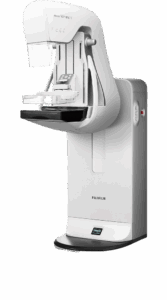
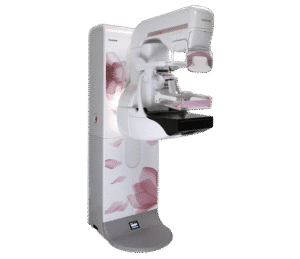
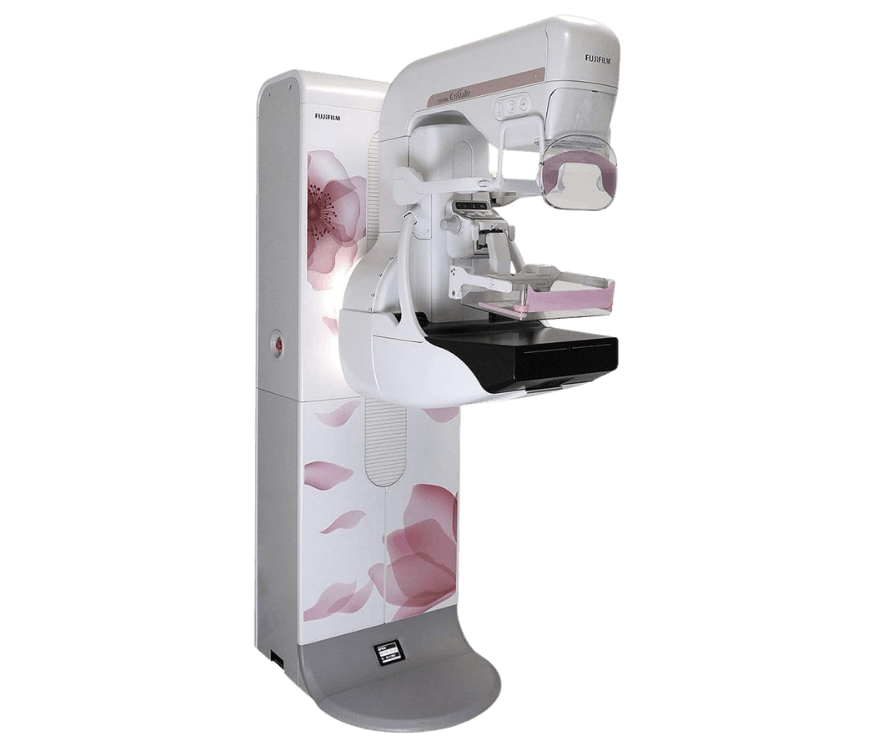
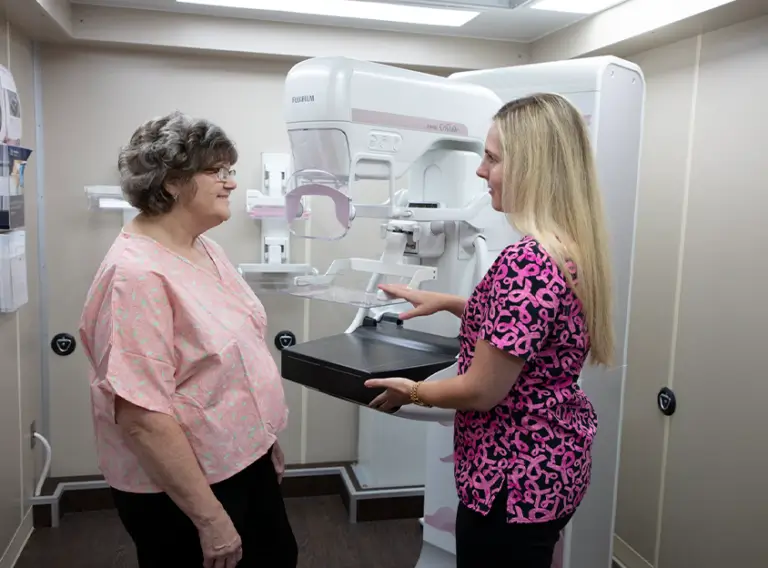
Authorized Fujifilm medical imaging equipment supplier. The ASPIRE Cristalle is Fujifilm’s third-generation FFDM system, built on nearly 35 years of digital mammography detector and image processing expertise. It solves three persistent problems in breast imaging: conventional square-pixel detectors that sacrifice charge collection efficiency, fixed-sensor AEC systems that struggle with dense or implant-containing breasts, and compression workflows that reduce patient compliance. The result is a mammogram machine designed to produce better images at lower dose with greater patient comfort.
Core mammography technology: Hexagonal Close Pattern (HCP) detector with 50μm output delivering 20% higher sensitivity than conventional square-pixel FFDM systems. The intelligent iAEC system performs morphological breast analysis before every exposure, eliminating over- and under-exposure across all tissue types. DVIIm AI image processing identifies skin line, glandular tissue, pectoral muscle, and adipose tissue, then auto-optimizes each region, making the ASPIRE Cristalle a complete diagnostic breast imaging solution for screening programs, high-volume departments, and specialty breast centers alike.
Need pricing? Get a quote with lead times and volume discounts within one business day.
HCP Detector, iAEC Intelligence & DVIIm Image Processing
Three core medical imaging technologies set the ASPIRE Cristalle apart from conventional mammography machines and legacy FFDM systems. Each addresses a measurable clinical limitation. Full technical detail is inside the expandable sections below.
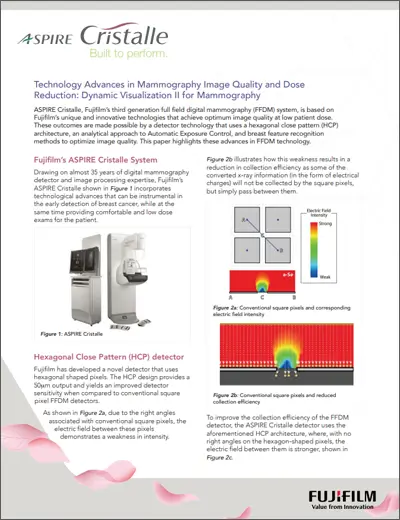
Pixel Architecture: Hexagonal shaped pixels eliminate the right-angle field weakness found in conventional square-pixel FFDM detectors
Electric Field Strength: Stronger electric field between hexagonal pixels “steers” converted electrical charges directly to each pixel, with no charge loss between pixels
Collection Efficiency: Measurably higher than square-pixel designs where charges pass between pixel gaps undetected
Output Resolution: 50μm pixel pitch
Sensitivity Gain: Approximately 20% increase in detector sensitivity vs. conventional square-pixel FFDM
Dose Implication: Higher sensitivity enables equivalent or superior image quality at reduced patient dose
iAEC Pre-Exposure Analysis: Morphological analysis of the pre-exposure image differentiates fibroglandular tissue, adipose tissue, pectoral muscle, and breast implants, then isolating the densest region before selecting exposure parameters
Dose Stabilization: Exposure optimization is independent of breast composition or patient positioning, eliminating over- and under-exposure
Implant Handling: iAEC calculates exposure automatically for patients with implants, removing manual technique adjustments
DVIIm Processing: AI-based feature recognition identifies skin line, pectoral muscle, adipose tissue, and glandular tissue in the acquired image, then auto-adjusts contrast and density region by region
Dense Breast Performance: DVIIm corrects for skin line loss and glandular tissue contrast deficiencies that affect conventional image processing
Microcalcification Conspicuity: DVIIm improves visibility of masses and microcalcifications that tissue superimposition or saturation may otherwise obscure
How the ASPIRE Cristalle compares against a conventional FFDM mammography system:
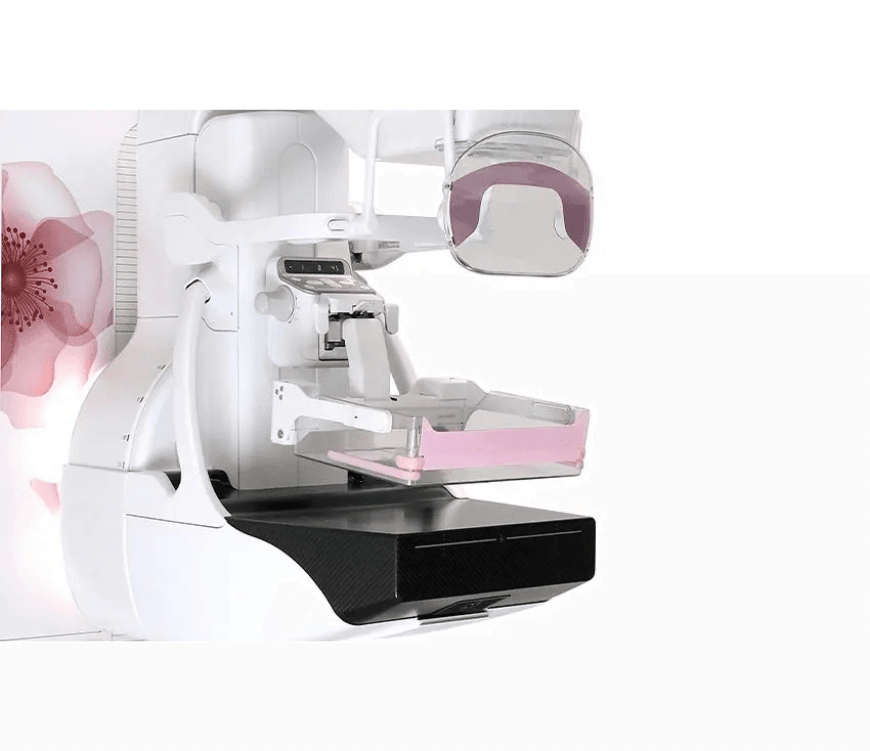
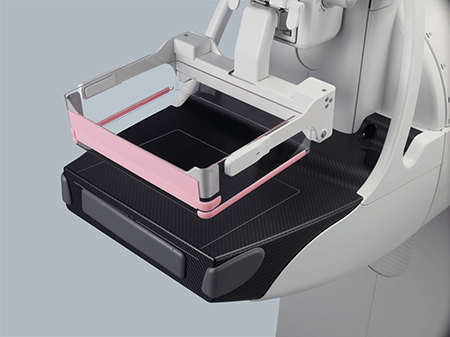
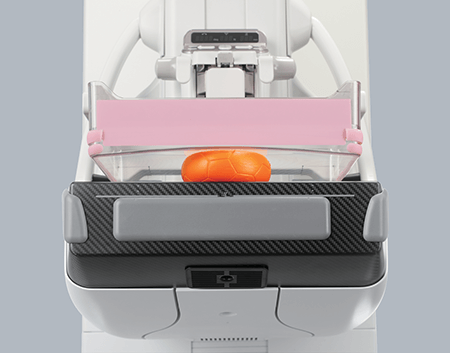
Fujifilm’s slotted-edge comfort paddle flexes to the individual shape of each breast, bending from the center toward the thinner edge, distributing compression more evenly than rigid paddles. Comfort Comp technology triggers an automatic reduction in compression immediately before exposure, meaning patients are compressed for the shortest possible time without sacrificing image quality. These features address the number-one barrier to mammography screening compliance: patient discomfort.
Full Technical Specifications
Complete reference data for capital equipment procurement, RFP submissions, and biomedical engineering review. This is the full specification set required by hospital radiology directors, imaging technology managers, and biomedical engineers evaluating mammography systems. Expand each category.
| System Generation | Third-generation FFDM (Full Field Digital Mammography) |
| Detector Architecture | Hexagonal Close Pattern (HCP) direct conversion |
| Pixel Output | 50μm pixel pitch |
| Sensitivity vs. Square Pixel | ~20% increase in detector sensitivity |
| Image Processing | Dynamic Visualization II for Mammography (DVIIm) with AI-based feature recognition |
| ISC | Image-based Spectrum Conversion that optimizes contrast for all exposures and breast types |
| Dose Modes | H (High), N (Normal), L (Low), technologist selectable |
| AEC System | iAEC, an intelligent Automatic Exposure Control system with morphological pre-exposure analysis |
| iAEC Tissue Recognition | Fibroglandular, adipose, pectoral muscle, implants |
| AGD Comparison (60mm, 20% glandular) | Competitor: 355% higher (L mode), 210% higher (N mode) vs. ASPIRE Cristalle |
| Comfort Comp | Automatic compression reduction before exposure, which reduces compression hold time |
| DBT Acquisition | Multiple low-dose images acquired from different angles |
| Reconstruction | Reconstructed into slices, viewable individually or dynamically |
| Clinical Benefit | Identifies lesions obscured by tissue overlap on standard 2D mammography and reduces recall rates |
| DBT Dose | Comparable dose reduction vs. competitive DBT systems (independent evaluation) |
| CEDM Modality | Contrast-Enhanced Digital Mammography |
| Abnormality Detection Basis | Blood vessel enhancement, morphological characteristics, and tissue density |
| Information Level | Comparable to breast MRI |
| Advantage vs. Breast MRI | Less expensive and less time-consuming while providing similar diagnostic information |
| QC Method | Single exposure of Single exposure of One Shot Phantom M Plus with automated pass/fail analysis |
| Tests Performed | Missed Tissue at Chest Wall, CNR, Sensitivity, Geometric Distortion, Uniformity, Dynamic Range, Spatial Resolution, Low Contrast Detectability, Linearity / Beam Quality |
| Data Management | Trend graphs, medical physicist testing support, data export to spreadsheet format |
| Included Standard | Yes, included with all Fujifilm FFDM systems |
Clinical Applications
Deployed across the full range of breast imaging environments, from high-volume screening programs where throughput and patient comfort drive compliance to specialty diagnostic settings where multi-modality capability and image precision are mission-critical.
iAEC and DVIIm deliver consistent image quality across all breast types without manual technique selection, maximizing throughput on a new mammogram machine built for volume.
DVIIm’s AI feature recognition provides enhanced conspicuity of masses and microcalcifications that conventional image processing may miss in dense or superimposed tissue.
DBT slices resolve overlapping tissue structures that obscure lesions on standard 2D acquisitions, reducing recall rates and unnecessary patient callbacks.
CEDM identifies enhancing lesions based on blood vessel characteristics and tissue density, providing breast MRI-level diagnostic information at significantly lower cost.
iAEC isolates fibroglandular regions in all breast compositions before exposure; DVIIm corrects glandular contrast and skin line visibility automatically, with no manual adjustments required.
iAEC automatically calculates exposure parameters for patients with breast implants, eliminating the manual technique changes that slow workflow and increase operator variability.
Acquisition Workflow, DBT & CEDM Integration
A complete breast imaging solution engineered to streamline every step, from patient positioning through image acquisition to PACS delivery. The ASPIRE Cristalle supports mammogram system upgrades by fitting into existing radiology infrastructure with a compact footprint and intuitive operator interface. Expanded details on each workflow mode are in the expandable sections below.
The ASPIRE Cristalle’s iAEC system performs a pre-exposure morphological analysis automatically. After positioning, the technologist initiates exposure — iAEC selects optimal kV and mAs based on actual tissue composition, not fixed sensor averages. Smart shortcuts set exposure parameters and confirm images on a single screen. Automatic startup and sleep mode improve system availability throughout the day.
DBT on the ASPIRE Cristalle captures a series of low-dose images from multiple angles in a single sweep. These are reconstructed into thin slices that radiologists can review individually or scroll through dynamically — separating overlapping tissue structures that create false positives or missed findings on standard 2D. Dose levels are comparable to or lower than competitive DBT systems based on independent evaluation.
Contrast-Enhanced Digital Mammography (CEDM) follows a straightforward protocol: contrast agent is administered, and the ASPIRE Cristalle acquires both low-energy and high-energy images that are processed to display enhancing regions. CEDM is appropriate for patients who require additional characterization beyond standard mammography or tomosynthesis, offering breast MRI-comparable information at lower cost and with shorter exam time.
The One Shot Phantom M Plus QC program is included with all Fujifilm FFDM systems. A single phantom exposure automatically generates pass/fail results for nine system performance parameters, accumulates trending data over time, supports medical physicist annual testing, and exports all QC data to spreadsheet format for regulatory documentation.
The ASPIRE Cristalle features a compact footprint that fits into virtually any radiology department without major renovation. An intuitive design minimizes training requirements, allowing staff to begin using the system quickly. The advanced imaging capabilities support a wide range of patients and heavy clinical workflows — making it a practical mammogram system upgrade for facilities seeking improved dose performance and patient comfort.
Regulatory Compliance & Safety
FDA cleared for 2D FFDM, Digital Breast Tomosynthesis, and CEDM. FUJIFILM Healthcare Americas Corporation is a leading provider of diagnostic imaging products backed by decades of validated clinical performance. Medical Outfitters is an ISO 13485:2016-certified supplier of medical imaging equipment, meaning every ASPIRE Cristalle ships through a documented, audited quality management system. Full compliance documentation available in the expandable sections below.
FDA Cleared: The Fujifilm ASPIRE Cristalle is FDA cleared for 2D full field digital mammography, Digital Breast Tomosynthesis (DBT), and Contrast-Enhanced Digital Mammography (CEDM). Suitable for use in U.S. hospital radiology departments, breast centers, and outpatient imaging facilities.
ISO 13485: Medical Outfitters Inc. is independently ISO 13485:2016 certified as a diagnostic medical imaging equipment supplier, ensuring every unit ships through a documented, audited quality management system.
AGD Performance: Independently evaluated Average Glandular Dose demonstrates significant reduction vs. competitive FFDM systems across all breast thicknesses and compositions.
Image Processing Standard: DVIIm Dynamic Visualization II processing is designed to meet diagnostic imaging quality standards for all FFDM use cases including screening, diagnostic, DBT, and CEDM.
QC Program: One Shot Phantom M Plus supports full regulatory QC documentation requirements including medical physicist annual testing.
RoHS: Restriction of Hazardous Substances compliant.
REACH: EU REACH chemical regulation compliant.
FUJIFILM Healthcare Americas: Manufactured by FUJIFILM Healthcare Americas Corporation, Lexington, MA — a leading provider of diagnostic imaging products with nearly 35 years of digital mammography expertise.
Site Planning & Facility Review
Provide your department layout, existing PACS infrastructure, and patient volume. Our team confirms the ASPIRE Cristalle’s compact footprint fits your facility and coordinates installation planning before shipment.
Capital Equipment & RFP Support
Volume pricing, technical documentation, and multi-site logistics for mammogram system upgrade projects. We support radiology directors, biomedical engineers, and hospital purchasing departments. Contact us for RFP packages and trade-in evaluations.
Frequently Asked Questions
Quick answers to the most common purchase and technical questions about the Fujifilm ASPIRE Cristalle digital mammography system. Tap any question to expand.
The Fujifilm ASPIRE Cristalle is a third-generation full field digital mammography (FFDM) system featuring a Hexagonal Close Pattern (HCP) detector with 50μm output, iAEC intelligent exposure control, DVIIm AI image processing, Digital Breast Tomosynthesis (DBT), and contrast-enhanced digital mammography (CEDM). Built on nearly 35 years of Fujifilm mammography expertise.
Pricing varies by configuration and installation scope. Medical Outfitters returns a quote within one business day. Submit a request online or call (305) 885-4045. We also support trade-in evaluations for mammogram system upgrade projects.
The Hexagonal Close Pattern (HCP) detector uses hexagonally shaped pixels instead of conventional square pixels. This eliminates right-angle electric field weaknesses, improves charge collection efficiency, and delivers approximately 20% higher detector sensitivity at a 50μm output, enabling better image quality at lower patient dose.
Yes. The ASPIRE Cristalle supports DBT, capturing multiple low-dose images from different angles that are reconstructed into slices for individual or dynamic review. DBT identifies lesions obscured by tissue overlap on standard 2D mammography and can reduce patient recall rates.
Contrast-Enhanced Digital Mammography (CEDM) identifies enhancing lesions based on blood vessel characteristics, morphology, and tissue density, providing diagnostic information comparable to breast MRI but at lower cost and in less exam time.
Three technologist-selectable dose modes (H, N, L), the 20% sensitivity gain of the HCP detector, and iAEC’s dose stabilization combine to deliver significantly lower average glandular dose. Independent testing shows competitive FFDM systems deliver up to 355% higher AGD than the ASPIRE Cristalle in L mode for a 60mm, 20% glandular equivalent breast.
Yes. FDA cleared for 2D FFDM, Digital Breast Tomosynthesis, and contrast-enhanced digital mammography (CEDM). Medical Outfitters Inc. is ISO 13485:2016 certified as the supplying distributor.
Through Medical Outfitters Inc., ISO 13485:2016 certified, Miami, FL. New, refurbished, and used units with nationwide installation support. Call (305) 885-4045 or request a quote online.
Compatible Equipment
Breast imaging equipment commonly deployed alongside the Fujifilm ASPIRE Cristalle, from biopsy specimen radiography systems used to verify mammography-guided procedures to vacuum-assisted biopsy devices and complementary Fujifilm FFDM platforms.
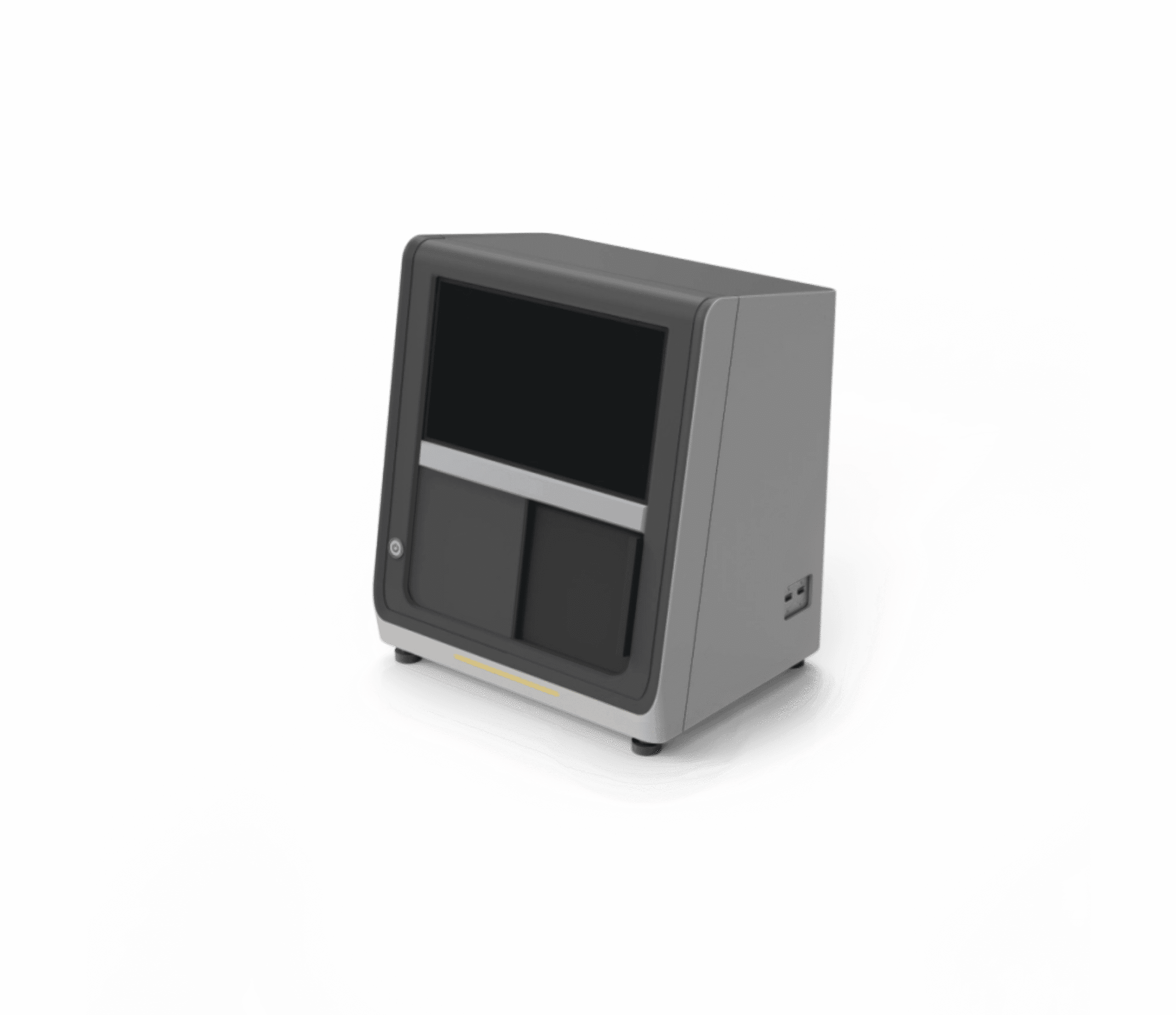
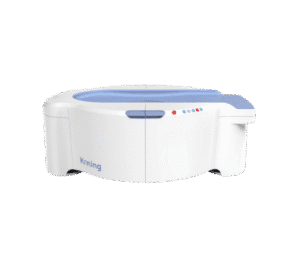
TrueView Core 100Pro Specimen Radiography
Biopsy specimen verification · CMOS detector · automatic calcification recognition · PACS/DICOM
View Product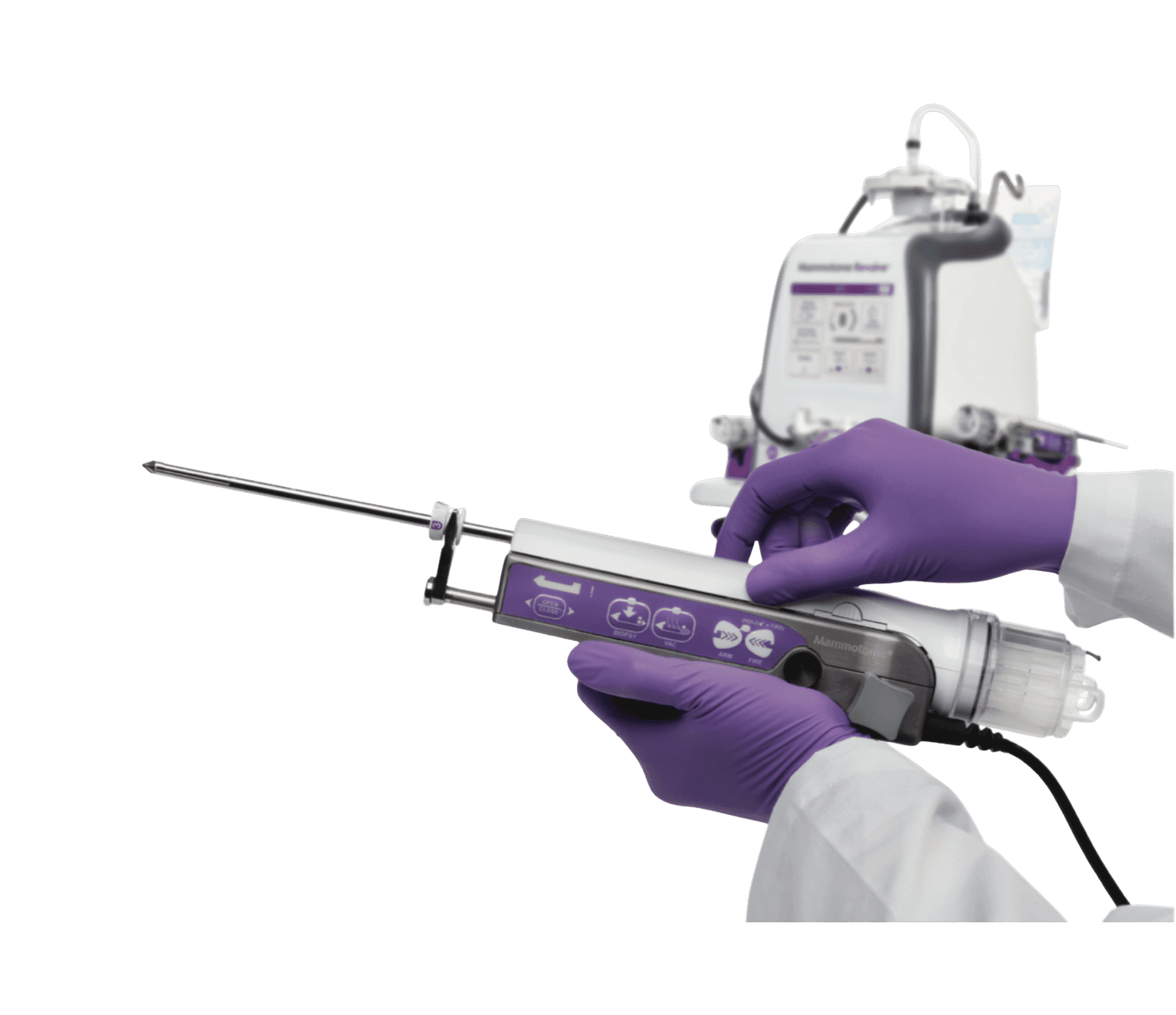
Mammotome Revolve Biopsy System
Vacuum-assisted biopsy · ultrasound-guided · stereotactic · breast biopsy
View Product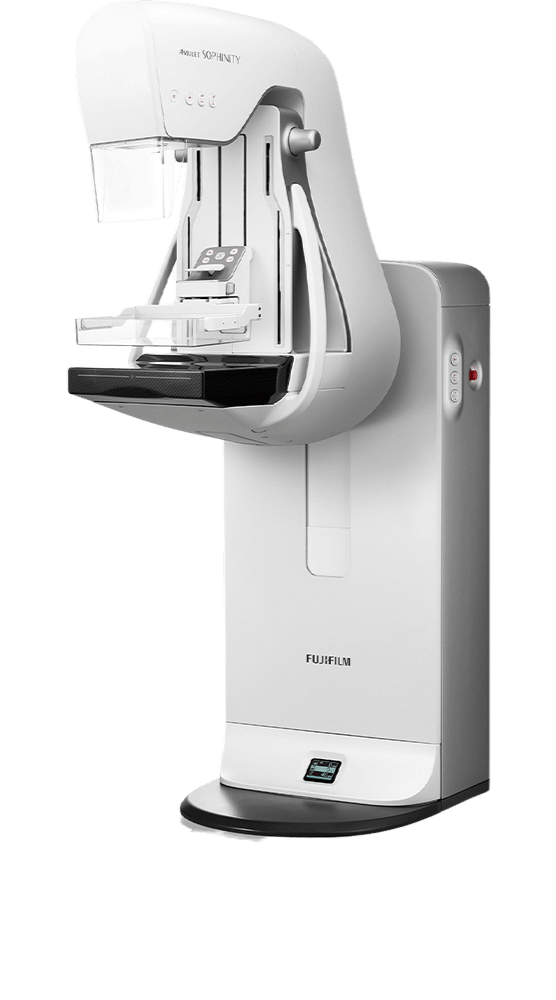
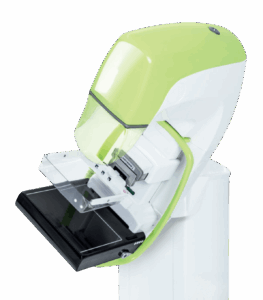
Fujifilm Amulet Sophinity
Fujifilm FFDM · DBT · CEDM · breast tomosynthesis · high-volume screening
View ProductRequest a Quote Today
Get in touch with Medical Outfitters today to request your personalized quote and outfit your facility with confidence.