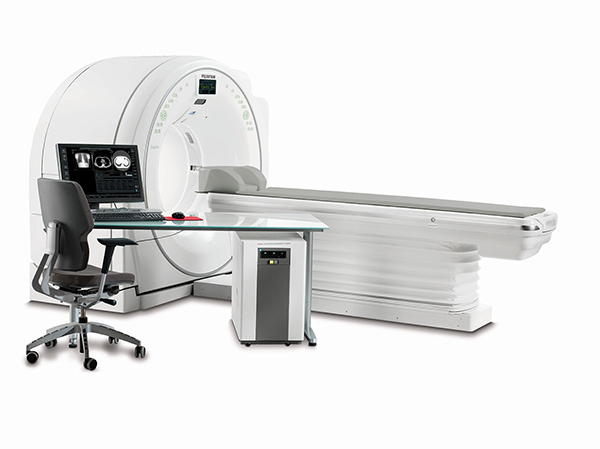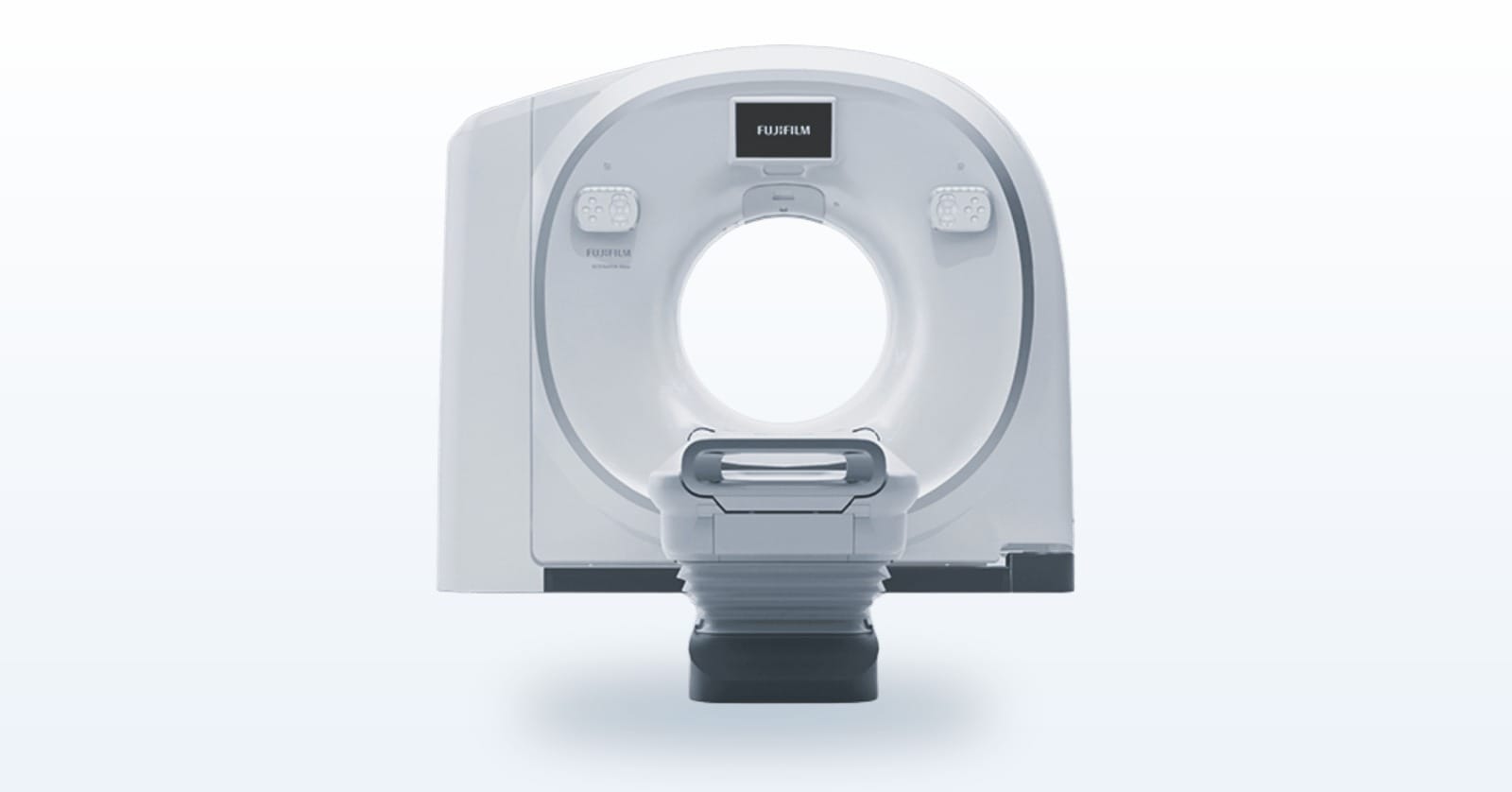
Five CT scanner manufacturers account for almost every scanner installed in the United States: GE Healthcare, Siemens Healthineers, Philips, Canon Medical and Fujifilm. All five make good scanners. The differences that matter to a buyer are not image quality at the top of each range but the shape of the range, the cost of the X-ray tube, the depth of the refurbished market, the service network in your region and how long the software stays supported.
This guide compares the CT scanner brands on those terms. It covers each maker’s current and legacy families by slice tier, what each is known for, what the refurbished market looks like, and the questions to ask before you sign. It does not rank them. The best CT scanner brand for a cardiac program in a large hospital is not the best brand for a two-room outpatient center, and neither is the best choice for a clinic that needs a scanner serviced on an island.
- GE and Siemens have the largest installed bases and the deepest refurbished markets, which keeps parts, engineers and resale value strong.
- Philips is distinguished by spectral detector CT; Canon by 320-row whole-organ coverage; Fujifilm by compact, competitively priced new scanners with a 75 cm bore.
- The tube, the service contract and the software end-of-support date decide the ten-year cost more than the badge on the gantry.
- Where we stand: Medical Outfitters sells Fujifilm new as an authorized dealer, and GE and Siemens refurbished and used through MO Select. We do not sell GE, Siemens or Philips scanners new.
All of our current inventory is on the CT scanners for sale page, and our guide to CT scanner types by slice count explains the tiers referred to throughout this article.
CT Scanner Manufacturers Compared at a Glance
| Brand | Known for | Families you will see quoted | Refurbished market |
|---|---|---|---|
| GE Healthcare | Largest installed base, strong parts supply, ASiR-V and TrueFidelity reconstruction | BrightSpeed, LightSpeed, Optima CT660, Revolution | Deepest of any brand; 16 and 64-slice units widely available |
| Siemens Healthineers | Dose-reduction technology, dual-source speed, tin-filter imaging | SOMATOM Scope, Emotion, Definition AS and Edge, go platform, Force | Strong for Scope, Emotion and Definition AS |
| Philips | Spectral detector CT, iDose and IMR reconstruction, workflow tools | Brilliance, Ingenuity, Incisive, iCT, Spectral CT | Moderate; Brilliance and Ingenuity most common |
| Canon Medical (formerly Toshiba) | Wide-coverage 320-row imaging, large-bore systems, AiCE deep-learning reconstruction | Aquilion Lightning, Prime, ONE, Exceed LB | Moderate; Aquilion 16 and 64-slice units |
| Fujifilm (formerly Hitachi) | Compact footprint, 75 cm bore, value pricing on new systems | Supria, SCENARIA View, iStream | Small; most systems still in first ownership, certified pre-owned units exist |
Two smaller names appear in some quotes. United Imaging, a newer entrant, sells a full range from 16-slice to wide-coverage systems at aggressive prices, and Samsung NeuroLogica makes portable point-of-care CT scanners for neuro-ICUs and operating rooms. Neither has the North American service depth of the five above yet, and over a ten-year life that matters more than the purchase price.
What Actually Separates the CT Scanner Brands
The shape of the range, not the peak
Every brand’s flagship produces excellent images. What differs is how each maker fills the tiers below it. GE and Siemens have complete lines from 16 slices to premium, with several generations of each on the secondary market. Fujifilm concentrates on compact 16 to 128-slice systems for outpatient and community-hospital buyers. Canon is strongest at the top of the range. Philips competes across the range with spectral imaging as its distinguishing technology.
The tube
The X-ray tube is the most expensive consumable in radiology. Each brand designs its own, tube prices differ by tens of thousands of dollars between platforms, and life expectancy varies with the tube design and how hard the scanner is driven. On a refurbished purchase the tube’s remaining life, measured in scan seconds or exposures, is the single biggest variable in the price. On a new purchase the tube replacement terms in the service contract are the number to negotiate.
Parts, engineers and the installed base
A brand with a large installed base has more third-party engineers trained on it, more used parts in circulation and better refurbished pricing. That is why the refurbished market is deepest for GE and Siemens: the scanners were sold in the largest numbers, and independent service organisations can support them for years after the manufacturer’s contract ends. A scanner from a smaller vendor can be an excellent machine and still be hard to keep running in a region where nobody else has one.
Software support and end of life
Manufacturers eventually stop releasing software updates and security patches for older platforms, and hospital IT departments increasingly refuse to connect unsupported systems to the network. Ask when the platform you are quoted reached, or will reach, end of support, and what that means for cybersecurity compliance and DICOM connectivity. A refurbished scanner two generations old can still be a good buy if the answer is clear.
Resale value
Because refurbishers look for platforms with deep parts supply and a big installed base, the brands that are easy to buy used are also easy to sell used. That matters if you plan to trade the scanner in after seven or eight years rather than run it to the end. Our guide on who buys used medical imaging equipment explains how that market values a scanner.
GE Healthcare CT Scanners
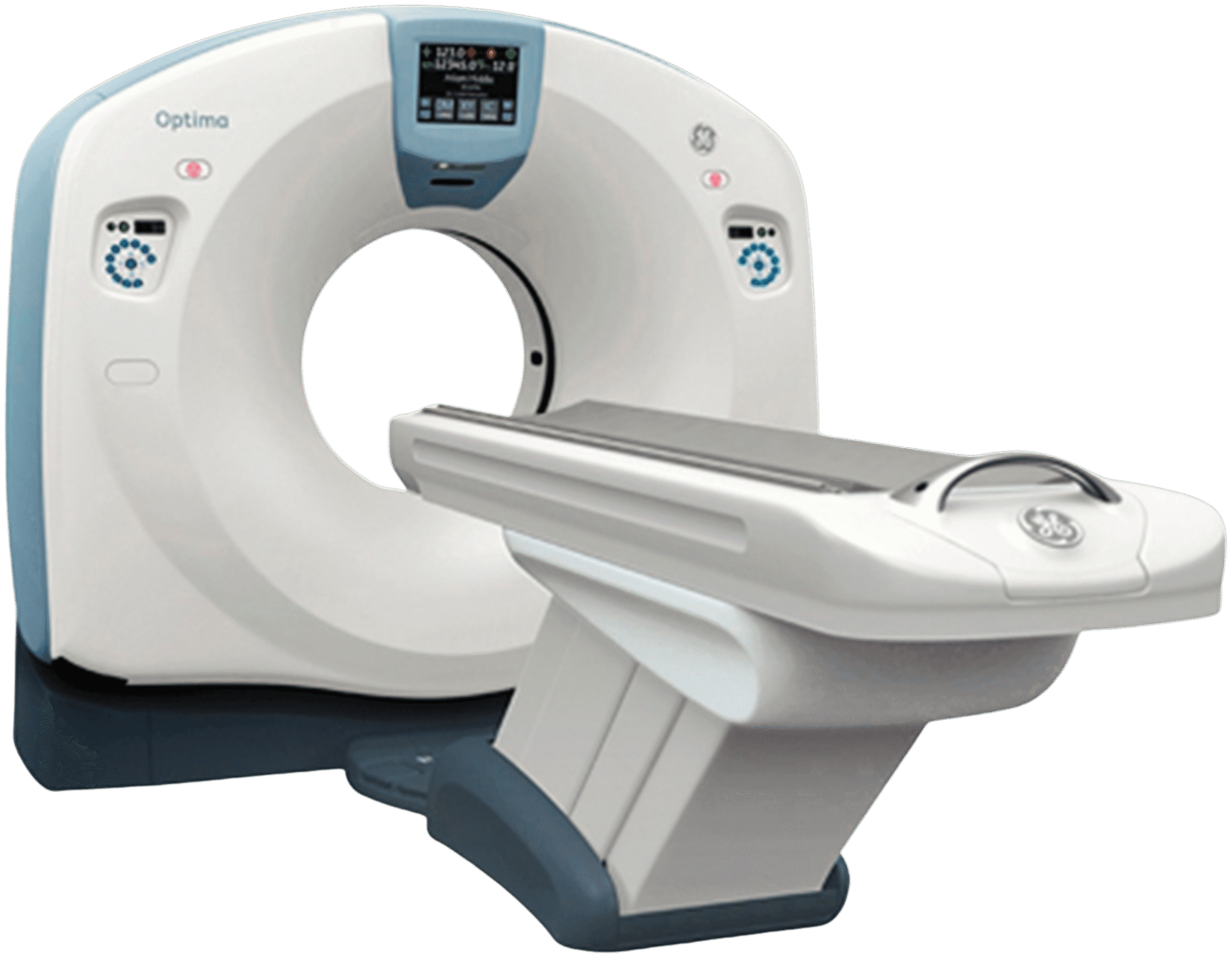
GE’s CT line runs from the 16-slice BrightSpeed and LightSpeed families through the 64-slice LightSpeed VCT and Optima CT660 to the Revolution family, which spans 64-slice community systems to the 256-slice Revolution CT and Apex. GE is known for its reconstruction software, ASiR-V and the deep-learning TrueFidelity on Revolution systems, and for a service ecosystem so large that independent engineers and parts are available almost everywhere.
For buyers that makes GE the most liquid brand on the refurbished market. A rebuilt BrightSpeed Elite 16-slice, LightSpeed VCT 64 or Optima CT660 is a mainstream community-hospital scanner at a refurbished price, with tubes and parts easy to source. We sell GE scanners refurbished and used only, through MO Select, with a written warranty and installation by our own engineers.
Siemens Healthineers CT Scanners
Siemens sells the 16-slice SOMATOM Scope and Emotion, the Definition AS family that spans 20 to 128 slices, the Definition Edge and the current SOMATOM go platform, which ranges from the 32-slice go.Now to the 128-slice go.Top and includes a radiation-therapy version, go.Sim. At the top sit the dual-source Definition Flash and SOMATOM Force. Siemens’ reputation rests on dose reduction, its tin-filter technology for low-dose chest and pediatric imaging, and the speed of its dual-source scanners for cardiac work.
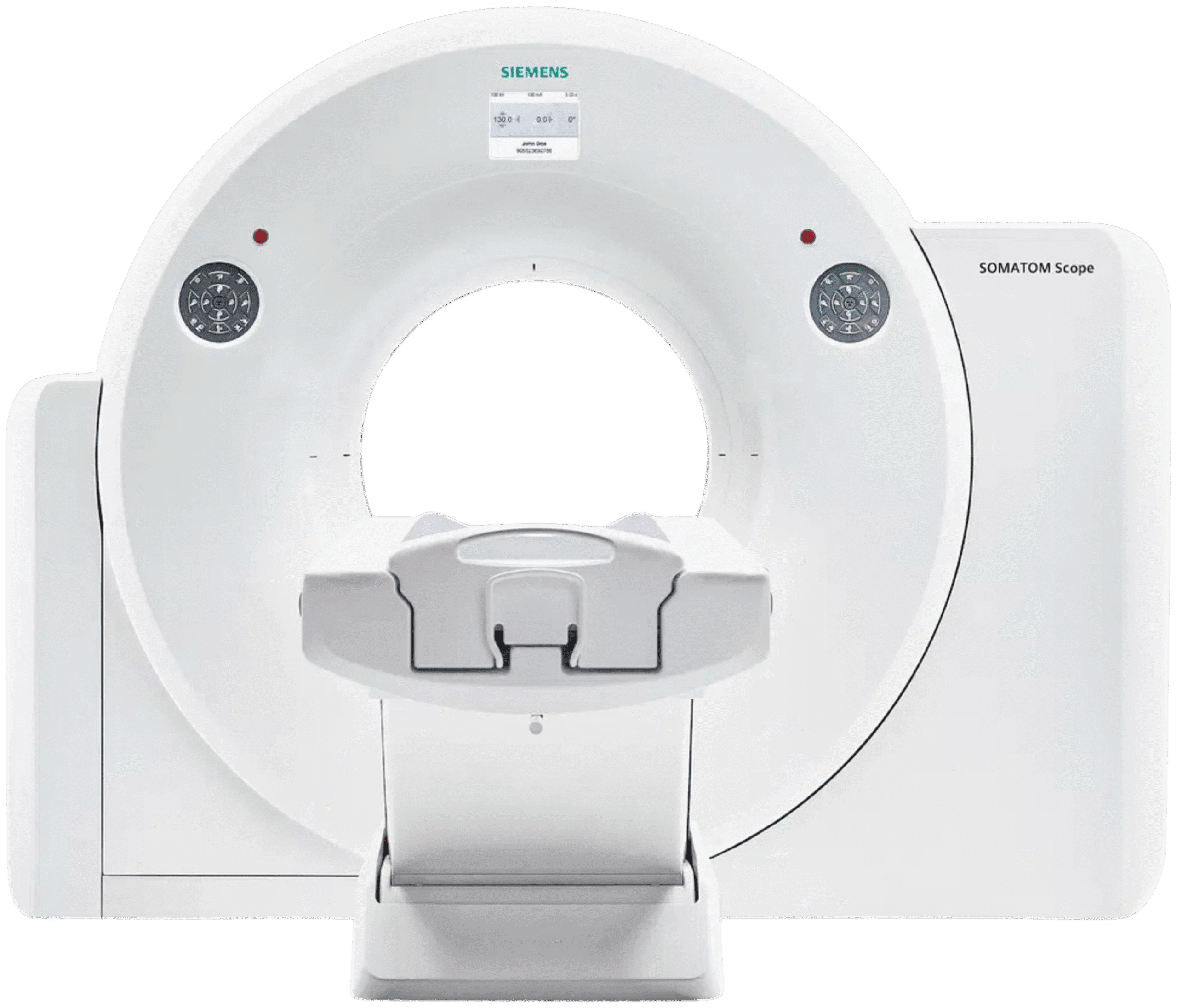
The refurbished market is strong for the Scope, Emotion and Definition AS generations, which were sold in large numbers to hospitals now upgrading. The Siemens SOMATOM Scope in our inventory is a typical example: a reliable 16-slice platform rebuilt for outpatient imaging. As with GE, we sell Siemens scanners refurbished and used only.
Philips CT Scanners
Philips’ line runs from the Brilliance 16 and 64 through the Ingenuity Core and Elite to the current Incisive CT, with the iCT 256 and the spectral detector systems, IQon and Spectral CT 7500, at the top. Philips’ distinguishing technology is spectral detector CT, which captures two energy levels in every scan without a special protocol, and its iDose and IMR reconstruction packages. Philips scanners are well regarded for workflow and patient-positioning tools.
The refurbished market is moderate: Brilliance and Ingenuity systems are available, but in smaller numbers than the GE and Siemens equivalents, and parts supply is thinner outside the main metropolitan markets. We source Philips scanners refurbished or used on request and do not sell them new.
Canon Medical CT Scanners
Canon Medical, which acquired Toshiba Medical in 2016, sells the Aquilion family: the 16 and 80-slice Aquilion Lightning, the 80 and 160-slice Prime SP, the 320-row Aquilion ONE that images the entire heart or brain in a single rotation, and the large-bore Aquilion Exceed LB for radiation-therapy planning. Its AiCE deep-learning reconstruction was among the first of its kind. Canon is strongest where wide coverage matters: cardiac, stroke and pediatric imaging.
On the secondary market, Aquilion 16 and 64-slice systems appear regularly; the wide-coverage systems rarely do at attractive prices. Canon systems are available through the secondary market on request.
Fujifilm CT Scanners
Fujifilm acquired Hitachi’s diagnostic imaging business in 2021 and with it a CT line built for community and outpatient buyers: the Supria family from 16 to 128 slices, known for its compact footprint and 75 cm bore, the SCENARIA View in 64 and 128-slice configurations, and the 128-slice iStream. Fujifilm’s proposition is a new scanner, with a full manufacturer warranty and current software, at a price that competes with refurbished systems from the larger brands, in a gantry that fits rooms designed for older scanners.
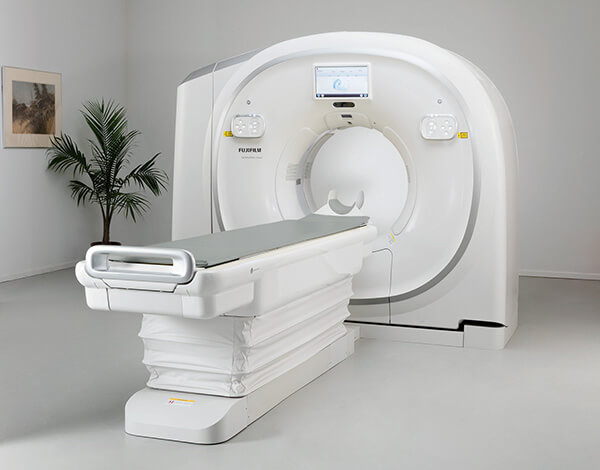
We are a Fujifilm authorized dealer and sell the Supria 32, Supria 128, SCENARIA View, SCENARIA View Focus Edition and iStream 128 new, with certified pre-owned units when they become available. Because most Fujifilm scanners are still in first ownership, the refurbished market is small.
The Ten-Year Cost Is Not the Purchase Price
Over a ten-year life, the scanner’s purchase price is often less than half of what it costs to own. The rest is one or two tube replacements, the service contract, software upgrades and licences, the room work at installation, and the electricity and cooling it draws. Brands differ on every line: tube prices vary widely, service contracts are priced by the manufacturer’s leverage in your region, and software upgrade policies range from included to expensive.
The practical consequence is that a refurbished 64-slice scanner from a high-volume brand, bought with a fresh tube and a fixed-price service contract, frequently costs less over ten years than a new scanner from a smaller vendor with an unknown service situation, and a new compact scanner can cost less than a refurbished premium one once room work is counted. Our CT scanner cost and price guide puts ranges on each of those lines, and the refurbished vs OEM-certified guide explains what a proper rebuild includes.
Questions to Ask Any CT Scanner Vendor, Whatever the Brand
- What is the physical detector row count and the coverage per rotation, in millimetres, of the configuration quoted?
- What is the tube’s remaining life on a refurbished unit, and what are the replacement terms on a new one?
- Which reconstruction and dose-reduction packages are installed and licensed to this serial number?
- When does this platform reach end of software support, and what does that mean for your IT security policy?
- Who services the scanner in your region, with what response time, and is that in writing?
- What is included in installation: rigging, room layout, shielding review, calibration, applications training?
- Is the warranty written, and what does it exclude?
Those questions matter more than the badge on the gantry. Ask us to answer them for any system on our CT scanners for sale page, or for a scanner you are considering from another source, and see the Florida delivery and installation page for local timelines.
CT Scanner Brands: Common Questions
Which CT scanner brand is the best?
No single brand is best for every facility. GE and Siemens have the largest installed bases and the deepest refurbished markets, Philips is distinguished by spectral detector CT, Canon by wide-coverage 320-row imaging, and Fujifilm by compact, competitively priced new scanners. The right brand depends on the exams you run, the room you have and who can service the scanner in your region.
Which CT scanner brands are easiest to buy refurbished?
GE and Siemens. Their 16 and 64-slice platforms, such as the GE BrightSpeed, LightSpeed VCT and Optima CT660 and the Siemens SOMATOM Scope, Emotion and Definition AS, were sold in large numbers, so refurbished units, tubes and parts are widely available and independent engineers know them well.
Does Medical Outfitters sell GE, Siemens or Philips CT scanners new?
No. We sell GE and Siemens CT scanners refurbished and used through our MO Select program, and we source Philips scanners refurbished or used on request. New CT scanners in our range are Fujifilm systems, which we sell as an authorized dealer.
Who makes Fujifilm CT scanners?
Fujifilm Healthcare acquired Hitachi's diagnostic imaging business in 2021, so current Fujifilm CT scanners such as the Supria, SCENARIA View and iStream families are the continuation of the Hitachi CT line. They are known for compact footprints, a 75 cm bore and value pricing on new systems.
What matters more than the brand when buying a CT scanner?
The physical detector row count and coverage per rotation, the condition and replacement terms of the X-ray tube, the reconstruction and dose software licensed to the system, the platform's software support end date, who services it in your region and with what response time, and whether the warranty and installation scope are in writing.
Is Canon the same as Toshiba for CT scanners?
Yes. Canon acquired Toshiba Medical Systems in 2016, so Aquilion scanners sold under the Toshiba name and current Canon Medical Aquilion systems are the same product line. Older Toshiba-badged Aquilion scanners appear on the refurbished market and are serviced with Canon parts.
Related Articles