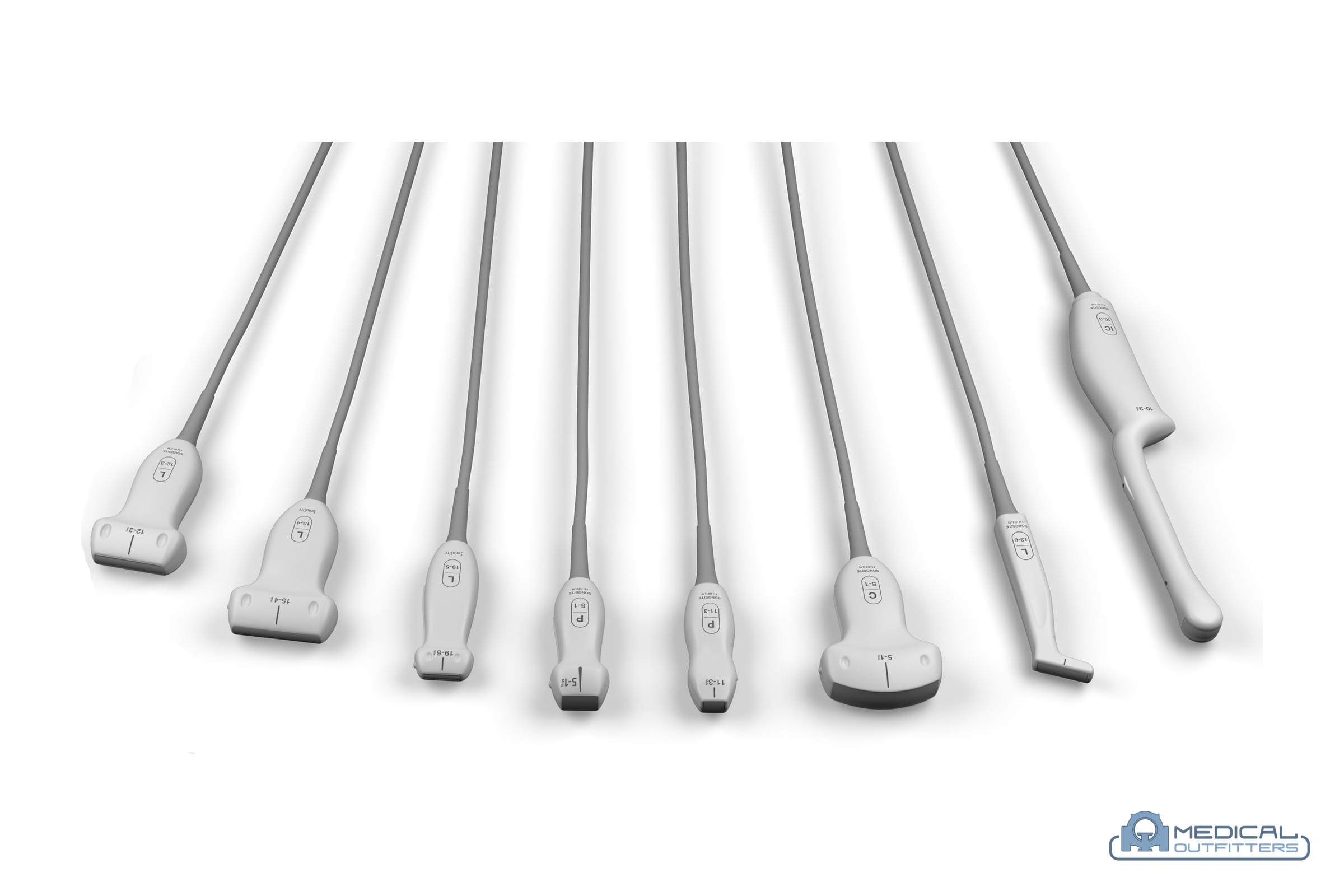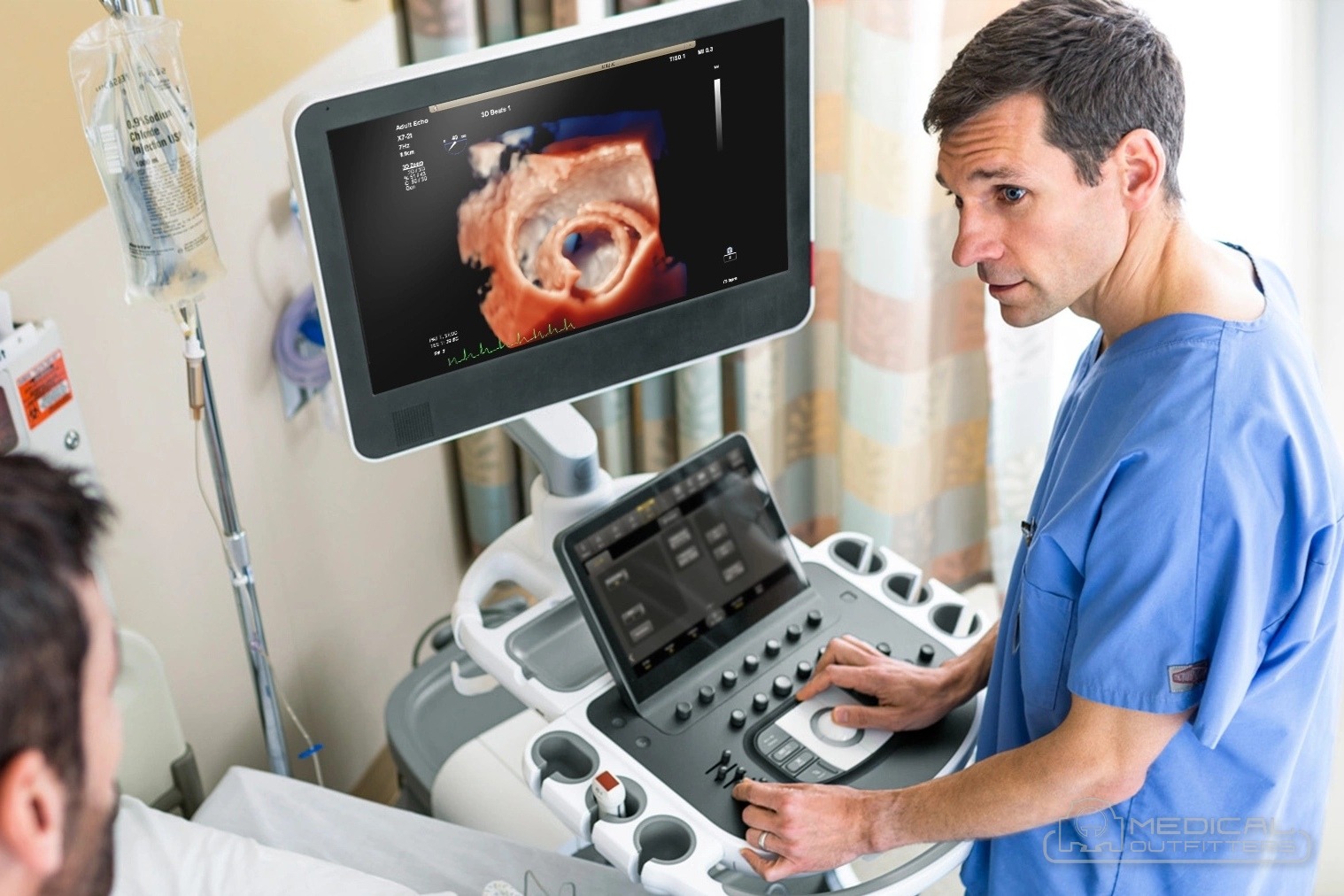
How much does an echocardiogram cost? More than almost any other ultrasound exam, and the echocardiogram cost depends on three things before anyone looks at a machine: which echo is ordered (a complete transthoracic study, a limited follow-up, a stress echo or a transesophageal echo under sedation), where it is done (a cardiology office, an independent imaging center or a hospital outpatient department) and who is paying (Medicare, a commercial insurer or the patient in cash). The exam itself is a 30 to 60 minute ultrasound of the heart performed by a cardiac sonographer and read by a cardiologist, with no radiation and, for the standard transthoracic study, no known risks. This guide lays out the 2026 echocardiogram cost by exam type, by setting and by payer, explains what Medicare pays and why a hospital bill for the same study can run three times higher, shows what the price-transparency studies found, and then turns to the facility side: what the echo machine behind the exam costs and how many studies it takes to pay for one.
Medical Outfitters sells the Fujifilm Lisendo 880 cardiovascular ultrasound system new as an authorized Fujifilm dealer, rebuilds GE Vivid and Siemens Acuson cardiac carts through its MO Select refurbished line, sources Philips EPIQ CVx and Affiniti CVx systems refurbished on request, and services ultrasound systems and tests probes across the United States, Puerto Rico and the Caribbean. The exam prices below are the revenue side of that purchase; the cardiac section of the ultrasound machine cost guide is the cost side. This article is written for the practice administrator, cardiology manager and facility owner pricing an echo lab, and it answers the patient’s question plainly on the way.
- Without insurance: about $500 to $1,200 cash at an independent cardiology clinic when you ask for the self-pay rate, $800 to $1,400 as a discounted hospital cash rate, and $2,000 to $3,500 at hospital list prices, with a national median near $1,800 (CoveredUSA, May 2026).
- Medicare: $197.85 for a complete transthoracic echo (93306) in an office or imaging center, $101.60 for a limited echo (93308), $186.15 for a stress echo (93350) and $240.62 for a transesophageal echo (93312) under the 2026 physician fee schedule, per the American Society of Echocardiography; the patient pays 20 percent after the $283 Part B deductible.
- Hospital outpatient: Medicare pays the hospital $558.25 under APC 5524 for a complete, stress or transesophageal echo, plus the cardiologist’s reading fee, so the same 93306 costs Medicare about $626 at a hospital against $198 in an office, our arithmetic on the ASE tables.
- With commercial insurance: in-network negotiated rates of about $300 to $550 for a transthoracic echo (CoveredUSA, May 2026), with the insured patient typically owing $50 to $400 after the deductible (CareRoute, September 2026); the hospital facility fee is where prices scatter, not the reading fee (JAMA Network Open, July 2026).
- The machine: $35,000 to $90,000 for a refurbished cardiac cart and $140,000 to $200,000 for a new one, delivered, installed and warrantied with the phased array probe, the Doppler suite and the cardiac package, per the Medical Outfitters ultrasound cost guide; Medicare pays the same per exam on either.
Echocardiogram Cost by Exam Type: Transthoracic, Limited, Stress and Transesophageal
Start with what is being ordered, because the cost of echocardiogram testing, the “echo test cost” of most searches, covers four different procedures. A complete transthoracic echocardiogram (TTE), billed as CPT 93306, is the standard study: two-dimensional images of the chambers and valves plus spectral Doppler and color flow mapping, taken through the chest wall. A limited or follow-up echo (93308) answers one question, such as whether fluid around the heart has changed. A stress echocardiogram (93350 or 93351 when the practice also supplies the treadmill and ECG monitoring) images the heart before and after exercise or a drug that raises the heart rate. A transesophageal echocardiogram (TEE, 93312) passes the probe down the esophagus under sedation for a closer view of the valves and the left atrium. MedlinePlus describes the TTE as the type most people have, performed by a sonographer and interpreted by a cardiologist, and the TEE as an invasive procedure with some risk.
CoveredUSA’s May 2026 echocardiogram cost guide, which draws on the CMS 2026 fee schedules, FAIR Health consumer data and hospital price-transparency files, puts a TTE at $1,000 to $3,500 without insurance, a TEE at $1,800 to $5,000 with sedation and monitoring included, and a stress echo at $1,500 to $5,000, and notes that independent clinics quote $500 to $1,200 for a TTE when the patient asks for a cash rate up front. CareRoute’s September 2026 guide lands lower at the bottom of the market, at $200 to $1,000 cash in a cardiology office or imaging center and $1,000 to $3,000 billed by a hospital outpatient department. The table puts those cash ranges next to the 2026 Medicare payment for each code, taken from the American Society of Echocardiography’s comparison of the CMS 2026 final rule, in the office and in the hospital.
| Echocardiogram | CPT code | Cash price, 2026 | Medicare, office or imaging center | Medicare, hospital outpatient (facility plus reading) |
|---|---|---|---|---|
| Transthoracic, complete with Doppler and color flow | 93306 | $500 to $3,500 | $197.85 | $625.76 |
| Transthoracic, complete without Doppler | 93307 | not published separately | $138.36 | $287.22 |
| Transthoracic, limited or follow-up | 93308 | not published separately | $101.60 | $268.50 |
| Stress echo, imaging only | 93350 | $1,500 to $5,000 | $186.15 | $625.76 |
| Stress echo, complete with ECG and supervision | 93351 | $1,500 to $5,000 | $234.27 | $639.46 |
| Transesophageal echo | 93312 | $1,800 to $5,000 | $240.62 | $663.52 |
| Transthoracic, congenital heart disease | 93303 | not published separately | $221.24 | $618.41 |
Sources: cash ranges from CoveredUSA’s May 2026 echocardiogram guide (the TTE range runs from its $500 independent-clinic cash figure to its $3,500 hospital figure). Medicare office figures are the 2026 national global payments in the ASE’s CY 2026 physician fee schedule comparison; the hospital column adds the 2026 APC rate from the ASE’s CY 2026 hospital outpatient comparison ($558.25 for APC 5524, $243.77 for APC 5523) to the same code’s professional component, our arithmetic. All Medicare figures are national rates before geographic adjustment.
Two patterns in that table matter more than any single number. First, Medicare’s office rate is flat and low: $100 to $240 for every echo code, and the complete study pays barely more than a complete abdominal ultrasound. Second, the hospital column is roughly three times the office column for the identical code, because Medicare pays the hospital a facility rate under the outpatient prospective payment system and pays the cardiologist’s reading on top. Every cash and commercial price in the market is anchored to one of those two numbers, which is why the next two sections take them in turn.
What Medicare Pays for an Echocardiogram: The Fee Schedule, the Hospital Rate and the Patient’s Share
The Medicare echocardiogram cost depends on where the exam is done, because Medicare pays for it two different ways. In a cardiology office or an independent imaging center the whole exam is paid under the Medicare Physician Fee Schedule as a single global fee that splits into a technical component (the sonographer, the machine and the room) and a professional component (the cardiologist’s interpretation). For 2026 the American Society of Echocardiography’s comparison of the CMS final rule puts the complete TTE with Doppler, CPT 93306, at $197.85 global, made up of $130.34 technical and $67.51 professional, up 5 percent from $187.93 in 2025. The limited echo (93308) pays $101.60, of which $76.87 is technical and $24.73 professional; the stress echo (93350) pays $186.15; the transesophageal echo (93312) pays $240.62, with $105.27 going to the physician. Those figures are national amounts at the 2026 conversion factor of $33.4009 per relative value unit, per the CMS fee schedule, before the geographic adjustment that moves them up or down by locality.
In a hospital outpatient department the technical side is paid instead under the outpatient prospective payment system, as an ambulatory payment classification (APC) rate, and the cardiologist bills the professional component separately. The ASE’s CY 2026 hospital outpatient comparison places the complete TTE, the stress echo, the TEE and the congenital study all in APC 5524, Level 4 Imaging without Contrast, at $558.25 for 2026, up 2 percent from $548.30, while the limited echo and the TTE without Doppler sit in APC 5523, Level 3 Imaging without Contrast, at $243.77. A contrast-enhanced echo billed with the hospital C codes (C8921 to C8930) is paid at $800.90 under APC 5573. The American College of Cardiology reports that CMS finalized a 2.6 percent increase to OPPS rates for 2026 overall. Add the reading fee and Medicare’s total for a hospital 93306 is $625.76, against $197.85 in the office, our arithmetic on the two ASE tables: 3.2 times the office price for the same images.
| Complete TTE with Doppler (93306), 2026 | Office or imaging center | Hospital outpatient |
|---|---|---|
| Technical side (sonographer, machine, room) | $130.34 (fee schedule TC) | $558.25 (APC 5524) |
| Professional side (cardiologist’s reading) | $67.51 | $67.51 |
| Medicare total | $197.85 | $625.76 |
| Patient’s 20 percent after the $283 Part B deductible | $39.57 | $125.15 |
The patient’s share follows the same split. Under Part B the beneficiary owes 20 percent of the Medicare-approved amount after the 2026 deductible of $283, which CoveredUSA cites from the CMS premiums and deductibles notice, so an office echo costs a Medicare patient about $40 in coinsurance and a hospital outpatient echo about $125, before any Medigap plan picks it up. CoveredUSA puts Medicare Advantage payments for a TTE at $220 to $280 and the Medicaid copay for outpatient cardiac imaging at $1 to $5. An echo done during an inpatient admission is not billed separately at all: CoveredUSA notes it is bundled into the diagnosis-related group payment for the stay.
Why the Same Echo Costs Two to Three Times More at a Hospital
The gap between the office and the hospital is the single largest driver of echocardiogram price, and it is structural rather than clinical. The sonographer uses the same phased array probe, follows the same American Society of Echocardiography protocol and sends the same loops to a cardiologist, but a hospital outpatient department bills a facility fee that a physician office does not have, and it negotiates commercial rates from the higher Medicare base shown above. CoveredUSA’s May 2026 guide prices a hospital outpatient TTE at $2,000 to $3,500 without insurance against $1,000 to $2,200 at an independent cardiology or imaging clinic, and attributes the difference to a facility fee of $500 to $1,500 on top of the scan and the reading. CareRoute’s September 2026 guide says the same thing from the other direction: the hospital facility fee can double or triple the price of the same echo, and a freestanding practice is often half the price or less.
The commercial data agree. The Health Care Cost Institute’s April 2026 imaging brief, built on 2022 commercial claims, found hospital outpatient imaging prices two to four times physician-office prices for the same services and put negotiated ultrasound prices at 245 percent of Medicare on average. Apply that multiplier to the two Medicare anchors and a commercially insured 93306 lands near $485 in an office and near $1,530 at a hospital, our arithmetic, which brackets the $300 to $550 in-network range CoveredUSA reports for clinics and the $1,000 to $3,000 CareRoute reports for hospital billing. For the patient the hospital also adds a second line of cost sharing, since the facility fee carries its own copay or coinsurance.
There are two settings where the hospital premium is unavoidable. The transesophageal echocardiogram cost includes sedation, airway monitoring and a recovery area, and CoveredUSA puts the TEE facility fee at $800 to $2,000 on top of the $350 to $420 the physician side bills; an echo ordered in the emergency department or during an admission is billed wherever the patient already is. For a routine outpatient TTE, though, the referring physician and the patient can choose the site, and the price-transparency rules described next are built to make that choice visible. For a facility, the lesson runs the other way: an office-based echo lab competes on a Medicare rate of $197.85 and a commercial rate a few hundred dollars above it, so the economics of the lab depend on volume and on keeping the equipment line small, which is the subject of the last section.
Echocardiogram Cost With Insurance and Without: Negotiated Rates, Cash Prices and the Good Faith Estimate
With commercial insurance the patient pays a share of the rate the insurer negotiated, not the list price. CoveredUSA’s May 2026 chargemaster analysis puts the in-network negotiated rate for a TTE at $300 to $550 and cites a Circulation abstract on out-of-network echocardiography pricing with a median interquartile range of $744 to $1,948. CareRoute’s September 2026 guide says an insured patient typically owes $50 to $400 as a copay or coinsurance once the deductible is met, and the full contracted rate until it is met on a high-deductible plan. That last point is the one that surprises people: on a $3,000 deductible in January, a $1,500 hospital echo is paid entirely by the patient at the insurer’s negotiated rate, while the same study at an in-network cardiology office might be $450.
The echocardiogram cost without insurance comes down to the self-pay price, because the posted hospital charge is not what anyone is expected to pay. CoveredUSA’s analysis of hospital chargemaster files puts the average list price for CPT 93306 at $2,497 nationwide, with an interquartile range of $1,731 to $3,576, and cites a peer-reviewed study of echocardiography pricing that found the median chargemaster price was 5.38 times what hospitals were actually paid. Discounts of 30 to 60 percent off the chargemaster are common, which brings a hospital’s cash rate to about $800 to $1,400; an independent cardiology clinic quotes $500 to $1,200, and prepaid bundles sold through self-pay marketplaces run $700 to $900. CareRoute’s bottom of the market is $200 to $1,000 cash in an office or imaging center. Those are the figures behind the quick answer at the top of this page.
Two federal rules put those prices on paper. Under the No Surprises Act, a self-pay or uninsured patient who schedules an echo at least three business days ahead is entitled to a written Good Faith Estimate, and CoveredUSA notes that a final bill $400 or more above the estimate can be taken to the patient-provider dispute process. Under the hospital price transparency rule at 45 CFR Part 180, every hospital must post a machine-readable file of its standard charges, including the cash price and each payer-specific negotiated rate, and a consumer-friendly list of shoppable services; echocardiography is one of the services researchers have used to test whether those files are complete, which is the subject of the next section. For a facility, the practical consequence is that your cash price for 93306 is public, comparable and increasingly searched, so an office-based lab with a clear self-pay rate near the middle of CoveredUSA’s $500 to $1,200 band is pricing against hospitals charging two to three times more for the same loops.
Why Echocardiogram Prices Vary So Much: What the Transparency Studies Found
Echocardiography has been a favorite test case for price-transparency researchers because it is common, standardized and performed in every kind of facility, and the findings explain why any single “average echocardiogram price” is misleading. In a study published in JAMA Internal Medicine in July 2022, Andrew Oseran, Rishi Wadhera and colleagues at Beth Israel Deaconess Medical Center pulled the posted price files of 20 top-ranked US hospitals and found that the median negotiated price for an echocardiogram ranged from $204 to $2,588 across hospitals, which the senior author described as a tenfold difference, and that within a single hospital the price paid for the same echo ranged from $470 to $3,022 depending on which insurer was paying. Only seven of the 20 hospitals posted prices for every cardiovascular test in the study. The authors attributed the spread to bargaining power rather than quality, since the hospitals were deliberately similar.
A larger 2026 study found where the spread lives. In JAMA Network Open on July 16, 2026, Alexander Philips, Sanket Dhruva and Christopher Whaley analyzed April 2025 Transparency in Coverage files from Blue Cross Blue Shield, UnitedHealthcare, Cigna and Aetna, which together hold 78 percent of the commercial market, across 32 cardiology services. For the transthoracic echocardiogram the facility price had a coefficient of variation of 3.87, while the professional (reading) fee had a coefficient of variation of 0.61. In plain terms, cardiologists are paid roughly the same for reading an echo everywhere, and almost all of the price variation is in what the facility charges for the room, the sonographer and the machine. That is the facility fee again, and it is why two hospitals in the same city can post echo prices a thousand dollars apart while paying the same reading fee.
For a buyer of an echo lab the studies carry a plain message: the machine does not set the price, the contract does. A refurbished GE Vivid and a new Fujifilm Lisendo 880 bill the same CPT code and earn the same Medicare rate, and the spread between a $450 office echo and a $1,500 hospital echo is a matter of site of service and negotiated rates, not image quality. What the equipment does decide is whether the lab can do the studies that pay more, since a stress echo, a TEE or a 3D study needs the probe ports, the licensed cardiac package and the processing that only a cardiac cart carries. The ultrasound transducer types explainer covers what the phased array and TEE probes do, and the ultrasound service page covers how probes are tested, because on a cardiac cart the TEE probe is the component that fails and the one that costs most to replace.
What You Are Paying For: What an Echocardiogram Shows and Who Performs It
An echocardiogram uses sound waves to make moving pictures of the heart, gives more detail than a chest X-ray and involves no radiation, according to MedlinePlus. In the standard transthoracic study a sonographer places a transducer on the chest and upper abdomen; the machine turns the returning echoes into two-dimensional or three-dimensional images and, with Doppler, into a map of how blood moves through the chambers and across the valves. If the lungs, ribs or tissue block a clear view, a contrast agent can be injected through an IV, which is why the hospital C codes for contrast echo exist and pay at the higher APC 5573 rate. No preparation is needed for a TTE and MedlinePlus states there are no known risks from the external test. For a TEE the patient cannot eat or drink for several hours beforehand, a numbed flexible probe is guided down the throat and esophagus, and the risks include reactions to the sedative and, rarely, damage to the esophagus.
The reasons an echo is ordered are the reasons the codes are structured as they are. MedlinePlus lists valve problems, congenital heart disease, heart muscle damage after a heart attack, murmurs, fluid around the heart, endocarditis, pulmonary hypertension, reduced pumping ability in heart failure and the search for a source of clots after a stroke. A complete 93306 answers most of those in one visit because it bundles the Doppler and color flow work that older codes billed as add-ons; the ASE’s 2026 table still lists the Doppler add-on (93320) at $51.80 and the color flow add-on (93325) at $24.06 for the codes that do not include them, and the myocardial strain add-on (93356) at $36.76. The congenital code (93303) pays $221.24 because a pediatric or adult congenital study takes longer and uses more views.
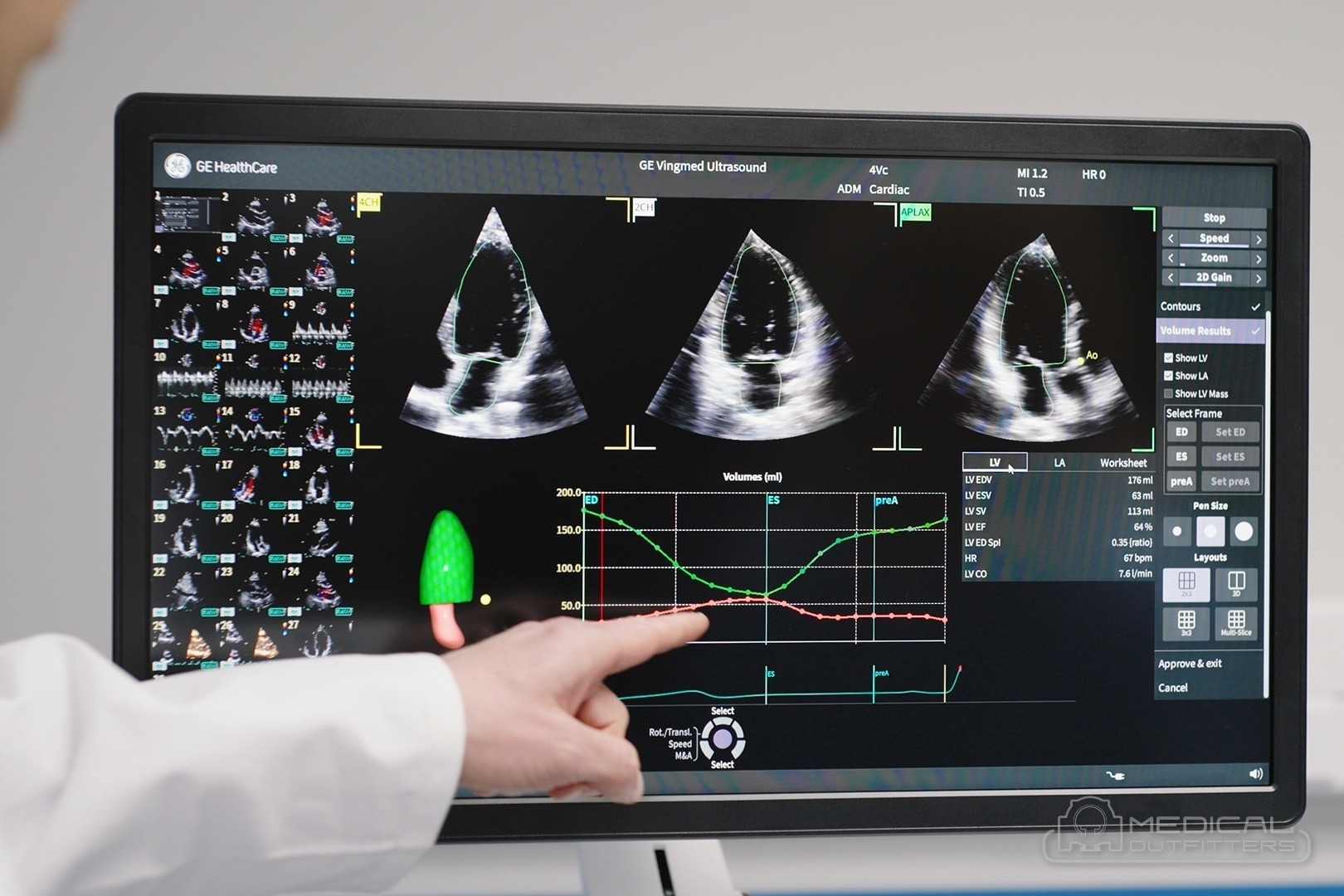
What the patient sees on the screen is also what a cardiac cart is priced for. The automated left-ventricle volume curve and ejection fraction in the GE Vivid photo above, the three-dimensional valve rendering in the cover photo and the strain measurement that Fujifilm calls 2D Tissue Tracking on the Lisendo 880 are licensed cardiac software, and the Medical Outfitters ultrasound guide lists licensed software among the largest price drivers after the class of system and the probes, with the warning that packages do not always transfer with a used system. A general imaging cart with a phased array probe can produce a billable 93306; it cannot do the 3D, strain and TEE work that a cardiology practice is paid for, which is why the guide treats the echocardiogram machine as its own price class.
What an Echo Machine Costs: Cardiac Ultrasound Prices From the Medical Outfitters Guide
The Medical Outfitters ultrasound machine cost guide puts a cardiac ultrasound machine, the echo machine price in most searches, at $35,000 to $90,000 refurbished and $140,000 to $200,000 new for a cart-based system, delivered, installed and warrantied with a phased array probe, the full Doppler suite and the licensed cardiac package. The guide explains that an echocardiogram machine is a premium cart rather than a compact system because strain, 3D and TEE work need the processing and the probe ports, and names the GE Vivid iq as the portable exception for bedside and stress work. Those ranges are all-in and sit at the upper end of the market on purpose; the quote is the number, and the cardiac section of the guide carries the model table reproduced here.
| Model | Class | Refurbished, all-in | New |
|---|---|---|---|
| Fujifilm Lisendo 880 | Premium cardiovascular cart, current | $60,000 to $90,000, refurbished on request | $140,000 to $200,000, sold new by Medical Outfitters |
| GE Vivid E95 | Premium cardiac cart, 2016 to current | $60,000 to $90,000, MO Select | Not sold new by Medical Outfitters; estimated at $120,000 to $200,000 |
| GE Vivid E9 | Premium cardiac cart, 2009 to 2017 | $35,000 to $55,000, MO Select | Out of production |
| GE Vivid S70 | Mid-range cardiac cart, 2016 to current | $40,000 to $60,000, MO Select | Not sold new by Medical Outfitters; estimated at $90,000 to $130,000 |
| GE Vivid iq | Portable cardiac, 2016 to current | $25,000 to $40,000, MO Select | Not sold new by Medical Outfitters; estimated at $35,000 to $60,000 |
| Philips EPIQ CVx | Premium cardiac cart, 2018 to current | $60,000 to $90,000, sourced on request | Not sold new by Medical Outfitters; estimated at $130,000 to $200,000 |
| Philips Affiniti CVx | Mid-range cardiac cart, 2018 to current | $40,000 to $65,000, sourced on request | Not sold new by Medical Outfitters; estimated at $90,000 to $130,000 |
| Siemens Acuson SC2000 | Premium cardiac cart, 2009 to about 2020 | $35,000 to $55,000, MO Select | Out of production |
Source: Medical Outfitters ultrasound machine cost guide, cardiac section, 2026. The new figures for GE, Philips and Siemens are comparison estimates; Medical Outfitters sells those brands refurbished. The guide adds that the TEE probe is the add-on that moves a cardiac quote most, at $15,000 to $30,000 new and $6,000 to $15,000 tested refurbished, and that a vascular lab that does not need the cardiac package buys a general imaging cart instead.
What separates the tiers is the cardiac software and the probes rather than the image. Fujifilm’s Lisendo 880 page lists a 22-inch OLED monitor, 2D Tissue Tracking strain, HemoDynamic Structural Intelligence automated measurements, Vector Flow Mapping, Dual Gate Doppler and 3D transthoracic and transesophageal imaging, with a single-crystal adult phased array probe (S121) at 5 to 1 MHz with a 120 degree field of view, a 3D TEE probe at 10 to 1 MHz and a pediatric TEE probe with a 7.2 mm insertion diameter. GE HealthCare’s Vivid page describes the cSound architecture shared across the Vivid Pioneer, Explorer, Advanced and Focus carts and the Vivid iq Ultra Edition portable, the 9VT-D Mini 4D TEE probe in adult and pediatric versions, and the EchoPAC analysis software. Philips’ EPIQ CVx documentation lists TOMTEC AutoStrain for the left ventricle, left atrium and right ventricle, Dynamic HeartModel A.I. three-dimensional ejection fraction, TrueVue photorealistic 3D rendering and the X8-2t 3D TEE probe. None of those features changes what Medicare pays for a 93306; all of them change which studies the lab can bill.
The payback arithmetic is short because the Medicare anchors are public. Take a refurbished mid-range cardiac cart at $60,000, the top of the guide’s Vivid S70 band, all-in. The facility’s share of an office echo is the technical component, $130.34 per 93306 under the 2026 fee schedule, so the equipment line is recovered after 460 Medicare echoes; at a $300 net technical payment, the bottom of CoveredUSA’s commercial negotiated range, it takes 200. At eight echoes a day, five days a week, that is about twelve weeks on Medicare alone and about five weeks on commercial rates, our arithmetic. The sonographer, the cardiologist’s reading, the TEE probe and its repairs and the service contract all sit on top of the equipment line, which is why the service contract guide matters as much as the purchase price on a cart that will do 2,000 studies a year. Every system on the ultrasound machines for sale page is quoted with its probes named, because a cardiac cart quoted without the TEE probe is not comparable to one quoted with it.
Pricing an Echo Lab With Medical Outfitters
If you are building or re-equipping an echocardiography lab, start with the cardiac section of the ultrasound machine cost and buying guide for the class bands and the model table, then compare the Fujifilm Lisendo 880, which Medical Outfitters sells new, with the refurbished GE Vivid carts in the GE ultrasound price guide and the Philips EPIQ CVx and Affiniti CVx carts in the Philips ultrasound price guide. The ultrasound machines category lists every system with its configuration, the refurbished equipment page explains the MO Select standard, and the companion article on how much an ultrasound costs covers the general imaging exams the same lab may bill. To run the payback on a specific cardiac cart with the probes you need, contact Medical Outfitters.
- CoveredUSA, “Echocardiogram Cost” (updated May 14, 2026): price ranges by setting and echo type, national median, Medicare and OPPS figures, Medicaid and Medicare Advantage notes, Good Faith Estimate threshold. coveredusa.org
- CoveredUSA, “Echocardiogram Cost: CPT 93306 and the Chargemaster” (May 24, 2026): $2,497 average chargemaster, interquartile range, 5.38 times markup study, in-network and out-of-network rates, cash prices by setting, TEE facility fee. coveredusa.org
- CareRoute, “How Much Does an Echocardiogram Cost?” (updated September 24, 2026): cash and billed ranges by setting, insured cost sharing, facility fee effect. careroute.ai
- American Society of Echocardiography, “Medicare Physician Fee Schedule: Comparison of Final CY2025 and CY2026 Rates for Echocardiography”: global, technical and professional payments for CPT 93303 to 93356. asecho.org
- American Society of Echocardiography, “National HOPPS (APC) Rates: Comparison of Final CY2025 and CY2026 Rates for Echocardiography”: APC 5523, 5524, 5572 and 5573 assignments and 2026 payment rates. asecho.org
- American College of Cardiology, “Highlights From the 2026 Hospital OPPS Final Rule” (December 4, 2025): the 2.6 percent OPPS update. acc.org
- Oseran AS, Ati S, Feldman WB, et al., “Assessment of Prices for Cardiovascular Tests and Procedures at Top-Ranked US Hospitals,” JAMA Internal Medicine (July 2022), as reported by TCTMD on July 21, 2022: echocardiogram price ranges across and within 20 hospitals. tctmd.com
- Philips AP, Dhruva SS, Whaley C, “Commercial Price Variation for Common Cardiovascular Services Across 4 Major US Insurers,” JAMA Network Open, July 16, 2026: facility and professional coefficients of variation for the transthoracic echocardiogram. jamanetwork.com
- Health Care Cost Institute, “Imaging Services are the Second Most Common Outpatient Service” (April 2026): commercial ultrasound prices at 245 percent of Medicare and hospital outpatient versus office prices. healthcostinstitute.org
- MedlinePlus Medical Encyclopedia, “Echocardiogram”: how the transthoracic and transesophageal tests are done, preparation, risks and the conditions they evaluate. medlineplus.gov
- Fujifilm Healthcare Americas, “LISENDO 880 Cardiovascular Ultrasound”; GE HealthCare, “Vivid Cardiovascular Ultrasound”; Philips EPIQ CVx product documentation: features and transducers named in the machine section. fujifilm.com
- Medical Outfitters, “Ultrasound Machine Cost and Buying Guide (2026),” cardiac section: refurbished and new cardiac cart bands, model table and probe prices. medicaloutfitters.com
- Cardiac (echo) ultrasound machine price: the Medical Outfitters guide
- Ultrasound machine cost and buying guide (2026)
- Ultrasound machines: new Fujifilm, refurbished GE, Siemens and Philips
- Ultrasound machines for sale
- Ultrasound machine service, repair and probe testing
- Refurbished medical imaging equipment: the MO Select standard
- Fujifilm Lisendo 880 cardiovascular ultrasound, sold new
- GE ultrasound machine price guide (2026): Logiq, Voluson, Vivid, Venue and Vscan
- Philips ultrasound machine price guide (2026): EPIQ, Affiniti, CX50 and Lumify
- How much does an ultrasound cost in 2026?
- Ultrasound transducer types explained: phased array, TEE and 3D probes
- Imaging equipment service contracts: what they cover and cost
- Radiology equipment cost: every modality in one table
- Run the payback on a specific cardiac ultrasound cart
Echocardiogram Cost: Common Questions
How much does an echocardiogram cost in 2026?
About $500 to $1,200 in cash at an independent cardiology clinic and $2,000 to $3,500 as a hospital outpatient, with a national median near $1,800, according to CoveredUSA's May 2026 guide. Medicare pays $197.85 for a complete transthoracic echo (CPT 93306) in an office or imaging center and $558.25 to the hospital plus $67.51 to the reading cardiologist as a hospital outpatient, per the American Society of Echocardiography's 2026 rate tables, and the patient owes 20 percent after the $283 Part B deductible.
How much is an echocardiogram without insurance?
Ask for the self-pay price. CoveredUSA's May 2026 analysis puts an independent cardiology clinic's cash rate for a transthoracic echo at $500 to $1,200, a hospital's discounted cash rate at $800 to $1,400 after the common 30 to 60 percent discount off a chargemaster that averages $2,497, and prepaid bundles at $700 to $900. CareRoute puts the bottom of the market at $200 to $1,000 in an office or imaging center. Under the No Surprises Act a self-pay patient scheduled three or more business days ahead is entitled to a written Good Faith Estimate.
How much does an echocardiogram cost with insurance?
A share of the rate your insurer negotiated. CoveredUSA reports in-network negotiated rates of about $300 to $550 for a transthoracic echo at a clinic, and CareRoute says an insured patient typically owes $50 to $400 as a copay or coinsurance once the deductible is met. On a high-deductible plan you pay the full contracted rate until the deductible is met, and a hospital outpatient department adds a facility fee with its own cost sharing, which is why the same echo can cost an insured patient $450 at an office and $1,500 at a hospital.
How much does Medicare pay for an echocardiogram?
Under the 2026 Medicare Physician Fee Schedule the American Society of Echocardiography's rate comparison lists $197.85 for a complete transthoracic echo with Doppler (93306), split into $130.34 technical and $67.51 professional, $101.60 for a limited echo (93308), $186.15 for a stress echo (93350) and $240.62 for a transesophageal echo (93312). In a hospital outpatient department the hospital is paid $558.25 under APC 5524 for the complete, stress and transesophageal studies and $243.77 under APC 5523 for the limited echo, and the cardiologist bills the reading separately.
Why does an echocardiogram cost more at a hospital than at a cardiology office?
Because the hospital bills a facility fee and is paid under a different Medicare system. Medicare pays a hospital outpatient department $558.25 under APC 5524 for the technical side of a complete echo against $130.34 in an office, per the ASE's 2026 tables, and the Health Care Cost Institute found hospital outpatient imaging prices two to four times physician-office prices in 2022 commercial claims. CoveredUSA puts the hospital facility fee at $500 to $1,500 on top of the scan and the reading, and CareRoute says it can double or triple the price of the same echo.
How much does a transesophageal or stress echocardiogram cost?
CoveredUSA's May 2026 guide prices a transesophageal echo at $1,800 to $5,000 without insurance, with sedation and monitoring included, and a stress echo at $1,500 to $5,000. Medicare pays $240.62 for the TEE (93312) and $186.15 for the stress echo (93350) in the office under the 2026 fee schedule, and $558.25 to a hospital under APC 5524 for either, per the American Society of Echocardiography. CoveredUSA puts the TEE facility fee at $800 to $2,000 on top of the $350 to $420 the physician side bills, which is why a TEE is almost always a hospital procedure.
How much does an echocardiogram machine cost?
The Medical Outfitters ultrasound machine cost guide puts a cardiac ultrasound machine at $35,000 to $90,000 refurbished and $140,000 to $200,000 new for a cart-based system, delivered, installed and warrantied with a phased array probe, the Doppler suite and the licensed cardiac package. The Fujifilm Lisendo 880 is sold new at $140,000 to $200,000; a GE Vivid E95 runs $60,000 to $90,000 and a Vivid S70 $40,000 to $60,000 refurbished through MO Select; a Philips EPIQ CVx is sourced refurbished at $60,000 to $90,000. A TEE probe adds $15,000 to $30,000 new or $6,000 to $15,000 tested refurbished.
How many echocardiograms does it take to pay for a cardiac ultrasound machine?
On our arithmetic for a refurbished mid-range cardiac cart at $60,000, the top of the Medical Outfitters guide's Vivid S70 band, the equipment line is recovered after 460 echoes at the 2026 Medicare technical component of $130.34 per complete study, or 200 echoes at a $300 commercial technical payment. At eight echoes a day, five days a week, that is about twelve weeks on Medicare alone and about five weeks on commercial rates. The sonographer, the cardiologist's reading, the TEE probe and the service contract sit on top, so probe care decides the economics of the lab.