An imaging equipment service contract is the second largest number in the life of an MRI, CT, X-ray or ultrasound system, after the purchase price, and it is usually the one that gets the least attention. The quote for the scanner is negotiated line by line; the service agreement is often signed later, from a template, when the leverage is gone. Yet over a ten-year life the contract decides how much of the budget goes to keeping the system running, who carries the risk of a failed tube or a quenched magnet, and how long the schedule stays empty when something breaks. This guide explains what a medical equipment service contract covers, the four contract shapes from time and materials to full service, what each typically costs as a share of system value, the clauses that decide an MRI service contract and a CT service contract, how uptime guarantees and response times are written, how OEM and independent service compare, and how to negotiate one.
Medical Outfitters services MRI, CT, X-ray and ultrasound systems with its own field engineers across the United States, Puerto Rico and the Caribbean, on systems we sold and systems bought elsewhere, as our imaging equipment service and repair page explains. We wrote this for the administrator, radiology manager, imaging center owner and clinical engineer who has a renewal on the desk or a purchase about to close and wants to read a service agreement the way the provider wrote it.
- What it is: a yearly agreement covering preventive maintenance, repair labor, parts, travel and response times for one system or a fleet.
- The four shapes: time and materials, a preventive maintenance agreement, shared service and full service, each moving more risk from the owner to the provider.
- The cost: priced per year as a percentage of the system value; trade press has reported 8 to 10 percent as reasonable and 14 percent or more as common for imaging.
- The clause that matters: cryogens, cold heads and coils on MRI, the tube on CT, detectors on X-ray and probes on ultrasound decide whether a contract is complete.
- The rule: CMS requires hospital imaging equipment to be maintained per the manufacturer’s recommendations, so preventive maintenance is not optional, whoever performs it.
What Is an Imaging Equipment Service Contract?
An imaging equipment service contract is an agreement between the owner of a scanner and a service provider that turns an unpredictable stream of repairs into a defined set of obligations. It names the systems covered, usually by model and serial number; the preventive maintenance schedule; which repairs, parts and labor are included and which are billed; the hours of coverage; how quickly the provider must answer remotely and arrive on site; and, in the stronger agreements, how much uptime the provider guarantees and what happens when it falls short.
Three kinds of organization write these agreements, as our service and repairs page sets out: the original equipment manufacturer servicing its own installed base, an independent service organization covering several brands, and a supplier that services what it sells and often more. The practical difference between them is usually parts access, engineer training on the platform and how far the engineer has to travel.
Why the maintenance itself is not optional. For hospitals, the federal rules on medical imaging equipment maintenance leave little room to skip it. The Centers for Medicare and Medicaid Services memo S&C 14-07, “Hospital Equipment Maintenance Requirements,” posted December 20, 2013, lets hospitals use a risk-based Alternate Equipment Management program to change the maintenance frequency a manufacturer recommends for most equipment, but it names the exception directly: all imaging and radiologic equipment must be maintained per the manufacturer’s recommendations. A service contract is the most common way to prove that, because each preventive maintenance visit leaves a dated report against the manufacturer’s checklist.
Mammography adds its own layer. Under the FDA’s Mammography Quality Standards Act rules, 21 CFR 900.12(e)(10), equipment that has undergone a major repair, including component replacement, must be evaluated by a medical physicist before it returns to clinical use, and FDA guidance notes that a recent annual survey does not satisfy that requirement. A mammography contract that does not account for the physicist’s visit after a detector or tube swap leaves the facility holding a repaired unit it cannot use.
The vocabulary. A few terms recur in every agreement: preventive maintenance (PM), the scheduled visits; corrective maintenance, the repairs; glassware, the industry’s word for X-ray and CT tubes and image intensifiers; consumables, parts that wear by design; uptime, the share of contracted hours the system is available; and response time, which may mean a phone call, a remote login or an engineer on site, and the contract should say which.
Full Service vs Time and Materials, and the Two Shapes in Between
There is no single standard agreement, but nearly every quote falls into one of four shapes. They differ in how much of the repair risk moves from the owner to the provider, and the price follows that risk. The descriptions below are the ones on our MRI service and CT scanner service pages, where every plan is built around the system, its age, how hard it works and the budget it has to fit.
| Contract shape | What it covers | Who it suits |
|---|---|---|
| Time and materials | No contract; each call is quoted and billed as parts, labor and travel | Low-utilization systems, or an owner who prefers to pay per event |
| Preventive maintenance agreement | Scheduled visits at manufacturer-recommended intervals with the documentation for regulators; repairs quoted separately | Sites with an in-house biomedical team that handles first response |
| Shared service | Preventive maintenance plus a defined share of repair labor and parts, with the owner’s biomeds doing routine work | Hospitals and groups with clinical engineering staff |
| Full service | Preventive maintenance, repair labor, travel and parts, with response commitments written in | Imaging centers and practices that need a fixed annual number and one call to make |
Full service vs time and materials is the decision most owners actually face. Time and materials has the lowest fixed cost and the highest variance: a quiet year costs little, and a year with a CT tube or an MRI cold head can cost more than several years of contract payments. Full service has the highest fixed cost and almost no variance, which is why lenders, imaging center owners and anyone running on thin cash flow tend to prefer it. Owners sometimes call time and materials “self-insuring,” and that is an accurate description: the owner is the insurer, and it only works with the reserves to absorb the bad year.
Between the two, a preventive maintenance agreement keeps the regulatory paperwork current and leaves repairs on time and materials, and shared service splits the work so that in-house engineers take first call and the provider handles what they cannot. Both depend on having trained clinical engineering staff. A 2015 Health Facilities Management article noted that most imaging equipment work is outsourced because of its specialization and sophistication, which is why shared service is mostly a hospital arrangement.
Parts-only and dollar-pool variants also exist. Some manufacturers sell a pool of parts dollars that the owner draws against; GE HealthCare’s Universal service page, for example, lists the option to buy a dollar pool on each tier. A pool caps the provider’s exposure and leaves the overrun with the owner, so read it as a partial contract, not a full one.
What an Imaging Equipment Service Contract Costs
A service contract is priced per year as a percentage of the system value, and the percentage moves with what it covers, the platform, its age, the response time required and where the site is, as the Medical Outfitters MRI machine cost guide and CT scanner cost guide both explain. Published benchmarks give a sense of the range.
- Imaging contracts: at the 2012 AHRA annual meeting, consultant Vicki Petersen said service agreements may cost about 14 percent or more of equipment list price and that 8 to 10 percent is more reasonable, as reported by Diagnostic Imaging. Her example: a community hospital with $16 million of equipment at list price could be paying $1.6 million a year for service.
- Whole equipment programs: Ted Cohen of UC Davis Medical Center, in a 2007 benchmarking series for AAMI’s journal Biomedical Instrumentation and Technology, put the cost of service ratio for US hospitals at 5 to 10 percent of acquisition cost, as Health Facilities Management reported in 2015. That figure covers all medical equipment, and imaging sits at the expensive end of it.
- By provider: a 2010 Health Facilities Management article reported that service from an independent service organization is typically 20 percent less than OEM service, and that in-house service often costs 50 percent less than a full-service OEM contract.
The ratio clinical engineers track is the cost of service ratio: total annual service cost divided by the acquisition cost of the equipment. It is the number to calculate for your own fleet before any renewal, because it tells you whether a quote is high for what it covers or merely large because the system is expensive.
What one percentage point is worth. Because contracts are quoted as a share of value, each point of rate is a fixed sum on a given system. The table applies one point to the Medical Outfitters guide bands for common refurbished systems, delivered, installed and warrantied. It is arithmetic for comparing quotes, not a service price.
| System | Medical Outfitters guide band | One percentage point of rate, per year |
|---|---|---|
| Refurbished 16 to 32-slice CT | $85,000 to $185,000 (CT cost guide) | $850 to $1,850 |
| Refurbished 64-slice CT | $175,000 to $375,000 (CT cost guide) | $1,750 to $3,750 |
| Refurbished 1.5T MRI | $475,000 to $975,000 (MRI cost guide) | $4,750 to $9,750 |
| Refurbished 3T MRI | $1,000,000 to $1,900,000 (MRI cost guide) | $10,000 to $19,000 |
Two things move the rate more than anything else. The first is the expensive component: whether the CT tube, the MRI cold head and cryogens, the X-ray detector or the ultrasound probes are inside the contract. The second is age and support status. Our cost guides make the point that on an older helium-consuming magnet the service and cryogen lines can rival the purchase price over a decade, and that a CT’s tube and service contract together can approach its purchase price over the same span. That is why radiology equipment maintenance cost belongs in the purchase decision, and why our guide to radiology equipment cost in 2026 treats the service quote as part of the price.
MRI Service Contract Cost, CT Service Contracts and the Clause That Decides Each
Every contract has the same four basic lines, which our service pages tell owners to read separately because a contract can look complete and still leave the expensive parts out: parts, including whether the platform is still supported by the manufacturer; labor, on site and remote; travel, frequently billed separately and the line that matters most for a remote or island site; and response time, which should be a stated commitment rather than an intention. Then each modality adds the clause that decides whether the contract is worth its price.
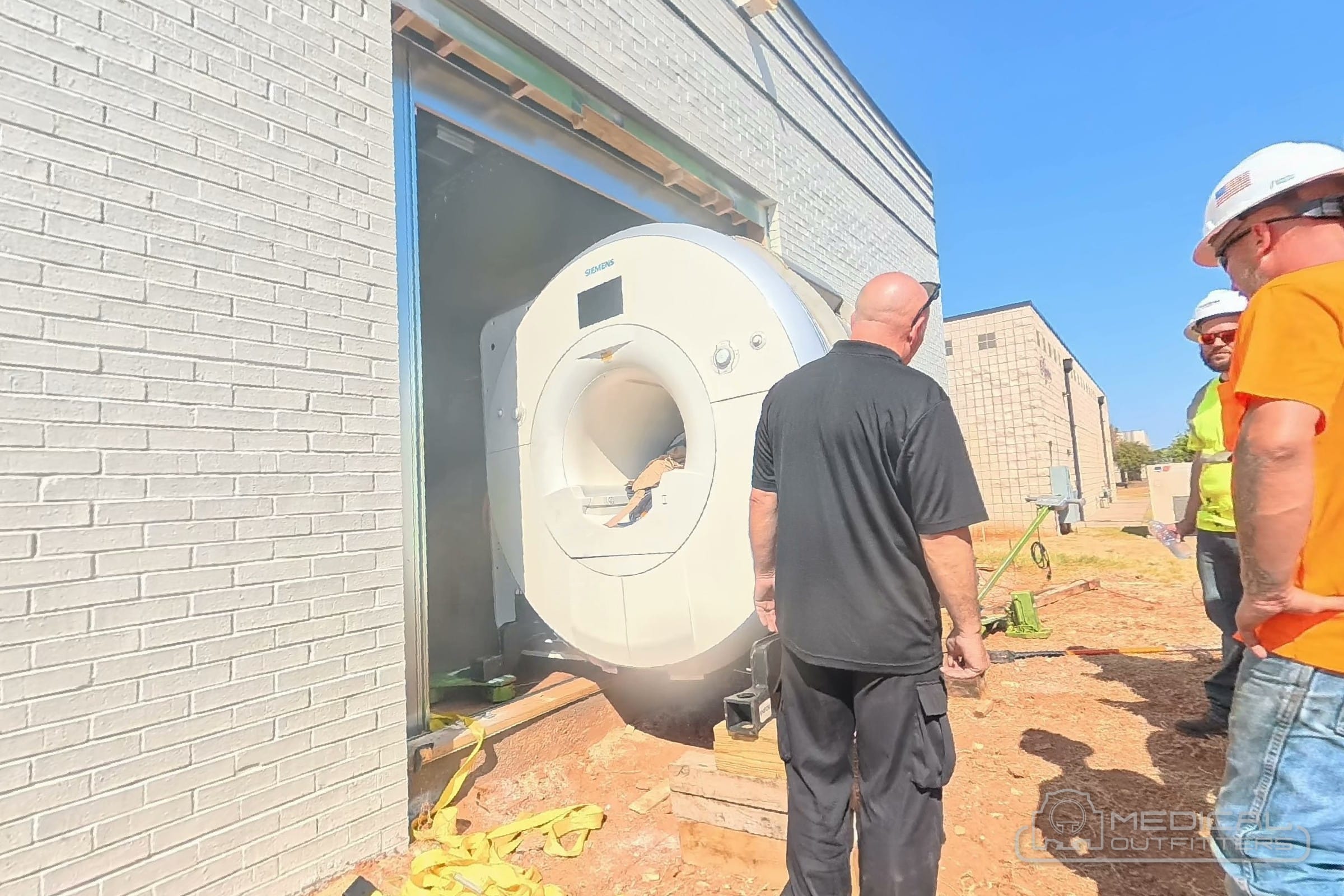
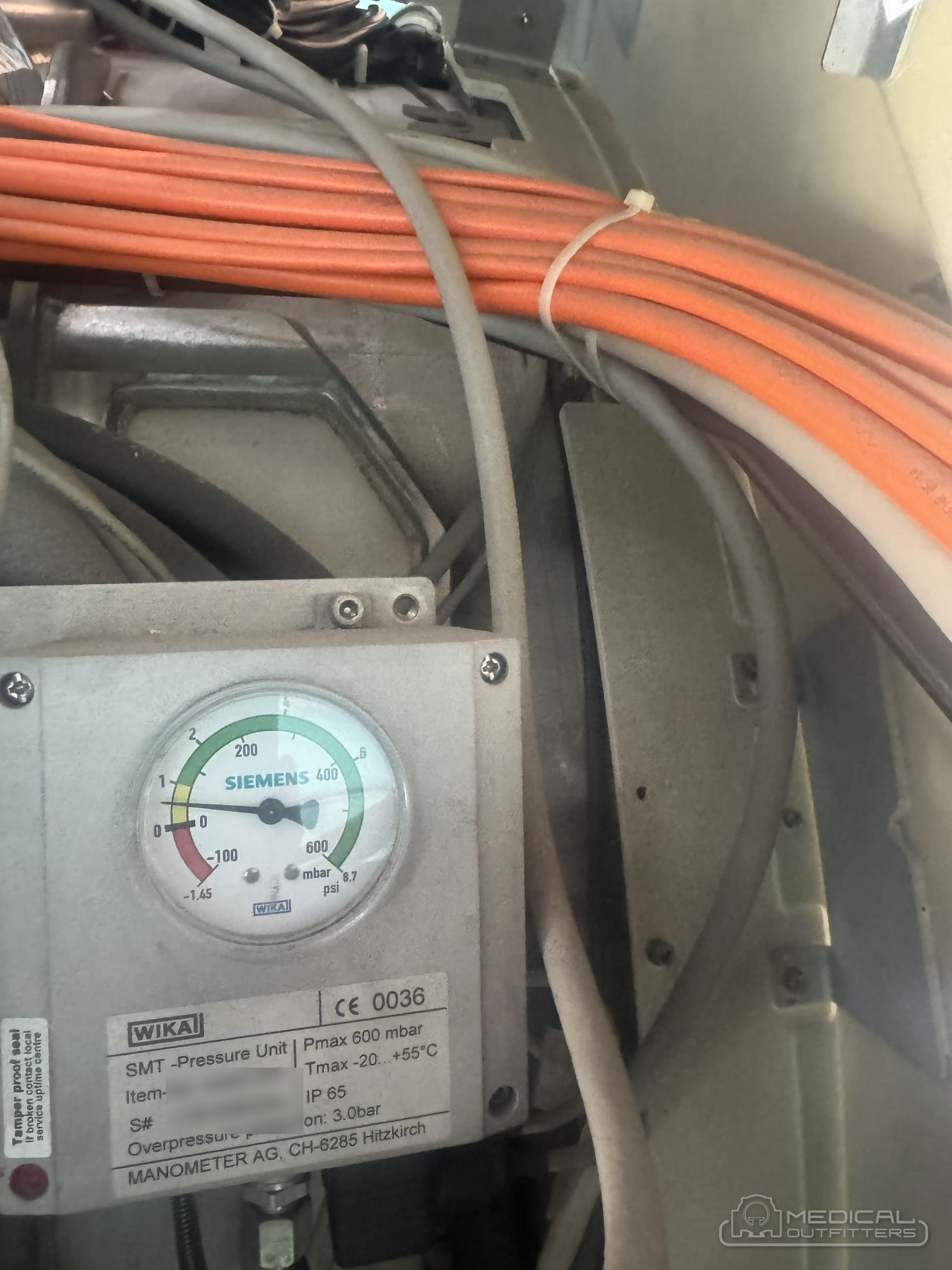
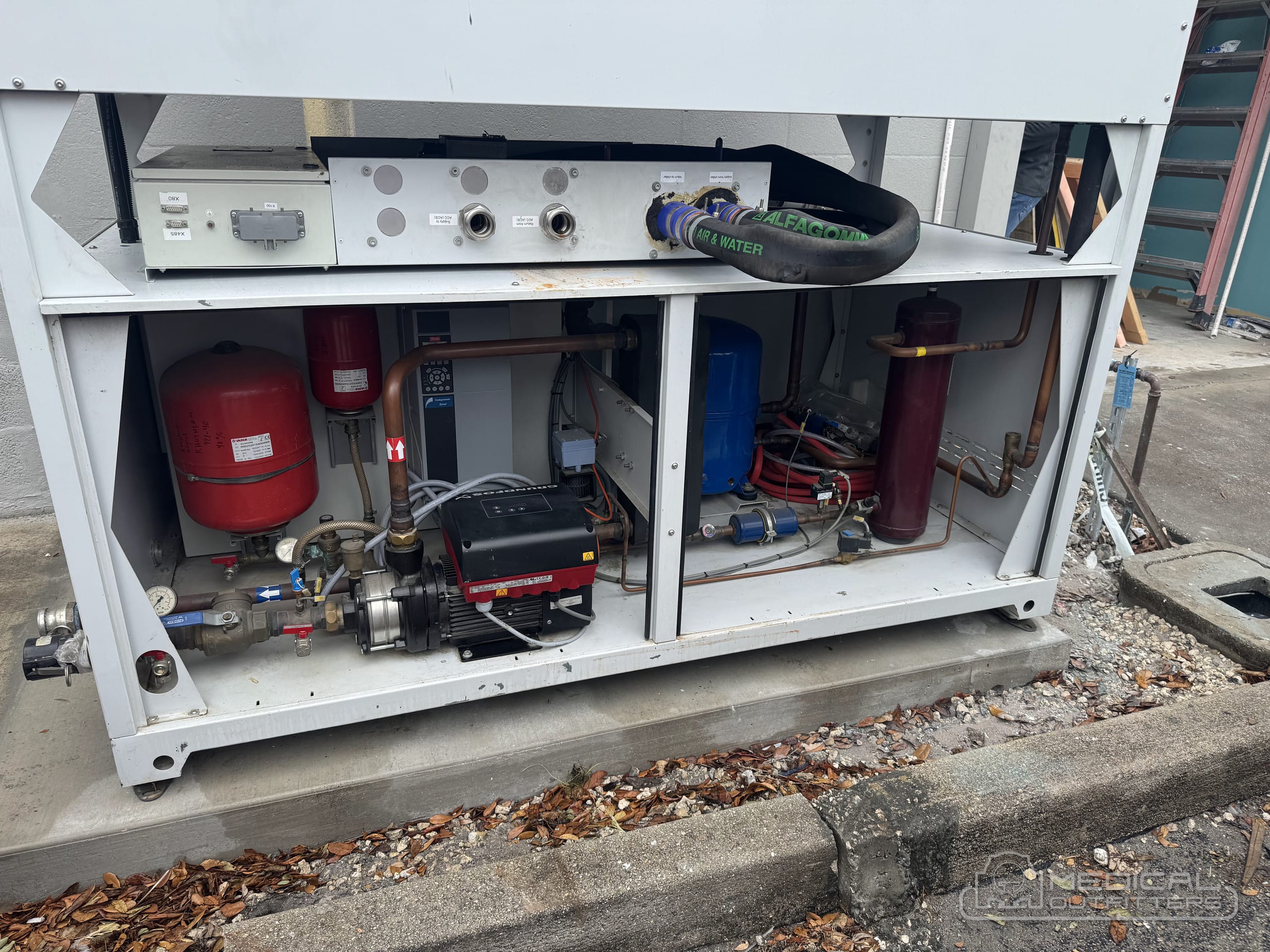
MRI: cryogens, the cold head and coils. Our MRI service page notes that cryogens are often excluded from MRI contracts entirely, so the first question on any MRI service contract cost comparison is whether helium, cold-head replacement and quench recovery are in or out. The same page lists the cold head and the cryogenic chain as what fails most often on an MRI, long before the electronics, with coil damage next. A contract that covers the gradients but not the cold head is covering the unlikely failures and leaving the likely one with the owner. Coils deserve their own line: whether repair and replacement are covered, and up to what value. Our articles on what an MRI cold head is and what an MRI helium refill costs explain the parts behind those lines.
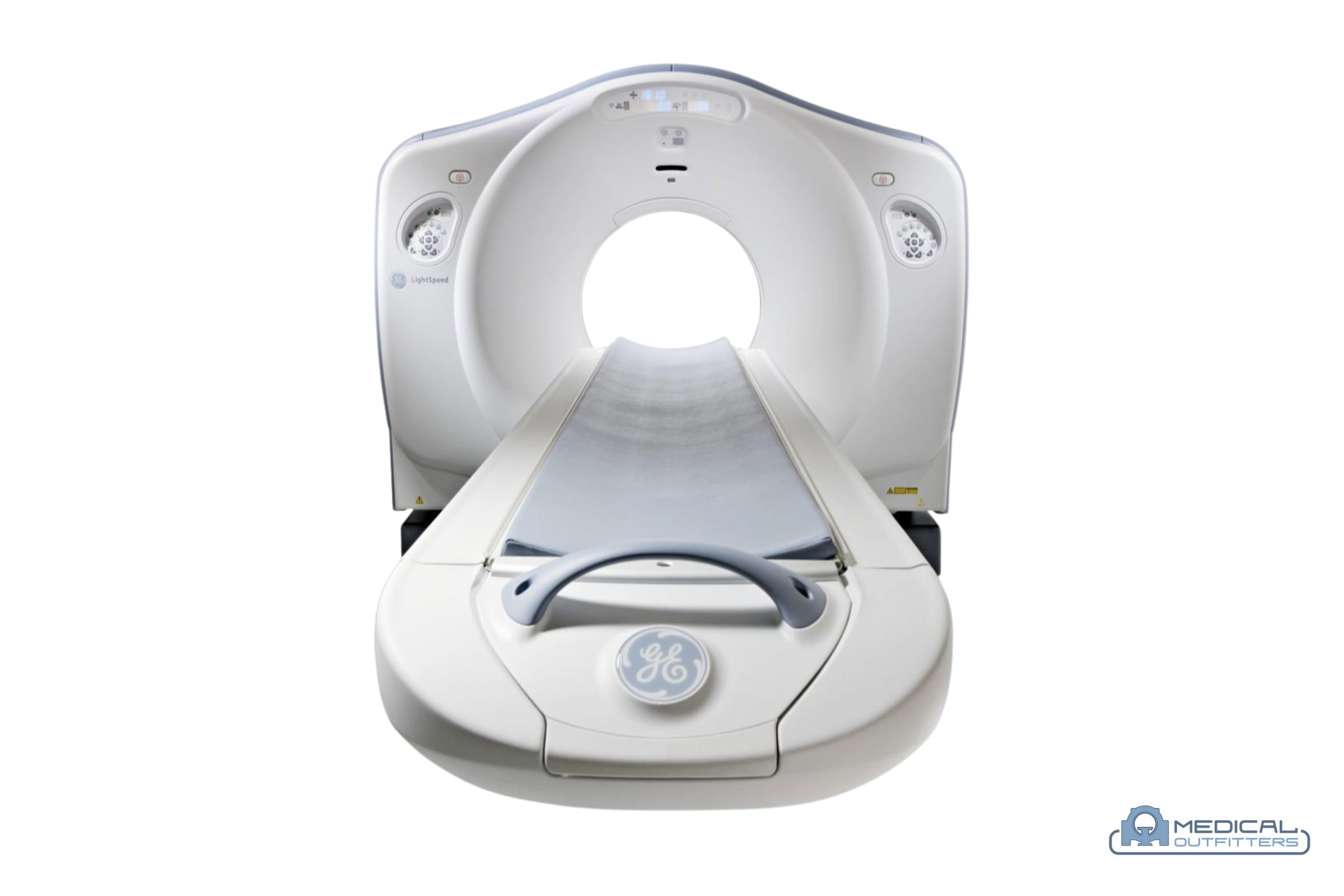
CT: the tube. The X-ray tube is the single largest service event in a CT scanner’s life, which is why a contract with tube coverage costs more than one without, according to our CT scanner cost guide. A CT service contract, whether from the manufacturer or an independent provider, should say whether the tube is in or out and, if in, whether coverage is capped by value or by scan seconds, as our CT scanner service page puts it. Ask for the tube’s current scan-second count before you sign any CT scanner service contract; our guide on how long a CT tube lasts explains how that count predicts the next replacement.
X-ray: detectors and tubes. On digital radiography rooms, our X-ray service page calls a detector cap the clause that decides whether a contract is complete. Wireless detectors travel between rooms and to the bedside, which exposes them to drops that fixed panels never see. A group of rooms and portable units is usually quoted as a group, with one response commitment.
Ultrasound: probes. On ultrasound, the probes fail far more often than the consoles, and our ultrasound service page names probe coverage, which probes and up to what value, as the clause that decides the contract. Our guide to ultrasound probe types and repair covers how a failing probe is tested before money is spent.
Software and calibration belong in every agreement too: whether software updates, annual calibration and the quality control support an accreditation survey needs are included or billed.
Uptime Guarantees and Response Times: What the Numbers Mean
An uptime guarantee is the provider’s promise that the system will be available for a stated share of the contracted hours, and it is the clause that turns a service contract from a list of tasks into a performance commitment. Manufacturers publish their tiers, and GE HealthCare’s US page for its Universal full-service plans is a clear example of how the commitment, the response time and the coverage hours move together.
| GE HealthCare Universal tier | Uptime guarantee | On-site response (imaging) | Remote call response | Coverage hours |
|---|---|---|---|---|
| Universal | 92% | Next day, during coverage hours | 60 minutes | Mon to Fri, 8 am to 5 pm |
| Universal Standard | 95% (buy up to 97%) | 4 hours | 30 minutes | Mon to Fri, 8 am to 5 pm (buy up to 9 pm) |
| Universal Plus | 98% | 2 hours | 10 minutes | Mon to Fri, 8 am to 9 pm (buy up to midnight) |
The same GE HealthCare page notes that preventive maintenance labor is billed separately on all three tiers and that uptime and response depend on the coverage purchased, which is a reminder to read each tier’s footnotes, not only the headline percentage.
How uptime is counted matters as much as the number. A guarantee usually counts only the contracted hours, so a 98 percent commitment on a weekday 8 am to 9 pm schedule says nothing about a Saturday failure. Scheduled preventive maintenance is normally excluded from downtime, and so is downtime caused by the site, such as power, cooling or a facility-side network fault. Before signing, ask four questions: which hours count, when the clock starts (the call, or the engineer’s diagnosis), what is excluded, and what the remedy is when the guarantee is missed, whether a credit, a contract extension or nothing.
Response time has the same ambiguity. A remote response in minutes means an engineer has logged in or called back; an on-site response in hours means a person at the scanner. For Medical Outfitters MRI contract clients, our MRI service page commits to remote response within 30 minutes and on-site service within 2 hours for local facilities, with emergency response same-day or next-day depending on urgency and location. For sites in Puerto Rico and the Caribbean, travel days and flights are part of the response time, and the page says we plan them into the contract rather than discovering them when a system is already down. Any provider’s on-site figure should name the distance or the region it applies to.
Parts logistics sit behind both numbers. An engineer on site in two hours without the failed board is still a down scanner. Ask where the parts come from and how fast; Medical Outfitters holds more than 20,000 parts in stock for MRI, CT, X-ray and more, shipping same day or next day from Miami, according to our service pages.
OEM or Independent Service: What the Regulators Found
OEM vs third party service is the question of whether a manufacturer or an independent organization should service a scanner, and it has been argued for years. The federal record is clearer than the sales pitches on either side. In May 2018 the FDA released its Report on the Quality, Safety, and Effectiveness of Servicing of Medical Devices, required by the FDA Reauthorization Act of 2017. The agency concluded that the evidence was not sufficient to establish a widespread public health concern with servicing, including by third parties, that many manufacturers and third-party entities provide high-quality, safe and effective service, and that most complaints blamed on poor servicing actually related to remanufacturing.
That distinction was then written down. The FDA’s final guidance “Remanufacturing of Medical Devices,” issued in May 2024, defines servicing as repair or preventive and routine maintenance that returns a device to the manufacturer’s safety and performance specifications and its original intended use, and remanufacturing as work that significantly changes those specifications or the intended use. Remanufacturers carry manufacturer obligations; servicers who only service do not. For a contract buyer, the practical test is whether the provider’s work restores the system to the manufacturer’s specifications with appropriate parts and documents it.
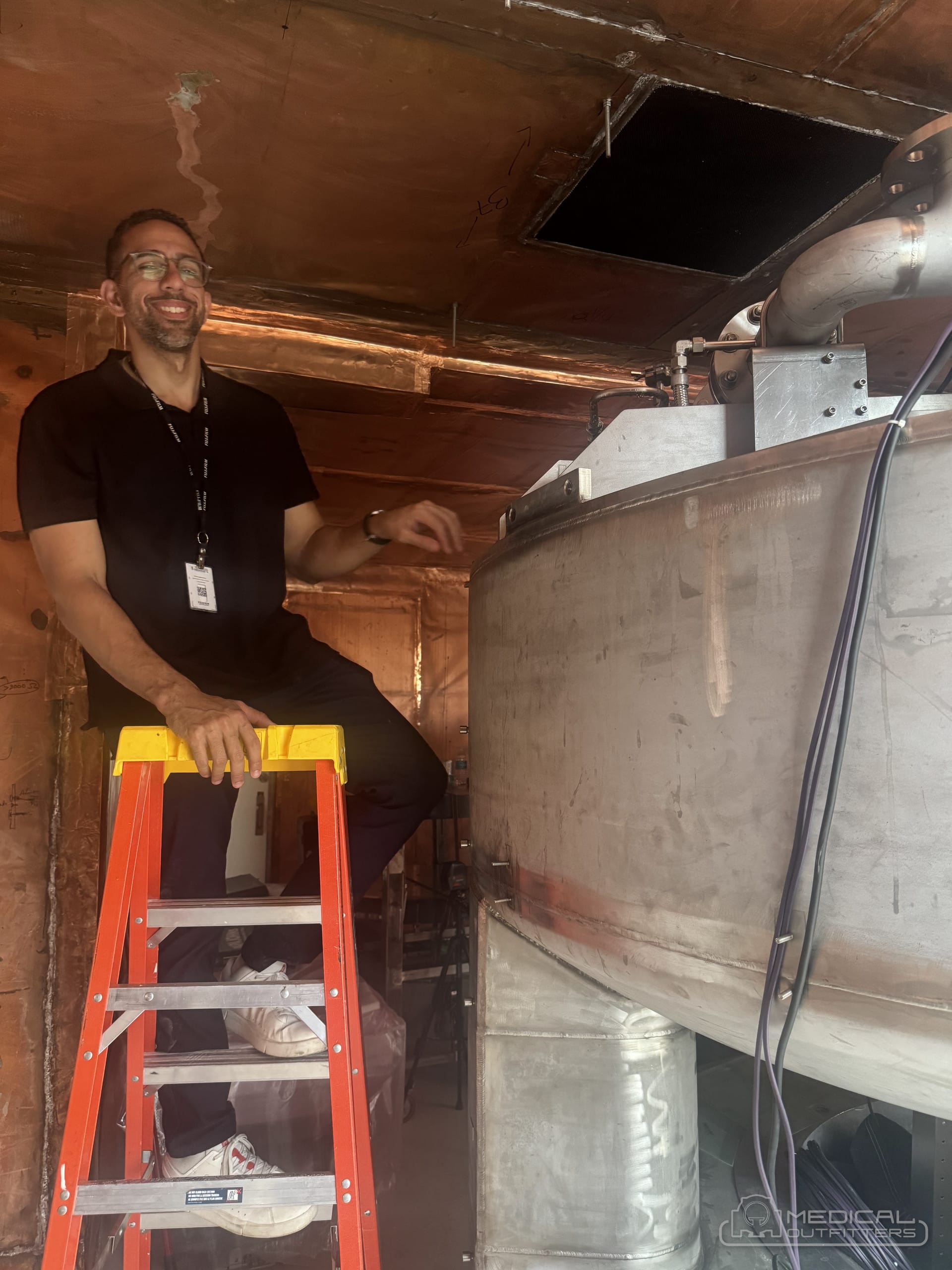
Where the OEM has the edge: current software and service keys, remote diagnostics built into newer systems, and guaranteed access to parts while the platform is supported. Where an independent or supplier has the edge: price, multi-vendor fleets under one contract, older platforms the manufacturer has stopped supporting, and local engineers who do not need a flight to reach the site. The 2010 Health Facilities Management benchmark that independent service typically runs 20 percent below OEM service reflects that trade.
What to require from either. Preventive maintenance to the manufacturer’s specification, which the CMS memo makes mandatory for hospital imaging equipment; parts appropriate to the platform; trained engineers on that specific system; and a written service report for every visit. Medical Outfitters performs every repair with OEM parts and procedures so a manufacturer warranty stays valid, according to our service pages, and services systems whether or not we sold them. Platform support status is the question to ask first: our service pages note that a widely installed, still-supported platform has a deep parts pool, while a rare or end-of-support model can be newer and still harder to keep running.
How to Negotiate an Imaging Equipment Service Contract
Leverage is highest before the purchase order is signed, and that is the advice that comes up most often. At the 2012 AHRA session reported by Diagnostic Imaging, Vicki Petersen told managers to give themselves a target and to negotiate service at the time of purchase, and Carolinas Healthcare System’s John Krepshaw described a five-year capital plan that tracks service costs, equipment age and replacement priority for every modality. The checklist below gathers the clauses worth settling before signing.
1. Build the inventory first. Petersen’s starting point was a spreadsheet of every system with its acquisition cost, contract start and end dates, coverage level, annualized contract cost and cost of service ratio. With that in hand, a renewal quote can be compared with what the system actually needed over the last term.
2. Price the service with the system. Ask for the service contract alongside the purchase quote, as our cost guides recommend, and compare quotes on the same coverage: same parts list, same caps on the tube, cold head, coils, detectors or probes, same hours and response times.
3. Match the shape to the system. A heavily used CT or MRI that funds the department justifies full service with tube or cryogen coverage. A lightly used X-ray room or a second ultrasound cart may be better on a preventive maintenance agreement with repairs on time and materials, provided there are reserves for the bad year.
4. Read the exclusions. Cryogens, glassware, coils, probes, detectors, software upgrades, travel, after-hours labor and damage from misuse or site conditions are the usual ones. Each exclusion is a cost the owner keeps.
5. Write the remedies. An uptime guarantee without a credit is a goal. Ask what happens when the guarantee is missed, and how the contract can be ended if it is missed repeatedly.
6. Plan the end of the term. Ask how the price changes at renewal, what happens when the manufacturer ends support for the platform, and whether the contract transfers if the system is sold. Our article on how long an MRI machine lasts covers the end-of-support signals that should shape the last contract on an aging system.
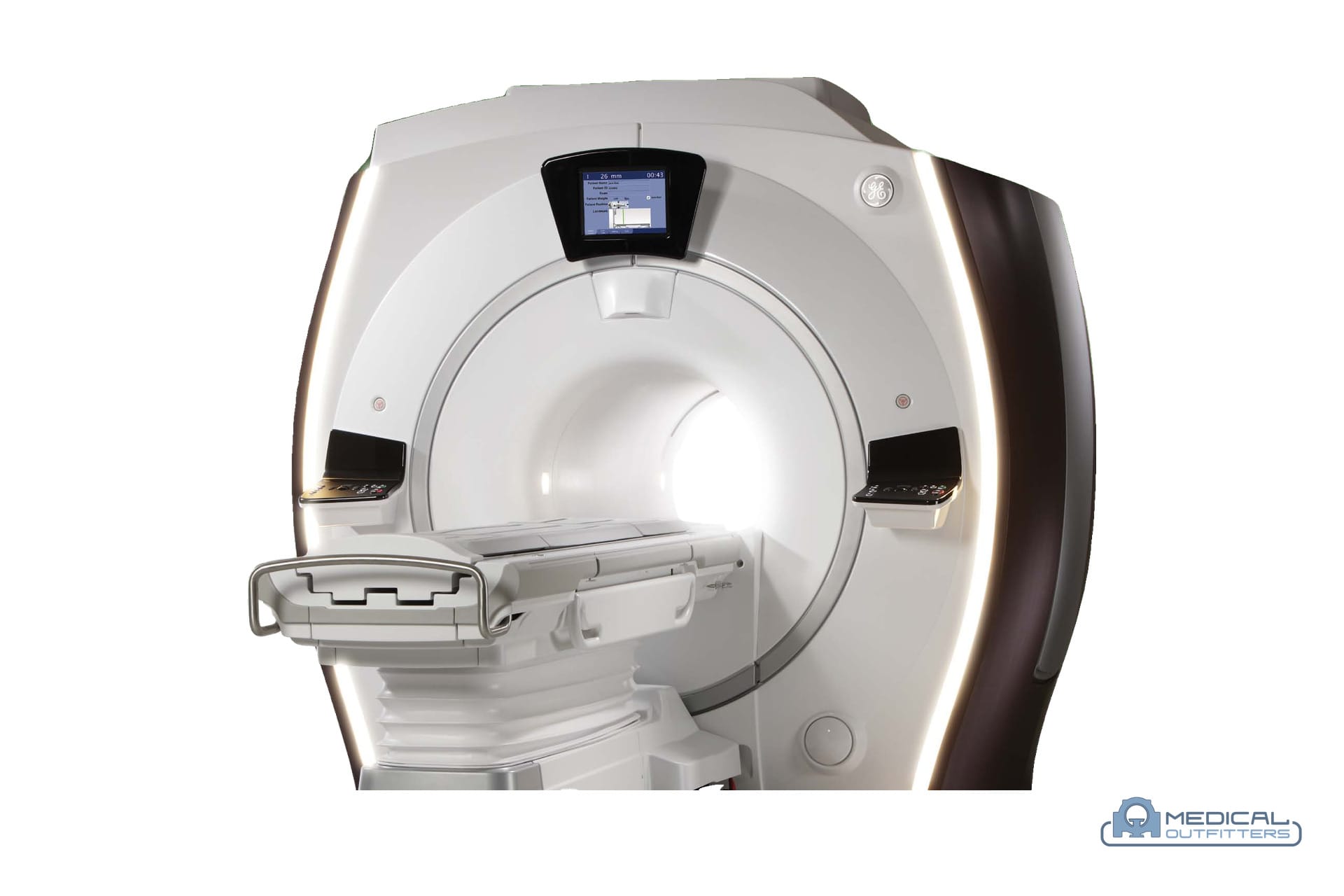
When to replace instead of renew. When the contract rate climbs because parts are scarce, the economics shift toward replacement. Our service pages note that a refurbished replacement usually costs 40 to 60 percent less than new, and refurbished GE and Siemens systems come through MO Select, our refurbished medical imaging equipment program.
Getting an Imaging Equipment Service Contract Quote From Medical Outfitters
A good imaging equipment service contract matches the shape to the system, names the expensive component, writes down the response and uptime commitments and prices travel honestly. Start with the modality pages for MRI service, CT scanner service, X-ray service and ultrasound service, check the purchase side in the MRI machine cost guide and the CT scanner cost guide, and read radiology equipment cost in 2026 for every modality side by side. When you know the platform, its age, your volume and the response time you need, send them to us and we will quote the contract shapes side by side.
- Medical Outfitters, MRI, CT scanner, X-ray and ultrasound service pages and the service and repairs page: contract shapes, line items, response commitments, parts stock and modality clauses: https://medicaloutfitters.com/mri-service/
- Centers for Medicare and Medicaid Services, S&C 14-07-Hospital, Hospital Equipment Maintenance Requirements, December 20, 2013: imaging equipment maintained per manufacturer’s recommendations: https://www.cms.gov/medicare/provider-enrollment-and-certification/surveycertificationgeninfo/policy-and-memos-to-states-and-regions-items/survey-and-cert-letter-14-07
- US Food and Drug Administration, Remanufacturing of Medical Devices, final guidance, May 2024: servicing and remanufacturing definitions: https://www.fda.gov/regulatory-information/search-fda-guidance-documents/remanufacturing-medical-devices
- FDA Report on the Quality, Safety, and Effectiveness of Servicing of Medical Devices, May 2018, as summarized by the FDA Law Blog: https://www.thefdalawblog.com/2018/05/fda-issues-report-on-medical-device-servicing-declining-to-impose-new-regulatory-requirements-for-now/
- Electronic Code of Federal Regulations, 21 CFR 900.12, Mammography quality standards: physicist evaluation after major repair: https://www.ecfr.gov/current/title-21/chapter-I/subchapter-B/part-900/subpart-B/section-900.12
- GE HealthCare, Universal Full-Service Solutions (US): uptime guarantees, response times and coverage hours by tier: https://www.gehealthcare.com/en-us/services/universal-full-service
- Sara Michael, Diagnostic Imaging, “Time to scrutinize imaging equipment service agreements,” 2012 AHRA annual meeting: 14 percent of list price, 8 to 10 percent, negotiation advice: https://www.diagnosticimaging.com/view/time-scrutinize-imaging-equipment-service-agreements
- Health Facilities Management, “Medical equipment maintenance” (2015) and “Successful measures” (2010): cost of service ratio of 5 to 10 percent; independent service 20 percent below OEM, in-house 50 percent below: https://www.hfmmagazine.com/articles/958-successful-measures
- Imaging equipment service and repairs
- MRI service, repair and maintenance
- CT scanner service, repair and maintenance
- X-ray machine service, repair and maintenance
- Ultrasound service, repair and probe testing
- MRI machine cost and price guide (2026)
- CT scanner cost and price guide (2026)
- Radiology equipment cost in 2026, every modality
- How long a CT tube lasts
- What an MRI cold head is
- What an MRI helium refill costs
- Ultrasound probe types and repair
- How long an MRI machine lasts
- Refurbished medical imaging equipment
- Get a service contract quote
Imaging Equipment Service Contracts: Common Questions
What is an imaging equipment service contract?
It is a yearly agreement that sets who maintains and repairs an MRI, CT, X-ray or ultrasound system, which parts and labor are covered, the preventive maintenance schedule and how fast an engineer must respond. It is priced per year as a percentage of the system value; a 2012 AHRA session reported by Diagnostic Imaging put imaging contracts at about 14 percent of list price or more and called 8 to 10 percent more reasonable.
What does a medical equipment service contract usually cover?
Read four lines separately: parts, labor, travel and response time, as the Medical Outfitters service pages advise, because a contract can look complete and still leave the expensive parts out. Then check the modality clause: cryogens, cold heads and coils on MRI, the tube on CT, detectors on X-ray and probes on ultrasound. Software updates, calibration and the paperwork for accreditation surveys should be stated too.
What is the difference between full service and time and materials?
Time and materials has no contract: each call is quoted and billed as parts, labor and travel, so a quiet year is cheap and a year with a tube or cold head failure is very expensive. Full service covers preventive maintenance, repair labor, travel and parts with written response commitments, for a fixed annual price. Preventive maintenance agreements and shared service sit between the two.
How much does an MRI service contract cost?
It is priced per year as a percentage of the system value, and the percentage moves with what it covers: parts and labor only, or parts, labor, cold head and coils, or all of that plus cryogen top-ups, per the Medical Outfitters MRI service page. Cryogens are often excluded entirely, so compare quotes on the same coverage. On an older helium-consuming magnet the service and cryogen lines can rival the purchase price over a decade.
Should a CT service contract include the tube?
For a busy scanner, usually yes. The X-ray tube is the single largest service event in a CT scanner's life, which is why contracts with tube coverage cost more, according to the Medical Outfitters CT scanner cost guide. Check whether coverage is capped by value or by scan seconds, ask for the tube's current scan-second count, and compare quotes with and without the tube before deciding.
What is a good uptime guarantee for imaging equipment?
Published tiers give a reference: GE HealthCare's US Universal plans list 92, 95 (buy up to 97) and 98 percent uptime, with on-site response for imaging moving from next day to 4 hours to 2 hours. The number matters less than how it is counted: which hours, when the clock starts, what is excluded from downtime and what credit applies when the guarantee is missed.
Is OEM service better than independent service?
Not by default. The FDA's 2018 servicing report found many manufacturers and third parties provide high-quality, safe and effective service, and that most complaints blamed on servicing related to remanufacturing. A 2010 Health Facilities Management article reported independent service typically runs 20 percent below OEM. Require service to the manufacturer's specification, trained engineers on your platform, appropriate parts and a written report for every visit.
Do hospitals have to keep imaging equipment under a service contract?
Not under a contract specifically, but CMS memo S&C 14-07, posted December 20, 2013, requires hospital imaging and radiologic equipment to be maintained per the manufacturer's recommendations, with no risk-based alternative schedule allowed. Most hospitals meet that through a contract or a qualified in-house team with documented visits. For mammography, FDA rules also require a medical physicist's evaluation after any major repair.
Related Articles