A CT tube lasts somewhere between two and eight years, and the honest answer is measured in scan seconds rather than years. Entry-level and compact scanner tubes are typically good for 300,000 to 400,000 scan seconds, mid-range 64-slice tubes for roughly half a million to a million, and the high-capacity tubes on premium platforms for 800,000 to 1.6 million. A busy department burns through 100,000 to 200,000 scan seconds a year; a small clinic uses a fraction of that, so the same tube can last three years in one building and ten in another. The tube is the single largest service event in a CT scanner’s life, and whether it is covered by the service contract, and how many scan seconds it already carries, are the two questions that decide what a scanner really costs to own.
This guide explains what a CT X-ray tube is and why it wears, how tube life is rated and tracked, the warning signs of a tube near the end, what a replacement involves and costs, how tube coverage works in a service contract, and what to check on the tube before buying a used CT scanner. Medical Outfitters services CT scanners from GE, Siemens, Philips, Canon and Fujifilm across the United States, Puerto Rico and the Caribbean, and tube monitoring and replacement are part of every CT service contract we write.
- Rated in scan seconds. Every second the tube is producing X-rays counts; the console keeps the total and the service engineer logs it at every visit.
- Two to eight years. The tube class sets the capacity, the workload sets the pace.
- The warning signs: arcing errors, longer warm-ups, bearing noise, image artifacts and a rising count of aborted scans.
- The bill: a replacement tube installed runs from the low tens of thousands of dollars for a refurbished entry-level tube to well into six figures for a new premium tube, and a contract with tube coverage is how most sites keep it predictable.
What a CT Tube Is and Why It Wears Out
A CT scanner’s X-ray tube is a vacuum vessel in which a heated tungsten filament fires electrons at a spinning tungsten-alloy anode, which converts a small fraction of that energy into X-rays and the rest into heat. In a radiography room the tube fires for milliseconds at a time. In a CT gantry it runs continuously for the length of every helical pass, at 60 to 120 kW, while spinning around the patient several times a second, which is why CT tubes are built with large anodes, oil-filled housings, high-capacity cooling and, on the premium platforms, bearings that run in liquid metal instead of steel balls.
Four things wear. The anode surface roughens and pits under the electron beam, which slowly reduces output and raises the dose needed for the same image. The filament thins with every heating cycle. The bearings that spin the anode wear, which shows up as noise and eventually as the anode failing to reach speed. And the vacuum degrades, as metal vapor and gas accumulate inside, which produces the arcs that are the most common reason a tube is condemned.
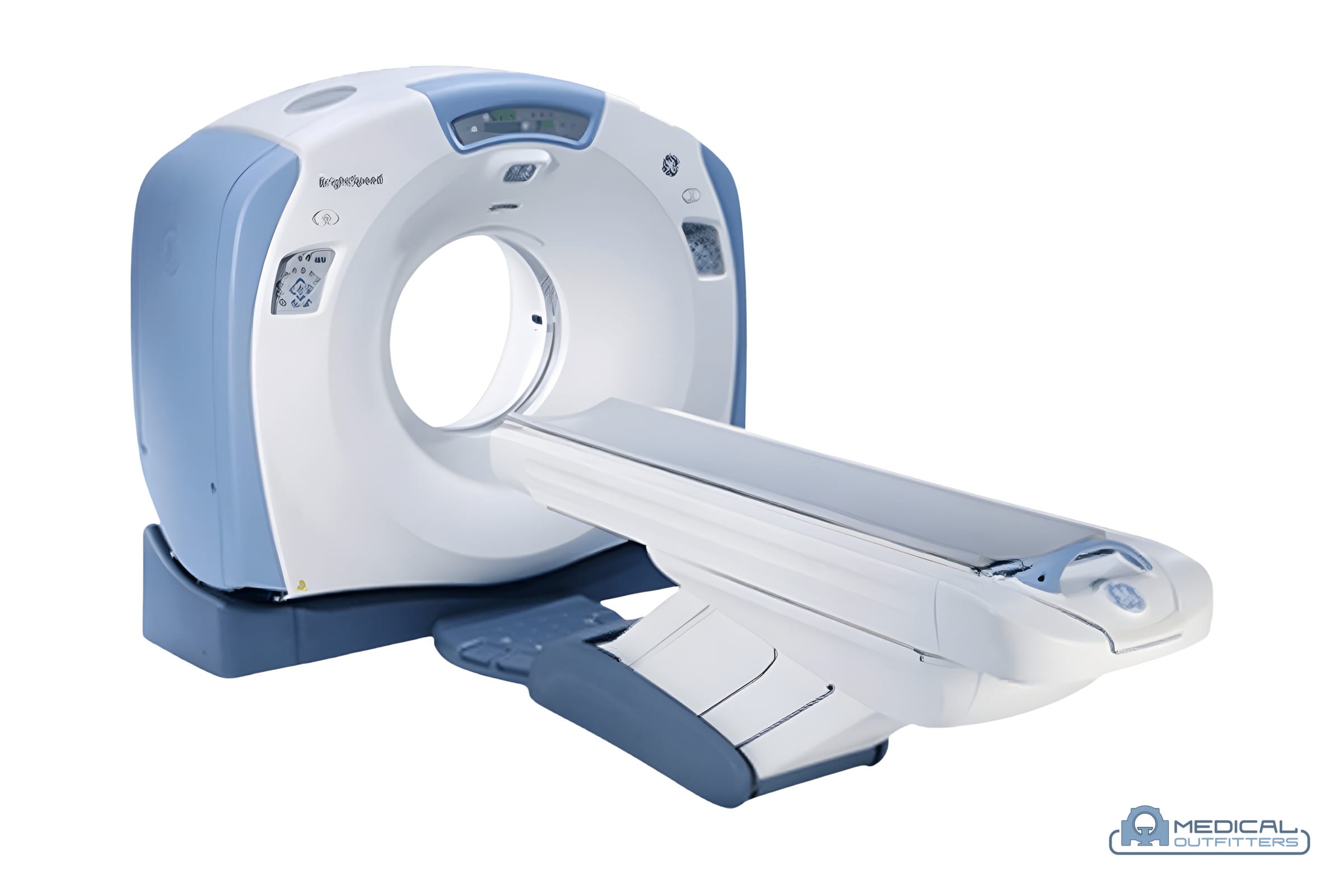
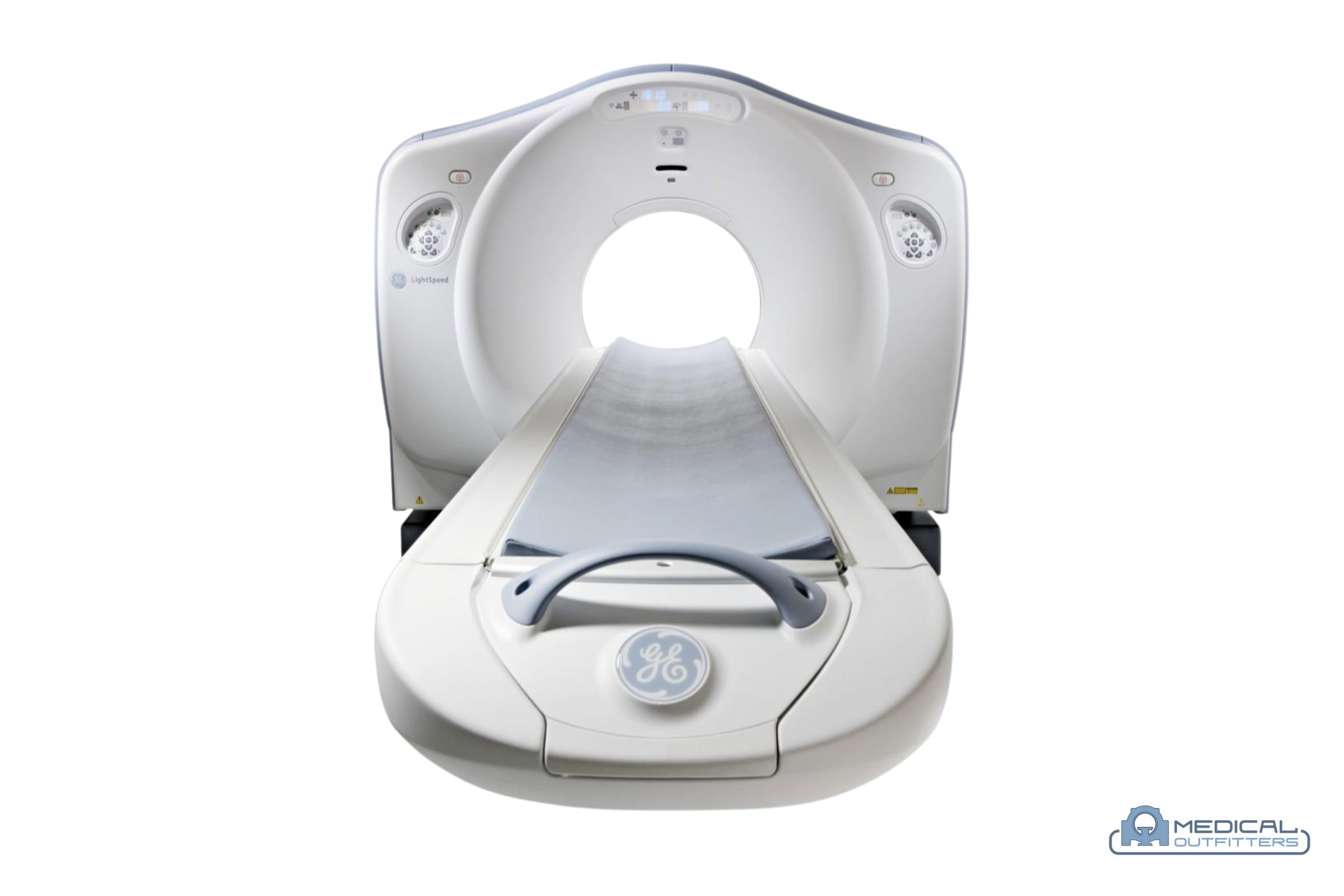
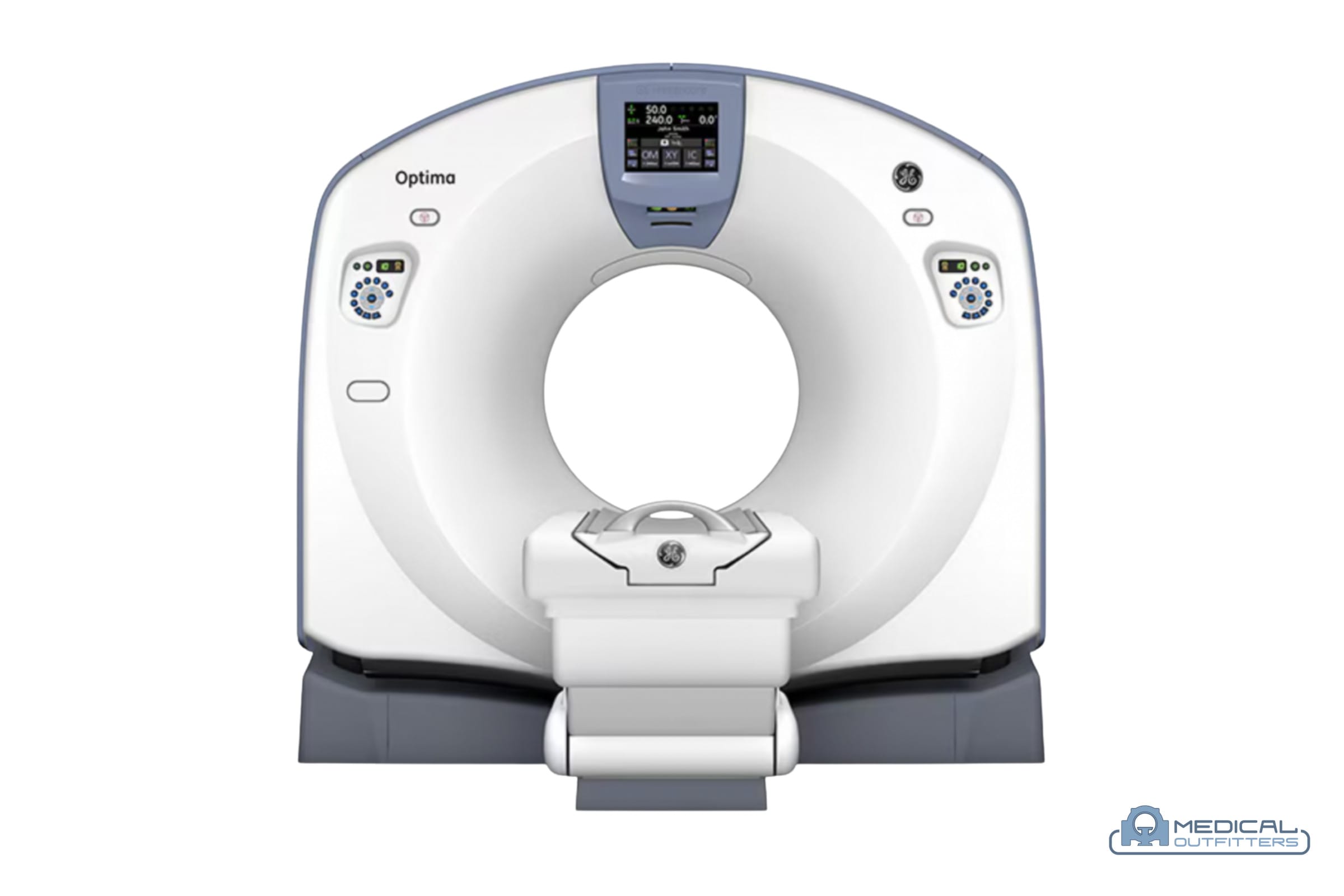
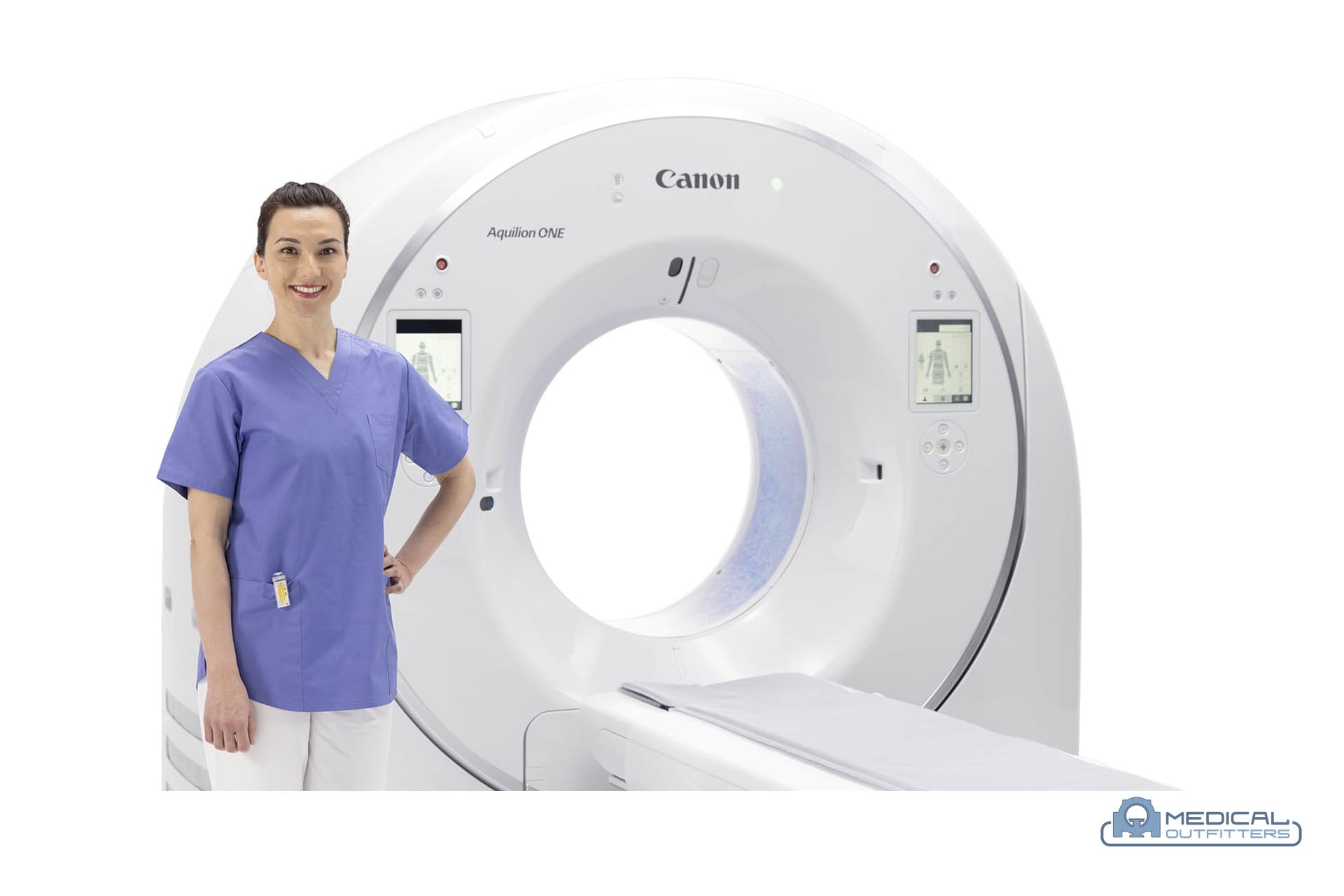
The main tube families on scanners Medical Outfitters sells and services are the GE Performix line on the LightSpeed, BrightSpeed, Optima CT660 and Revolution platforms, the Siemens Straton and Vectron tubes with their directly cooled rotating envelopes, the Philips MRC series, and the Canon Megacool tubes on the Aquilion line. Third-party manufacturers such as Dunlee and Varex make replacement tubes for several of them, which is part of why replacement prices vary so widely.
How Long Does a CT Tube Last? Scan Seconds, Not Years
A scan second is one second of X-ray production. A single helical pass through the chest might use five to ten of them; a multiphase abdominal study with contrast, thirty or more; a cardiac or trauma protocol somewhere in between. The scanner’s console keeps a running total, and the tube’s own history, the installation date and the count at every service visit, is the record that tells you how much life is left.
The classes run roughly as follows, drawing on the published experience of the service industry and what Medical Outfitters’ engineers see in the field. The entry-level tubes fitted to 16-slice and compact scanners, such as the Dunlee-built tubes on many older GE and Philips systems, are typically rated for 300,000 to 400,000 scan seconds. The tubes on mid-range 64-slice platforms generally run from about 500,000 to 1,000,000. The high-capacity tubes on premium Philips systems, the MRC 600 and MRC 800, consistently reach 800,000 to 1,600,000. Siemens’ Straton tubes trade a lower scan-second rating of a few hundred thousand for a very fast cooling design; the newer Vectron is built for far longer life.
Translate that into years with the workload. A hospital department scanning 60 patients a day at 20 scan seconds each uses about 300,000 scan seconds a year, so an entry-level tube lasts a little over a year there and an MRC tube three to five. An outpatient center scanning 15 patients a day uses around 75,000 a year, so the same entry-level tube lasts four or five years. That is the whole reason the question has no single answer, and the reason a tube’s remaining life is a number to ask for rather than a year to guess at.
Signs a CT Tube Is Near the End of Its Life
Arcing. The scanner reports tube arcs or high-voltage faults, at first occasionally and then on most scans. A tube that arcs once a week is being watched; a tube that arcs daily is being replaced.
Aborted and repeated scans. The scanner stops mid-pass on a tube fault and the study has to be repeated, which adds dose and time and is usually the symptom that gets reported to the service desk.
Longer warm-ups and cooling waits. The tube takes longer to pass its warm-up sequence in the morning, or the console imposes cooling delays between patients that it did not impose before.
Noise. A bearing whine or rumble from the gantry as the anode spins up, audible from the control room on a quiet day.
Image quality. Ring artifacts that calibration does not clear, streaks, or noise that climbs without a change in technique as the anode surface degrades and output falls.
Oil. A leak from the tube housing, which is an emergency rather than a warning.
Medical Outfitters’ preventive maintenance visits log the scan-second count and the arc history against the tube’s age and condition the tube on every visit, so the replacement is planned around the schedule rather than forced by a failure on a Monday morning.
CT Tube Replacement: The Job and the Cost
The job. Once the error logs and the scan-second count confirm the diagnosis, the tube is ordered: a new OEM tube, a refurbished or rebuilt tube with a documented count, or a third-party equivalent, matched to the generator and the software revision. The swap itself is most of a day for an engineer: drain and remove the old tube and housing, fit the new one, connect the high-voltage and cooling lines, run the tube through its seasoning and warm-up sequence, then recalibrate the scanner with air and phantom calibrations and confirm image quality. The scanner is typically down for one to two days including shipping, which is why sites with a single scanner value a tube that is stocked rather than ordered.
The cost. Published service-industry figures put a refurbished entry-level tube in the $25,000 to $40,000 range and a refurbished high-capacity tube at $55,000 to $90,000, with new OEM tubes running from around $70,000 for an entry-level tube to $150,000 and more for the premium Siemens and Philips tubes, plus $5,000 to $15,000 for the engineer, calibration and shipping. Medical Outfitters quotes a tube replacement installed and calibrated, with the tube’s warranty terms and its scan-second count on the quote, and the position of a given job within those ranges depends on the scanner model, the tube source and how quickly it is needed. On any scanner, the tube is the one bill that can equal a year of service, which is why it is handled in the contract rather than left to chance.
Tube Coverage in a CT Service Contract
A CT service contract is written with or without tube coverage, and the difference in the annual price is the insurance premium on the tube. With coverage, the tube is replaced when it fails or when its count says it should be, at no extra charge; without it, the contract covers labor and parts for everything else and the tube is quoted when the day comes.
The decision follows the scan-second count. A scanner with a new or young tube, well under a quarter of its rating used, can sensibly run without tube coverage for a year or two and move to coverage later. A scanner with a tube at mid-life or beyond is a scanner whose next large bill is already visible, and tube coverage is the way to spread it. A scanner bought used with an undocumented tube is the case where coverage matters most, because nobody knows when the bill arrives. Our CT scanner service page explains how Medical Outfitters builds contracts with and without tube coverage and what each visit covers.
How to Make a CT Tube Last Longer
Run the warm-up every morning and after any idle period of more than a few hours; a cold anode hit with a full-power scan is the fastest way to crack it. Respect the cooling delays the console imposes rather than overriding them. Keep the gantry’s cooling in specification: a chiller or an HVAC system that lets the gantry run warm shortens tube life as surely as it shortens everything else. Use dose modulation and iterative reconstruction, which lower the mAs per scan and therefore the heat per scan. Keep the room’s power clean, because voltage sags stress the high-voltage generator and the tube with it. And keep the preventive maintenance schedule, because an engineer who sees the arc count climbing can plan a replacement that a failure would have forced.
The Tube on a Used CT Scanner
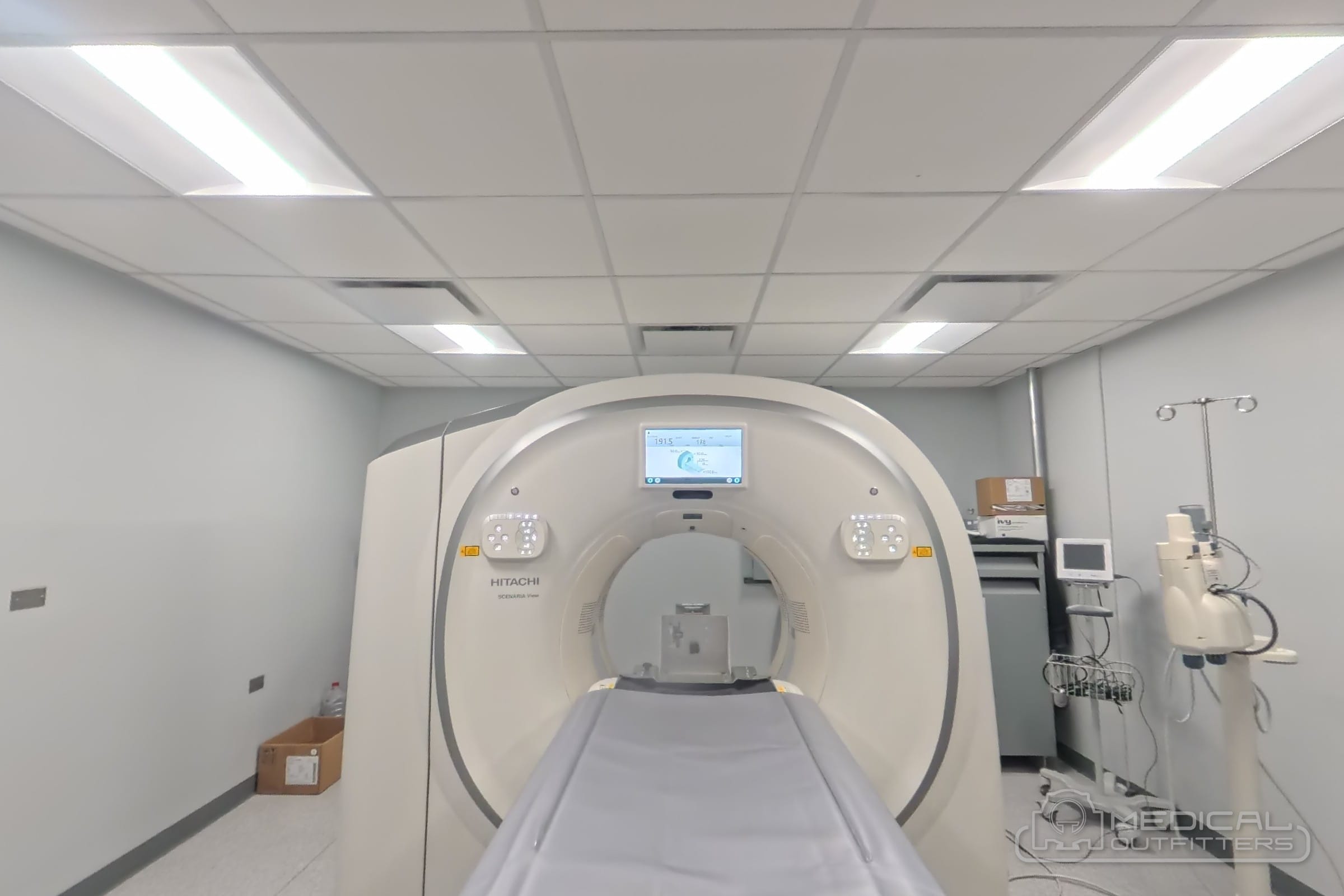
Ask for the tube’s installation date and its scan-second count before anything else, then its arc history and the warranty that comes with it. A used scanner with a fresh, documented tube and one with a tube near the end of its rating can look identical in the photographs and differ by the price of a tube, which our CT scanner cost and price guide treats as the first variable in any used CT price. Every MO Select refurbished CT from Medical Outfitters is sold with the tube’s count on the paperwork, a tube warranty and installation and calibration by our own engineers; the current systems are on the CT scanners for sale page, and our guide to CT scanner types by slice count helps match the platform to the workload that will decide how fast the tube is used. For new systems with a new tube and a full OEM warranty, the Fujifilm SCENARIA View and Supria 128 are sold and installed by Medical Outfitters as an authorized dealer. To check the tube on a scanner you are considering, or to price a replacement, contact us with the model, the serial number and the current scan-second count.
- CT scanner service, repair and tube replacement
- CT scanner cost and price guide (2026)
- CT scanners for sale: new Fujifilm, refurbished GE and Siemens
- CT scanner types by slice count
- CT scanner manufacturers compared
- Used imaging equipment inspection checklist
- GE LightSpeed CT price guide
- GE BrightSpeed CT price guide
- GE Optima CT660 price guide
- GE Revolution CT price guide
- Canon Aquilion CT price guide
- Fujifilm SCENARIA View 128-slice CT
- Fujifilm Supria 128 compact CT
- MO Select refurbished CT scanners
- Price a tube replacement
CT Tube Life: Common Questions
How long does a CT tube last?
Between two and eight years, measured in scan seconds. Entry-level and compact scanner tubes are typically rated for 300,000 to 400,000 scan seconds, mid-range 64-slice tubes for roughly 500,000 to 1,000,000, and the high-capacity tubes on premium platforms for 800,000 to 1.6 million. A busy hospital uses 100,000 to 300,000 scan seconds a year and a small clinic a fraction of that, so the same tube lasts very different times in different buildings.
What is a scan second?
One second of X-ray production by the tube. A helical chest pass uses five to ten, a multiphase contrast abdomen thirty or more. The scanner's console keeps a running total, and the tube's installation date and the count at every service visit are the record of how much life is left.
How much does a CT tube replacement cost?
Published service-industry figures put a refurbished entry-level tube at $25,000 to $40,000 and a refurbished high-capacity tube at $55,000 to $90,000, with new OEM tubes from around $70,000 for an entry-level tube to $150,000 and more for premium Siemens and Philips tubes, plus $5,000 to $15,000 for the engineer, calibration and shipping. Medical Outfitters quotes the replacement installed and calibrated with the tube's warranty and scan-second count on the quote.
What are the signs of a failing CT tube?
Arcing and high-voltage faults reported by the scanner, scans that abort mid-pass and have to be repeated, longer warm-up sequences and cooling delays, a bearing whine or rumble as the anode spins up, ring or streak artifacts that calibration does not clear, and rising noise at the same technique. An oil leak from the housing is an emergency rather than a warning.
How long does a CT tube replacement take?
The swap itself is most of a day for an engineer: remove the old tube and housing, fit and connect the new one, run its seasoning and warm-up, then recalibrate the scanner and confirm image quality. Including shipping the scanner is typically down for one to two days, which is why sites with a single scanner value a tube that is stocked rather than ordered.
Should my CT service contract include tube coverage?
If the tube is new or young and documented, time and materials is reasonable for a year or two. If the tube is at mid-life or beyond, or its count is unknown, tube coverage is the way to spread the one bill that can equal a year of service. Medical Outfitters writes contracts both ways and logs the scan-second count at every visit so the decision can be revisited.
Can a CT tube be refurbished?
Yes. Refurbished and rebuilt tubes with a documented count are a large part of the replacement market, alongside new OEM tubes and third-party equivalents from manufacturers such as Dunlee and Varex. The choice is made on the scanner model, the generator and software compatibility, the warranty offered and how quickly the tube is needed.
Does the tube affect the price of a used CT scanner?
More than anything but the slice count. A used scanner with a fresh, documented tube and one with a tube near the end of its rating can look identical and differ by the price of a tube. Every MO Select refurbished CT from Medical Outfitters is sold with the tube's count on the paperwork and a tube warranty.
Related Articles