The MRI cold head is a small two-stage refrigerator, bolted into the top of the magnet, that keeps the liquid helium cold enough to stay liquid. Driven by a helium compressor in the equipment room and cooled by the chiller, it runs around the clock for the life of the scanner, recondensing the helium that boils off so the level never falls. When it weakens or stops, the magnet starts losing helium; left long enough, it quenches. A cold head lasts three to five years, is replaced in a planned day of work while the magnet stays at field, and is the single most important service item on a modern MRI.
This guide explains what an MRI cold head does, how it works with the compressor and the chiller, the warning signs that it is wearing out, what a replacement involves and costs, and what a buyer should ask about the cold head on a used MRI. It draws on the magnets Medical Outfitters’ engineers service across Florida, the United States, Puerto Rico and the Caribbean, and sits alongside our guides to how long an MRI machine lasts and what an MRI quench is.
- What it is: a Gifford-McMahon cryocooler with two stages, about 40 kelvin and about 4 kelvin, mounted in the magnet’s service turret.
- What it needs: a helium compressor, water from the chiller, clean power and an adsorber change every year.
- How it fails: gradually, losing a share of its cooling capacity every year, until the helium level starts to fall.
- What to watch: the helium level trend, the cryostat pressure, the sound of the cold head and the compressor’s temperature and pressure readings.
- Service life and cost: three to five years; replacement is a one-day job priced in the low tens of thousands of dollars installed.
How the Cold Head Keeps an MRI Magnet Cold
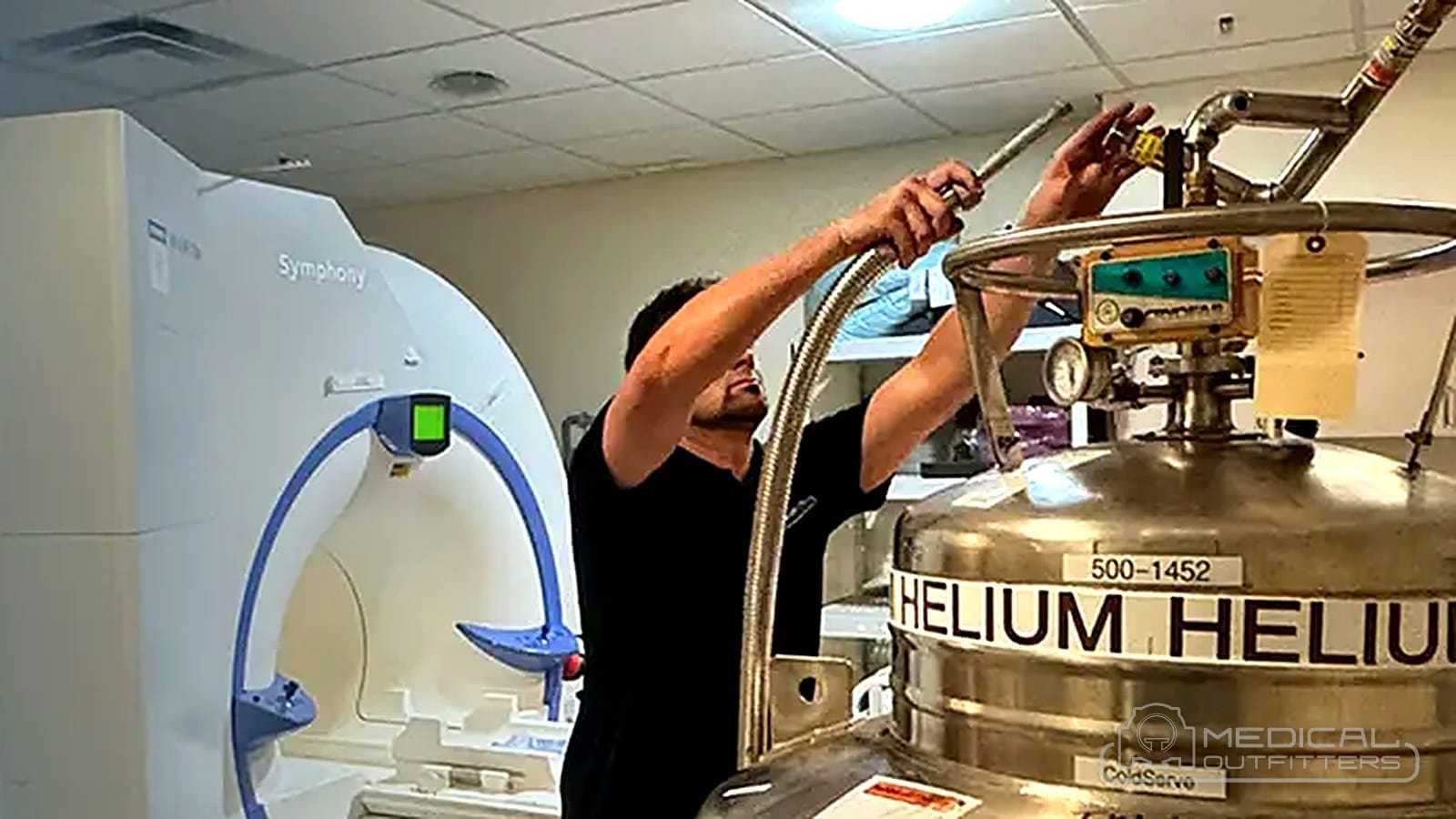
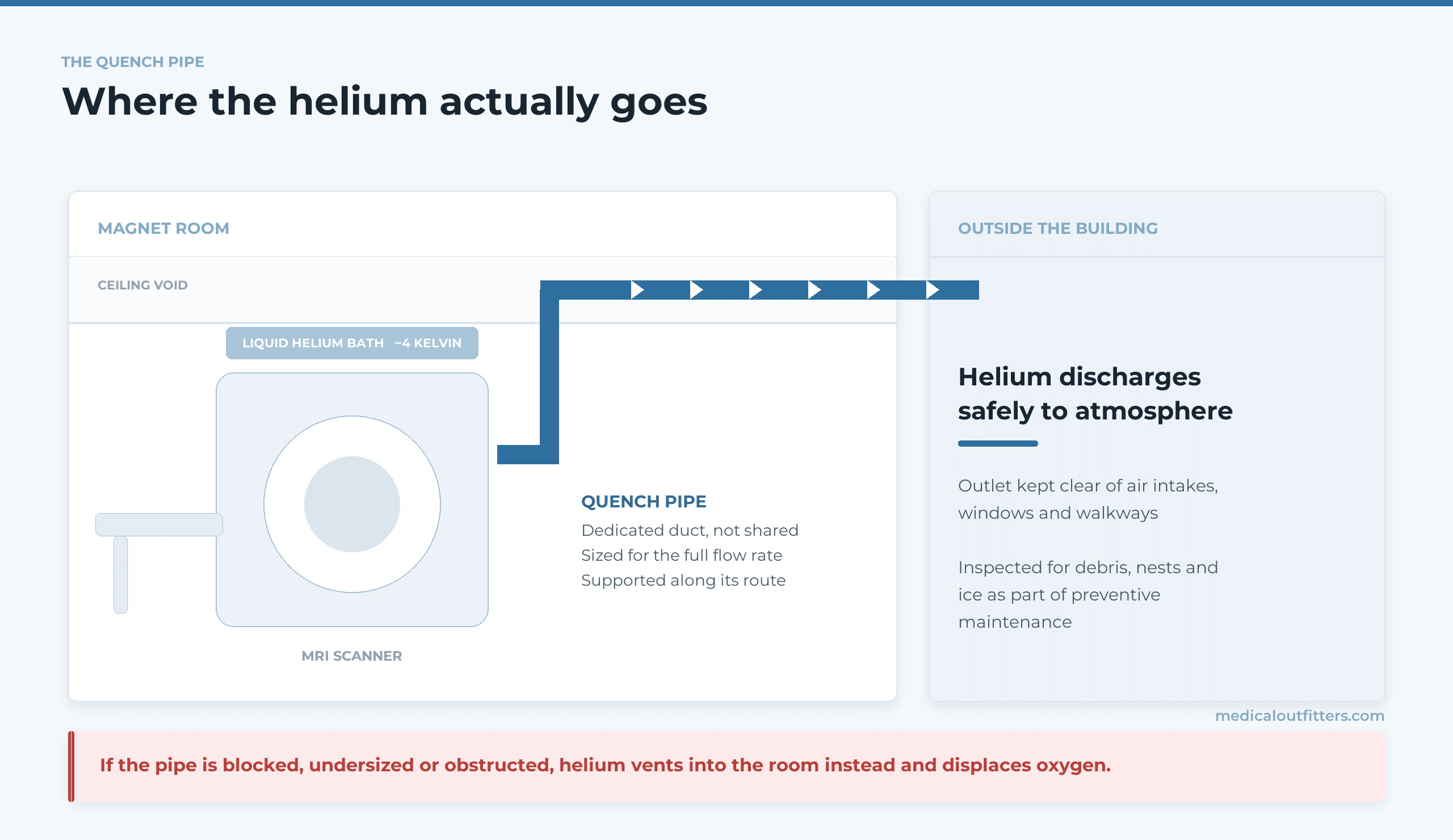
A superconducting MRI magnet carries its current with no resistance only while the coil sits at about 4 kelvin, which is minus 269 degrees Celsius. It gets there by sitting in a bath of liquid helium inside a vacuum-insulated vessel, the cryostat. No insulation is perfect: heat leaks in through the supports, the wiring and the radiation from the room, and every watt that leaks in boils a little helium. On the magnets built before the mid-2000s that helium simply vented through the quench pipe, and the magnet was topped up with a few hundred litres a year. On every modern zero-boil-off magnet the cold head catches the vapor and turns it back into liquid.
The compressor. A separate cabinet in the equipment room compresses helium gas, the working fluid of the cryocooler and not the helium in the magnet, to high pressure, removes the heat of compression into the chiller’s water loop, and sends the gas to the cold head through a pair of flexible stainless lines. An adsorber cartridge in the compressor traps traces of oil so they never reach the cold head.
The cold head. Inside it a displacer moves up and down about once a second, which is the chugging sound every MRI engineer knows, expanding the high-pressure helium in two stages. The first stage reaches roughly 40 to 50 kelvin and cools the radiation shield that surrounds the helium vessel. The second stage reaches about 4 kelvin at its tip, which sits in the neck of the cryostat; helium vapor that touches it condenses and drips back into the bath. Most current magnets use a Sumitomo two-stage Gifford-McMahon cold head of the RDK-408 class or its equivalent; some designs use pulse-tube coolers, which have no moving displacer in the cold section.
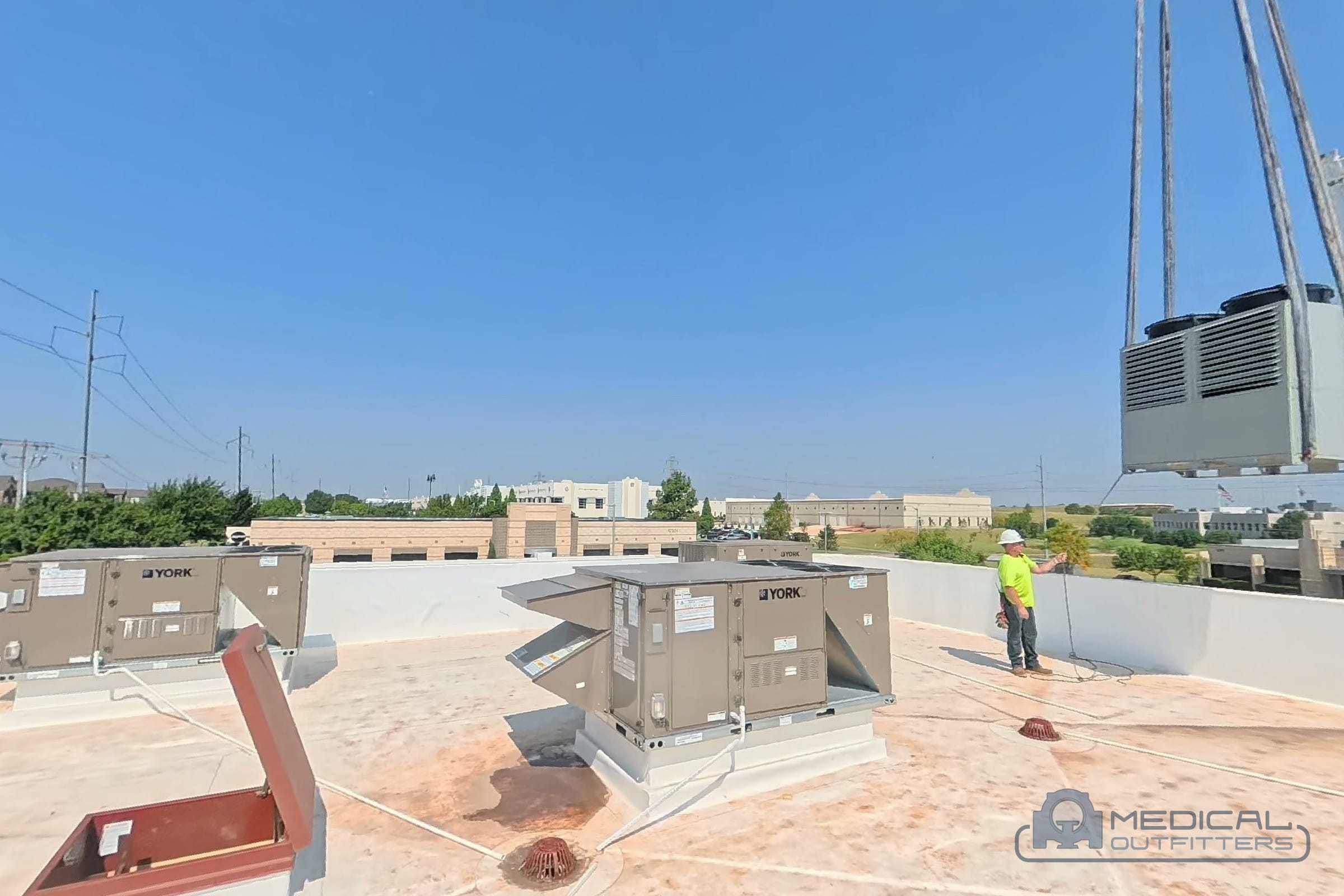
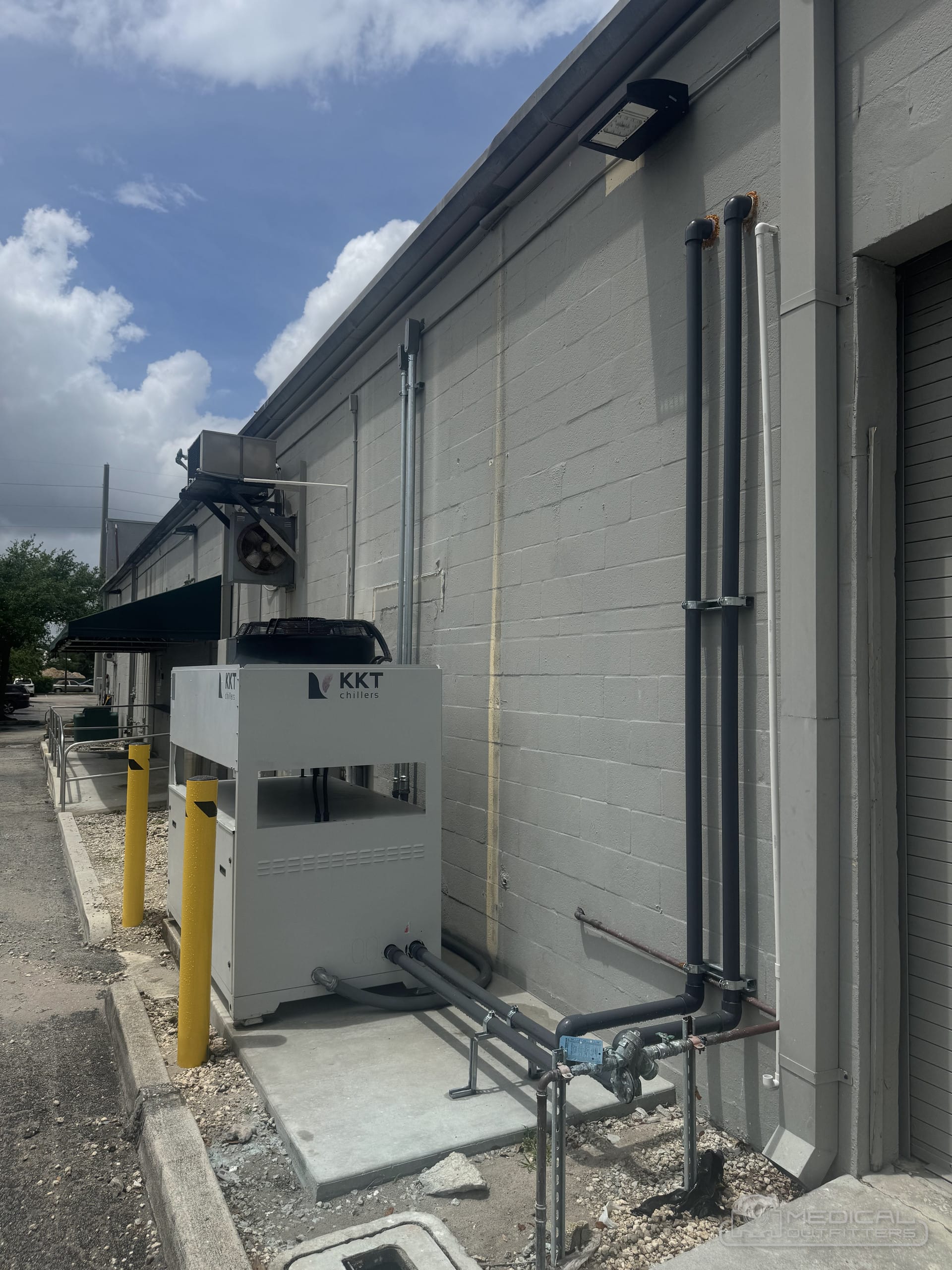
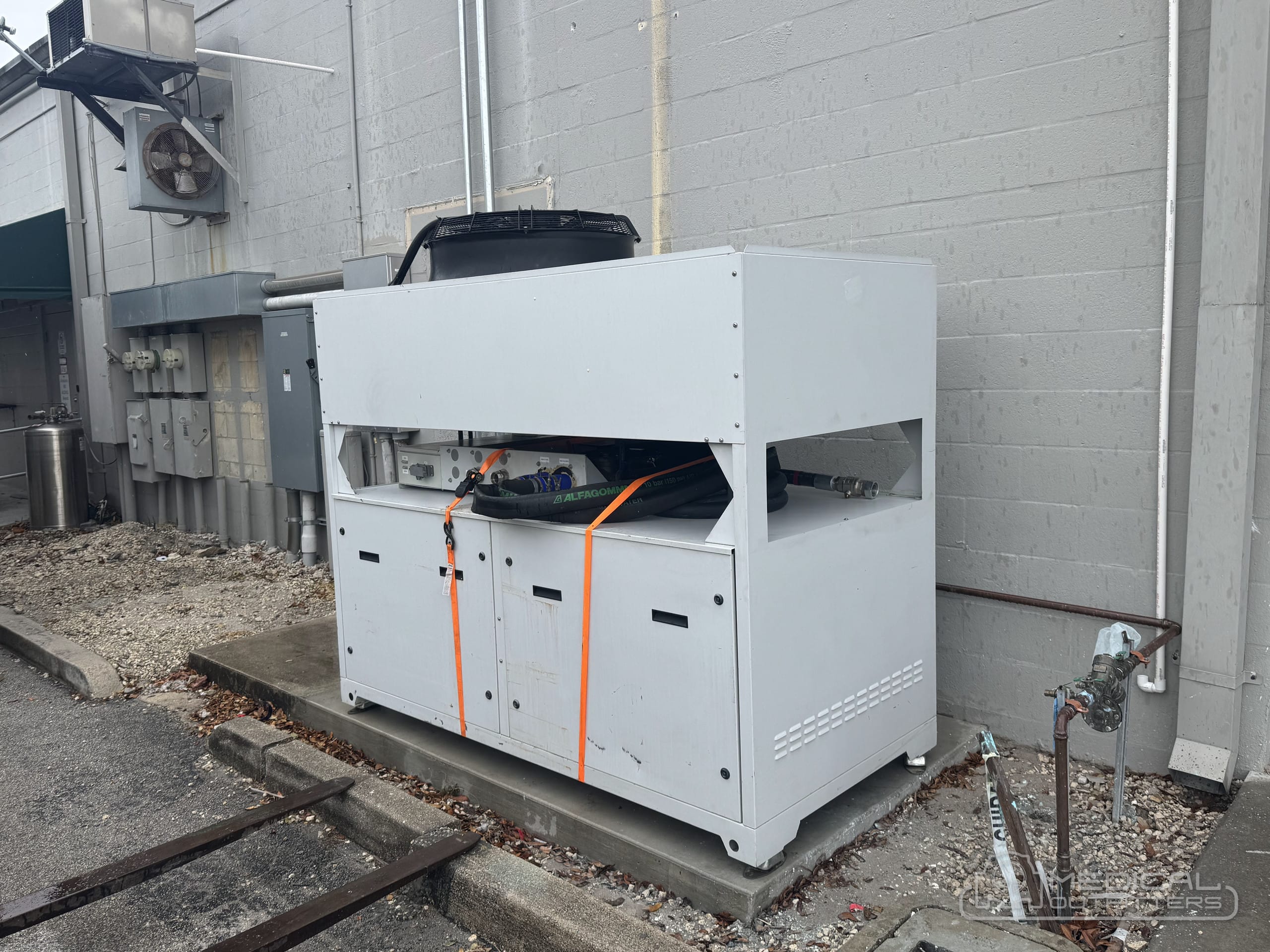
The chiller. The compressor rejects its heat into a water loop, and the chiller outside the building keeps that water at the temperature the compressor needs. A chiller that is undersized, fouled or short of refrigerant warms the compressor, which reduces the cold head’s capacity, which lets the helium level fall. Nearly every expensive helium bill traces back to the chiller or the cold head.
How an MRI Cold Head Fails, and the Warning Signs
A cold head wears rather than breaks. The displacer seals and the regenerator material inside it degrade with every cycle, so the cooling capacity falls a little each year, by about a tenth a year on the industry’s rule of thumb, while the heat leaking into the magnet stays the same. At first the cold head still has margin and the helium level holds. Then the margin disappears, the vapor stops condensing as fast as it forms, the cryostat pressure rises, the magnet’s relief valve starts to vent, and the helium level begins to drop. If nobody is watching, the level falls until the coil is no longer covered and the magnet quenches, which is a six-figure event with a ramp-up, shimming and a physicist’s acceptance to follow, as our quench guide explains.
The signs, roughly in the order they appear:
The helium level trend turns down. On a healthy zero-boil-off magnet the level line is flat for years. A level that drops a fraction of a percent a month is the earliest and most reliable warning, which is why Medical Outfitters logs the level on every service visit and offers continuous remote monitoring on its contracts.
The cryostat pressure rises. The pressure gauge on the magnet, or the console’s cryogen screen, reads above its normal band and the relief valve begins to lift.
The sound changes. A healthy cold head chugs steadily; a worn one knocks, rattles, slows or runs rough. Technologists who work next to the magnet every day are usually the first to notice.
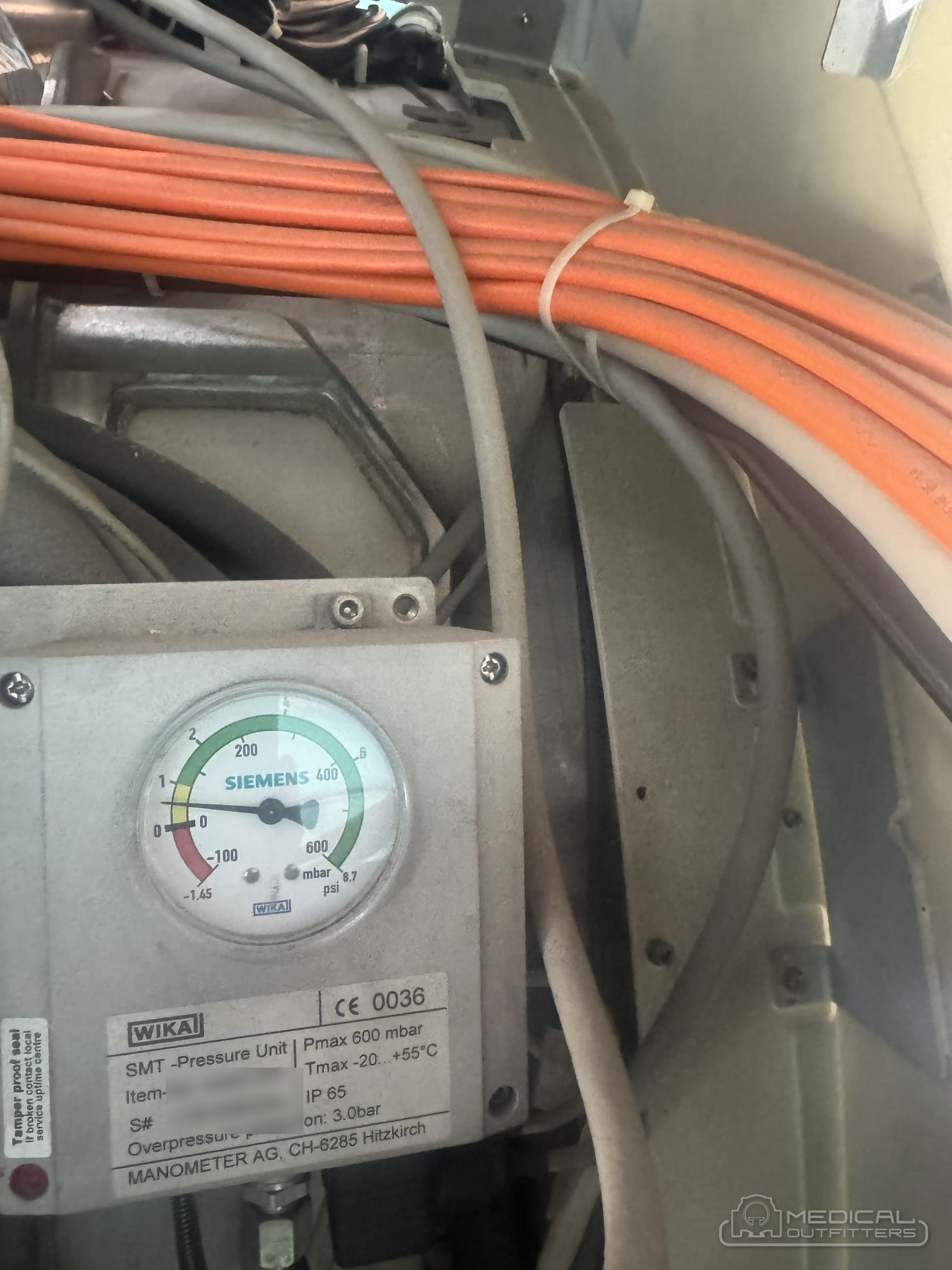
The compressor complains. High temperature alarms, low helium gas pressure in the compressor circuit, oil in the lines, or a compressor that cycles when it should run continuously. Compressor faults and chiller faults produce the same symptom at the magnet.
Frost. Ice forming on the cold head sleeve, the lines or the magnet’s turret means the cold is going somewhere it should not.
Cold Head Replacement: Service Life, the Job and the Cost
Service life. Three to five years is the range Medical Outfitters’ engineers plan around, and it matches the industry’s experience: a new cold head toward the top of the range, a rebuilt one a little less, and a cold head on a magnet with a struggling chiller less again. The cold head runs 24 hours a day whether the scanner is imaging or not, so its life is counted in calendar time, not patient volume. The compressor’s adsorber is changed every year; the compressor itself is rebuilt or replaced on a longer cycle of eight to ten years.
The job. A planned replacement takes a day. The compressor is shut down, the cold head is unbolted from the magnet’s turret and withdrawn, the new or rebuilt unit is fitted, purged and connected, and the compressor is restarted; the magnet stays at field throughout, and the helium lost while the sleeve is open is small if the work is done quickly and the room is dry. The engineer checks the helium level, the cryostat pressure and the compressor readings over the following days to confirm the new cold head has margin. A replacement done late, after the level has fallen, becomes a larger job that may need a helium fill as well, and our guide to MRI helium refill cost explains what that adds.
The cost. The cold head is the expensive part, and prices vary with the magnet model, the OEM or third-party source and whether the unit is new or rebuilt; published industry figures for the part alone run from the high four figures to the mid five figures. Medical Outfitters quotes the replacement installed, with the engineer, travel, the adsorber change and the follow-up checks included, and on the magnets we service that typically lands between $12,000 and $30,000 all in, with the model and new versus rebuilt setting where in the range a quote falls. Set against a quench, or against a year of helium top-offs on a venting magnet, a cold head on schedule is the cheapest line in the cryogen budget.
Siemens MAGNETOM Espree magnet cooldown, filmed by Medical Outfitters engineers
What Happens to the Cold Head When the Power Fails
The cold head stops the moment the compressor loses power, and from that moment the magnet is boiling off helium at the rate its heat leak allows. A zero-boil-off magnet with a full bath rides out a few hours without concern; a magnet that is already low, or an outage that runs into days, is a different matter, and after a hurricane or a grid failure the first call Medical Outfitters’ engineers make is to the magnets on their monitoring list. A generator feed or a UPS for the compressor and chiller, and a monitoring service that reports the level and pressure remotely, are the two measures that turn an outage into an entry in the log instead of a quench. Both are covered in our MRI room and siting guide and are standard questions in our site surveys in Puerto Rico and the Caribbean.
The Cold Head on a Used or Refurbished MRI
On a used magnet the cold head’s hours and last replacement date are the first two numbers to ask for, with the helium level history and any quench. A magnet offered with a cold head at year four is a magnet whose next large service bill is already due, and the price should say so. Every MO Select refurbished MRI from Medical Outfitters is delivered with a new or rebuilt cold head, a serviced compressor and chiller, a logged helium level and a written warranty, and our used and refurbished MRI machines page lists the current systems. The MRI manufacturers comparison covers how GE, Siemens, Philips and Fujifilm handle cryogens on their current platforms, including the sealed, helium-free magnets such as the Fujifilm ECHELON Smart ZeroHelium that still use a cold head but carry no helium bath to lose.
For a service contract that covers the cold head, the compressor and the helium, with continuous magnet monitoring and engineers who answer the phone at night, see our MRI service, repair and maintenance page, or contact us with the magnet’s model and the date of its last cold head.
- MRI service, repair and maintenance with magnet monitoring
- What an MRI helium refill costs
- How long does an MRI machine last?
- What is an MRI quench?
- Used and refurbished MRI machines for sale
- Used imaging equipment inspection checklist
- MRI manufacturers compared
- Fujifilm ECHELON Smart ZeroHelium 1.5T MRI
- MRI machine cost and price guide (2026)
- MRI room shielding and siting requirements
- How to move an MRI or CT scanner
- MRI machines: new, refurbished and used
- Ask an MRI engineer
MRI Cold Head: Common Questions
What is a cold head on an MRI machine?
The cold head is a two-stage cryocooler mounted in the magnet's service turret that keeps the liquid helium cold. Driven by a helium compressor in the equipment room and cooled by the chiller, its 4 kelvin tip recondenses the helium that boils off inside the cryostat, so on a modern zero boil-off magnet the helium level stays flat for years.
How does an MRI cold head work?
The compressor supplies high-pressure helium gas through flexible lines; inside the cold head a displacer expands that gas in two stages, the first at about 40 to 50 kelvin to cool the radiation shield and the second at about 4 kelvin at the tip in the cryostat neck, where helium vapor condenses and drips back into the bath. The chugging sound once a second is the displacer moving.
How long does an MRI cold head last?
Three to five years. A new cold head tends toward the top of the range, a rebuilt one a little less, and one on a magnet with a struggling chiller less again. The cold head runs 24 hours a day whether or not the scanner is imaging, so its life is calendar time, not patient volume. The compressor's adsorber is changed every year.
How do I know if the cold head is failing?
The helium level starts to trend down, the cryostat pressure rises and the relief valve begins to vent, the cold head's rhythm changes to a knock or a rattle, the compressor reports high temperature or low pressure, or frost forms on the sleeve or the lines. The level trend is the earliest and most reliable sign, which is why it is logged on every service visit.
What does an MRI cold head replacement cost?
Published industry figures for the part alone run from the high four figures to the mid five figures depending on the magnet model and whether the unit is new or rebuilt. Medical Outfitters quotes the replacement installed, with the engineer, travel, the adsorber change and the follow-up checks included, and on the magnets we service that typically lands between $12,000 and $30,000 all in.
What happens if the cold head fails?
The magnet stops recondensing and boils off helium at the rate its heat leak allows. On a zero-boil-off magnet with a full bath that gives days to weeks of warning if the level is being watched; left unattended, the level falls until the coil is no longer covered and the magnet quenches, which means a helium fill, a ramp-up, shimming and physicist testing on top of the cold head itself.
Can an MRI run without a cold head?
For a short time. The magnet stays at field and keeps imaging while the helium bath lasts, which is why a planned cold head replacement is done with the magnet at field and the scanner back in use the same day. A magnet cannot be left without a working cold head for long, and a power outage that stops the compressor is treated with the same urgency.
What is the difference between the cold head and the compressor?
The cold head is the refrigerator at the magnet that does the cooling; the compressor is the pump in the equipment room that drives it with high-pressure helium gas and dumps the heat into the chiller. They are serviced together: the adsorber in the compressor every year, the cold head every three to five years, the compressor on a longer cycle.
Related Articles