Mammogram cost has two honest answers, because the same words describe two different bills. The patient’s bill is the price of the exam: about 30 minutes in a mammography suite while a technologist positions and compresses each breast for two views, read by a radiologist and priced anywhere from $0 under a screening benefit to several hundred dollars for a diagnostic workup at a hospital. The facility’s bill is the price of the machine behind the exam, a capital purchase measured in the tens or hundreds of thousands of dollars. This article answers the patient question first and in full: how much a mammogram costs without insurance by exam type and setting, what each exam bills by CPT code, what Medicare and commercial plans cover and pay, why a diagnostic callback is billed differently from the screening that triggered it, and why 3D costs more. It then turns to the facility side, with the all-in machine bands from the Medical Outfitters mammography cost guide.
Medical Outfitters sells the Fujifilm ASPIRE Cristalle mammography system new in the United States and Puerto Rico as an authorized Fujifilm dealer, sells the Fujifilm AMULET Sophinity and AMULET Elite new in the Caribbean and the Dominican Republic and the Planmed Clarity systems new in Latin America and the Caribbean outside Puerto Rico, and sources refurbished Hologic, GE and Siemens systems on request, delivered, installed and warrantied. This article is written for the patient who has been handed a mammogram order and wants to know what it will cost, and for the practice administrator, radiology manager or physician owner who wants the revenue side of the exam before deciding whether to add a mammography machine to the facility. The figures below come from CMS, Medicare.gov, HealthCare.gov, the US Preventive Services Task Force, the FDA, RadiologyInfo, Hologic’s 2026 coding guide, CoveredUSA’s and CareRoute’s dated price surveys and the Medical Outfitters mammography machine cost guide, each named where it is used.
- Without insurance: a 2D screening mammogram runs $100 to $250 at a freestanding imaging center and $250 to $500 at a hospital outpatient department, and a 3D screening $200 to $400 at a center, per CoveredUSA (May 15, 2026); CareRoute (September 12, 2026) puts hospital self-pay at $250 to $1,000 plus a facility fee.
- By exam type: diagnostic mammograms cost more than screening, $200 to $400 for one breast and $300 to $600 for both in cash, per CoveredUSA, because they take extra views and a radiologist’s same-day read.
- Medicare: a screening mammogram is $0 once every 12 months from age 40, plus one baseline exam at 35 to 39, per Medicare.gov; a diagnostic mammogram costs 20 percent of the Medicare-approved amount after the $283 Part B deductible, and the 2026 national rates are $126.89 for screening and $157.77 for a bilateral diagnostic exam, per Hologic’s 2026 coding guide.
- Commercial insurance: the ACA requires Marketplace and most other plans to cover a screening mammogram every 1 to 2 years for women 40 and older without a copay or coinsurance, even before the deductible, per HealthCare.gov; the USPSTF recommendation of April 30, 2024 is biennial screening from 40 to 74. A callback or diagnostic exam follows the plan’s deductible and coinsurance.
- The machine: a refurbished 2D system runs $40,000 to $95,000 and a refurbished 3D system $95,000 to $225,000, delivered, installed and warrantied; new systems run $110,000 to $225,000 for 2D and $235,000 to $500,000 for 3D, per the Medical Outfitters mammography cost guide reviewed October 26, 2026.
Mammogram Cost Without Insurance: By Exam Type and Setting
The two things that set a mammogram’s cash price are the exam type on the order and the door you walk through. CoveredUSA’s mammogram pricing guide (May 15, 2026) puts a 2D screening mammogram at $100 to $250 at a freestanding women’s health or imaging center, a 3D tomosynthesis screening at $200 to $400 at the same kind of center, and either exam at $250 to $500 at a hospital outpatient department. For diagnostic exams the same guide lists $200 to $400 for a unilateral study and $300 to $600 for a bilateral one, and $100 to $250 for a baseline exam at age 35 to 39. CoveredUSA notes that hospital outpatient departments charge 30 to 50 percent more than freestanding centers for cash-pay patients, that prices in major metro areas run 40 to 60 percent higher than suburban and rural ones, and gives a worked example of a routine screening at $400 to $500 at a hospital against $150 to $200 at a freestanding center. CareRoute’s national estimates for 2026 (updated September 12, 2026), which the exam cost section of the Medical Outfitters mammography guide records, agree on the low end and run higher at the top: 2D screening $100 to $250 self-pay, 3D screening $150 to $350, diagnostic $150 to $500 and hospital outpatient $250 to $1,000 plus a facility fee.
| Where the exam is done | Screening 2D, cash | Screening 3D, cash | Diagnostic, cash | Source |
|---|---|---|---|---|
| Freestanding imaging center or women’s health center | $100 to $250 | $200 to $400 | $200 to $400 one breast, $300 to $600 both | CoveredUSA, May 15, 2026 |
| Hospital outpatient department | $250 to $500 | $250 to $500 | $250 to $1,000 plus a facility fee | CoveredUSA, May 15, 2026; CareRoute, September 12, 2026 |
| Mobile or community screening program | Free for eligible women through the CDC’s NBCCEDP; otherwise priced by the program | Program dependent | Diagnostic follow-up covered by the NBCCEDP for enrolled women | CDC, NBCCEDP program page |
| 3D add-on over 2D, any setting | Adds $50 to $150 (CoveredUSA); about $50 to $100 (CareRoute) | Adds $80 to $250 by CPT 77063 (CareRoute) | CoveredUSA; CareRoute CPT pages | |
Two things in the table matter to a person paying cash. First, the setting moves the price more than the technology does: the same 3D exam on the same class of machine costs about twice as much at a hospital department as at a freestanding center, on CoveredUSA’s figures, because the hospital adds a facility charge and prices against a higher chargemaster. Second, the screening vs diagnostic mammogram split is a difference of product, not of price tier: the diagnostic exam is a different study from the screening exam, not a more expensive version of it. A diagnostic mammogram takes additional views, often magnification or spot compression, and the radiologist reads it the same day, which is why both aggregators price it well above a screening. Whether the search is for mammogram cost without insurance, mammogram price, cost of mammogram or how much is a mammogram, the answer is the row for the exam type and the column for the setting, and the cheapest reliable route for an uninsured woman is a freestanding center’s self-pay screening price, or a community program if she qualifies.
Mammogram Price by CPT Code: Screening, Diagnostic and 3D Tomosynthesis
Every mammogram bill carries one of five codes, and the Medicare rate for each is the anchor that cash and insured prices are set against. CPT 77067 is the screening mammogram, bilateral, two views of each breast, including computer-aided detection when performed. CPT 77063 is the screening digital breast tomosynthesis add-on, billed with 77067 when the exam is 3D. CPT 77065 and 77066 are the diagnostic mammogram, unilateral and bilateral. For diagnostic tomosynthesis, Hologic’s 2026 coding and reimbursement guide lists the Medicare add-on as HCPCS code G0279, billed with 77065 or 77066; the CPT codes 77061 and 77062 describe the same unilateral and bilateral diagnostic tomosynthesis for payers that use them. The table gives the 2026 national average Medicare rates from Hologic’s guide, which applies the $33.5675 conversion factor for qualifying alternative payment model participants to the RVUs in the CMS 2026 relative value file; at the $33.4009 factor for everyone else, 77067 pays $126.26, as CareRoute’s CPT page calculates. Both are national averages before locality adjustment and before the 2 percent sequestration reduction.
| Code | What it bills | Cash range | 2026 Medicare, global (Hologic 2026 coding guide) | Technical component |
|---|---|---|---|---|
| 77067 | Screening mammogram, bilateral, 2D, with CAD when performed | $100 to $250 center, $250 to $500 hospital (CoveredUSA) | $126.89 (3.78 RVU) | $91.64 |
| 77063 | Screening tomosynthesis add-on, billed with 77067 | Adds $50 to $150 (CoveredUSA) | $51.69 (1.54 RVU) | $23.83 |
| 77065 | Diagnostic mammogram, unilateral | $200 to $400 (CoveredUSA) | $124.54 (3.71 RVU) | $86.60 |
| 77066 | Diagnostic mammogram, bilateral | $300 to $600 (CoveredUSA) | $157.77 (4.70 RVU) | $111.11 |
| G0279 | Diagnostic tomosynthesis add-on, billed with 77065 or 77066 (CPT 77061 and 77062 for other payers) | Adds $50 to $150 (CoveredUSA) | $40.62 (1.21 RVU) | $12.76 |
Adding the codes gives the Medicare price of each complete exam: $126.89 for a 2D screening, $178.58 for a 3D screening (77067 plus 77063), $157.77 for a 2D bilateral diagnostic and $198.39 for a 3D bilateral diagnostic (77066 plus G0279). The professional component, the radiologist’s read, is $35.25 of the screening rate and $46.66 of the bilateral diagnostic rate, per the same guide; the rest is the technical component, which pays for the machine, the technologist and the room. One difference from other imaging exams bears on the hospital question: Hologic’s guide, citing the Medicare Claims Processing Manual, chapter 4, section 10.6.2.2, notes that screening and diagnostic mammography furnished in hospitals is paid under the physician fee schedule rather than the hospital outpatient system, so Medicare pays a hospital and a freestanding center the same national rate for the same mammogram. The hospital premium that CoveredUSA and CareRoute measure is a cash and commercial-contract effect, not a Medicare one.
The CMS 2026 Physician Fee Schedule final rule of October 31, 2025 set the two conversion factors at $33.40 (up 3.26 percent) and $33.57 (up 3.77 percent), so the 2026 rates above are a little higher than the 2025 figures the Medical Outfitters guide recorded from Hologic’s 2025 edition ($124.53 for 77067 and $153.65 for 77066 at the $32.2465 factor). For a facility, the technical component is the number that matters: $91.64 for every 2D screening and $115.47 for every 3D screening, before the read, is the revenue line against which the machine in the last section is paid off.
Does Medicare Cover a Mammogram? The 12-Month Rule and What It Pays
Medicare Part B covers three kinds of mammogram, per Medicare.gov. A baseline mammogram is covered once in a lifetime for women aged 35 to 39. A screening mammogram is covered once every 12 months for women 40 or older. A diagnostic mammogram is covered when it is medically necessary, with no frequency limit. For the baseline and the screening exam the patient pays nothing when the doctor or other provider accepts assignment. For the diagnostic exam the patient pays 20 percent of the Medicare-approved amount after meeting the Part B deductible, which CMS set at $283 for 2026 in its announcement of November 14, 2025. On the 2026 national rates that coinsurance is about $32 on a $157.77 bilateral diagnostic exam and about $40 on a $198.39 bilateral diagnostic exam with tomosynthesis, after the deductible. Medicare.gov adds that the final cost can depend on other insurance, what the doctor charges, whether the doctor accepts assignment, the type of facility and where the test is done, which is the same setting effect the cash tables show.
The 3D question is simpler under Medicare than under commercial plans. Hologic’s 2026 coding guide lists 77063, the screening tomosynthesis add-on, with its own Medicare rate alongside 77067, so a 3D screening mammogram is billed and paid as a screening exam, and Medicare.gov’s $0 screening benefit does not distinguish 2D from 3D. The 12-month rule is a payment interval, not a clinical one: the USPSTF’s April 30, 2024 recommendation is biennial screening from 40 to 74, and a woman and her physician choose annual or biennial screening on her risk, while Medicare pays for one screening in any 12 months. A second screening inside the window is not covered, and a screening ordered for a symptom is a diagnostic exam and billed as one, which is the next section’s subject.
From the facility’s side of the desk, Medicare is the floor and the volume. The FDA’s Mammography Quality Standards Act statistics as of October 1, 2026 count 9,137 certified facilities with 27,865 accredited units performing 45,083,719 mammography procedures a year in the United States, and 13,624 of those units are accredited for tomosynthesis. Medicare’s screening rate of $126.89 and its 3D add-on of $51.69 are what a facility can count on per exam before it negotiates a single commercial contract, and the price tiers in the Medical Outfitters guide are sized against that arithmetic.
Mammogram Cost With Insurance: The ACA Screening Rule, Callbacks and Deductibles
With commercial insurance, the cost of a mammogram depends on whether the plan classifies the exam as preventive screening or as a diagnostic test. The Affordable Care Act requires Marketplace plans and most other plans to cover a list of women’s preventive services without charging a copayment or coinsurance, and HealthCare.gov lists among them a breast cancer screening mammogram, with or without a clinical breast examination, every 1 to 2 years for women 40 years and older, adding that this is true even if the yearly deductible has not been met. The list follows the US Preventive Services Task Force, whose final recommendation of April 30, 2024 gives a grade B to biennial screening mammography for women aged 40 to 74, lowering the starting age from the previous 50, and issues an I statement, insufficient evidence, for women 75 and older and for supplemental screening with ultrasound or MRI in women with dense breasts. A woman of 40 or older who has a screening mammogram at an in-network facility under a non-grandfathered plan should therefore see no bill for the 2D exam. The 3D add-on is the common exception: CareRoute (September 12, 2026) puts the insured cost of a 3D screening at $0 to $100, because some plans still treat tomosynthesis as an upgrade and pass the add-on through to the patient.
Everything else is diagnostic, and the callback is where most of the surprise bills come from. About one screening in ten leads to a recall for more imaging: the Friedewald study in JAMA (2014), across 13 sites, measured recall rates of 107 per 1,000 screens with digital mammography alone and 91 per 1,000 with tomosynthesis added. The recall is billed as a diagnostic mammogram, CPT 77065 or 77066, often with an ultrasound, and under most plans it runs through the deductible first and then the copay or coinsurance, even though it was ordered because of a free screening. Medicare handles it the same way, at 20 percent after the $283 deductible. A mammogram ordered for a lump, pain, discharge or a change in the breast is diagnostic from the start, as RadiologyInfo defines it: diagnostic mammography evaluates a patient with abnormal clinical findings, or follows up an abnormal screening result. Whether a particular plan waives cost sharing for diagnostic breast imaging is a question for the plan itself, asked before the appointment rather than after.
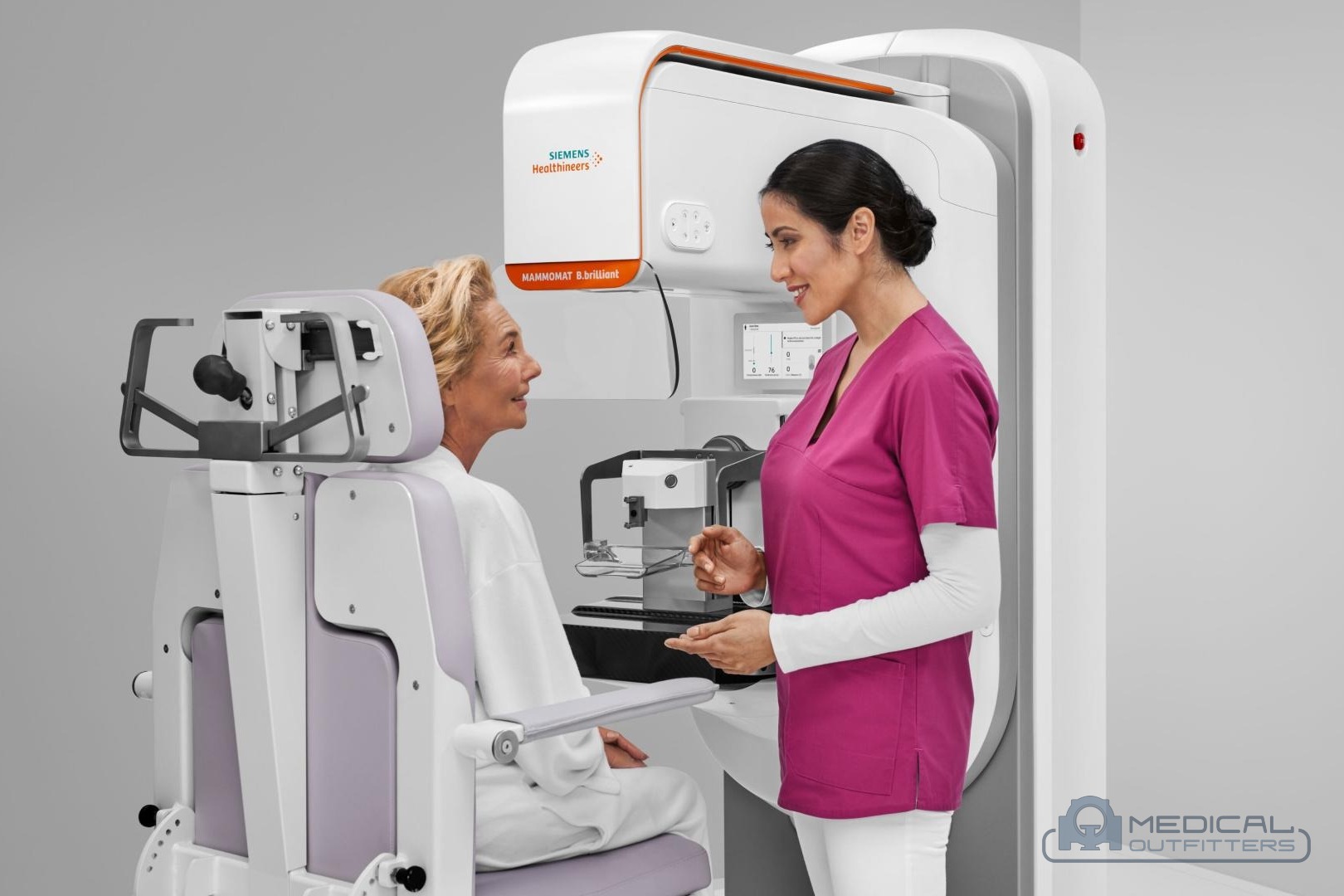
Three questions settle most insurance surprises before they happen. Is the order written as screening, and does the patient meet the plan’s screening definition of age and interval? Is the facility in network, and is it billed as a freestanding center or a hospital outpatient department? And will the exam be 2D or 3D, and does the plan pass the 3D add-on through? Under the No Surprises Act, CMS’s consumer page explains, a patient without insurance or not using it is usually entitled to a good faith estimate when she requests one or schedules at least 3 business days in advance, and may be able to dispute a bill that is at least $400 more than the estimate. The Medical Outfitters guide’s exam cost table sets the same three columns, cash, insured and Medicare, side by side.
Why a 3D Mammogram Costs More, and Whether It Is Worth It
A 3D mammogram, digital breast tomosynthesis, sweeps the X-ray tube through an arc over the compressed breast and reconstructs a stack of thin slices, so that overlapping tissue which can hide or mimic a cancer on a single 2D projection is separated; most systems also produce a synthesized 2D image from the same sweep. RadiologyInfo describes it as multiple images captured from different angles and reconstructed into a three-dimensional set, with clearer images of abnormalities within dense breast tissue. The cost premium follows from the hardware and the reading: a tomosynthesis system costs a facility $95,000 to $225,000 refurbished and $235,000 to $500,000 new against $40,000 to $95,000 and $110,000 to $225,000 for 2D, per the Medical Outfitters mammography cost guide, and the radiologist reads a stack of slices rather than four images. Medicare prices the difference at $51.69 for the screening add-on and the aggregators at $50 to $150 in cash.
What the premium buys is measured in the screening literature. The Friedewald study in JAMA (2014), 454,850 examinations at 13 sites, found that adding tomosynthesis to digital mammography reduced the recall rate from 107 to 91 per 1,000 screens, a relative reduction of 15 percent, and raised the invasive cancer detection rate from 2.9 to 4.1 per 1,000, a relative increase of 41 percent, with the overall cancer detection rate up from 4.2 to 5.4 per 1,000; the authors noted that the study did not assess clinical outcomes and that it was funded by Hologic and the National Cancer Institute. The USPSTF’s 2024 recommendation treats digital mammography and tomosynthesis as equally effective screening modalities. For a patient the practical arithmetic is that fewer callbacks mean fewer diagnostic bills, so a 3D add-on of $50 to $150 can pay for itself against a single avoided diagnostic exam at $300 to $600. The dose difference is small: RadiologyInfo’s radiation dose table gives 0.28 mSv for a screening digital mammogram, about 34 days of natural background radiation, and 0.34 mSv for tomosynthesis, about 42 days, against a US annual background of about 3 mSv.
Density adds a reason that is now written into every report. Under the FDA’s amended Mammography Quality Standards Act regulations, final rule of March 10, 2023 with compliance required by September 10, 2024, every mammography report and patient result letter in the United States must state whether the breast tissue is dense or not dense, with standard wording that dense tissue can hide findings and that supplemental screening may help. The FDA’s rule does not itself require supplemental imaging or decide how it is paid for, and the USPSTF found the evidence for supplemental ultrasound or MRI insufficient to recommend it, so a woman with dense breasts faces a second cost question that depends on her state’s law and her plan. The market has already moved: the FDA’s October 1, 2026 count puts 13,624 tomosynthesis units at 8,683 of the 9,137 certified facilities, which is why the 2D versus 3D section of the Medical Outfitters guide treats tomosynthesis as the default for a new screening program and 2D as the entry point for a low-volume or non-FDA market.
Why the Same Mammogram Costs $150 at One Door and $500 at Another, and How to Pay Less
The machine is not the reason. A hospital outpatient department and a freestanding center run the same two classes of system, a 2D full-field digital unit or a tomosynthesis unit from Hologic, GE, Siemens or Fujifilm, under the same FDA certification and the same annual physicist survey, and the exam takes the same 30 minutes at either. The differences are structural. A hospital department prices its chargemaster against its whole cost base and adds a facility charge for commercial and self-pay patients, which CoveredUSA measures at 30 to 50 percent above freestanding centers for cash and CareRoute at $250 to $1,000 against $100 to $250. Geography adds a layer: CMS adjusts every Medicare rate by locality, and CoveredUSA puts major metro prices 40 to 60 percent above suburban and rural ones. The exam type adds another, the diagnostic exam priced above the screening at every payer. And the billing route adds the last: a facility’s published self-pay price, an insured allowed amount, a chargemaster list price and the Medicare rate can be four different numbers for one exam at one address.
What a patient can do about it is short. Use the screening benefit: at 40 or older, an in-network screening mammogram under an ACA-compliant plan carries no copay and no deductible, per HealthCare.gov, and under Medicare it is $0 every 12 months, per Medicare.gov. Book the screening at a freestanding imaging center rather than a hospital department when paying cash, and ask for the self-pay price before handing over an insurance card, because an unmet deductible on a diagnostic exam at a hospital can cost more than the center’s cash price. Ask whether the exam is 2D or 3D and what the add-on costs under the plan. Ask for the good faith estimate. Bring the prior images, or have them sent, so the radiologist compares against them and the chance of a callback for a stable finding falls. And for a woman without adequate insurance, the CDC’s National Breast and Cervical Cancer Early Detection Program funds mammograms, clinical breast exams and diagnostic follow-up through 71 award recipients across the United States; in 2025 its breast services reached 338,824 women, per the CDC, and CoveredUSA notes the 2026 income ceiling at 250 percent of the federal poverty level, $37,650 for a household of one. For how the mammogram price compares with other imaging exams, the Medical Outfitters posts on CT scan cost, MRI scan cost and DEXA scan cost use the same sources; a screening mammogram at $100 to $250 cash sits with the DEXA scan among the least expensive imaging studies a patient can buy, and it is the one most often free.
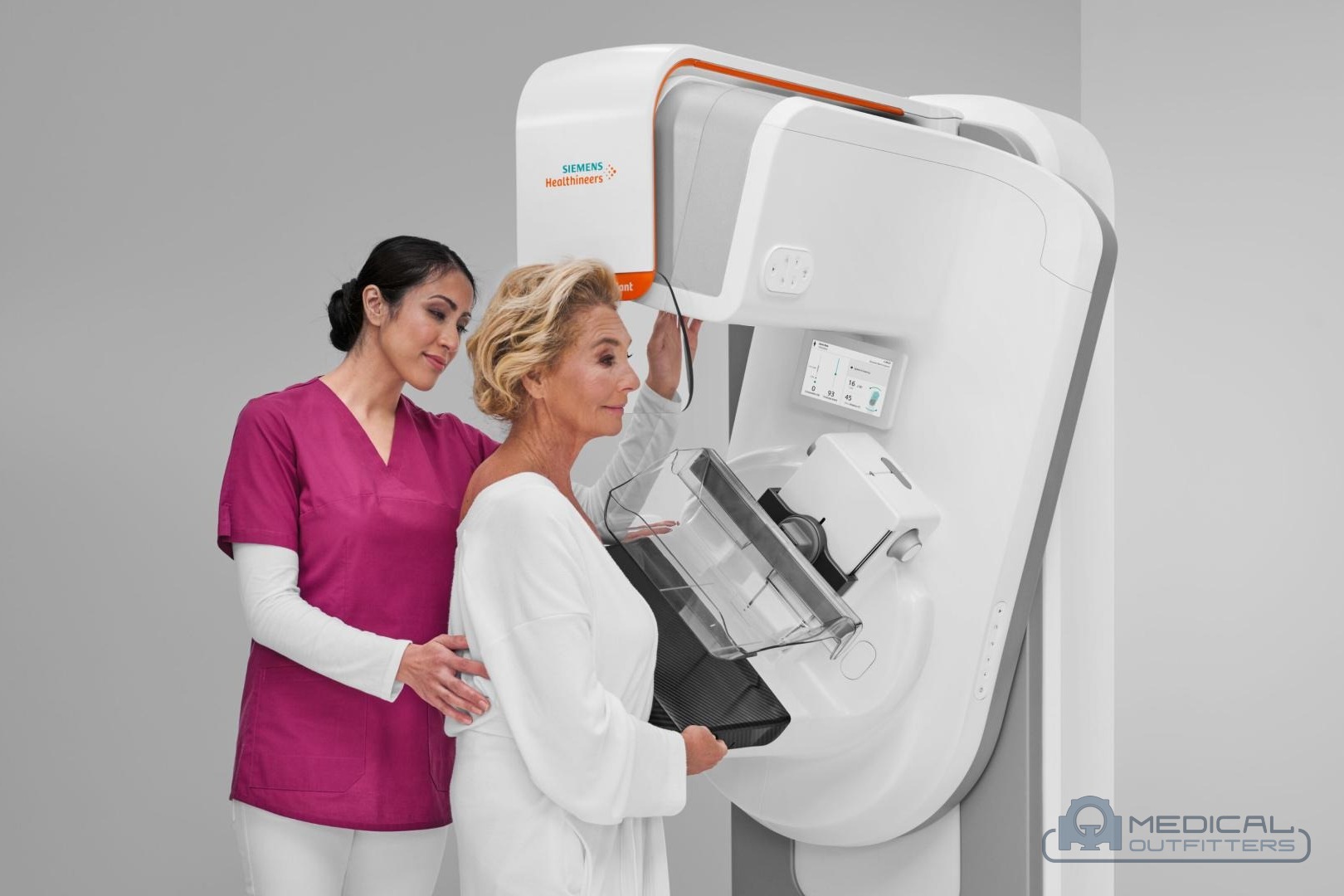
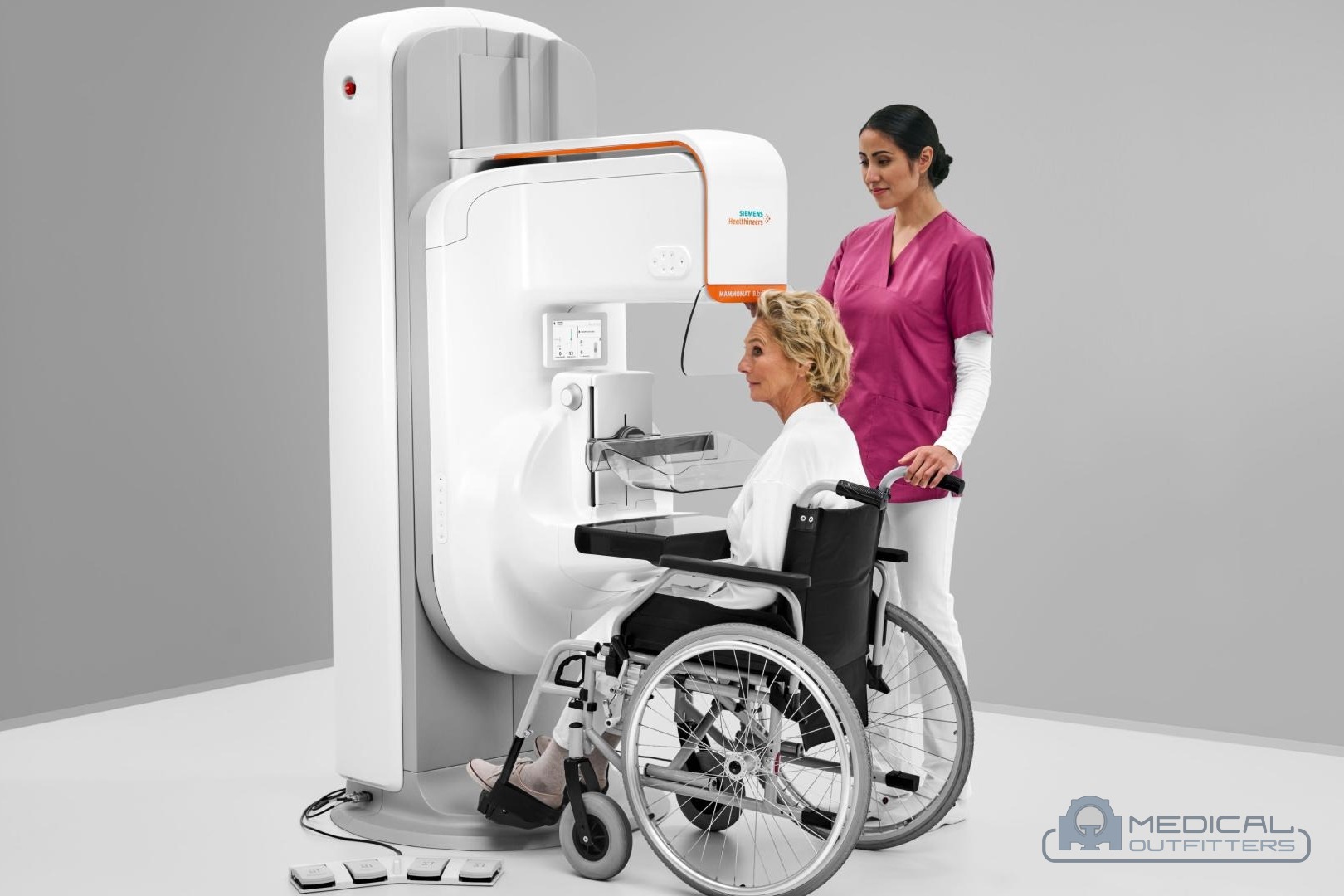
The exam itself, for anyone who has not had one: RadiologyInfo puts the whole process at about 30 minutes, advises against deodorant, talcum powder or lotion under the arms or on the breasts on the day of the exam, and suggests scheduling it the week after a period, when the breasts are least tender. Each breast is positioned on the detector, compressed with a paddle for a few seconds per view and imaged twice, top to bottom and side to side; a tomosynthesis sweep adds a few seconds per view. Results from a screening exam come by letter and, since September 2024, that letter states the breast density. Keeping the prior images together, and returning to the same facility where practical, is the single habit that keeps the diagnostic bills down, because a stable finding that the radiologist can compare is not a callback.
What the Mammography Machine Behind the Exam Costs a Facility
A patient’s $150 screening runs on a machine that cost the facility somewhere between $40,000 and $500,000. The Medical Outfitters mammography machine cost guide, with price ranges reviewed October 26, 2026, puts a refurbished 2D full-field digital system at $40,000 to $95,000 and a new one at $110,000 to $225,000, and a refurbished 3D tomosynthesis system at $95,000 to $225,000 and a new one at $235,000 to $500,000, each figure delivered, installed and warrantied, with applications training inside the quote. The guide’s averages are about $65,000 for a refurbished 2D system, about $150,000 for a refurbished 3D system and about $300,000 for a new tomosynthesis platform, and it notes that headline prices published elsewhere are often for the equipment alone, before freight, installation and current tariffs, and read lower than a real cost. The price list by model gives the detail; the table below reproduces the systems most often quoted, with how Medical Outfitters sells each one.
| System | Maker and how Medical Outfitters sells it | Refurbished, all-in (Medical Outfitters guide) | New price |
|---|---|---|---|
| 2D full-field digital, class band | Hologic, GE and Siemens refurbished, sourced on request; Fujifilm sold new | $40,000 to $95,000 | $110,000 to $225,000 |
| 3D tomosynthesis, class band | Hologic, GE and Siemens refurbished, sourced on request; Fujifilm sold new | $95,000 to $225,000 | $235,000 to $500,000 |
| Fujifilm ASPIRE Cristalle | Fujifilm, sold new by Medical Outfitters in the United States and Puerto Rico as the authorized dealer; FDA cleared for 2D, tomosynthesis and contrast-enhanced mammography | $70,000 to $95,000 (2D) | $180,000 to $225,000 (2D); $235,000 to $295,000 with tomosynthesis |
| Fujifilm AMULET Sophinity (3D) and AMULET Elite (2D) | Fujifilm, sold new by Medical Outfitters in the Caribbean and the Dominican Republic, non-FDA; not sold in the United States or Puerto Rico | Not applicable | Quoted on request |
| Planmed Clarity 2D, Clarity S and Clarity 3D | Planmed, sold new by Medical Outfitters to customers in Latin America and the Caribbean outside Puerto Rico; not sold by Medical Outfitters in the United States or Puerto Rico | On request | $110,000 to $180,000 (2D); $120,000 to $190,000 (S); $250,000 to $380,000 (3D) |
| Hologic Selenia Dimensions 3D | Hologic, refurbished, sourced on request | $110,000 to $175,000 | Estimated $250,000 to $350,000 through Hologic; not sold new by Medical Outfitters |
| Hologic 3Dimensions | Hologic, refurbished, sourced on request | $160,000 to $225,000 | Estimated $300,000 to $500,000 through Hologic; not sold new by Medical Outfitters |
| GE Senographe Pristina | GE, refurbished, sourced on request | $150,000 to $225,000 | Estimated $300,000 to $500,000 through GE; not sold new by Medical Outfitters |
| Siemens MAMMOMAT Revelation | Siemens, refurbished, sourced on request | $150,000 to $225,000 | Estimated $300,000 to $500,000 through Siemens; not sold new by Medical Outfitters |
The exam price and the machine price meet in the payback arithmetic, which this article works with the Medicare technical component as the floor. A 3D screening pays a technical component of $115.47 under the 2026 rates in Hologic’s guide ($91.64 for 77067 plus $23.83 for 77063), so the guide’s $150,000 average refurbished tomosynthesis system is recovered after about 1,300 screening exams on the equipment line alone, before the technologist, the physicist’s annual survey, MQSA accreditation and inspection fees, service and floor space; at the technical component of a 2D screening, $91.64, a $65,000 refurbished 2D system is recovered after about 710 exams. A payer mix that averages above Medicare shortens both. Which system to buy follows from the market and the volume: a United States or Puerto Rico facility starting a screening program chooses between the Fujifilm ASPIRE Cristalle new with tomosynthesis and a refurbished Hologic, GE or Siemens tomosynthesis system sourced through the MO Select refurbished line; a Caribbean or Dominican Republic facility outside the FDA’s jurisdiction has the AMULET Sophinity and AMULET Elite as new options; and a program that will add stereotactic biopsy prices the biopsy package with the machine, which the guide covers alongside the breast biopsy systems Medical Outfitters sells. The room itself needs less shielding than a general X-ray room, specified by a medical physicist, plus acquisition and reading workstations, PACS connectivity and, in the United States, MQSA certification, an annual physicist survey and qualified staff, per the Medical Outfitters mammography category page; the new versus refurbished section of the guide and the radiology equipment cost table set the mammography bands beside every other modality.
Price the Exam, or Price the Machine, With Medical Outfitters
If you are a patient, the numbers above are the ones to carry to the phone: $100 to $250 cash for a 2D screening at a freestanding center and $200 to $400 for 3D, $250 to $500 at a hospital, $0 under Medicare every 12 months from age 40 and $0 for an in-network screening under an ACA-compliant plan, with a diagnostic callback billed at 20 percent after the $283 deductible under Medicare or through the plan’s deductible and coinsurance. If you run a facility, the same numbers are the revenue line against a machine that costs $40,000 to $95,000 refurbished or $110,000 to $225,000 new for 2D and $95,000 to $225,000 refurbished or $235,000 to $500,000 new for 3D, delivered, installed and warrantied. The mammography machine cost guide has the full price list by brand and model, the exam cost table and the territory for each new system; the mammography category lists the Fujifilm, Planmed and Koning systems and explains which can be sold in the United States; the refurbished equipment page explains the MO Select standard; and installation and service cover the system after the sale. Send your expected weekly volume, payer mix and location through the contact page and the team will price a specific system against it.
- CoveredUSA, Mammogram Cost in 2026 (May 15, 2026): cash price ranges by exam type and setting, the 3D add-on, the hospital and metro premiums and the NBCCEDP income ceiling. coveredusa.org/en/cost/mammogram
- CareRoute, How Much Does a Mammogram Cost in 2026? (updated September 12, 2026) and its CPT 77067 and 77063 pages: self-pay ranges, the insured 3D cost and the 2026 rate at the $33.4009 conversion factor. careroute.ai/costs/mammogram-cost
- Hologic, 2026 Breast Imaging: Mammography Coding and Reimbursement Guide (MISC-03286 REV 016, January 2026): 2026 RVUs and national average Medicare rates for 77067, 77063, 77065, 77066 and G0279, global, professional and technical, and the hospital payment note. hologic.com, 2026 mammography coding guide (PDF)
- Medicare.gov, Mammograms: the baseline, screening and diagnostic benefits, the 12-month interval and the 20 percent coinsurance after the Part B deductible. medicare.gov/coverage/mammograms
- CMS, Calendar Year 2026 Physician Fee Schedule Final Rule fact sheet (October 31, 2025): the two 2026 conversion factors; CMS, 2026 Medicare Parts A and B premiums and deductibles (November 14, 2025): the $283 Part B deductible. cms.gov, CY 2026 PFS final rule fact sheet
- US Preventive Services Task Force, Breast Cancer: Screening (April 30, 2024): the grade B for biennial screening at 40 to 74 and the I statements. uspreventiveservicestaskforce.org, breast cancer screening
- HealthCare.gov, Preventive care benefits for women: the mammogram line and the no-copay, no-deductible rule. healthcare.gov/preventive-care-women
- FDA, MQSA National Statistics (as of October 1, 2026): certified facilities, accredited units, tomosynthesis units and annual procedures; FDA, Important Information: Final Rule to Amend the MQSA (breast density notification, compliance by September 10, 2024). fda.gov, MQSA national statistics
- Friedewald SM et al., Breast Cancer Screening Using Tomosynthesis in Combination With Digital Mammography, JAMA 2014;311(24):2499-2507: recall and cancer detection rates per 1,000 screens. doi.org/10.1001/jama.2014.6095
- RadiologyInfo (ACR and RSNA), Mammography and Radiation Dose From X-Ray and CT Exams: exam time, preparation, screening versus diagnostic, tomosynthesis and the 0.28 and 0.34 mSv doses. radiologyinfo.org/en/info/mammo
- CDC, About the National Breast and Cervical Cancer Early Detection Program: services, award recipients and 2025 reach; CMS, Understanding costs in advance: the good faith estimate and the $400 dispute threshold. cdc.gov, NBCCEDP
- Medical Outfitters, Mammography Machine Cost and Buying Guide (2026), reviewed October 26, 2026: all-in machine bands, the price list by model, territory by system and the exam cost table. medicaloutfitters.com, mammography machine cost guide
- Mammography machine cost and buying guide (2026)
- How much a mammogram costs: the exam, not the machine
- Mammography machine price tiers, refurbished and new
- 2D vs 3D mammography (tomosynthesis) vs breast CT
- Mammography machine price by model
- Mammography machines: new, refurbished and used
- Breast biopsy systems
- Refurbished medical imaging equipment: the MO Select standard
- Fujifilm ASPIRE Cristalle: sold new in the United States and Puerto Rico
- Koning Vera breast CT: compression-free breast imaging
- How much does a DEXA scan cost in 2026?
- How much does a CT scan cost in 2026?
- How much does an MRI scan cost in 2026?
- Radiology equipment cost in 2026, every modality
- Price a mammography system against your volume and payer mix
Mammogram Cost: Common Questions
How much does a mammogram cost?
A screening mammogram costs about $100 to $250 without insurance at a freestanding imaging center and $250 to $500 at a hospital outpatient department in 2026, with 3D tomosynthesis adding $50 to $150, per CoveredUSA's pricing guide of May 15, 2026. Medicare Part B covers a screening mammogram once every 12 months from age 40 at $0 when the provider accepts assignment, per Medicare.gov, and pays $126.89 for the exam under the 2026 Physician Fee Schedule, per Hologic's 2026 coding guide.
How much is a mammogram without insurance?
CoveredUSA (May 15, 2026) puts the cash price of a 2D screening mammogram at $100 to $250 at a freestanding imaging center and $250 to $500 at a hospital outpatient department, a 3D screening at $200 to $400 at a center, and a diagnostic mammogram at $200 to $400 for one breast and $300 to $600 for both. CareRoute (September 12, 2026) runs $100 to $250 for 2D screening, $150 to $350 for 3D and $250 to $1,000 plus a facility fee at a hospital. A freestanding center's self-pay screening price is the cheapest reliable route.
How much does a 3D mammogram cost?
A 3D screening mammogram costs $200 to $400 cash at a freestanding imaging center, per CoveredUSA (May 15, 2026), which puts the tomosynthesis add-on at $50 to $150 over a 2D exam; CareRoute (September 12, 2026) gives $150 to $350 self-pay and $0 to $100 with insurance. Medicare pays the screening tomosynthesis add-on, CPT 77063, at $51.69 alongside the $126.89 screening rate in 2026, per Hologic's coding guide, and covers it under the $0 screening benefit.
Does Medicare cover mammograms, and how often?
Yes. Medicare Part B covers one baseline mammogram for women aged 35 to 39, a screening mammogram once every 12 months for women 40 or older, and diagnostic mammograms when medically necessary, per Medicare.gov. The baseline and screening exams cost the patient nothing when the provider accepts assignment. A diagnostic mammogram costs 20 percent of the Medicare-approved amount after the Part B deductible, $283 in 2026 per CMS, which is about $32 on the $157.77 bilateral diagnostic rate.
Why was my diagnostic mammogram billed when my screening was free?
Because the callback is a different exam. A screening mammogram is a preventive service that the ACA and Medicare cover at $0; a diagnostic mammogram, CPT 77065 or 77066, evaluates a finding, including an abnormal screening result, and most plans run it through the deductible and coinsurance, per CoveredUSA and Medicare.gov. The Friedewald study in JAMA (2014) measured recalls at 107 per 1,000 screens with 2D mammography and 91 with tomosynthesis, so about one woman in ten gets that second bill. Ask the plan whether it waives cost sharing for diagnostic breast imaging.
Is a mammogram free with insurance?
A screening mammogram is. HealthCare.gov lists a breast cancer screening mammogram every 1 to 2 years for women 40 and older among the preventive services that Marketplace and most other plans must cover without a copayment or coinsurance, even if the deductible has not been met, following the USPSTF's April 30, 2024 grade B recommendation for biennial screening at 40 to 74. The 3D add-on may still carry a $0 to $100 charge on some plans, per CareRoute, and a diagnostic exam follows the plan's deductible and copay.
Where can I get a free or low-cost mammogram?
The CDC's National Breast and Cervical Cancer Early Detection Program funds mammograms, clinical breast exams and diagnostic follow-up for women with low incomes who do not have adequate insurance, through 71 award recipients across the United States; its breast services reached 338,824 women in 2025, per the CDC. CoveredUSA puts the 2026 income ceiling at 250 percent of the federal poverty level, $37,650 for a household of one. Freestanding imaging centers' self-pay screening prices, $100 to $250 per CoveredUSA, are the next lowest route.
What does a mammography machine cost?
The Medical Outfitters mammography machine cost guide, reviewed October 26, 2026, puts a refurbished 2D digital system at $40,000 to $95,000 and a new one at $110,000 to $225,000, and a refurbished 3D tomosynthesis system at $95,000 to $225,000 and a new one at $235,000 to $500,000, delivered, installed and warrantied. At the 2026 Medicare technical component of $115.47 per 3D screening, from Hologic's coding guide, a $150,000 refurbished tomosynthesis system is recovered after about 1,300 exams on the equipment line alone.
Related Articles