A year-end imaging purchase raises a tax question before it raises a clinical one: can a practice write off a new or refurbished CT, MRI, X-ray or DEXA system in the year it buys it, and how much does that actually save? The answer runs through two parts of the tax code, Section 179 expensing and bonus depreciation, both of which were rewritten by the One Big Beautiful Bill Act in 2025 and then indexed for inflation for 2026. The Section 179 medical equipment deduction is the one most buyers ask about by name, because it lets a facility deduct the whole cost of a machine at once instead of spreading it over years. This guide gives the exact 2026 numbers from the IRS, explains the phase-out, shows how bonus depreciation fits alongside it, confirms that used and refurbished equipment qualifies, works a plain example on a refurbished 64-slice CT, and covers financing, the placed-in-service deadline and the one line every page like this has to carry: talk to your own accountant before you file.
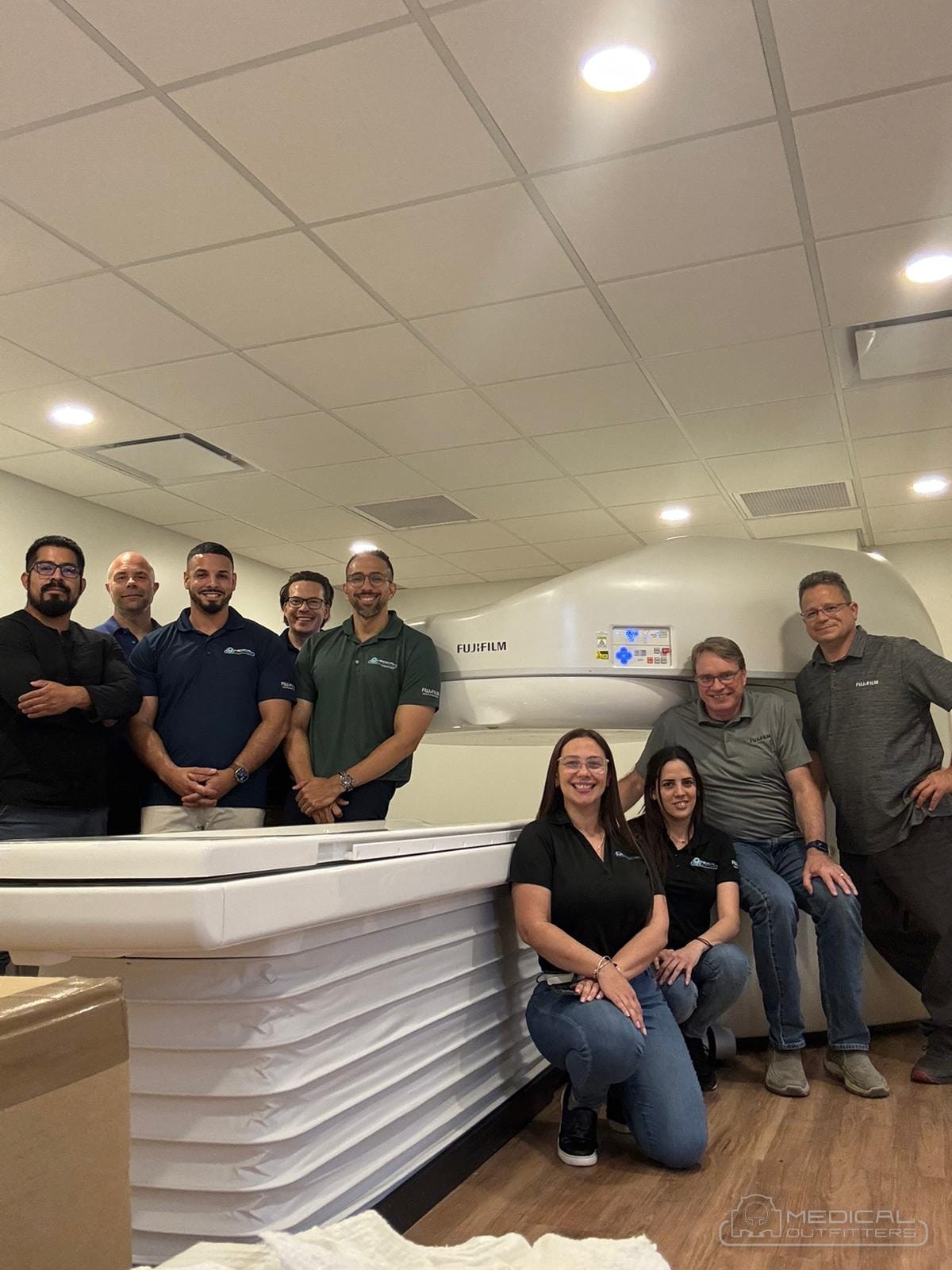
Medical Outfitters sells and installs the equipment, not the tax return. We are a medical imaging dealer: Fujifilm systems new, refurbished GE, Siemens, Philips, Canon and Hitachi systems through our MO Select line, with delivery, installation, applications training and warranty handled by our own crews across the United States, Puerto Rico and the Caribbean. This article is written for the facility owners, administrators and radiology managers who ask us every November and December whether a purchase will qualify before year end. The figures below come from the IRS and from public law; the decision about your return belongs to your CPA.
- 2026 limit: up to $2,560,000 of qualifying equipment can be expensed under Section 179, per IRS Revenue Procedure 2025-32.
- Phase-out: the deduction shrinks dollar for dollar once 2026 purchases exceed $4,090,000 and reaches zero at $6,650,000.
- Bonus depreciation: the One Big Beautiful Bill Act restored 100 percent first-year bonus depreciation permanently for property acquired after January 19, 2025, with no dollar cap.
- Refurbished qualifies: used equipment is eligible as long as it is new to your business, so an MO Select refurbished scanner counts.
- Placed in service: the machine must be installed and ready for use by December 31, not merely ordered or paid for, to be deducted this year.
What Section 179 Medical Equipment Deductions Cover in 2026
Section 179 is an election, not an automatic rule. Instead of depreciating a scanner over its recovery period of five or more years, a business elects to treat the cost as an expense in the year the equipment is placed in service, deducting it against income on Form 4562. The equipment has to be tangible property, bought for use in the active conduct of a trade or business, and used more than half the time for business, which every imaging system in a clinic plainly is. Section 179 imaging equipment of every kind is covered, from a CT scanner to an MRI, an X-ray room or a DEXA unit. The IRS explains the mechanics in Publication 946, How To Depreciate Property, the same document that governs the depreciation you would otherwise take.
Two features set Section 179 apart from ordinary depreciation. First, it compresses the whole write-off into year one, which is the point for a buyer managing a profitable year. Second, it has limits that bonus depreciation does not: a dollar cap, a purchase-based phase-out and a business-income ceiling, all explained below. Those limits rarely bite on a single imaging purchase, because one scanner costs far less than the cap, but they matter to a group buying several systems or a whole suite in one year.
Bonus depreciation sits next to Section 179 and does a similar job by a different route. The two are often used together, with Section 179 applied first to chosen assets and bonus depreciation sweeping up the rest. Because the rules interact, the comparison in the figure above is the frame for everything that follows, and the next sections take the 2026 numbers one at a time.
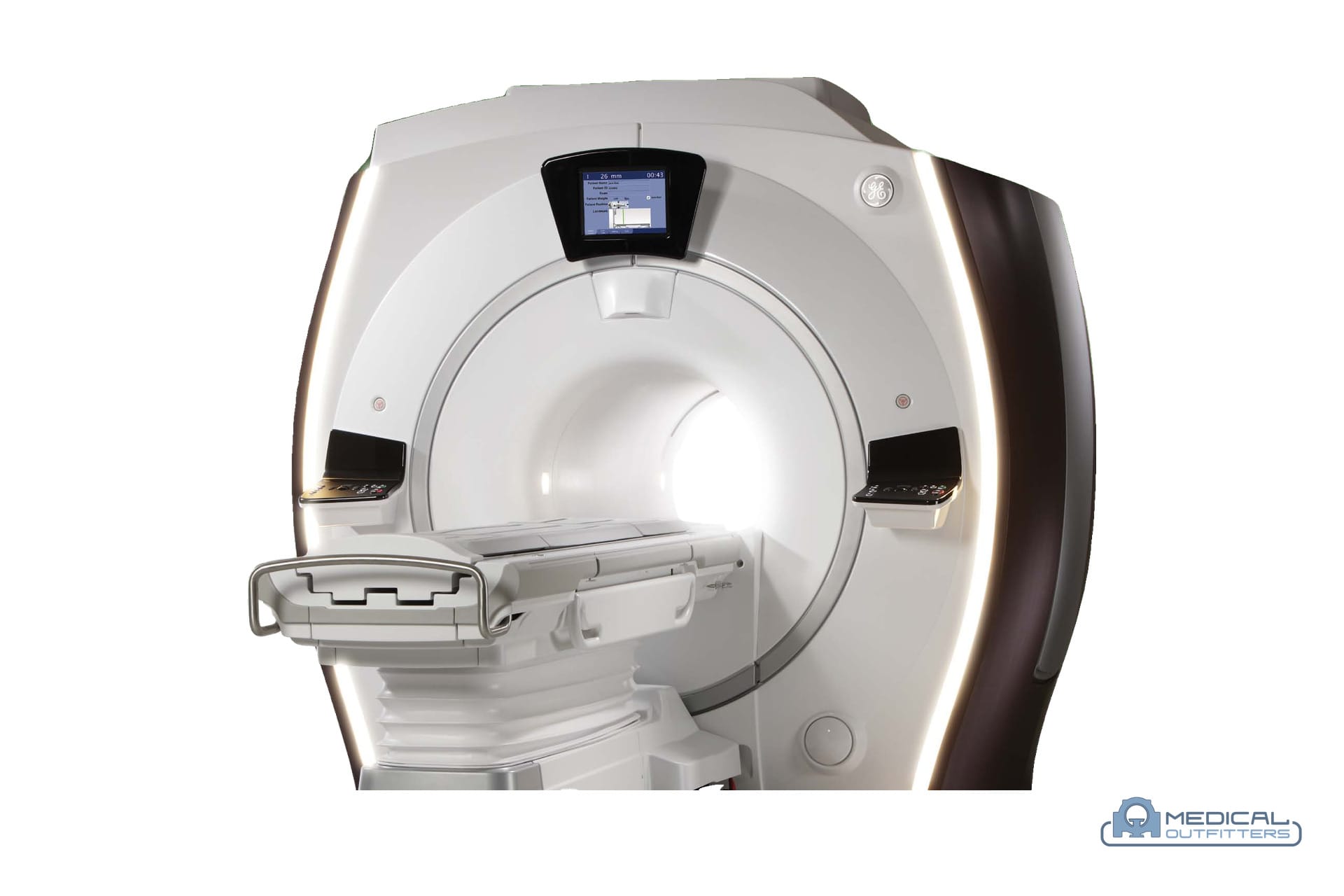
The 2026 Deduction Limit and Phase-Out Threshold
The One Big Beautiful Bill Act, signed into law in July 2025 as Public Law 119-21, raised the Section 179 ceiling. Section 70306 of the Act lifted the maximum deduction to $2,500,000 and the phase-out threshold to $4,000,000 for property placed in service in tax years beginning after December 31, 2024, and directed that both figures be indexed for inflation. The IRS then set the 2026 numbers in Revenue Procedure 2025-32.
For any tax year beginning in 2026, the aggregate cost a taxpayer may elect to expense under Section 179 cannot exceed $2,560,000. That cap is reduced, but not below zero, by the amount by which the cost of Section 179 property placed in service during 2026 exceeds $4,090,000. The arithmetic means the deduction disappears entirely once a business places $6,650,000 of qualifying property in service in one year. A separate sublimit caps the cost of a sport utility vehicle taken into account under Section 179 at $32,000 for 2026, which is irrelevant to a scanner but worth knowing if the same return also expenses a vehicle.
| Section 179, tax year 2026 | Amount | Source |
|---|---|---|
| Maximum deduction | $2,560,000 | Rev. Proc. 2025-32 |
| Phase-out begins at | $4,090,000 of purchases | Rev. Proc. 2025-32 |
| Deduction reaches zero at | $6,650,000 of purchases | Derived from the two figures |
| Sport utility vehicle sublimit | $32,000 | Rev. Proc. 2025-32 |
One imaging system rarely approaches these numbers. A refurbished CT or MRI runs in the hundreds of thousands of dollars, well under the cap, so a single purchase is fully covered with room to spare. The phase-out is a concern for a large group practice or an imaging network buying several systems in one calendar year; for most buyers it is a backstop they never touch. The business-income limit is the ceiling that bites more often: Section 179 cannot reduce taxable income below zero, so a deduction larger than the year’s business income carries forward rather than creating a loss. Bonus depreciation, by contrast, can create a loss, which is one reason the two tools are paired.
How Bonus Depreciation Works Alongside Section 179
Bonus depreciation lets a business deduct a percentage of the cost of qualifying property in the first year, on top of or instead of Section 179. Under the prior law the rate was phasing down, to 60 percent in 2024 and 40 percent in 2025. The One Big Beautiful Bill Act reversed that. Section 70301 of the Act restored the rate to a permanent 100 percent for qualifying property acquired after January 19, 2025, so a machine bought and placed in service now can be written off in full under bonus depreciation whether or not Section 179 is used.
The practical differences decide which tool a buyer leans on. Bonus depreciation has no dollar cap and no purchase-based phase-out, and it can push taxable income below zero to create a loss that carries to other years. Section 179 has the $2,560,000 cap and the $4,090,000 phase-out, and it cannot create a loss. For a single scanner the result is usually the same, a full first-year deduction, and the choice between them is a planning decision your accountant makes based on the practice’s income, its other assets and its state tax treatment, since several states decouple from federal bonus depreciation. A business that expects a much higher-income year ahead can even elect to take only 40 percent bonus in the first year and depreciate the rest later; the election exists precisely so the deduction lands where it helps most. Our guides to the cost of a CT scanner and the cost of an MRI machine give the equipment numbers that feed these calculations.
Does a Refurbished CT, MRI or X-Ray System Qualify?
Yes. This is the question buyers of pre-owned equipment ask most, and the answer is settled. Section 179 and bonus depreciation both apply to used property as well as new, provided the equipment is new to the taxpayer claiming it. Publication 946 states the test plainly: property qualifies if its first use by the business began with that business, not whether the machine itself has ever been used before. A refurbished 64-slice CT that your practice has never owned is new to you, so it is eligible, exactly as a factory-new scanner would be. The equipment does not have to be the newest model, only newly yours.
That matters because refurbished systems are where most independent facilities buy. A worked example shows the scale. Our CT scanner cost and price guide puts a refurbished 64-slice CT, delivered, installed and warrantied, at $175,000 to $375,000, and a refurbished 16 to 32-slice system at $85,000 to $185,000. Take a practice that places a refurbished 64-slice CT in service in 2026 at a representative $275,000. The full $275,000 is under the $2,560,000 cap and nowhere near the $4,090,000 phase-out, so the entire cost can be expensed in 2026 under Section 179 or 100 percent bonus depreciation. The cash value of that deduction is the deduction multiplied by the practice’s marginal tax rate: at an illustrative combined rate of 25 percent, expensing a $275,000 system lowers the current-year tax bill by about $68,750. That figure is an illustration of the arithmetic, not a promise of your result, which depends on your entity, your income and your state. Our refurbished systems come through the MO Select refurbished line, and the used CT scanner buying guide covers what to check before you buy one.
The Placed-in-Service Rule and the December 31 Deadline
The deduction is tied to a date, and the date is not the day you sign the order or send the deposit. Publication 946 defines property as placed in service when it is ready and available for its specific use, which for an imaging system means delivered, installed, calibrated and able to scan patients. A CT that is sitting crated in a hallway on December 31 has been purchased but not placed in service, and it cannot be deducted for that year. For a calendar-year practice, a system has to be installed and operational by December 31, 2026 to be expensed on the 2026 return.
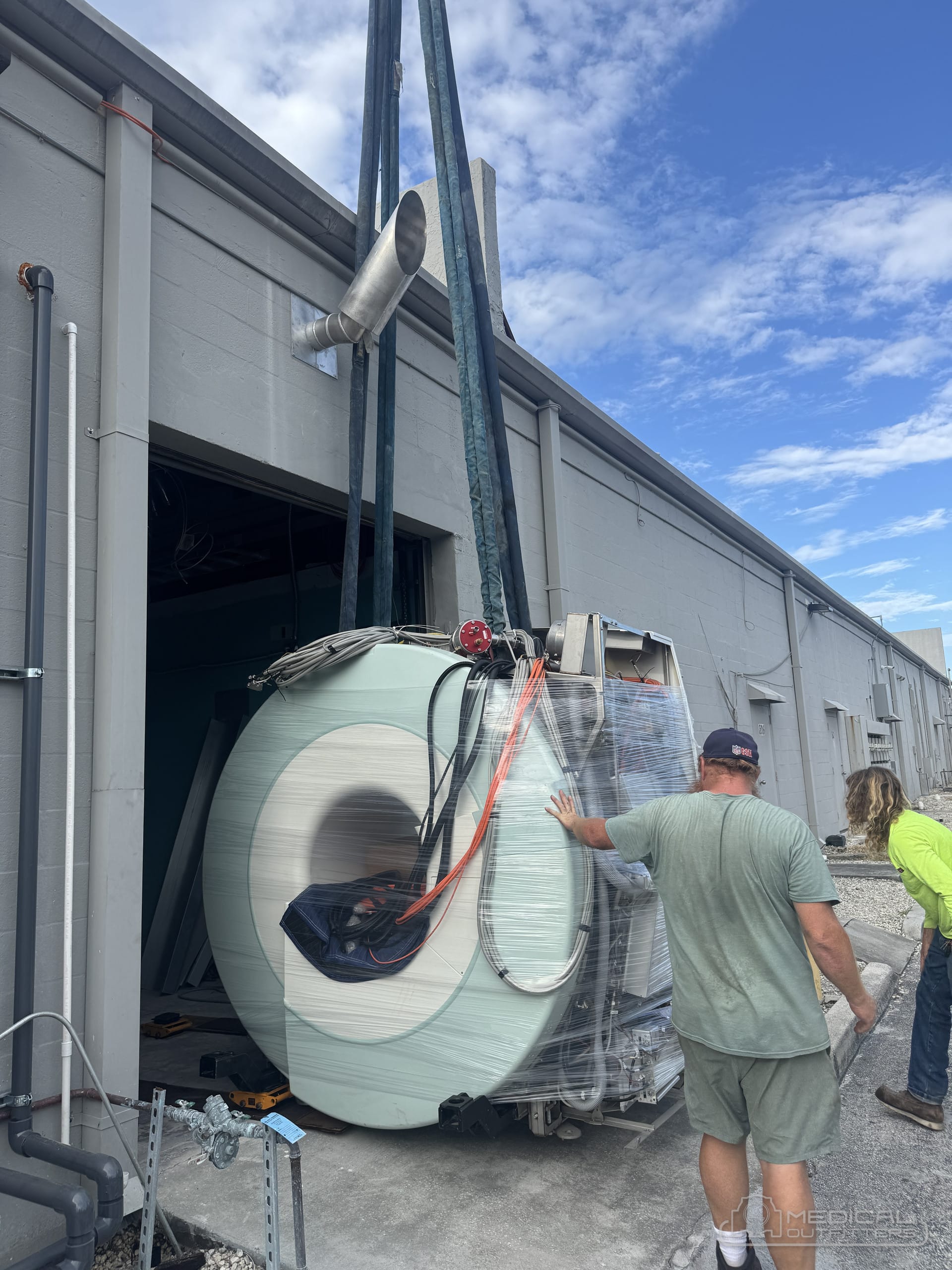
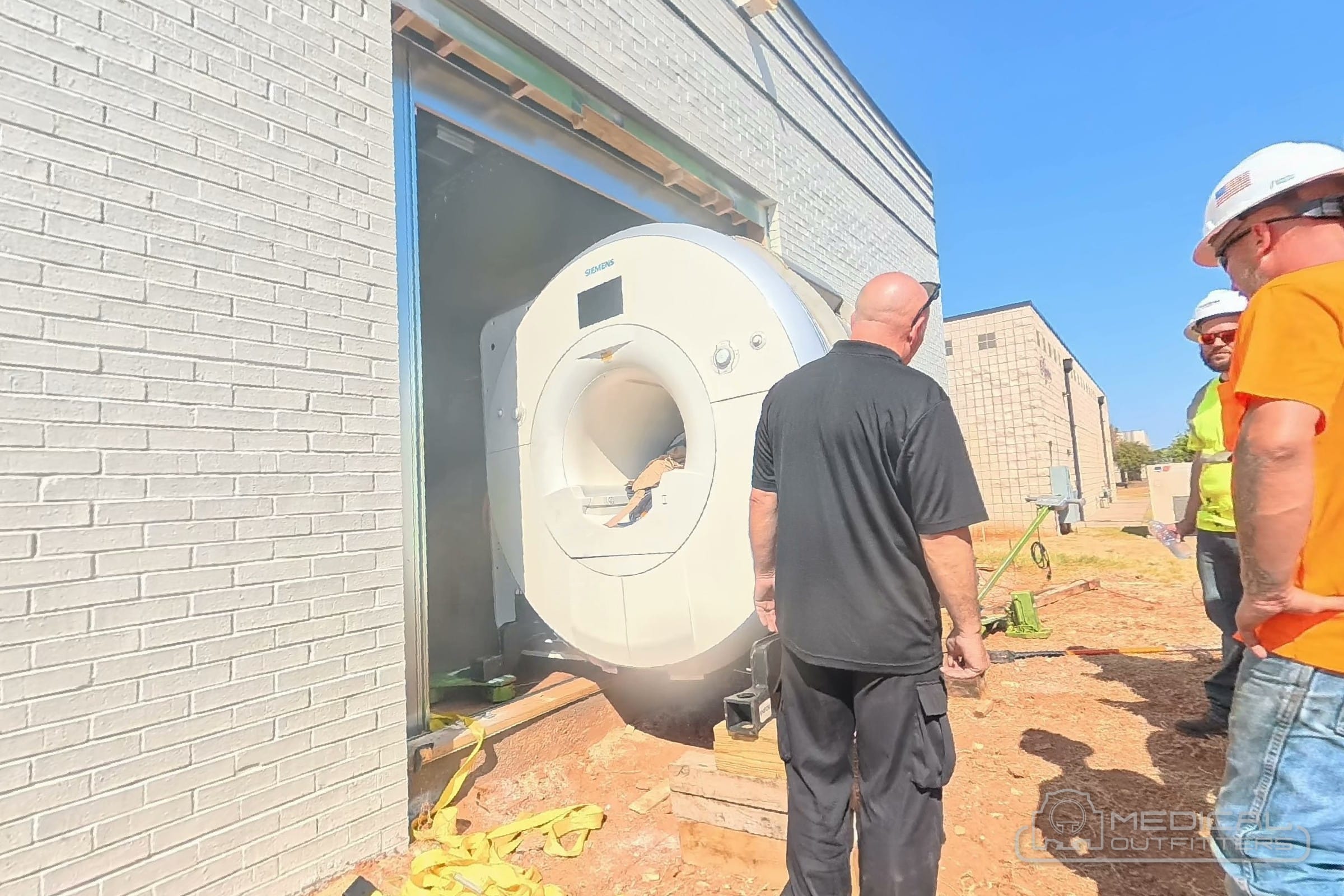
That makes installation lead time part of the tax decision, not an afterthought. A refurbished scanner usually needs room preparation, electrical and sometimes shielding work, rigging and a commissioning day before it is ready, and a new MRI needs a magnet room built around it. A buyer chasing a year-end deduction has to leave enough runway for the install to finish before the deadline, which is one reason year-end orders go in weeks earlier than the date on the calendar might suggest. Medical Outfitters installs every system it sells with its own crews and schedules the commissioning as part of the project, so the placed-in-service date is something we plan toward rather than hope for. Our CT, MRI and X-ray service teams keep the system running once it is live.
Financing, Leases and the Deduction
A common misunderstanding is that a practice has to pay cash to take the deduction. It does not. Section 179 and bonus depreciation are based on the cost of the equipment placed in service, not on how much of that cost has been paid in the year. A facility that finances a scanner, or buys it on a capital lease with a nominal buyout, generally places the full-cost asset in service and can elect to expense the whole amount in year one while paying it down over time, which is what makes financed year-end purchases attractive. A true operating lease is different: there the lessee is renting, deducts the lease payments as they are made, and does not own the asset to expense, so the structure of the agreement decides the tax treatment. Your accountant should see the lease documents before you assume either result.
Financing for imaging equipment is a settled part of this market. Equipment Finance Advisor reported on February 13, 2018 that Hitachi Capital America Vendor Services and Medical Outfitters established a vendor financing program to give Medical Outfitters customers customized, flexible financing for imaging equipment. Programs and lenders change over the years, but the point for a buyer is constant: a system can be financed and still deducted, and the two decisions, how to pay and how to deduct, are made together. For the full installed cost that a financing package has to cover, see our radiology equipment cost overview and the service contract cost that follows the purchase.
Buying Imaging Equipment Before Year End With Medical Outfitters
Section 179 and bonus depreciation turn a year-end imaging purchase into a tax decision as much as a clinical one, and the deduction depends on one thing Medical Outfitters controls: getting the system delivered, installed and ready to scan before December 31. We sell Fujifilm systems new and refurbished GE, Siemens, Philips, Canon and Hitachi systems through MO Select, with the install handled by our own crews. Start with the numbers in the CT, MRI, X-ray and DEXA cost guides, browse MRI systems for sale or the CT category, and read about how we work. To price a system and set a realistic install date for a year-end deduction, contact Medical Outfitters. For the tax treatment of your specific purchase, confirm every figure and every election with your CPA or tax advisor before you file; nothing here is tax advice.
- IRS Revenue Procedure 2025-32, the 2026 inflation-adjusted Section 179 amounts (maximum deduction, phase-out threshold and sport utility vehicle sublimit): https://www.irs.gov/pub/irs-drop/rp-25-32.pdf
- IRS Publication 946, How To Depreciate Property, for the Section 179 election, the placed-in-service rule, used-property eligibility and the business-income limit: https://www.irs.gov/publications/p946
- One Big Beautiful Bill Act, Public Law 119-21, section 70301 (100 percent bonus depreciation) and section 70306 (Section 179 increase): https://www.congress.gov/bill/119th-congress/house-bill/1
- Equipment Finance Advisor, Hitachi Capital America Vendor Services and Medical Outfitters establish a vendor financing program, February 13, 2018: https://www.equipmentfa.com/news/7690/hitachi-capital-medical-outfitters-launch-vendor-financing-program
- Medical Outfitters CT scanner cost and price guide, reviewed October 12, 2026, for the refurbished 64-slice and 16 to 32-slice bands: https://medicaloutfitters.com/ct-scanner-cost-and-price-guide/
- CT scanner cost and price guide (2026)
- MRI machine cost and price guide (2026)
- X-ray machine cost and price guide (2026)
- DEXA and bone densitometer cost guide (2026)
- Refurbished medical imaging equipment and MO Select
- Used CT scanner buying guide
- Radiology equipment cost in 2026
- Imaging equipment service contracts: what they cost
- MRI machines for sale
- CT scanners for sale
- Used and refurbished MRI machines for sale
- About Medical Outfitters
- Price a system and set an install date
Section 179 for Medical Equipment: Common Questions
Does medical imaging equipment qualify for the Section 179 deduction?
Yes. Section 179 lets a practice expense the full cost of qualifying medical imaging equipment in the year it is placed in service, and imaging systems are exactly the kind of tangible business property it covers. For tax years beginning in 2026 the maximum deduction is $2,560,000 and the phase-out begins once purchases pass $4,090,000, per IRS Revenue Procedure 2025-32. New and refurbished systems both qualify. This is general information, not tax advice.
What is the Section 179 limit for 2026?
For any tax year beginning in 2026, the most a business may elect to expense under Section 179 is $2,560,000, per IRS Revenue Procedure 2025-32. That cap is reduced dollar for dollar once the cost of Section 179 property placed in service in 2026 exceeds $4,090,000, and it reaches zero at $6,650,000 of purchases. The One Big Beautiful Bill Act set the underlying $2,500,000 and $4,000,000 figures, which the IRS then indexed for inflation.
Does refurbished or used imaging equipment qualify for Section 179?
Yes. IRS Publication 946 allows Section 179 and bonus depreciation on used property as long as it is new to the business claiming the deduction. A refurbished 64-slice CT your practice has never owned is new to you, so it qualifies just as a factory-new system would. The machine does not have to be the latest model, only newly yours. Medical Outfitters sells refurbished GE, Siemens, Philips, Canon and Hitachi systems through its MO Select line.
How does bonus depreciation compare with Section 179 in 2026?
The One Big Beautiful Bill Act, section 70301, restored 100 percent bonus depreciation permanently for property acquired after January 19, 2025. Unlike Section 179, bonus depreciation has no dollar cap and no purchase phase-out, and it can create a loss, while Section 179 is capped at $2,560,000 and at business income for 2026. For a single scanner both usually reach a full first-year deduction; your accountant chooses between them based on income and state rules.
What does placed in service mean for the deduction?
IRS Publication 946 defines property as placed in service when it is ready and available for its specific use. For an imaging system that means delivered, installed, calibrated and able to scan patients, not merely ordered or paid for. A crated scanner on December 31 has been purchased but not placed in service, so it cannot be deducted that year. A calendar-year practice needs the system operational by December 31, 2026 to expense it on the 2026 return.
Can I finance equipment and still take the Section 179 deduction?
Yes. Section 179 and bonus depreciation are based on the cost of the equipment placed in service, not on how much you paid during the year. A facility that finances a scanner or buys it on a capital lease generally places the full-cost asset in service and can expense it in year one while paying it down over time. A true operating lease is different, since you deduct the payments instead. Have your accountant review the lease documents first.
How much does a refurbished 64-slice CT save under Section 179?
The Medical Outfitters CT scanner cost and price guide puts a refurbished 64-slice CT, delivered, installed and warrantied, at $175,000 to $375,000. A representative $275,000 system placed in service in 2026 is well under the $2,560,000 cap, so the whole cost can be expensed. The cash value equals the deduction times your marginal rate: at an illustrative 25 percent that is about $68,750. The real figure depends on your entity, income and state, so confirm it with your CPA.
Is this tax advice?
No. This article is general information drawn from IRS Revenue Procedure 2025-32, IRS Publication 946 and the One Big Beautiful Bill Act, written for buyers deciding whether a year-end imaging purchase will qualify. The rules interact with your entity type, your taxable income, your other asset purchases and your state tax law, none of which a general article can judge. Confirm every figure and every election with your own CPA or tax advisor before you file. Medical Outfitters sells and installs the equipment, not the return.
Related Articles