Stress test cost depends first on which stress test your doctor orders, because the phrase covers three very different exams. An exercise ECG, the classic treadmill stress test, records the heart’s electrical activity while you walk. A stress echocardiogram adds ultrasound pictures of the heart before and after exercise. A nuclear stress test adds a radioactive tracer and two sets of images from a gamma camera, and a cardiac PET study does the same on a PET scanner. Whether you searched how much does a stress test cost, how much is a stress test or nuclear stress test cost without insurance, the answer moves with three things: the test type, the setting (a cardiology office, an imaging center or a hospital outpatient department) and who pays. This guide gives the 2026 numbers for each, with every figure tied to its source, explains why a nuclear stress test costs several times a treadmill test, and then turns to the facility side: what the treadmill system, the echo machine and the gamma camera behind the exam cost.
Medical Outfitters sells new Fujifilm imaging systems as an authorized dealer and refurbished GE, Siemens, Philips, Canon and Hitachi systems through MO Select, sources refurbished nuclear medicine cameras on request, and installs and services imaging equipment across the United States, Puerto Rico and the Caribbean. We wrote this for patients and practice managers trying to read a stress test bill, and for cardiology practices, imaging centers and hospital managers who sit on the other side of that price. Nothing here is medical advice: whether you need a stress test, and which kind, is a decision for your own doctor, and the preparation instructions come from your own cardiology office or imaging center.
- Treadmill test: $200 to $500 without insurance, with Medicare paying $73.48 in an office in 2026, per CareRoute’s CPT 93015 page.
- Stress echo: Medicare pays $186.15 for the imaging and $234.27 for the complete study in an office in 2026, per the American Society of Echocardiography; CareRoute puts billed charges at $1,000 to $3,000.
- Nuclear stress test: $800 to $2,500 without insurance and $1,500 to $7,000 in billed charges, per CareRoute; Medicare pays $428.20 for the SPECT imaging alone in 2026, per the ACR.
- Setting: a hospital facility fee can double or triple the price of the same test, per CareRoute, and a JAMA Internal Medicine study found nuclear stress test medians from $463 to $3,230 across 20 top hospitals.
- The equipment: a refurbished dual-head SPECT camera is estimated at $60,000 to $250,000 and a refurbished cardiac ultrasound cart at $35,000 to $90,000 in the Medical Outfitters guides.
Stress Test Cost in 2026: Prices by Test Type
A stress test is not one price because it is not one exam, and each kind carries its own CPT codes. An exercise ECG stress test is CPT 93015 when one practice does all of it, or 93016, 93017 and 93018 when the supervision, the tracing and the report are billed apart. A stress echocardiogram is CPT 93350 for the imaging alone or 93351 when the same provider also supervises the ECG. A nuclear stress test with SPECT imaging is CPT 78452 when rest and stress images are both taken, or 78451 for a single study, and a cardiac PET rest and stress study is CPT 78492. Ask the ordering office which code it sent before you call anyone for a price.
The table brings the published 2026 figures together. Medicare’s national rates are the global office rates, which cover both the technical side and the physician’s reading. They come from three places: CareRoute’s CPT 93015 page, which computes the treadmill rate from the CMS Physician Fee Schedule; the American Society of Echocardiography’s table of final 2026 rates for the stress echo codes; and the American College of Radiology’s CY2026 impact table for the nuclear codes. The billed and cash ranges are national estimates from CareRoute’s 2026 guides.
| Test (CPT) | Medicare 2026, office global | Billed or cash, CareRoute |
|---|---|---|
| Exercise ECG stress test (93015) | $73.48 | $200 to $500 without insurance; $200 to $1,000 billed for the tracing (93017) |
| Stress echo, imaging only (93350) | $186.15 | $1,000 to $3,000 billed |
| Stress echo, complete with ECG (93351) | $234.27 | Not listed separately |
| Nuclear SPECT, single study (78451) | $311.63 | Not listed separately |
| Nuclear SPECT, rest and stress (78452) | $428.20 for the imaging | $800 to $2,500 without insurance; $1,500 to $7,000 billed |
| Cardiac PET, rest and stress (78492) | Set by the local Medicare contractor; reading $82.50 | Not listed |
Sources: CareRoute, CPT 93015 (May 2026), CPT 78452 (May 2026) and How Much Does a Nuclear Stress Test Cost? (September 16, 2026); ASE, Comparison of Final CY2025 and CY2026 Rates for Echocardiography; ACR, CY2026 MPFS Final Rule Impact Tables, 7xxxx series. The ACR table lists the technical part of the cardiac PET codes as priced by each Medicare contractor rather than nationally, so only the $82.50 physician reading of 78492 has a national figure.
Two patterns stand out. First, the order of the prices follows the equipment and the work: the treadmill test uses an ECG system and a technologist for about an hour, the stress echo adds an ultrasound study and its reading, and the nuclear test adds a tracer, a gamma camera and two imaging sessions. Second, the nuclear row is incomplete on its own. A nuclear stress test is billed as two halves of one exam: the stress portion under 93015 or its parts, and the imaging under 78452, per a July 2026 coding guide from the billing firm 107 RCM. At Medicare’s 2026 office rates that pairing comes to $428.20 plus $73.48, or $501.68, before any separate charge for the tracer or a stress drug, our arithmetic on the ACR and CareRoute figures.
Cardiac Stress Test Cost by Setting: Office, Imaging Center or Hospital
For the identical test, the building moves the price more than anything else. CareRoute’s nuclear stress test guide calls the site of care the biggest price driver and says a hospital outpatient department adds a facility fee that can double or triple the cost, while the same test at a freestanding cardiology practice or imaging center is often half the price or less. Its CPT 78452 page puts the hospital facility or technical fee for a nuclear stress test at $1,000 to $2,500 on its own. For the treadmill test, its CPT 93015 page puts the physician’s portion in a hospital at $40.08, plus a separate facility fee that is often $150 to $400.
Medicare’s own hospital payments show the same gap. Medicare pays a hospital outpatient department for the technical side of a test under the Hospital Outpatient Prospective Payment System, which groups services into payment levels:
- Treadmill test: the tracing, CPT 93017, sits in APC 5722, Level 2 Diagnostic Tests, at a national rate of $220.60 in 2026, down from $311.40 in 2025, per the American College of Cardiology’s summary of the final rule.
- Stress echo: 93350 and 93351 sit in APC 5524, Level 4 Imaging without Contrast, at $558.25 in 2026, per the ASE’s outpatient rate table, against $186.15 and $234.27 for the whole study in an office.
- Cardiac PET: the ACC reports the outpatient payment for 78432 falling from $1,850.50 to $1,550.50 and for 78433 rising from $1,950.50 to $2,250.50 in 2026, with 78431 unchanged.
The physician’s reading is paid on top of each of those hospital amounts. Commercial insurers negotiate from those higher hospital bases, which is why the hospital column of any stress test price list sits far above the office column.
Hospital price files show how wide the hospital column really is. Under the CMS Hospital Price Transparency rule, in force since January 2021, each hospital must publish its negotiated and cash prices. A study in JAMA Internal Medicine in 2022 by Andrew Oseran and colleagues at Beth Israel Deaconess Medical Center searched the files of the 20 top-ranked US hospitals and, as TCTMD reported, found the median negotiated price for a nuclear stress test ranging from $463 to $3,230 across hospitals; inside a single hospital the price varied fivefold by insurer, from $776 to $3,473.
The practical point is simple. If your cardiologist can perform the test in the office or refer you to an independent imaging center your plan covers, ask whether that is an option before the test is booked at the hospital. If you are already a hospital patient, or your doctor wants the hospital for a medical reason, follow your doctor.
Why a Nuclear Stress Test Costs Several Times a Treadmill Test
A treadmill stress test and a nuclear stress test both start the same way: electrodes on the chest, a blood pressure cuff and exercise on a treadmill or bike. MedlinePlus, the National Library of Medicine’s patient encyclopedia, describes the exercise test as about 10 electrode patches, a workload that rises about every 3 minutes, 10 to 15 minutes of monitoring afterward and a total of around 60 minutes. Everything after that is what a nuclear test adds, and each addition carries a cost.
The tracer. MedlinePlus describes a nuclear stress test as an injection of a radioactive tracer such as thallium or sestamibi through an IV line, once at rest and a second dose when the heart is working as hard as it can. The 107 RCM coding guide lists technetium-99m sestamibi under HCPCS A9500 and the stress drug regadenoson under HCPCS J2785, noting that many payers package them into the imaging payment while others pay them as separate lines.
The camera. The images come from a SPECT gamma camera that rotates its detectors around the chest to show how the tracer reached the heart muscle at rest and under stress. The camera is a capital purchase priced later in this guide, it needs a shielded hot lab and a dose calibrator for the tracer, and the facility needs a radioactive materials license with a named radiation safety officer, per the Medical Outfitters nuclear medicine camera guide.
Two imaging sessions and the wait between them. MedlinePlus says each injection is followed by a wait of 15 to 45 minutes before the camera scans the heart, so the patient is imaged twice in one visit and the camera room is booked for both sessions. A treadmill test needs no imaging room at all.
Specialist reading and drugs. A physician reads the images, and the 107 RCM guide notes that billing 78452 requires that the interpreting physician hold nuclear medicine credentials recognized by CMS and the payer. MedlinePlus adds that patients who cannot exercise receive a drug such as adenosine, dipyridamole or dobutamine to stress the heart instead, which is a further line on some bills.
That stack is why the ACR lists the 2026 technical part of 78452 at $353.72 and the physician reading at $74.48, while the whole treadmill test pays $73.48. Your doctor chooses the test by what the question needs, and a nuclear or echo study is often ordered when an exercise ECG alone would be hard to interpret, as MedlinePlus explains.
Stress Echo Cost, Nuclear Stress Test Cost and Cardiac PET Compared
Stress echo. A stress echocardiogram images the heart with ultrasound before and right after exercise or a drug that raises the heart rate, with no tracer and no radiation. The ASE lists the 2026 office rate for the imaging-only study, 93350, at $186.15, of which $118.64 is the technical part and $67.51 the reading, and the complete study with ECG supervision, 93351, at $234.27, of which $153.06 is technical and $81.21 the reading. When an ultrasound contrast agent is used to sharpen the heart’s borders, the ASE lists its administration, 93352, at $36.09. On the cash side, CareRoute puts a stress echo at $1,000 to $3,000 in billed charges, and CoveredUSA’s echocardiogram guide puts it at $1,500 to $5,000 without insurance. Our echocardiogram cost guide covers the resting echo and the TEE.
Nuclear stress test. The ACR lists 78452 at $428.20 in 2026, up 4.7 percent from $408.86 in 2025, and the single-study 78451 at $311.63. The exercise or drug stress portion and, with some payers, the tracer are billed with it, as described above. CareRoute’s nuclear guide puts self-pay prices at $500 to $2,000 and says that is usually well below billed charges of $1,500 to $7,000.
Cardiac PET. A cardiac PET perfusion study uses a PET scanner and a short-lived tracer instead of a gamma camera. The ACR’s table shows the technical part of 78492 priced by each Medicare contractor rather than nationally, with the physician reading at $82.50 and, for the PET/CT version 78431, $86.51. In the hospital outpatient department, the ACC figures above put the cardiac PET codes between $1,550.50 and $2,250.50 in 2026, several times the stress echo payment. A July 2026 study in JAMA Network Open by Alexander Philips and colleagues, using the price files of four major insurers, found a median professional fee of $444 for Cigna’s cardiac PET stress test, with wide variation around it.
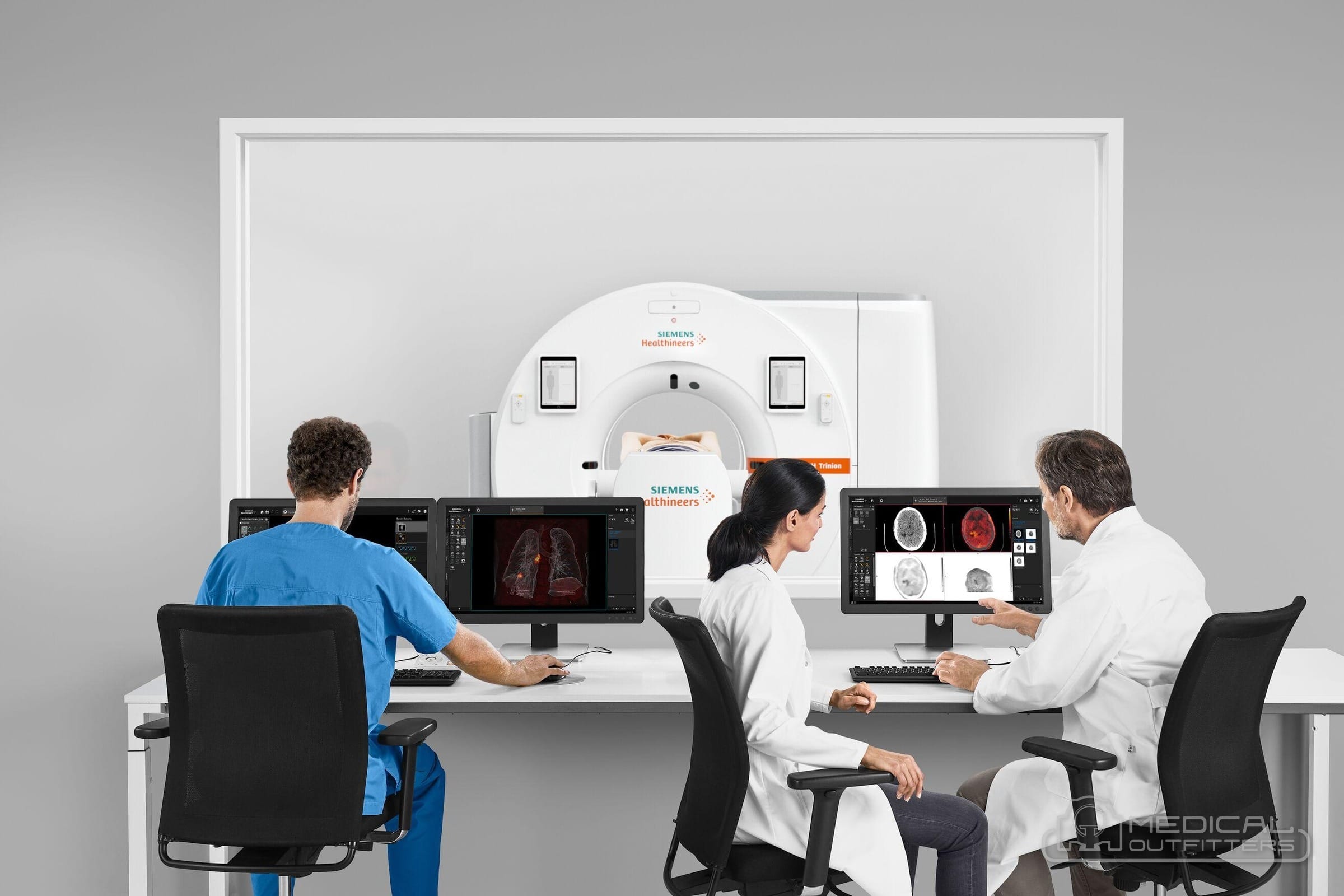
The price order is not a quality order. The three tests answer overlapping but different questions, a stress echo avoids radiation, and a nuclear or PET study may be chosen for a patient whose echo images would be hard to read. That choice belongs to your cardiologist. Our guides to PET scan cost and how a PET scanner works cover the PET side in more depth.
Stress Test Cost With Insurance, Medicare and Medicaid
Medicare. Part B covers a stress test your doctor orders. It pays 80 percent of the approved amount after the annual deductible, which CMS set at $283 for 2026, and the patient pays 20 percent. On a treadmill test in an office that is $14.70, per CareRoute’s CPT 93015 page; on the $428.20 imaging part of a nuclear test it is $85.64, our arithmetic on the ACR figure, with the stress portion adding its own 20 percent. A Medicare Supplement plan usually covers the 20 percent, and in a hospital outpatient department the coinsurance is figured on the larger hospital payment.
Commercial insurance. For a patient with a commercial plan, the price is the rate the facility negotiated with the insurer, and what reaches the patient depends on the plan design. CareRoute gives these common cases:
- Treadmill test: a $40 to $100 copay with the deductible met, $18 to $60 on a 20 percent coinsurance plan, and $90 to $300 on a high-deductible plan before the deductible is met.
- Nuclear stress test: a typical negotiated rate of $500 to $1,200; that means $100 to $240 on 20 percent coinsurance, a $50 to $150 specialist copay, or the full $500 to $1,200 before a high deductible is met.
CareRoute’s CPT 78452 page adds that some plans require prior authorization for a nuclear stress test, so ask the ordering office to confirm it is approved before the appointment. Ask the plan whether the test is covered at the office, the imaging center and the hospital you are considering, since the facility fee changes the coinsurance.
Medicaid. CareRoute’s CPT 78452 page puts the Medicaid patient’s share of a nuclear stress test at $0 to $10, with minimal or no cost sharing in most states. The state Medicaid office decides eligibility, and low-income patients who are uninsured may qualify.
Nuclear Stress Test Cost Without Insurance and Treadmill Cash Prices
Stress test cost without insurance comes down to which of two very different numbers a self-pay patient is shown. The chargemaster price is the facility’s list price, the figure on an itemized bill before any discount. The cash price is what the same facility accepts from a patient paying directly, and it is usually far lower. For the treadmill stress test cost, CareRoute’s CPT 93015 page puts the uninsured price at $200 to $500 with a national average charge of $289.52, and says many cardiology offices offer cash rates of $100 to $200 for a basic treadmill test.
For a nuclear stress test without insurance, CareRoute’s CPT 78452 page puts the range at $800 to $2,500, with a national average charge of $1,203.08 for the imaging code in 2023 Medicare data, and says some cardiology practices offer bundled cash rates of $600 to $1,000. Its nuclear guide puts self-pay at $500 to $2,000 against billed charges of $1,500 to $7,000. A bundled rate is worth asking for by name, because a nuclear test can otherwise arrive as several bills: the stress portion, the imaging, the reading and, sometimes, the tracer and the stress drug.
Two federal rules give a self-pay patient leverage. The Hospital Price Transparency rule makes every hospital publish its cash prices. Under the No Surprises Act, in force since January 1, 2022, a provider that schedules a service for an uninsured or self-pay patient must give a written Good Faith Estimate of the expected charges, and if the final bill comes in $400 or more above it, the patient can dispute it through the federal process, per CMS.
The practical sequence is short, and the diagram below lays it out. Ask the ordering doctor which test and which CPT codes are planned. Call a cardiology office or independent imaging center and, if you prefer, the local hospital, and ask each for an all-in self-pay price that includes the stress portion, the imaging, the reading and any tracer or drug. Ask about a prompt-pay discount. Get the Good Faith Estimate in writing. Then book the lowest all-in price at a site your doctor accepts results from.
What the Equipment Behind a Stress Test Costs
Every stress test price on this page is revenue to the cardiology practice, imaging center or hospital that owns the equipment, and the three tests sit on three very different equipment budgets.
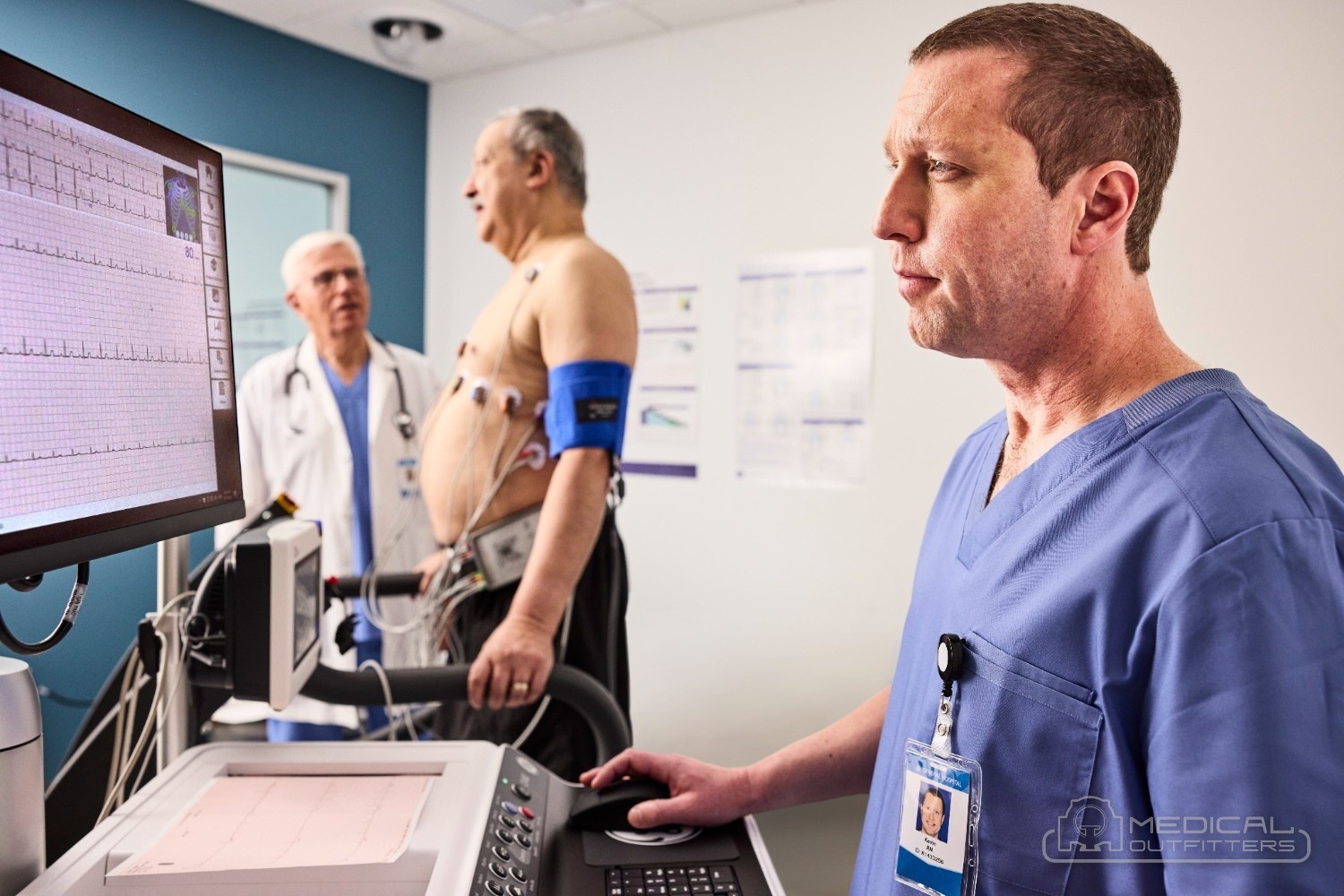
The treadmill system. An exercise ECG lab needs a treadmill or bike, a stress ECG system with its monitor and printer, a blood pressure cuff and resuscitation equipment in the room. Medical Outfitters does not publish a band for stress ECG systems, which are cardiology equipment rather than imaging equipment.
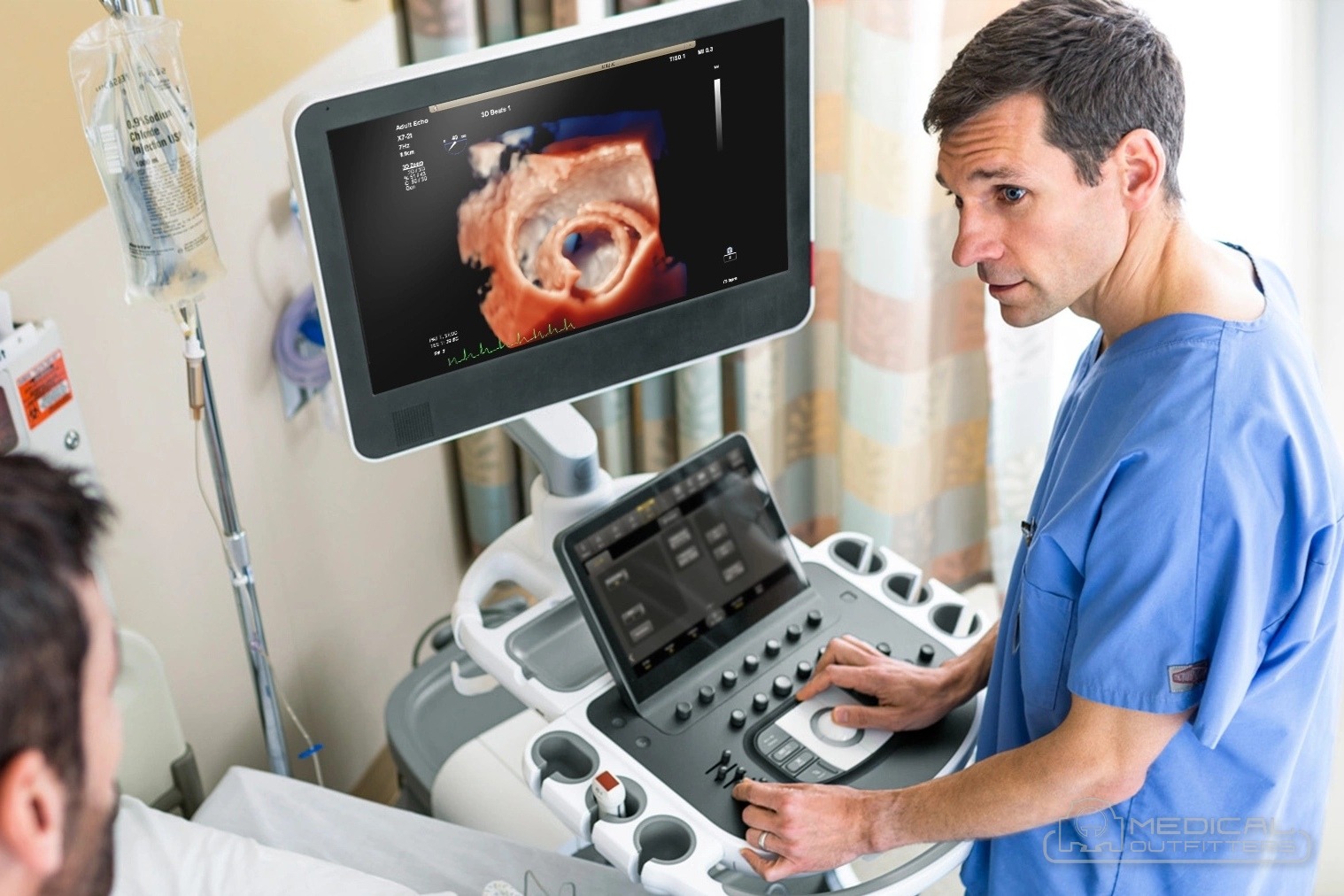
The echo machine. A stress echo lab adds a cardiac ultrasound cart with a phased array probe and a stress package. The Medical Outfitters ultrasound machine cost guide, as summarized in our echocardiogram cost post, puts a refurbished cardiac cart at $35,000 to $90,000 and a new one at $140,000 to $200,000 (delivered, installed and warrantied) with the probe, the Doppler suite and the cardiac package.
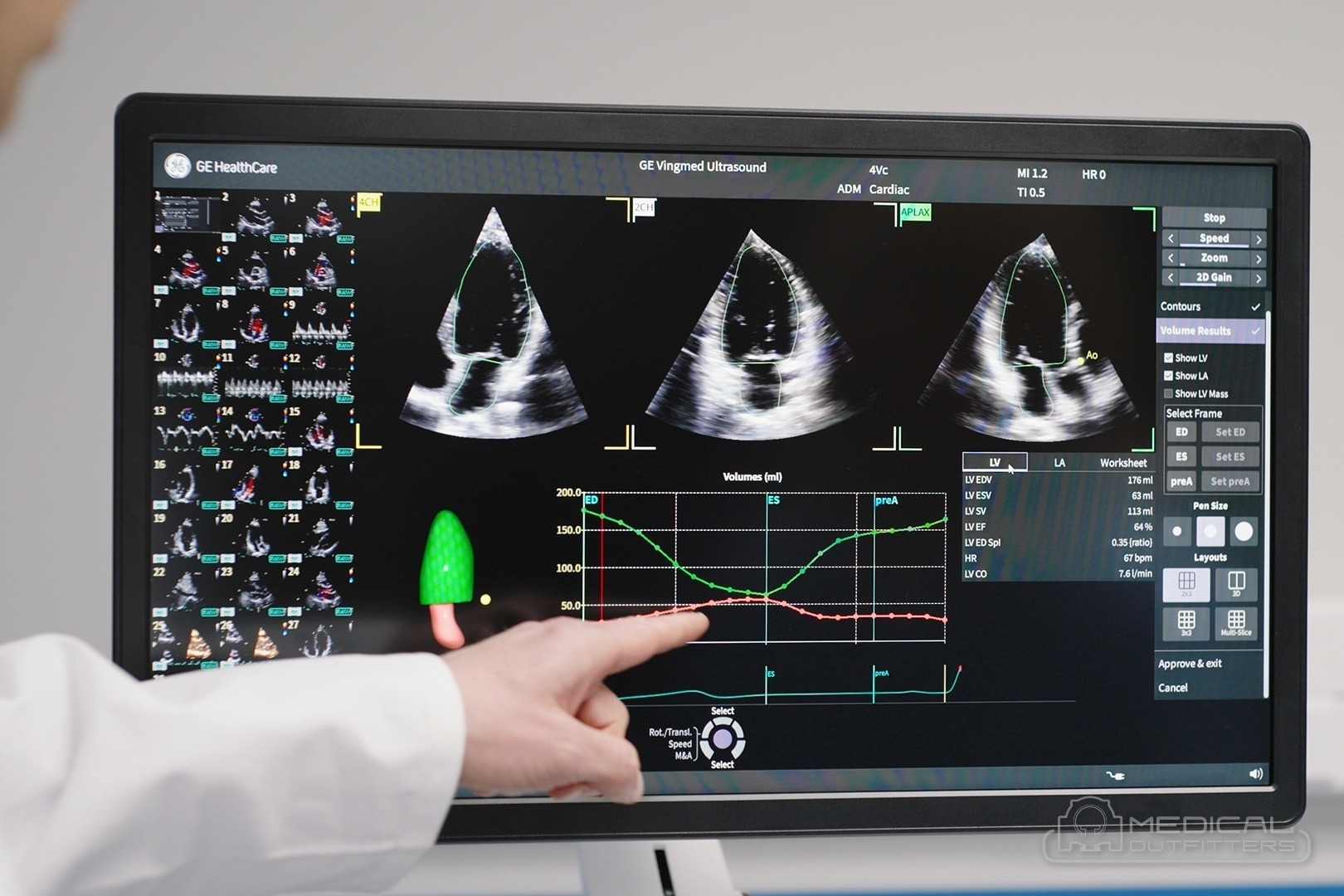
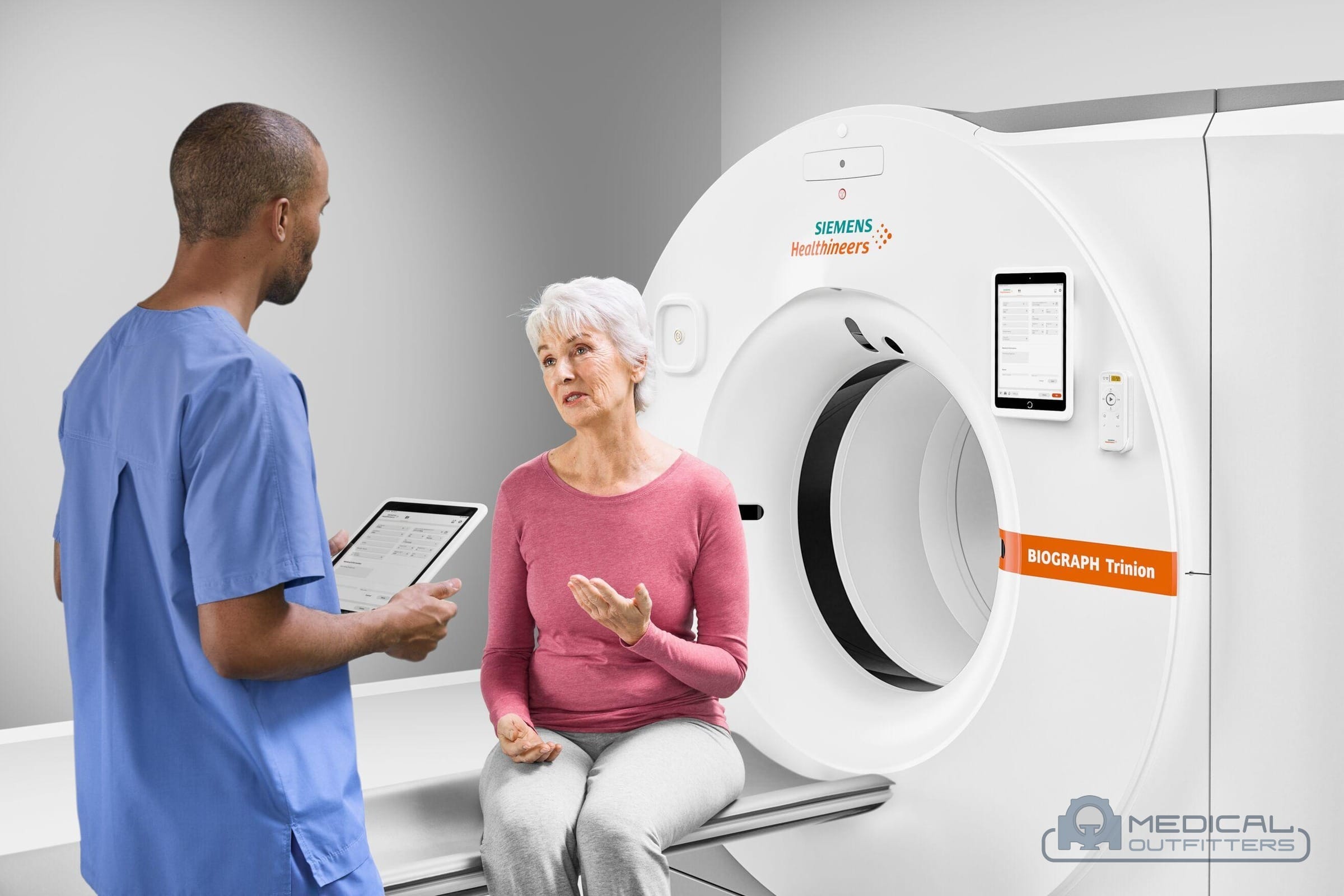
The gamma camera. A nuclear stress test needs a SPECT camera, a hot lab and a license. The Medical Outfitters nuclear medicine camera cost guide estimates, for comparison only, a refurbished dual-head SPECT gamma camera at $60,000 to $250,000; a refurbished SPECT/CT with a localization CT at $110,000 to $225,000; and a refurbished diagnostic or late-model SPECT/CT at $150,000 to $550,000. New, it puts a dual-head camera at $350,000 to $550,000; a hybrid at $550,000 to $1,400,000 and a digital CZT system at $1,300,000 to $2,200,000. Those estimates cover the gantry, detectors, a general collimator set, the table, consoles, freight, installation, training and a warranty; the room shielding, the hot lab, the dose calibrator, the license and the first service contract come on top. The guide also notes that cardiac and other processing packages are licensed separately and do not always transfer with a used camera, and that a cardiac practice needs the cardiac collimator set. Medical Outfitters sources GE, Siemens and Philips cameras refurbished on request and quotes each per project.
The PET scanner. A cardiac PET program runs on a PET/CT, the largest of the four budgets, priced in our PET/CT scanner cost guide. Whatever the modality, the service contract is the next line in the budget, and our guide to imaging equipment service contracts covers what one costs.
Pricing a Stress Test Lab With Medical Outfitters
If you came here as a patient, the short version is to ask which stress test and which CPT codes are planned, call a cardiology office or independent imaging center for its all-in self-pay price, ask about prior authorization if you are insured, and get a Good Faith Estimate if you are not; let your own doctor decide which test you need and follow the preparation your imaging center gives you. If you came as a cardiology practice, imaging center or hospital manager, the stress test prices on this page are your revenue side and our guides are the cost side: the nuclear medicine camera cost guide for the gamma camera, the nuclear medicine category for current systems, and the ultrasound machines for sale page for echo carts. The MO Select standard is described on the refurbished imaging equipment page, and our ultrasound service team supports systems across the United States, Puerto Rico and the Caribbean. Send us the tests you plan to offer and the room you have, and we will price a specific system, delivered, installed and warrantied: contact Medical Outfitters.
- American College of Radiology, CY2026 MPFS Final Rule Impact Tables, 7xxxx series: 2025 and 2026 global, professional and technical rates for 78451, 78452, 78492 and 78431: https://edge.sitecorecloud.io/americancoldf5f-acrorgf92a-productioncb02-3650/media/ACR/Files/Medicare-Medicaid/MPFS/CY2026-MPFS-Final-Rule-Impact-Tables-7xxxx-series.pdf
- American Society of Echocardiography, Medicare Physician Fee Schedule: Comparison of Final CY2025 and CY2026 Rates for Echocardiography, and National HOPPS (APC) Rates: Comparison of Final CY2025 and CY2026 Rates: 93350, 93351, 93352 and APC 5524: https://www.asecho.org/wp-content/uploads/2025/11/ASE-CY2026-MPFS-Final-Rate-Comparison.pdf and https://www.asecho.org/wp-content/uploads/2025/12/ASE-CY2026-OPPS-APC-Final-Rate-Comparison.pdf
- American College of Cardiology, Highlights From the 2026 Hospital OPPS Final Rule (December 4, 2025): APC 5722 for 93017 and the cardiac PET outpatient rates: https://www.acc.org/Latest-in-Cardiology/Articles/2025/12/04/11/10/Highlights-From-the-2026-Hospital-OPPS-Final-Rule
- CareRoute, CPT 93015 and CPT 78452 (May 2026) and How Much Does a Nuclear Stress Test Cost? (September 16, 2026): Medicare office rate for 93015, cash, billed and insured ranges, facility fees: https://www.careroute.ai/costs/cpt/93015 , https://www.careroute.ai/costs/cpt/78452 and https://www.careroute.ai/costs/nuclear-stress-test-cost
- CoveredUSA, Echocardiogram Cost (May 14, 2026): stress echo cash range: https://coveredusa.org/en/cost/echocardiogram
- Oseran AS et al., JAMA Internal Medicine (2022), as reported by TCTMD: nuclear stress test prices at 20 top-ranked hospitals: https://www.tctmd.com/news/stunning-cost-variability-across-centers-common-cardiac-tests-procedures
- Philips AP, Dhruva SS, Whaley C, JAMA Network Open (July 16, 2026): commercial cardiac PET professional fee: https://jamanetwork.com/journals/jamanetworkopen/fullarticle/2851713
- 107 RCM, Stress Test CPT Codes 2026 (July 6, 2026): how the stress and imaging codes, the tracer and the stress drug are billed: https://oneosevenrcm.com/stress-test-cpt-codes/
- MedlinePlus, Exercise stress test and Nuclear stress test: how each test is done and how long it takes: https://medlineplus.gov/ency/article/003878.htm and https://medlineplus.gov/ency/article/007201.htm
- CMS, 2026 Medicare Parts A and B Premiums and Deductibles, and No Surprises Act key responsibilities for providers: https://www.cms.gov/newsroom/fact-sheets/2026-medicare-parts-b-premiums-deductibles and https://www.cms.gov/files/document/nsa-key-responsibilities-providers.pdf
- Nuclear medicine camera cost guide (2026)
- Nuclear medicine systems
- How much does an echocardiogram cost?
- Ultrasound machine cost and buying guide (2026)
- Ultrasound machines for sale
- PET/CT scanner cost and price guide (2026)
- How much does a PET scan cost?
- What is a PET scanner?
- How much does a CT scan cost?
- Imaging equipment service contracts
- Ultrasound service, repair and probe testing
- Refurbished medical imaging equipment
- Price a stress test lab for your practice
Stress Test Cost: Common Questions
How much does a stress test cost in 2026?
A treadmill stress test costs about $200 to $500 without insurance, and a nuclear stress test $800 to $2,500, per CareRoute's 2026 code pages; CareRoute puts billed charges for a stress echo at $1,000 to $3,000. Medicare's 2026 office rates are $73.48 for an exercise ECG stress test, $234.27 for a complete stress echo and $428.20 for the imaging part of a nuclear test, per CareRoute, the ASE and the ACR.
How much does a nuclear stress test cost without insurance?
CareRoute's CPT 78452 page puts a nuclear stress test at $800 to $2,500 without insurance, with some cardiology practices offering bundled cash rates of $600 to $1,000. Its nuclear stress test guide puts self-pay prices at $500 to $2,000, against billed charges of $1,500 to $7,000. Ask for one all-in price covering the stress portion, the imaging, the reading and any tracer or stress drug, and get a written Good Faith Estimate.
Why is a nuclear stress test so expensive?
It adds a radioactive tracer, a gamma camera and two imaging sessions to an exercise test. MedlinePlus describes two tracer injections, each followed by a 15 to 45 minute wait and a camera scan. The facility needs a hot lab and a radioactive materials license, per the Medical Outfitters camera guide. The ACR lists the 2026 technical part of the imaging at $353.72, against $73.48 for a whole treadmill test, per CareRoute.
How much does a stress echo cost?
The American Society of Echocardiography lists Medicare's 2026 office rate at $186.15 for the imaging-only stress echo (93350) and $234.27 for the complete study with ECG supervision (93351); a hospital outpatient department is paid $558.25 for the technical side under APC 5524. CareRoute puts billed charges at $1,000 to $3,000, and CoveredUSA's echocardiogram guide puts a stress echo at $1,500 to $5,000 without insurance.
What does Medicare pay for a stress test?
In an office in 2026, Medicare pays $73.48 for an exercise ECG stress test (93015), per CareRoute's calculation from the CMS fee schedule, $186.15 to $234.27 for a stress echo, per the ASE, and $428.20 for nuclear SPECT imaging (78452), per the ACR, with the stress portion billed alongside. After the $283 Part B deductible for 2026, the patient pays 20 percent: $14.70 on the treadmill test, per CareRoute.
Is a stress test cheaper at a cardiology office than a hospital?
Usually. CareRoute says a hospital outpatient department adds a facility fee that can double or triple the cost, and that the same test at a freestanding cardiology practice or imaging center is often half the price or less. A JAMA Internal Medicine study of 20 top hospitals found median nuclear stress test prices from $463 to $3,230. Follow your doctor if the hospital is needed for a medical reason.
Does insurance cover a stress test?
Plans generally cover a stress test a doctor orders, with the patient paying the copay, coinsurance or deductible. CareRoute gives a $40 to $100 copay for a treadmill test with the deductible met and $100 to $240 on 20 percent coinsurance for a nuclear test, whose negotiated rate is typically $500 to $1,200. CareRoute notes that some plans require prior authorization for a nuclear stress test.
What does a nuclear medicine camera cost?
The Medical Outfitters nuclear medicine camera cost guide estimates, for comparison only, a refurbished dual-head SPECT gamma camera at $60,000 to $250,000 and a refurbished SPECT/CT at $110,000 to $550,000 by class, delivered, installed and warrantied. New, it puts a dual-head camera at $350,000 to $550,000 and a digital CZT system at $1,300,000 to $2,200,000. The room, the hot lab, the license and the first service contract come on top.
Related Articles
More scan cost guides: How much does a CT scan cost? · MRI scan cost · PET scan cost · DEXA scan cost · Mammogram cost · Ultrasound cost · Echocardiogram cost