Updated 28 September 2026. Price ranges reviewed 16 September 2026; Prices, specifications and regulatory references on this page were checked against manufacturer documentation and primary sources.
An MRI machine is a diagnostic imaging system that uses a strong magnetic field and radio waves to produce detailed images of soft tissue, organs, and the nervous system, with no ionizing radiation.
MRI machine cost ranges from roughly $300,000 for a refurbished open MRI to over $3.7 million for a new 3T system, depending on field strength, condition, and configuration.
An MRI scanner is one of the largest capital investments an imaging facility makes, and the right choice depends on your case mix, patient comfort needs, and budget. This guide breaks down what an MRI machine costs, how field strength affects price, the leading brands, and how to decide between new and refurbished.
- In this guide: MRI machine cost by field strength, new and refurbished
- What moves the price of an MRI machine
- What an MRI machine price includes
- Used and refurbished MRI machine cost
- What it costs to run an MRI
- MRI systems we carry
- Frequently asked questions
- MRI machine price by field strength: tiers, models and brands
- Open vs closed vs wide-bore MRI cost
- How much an MRI scan costs (the exam, not the machine)
- What an MRI service contract costs
How Much Does an MRI Machine Cost?
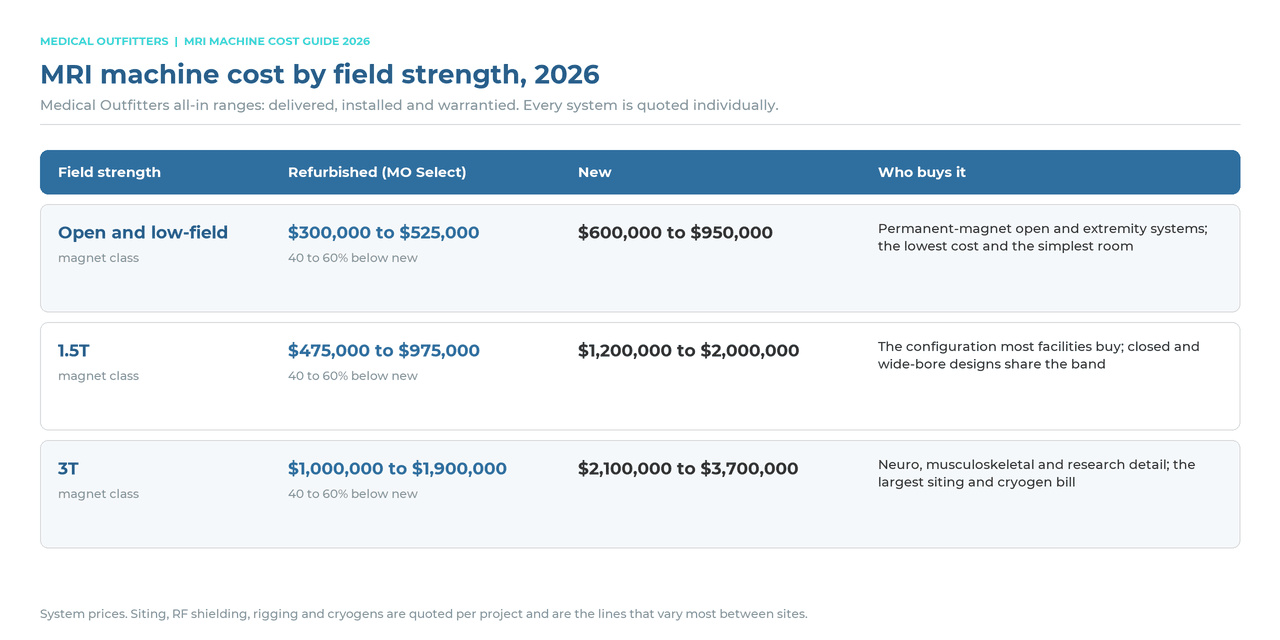
MRI machine cost is driven mainly by field strength and condition (new vs. refurbished). The figures below are Medical Outfitters ranges for a system delivered, installed and warrantied. Headline prices published elsewhere are often for the equipment alone, before delivery, rigging, installation and current tariffs, so they read lower than a real all-in cost. Every Medical Outfitters system is quoted individually. Typical system price ranges are:
| MRI Type | Refurbished | New |
|---|---|---|
| Open / low-field MRI | $300,000 to $525,000 | $600,000 to $950,000 |
| 1.5T MRI | $475,000 to $975,000 | $1,200,000 to $2,000,000 |
| 3T MRI | $1,000,000 to $1,900,000 | $2,100,000 to $3,700,000 |
These are system prices. For background on the imaging itself, see the FDA overview of MRI. Full installed cost adds siting, RF shielding, rigging, and cryogens. A certified refurbished MRI typically saves 40 to 60% versus new. Browse MRI machines for sale »
If you want a single average price of an MRI machine, the honest answer is the refurbished 1.5T band, $475,000 to $975,000 delivered and installed, because that is what most facilities actually buy. Asked as the price of MRI machines in general, or how much is an MRI scanner machine, the answer is the table above: field strength first, condition second. The cost of an MRI machine in the USA follows the same ranges; import handling and engineer travel are added only for island projects.
The same question arrives in many forms: MRI machine price, price of MRI machines, price of an MRI machine, MRI scanner price, MRI scanner cost, cost of an MRI machine, MRI equipment cost, MRI unit cost, how much is an MRI machine, how much are MRI machines, how much do MRI machines cost, how much does a new MRI machine cost, how much does an MRI machine cost to buy. They all point at the table above. The one distinction that matters is field strength, because an open low-field system and a 3T are different classes of purchase, and the second is condition. A new MRI machine price sits in the right-hand column; the refurbished column is where most of the market buys.
MRI Machine Price by Field Strength: Tiers, Models and Brands
Model names make the table concrete. The systems below are grouped by the field-strength class they are bought in; the price band is the class band from the table, not a per-model list price, because the same platform can be quoted at either end of its band depending on magnet age, coil set, software and condition.
Tier 1: open and low-field MRI, $300,000 to $525,000 refurbished, $600,000 to $950,000 new
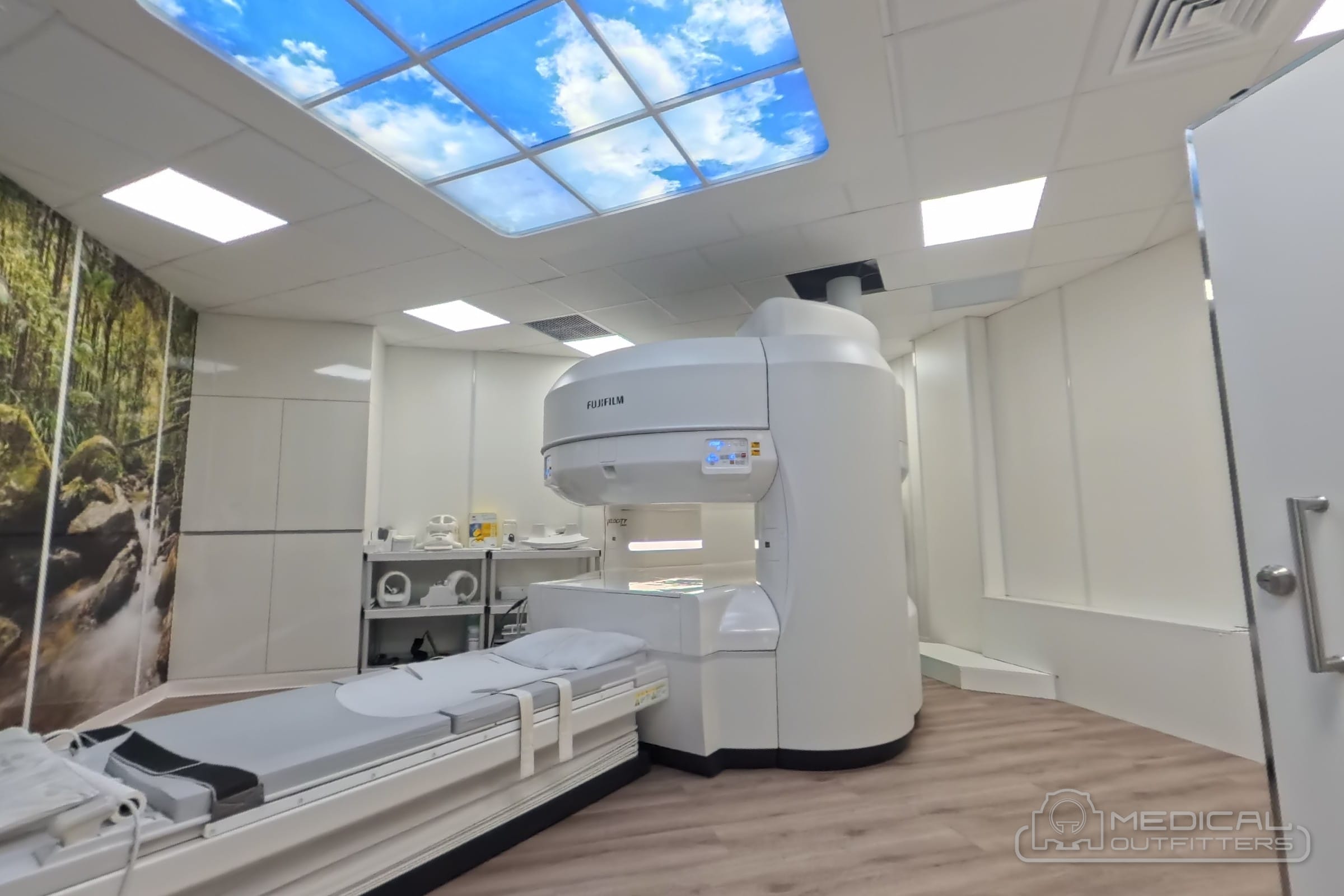
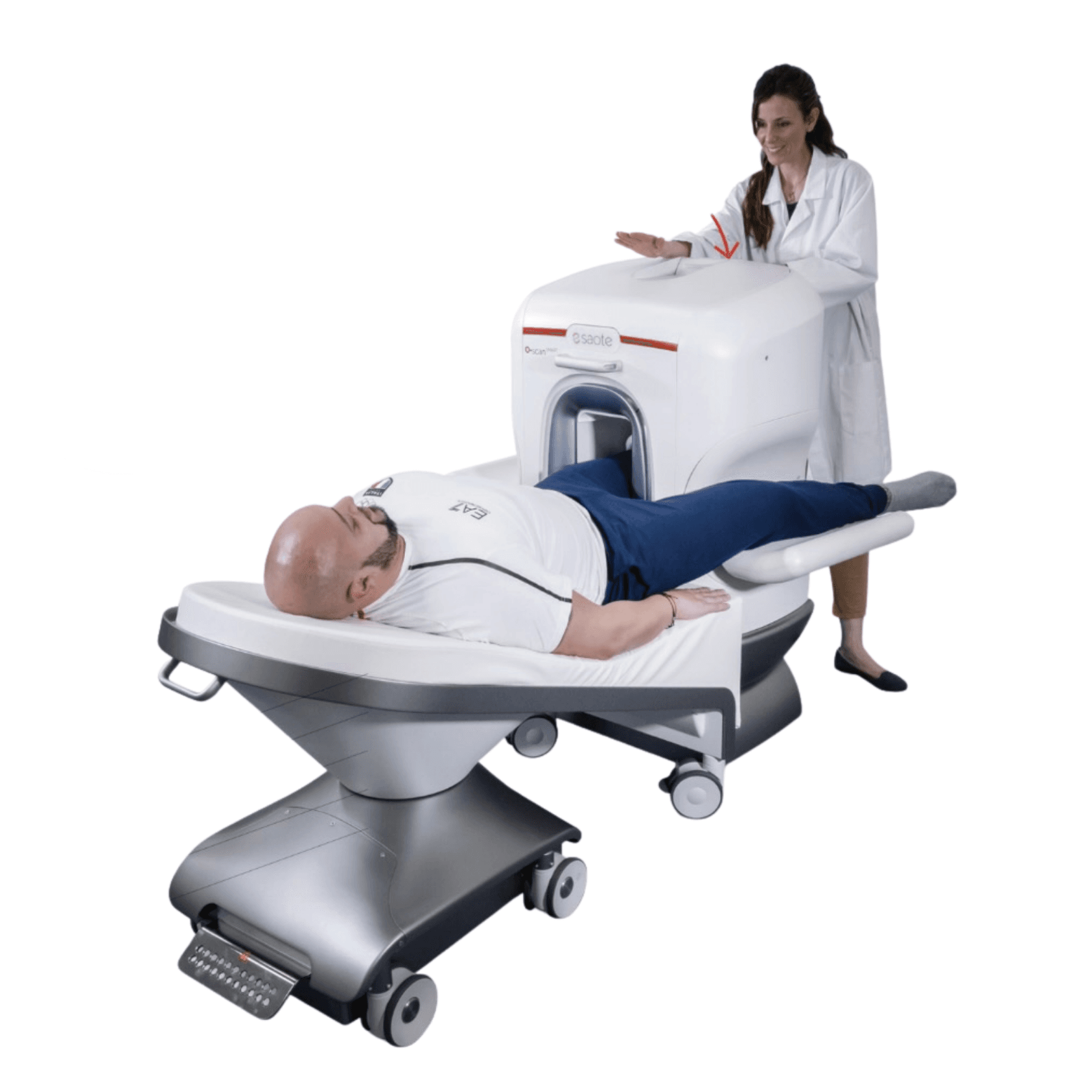
Permanent-magnet and low-field open systems for claustrophobic, pediatric and bariatric patients, extremity work and practices that want a single-room installation with no cryogens. Sold new: the Fujifilm AIRIS Vento 0.3T and APERTO Lucent 0.4T open systems, and the OASIS Velocity 1.2T, a high-field open design that keeps image quality usable for general work; the OASIS Velocity CPO is its certified pre-owned form. Dedicated extremity and weight-bearing systems from Esaote, the O-scan, S-scan and tilting G-scan, are quoted separately and sit below this band.
Tier 2: 1.5T MRI, $475,000 to $975,000 refurbished, $1,200,000 to $2,000,000 new
The configuration most facilities buy. Refurbished through MO Select: the GE Signa HDxt, the wide-bore GE Optima MR450w, the wide-bore Siemens MAGNETOM Aera and the open-bore Siemens MAGNETOM Espree. Sold new: the Fujifilm ECHELON Smart 1.5T, ECHELON Smart with SynergyDrive and the ECHELON Smart ZeroHelium. Philips Achieva and Ingenia 1.5T and Siemens Avanto systems appear in the same class on the used market; we install and service them.
Tier 3: 3T MRI, $1,000,000 to $1,900,000 refurbished, $2,100,000 to $3,700,000 new
Neuro, musculoskeletal, prostate and research detail, with the largest siting and cryogen bill of the three classes. Refurbished through MO Select: the Siemens MAGNETOM Skyra and the wide-bore GE Discovery MR750w; Siemens Verio and Philips Ingenia 3T systems on the used market. New 3T systems are sourced on request.
What is the average cost of an MRI machine?
Averages hide the class split. Across the systems we quote, the refurbished 1.5T band is the center of the market, $475,000 to $975,000 delivered and installed, because that is what most facilities buy. An open or low-field system averages in the low-to-mid six figures refurbished; a new 3T averages well over two million dollars. An average MRI machine price quoted without the field strength and the condition is not a usable number.
MRI machine price by brand
Brand moves an MRI quote less than field strength does; a refurbished 1.5T GE and a refurbished 1.5T Siemens sit in the same $475,000 to $975,000 band. What separates two quotes is magnet age and helium behaviour, the coil set, software licenses and the support horizon. GE MRI machine price: the largest installed base and the deepest used market, from the Signa HDxt and Optima MR450w at 1.5T to the Discovery MR750w at 3T, all refurbished through MO Select. Siemens MRI machine price: Espree, Aera and Skyra systems, with the Aera and Skyra carrying a premium for their wide-bore, newer-software lineage. Philips MRI machine price: Achieva and Ingenia systems at 1.5T and 3T, used market, strong in advanced applications; we have installed and de-installed Philips 3T and Achieva systems for clients. Fujifilm MRI machine price: our new-equipment range, from the AIRIS and APERTO open systems to the ECHELON 1.5T family, priced in the new column of the table. Esaote: dedicated extremity and weight-bearing systems that the big manufacturers do not cover, quoted separately. For a broader comparison see which MRI manufacturer to choose below.
What Affects the Price of an MRI Machine?
Two MRI machines of the same field strength and the same age can be hundreds of thousands apart. These are the things that move an MRI machine price, roughly in order of impact.
- Field strength The single biggest factor. Open and low-field, 1.5T and 3T are three different price classes before anything else is considered
- Bore size A 70 cm wide bore commands a premium over a standard 60 cm bore on the same field strength
- Coil set Coils are expensive, they are what the system actually images with, and a system quoted with three coils is not comparable to the same system quoted with eight
- Channel count More receive channels means more simultaneous coil elements and faster imaging
- Software packages Cardiac, neuro, spectroscopy and advanced vascular packages are licensed, priced separately, and do not always transfer with a used system
- Magnet condition and helium history Whether the magnet has ever been ramped down or quenched, and what its boil-off rate is
- Platform support status Whether the manufacturer still supports the software and supplies parts matters more than the year of manufacture
A note on wording, because it affects what you are comparing. You will see the same equipment listed as an MRI machine, an MRI system and an MRI scanner. They mean the same thing, so MRI scanner cost and MRI machine cost are the same question. So are MRI scanner price and what does an MRI machine cost: one number, described differently. How expensive is an MRI machine compared with the rest of an imaging department? It is the most expensive single system a facility buys, ahead of CT, which is why the drivers below matter more than the headline. What is not the same is a bare system price against a working configuration.
The coil set is the one buyers most often miss. Ask for the MRI equipment cost with the coils you actually need included, because a bare system price and a working configuration are different numbers. Our guides to open MRI versus closed MRI and wide bore MRI systems cover the format decision in more detail.
What Is Included in an MRI Machine Price?
The figures above are system prices. When you compare two quotes, compare the scope as well as the number, because the gap is often what is in them rather than the machine.
- Quoted with the system The magnet, gradient and RF chain, console, the coil set as specified, and the software packages listed
- Quoted per project Freight and rigging, crane or wall opening where access requires it, RF shielded enclosure, chiller and mechanical work, structural work, first helium fill, applications training
Siting is where MRI budgets are won or lost. RF shielding, floor loading, the route in and the magnetic fringe field all have to be assessed before a system is ordered, not after it arrives. We handle installation, rigging and de-installation ourselves. For island projects, freight, import handling and engineer travel are planned in from the start, which is covered in our notes on MRI installation in Puerto Rico and the Caribbean.
If you are replacing rather than adding, the system you are retiring may be worth something against the new one. We also buy used imaging equipment.
How Much Does a Used MRI Machine Cost?
A refurbished MRI machine generally runs 40 to 60 per cent below the new price of the same platform, which is why many facilities adding a second or third system choose refurbished. The refurbished columns in the table above are our ranges for a system delivered, installed and warrantied, which is why they sit above equipment-only figures published elsewhere. Every MO Select system is quoted individually.
What you give up against new is the newest software generation and a long factory warranty. What you gain is a large reduction in price on a platform whose behaviour is well understood. The words matter though, because refurbished versus OEM certified are not the same thing and do not carry the same obligations. Current stock is in the MRI systems we carry, and the refurbished units themselves are listed on our used MRI machines for sale page.
How Much Does It Cost to Run an MRI Machine?
The MRI machine cost to buy is the first line of a ten-year budget, not the whole of it. Asked as how much for an MRI machine over its working life, the running costs below often rival the purchase price.
Purchase price is not the whole number, and on MRI the running cost is larger than on any other modality. Budget for these before you sign, not after.
- Cryogens A superconducting magnet consumes liquid helium. Modern zero boil-off systems consume very little in normal operation, older magnets consume considerably more, and the interval is a property of the specific magnet rather than a general figure
- Cold head and chiller The cold head is a wear part and the chiller has to run continuously. If either fails, helium starts boiling off
- Service contract Priced against the platform, its age and the response time you need. Get it in writing alongside the purchase quote
- Power An MRI draws continuously, not only while scanning, because the magnet and the chiller never switch off
- Coil repair and replacement Coils are handled constantly and they are the component most often damaged in daily use
- Accreditation and QA Recurring, and required
The cost nobody budgets for is a quench. Losing the helium charge is expensive and the system is down until it is refilled and ramped back up, which is why what an MRI quench is is worth understanding before it happens. We handle cryogenics and helium as a standing service, including on systems bought elsewhere.
We do not publish running-cost figures, because an honest number depends on the specific magnet, its age, its duty cycle and where it is installed. Tell us the system and the site and we will give you a real one.
How Much Does an MRI Scan Cost? (The Exam, Not the Machine)
Many readers arrive here asking a different question: not what the machine costs, but what the exam costs. They are two different prices, and the exam price is what the machine earns.
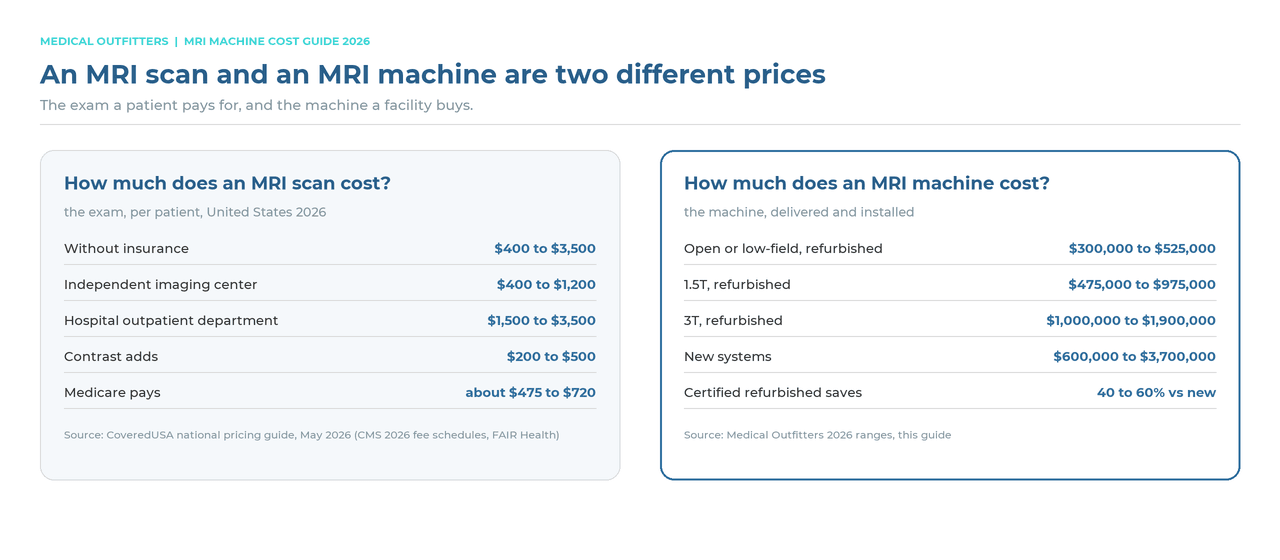
According to CoveredUSA’s May 2026 national pricing guide, which draws on the CMS 2026 Medicare fee schedules, hospital price-transparency files and FAIR Health data, an MRI typically costs $400 to $3,500 without insurance in 2026: about $400 to $1,200 at an independent imaging center, $1,500 to $3,500 in a hospital outpatient department and $350 to $900 on a mobile MRI unit. Contrast adds roughly $200 to $500. Medicare pays about $475 for the scan at an independent center and about $720 in a hospital outpatient department, with the patient owing 20 percent coinsurance after the Part B deductible.
For a facility, those numbers are the revenue side of the purchase decision: the gap between what an independent center is paid and what a hospital department is paid is why outpatient MRI volume keeps moving to freestanding sites, and why a refurbished 1.5T in a well-run imaging center is the most common system we deliver. If you are pricing the scanner rather than the scan, the table at the top of this page is the answer, and a quote takes a day.
What Is an MRI Machine?
An MRI (magnetic resonance imaging) machine uses a powerful superconducting magnet, radio-frequency coils, and gradient systems to map the body in fine detail. Unlike CT or X-ray, MRI uses no ionizing radiation, which makes it ideal for repeat imaging and soft-tissue work. The patient lies on a table that moves into the bore of the magnet while the system captures images. MRI is a core tool for neurology, orthopedics, oncology, and cardiology in hospitals and imaging centers.
How Does an MRI Machine Work?
The magnet aligns hydrogen atoms in the body, radio-frequency pulses knock them out of alignment, and as they realign the scanner measures the signals to build cross-sectional images. The strength of that magnet, measured in Tesla (T), is the single most important factor in image quality and price.
MRI Field Strength Explained (Open vs 1.5T vs 3T)
Field strength is the MRI equivalent of CT slice count: the spec that most affects image quality, capability, and cost.
Open / Low-Field MRI
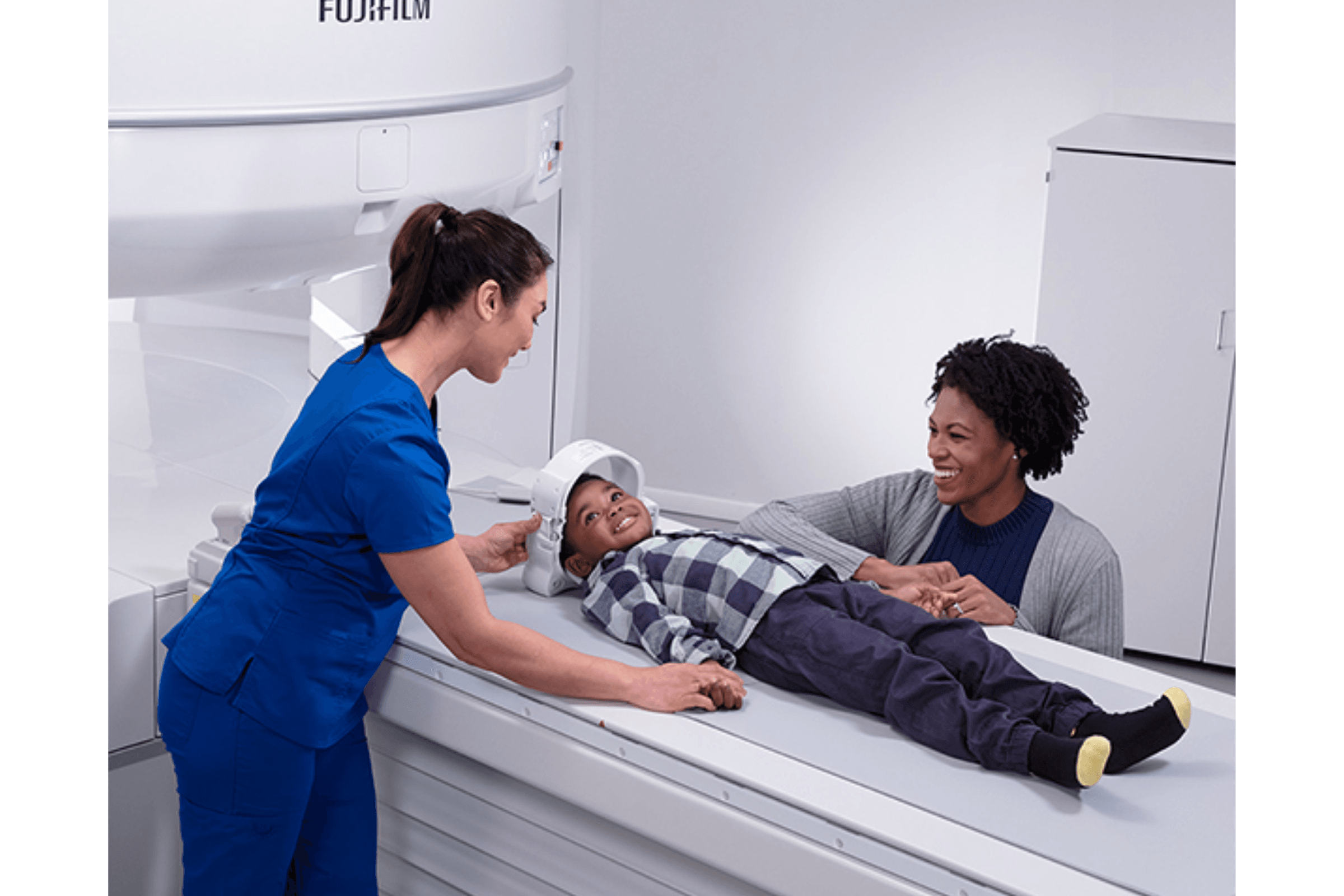
Lower field strength in a patient-friendly open design. Best for claustrophobic, pediatric, and bariatric patients, at the lowest cost.
1.5 Tesla (1.5T) MRI
The most popular field strength, balancing image quality, throughput, and cost for the majority of routine and advanced imaging.
3 Tesla (3T) MRI
High-field systems delivering the finest detail for neuro, musculoskeletal, and research-grade imaging, at a premium price. A 3 tesla MRI machine price starts around $1,000,000 refurbished and $2,100,000 new, delivered and installed.
What Types of MRI Systems Are There?
- Closed-bore MRI: the standard high-field design (1.5T and 3T) for maximum image quality.
- Wide-bore MRI: a larger opening for patient comfort while keeping high field strength.
- Open MRI: an open-sided design for anxious, pediatric, and larger patients.
- Extremity MRI: compact systems dedicated to imaging hands, knees, and joints.
- Mobile MRI: trailer-mounted systems for flexible or interim imaging capacity.
Open vs Closed vs Wide-Bore MRI Cost
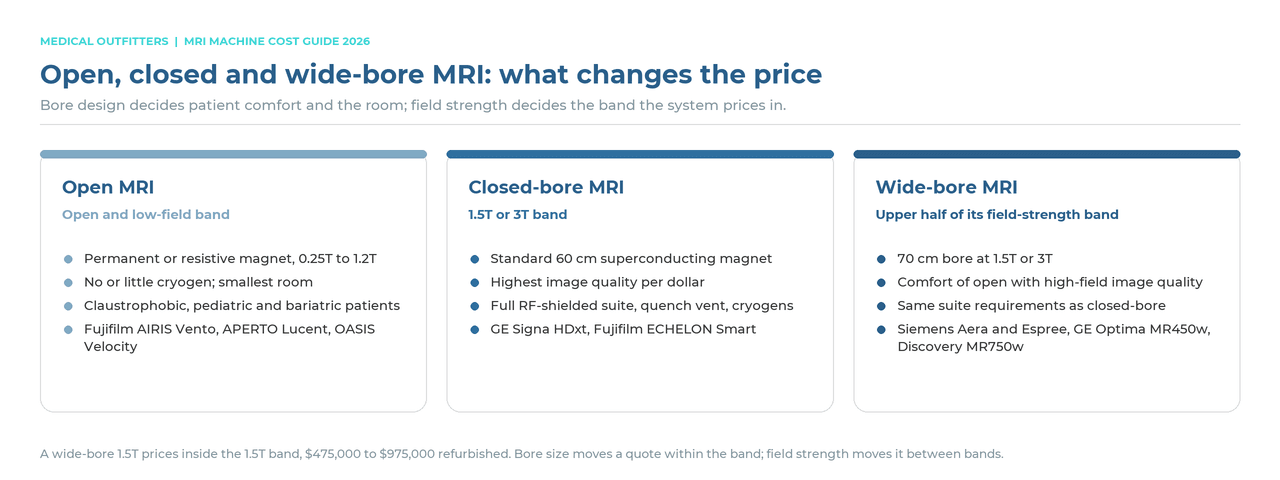
Bore design decides patient comfort and the room; field strength decides the band a system prices in. That is the whole rule, and it answers most open, closed and wide-bore price questions.
Open MRI machine cost
Open and low-field systems are the lowest band in the table, $300,000 to $525,000 refurbished and $600,000 to $950,000 new, and they need the simplest room: little or no cryogen, a compact RF cabin and no quench vent on permanent-magnet designs. The trade is image quality and speed against a high-field system. Which patients justify an open system is covered in open MRI vs closed MRI.
Closed-bore MRI machine cost
The standard 60 cm superconducting magnet at 1.5T or 3T gives the highest image quality per dollar and the full siting bill: an RF-shielded suite, a quench vent, cryogens and a cold head on a service schedule. Prices follow the 1.5T and 3T rows of the table.
Wide-bore MRI machine cost
A 70 cm bore at 1.5T or 3T (Siemens Aera and Espree, GE Optima MR450w and Discovery MR750w) offers most of the comfort of an open design with high-field image quality, and it commands a premium within its field-strength band because demand from bariatric, oncology and anxious patients is high and the platforms are newer. A wide-bore 1.5T still prices inside the 1.5T band, $475,000 to $975,000 refurbished. See wide bore MRI systems: bore size, image quality and cost and wide-bore vs open vs closed MRI: which should a new imaging center buy.
MRI Systems We Carry
Medical Outfitters carries new Fujifilm and Esaote MRI systems across field strengths, plus certified refurbished Siemens and GE systems under our MO Select line:
- Fujifilm Echelon: the Echelon Smart 1.5T high-field platform, in SynergyDrive and ZeroHelium configurations
- Fujifilm Oasis & Aperto: the high-field open Oasis Velocity (1.2T) and the open Aperto Lucent
- Fujifilm Airis: the open Airis Vento
- Esaote: the O-scan extremity MRI
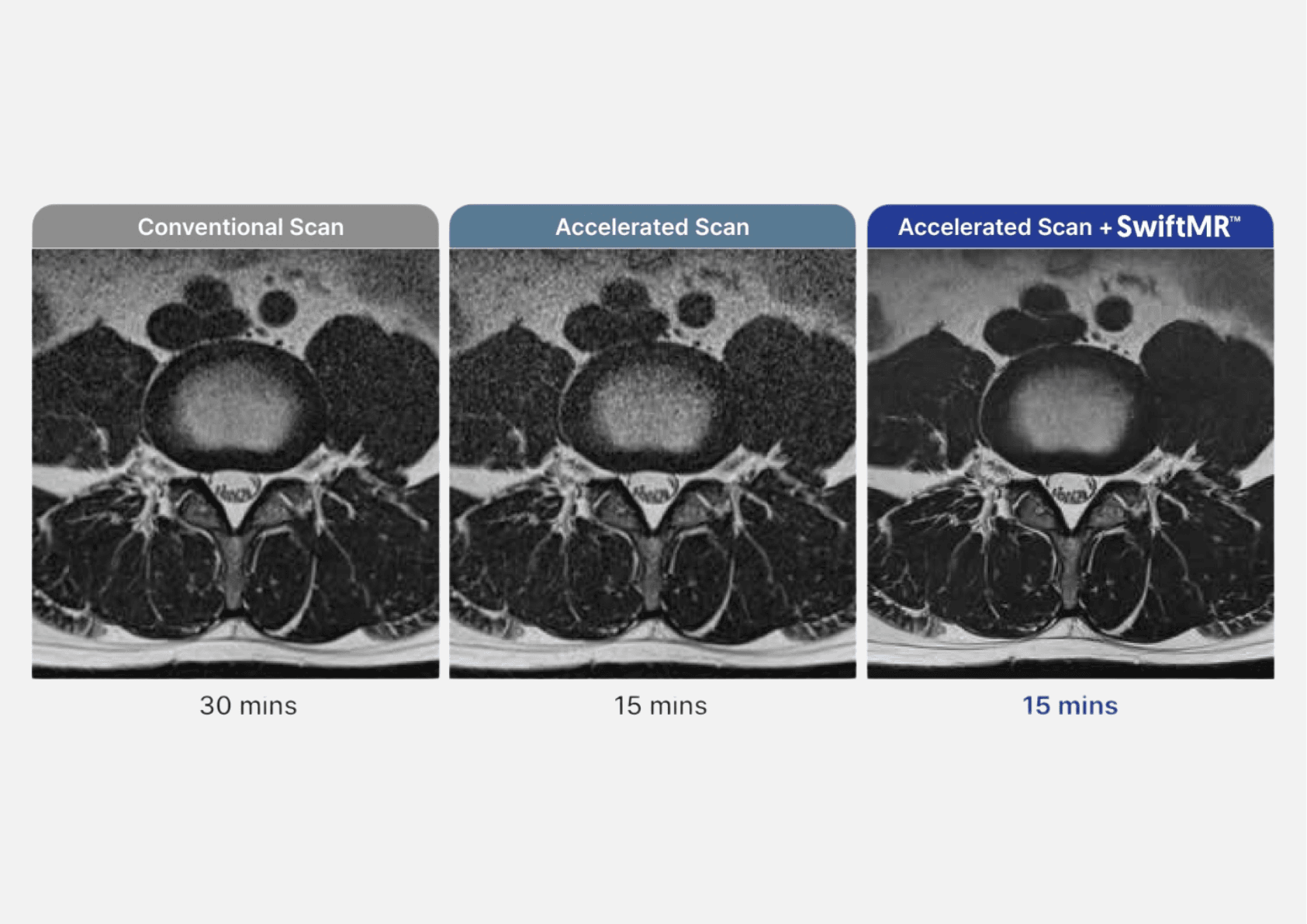
- Swift MR: AI-powered image acceleration for faster scans
Refurbished GE and Siemens MRI systems are supplied under our MO Select line. Looking for a refurbished Philips or Hitachi MRI? Our team can also help you source and compare other manufacturers.
Model price guides: what each platform costs refurbished in 2026, its configurations and what to check before you buy: Siemens MAGNETOM Aera, MAGNETOM Espree, MAGNETOM Skyra 3T, GE Signa HDxt, GE Optima MR450w, GE Discovery MR750w, Philips Ingenia and the Hitachi AIRIS open MRI family.
New vs Refurbished MRI Machine Price: What Changes
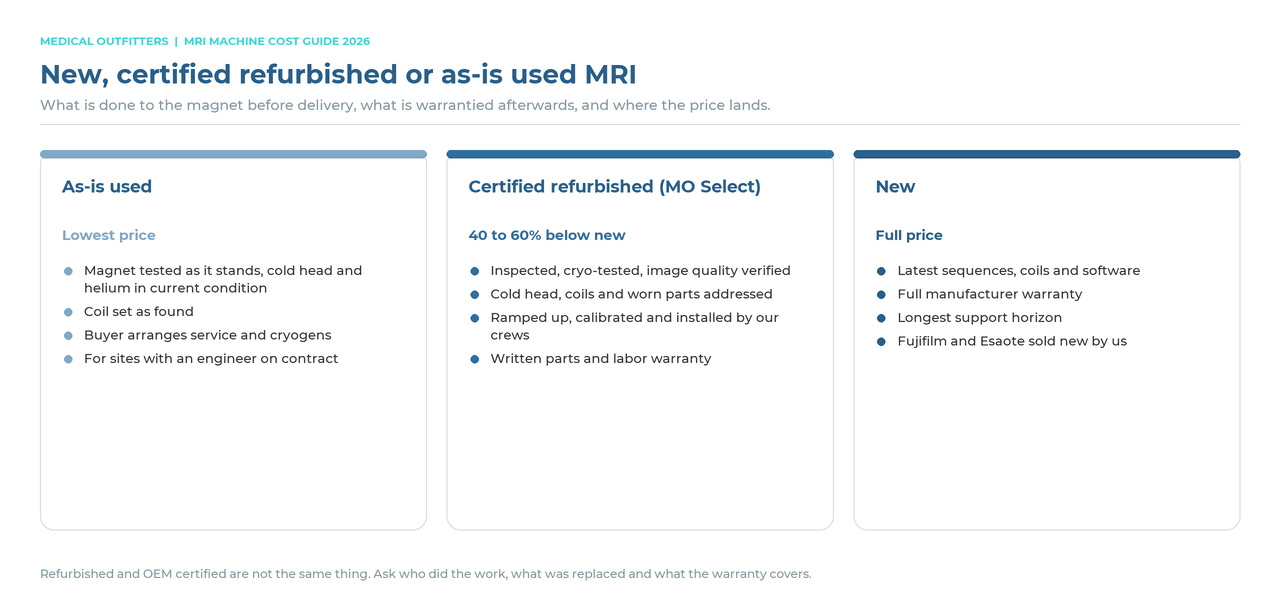
A new MRI offers the latest coils, software, and a full manufacturer warranty, but at the highest price. A certified refurbished MRI delivers proven clinical performance for far less, fully inspected, cryo-tested, and warrantied. For many facilities, a refurbished higher-field system delivers more capability per dollar than a new entry-level one. Refurbished typically saves 40 to 60 percent versus new. The words on the quote matter as much as the number, so here is what each condition means.
As-is used MRI machine price
The lowest price. The magnet is tested as it stands, the cold head, helium level and coil set are sold in their current condition, and the buyer arranges service and cryogens. It suits a site with an engineer on contract and a cryogen budget; it is the wrong first magnet for a new imaging center.
Cosmetic refurbishment
Some sellers repaint covers and replace the table pad and call the system refurbished. The magnet, cold head and coils have not been tested to specification. Ask what was done; if the answer is covers and paint, price it as a used system.
Certified refurbished MRI machine price (MO Select)
Inspected, cryo-tested, image quality verified against specification, cold head, coils and worn parts addressed, ramped up, calibrated and installed by our own crews, and covered by a written parts and labor warranty. This is the MO Select standard and it is what the refurbished column of the price table describes. Refurbished versus OEM certified are not the same thing; the refurbished units themselves are listed on our used MRI machines for sale page.
What Does MRI Installation and Siting Involve?
An MRI requires careful site planning: RF shielding, magnetic shielding, structural support for the magnet, and a cryogen (liquid helium) supply for superconducting systems. A quench (rapid loss of the magnetic field) must be vented safely, so proper installation matters. Medical Outfitters manages de-installation, rigging, site preparation, RF shielding, installation, and cryogenic services. Learn about installation and rigging »
MRI vs. CT: What Is the Difference?
The full comparison, including what changes for the building and the budget, is in our MRI vs CT comparison.
An MRI uses magnetic fields and radio waves with no radiation, and excels at soft tissue, brain, spine, and joint detail. A CT scanner uses X-rays, is much faster, and is better for trauma, lung, and bone imaging. Many facilities run both. If you are also evaluating CT, see our CT Scanner Cost & Buying Guide.
What Does MRI Service and Maintenance Involve, and What Does It Cost?
MRI systems need ongoing preventive maintenance, coil care, and cryogen management to stay reliable and compliant. Medical Outfitters provides MRI service, repair, parts, and cryogenics support. Learn about our service and repair options » Full details of the response commitments, what a maintenance visit covers and how a contract is priced are on our MRI service, repair and maintenance page.
How much does an MRI service contract cost?
A service contract is priced per year as a percentage of the system value, and the percentage moves with what it covers: parts and labor only, or parts, labor, cold head and coils, or all of that plus cryogen top-ups. Ask for the contract with the quote rather than after it, because on an older helium-consuming magnet the service and cryogen lines can rival the purchase price over a decade. What drives the number, by platform:
| Platform | Magnet and cryogens | Cold head | Coils and software | What to check before you sign |
|---|---|---|---|---|
| GE (Signa HDxt, Optima MR450w, Discovery MR750w) | Superconducting; helium use depends on magnet generation | Scheduled replacement interval | Deep used-market coil supply | Cold head hours and helium level on the day of survey |
| Siemens (Espree, Aera, Skyra) | Superconducting; newer platforms sip helium | Scheduled replacement interval | Wide coil range, software licenses transfer per policy | Which licenses transfer with the system |
| Philips (Achieva, Ingenia) | Superconducting | Scheduled replacement interval | Strong advanced-application software | Support status of the software release |
| Fujifilm ECHELON (new) | Superconducting; ZeroHelium version sealed | Per manufacturer schedule | Current sequences, full warranty | Warranty term and what the first-year contract adds |
| Open and permanent-magnet (AIRIS, APERTO, Esaote) | No or minimal cryogens | None or minimal | Smaller coil set | Simplest contract of the group |
Our engineers rebuild the MO Select magnets and service systems bought elsewhere, and cryogenics and helium is a standing service line. The helium section and the lifespan section below cover the two costs that vary most from one magnet to the next.
How to Choose the Right MRI Machine
Match field strength and design to your case mix, patient population, and budget. Key takeaways:
- Open / low-field for patient comfort and the lowest cost
- 1.5T for the best balance of quality, throughput, and price
- 3T for the finest detail in neuro and musculoskeletal imaging
- Refurbished for 40 to 60% savings with image quality tested to the manufacturer specification
- Plan siting, RF shielding, and cryogens early to avoid delays
What MRI Coils Do You Need, and What Do They Cost?
Coils are the part of an MRI most often left out of a comparison, and they are a large share of what you are buying. The magnet creates the field. The coils receive the signal. A system quoted with three coils and the same system quoted with eight are not the same purchase.
- Compatibility Coils are specific to the platform and often to the software version. A coil from a different generation may not work at all
- Channel count More receive channels means more coil elements read at once, which generally means better signal and faster imaging
- Phased array Multiple small elements combined, which gives better signal than a single large coil over the same anatomy
- Anatomy coverage Head, neck, spine, body, shoulder, knee, wrist, breast and cardiac coils are all separate items
- Condition Coils are handled every day and dropped occasionally, so they are the component most often damaged in service
Ask for the coil list in writing with the quote, including channel counts, and ask what a replacement costs for the two you would use most. Coil repair is usually cheaper than replacement, and it is work we do as part of service and repairs. The NEMA standards catalogue is where the measurement conventions for MR image quality are published, if you want to compare like with like.
How Much Helium Does an MRI Machine Use?
A superconducting magnet is kept superconducting by liquid helium, and how much it uses depends almost entirely on the age and design of that specific magnet. This is one of the biggest differences between a system that is cheap to own and one that is not.
- Older magnets Boil off continuously and need scheduled refills
- Modern zero boil-off designs Recondense helium internally and consume very little in normal operation
- Sealed low-helium designs Some current systems use a fraction of the helium of a conventional magnet
- The cold head A wear part. When it degrades, boil-off rises
- The chiller Runs continuously. If it fails, helium starts leaving
We deliberately do not publish a boil-off rate here, because an honest figure is a property of the individual magnet and its service history rather than a general average. Tell us the system and we will give you the real one. Cryogenics and helium is a standing service line for us, including on systems bought elsewhere.
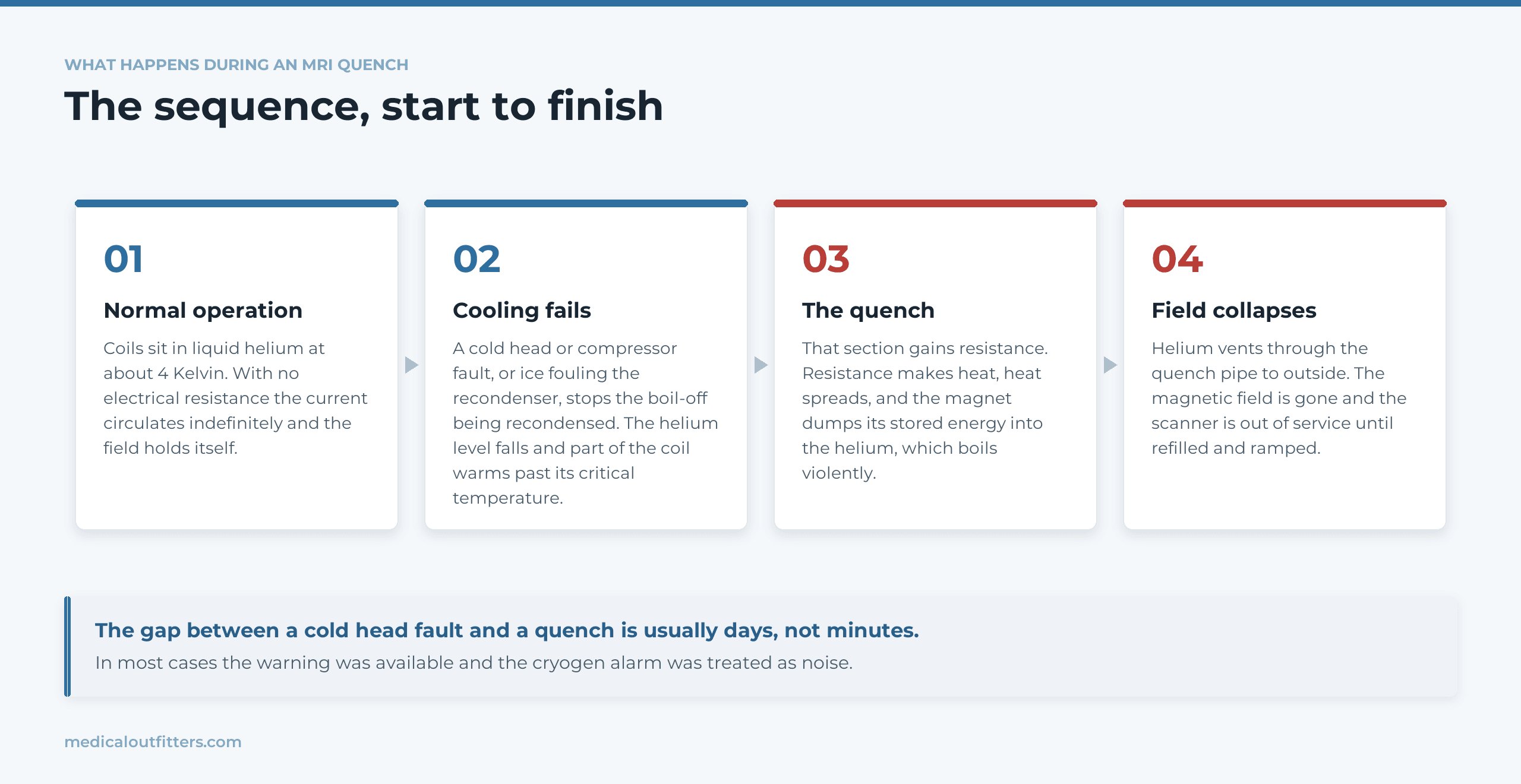
If you want the mechanism rather than the summary, our guide to what an MRI quench is covers what actually happens and why the vent matters. Helium is a finite globally traded commodity, and supply has been volatile, which is worth factoring into a ten year ownership plan.
If you want numbers to budget against, our article on what an MRI helium refill costs walks through fill volumes by magnet type, how boil-off turns into a bill and what neglecting the cold head ends up costing. It is the companion piece to this section.
What Size Room Does an MRI Need?
MRI budgets are won or lost on siting, not on the machine. A CT needs a lead lined room and power. An MRI needs considerably more, and it needs it decided before the system is ordered.
- RF shielded enclosure A room within the room. Copper and galvanised steel are both used, and the choice affects cost and construction
- Magnetic fringe field The five gauss line has to fall inside space you control, which constrains what can be on the other side of every wall, floor and ceiling
- Floor loading A magnet is heavy and the figure that matters is the one on that model’s site planning drawing
- Quench vent A pipe to outside air, routed so a discharge is safe. This has no equivalent on any other modality
- Chiller and mechanical Plant space, water and power
- The route in Door widths, corridors, lift capacity, and whether a wall has to be opened or a crane used
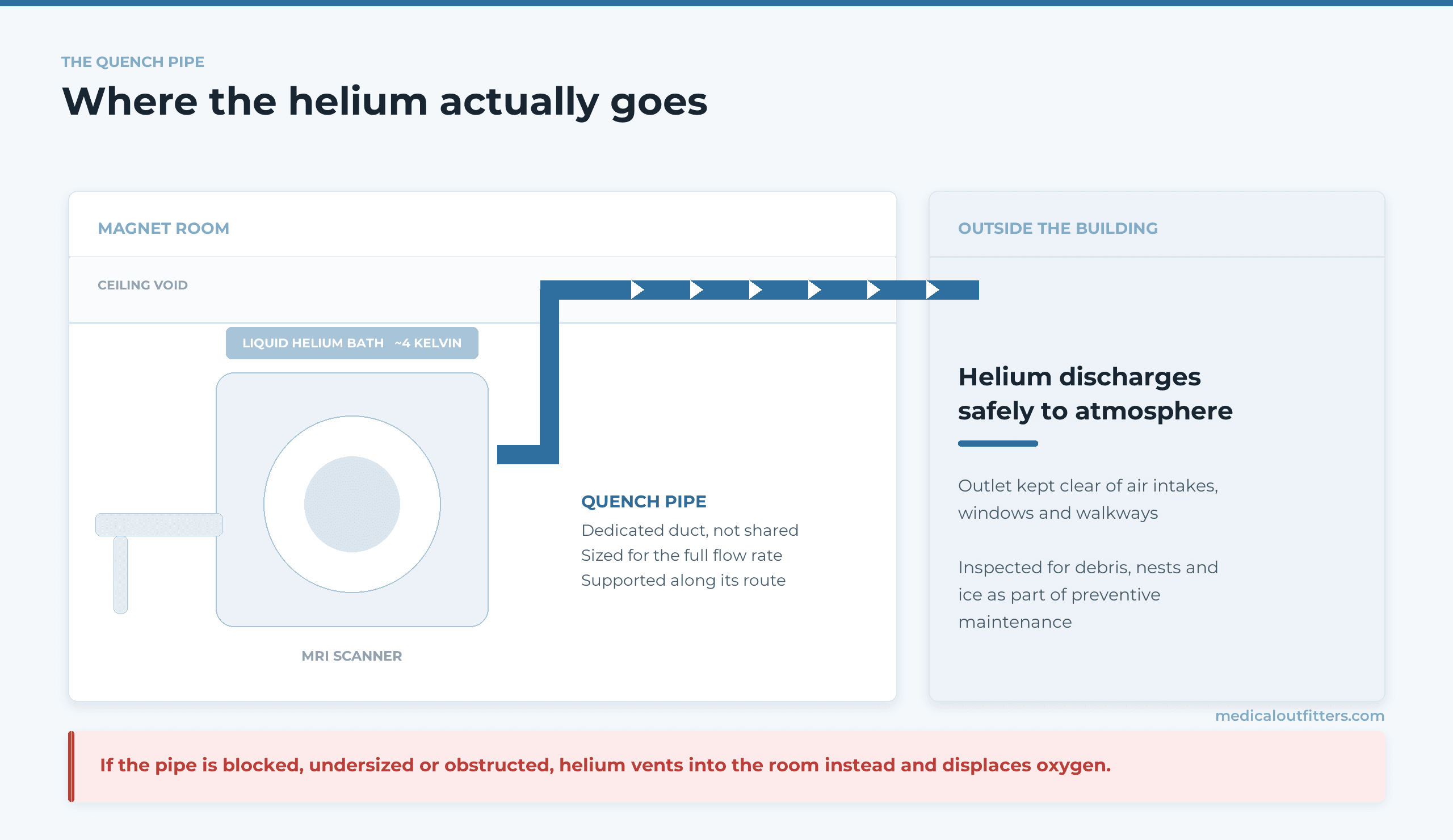
We do not publish a standard room size, because the honest answer comes from the manufacturer site planning drawing for the specific system, and those differ substantially between a compact 1.5T and a 3T. Send us the model and the floor plan and we will tell you whether it fits. Installation, rigging and siting is work we do ourselves, and island projects add freight, import handling and engineer travel on top.
Which MRI Manufacturer Should You Choose?
Three manufacturers, GE, Siemens and Philips, hold the largest installed bases worldwide, with Canon and Fujifilm behind them, and a used market exists around all of them. What matters for a buyer is not which badge is best in the abstract but which platform is still supported, which coils and software you can still get, and who can service it where you are.
- GE Very large installed base, deep used market and wide parts availability
- Siemens Large installed base, strong wide bore lineage
- Philips Large installed base, strong in advanced applications
- Fujifilm Acquired the Hitachi medical systems business, so the AIRIS, APERTO, OASIS and ECHELON lines sit here now. This is our new-equipment range
- Esaote The specialist in dedicated extremity and weight-bearing systems, which the big four do not really cover
- Canon Formerly Toshiba, a smaller but established presence
Our new-equipment range is Fujifilm and Esaote. Refurbished Siemens and GE 1.5T and 3T systems are supplied under our MO Select line. For a brand-by-brand comparison of platforms, helium, coils, service and price, see MRI manufacturers compared. On the Fujifilm side that runs from the AIRIS Vento 0.3T open and APERTO Lucent through the OASIS Velocity CPO 1.2T open and OASIS Velocity, to the 1.5T ECHELON Smart, ECHELON Smart with SynergyDrive and ECHELON Smart ZeroHelium. Everything currently available is in the MRI machines category.
What Should You Include When You Buy an MRI?
Purchase an MRI machine on the system price alone and the surprises arrive later. An MRI machine buy that goes smoothly is one where every line below was in the quote before the order was signed.
The gap between a cheap quote and an expensive one is usually scope rather than machine. These are the items that get left out and then reappear as change orders.
- The coil set you actually need Not the coils that happen to be with the system
- Chiller Sometimes quoted separately, always required
- Applications training What decides whether the system is used properly in its first month
- Contrast injector If your protocols need one
- Patient positioning pads and accessories Small money, genuinely annoying to be without
- Site planning support Drawings, fringe field plot, structural and shielding input
- First helium fill and ramp up
- Warranty term and what it covers Specifically whether coils and the cold head are included
- Service contract pricing Agreed before you sign, not after
We include delivery, placement, installation and applications training as part of the job, and quote structural and shielding work per project because it depends on the building. Delivery and logistics covers how the transport side works.
What Does End of Life Mean for an MRI Scanner?
An MRI magnet can run for a very long time. What ends a system is almost never the magnet. It is support.
- End of sale The manufacturer stops selling it new. No effect on you
- End of support Software updates and manufacturer service stop. Third party service usually continues
- End of parts The real constraint. When a critical part is no longer made and the used pool dries up, the system becomes a risk
This is why platform support status matters more than year of manufacture when you compare two used systems. A newer system on a dead platform is a worse buy than an older one that everybody still stocks parts for. Ask the question before the invoice, because the answer does not change afterwards.
Software is a live part of this too. SwiftMR is an example of the other direction, where AI based image enhancement can lift throughput and image quality on a system you already own rather than replacing it.
What Does It Cost to Move or De-install an MRI?
Moving an MRI is a project, not a delivery. The magnet has to be ramped down or transported cold, the RF enclosure usually has to be dealt with, and the route out is the same problem as the route in but with less flexibility.
- Ramp down and cryogen handling Or a cold move, which is faster but has its own requirements
- Rigging Frequently a crane or a wall opening at both ends
- RF enclosure Dismantling, and whether it is reusable
- Transport Specialist, and for island work freight and customs on top
- Reinstallation Siting at the destination has to satisfy the same requirements as a new install
It is quoted per project because it depends on two buildings rather than one machine. We do this work ourselves rather than subcontracting it, which is the main reason our de-installation and rigging quotes tend to hold. If you are replacing rather than relocating, we also buy used imaging equipment, and full facility projects are something we run end to end.
MRI Safety: What Does the Always-On Magnet Change?
The single fact that governs MRI safety is that the magnetic field is never switched off. It is on during the night, during a power cut and during a fire.
- Zoning Access is controlled in graded zones, with screening before anyone enters the magnet room
- Ferromagnetic objects Oxygen cylinders, trolleys, tools and cleaning equipment are the classic projectile hazards
- Implants and devices Screened case by case against manufacturer conditions
- Hearing protection Gradient switching is loud
- Quench procedure Staff have to know what a quench looks like and what to do
The ACR radiology safety resources are the standard programme level reference, the RadiologyInfo page on MR safety is the plain language version, and the FDA page on MRI benefits and risks covers the regulatory view. For the physics behind it, the NIBIB explainer on MRI is a good neutral summary and the ISMRM is the field’s professional society.
Extremity, Open and Weight-Bearing MRI
Not every MRI is a whole body cylinder, and for some practices a dedicated system is both cheaper and better suited than a share of a general scanner.
Extremity MRI
A small bore system that images hands, wrists, elbows, knees, ankles and feet only. Far cheaper to buy, far simpler to site, and much easier for the patient because nothing goes inside a tunnel. For an orthopaedic or sports medicine practice it can carry the whole musculoskeletal caseload. The Esaote O Scan is the dedicated extremity system we supply, and the Esaote S Scan extends the same low-field approach to shoulders, hips and the lumbar and cervical spine.
Weight-bearing MRI
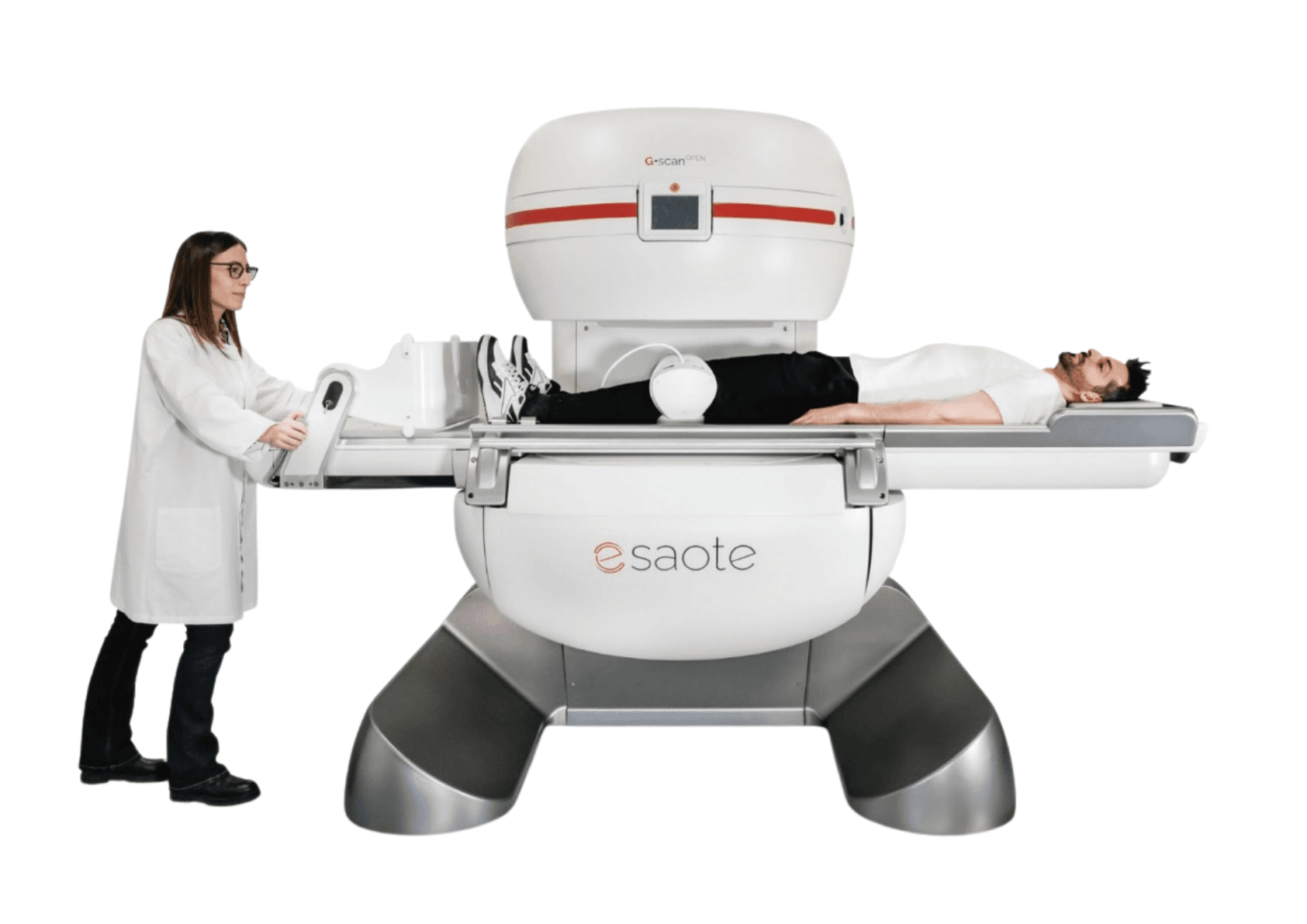
The Esaote G Scan tilts, so the patient can be scanned standing and loaded as well as lying down. For spine and knee work that changes what you can see, because some findings only appear under load. We installed the first of these in Grand Cayman.
Open MRI
Open systems trade field strength for access, which suits claustrophobic, paediatric and bariatric patients. Our guides to open versus closed MRI and wide bore systems cover that decision properly, and the MRI versus CT comparison covers the modality decision above it.
Veterinary MRI
Veterinary practices buy the same systems, often refurbished, and are often well served by extremity or open designs. The siting requirements are identical, because the physics does not care about the patient.
Portable MRI
Portable MRI cost is a different question from anything in the tables above. Point-of-care ultra-low-field units are a separate product class built for bedside brain imaging, not a substitute for a fixed 1.5T or 3T scanner, and they are not quoted on this page. For MRI that moves between sites, see our guide to buying versus renting a mobile MRI.
Frequently Asked Questions
- How much does an MRI machine cost?
- An MRI machine costs from $300,000 for a refurbished open or low-field system up to $3.7 million for a new 3T. A refurbished 1.5T, the most common configuration in practice, runs $475,000 to $975,000. These are system prices; siting, shielding and installation are quoted per project.
- How much is an MRI machine in the USA?
- The same ranges apply. A refurbished 1.5T MRI machine runs $475,000 to $975,000 and a new one $1,200,000 to $2,000,000. What moves the number inside those bands is bore size, the coil set, channel count and which software packages are licensed.
- What is the price of a magnetic resonance imaging machine?
- Magnetic resonance imaging machine cost is set first by field strength. Open and low-field systems start around $300,000 refurbished, 1.5T systems from $475,000 refurbished, and 3T systems from $1,000,000 refurbished. New systems run considerably higher in each class.
- How much do MRI machines cost to buy refurbished?
- A refurbished MRI machine generally runs 40 to 60 per cent below the new price of the same platform. A properly refurbished system is tested back to the manufacturer’s specification, so image quality on the same platform and software level should match a new unit of that generation.
- How much does a 1.5T MRI machine cost?
- A refurbished 1.5T MRI machine runs $475,000 to $975,000, and a new one $1,200,000 to $2,000,000. 1.5T is the workhorse field strength for general clinical imaging and it is the most common configuration we supply.
- How much does a 3T MRI machine cost?
- A refurbished 3T MRI machine runs $1,000,000 to $1,900,000, and a new one $2,100,000 to $3,700,000. 3T suits neuro, musculoskeletal and research work where signal to noise matters most.
- How much does an open MRI machine cost?
- An open or low-field MRI machine runs $300,000 to $525,000 refurbished and $600,000 to $950,000 new. Open systems suit claustrophobic, paediatric and bariatric patients, and they trade some image quality for access.
- What affects the price of an MRI machine?
- Field strength first, then bore size, the coil set, channel count and licensed software packages. After that, magnet condition and helium history, and whether the platform is still supported with parts and software. The coil set is the factor buyers most often overlook when comparing quotes.
- How much does it cost to run an MRI machine?
- The recurring costs are cryogens, cold head and chiller maintenance, the service contract, continuous power draw, coil repair and accreditation. An honest figure depends on the specific magnet, its age, its duty cycle and where it is installed, so we quote it against your system rather than publishing an average.
- Does the MRI machine price include installation and shielding?
- No. The figures quoted are system prices. Freight and rigging, RF shielded enclosure, chiller and mechanical work, structural work, the first helium fill and applications training are quoted per project, because they depend entirely on the building.
- What is the difference between a 1.5T and a 3T MRI?
- 3T has roughly twice the field strength of 1.5T, which means a better signal to noise ratio and either faster scans or higher resolution. 1.5T is more forgiving with implants and artefacts, cheaper to buy and cheaper to run. Most general clinical work is done at 1.5T.
- What is an open MRI?
- An open MRI uses a magnet that is open at the sides rather than a closed cylindrical bore, so the patient is not enclosed. It suits claustrophobic, paediatric and bariatric patients. Open systems run at lower field strengths, so image quality is generally below a closed 1.5T.
- Is a refurbished MRI machine worth it?
- For most buyers yes. A properly refurbished system is tested back to the manufacturer’s specification, so image quality on the same platform and software level should match a new unit of that generation. You give up the newest software generation and a long factory warranty, and you save 40 to 60 per cent.
- How long does an MRI machine last?
- Well maintained systems commonly run for well over a decade. The limiting factor is usually software and parts support rather than the magnet itself, which is why platform support status matters more than year of manufacture when you are comparing two used systems.
- How much does MRI installation cost?
- It is quoted per project, because it depends on the building rather than the machine. The variables are the route in, whether a wall has to be opened or a crane used, floor loading, the RF shielded enclosure, chiller and mechanical work, and the first helium fill. Have the site assessed before you order a system.
- What is the difference between an MRI and a CT scan?
- An MRI uses a strong magnetic field and radio waves and involves no ionising radiation. A CT uses X-rays and is much faster. MRI is better for soft tissue, brain, spine and musculoskeletal detail; CT is better for acute trauma, bone and chest imaging, and it is the practical choice when speed matters.
- How much does an MRI scanner cost?
- The same as an MRI machine, because they are the same equipment. A refurbished MRI scanner runs from $300,000 for an open or low-field system, $475,000 for a 1.5 Tesla and $1,000,000 for a 3 Tesla. New systems run considerably higher in each class.
- What is the average cost of an MRI machine?
- An average is misleading here, because the three field-strength classes barely overlap. A refurbished open system and a new 3 Tesla are an order of magnitude apart. The useful number is the range for the class you actually need, which is what the table above gives.
- How much does an MRI machine weigh?
- It varies by field strength, magnet design and manufacturer, and the figure that matters is the one on that model’s site planning drawing rather than a general average. Magnet weight drives floor loading, the route in and whether a crane or a wall opening is needed, so it is assessed from the manufacturer’s drawing before a system is ordered.
- What are MRI coils and why do they matter to the price?
- Coils receive the signal that becomes the image. They are specific to the platform, they come in sets covering different anatomy, and they carry a large share of a system’s value. A system quoted with three coils is not comparable to the same system quoted with eight, so ask for the coil list and channel counts in writing.
- How many channels should an MRI have?
- More receive channels means more coil elements read at once, which generally means better signal and faster imaging. What you actually need depends on your caseload rather than on the biggest number available. A high channel count is wasted if the coils to use it are not included.
- How much helium does an MRI machine use?
- It depends on the magnet. Older designs boil off continuously and need scheduled refills. Modern zero boil-off magnets recondense helium internally and use very little in normal operation. The honest figure is a property of the individual magnet and its service history, so we quote it against your system rather than publishing an average.
- What is a zero boil-off MRI magnet?
- A magnet with a cryocooler that recondenses helium back into the vessel instead of letting it escape, so in normal operation consumption is close to zero. It depends on the cold head and chiller working, which is why those are the components to keep on a maintenance schedule.
- When should an MRI cold head be replaced?
- The cold head is a wear part, and a rising boil-off rate is the usual first sign that it is degrading. Replacing it on schedule is far cheaper than losing a helium charge, which is why cold head condition belongs in a service conversation rather than an emergency.
- What size room does an MRI need?
- It comes from the manufacturer’s site planning drawing for that specific system, and a compact 1.5T and a 3T differ substantially. The constraints are the RF shielded enclosure, where the five gauss fringe field line falls, floor loading, the quench vent route and plant space for the chiller. Send us the model and the floor plan.
- What is RF shielding and does an MRI need it?
- Yes. An RF shielded enclosure is a room built inside the room that keeps outside radio frequency noise out of the images. Copper and galvanised steel are both used and the choice affects cost and construction. It is quoted per project because it is construction, not equipment.
- What is the five gauss line?
- The boundary around the magnet where the fringe field falls to five gauss. It has to sit inside space you control, which constrains what can be on the other side of every wall, floor and ceiling. It is plotted at site planning, not discovered at installation.
- Does an MRI need a quench vent?
- Yes. A quench pipe routes a helium discharge to outside air on a route that stays safe if it ever happens. It has no equivalent on any other imaging modality and it has to be designed into the room.
- Which MRI manufacturer is best?
- There is no single best. GE, Siemens and Philips have the largest installed bases and therefore the deepest used and parts markets. Fujifilm holds the former Hitachi lines, which is our new-equipment range, and Esaote specialises in extremity and weight-bearing systems. Refurbished Siemens and GE systems are supplied under our MO Select line. What matters is which platform is still supported and who can service it where you are.
- What should be included when buying an MRI machine?
- The coil set you actually need, chiller, applications training, site planning support, first helium fill and ramp up, patient pads and accessories, a contrast injector if your protocols need one, and a warranty whose terms you have read. Agree service contract pricing before signing rather than after.
- What does end of life mean for an MRI scanner?
- Three different things. End of sale means it is no longer sold new and affects you not at all. End of support means manufacturer software and service stop, though third party service usually continues. End of parts is the real constraint, and it is why platform support status matters more than year of manufacture.
- How long does an MRI magnet last?
- Magnets routinely run for well over a decade and often much longer. Systems are retired because parts and software support end, not because the magnet fails. That is the question to ask about any used system you are considering.
- How much does it cost to move an MRI machine?
- It is quoted per project, because it depends on two buildings rather than one machine. The variables are ramp down or a cold move, rigging and whether a crane or wall opening is needed at either end, the RF enclosure, specialist transport, and reinstallation which has to satisfy the same siting requirements as a new install.
- Can you de-install and relocate an MRI for us?
- Yes, and we do the rigging ourselves rather than subcontracting it. That includes inspection, disconnection, ramp down where required, packaging, rigging, loading and reinstallation at the destination, including to Puerto Rico and the Caribbean.
- Is an MRI safe?
- MRI uses no ionising radiation, which is its main safety advantage. The risks are different in kind: the magnetic field is never switched off, so ferromagnetic objects become projectiles and implants have to be screened case by case. Facilities manage this with controlled zones and screening before anyone enters the magnet room.
- What is an extremity MRI?
- A small bore system that images joints only, so hands, wrists, elbows, knees, ankles and feet. It is far cheaper to buy and far simpler to site than a whole body system, and the patient is never inside a tunnel. For an orthopaedic or sports medicine practice it can carry the entire musculoskeletal caseload.
- What is a weight-bearing MRI?
- A system that tilts so the patient can be scanned standing and loaded as well as lying down. Some spine and knee findings only appear under load, which a conventional supine scan cannot show. The Esaote G Scan is the weight-bearing system we supply.
- Can we buy an MRI for a veterinary practice?
- Yes. Veterinary practices buy the same systems, often refurbished, and are often well served by extremity or open designs. The siting requirements are identical, because the physics does not care about the patient.
- Do you service MRI machines you did not sell?
- Yes. Service, cryogenics and coil repair are separate lines of work from sales, and a good deal of what we look after was bought elsewhere. Ask about territory and platform before assuming coverage.
- How do the prices of new MRI machines compare across different brands?
- Within a field-strength class the brand moves the price less than the coil set, the software licensed and the condition. Siemens, GE and Philips 1.5T and 3T systems sit in similar bands, new and refurbished; Fujifilm and Esaote are the lower-cost entries because they concentrate on open, low-field and extremity designs; Canon sits with the big three. Compare quotes on scope first: a bare system from one brand against a working configuration from another is not a price difference, it is a scope difference.
- Where can I find the best deals on MRI equipment for sale?
- The best deal is rarely the lowest headline price, because equipment-only figures leave out delivery, rigging, RF shielding, installation and warranty, which are the parts that go wrong. Look for a refurbished system on a platform the manufacturer still supports, with the coil set and software you need included, a written warranty, and the installer and the service provider being the same people. Our used MRI machines for sale page lists what we hold with all-in pricing by field strength.
- What should you look for in an MRI machine supplier?
- Ask four things: do they refurbish and test the system themselves or buy it as-is and resell it; will they install it with their own crews; will the engineers who installed it service it afterwards; and what parts do they hold. Then ask for the warranty in writing and for references at sites like yours. A supplier who cannot answer those four is a broker, which is fine for a bare machine and a poor fit for an installed one.
- How much is an MRI machine?
- An MRI machine is $300,000 to $525,000 for a refurbished open or low-field system, $475,000 to $975,000 for a refurbished 1.5T and $1,000,000 to $1,900,000 for a refurbished 3T, delivered, installed and warrantied. New systems run from $600,000 for an open or low-field design to $3,700,000 for a 3T.
- What is the price of an MRI machine?
- The price of an MRI machine follows field strength first and condition second: open and low-field $300,000 to $950,000, 1.5T $475,000 to $2,000,000, 3T $1,000,000 to $3,700,000, with refurbished at the low end of each range and new at the high end. Siting, RF shielding and cryogens are quoted per project.
- How much does a new MRI machine cost?
- A new MRI machine costs $600,000 to $950,000 for an open or low-field system, $1,200,000 to $2,000,000 for a 1.5T such as the Fujifilm ECHELON Smart, and $2,100,000 to $3,700,000 for a 3T, delivered and installed. Certified refurbished systems save 40 to 60 percent against those figures.
- How much does an MRI machine cost to buy versus run?
- Buying is the first line: $300,000 to $3,700,000 depending on field strength and condition. Running it is the rest of a ten-year budget: the service contract, cold head replacements, helium or cryogen service, coil repairs, power and staffing, which on an older helium-consuming magnet can rival the purchase price over a decade.
- How much does a wide-bore MRI machine cost?
- A wide-bore MRI prices inside its field-strength band: a refurbished wide-bore 1.5T such as the Siemens Aera or GE Optima MR450w sits in the $475,000 to $975,000 band, usually in the upper half because the platforms are newer and demand is high; a wide-bore 3T such as the GE Discovery MR750w sits in the $1,000,000 to $1,900,000 refurbished band.
- How much does a closed MRI machine cost?
- A closed-bore superconducting MRI costs $475,000 to $975,000 refurbished or $1,200,000 to $2,000,000 new at 1.5T, and $1,000,000 to $1,900,000 refurbished or $2,100,000 to $3,700,000 new at 3T, plus the RF-shielded suite, quench vent and cryogens the design needs.
- How much does a GE or Siemens MRI machine cost?
- By field strength, like every brand: a refurbished GE Signa HDxt, Optima MR450w, Siemens Espree or Aera at 1.5T sits in the $475,000 to $975,000 band, and a refurbished GE Discovery MR750w or Siemens Skyra at 3T in the $1,000,000 to $1,900,000 band. Medical Outfitters refurbishes both brands through MO Select with a written warranty.
- How much does a Philips MRI machine cost?
- Philips Achieva and Ingenia systems price in the same bands as GE and Siemens on the used market: $475,000 to $975,000 refurbished at 1.5T and $1,000,000 to $1,900,000 refurbished at 3T. We install, de-install and service Philips systems and can source one on request.
- How much does an MRI scan cost?
- The exam, not the machine: according to CoveredUSA’s May 2026 national pricing guide, an MRI typically costs $400 to $3,500 without insurance in the United States, about $400 to $1,200 at an independent imaging center and $1,500 to $3,500 in a hospital outpatient department, with contrast adding $200 to $500. Medicare pays about $475 to $720 depending on the setting.
- How much does an MRI service contract cost?
- It is priced per year as a percentage of the system value, and the percentage rises with coverage: parts and labor, then cold head and coils, then cryogen top-ups. Get the contract quoted with the system, because on an older helium-consuming magnet service and cryogens over ten years can rival the purchase price.
- How much does a mobile MRI cost?
- The scanner inside a mobile unit follows the field-strength bands above; the trailer, its RF shielding, power, transport and site pad are quoted per project, for purchase or rental. Our mobile MRI: buy or rent guide walks through the decision.
Medical Outfitters sells new Fujifilm and Esaote systems as an authorized dealer and certified refurbished GE and Siemens systems through MO Select, with delivery and installation included in every quote. Browse used and refurbished MRI machines for sale, browse CT scanners for sale and browse X-ray machines for sale; every listing shows the model, year basis, condition and availability with a quote form. Used and refurbished MRI inventory is also listed on our used MRI machines for sale page.
From open and 1.5T to 3T systems, Medical Outfitters helps you spec and buy the right MRI, new or certified refurbished. Serving the US, Puerto Rico, and the Caribbean.