An X-ray tube is the vacuum vessel in which electrons fired from a heated filament strike a tungsten target and make the X-rays; everything else in the room exists to aim, shape, time and record what comes out of it. Tubes come in a few families, the stationary-anode tubes in dental and some portable units, the rotating-anode tubes in every radiography room, fluoroscopy system and C-arm, the high-capacity tubes in CT scanners, and the small-focal-spot tubes with molybdenum, rhodium or tungsten targets in mammography. A radiography tube typically lasts 50,000 to 200,000 exposures, which in a clinical room is three to seven years, and it is the one component in an X-ray system that is bought as a consumable: a replacement radiography tube runs from the low to the high four figures installed, and a CT tube from the tens of thousands up. Knowing which tube a system carries, how much of its life is used and what it costs to replace is most of what separates a good used X-ray purchase from a bad one.
This guide explains how an X-ray tube works, the main tube types and where each is used, how tube life is rated and what wears out, the warning signs of a failing tube, what replacement involves and costs, how to make a tube last, and what to ask about the tube when buying new or used X-ray equipment. Medical Outfitters sells, installs and services X-ray rooms, portables, fluoroscopy systems and C-arms across the United States, Puerto Rico and the Caribbean, and tube replacement is part of every X-ray service contract we write.
- How it works: a filament boils off electrons, up to 150 kilovolts accelerate them, a tungsten target stops them, and about one percent of the energy leaves as X-rays while the rest becomes heat.
- Types: stationary anode, rotating anode, high-capacity CT, and mammography tubes with their own targets and filters.
- Life: rated in exposures or scan seconds and limited by heat; three to seven years in a typical radiography room, two to eight in CT.
- What fails: the filament, the anode surface, the bearings and the vacuum, in roughly that order of frequency.
- The money: the tube is the consumable, and tube terms belong in every used-equipment quote and service contract.
How an X-Ray Tube Works
Inside the glass or metal-ceramic envelope, under a hard vacuum, sit two electrodes. The cathode is a tungsten filament in a focusing cup; a few amps of current heat it until it boils off electrons. The anode is the target, a tungsten-rhenium surface on a disc of molybdenum or graphite; a high voltage of 40 to 150 kilovolts between the two, the kVp the technologist selects, accelerates the electrons across the gap and slams them into the target. The impact produces X-rays by bremsstrahlung and characteristic emission, and the beam leaves through a window in the housing toward the collimator and the patient.
The inefficiency is the whole engineering problem. Roughly one percent of the electrons’ energy becomes X-rays; the other 99 percent becomes heat in a focal spot a millimeter across. The tube’s design, its anode, its bearings, its cooling and its housing, is about surviving that heat, and its ratings, in heat units, kilowatts and exposures, describe how much of it the tube can take and shed.
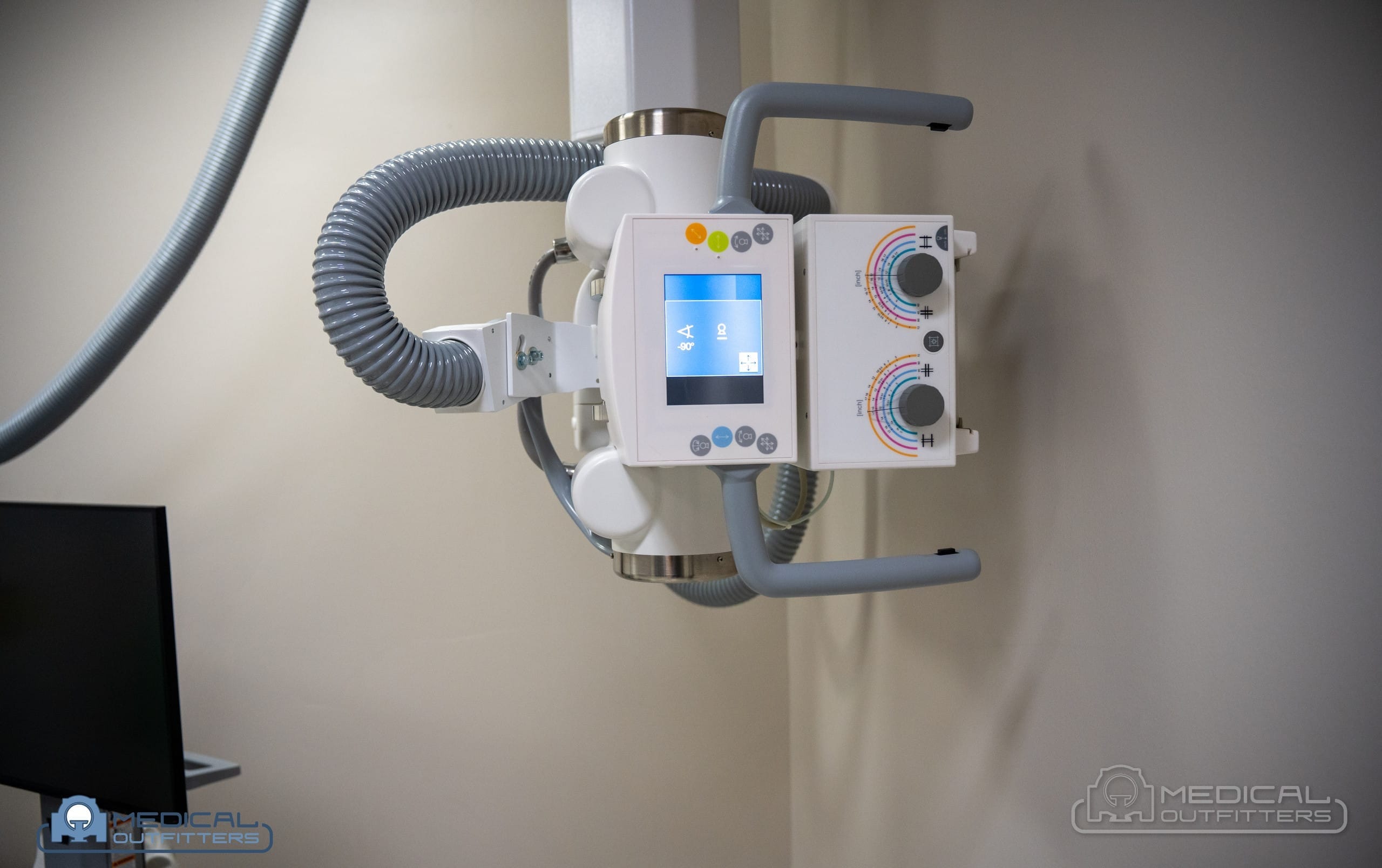
The tube sits inside a lead-lined, oil-filled housing that insulates the high voltage, absorbs the heat and stops the X-rays that leave in every direction but the useful one. The housing, the tube and the cables together form the tube housing assembly that service engineers replace as a unit, and that the FDA counts as a certified component of the system.
X-Ray Tube Types and Where Each Is Used
Stationary-anode tubes. The target is a fixed block of tungsten on a copper stem. Simple, cheap, long-lived at low power, and limited in output because the same spot takes every exposure. Dental intraoral units, some handheld and lightweight portable X-ray units, and veterinary and industrial equipment use them.
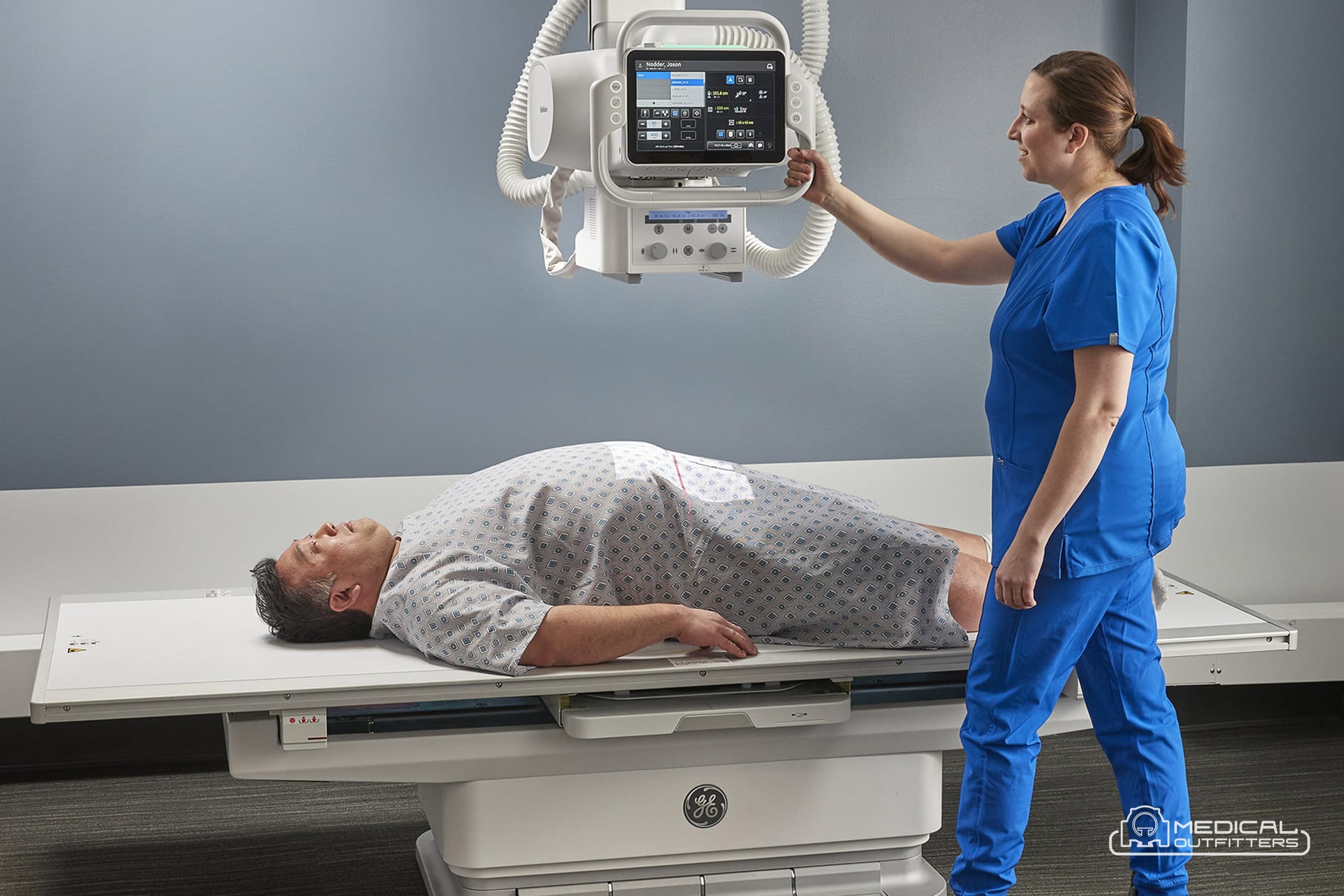
Rotating-anode tubes. The target is a disc, 75 to 200 mm across, spun by an induction motor at 3,000 to 10,000 revolutions a minute so that each exposure is spread around a track rather than burned into one spot. This is the tube in every fixed radiography room, mobile unit, fluoroscopy system and C-arm, with anode heat capacities from a few hundred thousand heat units on a mobile unit to several million on a high-power room, and two focal spots, a small one around 0.6 mm for detail and a large one around 1.2 mm for power.
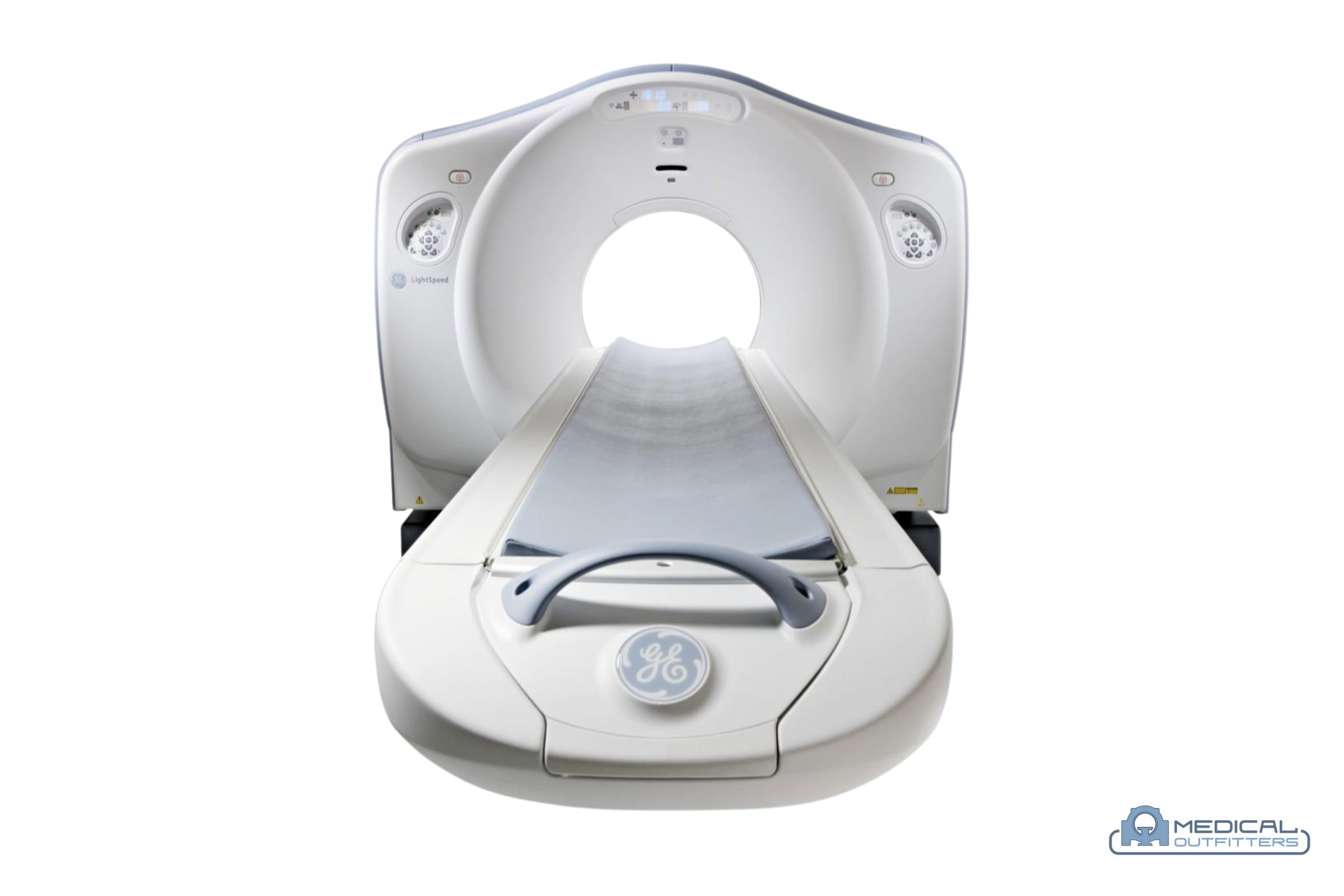
High-capacity CT tubes. A CT tube runs continuously for the length of every helical scan at 60 to 120 kilowatts while spinning around the patient, so the designs go further: larger anodes, liquid-metal bearings, anodes cooled directly by oil, metal envelopes and electron-beam steering. Their life is counted in scan seconds, and our guide to how long a CT tube lasts covers them separately.
Mammography tubes. Low voltages of 25 to 35 kilovolts, very small focal spots of 0.1 and 0.3 mm, and targets of molybdenum, rhodium or tungsten paired with matching filters to produce the soft, narrow-spectrum beam that soft-tissue contrast needs. They are not interchangeable with radiography tubes, and the digital mammography systems covered in our mammography machine cost guide each carry a tube matched to their detector.
Where the tube sits in the system. In a radiography room it hangs from the ceiling suspension or a floor column; in a fluoroscopy room it is under the table or on the tower; in a C-arm it sits at the bottom of the C opposite the detector; in a CT it is bolted into the rotating gantry. The mount decides how a replacement is done and how long it takes.
How Long an X-Ray Tube Lasts, and What Wears Out
Tube makers rate radiography tubes in exposures, and the published guidance from the tube manufacturers and the service industry puts a typical clinical life at 50,000 to 200,000 exposures, which for a room doing 40 to 80 exposures a day is three to seven years. The spread comes from the workload, the technique factors used, how carefully the heat limits are respected, and how many times a day the rotor is spun up for an exposure that never happens.
Four things wear. The filament thins with every heating cycle and eventually opens, which is the sudden failure: the tube simply stops producing. The anode surface roughens, pits and eventually cracks under the thermal cycling, which lowers output and raises noise gradually, and a cold anode hit with a full-power exposure can crack outright. The bearings that spin the anode wear and get noisy, until the rotor runs slowly or seizes and the system refuses to expose. The vacuum degrades as metal vapor and gas accumulate inside the envelope, which produces the arcs that trip the generator and that condemn more tubes than anything else.
The warning signs follow from the failures: a change in the rotor’s sound, longer rotor start-up, intermittent arcing or exposure faults on the generator, a rising mAs needed for the same image, inconsistent output on the physicist’s reproducibility test, and oil weeping from the housing, which is a replacement, not a repair.
X-Ray Tube Replacement: The Job and the Cost
The job. The engineer confirms the diagnosis from the generator’s error log and the tube’s behavior, orders the tube housing assembly matched to the system, and on the day swaps the assembly on its mount, reconnects the high-voltage cables and the cooling, seasons the new tube through its warm-up sequence, checks the collimator alignment and the light field against the new focal spot, and verifies output and reproducibility. Most radiography and fluoroscopy tube swaps are a day; C-arm and CT tubes take longer and need a full calibration afterward. Under the FDA’s assembly rules a like-for-like replacement tube housing assembly in an existing system does not need a new report of assembly, while a different tube housing does, as our guide to AIAT and the Form FDA 2579 explains.
The cost. Published service-industry figures put a replacement radiography tube at $5,000 to $20,000 depending on the system and the tube brand, with mobile and fluoroscopy tubes toward the upper part of the range and CT tubes far above it, from the tens of thousands for a refurbished entry-level CT tube to six figures for a premium new one. Medical Outfitters quotes a tube replacement installed and calibrated, with the tube’s warranty on the quote, and where in those ranges a job lands depends on the system model, the tube source and how quickly it is needed.
How to Make an X-Ray Tube Last Longer
Run the warm-up sequence every morning and after any long idle period, because the thermal shock of a full exposure on a cold anode is the fastest way to crack it. Do not hold the rotor spinning with the prep switch while waiting for a patient; every spin-up is bearing wear. Keep technique inside the tube’s rating charts, which the generator enforces on a modern system but not on every older one. Keep the generator calibrated and the power clean, because a sagging supply stresses the high-voltage circuit and the tube with it. Keep the housing cool: a tube in a hot, enclosed mount or a mobile unit stored in the sun ages faster. Treat the high-voltage cables gently, since a damaged cable produces arcs that look like a failing tube. And log the exposure count at every preventive maintenance visit, so the replacement is planned instead of forced.
The Tube on a New or Used X-Ray System
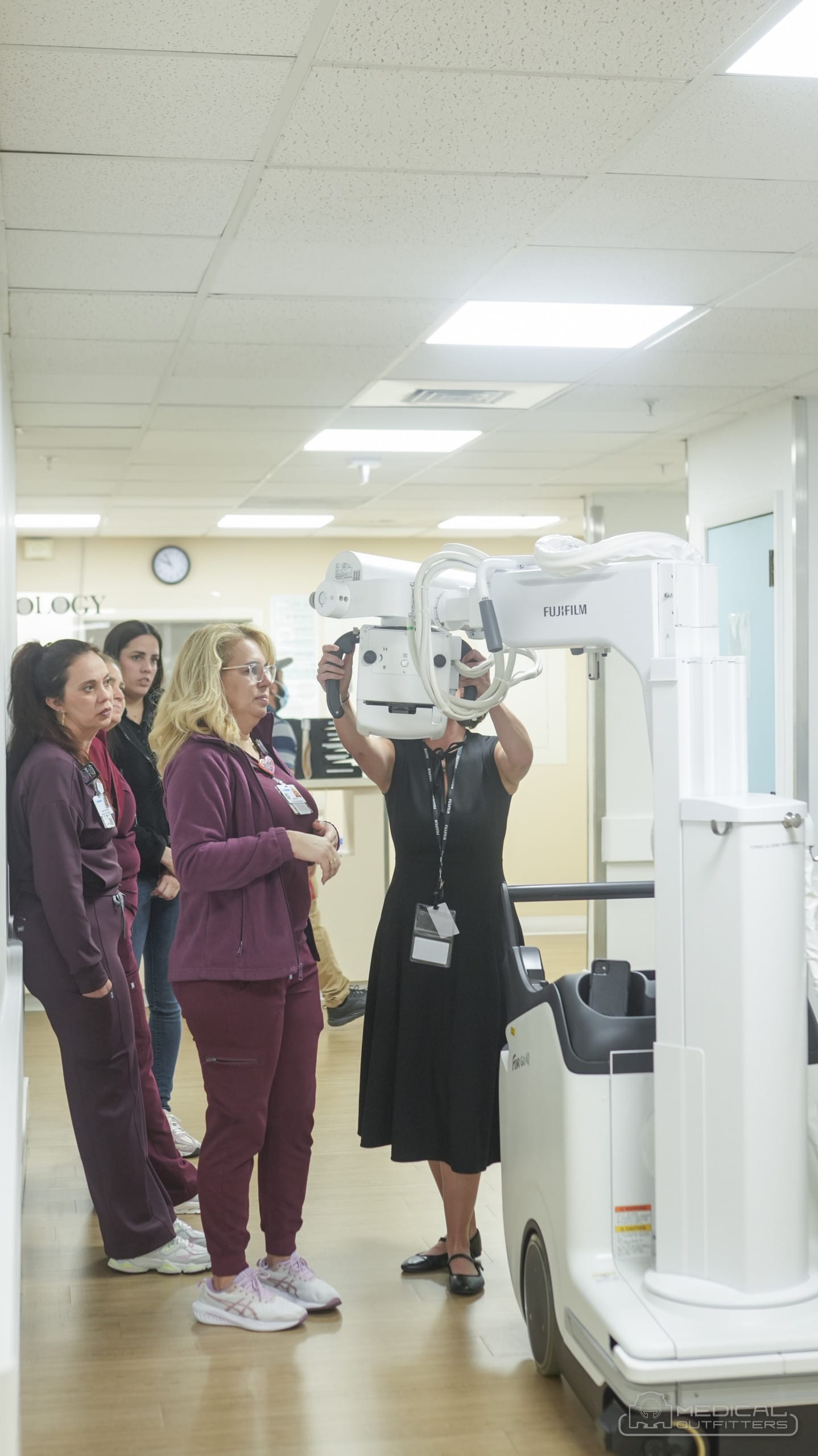
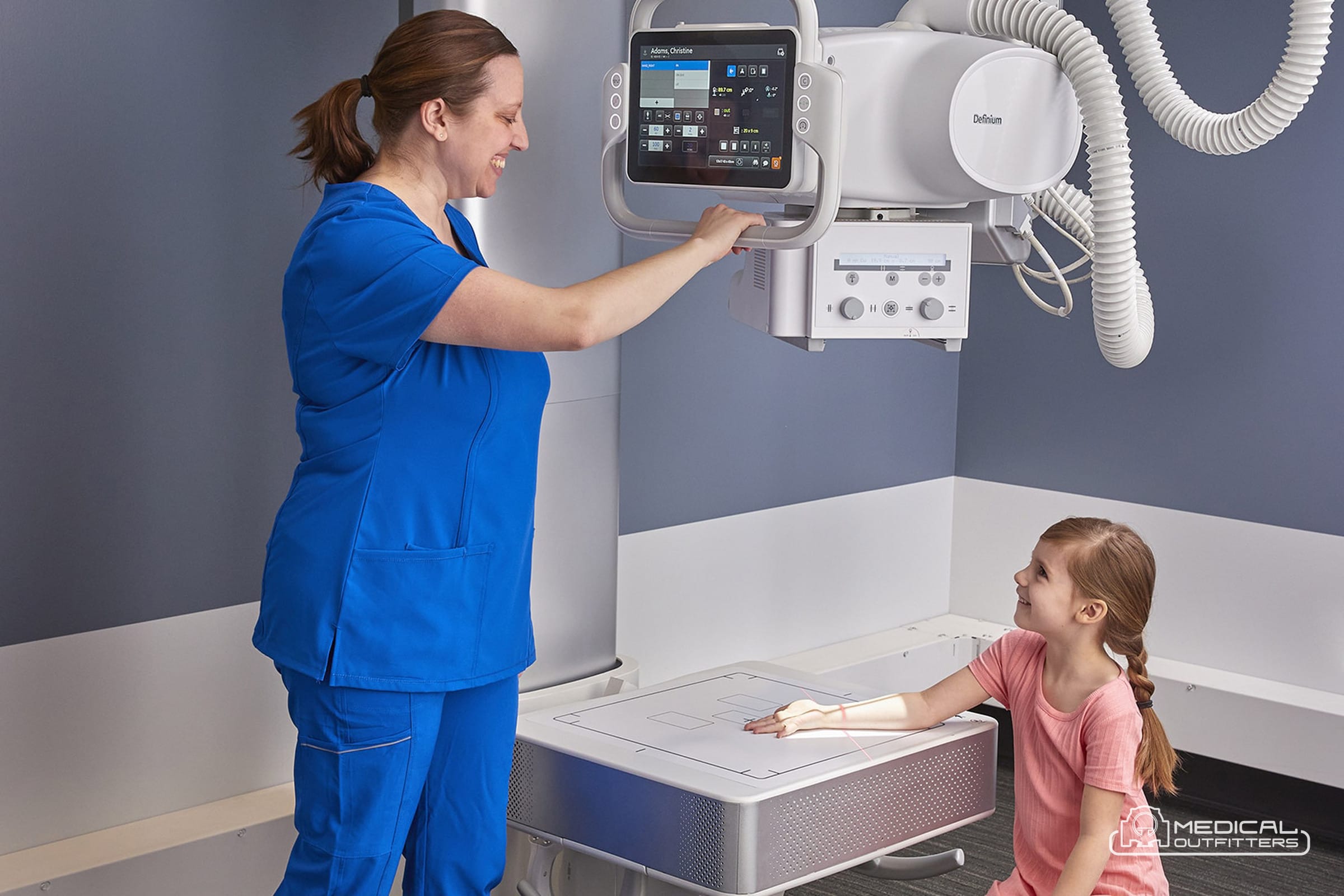
On a new system the tube comes with the manufacturer’s warranty and a known rating, and the question is which tube the model carries: a higher-capacity tube costs more and lasts longer in a busy room, which is why the Fujifilm rooms Medical Outfitters sells are configured by workload. On a used room, portable, fluoroscopy system or C-arm, ask for the tube’s exposure count and installation date, the arc history, and what warranty covers it; a used system with a fresh tube and one with a tube at the end of its rating can look identical and differ by the price of a tube, which our X-ray machine cost guide treats as the first variable in a used X-ray price alongside the detector. On a C-arm the tube and the detector or image intensifier are the two components that decide the remaining value, as our used C-arm buying guide explains.
Every MO Select refurbished X-ray system from Medical Outfitters is sold with the tube’s history on the paperwork, a tube warranty and installation and calibration by our own engineers; the current systems are on the X-ray machines for sale page and the new Fujifilm rooms, from the Smart Essential to the Persona RF PREMIUM+, carry new tubes under warranty. To check the tube on a system you are considering, or to price a replacement, contact us with the model, the serial number and the exposure count.
- X-ray machine service, repair and tube replacement
- X-ray machine cost and price guide (2026)
- X-ray machines for sale: Fujifilm FDR digital X-ray, new and refurbished
- X-ray machines: rooms, portables and R/F systems
- How long does a CT tube last?
- What is AIAT? X-ray installation rules and the Form FDA 2579
- CR vs DR X-ray explained
- Mammography machine cost and buying guide (2026)
- Used C-arm buying guide
- C-arm machine cost and buying guide
- Portable X-ray machine price guide (2026)
- Fujifilm Smart Essential digital radiography room
- Fujifilm Persona RF PREMIUM+ fluoroscopy system
- GE Definium X-ray price guide
- Price a tube replacement
X-Ray Tubes: Common Questions
How does an X-ray tube work?
A heated tungsten filament in the cathode boils off electrons, a voltage of 40 to 150 kilovolts accelerates them across a vacuum, and a tungsten target in the anode stops them. About one percent of the energy leaves as X-rays through a window in the housing; the rest becomes heat in a focal spot a millimeter across, which is why tube design is mostly about surviving and shedding heat.
How long does an X-ray tube last?
A radiography tube typically lasts 50,000 to 200,000 exposures, which in a clinical room is three to seven years depending on workload, technique and how carefully the heat limits and warm-up are respected. CT tubes are rated in scan seconds and last two to eight years. Dental and low-power stationary-anode tubes often last longer because they take less heat.
What is the difference between a stationary and a rotating anode?
A stationary anode is a fixed block of tungsten that takes every exposure on the same spot, which limits power; it suits dental units and some light portables. A rotating anode is a disc spun at 3,000 to 10,000 rpm so each exposure is spread around a track, which allows the higher power and longer exposures of radiography rooms, fluoroscopy, C-arms and CT.
What are the signs of a failing X-ray tube?
A change in the rotor's sound or a longer start-up, intermittent arcing or exposure faults on the generator, a rising mAs needed for the same image, inconsistent output on the physicist's reproducibility test, and oil weeping from the housing. A filament that opens stops the tube outright.
How much does it cost to replace an X-ray tube?
Published service-industry figures put a replacement radiography tube at $5,000 to $20,000 depending on the system and the tube brand, with mobile and fluoroscopy tubes toward the upper end and CT tubes far above, from the tens of thousands for a refurbished entry-level CT tube to six figures for a premium new one. Medical Outfitters quotes the replacement installed and calibrated with the tube's warranty on the quote.
Does replacing an X-ray tube require an FDA report of assembly?
Not for a like-for-like replacement. Under 21 CFR 1020.30 a reloaded or replacement tube housing assembly of the same type reinstalled in an existing system is exempt from the Form FDA 2579 report; a tube housing that differs from the one it replaces does require the report. The assembler confirms the position for the specific components.
How do I make an X-ray tube last longer?
Run the warm-up sequence every morning and after idle periods, do not hold the rotor spinning on the prep switch while waiting, keep technique within the tube's rating charts, keep the generator calibrated and the power clean, keep the housing cool, treat the high-voltage cables gently and log the exposure count at every preventive maintenance visit so the replacement is planned.
What should I ask about the tube when buying a used X-ray system?
The tube's exposure count and installation date, its arc history and the warranty that covers it. A used room, portable, fluoroscopy system or C-arm with a fresh tube and one with a tube at the end of its rating can look identical and differ by the price of a tube. Every MO Select refurbished X-ray system is sold with the tube's history on the paperwork and a tube warranty.