CR and DR are the two ways an X-ray room makes a digital image. Computed radiography (CR) exposes a reusable phosphor plate inside a cassette, which a technologist carries to a reader that scans it with a laser, erases it and hands back a digital image a minute or two later. Digital radiography (DR) captures the image directly on a flat-panel detector and shows it on the console in a few seconds. DR produces better images at a lower dose, moves patients through faster, has no cassettes or readers to break, and is paid in full by Medicare, which has cut the technical-component payment for CR exams by 10 percent since 2023. CR still has a place at the lowest volumes and as a backup, but for a room that images patients every day the question has shifted from whether to move to DR to how.
This guide compares CR vs DR on how the image is captured, image quality, radiation dose, workflow, reliability, Medicare payment and cost, then walks through a CR to DR conversion and the cases where computed radiography still makes sense. Medical Outfitters sells new Fujifilm digital radiography rooms, portables and wireless detectors as an authorized dealer, retrofits DR panels into working CR and film rooms, and services all of it across the United States, Puerto Rico and the Caribbean.
- Image in seconds, not minutes. DR shows the image on the console in 2 to 5 seconds; CR takes 30 to 90 seconds per plate plus the walk to the reader.
- Lower dose for the same image. Cesium iodide flat panels convert more of the X-ray into signal than CR plates, so the same image quality needs less exposure.
- Medicare pays CR less. X-rays taken with CR carry modifier FY and a 10 percent reduction on the technical component; film carries FX and a 20 percent reduction.
- Retrofit is the usual path. A generator and tube in good order can take a wireless DR panel and software without replacing the room.
What Is Computed Radiography (CR)?
Computed radiography replaced film in most departments between the late 1990s and the 2010s because it fitted the rooms they already had. A CR cassette is the same size and shape as a film cassette and goes into the same bucky tray, under the same tube and generator. Inside it is a photostimulable phosphor plate, usually a barium fluorohalide doped with europium, that stores the pattern of X-ray energy that reaches it.
After the exposure the technologist carries the cassette to a CR reader. The reader pulls the plate out, scans it line by line with a laser that releases the stored energy as light, measures that light with a photomultiplier, builds the digital image, floods the plate with bright light to erase it, and returns the cassette for the next patient. A single-cassette reader cycles in 30 to 90 seconds; a department with several rooms usually shares one or two readers.
The strengths are real: any room can go digital without touching the generator, cassettes can be carried to a portable unit or a trauma bay, and the entry cost is low. The weaknesses are the cassette round trip, the reader as a single point of failure, plates that scratch and lose sensitivity with use, and a detector that converts a smaller share of the X-ray dose into image signal than a modern flat panel.
What Is Digital Radiography (DR)?
Digital radiography captures the image on a flat-panel detector that is electronically read out, so there is no cassette and no reader. Most medical panels are indirect-conversion detectors: a scintillator layer, cesium iodide on better panels and gadolinium oxysulphide on economy ones, converts X-rays into light, and an amorphous-silicon photodiode array under it converts the light into charge, pixel by pixel. Direct-conversion panels use amorphous selenium to turn X-rays into charge in one step and are common in mammography. CMOS panels, faster and finer but smaller, appear in extremity and dental systems.
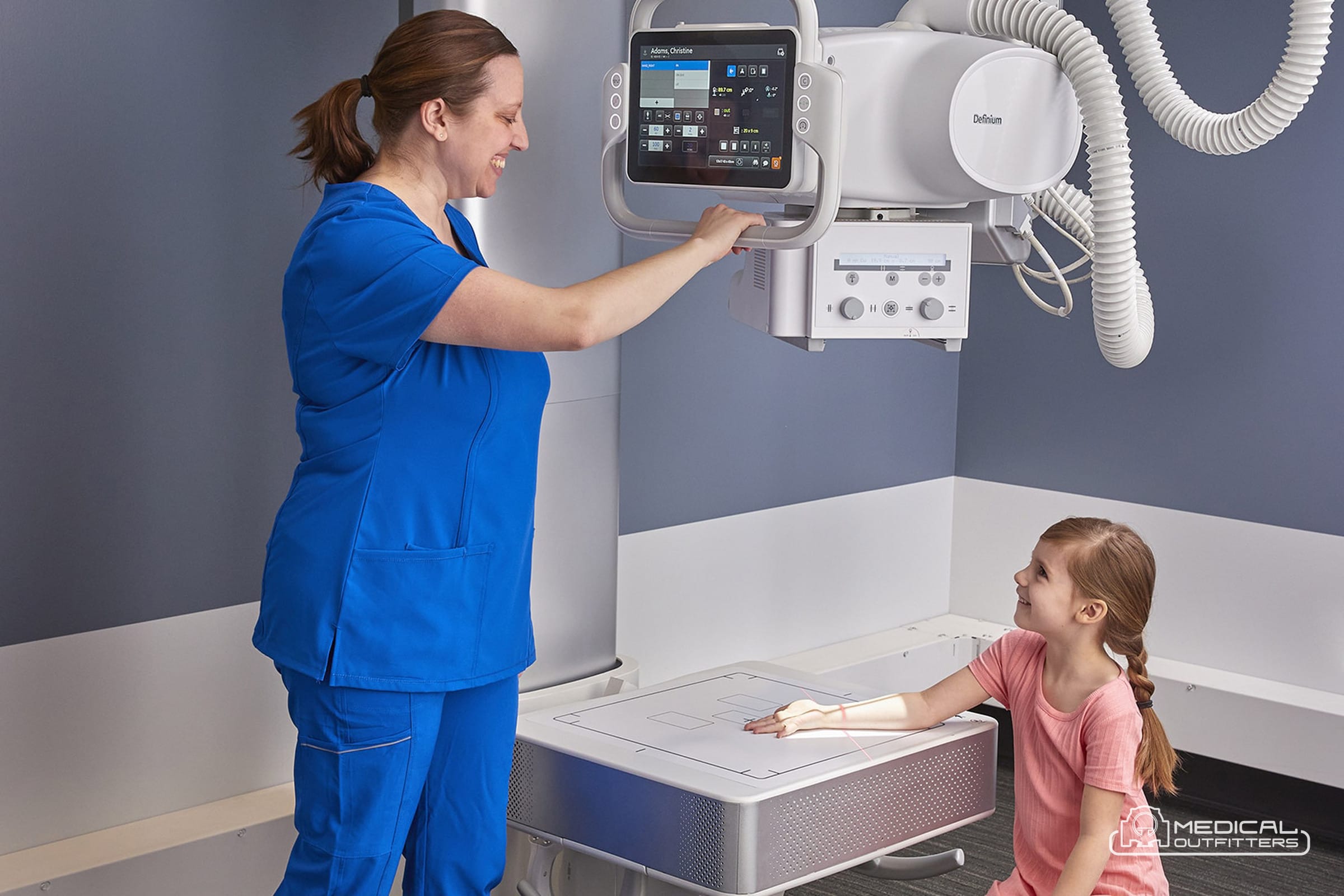
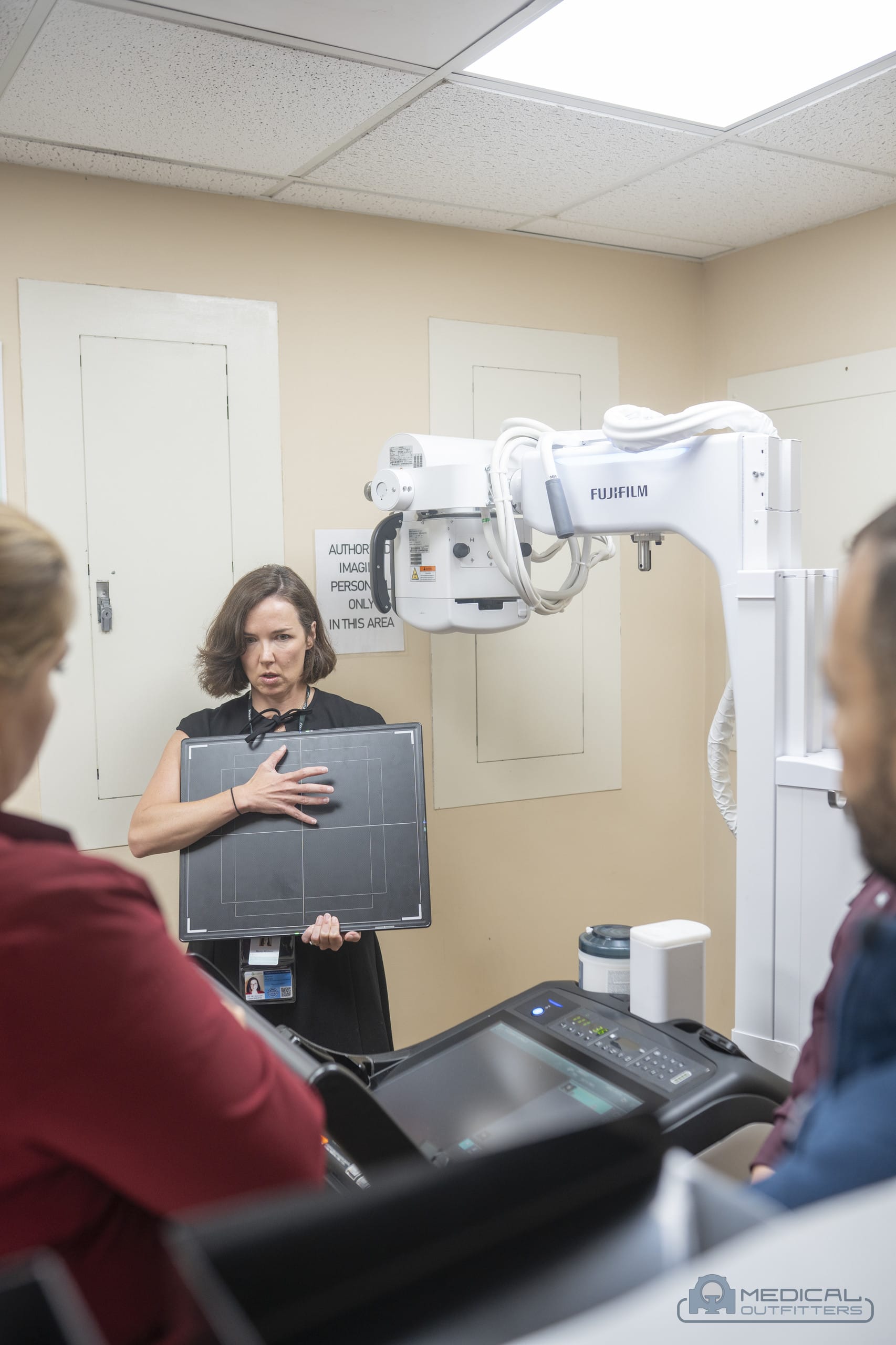
The panel can be fixed into the table and wall bucky of a dedicated DR room, or it can be a wireless detector the size of a cassette that moves between the table, the wall stand, a portable X-ray unit and the patient’s bed. Fujifilm’s FDR D-EVO III panels, which Medical Outfitters supplies with its rooms and portables, weigh a little over 2.5 kg in the 14 by 17 inch size and run for a shift on a battery.
The image appears on the console two to five seconds after the exposure. The technologist checks positioning and exposure, repeats a view if needed while the patient is still on the table, and sends the study to PACS without leaving the room.
CR vs DR: The Differences That Matter
Image quality and dose
The measure that separates the two is detective quantum efficiency, DQE: the fraction of the information in the X-ray beam that the detector turns into image. Cesium iodide flat panels have a markedly higher DQE than CR phosphor plates across the exposure range used in practice, which means two things at once. At the same exposure the DR image has less noise and more detail; at the same image quality the DR exposure can be lower. Published comparisons of chest radiography put the patient dose on an amorphous-silicon DR system at roughly 1.7 times lower than on CR and 2.7 times lower than film, and flat panels have produced urograms of equal or better quality at about half the CR dose.
CR has a hidden dose problem as well. A phosphor plate never looks over-exposed, because the reader rescales the image, so exposure settings tend to creep upward over the years. DR consoles display an exposure index and a deviation index against a target, which keeps technique honest.
Workflow and throughput
A CR exam costs the technologist a walk to the reader for every cassette and a wait at the reader for every image. A three-view study is three round trips. In a DR room the whole study is on screen within seconds of the last exposure, repeats are decided with the patient still positioned, and the room turns over faster. Departments that have converted report fewer repeats, because positioning errors are caught immediately, and more patients per room per day.
Reliability and consumables
CR has plates that scratch, crack and fade, cassettes that jam, and a reader with a laser, optics and mechanics that age; when the reader stops, every room that shares it stops. DR has the panel and its battery. A dropped wireless panel is the expensive failure, which is why panel protection, drop warranties and a spare battery are part of a sensible purchase.
Compatibility
CR works with any generator because it is just a cassette. A DR panel needs to know when the exposure happens: either through a wired or wireless interface to the generator, or through automatic exposure detection built into the panel, which is how most retrofits avoid rewiring an older generator.
Why Medicare Pays Less for CR and Film X-Rays
Section 502 of the Consolidated Appropriations Act of 2016 was written to push United States providers from film and computed radiography to digital radiography, and it did it through the technical component of the payment, the part that pays for the equipment and the technologist.
Film. From January 1, 2017, X-rays taken on film are reported with modifier FX and the technical component is reduced by 20 percent.
Computed radiography. From 2018 through 2022, X-rays taken with CR were reported with modifier FY and paid 7 percent less; from January 1, 2023, the reduction is 10 percent, and it stays at 10 percent for every year after.
The reductions apply under the Medicare Physician Fee Schedule and the hospital outpatient payment system. For a room that bills a few thousand Medicare exams a year, 10 percent of the technical component on every one of them is a recurring cost that a DR retrofit removes in its first year, before any gain from throughput or repeat rate is counted. Commercial payers set their own rules, but several have followed.
CR vs DR Cost: What Changes When You Convert
CR is cheaper to enter and more expensive to run. A used reader and a set of cassettes cost a fraction of a DR panel, which is why CR spread so fast; the running costs are the plates, the reader service, the technologist time and now the Medicare reduction.
A DR conversion of a working room is priced as a project rather than a part. Our X-ray machine cost guide puts the wireless flat-panel detector as the largest single component cost in any X-ray purchase, and a complete DR retrofit, meaning the panel, the acquisition software and workstation, integration with the existing generator, installation, calibration and applications training, typically lands in the region of $25,000 to $60,000 delivered and installed, with the panel size, whether a second panel is included and the age of the generator setting where in that range a given room falls. A new fixed DR room, or a refurbished room sold with a new panel, sits above that and is covered band by band in the cost guide; a portable DR unit is covered in the portable X-ray machine price guide.
The arithmetic that decides most conversions has three lines: the Medicare reduction avoided, the technologist time and repeats saved, and the CR reader service contract that goes away. Against them sits the retrofit, which on a room with a sound generator is the cheapest path to a DR department there is.
How a CR to DR Conversion Works
Assess the generator and tube. A generator that is stable, serviceable and still supported is the foundation of a retrofit. The tube’s exposure count and condition are checked at the same time, because a tube near the end of its life makes a new room the better buy.
Choose the panel. Size (14 by 17 inches is the general-purpose standard, with 17 by 17 for chest and larger fields), wireless or tethered, cesium iodide or gadolinium, one panel shared or two panels fixed, and the drop and battery warranty.
Software and connections. The acquisition workstation, exposure detection or generator interface, worklist from the RIS and DICOM send to PACS.
Install and calibrate. Mounting the panel holders in the table and wall bucky, interfacing the generator, flat-field calibration of the panel and image processing set-up for each body part.
Physicist survey and registration. An acceptance test of the converted room and whatever update the state radiation control program requires for the change in image receptor.
Train and retire the cassettes. Applications training on the new console and processing, then the reader and cassettes come out of service, which frees the space and the service contract.
Where Computed Radiography Still Makes Sense
A room that images a handful of patients a week, a backup for a DR department, a veterinary or industrial application outside Medicare, or a remote clinic that cannot justify a panel yet. Even there the case is shrinking: portable DR prices have fallen, wireless panels move between rooms, and a CR reader that fails is now hard and slow to get repaired. Our X-ray service team still maintains CR readers, and we will say plainly when a repair costs more than the panel that would replace it.
Revolutionizing Small Community Hospitals with Fujifilm's FDR AQRO: a customer testimonial filmed by Medical Outfitters
Going Digital With Medical Outfitters
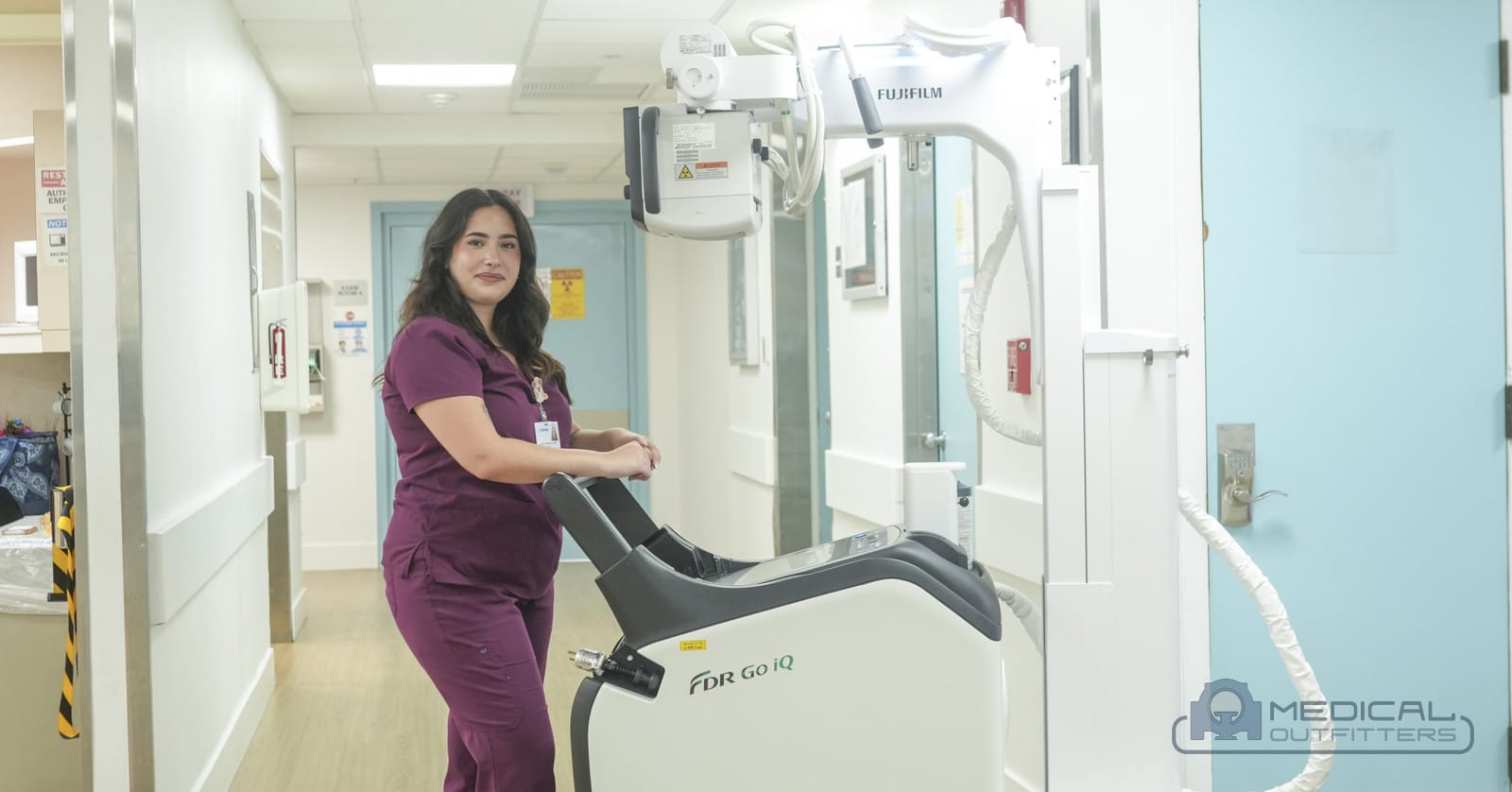
Medical Outfitters supplies new Fujifilm DR rooms, from floor-mounted and straight-arm systems to overhead-crane rooms, FDR portables and wireless D-EVO III panels, retrofits DR into working film and CR rooms, and sells refurbished rooms fitted with new detectors. Every quote covers delivery, installation, calibration, applications training and warranty. The X-ray machines for sale page lists the current systems, the digital detector range covers the panels on their own, and our article on X-ray room size and requirements covers the room around them. For a retrofit assessment of your room, contact us with the generator make, model and age.
- X-ray machine cost and price guide (2026)
- X-ray machines for sale: Fujifilm FDR digital X-ray, new and refurbished
- X-ray machines: rooms, portables and R/F systems
- Digital detectors and flat panels
- X-ray machine service, repair and DR upgrades
- Portable X-ray machine price guide (2026)
- What size room does an X-ray machine need?
- Fujifilm FDR D-EVO III wireless flat-panel detector
- Fujifilm Smart Essential digital radiography room
- Fujifilm FDR D-EVO Suite II DR room
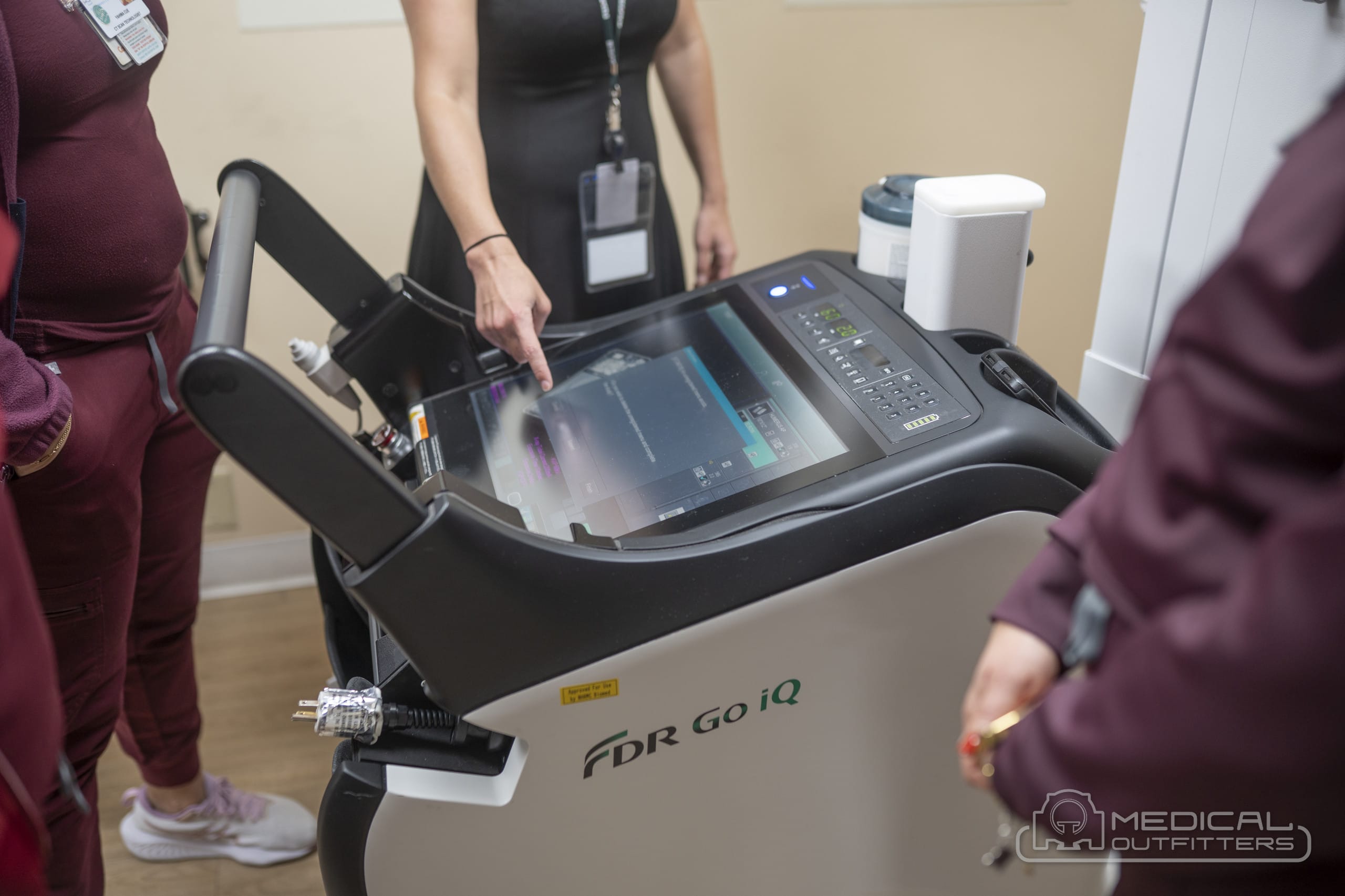
- Fujifilm FDR AQRO compact DR cart
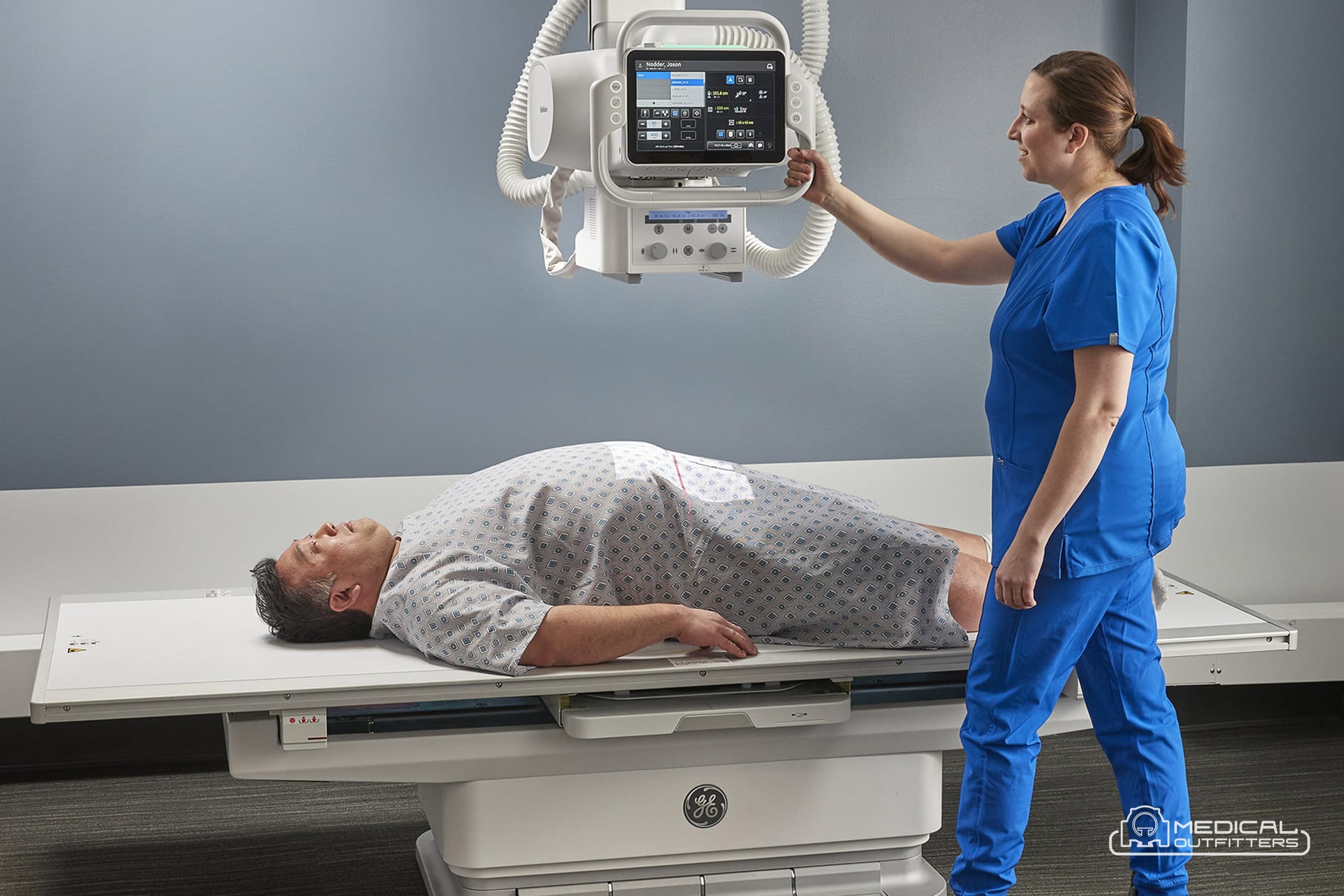
- GE Definium X-ray price guide
- Refurbished vs OEM certified imaging equipment
- Ask about a DR retrofit
CR vs DR: Common Questions
What is the difference between CR and DR in radiography?
CR, computed radiography, exposes a reusable phosphor plate inside a cassette that is carried to a reader, scanned by a laser and erased for the next patient. DR, digital radiography, captures the image on a flat-panel detector that is read out electronically and shows it on the console in seconds. Both produce digital images; DR does it faster, at a lower dose and without the cassette round trip.
Is DR better than CR?
For any room that images patients daily, yes. DR produces a better image at a lower dose because its detectors convert more of the X-ray beam into signal, it moves patients through faster, it has no plates or reader to fail, and Medicare pays its technical component in full while reducing CR by 10 percent. CR keeps a role as a backup, at very low volumes and outside Medicare.
Does DR use less radiation than CR?
Yes. Cesium iodide flat panels have a higher detective quantum efficiency than CR phosphor plates, so the same image quality needs less exposure. Published chest radiography comparisons put the patient dose on a DR system at roughly 1.7 times lower than on CR and 2.7 times lower than film. DR consoles also show an exposure index that keeps technique from creeping upward over time.
How long does a CR X-ray take compared with DR?
A CR plate takes 30 to 90 seconds in the reader, plus the walk to it and back, for every cassette; a three-view study is three round trips. A DR image appears on the console two to five seconds after the exposure, and the whole study is checked and sent from the room.
What is the Medicare payment reduction for CR?
Section 502 of the Consolidated Appropriations Act of 2016 reduced the technical component of X-rays taken on film by 20 percent from 2017, reported with modifier FX, and of X-rays taken with computed radiography by 7 percent from 2018 through 2022 and 10 percent from 2023 onward, reported with modifier FY. Digital radiography carries no reduction.
Can a CR room be converted to DR?
Usually, yes. If the generator is stable and supported and the tube has life left, a wireless flat-panel detector, an acquisition workstation and the interface or automatic exposure detection are added, the room is calibrated and surveyed, and the reader and cassettes are retired. Medical Outfitters retrofits DR into working CR and film rooms and sells refurbished rooms fitted with new panels.
How long do DR panels last?
A well-handled flat panel runs seven to ten years and more; the battery on a wireless panel is replaced every few years, and the detector's calibration is checked at preventive maintenance visits. The expensive failure is a dropped panel, which is why drop protection and a drop warranty are part of a sensible purchase.
What does a DR retrofit cost?
A complete retrofit of a working room, meaning the panel, the acquisition software and workstation, generator integration, installation, calibration and training, typically lands in the region of $25,000 to $60,000 delivered and installed, with the panel size, a second panel and the age of the generator setting where in the range a room falls. New and refurbished DR rooms and portables are covered band by band in our X-ray machine cost guide.
Related Articles