AIAT stands for assemble, install, adjust and test. It is the information a manufacturer of diagnostic X-ray equipment must provide so that whoever puts the system together in your building can do it in a way that keeps it compliant with the federal performance standard, and it is the set of instructions the installer certifies, on Form FDA 2579, that they followed. The requirement comes from 21 CFR 1020.30, the Food and Drug Administration’s regulation for diagnostic X-ray systems and their major components. The assembler files the report with the purchaser and, where the state requires it, with the state radiation control agency within 15 days of completing the assembly. Manufacturers must make the AIAT information available at no more than the cost of publishing and distributing it.
This guide explains what AIAT information is and why it exists, who counts as an assembler, what the Form FDA 2579 report of assembly says and when it is and is not required, how to obtain AIAT information for a given make and model, and what a facility should keep on file. It is written for the imaging manager, the biomedical engineer and the buyer of new or relocated X-ray equipment, and it reflects how Medical Outfitters installs the X-ray rooms, portables, fluoroscopy systems and C-arms it sells across the United States, Puerto Rico and the Caribbean.
- What it is: the manufacturer’s instructions for assembling, installing, adjusting and testing a certified X-ray component so that it meets 21 CFR 1020.30 to 1020.33.
- Who uses it: the assembler, meaning anyone in the business of assembling, replacing or installing components into a diagnostic X-ray system, including a facility’s own staff doing that work.
- The paperwork: Form FDA 2579, filed with the purchaser and the state within 15 days of completion.
- Where to get it: the manufacturer’s website, its parts department or its compliance officer, at cost.
Where AIAT Comes From: 21 CFR 1020.30
The United States regulates the radiation safety of diagnostic X-ray equipment through a federal performance standard, sections 1020.30 through 1020.33 of Title 21 of the Code of Federal Regulations, administered by the FDA’s Center for Devices and Radiological Health. The standard works through certified components. A manufacturer certifies that each component it makes, the X-ray control and generator, the tube housing assembly, the beam-limiting device or collimator, tables and cradles, fixed cassette holders, fluoroscopic imaging assemblies and image intensifiers, spot-film devices and CT gantries among them, meets the standard when it is installed according to the manufacturer’s instructions.
That last clause is the whole point of AIAT. A certified collimator is only compliant if it is aligned to the tube and the receptor the way the manufacturer specifies; a certified generator is only compliant if it is set up and tested the way the manufacturer specifies. So the regulation requires the manufacturer to provide instructions for assembly, installation, adjustment and testing that are adequate to assure the product will comply with the standard when they are followed, together with the specifications of the components it is compatible with. For X-ray controls and generators made after May 1994 the information also has to state the rated line voltage, the maximum line current and the technique factors the generator supports. The information must be available at a cost not exceeding the cost of publication and distribution, which is why the industry calls it “at cost” information.
Who Is an Assembler, and What Must They Do?
The regulation defines an assembler as any person engaged in the business of assembling, replacing or installing one or more components into a diagnostic X-ray system. That covers the manufacturer’s own installers, dealers such as Medical Outfitters, independent service organizations, and a hospital’s own biomedical staff when they install or replace a certified component. An assembler who installs certified components must install components of the type the standard requires for that kind of system, and must assemble, install, adjust and test them according to the manufacturer’s instructions, which is to say according to the AIAT information.
In practice the six steps look like this on a Medical Outfitters installation of a Fujifilm X-ray room or a mobile unit.
Obtain the AIAT information for the exact make, model and, where it differs by serial range, the serial number of every certified component going in: generator, tube, collimator, table, wall stand or fluoroscopy assembly.
Confirm certification and compatibility. Each certified component carries a certification label; the AIAT information states which components it may be combined with, and the assembler affirms that combination on the report.
Assemble and install to the manufacturer’s procedures: mounting, alignment, interlocks, cabling and the connection to the facility’s power.
Adjust. Generator calibration, kVp and mA, timer accuracy, collimator and light-field alignment to the receptor, source-to-image distance indicators, automatic exposure control, and on fluoroscopy systems the dose-rate limits and the image chain.
Test against the acceptance criteria the manufacturer specifies: reproducibility and linearity of output, half-value layer, beam limitation and positive beam limitation where fitted, timer termination, interlocks and warning indicators, fluoroscopic entrance exposure rates.
Report. Complete Form FDA 2579 and send copies to the purchaser and the state radiation control agency within 15 days of completing the assembly, keep the assembler’s copy, and hand the facility the documents it needs for its own state registration and the physicist’s survey.
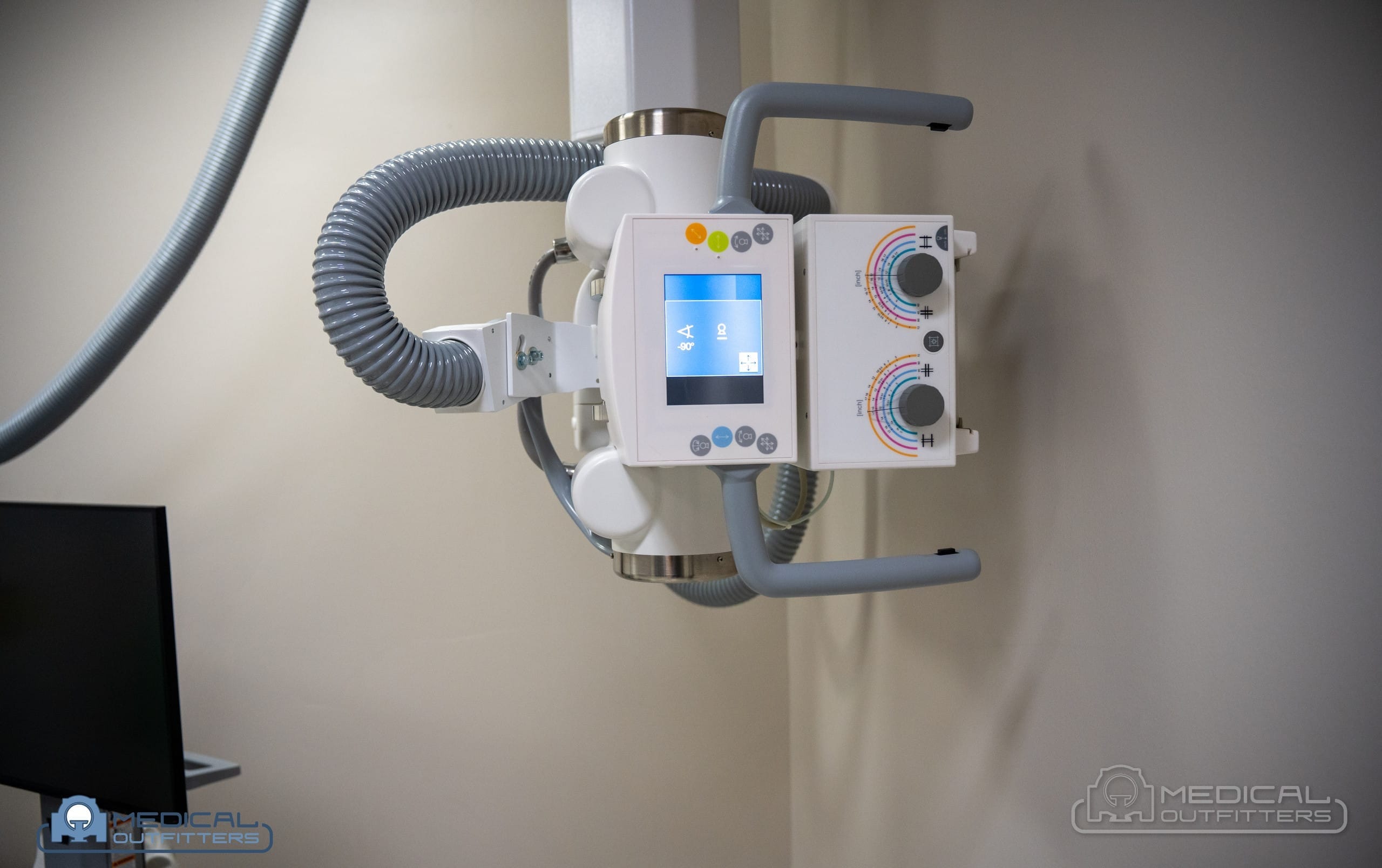
Form FDA 2579: The Report of Assembly
Form FDA 2579 is a one-page report, available from the FDA’s forms page, that documents the assembly of certified components into a human-use diagnostic X-ray system. It identifies the assembler, the purchaser and the location, lists each certified component by manufacturer, model and serial number, and carries the assembler’s affirmation. That affirmation is the legal heart of the form: by signing, the assembler takes responsibility that the certified components installed were adjusted and tested according to the manufacturer’s instructions, were of the type required by the manufacturer and by the diagnostic X-ray performance standard, were not modified in a way that adversely affects performance, and were installed in accordance with 21 CFR 1020. The regulation also allows the assembler to affirm instead that the components as assembled meet all applicable requirements, which is the route used when a system is assembled from components outside the manufacturer’s listed combinations and tested to the standard directly.
The deadline is 15 days following completion of the assembly, and the copies go to the purchaser and, where applicable, to the state agency responsible for radiation protection. The FDA treats the report as the assembler’s certification and identification, which is why an assembler who files is also an assembler the FDA can inspect.
When a report is required
A new system. A certified component added to an existing system, or replaced with one that differs from the one it replaces. A certified component relocated permanently to a system at a new address, which requires a fresh report to certify compatibility and installation at the new site. A used or refurbished room installed at a buyer’s facility is therefore reported in the same way as a new one, by the assembler who installs it.
When it is not
The regulation and the FDA’s assembler guide exempt a reloaded or replacement tube housing assembly of the same type reinstalled in or newly assembled into an existing system; certified accessory components; a component repaired and reinstalled into the same system in its original condition; and a certified loaner component installed temporarily, provided it is labeled as a temporary installation with the statement the FDA specifies, although the dealer and manufacturer still keep their distribution records. Exchanging an uncertified component for an identical uncertified one is not assembly for the purposes of the standard. The report is not required for non-human applications such as veterinary systems. An owner who modifies the system without affecting compliance does not file a report but must record the date and details of the modification and keep that record.
A common question on digital radiography retrofits: the flat-panel detector on its own is not one of the certified components the rule lists, so a panel-only retrofit does not by itself trigger a report of assembly, while replacing the generator, the control or the collimator as part of the same project does. The assembler confirms the position against the current rule for the specific components involved.
How to Obtain AIAT Information
The manufacturer’s website. Most manufacturers now publish AIAT information online, some openly and some behind a login that is granted to assemblers on request.
The parts department. With the make, model and serial number in hand, the manufacturer’s parts or technical publications group can usually supply the AIAT set under its own part number, in print or as a download, at the regulated at-cost price.
The compliance or quality officer. Where the first two routes fail, especially on older or discontinued platforms, the manufacturer’s regulatory, compliance or quality assurance contact is the person responsible for meeting the obligation, and a written request citing 21 CFR 1020.30 is normally answered.
The dealer. An authorized dealer installs from the manufacturer’s current AIAT information as a matter of course. Medical Outfitters installs the Fujifilm rooms, portables, fluoroscopy systems and C-arms it sells as the assembler of record, working from the manufacturer’s AIAT information, and keeps the installation record with the system’s file; on used and refurbished systems from other manufacturers we obtain the AIAT set for the specific model before the installation is scheduled.
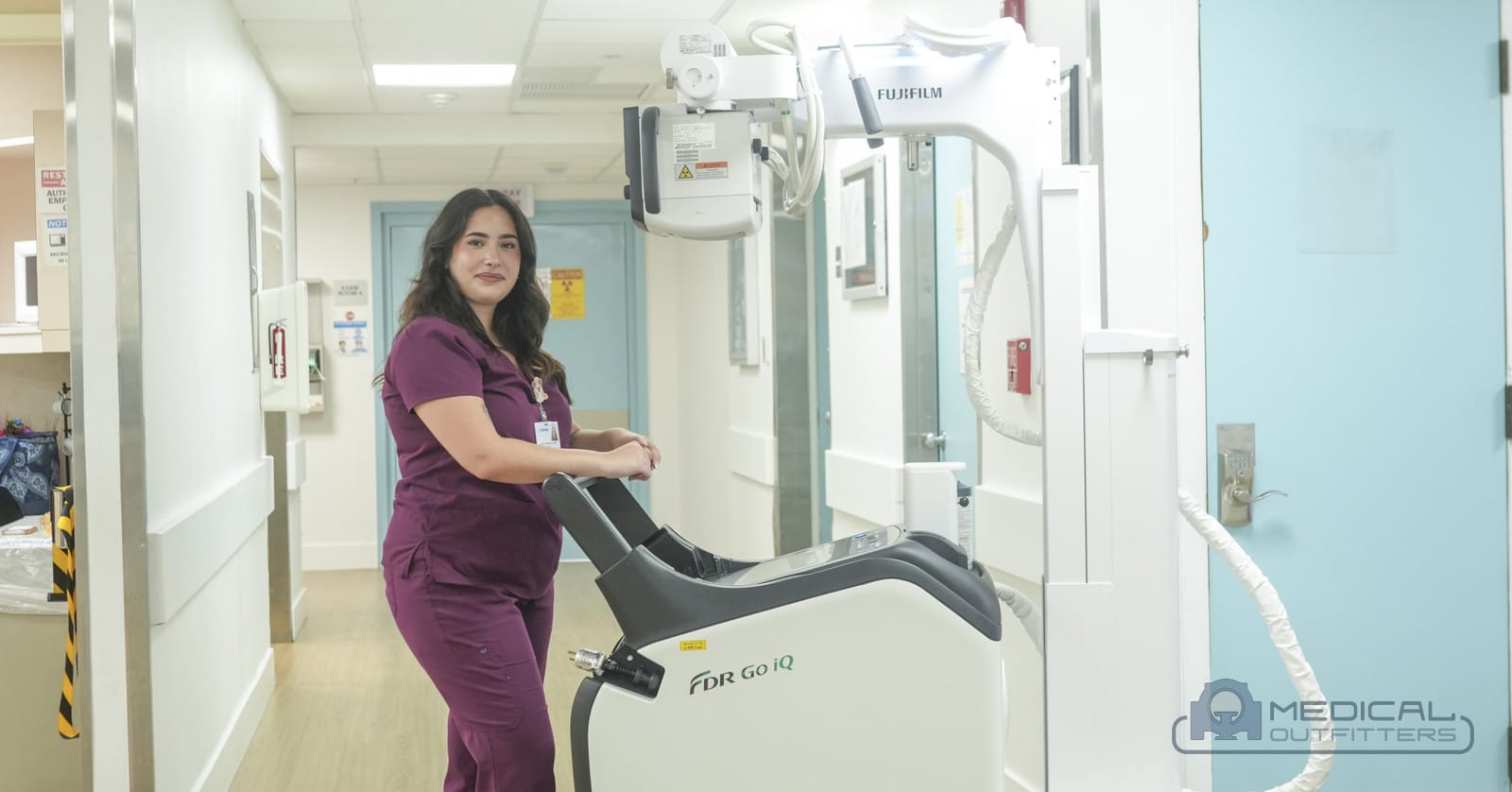
AIAT, the FDA Report and State Requirements Are Three Different Things
The FDA report of assembly is a federal document about the equipment. Separately, every state runs a radiation control program that registers X-ray machines, requires a shielding design and a physicist’s survey for new or relocated rooms, inspects facilities and licenses or registers the service companies that work on the equipment in that state. The physicist’s acceptance test and the state registration do not replace the Form FDA 2579, and the form does not replace them. A complete installation file for a room holds all three: the AIAT-based installation and test record, the assembler’s Form FDA 2579, and the physicist’s shielding design and acceptance survey with the state registration. Our guide to X-ray room size and requirements covers the shielding and registration side, and our note on CR vs DR covers what a digital retrofit changes.
What AIAT Means for a Buyer of X-Ray Equipment
The report protects the facility. A room installed and reported by a qualified assembler has a document that says the generator, tube and collimator were set up and tested the way the manufacturer requires, which is what a state inspector, an accrediting body or an attorney will ask for after an incident. A room installed by someone who did not work from the AIAT information, or did not file, leaves the facility holding the compliance question alone.
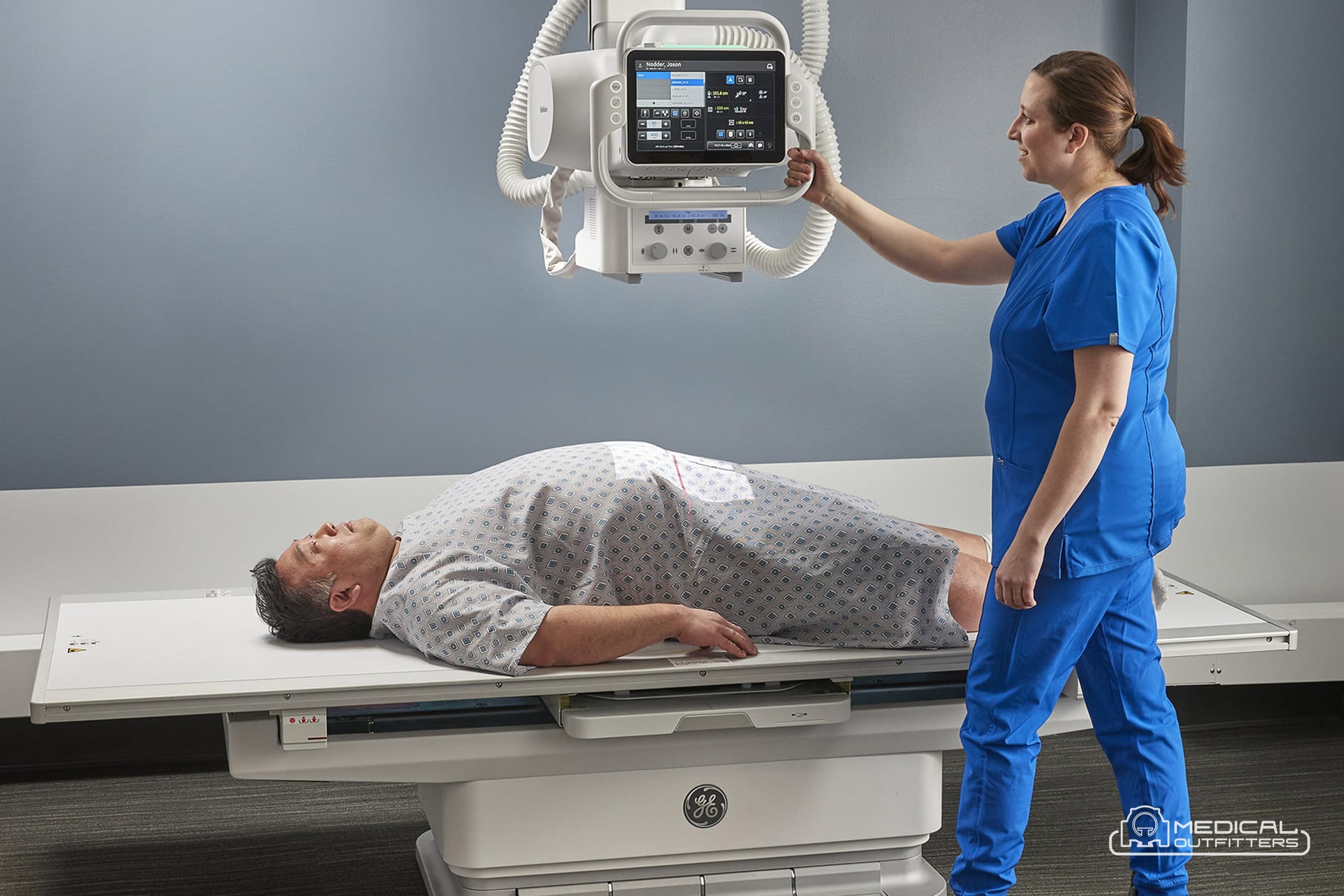
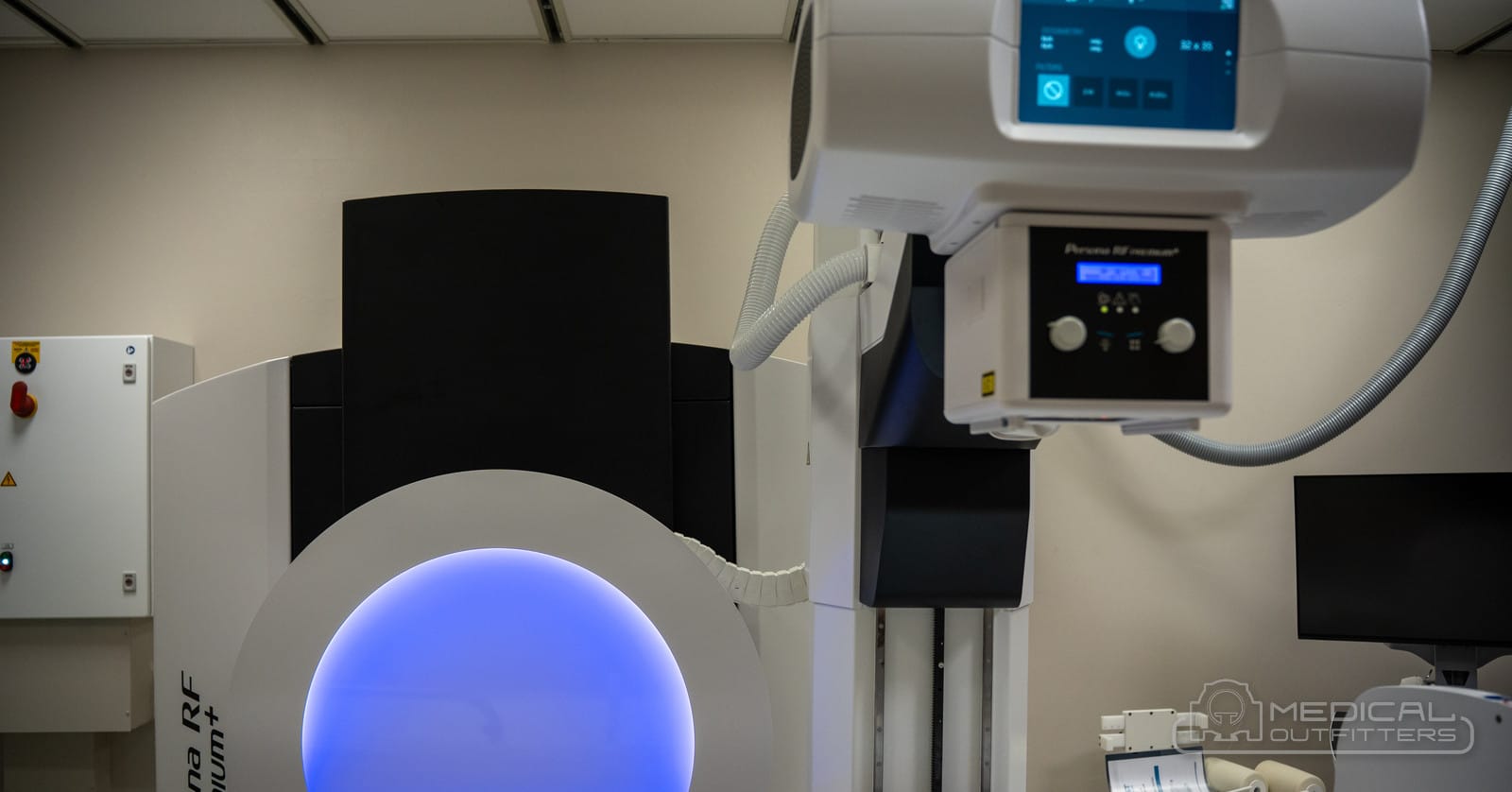
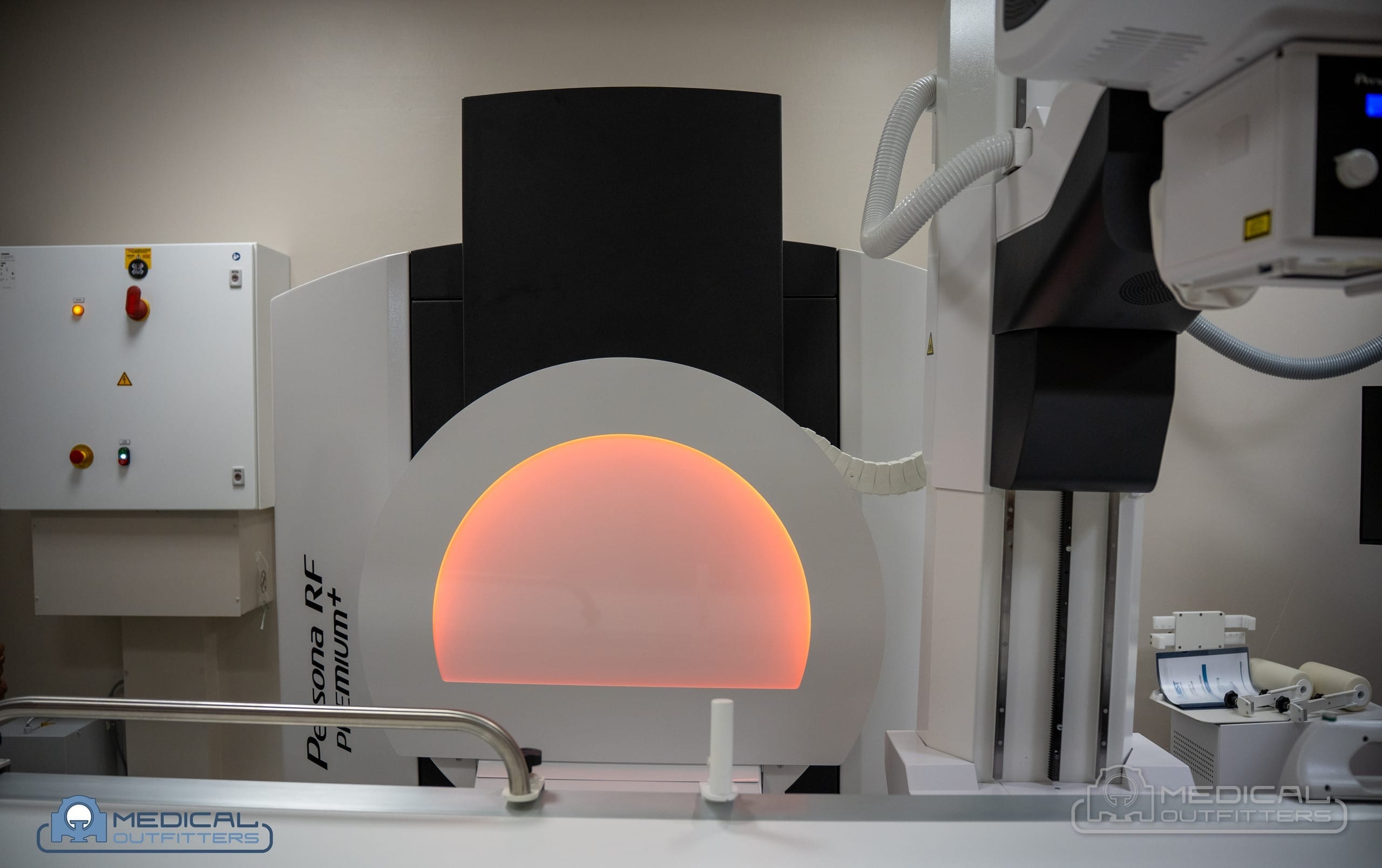
It also tells you who to buy from. Ask any seller of new or used X-ray equipment who will install it, whether that installer works from the manufacturer’s AIAT information, and whether they file the Form FDA 2579. Ask for a copy of a recent one. Medical Outfitters answers all three for every X-ray system we sell, from the Fujifilm Smart Essential and FDR D-EVO Suite II rooms to the Persona RF PREMIUM+ fluoroscopy system and the C-arms in our C-arm machine cost guide, and our X-ray service team handles the relocations, generator replacements and retrofits that trigger a new report on systems already in service. For an installation, a relocation or a question about a room’s compliance file, contact Medical Outfitters.
- X-ray machine service, repair, relocation and DR upgrades
- X-ray machines for sale: Fujifilm FDR digital X-ray, new and refurbished
- X-ray machines: rooms, portables and R/F systems
- X-ray machine cost and price guide (2026)
- Portable X-ray machine price guide (2026)
- What size room does an X-ray machine need?
- CR vs DR X-ray explained
- C-arm machine cost and buying guide
- Fujifilm Smart Essential digital radiography room
- Fujifilm FDR D-EVO Suite II DR room
- Fujifilm Persona RF PREMIUM+ fluoroscopy system
- GE Definium X-ray price guide
- Refurbished vs OEM certified imaging equipment
- Ask about an installation or a compliance file
AIAT and Form FDA 2579: Common Questions
What does AIAT stand for?
Assemble, install, adjust and test. AIAT information is the set of instructions a manufacturer of diagnostic X-ray equipment must provide so that an assembler can put a certified component into a system in a way that keeps it compliant with the federal performance standard, 21 CFR 1020.30 to 1020.33.
Is AIAT information required by law?
Yes. Under 21 CFR 1020.30 the manufacturer must provide instructions for assembly, installation, adjustment and testing adequate to assure the product complies with the standard when they are followed, together with the compatible component specifications, at a cost not exceeding the cost of publication and distribution. The assembler must follow them and certify that they were followed.
Who files Form FDA 2579?
The assembler: anyone in the business of assembling, replacing or installing components into a diagnostic X-ray system, including the manufacturer's installers, dealers such as Medical Outfitters, independent service organizations and a facility's own staff doing that work. Copies go to the purchaser and, where applicable, the state radiation control agency within 15 days of completing the assembly.
When is a report of assembly not required?
For a reloaded or replacement tube housing assembly of the same type reinstalled in an existing system, for certified accessory components, for a repaired component reinstalled in its original system, for a certified loaner installed temporarily and labeled as such, and for non-human applications such as veterinary systems. An owner's modification that does not affect compliance needs a record of the date and details rather than a report.
How do I get AIAT information for my X-ray equipment?
From the manufacturer: many publish it on their websites, openly or behind an assembler login; the parts department can supply the set under its own part number given the make, model and serial number; and the compliance or quality officer is responsible for meeting the obligation where the first two routes fail. An authorized dealer installs from the current AIAT information as a matter of course.
Does moving an X-ray machine require a new Form FDA 2579?
Permanent relocation of a certified component into a system at a new address requires a new report of assembly, certifying compatibility and installation to the manufacturer's instructions at the new site. A used or refurbished room installed at a buyer's facility is reported in the same way, by the assembler who installs it.
Does a DR retrofit require a report of assembly?
The flat-panel detector on its own is not one of the certified components the rule lists, so a panel-only retrofit does not by itself trigger a report, while replacing the generator, the control or the collimator as part of the same project does. The assembler confirms the position against the current rule for the specific components involved, and the state may still require an updated registration and a physicist's survey.
What does the state require on top of the FDA report?
Every state runs a radiation control program that registers X-ray machines, requires a shielding design and a physicist's acceptance survey for new or relocated rooms, inspects facilities and registers or licenses the service companies working in the state. The Form FDA 2579 does not replace those, and they do not replace it; a complete room file holds the AIAT-based installation and test record, the report of assembly, the physicist's documents and the state registration.