
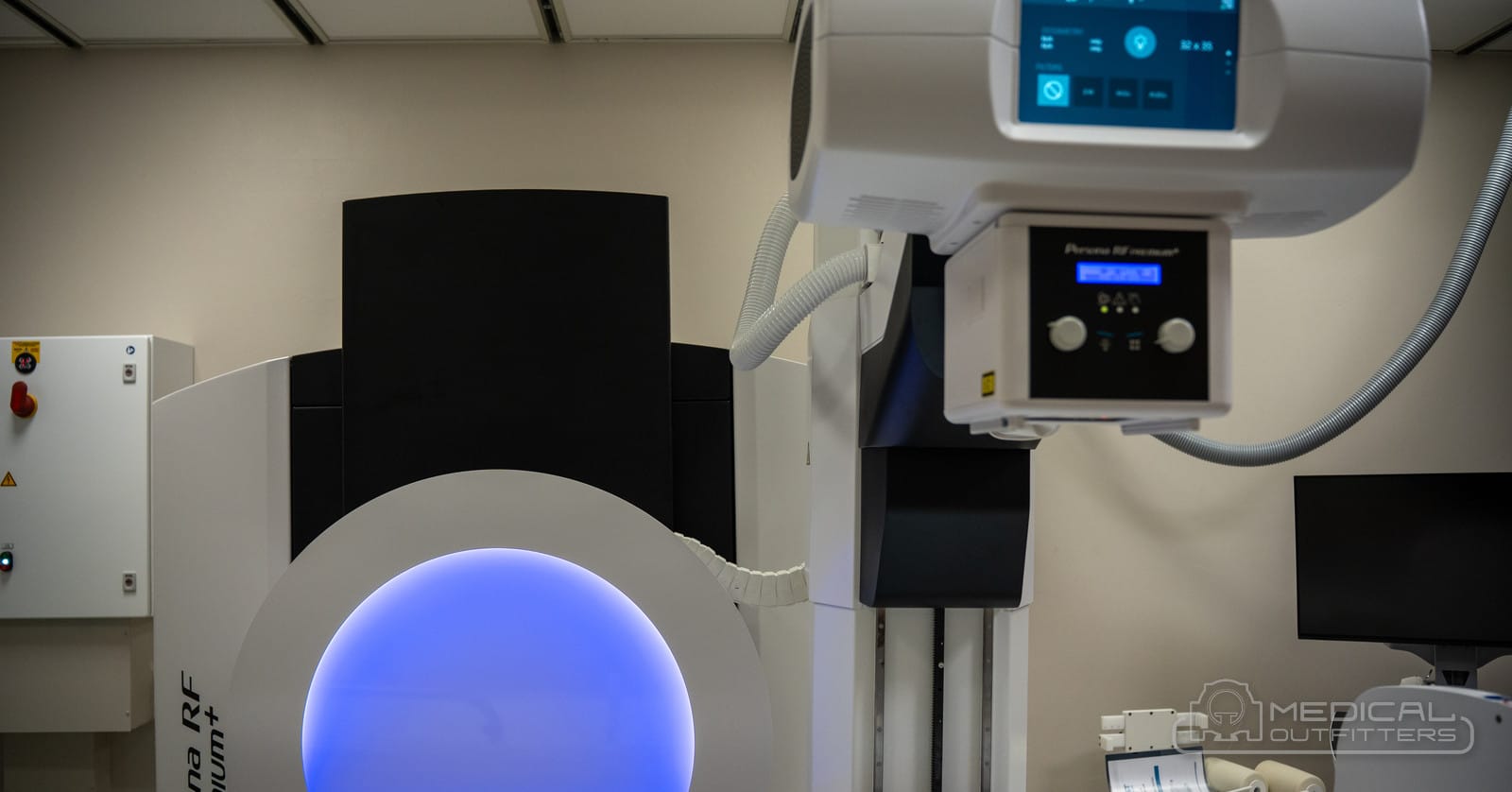
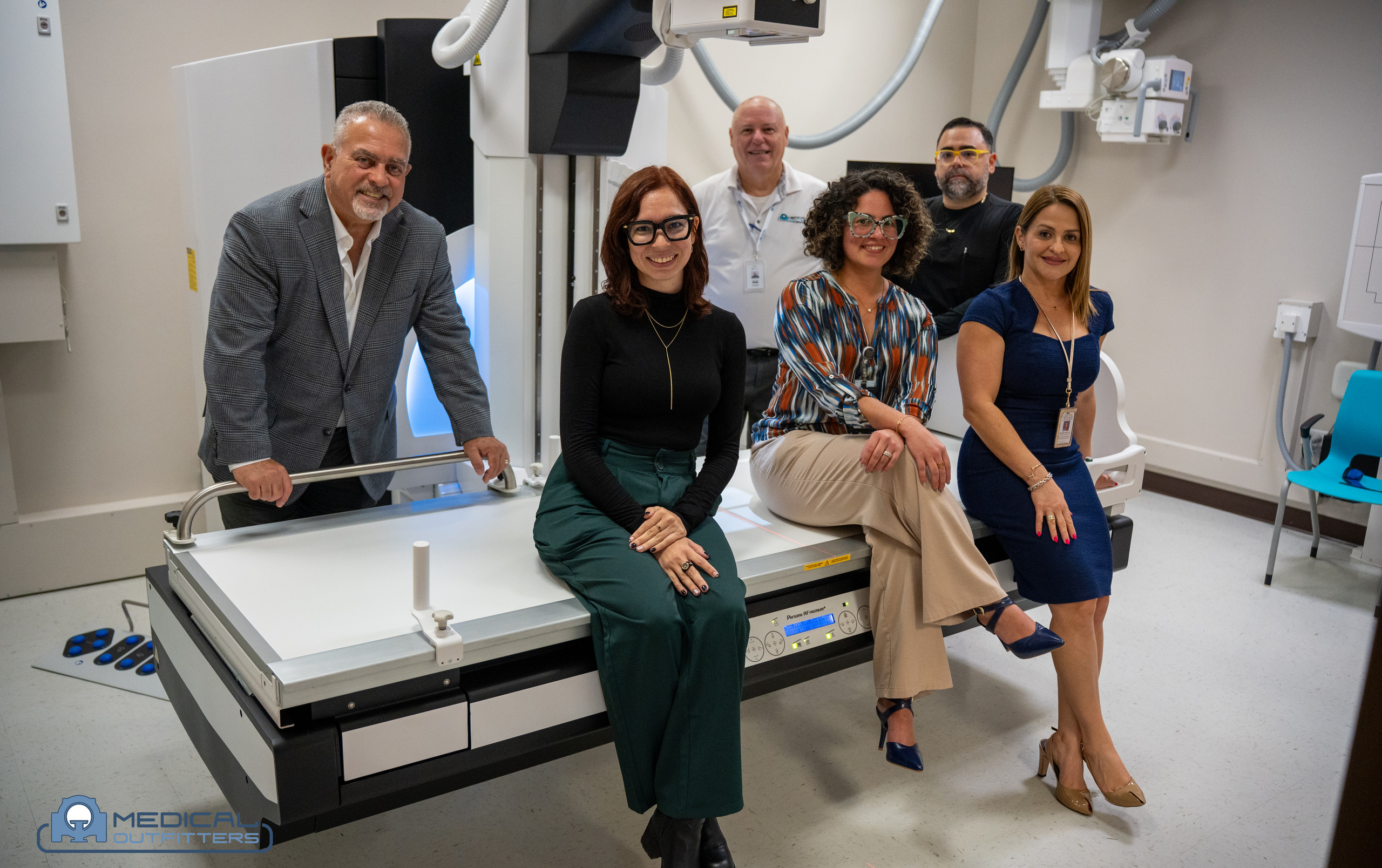
Centro Cardiovascular de Puerto Rico y del Caribe recently added a new radiography and fluoroscopy room, a Fujifilm Persona RF PREMIUM+. We sold the system, handled the logistics from Fujifilm’s warehouse in Ohio to San Juan, and installed it. Once the room was in service we went back with a camera. We asked the physicians, the imaging area manager and the administrator who ran the purchase what they made of it. Their answers, translated from Spanish, are further down. First, the room itself.
If you run a hospital you already know why this one matters. After all, the fluoroscopy room does the swallow studies, the line and tube checks and the contrast work. It also does the long-length exams that no other room can do. Until now, the equipment this hospital had did not cover those studies, as the physicians explain below. At a cardiovascular hospital that is a gap felt every day.
In short, the new room is a Persona RF PREMIUM+ with a 17 by 17 inch dynamic IGZO detector, a tilting table and an 80 kW generator. It sits in the Centro Cardiovascular de Puerto Rico y del Caribe Dr. Ramón M. Suárez Calderón, in the Centro Médico complex in San Juan. Medical Outfitters handled the logistics, installed it and calibrated it, and still supports it with a team based on the island.
About Centro Cardiovascular de Puerto Rico y del Caribe
Centro Cardiovascular is a public corporation created by Puerto Rico’s Law 51 of 1986. It is named for Dr. Ramón M. Suárez Calderón, the cardiologist and researcher who worked out the treatment for tropical sprue. It is also the only institution in Puerto Rico dedicated to cardiovascular conditions. Since 1999 it has also been the first and only hospital in the country to perform heart transplants. That program is certified by the United Network for Organ Sharing. It sits inside Centro Médico in San Juan, alongside the university hospitals.
That changes what a fluoroscopy room has to do. Here it is certainly not an occasional exam. It supports pre-operative and post-operative evaluation, functional studies and swallow studies for surgical patients. It also covers the everyday radiography the hospital needs. The patients on the table are often the ones least able to wait. So the room has to be quick, easy on dose and reliable.
What the Persona RF PREMIUM+ Brings to a Fluoroscopy Room
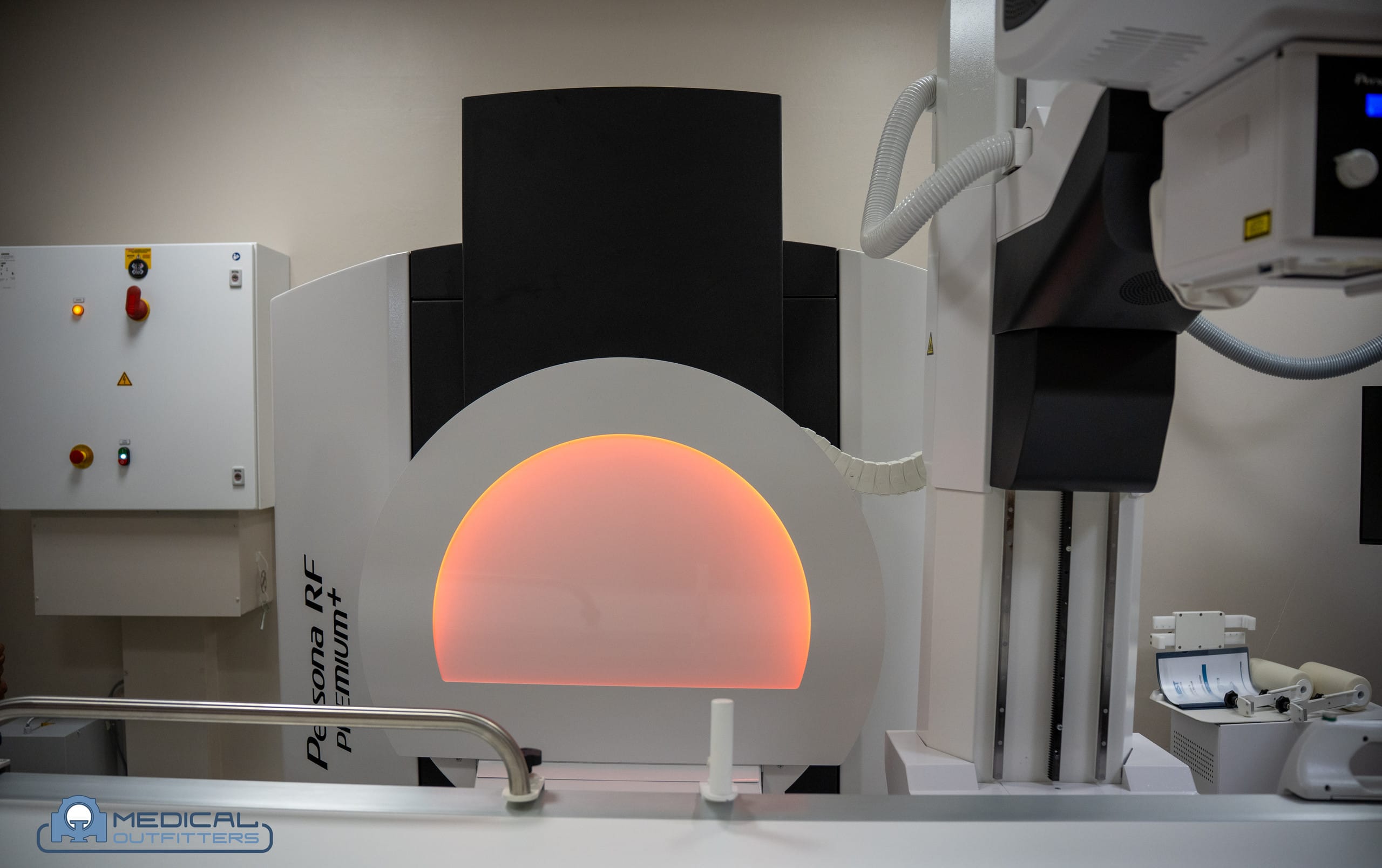
The Persona RF PREMIUM+ is Fujifilm’s multi-use radiography and fluoroscopy system. One room does dynamic fluoroscopy on the table as well as free radiographic exposures at the wall stand or on a stretcher. Both run from one console and one user interface. So if you are replacing an older R/F room, these are the specifications that matter:
- A 17 by 17 inch dynamic IGZO detector with 140 micron resolution at up to 30 frames per second. That means smooth, low-noise fluoroscopy at a lower dose.
- 94 inches of longitudinal coverage, so head-to-toe studies run without repositioning the patient. There is also a source-to-image distance of up to 71 inches for chest and long-length stitching exams, upright or supine.
- A table that tilts up to 90 degrees in both directions, with a wide height range for transfers.
- An 80 kW generator, so there is power to spare for the heaviest patients and the most demanding exams.
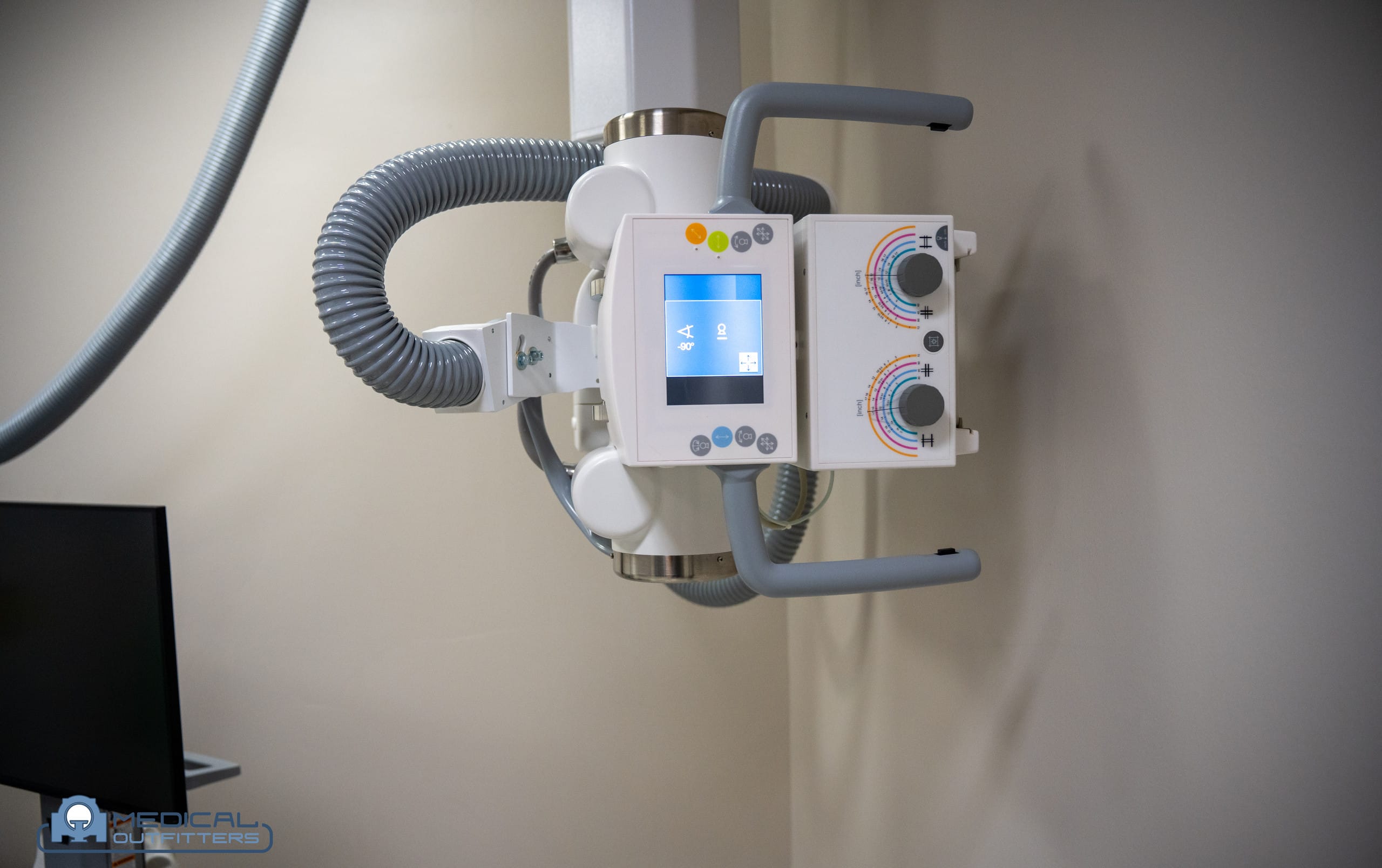
- A camera on the collimator for visual positioning, which also cuts down on scout exposures.
- Optional FDR D-EVO III wireless detectors for tabletop, stretcher and wall-stand radiography. So the room doubles as a full digital radiography room.
Above all, the practical gain for the technologist is one workflow for everything. Fluoroscopy and radiography are switched at the console rather than by changing rooms. That is what lets a single room carry the department’s schedule. The full specification is on our Persona RF PREMIUM+ product page.
How the Fluoroscopy Room Installation Went, From Purchase Order to First Patient
Installing an R/F room on the island follows the same sequence as on the mainland, at least on paper. The difference is distance: every crate has to cross the water, and the crew who unpack it also have to finish the job. We have been doing imaging installations across Puerto Rico and the Caribbean for years. This one went the way they usually go.
A room like this starts with a site survey against Fujifilm’s site requirements. That means floor loading for the table and tube stand, ceiling and rail geometry, power for the generator, and the shielding review. Then the system ships. In this case it came from Fujifilm’s warehouse in Ohio to San Juan. Our delivery and logistics team planned that leg with the hospital. Once it arrived, the table, tube stand and wall stand went in. Our installation and rigging crew assembled, cabled and aligned everything. After that come commissioning, acceptance testing and the technologists’ training before the first patient. The administrator who ran the purchase describes it below. Our team and the hospital’s own engineering team worked through it phase by phase, and finished on time.
In fact, the hospital’s own people were in it at every step. That runs from the physicians to the area manager to the administrators who handled the purchase. That is why we asked them to tell the story instead of telling it ourselves.
What the Team Told Us About the New Fluoroscopy Room
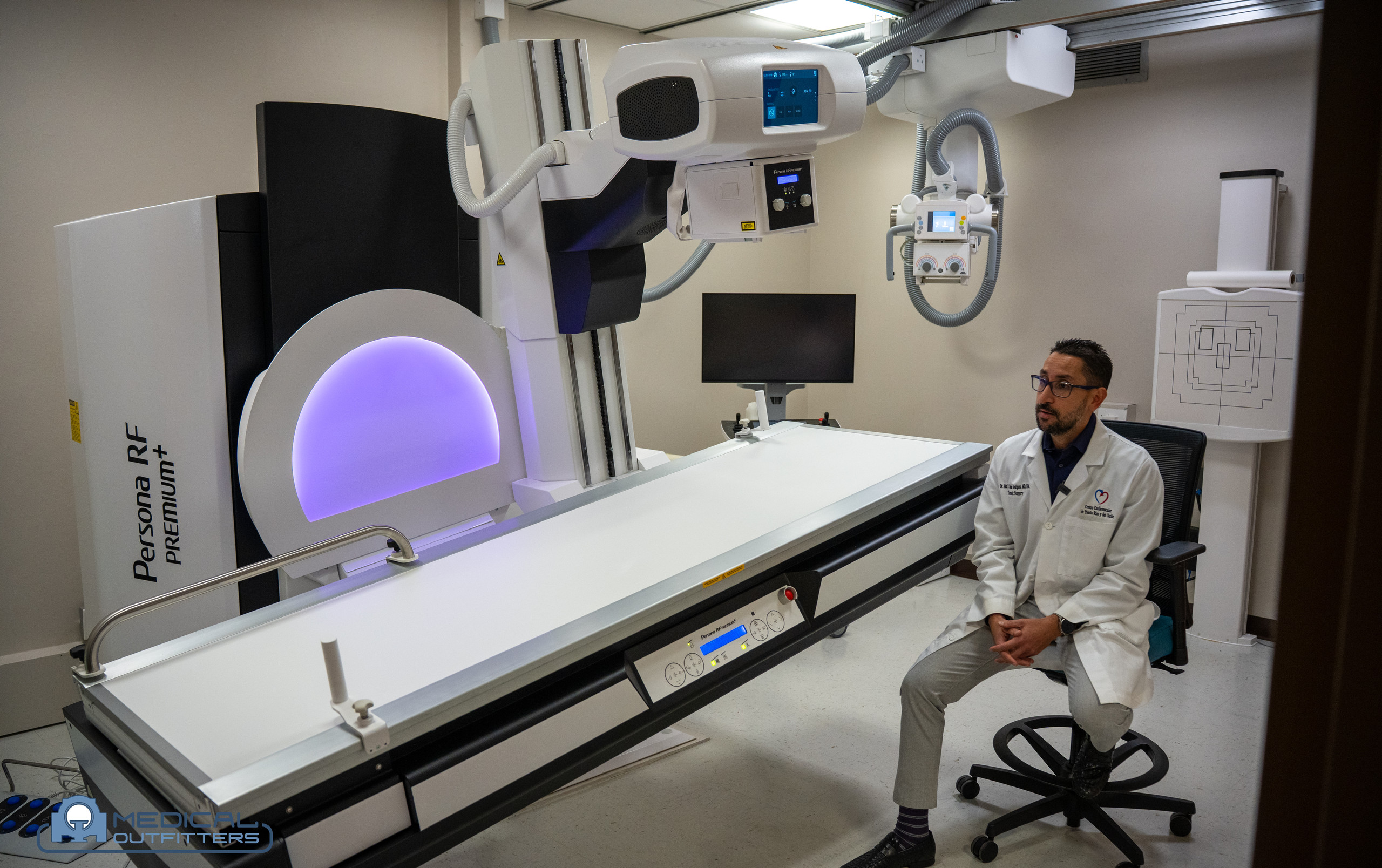
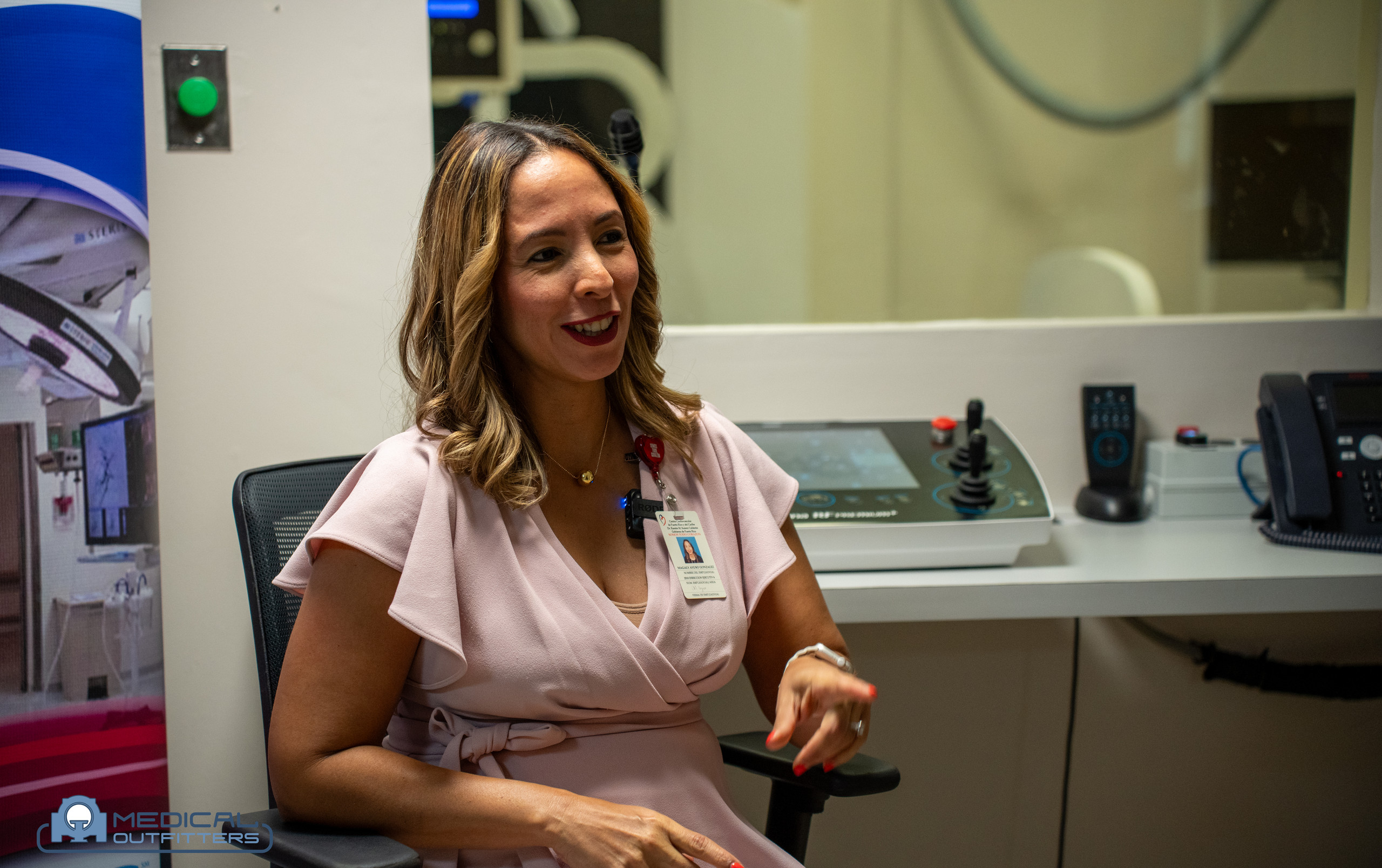
We also recorded interviews in the new room and in the control room. We spoke with the physicians, the imaging area manager and the administrator who led the purchase. The interviews were in Spanish, so the quotes below are our translation.
Why the hospital chose a new radiography and fluoroscopy suite
“When we selected this new suite for fluoroscopy and digital radiography studies, the center focused on the need to expand services. We wanted to care for patients with thoracic and cardiovascular conditions. The equipment we had in the past did not allow us to treat them. That includes bariatric patients, and patients who need functional and fluoroscopy studies so their future surgeries can go ahead.”
The same physician described what the room added. “This system gives us digital radiography, live fluoroscopy and support for invasive procedures. It lets us widen the services we provide to surgical patients, particularly thoracic surgery. That was an area that traditionally was not served in Puerto Rico. Over the last two or three years, the center has been able to cover it.”
What it does for the esophageal surgery program
“The cardiovascular hospital is expanding the services it offers, and part of that is esophageal surgery and esophageal evaluation. Fluoroscopy is a tool that has been on the market a long time and is still current. These systems are very useful for evaluating patients with esophageal motility problems, especially achalasia. They also help with hiatal or paraesophageal hernias. And they help with patients who have a history of esophageal cancer, or are being evaluated for it. Having the service here in the hospital helps us enormously to speed up pre-operative and post-operative evaluation.”
How the technologists took to it
“The team adapted to this new technology quite quickly. They are excellent technologists, and with the training they received the learning curve was covered in the first week.”
The imaging area manager pointed to the table as the change the technologists felt most. “One aspect of this equipment that has made it much easier to use is that the table is a detector. They do not have to load a cassette into a Bucky tray, and they can drive the table from the control console. Those are technical details, but they make handling patients during studies easier.” The area manager also compared it with the previous rooms. “This equipment gives us fluoroscopy, which the other rooms do not have. In terms of patient handling it is basically the same, since we have the chest stand and the table. But the detector built into the table is what makes the difference.”
How the purchase and the installation went
“The acquisition was a competitive process in which we evaluated several options on the market. For us, two things matter when acquiring equipment of this size. First, the quality of the equipment, the images in this case. Second, the service the company offers. We had already had experience with Medical Outfitters, and the response had been excellent. That influenced the committee’s decision at the award.”
On the project itself, the administrator who led the acquisition said this. “Once the equipment was awarded we began the planning phase for logistics and implementation. The Medical Outfitters team integrated with our team on both the administrative side and the technical engineering side. That made the project flow phase by phase until implementation was complete. As in any project of this size there were challenges along the way. I have to say the Medical Outfitters team made its recommendations proactively, so we could finish within the established time.”
“The experience was positive, a very pleasant one. I think the key was communication and the integration of both teams. The technical side, the professionalism, the availability and the openness to dialogue were key. They let us overcome every challenge and see the project through.”
Would they work with Medical Outfitters again?
“Yes, definitely, we would work with Medical Outfitters again on new projects. The service experience was key, along with the integration between the teams. I would definitely recommend that other colleagues consider Medical Outfitters for their projects. The team combines technical and collaborative experience, which is the key to success in projects of this size.”
What to Look for in Digital Radiography and Fluoroscopy (R/F) Systems
Hospitals replacing an ageing fluoroscopy room usually start with the detector and end with the workflow. From the projects we have done, these are the questions that separate good digital R/F systems from frustrating ones.
First, ask whether the fluoroscopy detector is a dynamic flat panel and what frame rate it runs at. Modern dynamic detectors replace image intensifiers with lower dose and no distortion. At 30 frames per second, motion studies also stay smooth. Then look at how much longitudinal coverage the table gives. Head-to-toe coverage without repositioning is the difference between one study and two. Does the table tilt both ways, and how low does it go? Swallow studies need upright, while stretcher transfers need low. Check whether the room can also do free radiography with a wireless detector. One room that does both keeps the schedule moving when the DR room is busy. Finally, ask who installs it and who answers the phone afterwards. On an island the installer and the service engineer need to be the same people. They also need to be nearby.
We sell new fluoroscopy machines from Fujifilm on our fluoroscopy machines page. That includes the Persona RF PREMIUM+, the FDR Beyond and the Persona C mobile fluoroscopy C-arm, along with remote-controlled R/F tables from Apelem. Industry price ranges for X-ray and R/F rooms are in our X-ray machine cost guide. Every configuration is quoted individually.
Why Medical Imaging Equipment in Puerto Rico Needs a Crew on the Island
Every imaging project in Puerto Rico and the Caribbean carries the same risks. Sea freight, customs on the other islands, power quality, and above all the distance to the nearest factory-trained engineer. We take most of that risk off the hospital by running the whole chain ourselves. That runs from the crate leaving the warehouse to the acceptance test in the room. We also keep a team based on the island. For the planning side, see our guide to MRI installation in Puerto Rico and the Caribbean. Our post on clinical facility development in the US and the Caribbean covers the same ground for whole facilities. Our Our Work page also has other installations around the region.
- Fujifilm Persona RF PREMIUM+ radiography and fluoroscopy system
- Fluoroscopy machines for sale
- Fujifilm FDR Beyond digital radiography and fluoroscopy
- Fujifilm Persona C mobile fluoroscopy C-arm
- Apelem Platinum Neo remote-controlled R/F table
- Installation, rigging and de-installation
- Delivery and logistics to Puerto Rico and the Caribbean
- MRI installation in Puerto Rico and the Caribbean
- X-ray machine cost guide
- More Medical Outfitters installations
- Request a site survey
Fujifilm and Persona RF PREMIUM+ are trademarks of FUJIFILM Corporation. Medical Outfitters is an authorized Fujifilm dealer.
Planning a fluoroscopy room, an X-ray room or any imaging installation in Puerto Rico or the Caribbean? Then contact us for a site survey and a quote. Nuestro equipo también atiende en español.
Questions We Get About Fluoroscopy Room Installations
What is the Fujifilm Persona RF PREMIUM+?
Fujifilm's multi-use digital radiography and fluoroscopy room. It pairs a 17 by 17 inch dynamic IGZO detector, at up to 30 frames per second, with a tilting table. The table tilts up to 90 degrees both ways. There is also 94 inches of longitudinal coverage and an 80 kW generator. Optional FDR D-EVO III wireless detectors handle radiography, all from one console.
Can Medical Outfitters install a fluoroscopy room in Puerto Rico?
Yes. We deliver, install, calibrate and service fluoroscopy machines, X-ray rooms, CT and MRI systems across Puerto Rico and the Caribbean. We also use our own logistics, rigging and installation crews, and we have a team based on the island.
How long does a fluoroscopy room installation take?
Once the room is ready, the installation itself is measured in weeks, not months. The site survey, the shielding review, shipping to the island and any construction come before that. In practice, the site survey is what sets the real schedule.
What is the difference between a fluoroscopy room and a C-arm?
A fluoroscopy room, or R/F room, is a fixed installation with a tilting table and a built-in dynamic detector. It handles gastrointestinal, swallow, contrast and general fluoroscopy studies, as well as routine radiography. A C-arm is a mobile fluoroscopy unit for the operating room. It is used for procedures where the patient stays on a surgical table.
How much does a fluoroscopy machine cost?
A new digital R/F room and refurbished fluoroscopy equipment sit in very different ranges. In short, the detector, the table and the generator drive most of the difference. Our X-ray machine cost guide has the broad industry ranges, and we quote each configuration individually.
Can I visit an installed Persona RF PREMIUM+ before buying one?
Often, yes. We can usually arrange a reference visit with an existing customer. A product specialist can also walk you through the workflow. So contact us and we will set it up.
