Dental x ray cost depends on which picture the dentist takes. A pair of bitewings that checks between the back teeth for decay is a small, quick exam; a full mouth series of small films covering every tooth, a panoramic image of both jaws, and a three-dimensional cone beam CT scan are progressively larger ones, and each has its own procedure code in the American Dental Association’s Code on Dental Procedures and Nomenclature (CDT) and its own price. Whether you searched how much are dental x rays, dental x ray cost without insurance or cbct scan cost, the answer is set by three things: the code on the treatment plan, whether a dental plan is paying and how often it allows that image, and the office’s own fee. This guide lays out the published 2024 to 2026 numbers by code, each with its source, explains what dental plans and Medicaid pay and how often, covers why a cone beam CT costs more than a panoramic image and when dentists order one, and then turns to the practice side: what the cone beam and panoramic equipment behind those images costs.
Medical Outfitters sells the Planmeca Viso G7 dental and maxillofacial cone beam CT new as an authorized Planmeca dealer, sources pre-owned cone beam units on request, and installs and services imaging systems across the United States, Puerto Rico and the Caribbean. We wrote this for patients reading a dental estimate and for dentists, oral surgeons and practice managers who sit on the other side of that estimate. Nothing here is dental or medical advice: which images you need, and how often, is a decision for your own dentist after an examination.
- Cash averages: $65 for bitewings, $55 for one periapical image, $200 for a panoramic, $226 for a full mouth series and $466 for a cone beam CT, per the 2024 Synchrony study published by CareCredit.
- Payer rates: Montana Medicaid pays $39.52 for four bitewings, $63.23 for a panoramic, $79.04 for a full mouth series and $331.97 for a both-jaws cone beam CT in its January 2026 schedule.
- Coverage: a Blue Cross Blue Shield of Massachusetts dental plan allows bitewings twice a calendar year and one full mouth series or panoramic per 60 months, and lists cone beam CT as not a covered benefit.
- Frequency: the ADA and FDA recommend bitewings every 6 to 18 months for adults at increased risk of decay and every 24 to 36 months for adults who are not, subject to the dentist’s judgment.
- The machine: the Medical Outfitters cone beam CT guide estimates a small or medium field of view dental CBCT at $30,000 to $100,000 new, a comparison figure from public list-price reporting, not a Medical Outfitters price.
Dental X Ray Cost in 2026 by Type of Image
A dental X-ray is not one price because it is not one exam. The ADA’s CDT code set gives each image its own code: D0220 for the first periapical image of a single tooth, D0272 for two bitewing images and D0274 for four, D0210 for an intraoral complete series, D0330 for a panoramic image, and D0364 to D0367 for cone beam CT by field of view, from less than one whole jaw (D0364) to both jaws with or without the cranium (D0367), as the descriptors read in the CDT tables reproduced by the CDC. The code on your treatment plan is the starting point for every price below, so the first thing to ask the front desk is which codes are planned.
The table brings three published sources together. The cash column is the national average and range from the 2024 Synchrony Average Procedural Cost Study, conducted by ASQ360 Market Research across the 50 states and the District of Columbia and published by CareCredit on January 31, 2025; CareCredit states those figures exclude insurance. The two payer columns are what a state Medicaid program pays a participating dentist: Montana’s January 2026 dental fee schedule and Maryland Medicaid’s 2026 CDT fee schedule. Medicaid rates are the low end of the market and are shown for comparison, not as a price a self-pay patient can expect.
| Image (CDT code) | Cash average, Synchrony 2024 | Cash range, Synchrony 2024 | Montana Medicaid, Jan 2026 | Maryland Medicaid, 2026 |
|---|---|---|---|---|
| Bitewings, two images (D0272) | $65 (bitewing set) | $52 to $120 | $23.71 | $16.41 |
| Bitewings, four images (D0274) | $65 (bitewing set) | $52 to $120 | $39.52 | $24.07 |
| Periapical, first image (D0220) | $55 | $42 to $102 | $19.76 | $11.82 |
| Full mouth series (D0210) | $226 | $175 to $428 | $79.04 | $57.00 |
| Panoramic (D0330) | $200 | $157 to $343 | $63.23 | $45.95 |
| Cephalometric (D0340) | $141 | $110 to $274 | $79.04 | $42.00 |
| Cone beam CT, both jaws (D0367) | $466 (cone beam CT) | $361 to $879 | $331.97 | Not listed |
Sources: CareCredit, Dental X-Ray Cost (January 31, 2025), citing the 2024 Synchrony Average Procedural Cost Study; Montana Medicaid Dental Services Fee Schedule, January 2026; Maryland Medicaid 2026 CDT Fee Schedule. The Synchrony study reports bitewings and cone beam CT as single categories rather than by code, so the same figure appears on both bitewing rows; Maryland’s schedule lists no cone beam CT code, so that cell is left empty rather than estimated.
A second cash source points the same way. Pearl’s dental cost site, updated May 2026 and built, by its own description, on ADA fee survey data, regional fee schedules and public reimbursement data, puts a full mouth series at a $195 national average, with dental X-rays typically $125 to $335. Two patterns stand out across the sources. Small intraoral images such as bitewings and periapicals cost tens of dollars, while the images that cover the whole mouth cost a few hundred. And cone beam CT sits well above everything else, at more than twice the panoramic average in the Synchrony figures. The next section explains what the dental plan pays of those prices.
How Much Are Dental X-Rays With Insurance?
CareCredit’s guide describes routine bitewing and full mouth X-rays as generally considered preventive care that dental insurance typically covers, with a patient copay of $5 to $50 depending on the plan, provided the office accepts the plan. The catch is frequency. A dental plan pays for an image only as often as its contract allows, and the limits are written in each plan’s own words. Blue Cross Blue Shield of Massachusetts publishes its procedure-level guidelines in a public CDT lookup, and they are a clear example of how a commercial plan writes them:
- Bitewings (D0272, D0274): “Two per calendar year” on standard plans, and one per six months on certain small group and Medicare Advantage plans with comprehensive dental coverage.
- Full mouth series or panoramic (D0210, D0330): “One full mouth series or a panorex (D0330) per 60 months”, with the two codes sharing one allowance; on ACA small group plans, up to age 19, one per three calendar years.
- Cone beam CT (D0364 to D0367): “Not a covered benefit.”
CareCredit’s guide gives another common pattern, a limit of seven bitewings a year and one panoramic X-ray every three years. Because the full mouth series and the panoramic image so often share one allowance, a patient who had a panoramic at another office two years ago can find a new full mouth series denied. The ADA’s guidance on bundling adds a related practice: some plans combine several images taken on one day, such as a panoramic plus bitewings, and recode them as a full mouth series, which is then subject to the plan’s frequency limit.
Medicaid. State Medicaid programs pay dentists from their own schedules and set their own limits. Montana’s January 2026 schedule, for example, allows a full mouth series every three years, four bitewing films per year for adults and one panoramic film every three years for adults. Adult dental coverage under Medicaid varies by state, so the state Medicaid office decides what an adult enrollee can receive.
Medicare. Original Medicare “doesn’t cover dental services like routine cleanings, fillings”, per Medicare.gov; it may cover dental services directly related to certain covered medical treatments, and in those cases the patient pays 20 percent of the Medicare-approved amount after the Part B deductible. Routine dental X-rays fall outside Original Medicare, so a Medicare beneficiary relies on a separate dental plan or a Medicare Advantage plan that includes dental benefits.

Dental X Ray Cost Without Insurance: What to Ask the Office
Dental X ray cost without insurance is set by each office’s own fee schedule, and the spread is wide: the Synchrony study puts a full mouth series anywhere from $175 to $428 and a panoramic from $157 to $343. Where a practice sits geographically matters too. CareCredit’s guide reports state averages for bitewings from $55 in Iowa and Mississippi to $99 in Hawaii, and notes that patients in states with a high cost of living may pay more.
Three questions turn a list price into a real number. First, ask which CDT codes are planned and how many images, because a new-patient visit may include a panoramic plus bitewings, a full mouth series, or only bitewings, and the bill differs by a factor of three or more. Second, for a cone beam CT, ask whether the fee covers both the capture and the interpretation; the CDT descriptors for D0364 to D0367 read “capture and interpretation”, while D0380 to D0384 cover the image capture alone, so two offices can be quoting different things. Third, ask for the office’s self-pay fee for each code in writing before the images are taken. If you are changing dentists, ask the previous office to send recent images, since the ADA’s guidance says the decision to take new radiographs should consider the date and availability of prior images.
Full mouth x ray cost is the figure most often quoted to a new self-pay patient, at a $226 average in the Synchrony study and $195 in Pearl’s May 2026 data. Bitewing x ray cost is the figure most often quoted at a recall visit, at a $65 average. Panoramic x ray cost, at a $200 average, sits between the two because one panoramic image replaces several intraoral films for a view of both jaws, the joints and the developing teeth, though it shows less fine detail between the teeth than bitewings do.
How Often You Need Dental X-Rays, per the ADA and FDA
The frequency a dental plan pays for and the frequency a patient needs are two different questions. The ADA’s Safe Use of Radiographs in Dentistry guide, which reprints the ADA Council on Scientific Affairs and FDA recommendations on patient selection, states that the only imaging examination with a frequency recommendation is the bitewing, and that the frequency of a full mouth series should be based solely on the individual patient’s needs, not on the frequency allowed in the dental insurance contract. Every recommendation in the ADA and FDA table is subject to the dentist’s clinical judgment after a history and examination.
| Patient | Bitewing interval, ADA and FDA |
|---|---|
| Child, increased caries risk | 6 to 12 months |
| Adolescent or adult, increased caries risk | 6 to 18 months |
| Child, no caries and not at increased risk | 12 to 24 months |
| Adolescent, no caries and not at increased risk | 18 to 36 months |
| Adult, no caries and not at increased risk | 24 to 36 months |
For a new adult patient, the same table recommends an individualized examination of posterior bitewings with a panoramic image, or bitewings with selected periapical images, and prefers a full mouth intraoral examination when the patient has clinical evidence of generalized oral disease or a history of extensive dental treatment. In other words, a low-risk adult with healthy teeth may need bitewings only every two to three years, while a plan that pays for them twice a year sets a ceiling, not a schedule.
Dose is low and has fallen with digital imaging. RadiologyInfo, the patient site of the American College of Radiology and the RSNA, lists a typical dental X-ray at 0.005 millisieverts, about one day of natural background radiation, a panoramic X-ray at 0.025 millisieverts, about three days, and a cone beam CT at 0.18 millisieverts, about 22 days, against 0.1 millisieverts for a chest X-ray. The ADA’s Safe Use guide notes that digital imaging reduces dose by 40 to 60 percent compared with film. On February 1, 2024, the ADA published updated recommendations in the Journal of the American Dental Association stating that lead aprons and thyroid collars are no longer recommended for patients during dental X-rays, including pregnant patients, because modern equipment and tight collimation make them unnecessary and shields can block the image; some states still require shielding, so the office follows its state rules.
CBCT Scan Cost: Why a Dental Cone Beam CT Costs More
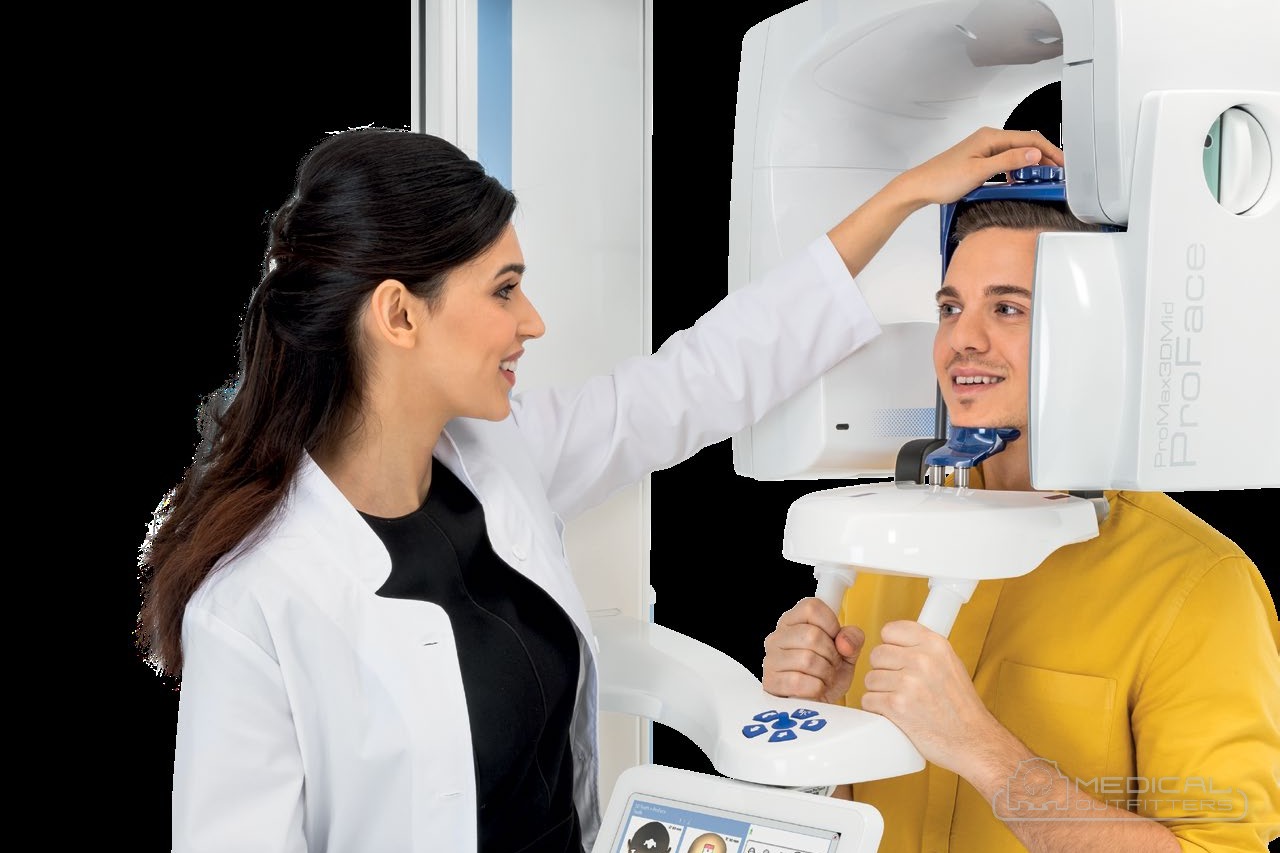
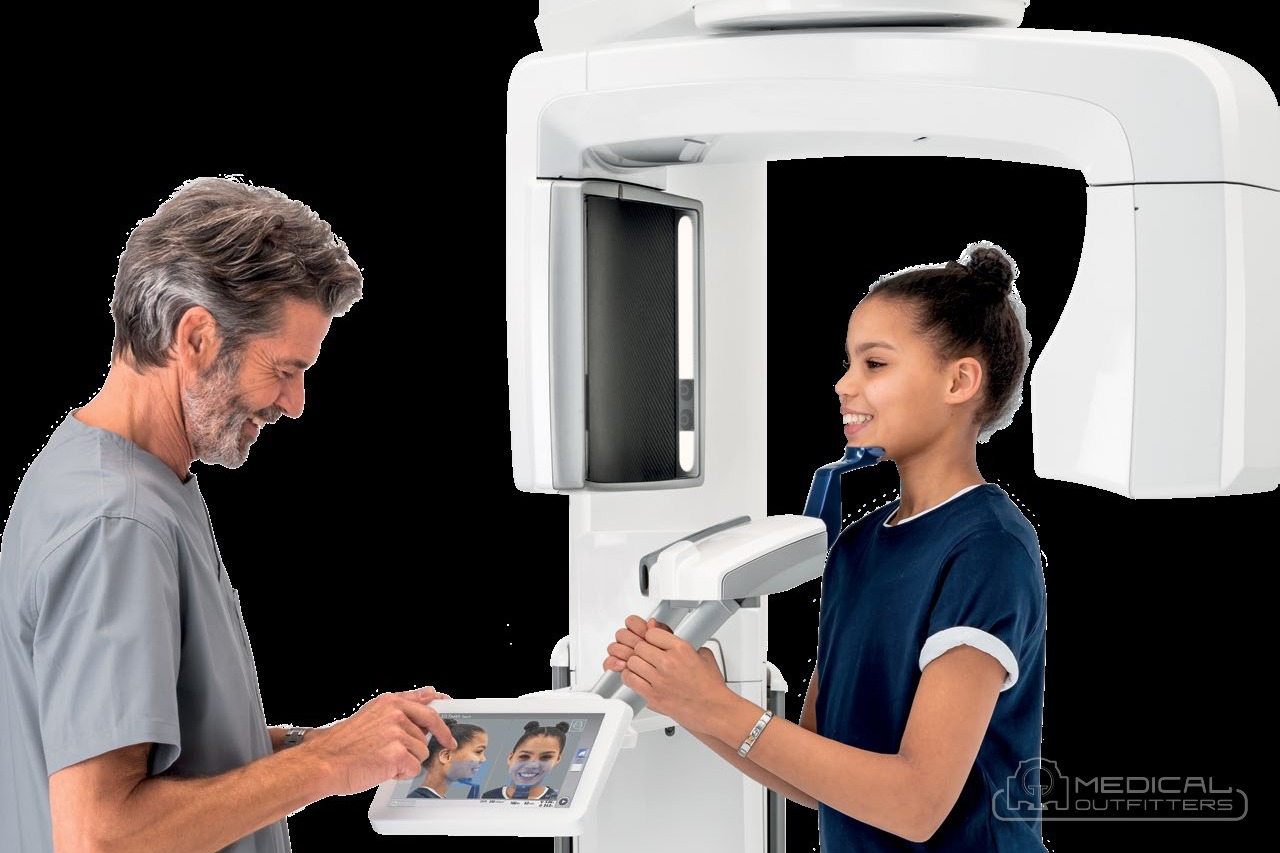
A dental cone beam CT cost of $466 on average, against $200 for a panoramic in the Synchrony study, reflects a different exam. A panoramic image is a flat, two-dimensional picture of both jaws. A cone beam CT rotates a cone-shaped beam and a flat-panel detector once around the head and reconstructs a three-dimensional volume that the dentist can slice in any plane, which shows bone height and width, the position of nerves and sinuses, and the roots of impacted teeth in a way a flat image cannot. The scan takes more expensive equipment, software and interpretation time, and the price follows. Montana Medicaid’s schedule shows the same gap at payer rates: $331.97 for a both-jaws cone beam CT (D0367) against $63.23 for a panoramic.
Dentists do not order a cone beam CT routinely, and the specialty bodies say so plainly. The ADA’s February 2024 recommendations advise incorporating CBCT only when lower-exposure options will not provide the necessary diagnostic information. The American Academy of Oral and Maxillofacial Radiology’s position statement on implant imaging, published in 2012, recommends cross-sectional imaging for the assessment of dental implant sites and names CBCT as the preferred method, and the joint statement of the American Association of Endodontists and the AAOMR, updated in 2025, keeps CBCT selective rather than routine in endodontics. Implant planning is the use the AAOMR names most directly, endodontic cases follow the AAE and AAOMR statement, and the CDT set carries a separate code for a jaw joint (TMJ) cone beam series, D0368, per the CDC’s CDT table.
Coverage is where the patient feels the difference. Blue Cross Blue Shield of Massachusetts lists all four cone beam codes as not a covered benefit, so a patient on a plan like that pays the full fee; plans differ, so check yours before the scan. Field of view drives both price and dose. A meta-analysis by Ludlow and colleagues in Dentomaxillofacial Radiology (2015) reported mean adult effective doses of 84 microsieverts for small field of view dental CBCT, 177 for medium and 212 for large, so a scan limited to the area in question (D0364) is both the smaller dose and, at many offices, the smaller fee. Ask which field of view is planned and whether the fee includes the interpretation report.
What the Panoramic and Cone Beam Machine Costs
Every image price on this page is revenue to the practice that owns the equipment. The Medical Outfitters cone beam CT machine cost guide prints the market estimates below, derived from public list-price reporting for 2025 and 2026 and labeled as comparison estimates; they are not Medical Outfitters prices, and Medical Outfitters publishes no price band of its own for cone beam CT.
| Dental class (field of view) | New, estimated | Refurbished, estimated |
|---|---|---|
| Small, about 4 x 4 to 8 x 8 cm | $30,000 to $60,000 | $20,000 to $35,000 |
| Medium, 8 x 8 to 10 x 10 cm | $55,000 to $100,000 | $30,000 to $50,000 |
| Large, above 10 x 10 cm to 30 x 30 cm (dental and ENT) | $100,000 to $180,000 | $40,000 to $90,000 |
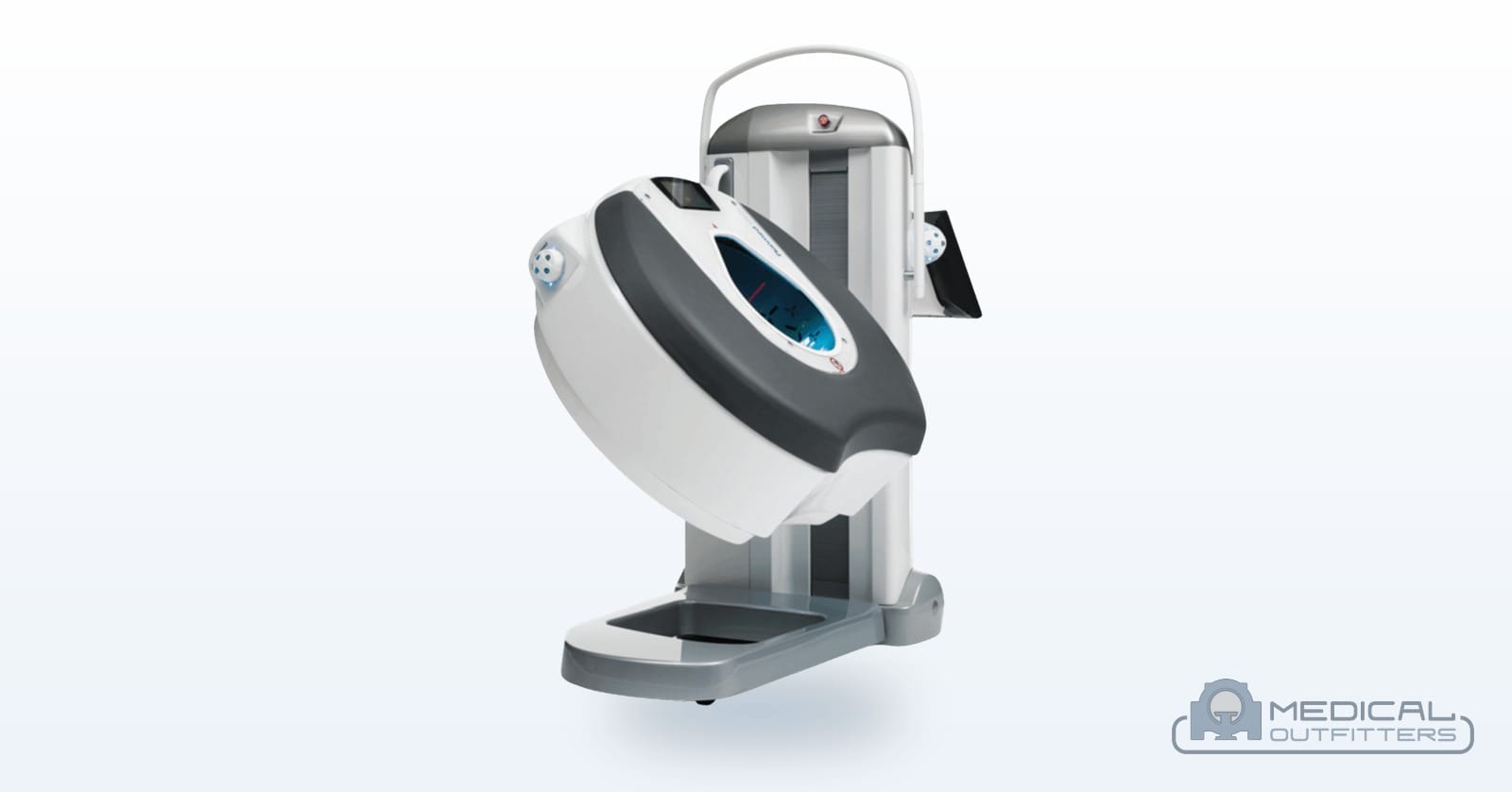
Panoramic imaging sits inside the same platforms. The guide lists the Planmeca Viso G7 with 2D panoramic and cephalometric options alongside its 3D volumes from 3 x 3 to 30 x 30 cm, and places small and medium field of view dental units as the choice for general, endodontic, implant and periodontal practices, usually with 2D panoramic imaging. The Planmeca Viso G7 is sold new by Medical Outfitters as an authorized Planmeca dealer and quoted on request, delivered, installed and warrantied; pre-owned units of other dental platforms are available on request, as described in the guide.
The room is part of the cost. The guide reports shielding and room modifications at an estimated $5,000 to $20,000, set by the physicist’s shielding survey and the state’s registration of the X-ray source, and notes that a dental or ENT unit usually goes into an existing office room. Our companion post on CBCT machine cost covers running costs, field of view and the ENT and extremity classes in more depth, and cone beam CT explained covers how the technology differs from a medical CT scanner. For a practice weighing whether the scans will pay for the machine, the patient prices above are the place to start: at the Synchrony average of $466 a scan, and with most commercial plans not paying for it, the volume of implant, surgical and endodontic cases a practice sees is the deciding number.
Pricing Dental Imaging With Medical Outfitters
If you came here as a patient, the short version is to ask for the CDT codes planned, check your plan’s frequency limits before the visit, ask for the self-pay fee if you have no coverage, and let your own dentist decide which images you need. If you came as a dentist, oral surgeon or practice manager, the image fees on this page are your revenue side and the cone beam CT machine cost guide is the equipment side. The systems we sell are in the cone beam CT category, the Planmeca Viso G7 product page lists its programs and options, and the MO Select standard for pre-owned systems is described on the refurbished imaging equipment page. For the medical side of X-ray pricing, see our guide to how much an X-ray costs and the X-ray machine cost guide, and our X-ray room requirements post covers shielding principles. Tell us the scans you expect each week and the room you have, and we will quote a specific system, delivered, installed and warrantied: contact Medical Outfitters.
- CareCredit, Dental X-Ray Cost (January 31, 2025), citing the 2024 Synchrony Average Procedural Cost Study by ASQ360 Market Research: national averages and ranges by image type, state bitewing averages, copays and plan limits: https://www.carecredit.com/well-u/health-wellness/dental-x-ray-cost/
- Montana Medicaid, Dental Services Fee Schedule, January 2026: D0210, D0220, D0272, D0274, D0330, D0340 and D0367 fees and frequency notes: https://prod-medicaidprovider.mt.gov/docs/feeschedules/2026/January2026DentalServicesFeeSchedule_rev.pdf
- Maryland Medicaid, 2026 CDT Fee Schedule: D0210, D0220, D0272, D0274, D0330 and D0340 fees: https://health.maryland.gov/mmcp/Documents/2026%20CDT%20Fee%20Schedule%20-%20Section%20508%20Compliant%20-%208.18.26.pdf
- Blue Cross Blue Shield of Massachusetts, CDT dental procedure lookup: frequency guidelines for D0210, D0272, D0274, D0330 and D0364 to D0367: https://provider.bluecrossma.com/ProviderHome/portal/home/office-resources/billing-and-reimbursement/cdt_dental_proc_lookup
- American Dental Association, Safe Use of Radiographs in Dentistry, reprinting the ADA Council on Scientific Affairs and FDA recommendations (2012): bitewing intervals, new patient examinations and digital dose reduction: https://www.ada.org/enmember-center/oral-health-topics/~/media/0666B35FBAFF4459814E5E635142638A.ashx
- American Dental Association, press release of February 1, 2024, on updated radiography safety recommendations: https://www.ada.org/en/about/press-releases/ada-releases-updated-recommendations-to-enhance-radiography-safety-in-dentistry
- American Dental Association, Bundling and Downcoding: https://www.ada.org/resources/practice/dental-insurance/bundling-and-downcoding
- AAOMR position statement on selection criteria for dental implant imaging (2012), abstract: https://pubmed.ncbi.nlm.nih.gov/22668710/ and the AAE and AAOMR joint statement on CBCT in endodontics, 2025 update: https://www.nysdental.org/news-publications/news/2026/01/23/aae-and-aaomr-joint-position-statement–use-of-cone-beam-computed-tomography-in-endodontics-2025-update
- RadiologyInfo (ACR and RSNA), Radiation Dose: dental, panoramic, cone beam CT and chest X-ray doses: https://www.radiologyinfo.org/en/info/safety-xray
- Medicare.gov, Dental services coverage: https://www.medicare.gov/coverage/dental-services
- CDC, Table S5, CDT-2017 Code on Dental Procedures and Nomenclature descriptors: https://stacks.cdc.gov/view/cdc/114228/cdc_114228_DS16.docx
- Pearl, Dental X-Rays national cost (May 2026): https://dentalcosts.hellopearl.com/procedure/dental-x-rays
- Ludlow JB and colleagues, Effective dose of dental CBCT, a meta-analysis, Dentomaxillofacial Radiology 2015: https://doi.org/10.1259/dmfr.20140197
- Cone beam CT machine cost guide (2026)
- How much does a CBCT machine cost?
- Cone beam CT scanners for sale
- Planmeca Viso G7 dental and maxillofacial CBCT
- Cone beam CT explained: CBCT vs medical CT
- Refurbished medical imaging equipment: the MO Select standard
- How much does an X-ray cost in 2026?
- X-ray machine cost and price guide (2026)
- What size room does an X-ray machine need?
- X-ray machine service, repair and maintenance
- Price a dental imaging system for your practice
Dental X-Ray Cost: Common Questions
How much does a dental X-ray cost?
Without insurance, bitewings average $65 ($52 to $120), a single periapical image $55, a panoramic X-ray $200 ($157 to $343), a full mouth series $226 ($175 to $428) and a dental cone beam CT $466 ($361 to $879), per the 2024 Synchrony Average Procedural Cost Study published by CareCredit. Most dental plans treat routine bitewings and full mouth series as preventive care, within the plan's frequency limits.
How much are dental X-rays without insurance?
It depends on the image and the office. The Synchrony study puts bitewings at a $65 average, a panoramic at $200 and a full mouth series at $226, and Pearl's May 2026 data puts a full mouth series at a $195 national average. CareCredit reports state bitewing averages from $55 in Iowa and Mississippi to $99 in Hawaii. Ask the office for its fee for each CDT code in writing before the images are taken.
Does dental insurance cover X-rays?
Usually, within limits. CareCredit describes routine bitewings and full mouth X-rays as generally preventive and typically covered, with copays of $5 to $50. A Blue Cross Blue Shield of Massachusetts plan, for example, allows bitewings twice a calendar year and one full mouth series or panoramic per 60 months, and lists cone beam CT as not a covered benefit. Check your own plan's frequency limits before the visit.
How much is a panoramic X-ray?
A panoramic dental X-ray (D0330) averages $200 without insurance, with a range of $157 to $343, per the 2024 Synchrony study published by CareCredit. Montana Medicaid pays dentists $63.23 and Maryland Medicaid $45.95 for the same code in their 2026 schedules. Many dental plans count a panoramic and a full mouth series against one shared allowance, such as one of either per 60 months on a Blue Cross Blue Shield of Massachusetts plan.
How much does a CBCT scan cost?
A dental cone beam CT scan averages $466 without insurance, with a range of $361 to $879, per the 2024 Synchrony study published by CareCredit. Montana Medicaid pays $331.97 for a both-jaws scan (D0367) in its January 2026 schedule. Many commercial dental plans do not cover cone beam CT; a Blue Cross Blue Shield of Massachusetts plan lists codes D0364 to D0367 as not a covered benefit. Ask which field of view is planned.
How often should you get dental X-rays?
The ADA and FDA recommendations tie bitewing frequency to decay risk: every 6 to 18 months for adults at increased risk and every 24 to 36 months for adults who are not, subject to the dentist's judgment. The ADA states that the bitewing is the only imaging exam with a frequency recommendation, and that a full mouth series should be based on the patient's needs, not on the frequency the insurance contract allows.
Does Medicare pay for dental X-rays?
Original Medicare does not cover routine dental care, per Medicare.gov, so routine dental X-rays are not covered. It may cover dental services directly related to certain covered medical treatments, with the patient paying 20 percent after the Part B deductible. Beneficiaries usually rely on a separate dental plan or a Medicare Advantage plan with dental benefits. Medicaid dental coverage for adults varies by state.
How much does a dental cone beam CT machine cost?
The Medical Outfitters cone beam CT guide estimates a small field of view dental CBCT at $30,000 to $60,000 new, a medium unit at $55,000 to $100,000 and a large dental and ENT unit at $100,000 to $180,000, with refurbished units at $20,000 to $90,000 by tier. Those are comparison estimates from public list-price reporting, not Medical Outfitters prices; Medical Outfitters quotes the Planmeca Viso G7 on request, delivered, installed and warrantied.
Related Articles
More scan cost guides: How much does a CT scan cost? · MRI scan cost · PET scan cost · DEXA scan cost · Mammogram cost · Ultrasound cost · Echocardiogram cost