Calcium score test cost is one of the few imaging prices most patients can actually see before they book, because the test is so often paid in cash. A coronary artery calcium scan is a short CT of the heart, done without contrast, that counts the calcified plaque in the coronary arteries and turns it into a single number. Whether you searched how much does a calcium score test cost, heart scan cost or calcium score test cost without insurance, the answer moves with three things: whether you are buying a calcium score or a different cardiac CT exam, which building does it, and whether anyone besides you pays. This guide gives the 2026 numbers for the calcium score and for the two cardiac CT exams it is often confused with, quotes the payers’ own words on coverage, explains what the score means as the guidelines describe it, and then turns to the facility side: what the CT scanner behind a cardiac program costs.
Medical Outfitters sells new Fujifilm imaging systems as an authorized dealer and refurbished GE, Siemens, Philips, Canon and Hitachi systems through MO Select, and installs and services CT scanners across the United States, Puerto Rico and the Caribbean. We wrote this for patients trying to price a heart scan and for cardiology practices, imaging centers and hospital managers who set that price. For the wider picture of CT pricing, start with our guide to how much does a CT scan cost. Nothing here is medical advice: whether you should have a calcium score, and what to do with the result, is a decision for your own doctor, and the preparation instructions come from your own imaging center.
- Cash price: $149 at Saint Alphonsus in Idaho, $150 at Tufts Medicine and UCHealth, and $35 to $397 across 193 providers on MDsave, with an MDsave average of $163.
- Medicare rate: $99.53 for CPT 75571 in an office in 2026, per the ACR, against $325.66 for a coronary CT angiogram (75574).
- Coverage: the WPS Medicare contractor calls calcium scoring in isolation a screening service and denies it; Tufts and UCHealth say insurance does not cover it.
- State mandates: Texas requires many plans to pay up to $200 once every five years for qualifying patients, and Maryland Medicaid covers the test under ACC guidelines from January 1, 2026.
- The scanner: the Medical Outfitters CT guide places coronary CT angiography and calcium scoring in the 64-slice class, at $175,000 to $375,000 refurbished.
Calcium Score Test Cost in 2026: Prices by Exam
Three cardiac CT exams share the scanner and are easy to mix up on a price list, and each carries its own CPT code. The coronary artery calcium scan is CPT 75571: a CT of the heart without contrast material, with a quantitative evaluation of coronary calcium. Cardiac CT for structure and morphology without a coronary study is CPT 75572, and a coronary CT angiogram, which adds an IV contrast injection to show the inside of the arteries, is CPT 75574. A fourth code, 75580, is the software analysis that estimates fractional flow reserve from a coronary CT angiogram. Before you compare prices, ask the ordering office which code it plans to use, because a calcium score and a CT angiogram are different tests at very different prices.
The table brings the published 2026 figures together. Medicare’s national rates are the global office rates from the American College of Radiology’s CY2026 impact table, which covers both the technical side and the physician’s reading. The cash ranges come from MDsave, a price marketplace that lists bundled self-pay prices, and are named as such.
| Exam (CPT) | Medicare 2026, office global (ACR) | Self-pay range (MDsave) |
|---|---|---|
| Coronary calcium score (75571) | $99.53 | $35 to $397; MDsave average $163 |
| Cardiac CT, structure (75572) | $229.46 | Not listed separately |
| Cardiac CT, congenital structure (75573) | $309.63 | Not listed separately |
| Coronary CT angiography (75574) | $325.66 | $252 to $1,447; MDsave average $617 |
| CT FFR analysis (75580) | $887.46 | Not listed |
Sources: American College of Radiology, CY2026 MPFS Final Rule Impact Tables, 7xxxx series; MDsave, Cardiac CT Calcium Scoring (193 providers) and Cardiac CT Coronary Angiography (116 providers), read November 2026. MDsave also shows an estimated national average of $336 for the calcium score and $1,314 for the CT angiogram, which are list-style figures rather than prices paid.
The ACR table shows how small the calcium score is as a Medicare service. Of the $99.53 global rate, $72.81 is the technical part (the scanner, the room and the technologist) and $26.72 the physician’s reading, and the total rose only 0.6 percent from $98.98 in 2025. The coronary CT angiogram is a bigger exam: $325.66 in 2026, up 2.3 percent from $318.29, with $215.10 technical and $110.56 for the reading. That gap tracks the work. A calcium score takes one quick breath-hold with no needle, while a CT angiogram adds an IV line, contrast, heart-rate control and a longer reading of the vessels.
Calcium Score Test Cost Without Insurance: Published Cash Prices
Because insurers so often decline the test, many hospitals publish a flat cash price for it, which makes the calcium score test cost without insurance unusually easy to check. A few published examples from 2026 pages:
- Saint Alphonsus Health System, Idaho: $149 in total, made of $69 paid at the time of service plus an $80 reading fee billed separately by Gem State Radiology, per its CT Coronary Calcium Scan sheet revised April 28, 2026. The sheet says the test is not typically covered by insurance, and that Medicare Parts A and B is the only payer the hospital will submit to; everything else is self-pay.
- Tufts Medicine, Massachusetts: $150, paid at least two days before the test, with the page stating that the heart CT calcium score scan is not covered by insurance.
- UCHealth, Colorado: $150, with the page stating that health insurance in general does not cover coronary calcium scoring and that the process typically takes 10 to 15 minutes.
Across a wider set of facilities, the coronary calcium scan cost spreads out further: MDsave lists cardiac CT calcium scoring at $35 to $397 from 193 providers, with an MDsave national average of $163. The spread is wide because the listings mix hospital programs, independent imaging centers and cardiology offices, and because some prices include the radiologist’s reading while others bill it separately.
Two practical points follow. First, the published price may or may not include the reading. Saint Alphonsus splits its $149 into a hospital part and a radiologist part, so ask whether the price you are quoted is all-in. Second, many programs require a doctor’s order: UPMC’s page says a calcium scoring CT scan requires an order from your doctor and is by appointment only, and Saint Alphonsus asks referring offices to fax an order for CPT 75571. Under the No Surprises Act, in force since January 1, 2022, a provider that schedules a service for an uninsured or self-pay patient must give a written Good Faith Estimate, and a bill $400 or more above it can be disputed through the federal process, per CMS.
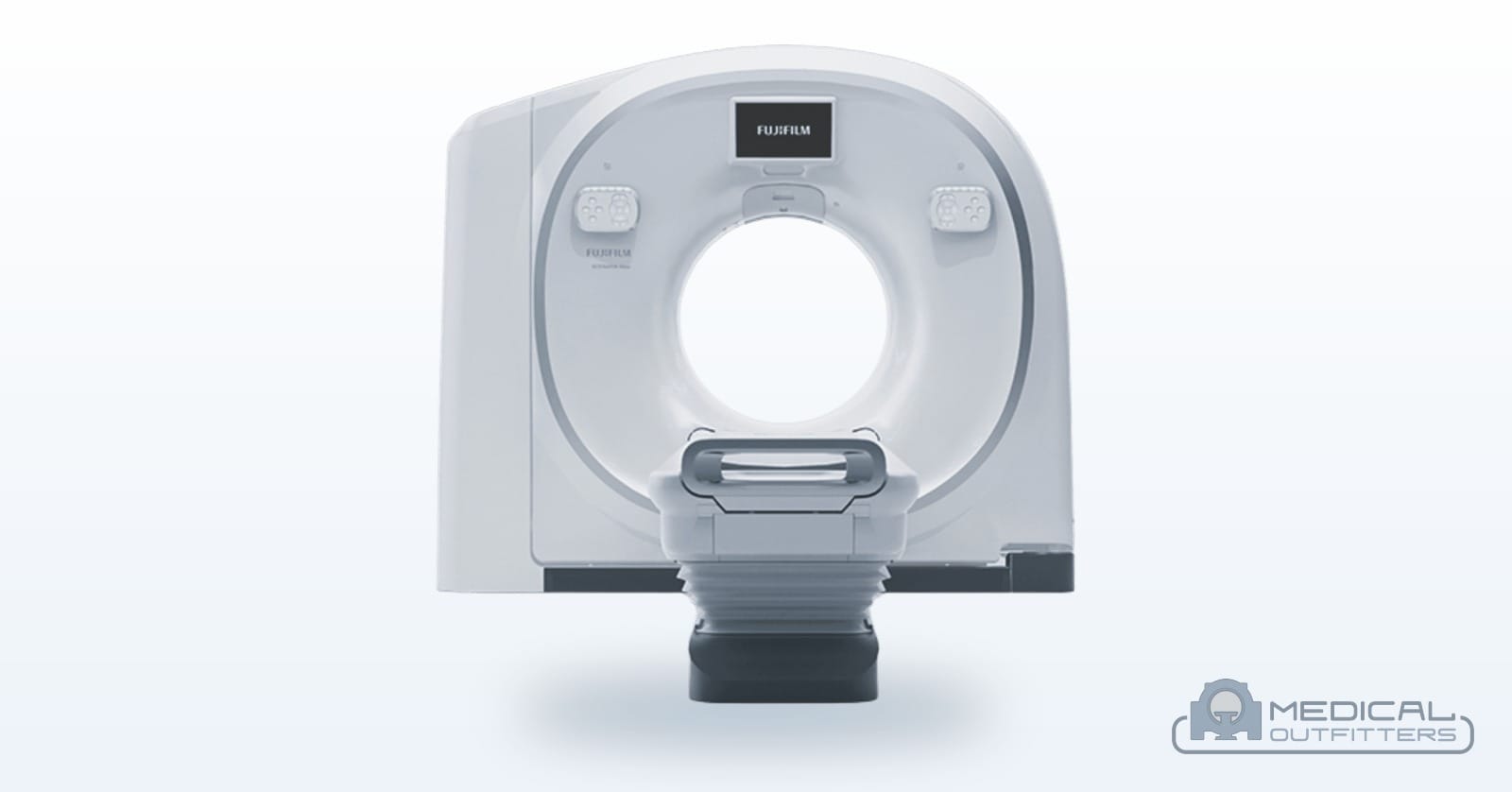
Does Insurance or Medicare Pay for a Coronary Calcium Scan?
Medicare. There is no national Medicare coverage policy for the calcium score, so the regional Medicare contractors decide, and the contractor policies we read treat it as screening. The coronary CT angiography policy of Wisconsin Physicians Service, LCD L35121, which applies in its J5 and J8 jurisdictions and was last revised for services on or after October 30, 2025, states that quantitative calcium scoring is not a covered service and will be denied as not medically necessary, and that calcium scoring reported in isolation is considered a screening service. The same policy says coronary CT angiography is never covered for screening, meaning in the absence of signs, symptoms or disease. Medicare contractors in other regions publish their own policies, so a patient on Medicare should ask the imaging center whether it will ask them to sign an Advance Beneficiary Notice, the form that warns Medicare may not pay. Saint Alphonsus is an example of a hospital that still submits the claim to Medicare.
When Medicare does pay for a cardiac CT, Part B pays 80 percent of the approved amount after the annual deductible, which CMS set at $283 for 2026, and the patient pays 20 percent. On the ACR’s office rates that is $19.91 on a calcium score and $65.13 on a coronary CT angiogram, our arithmetic; in a hospital outpatient department the coinsurance is figured on the hospital payment instead.
Commercial plans. The hospital pages above describe the calcium score as a test the patient pays for: Tufts Medicine says plainly that the scan is not covered by insurance, and UCHealth says health insurance in general does not cover it. A coronary CT angiogram is a different matter, because it is a diagnostic test ordered to investigate symptoms rather than a screening test, so it falls under the plan’s ordinary rules for diagnostic imaging, which may include prior authorization. Ask the plan before the appointment, not after.
States that require coverage. Two states have written the calcium score into law:
- Texas: House Bill 1290 of 2009, now Chapter 1376 of the Texas Insurance Code, requires many health benefit plans to cover up to $200 for a CT scan measuring coronary artery calcification, or an ultrasound of the carotid artery, once every five years, for men older than 45 and women older than 55 (both younger than 76) who have diabetes or an intermediate or higher risk score on the Framingham coronary prediction algorithm. The act took effect September 1, 2009, and applies to plans delivered, issued or renewed on or after January 1, 2010.
- Maryland: House Bill 666 requires the Maryland Medical Assistance Program to cover coronary calcium score testing in line with the most recent American College of Cardiology guidelines from January 1, 2026, per a Maryland Department of Health transmittal dated August 5, 2025, which adds that the fee-for-service program does not require prior authorization for CPT 75571.
If you live in another state, the plan document is the only reliable answer. Ask the plan whether CPT 75571 is covered, whether it needs a doctor’s order, and which imaging centers are in network.
Heart Scan Cost by Setting: Hospital, Imaging Center or Cardiology Office
For most CT exams, the hospital outpatient department is far more expensive than an independent imaging center, because Medicare and commercial plans pay hospitals a separate facility rate for the technical side. That pattern holds for the coronary CT angiogram. In a February 10, 2025 ACR Bulletin column, Juan Carlos Batlle, MD, reported that Medicare’s hospital outpatient payment for coronary CT angiography rose from $175 under APC 5571 in 2024 to $357 under APC 5572 in 2025, more than the ACR’s 2026 office technical rate of $215.10, and the physician’s reading is paid on top.
The calcium score is the exception that breaks the rule for cash payers. Several of the cheapest published self-pay prices come from hospital systems: Saint Alphonsus, Tufts Medicine and UCHealth all post flat prices around $150, inside MDsave’s $35 to $397 national range and close to its $163 average. Those flat prices exist because the hospitals market the scan directly to the public as a prevention program. The same hospital may bill an insurer far more for the same CPT code under its negotiated rates, which is why a self-pay patient should ask for the cash price by name rather than running the scan through a plan that will deny it.
The coronary CT angiogram does not usually come with a published flat price, because it is a diagnostic study ordered for symptoms and billed to insurance. For coronary CT angiography cost, MDsave’s $252 to $1,447 range, with an average of $617, is the best national snapshot of the cash market we found. Hospital price-transparency files, which every hospital must publish under the CMS Hospital Price Transparency rule in force since January 2021, list each hospital’s own cash and negotiated prices for 75574 and are worth checking before an elective study.
The practical point: for the CT calcium score cost, compare the flat cash prices of the hospital and imaging center programs near you and ask what is included. For a coronary CT angiogram, follow your doctor on where it is done, check that the site is in network and get the prior authorization confirmed before the appointment.
What a Calcium Score Means, as the Guidelines Describe It
RadiologyInfo, the patient site of the Radiological Society of North America and the American College of Radiology, describes the test as a CT that estimates the calcified plaque in the coronary arteries and grades the result as follows (page last reviewed July 15, 2026):
- 0: no evidence of coronary artery disease.
- 1 to 10: minimal evidence.
- 11 to 100: mild evidence.
- 101 to 400: moderate evidence.
- Over 400: extensive evidence.
RadiologyInfo says the exam takes less than 20 minutes, needs no contrast injection, and that patients are asked to avoid caffeine and smoking for four hours beforehand. It adds that current national guidelines suggest considering the test for men age 40 and older and women age 45 and older whose estimated 10-year risk is borderline or intermediate, when it is unclear whether a cholesterol-lowering medicine would help.
The 2019 ACC/AHA Guideline on the Primary Prevention of Cardiovascular Disease, in the American College of Cardiology’s Guidelines Made Simple summary, lists coronary artery calcium scanning as one of the tools that can help guide decisions about preventive treatment in select adults. Its list of candidates includes patients reluctant to start a statin who want to understand their risk more precisely, and older adults with few risk factors who question whether they would benefit. For an adult at intermediate risk whose score comes back at zero, the guideline says it is reasonable to withhold statin therapy unless higher-risk conditions such as cigarette smoking, a family history of premature heart disease or diabetes are present, and to reassess the score in 5 to 10 years.
That is where this guide stops. What your own score means for you, and whether you need the test at all, is your doctor’s call, and the guideline itself frames the scan as part of a clinician and patient risk discussion rather than a test to order alone. The same guideline adds a line that matters to the facility side: calcium scoring should be performed in facilities with current technology and the expertise to deliver the lowest radiation possible.
How to Price a Coronary Calcium Scan Before You Book
Because the calcium score is usually a cash purchase, a patient can price it the way they would any other service. The steps below assume your doctor has agreed the test makes sense for you.
Confirm the exam and the code. Ask the ordering office whether it is ordering a calcium score (CPT 75571) or a coronary CT angiogram (CPT 75574). The prices differ several times over, and only the angiogram involves contrast.
Check your plan once. Ask the plan whether 75571 is covered for you. If you live in Texas or are covered by Maryland Medicaid, mention the state requirement. If you are on Medicare, ask the imaging center whether it bills Medicare for the test and whether it will ask you to sign an Advance Beneficiary Notice.
Call two or three programs. Hospital heart scan programs and independent imaging centers both publish cash prices. Ask each for its all-in self-pay price, including the radiologist’s reading, and whether you need a doctor’s order.
Get it in writing. As a self-pay patient you are entitled to a Good Faith Estimate under the No Surprises Act. Keep it until the bill is paid.
Book where your doctor will use the result. The score only helps if it reaches the doctor who will discuss it with you, so choose a site that sends reports to your doctor’s office.
What the CT Scanner Behind a Calcium Score Costs
Every heart scan price on this page is revenue to the hospital, imaging center or cardiology practice that owns the CT scanner, and the price of a cardiac-capable scanner is set mostly by its slice count. The Medical Outfitters CT scanner cost and price guide describes the 16-slice tier as serving sites that do not need cardiac work, and places coronary CT angiography and calcium scoring in the 64-slice class. Our explainer on CT scanner types by slice count covers why more detector rows matter for a moving heart.
The guide’s bands, each delivered, installed and warrantied, are:
- 16 to 32-slice: $85,000 to $185,000 refurbished.
- 64-slice: $175,000 to $375,000 refurbished and $625,000 to $975,000 new.
- 128-slice: $350,000 to $625,000 refurbished, described as the tier for advanced cardiac and low-dose protocols at busy or specialized facilities.
- 256-slice and higher: $625,000 to $1,500,000 refurbished and $1,750,000 to $2,900,000 and up new, a hospital purchase for sites with the cardiac, stroke and perfusion caseload to carry it.
The guide lists freight, rigging, installation, calibration, image-quality testing, applications training and a written warranty in those bands, and quotes the contrast injector, shielding, electrical work, cooling and the first service contract per project. A calcium score needs no injector, but a program that adds coronary CT angiography will need one, along with the cardiac software options the scanner is licensed for. Software licenses matter on a used scanner, and our used CT scanner buying guide explains what to check before buying.
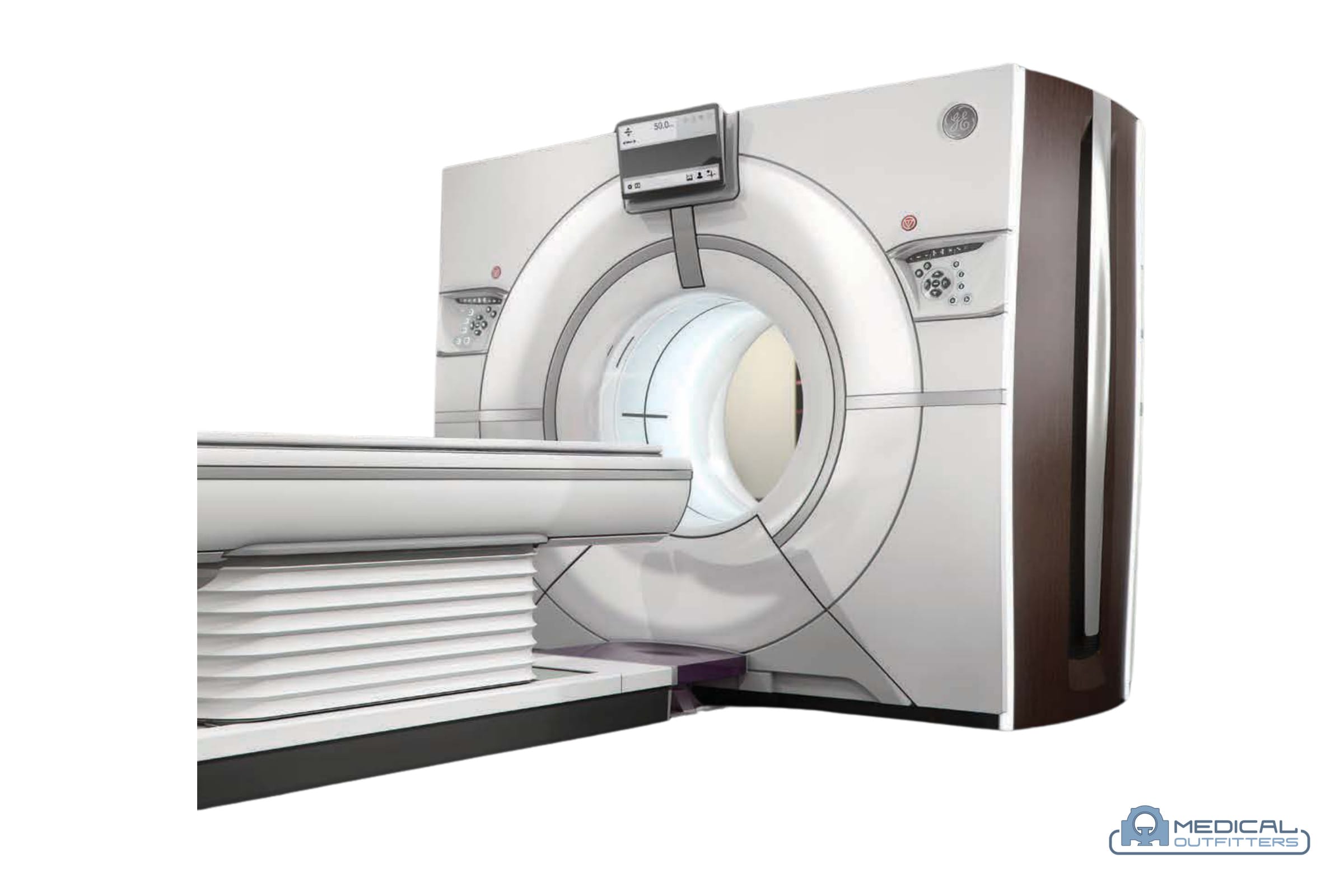
On the revenue side, the arithmetic is modest per scan. A calcium score brings in roughly $150 cash at the programs above, or a technical payment of $72.81 under the 2026 Medicare office rate, so a heart scan program earns its keep by volume and by the follow-on studies it feeds, not by the price of one scan. Our CT scan cost guide covers the revenue side of the full CT menu, and the imaging equipment service contracts guide covers the next line in the budget once the scanner is installed.
Pricing a Cardiac CT Program With Medical Outfitters
If you came here as a patient, the short version is to confirm with your doctor that a calcium score is the right test, ask whether it is CPT 75571 or a CT angiogram, check your plan once, then compare the all-in cash prices of two or three programs and get a Good Faith Estimate; follow the preparation your imaging center gives you. If you came as a cardiology practice, imaging center or hospital manager, the prices on this page are your revenue side and our guides are the cost side: the CT scanner cost guide for the bands, the CT category for current systems, and the GE Revolution CT price guide for a cardiac-class platform. The MO Select standard is described on the refurbished imaging equipment page, and our CT scanner service team supports systems across the United States, Puerto Rico and the Caribbean. If your patients also need functional testing, see our guides to stress test cost and echocardiogram cost. Send us the exams you plan to offer and the room you have, and we will price a specific system, delivered, installed and warrantied: contact Medical Outfitters.
- American College of Radiology, CY2026 MPFS Final Rule Impact Tables, 7xxxx series: 2025 and 2026 global, professional and technical rates for 75571, 75572, 75573, 75574 and 75580: https://edge.sitecorecloud.io/americancoldf5f-acrorgf92a-productioncb02-3650/media/ACR/Files/Medicare-Medicaid/MPFS/CY2026-MPFS-Final-Rule-Impact-Tables-7xxxx-series.pdf
- Wisconsin Physicians Service, LCD L35121 Coronary Computed Tomography Angiography (CCTA), revision effective October 30, 2025: calcium scoring and screening limitations: https://www.cms.gov/medicare-coverage-database/view/lcd.aspx?LCDId=35121
- ACR Bulletin, CCTA Technical Reimbursement Doubles (February 10, 2025): hospital outpatient payment for coronary CT angiography: https://acr.org/Clinical-Resources/Publications-and-Research/ACR-Bulletin/CCTA-Technical-Reimbursement-Doubles-But-We-All-Have-to-Help-Keep-It-That-Way
- Saint Alphonsus Health System, CT Coronary Calcium Scan (revised April 28, 2026), Tufts Medicine, Heart CT Calcium Scan, UCHealth, Coronary Calcium Scan, and UPMC, Calcium Scoring CT Scan: published self-pay prices and order rules: https://www.saintalphonsus.org/sites/default/files/2026-05/CT-Coronary-Calcium-Scan_2026.pdf , https://www.tuftsmedicine.org/services-treatments/radiology-imaging/heart-ct-calcium-scan , https://www.uchealth.org/treatments-procedures/coronary-calcium-scan/ and https://www.upmc.com/services/imaging/services/calcium-scoring-ct-scan
- MDsave, Cardiac CT Calcium Scoring and Cardiac CT Coronary Angiography (read November 2026): national self-pay ranges: https://www.mdsave.com/procedures/cardiac-ct-calcium-scoring/d785f4cf and https://www.mdsave.com/procedures/cardiac-ct-coronary-angiography/d786ffc8
- Texas Legislature, HB 1290 (81st Legislature, 2009), enrolled text; Maryland Department of Health, PT 08-26 Medicaid Coverage for Coronary Calcium Score Testing (HB 666), August 5, 2025: https://capitol.texas.gov/tlodocs/81R/billtext/html/HB01290F.htm and https://health.maryland.gov/mmcp/provider/Documents/transmittals/PT08-26_Coverage_Coronary_Calcium_Score_Testing.pdf
- RadiologyInfo.org (RSNA and ACR), Cardiac CT for Calcium Scoring, last reviewed July 15, 2026: https://www.radiologyinfo.org/en/info/ct_calscoring
- American College of Cardiology, Guidelines Made Simple: 2019 ACC/AHA Guideline on the Primary Prevention of Cardiovascular Disease: https://www.naccho.org/uploads/downloadable-resources/2019-ACC-and-AHA-Guidelines-on-Primary-Prevention-of-CVD.pdf
- CMS, 2026 Medicare Parts A and B Premiums and Deductibles, and No Surprises Act key responsibilities for providers: https://www.cms.gov/newsroom/fact-sheets/2026-medicare-parts-b-premiums-deductibles and https://www.cms.gov/files/document/nsa-key-responsibilities-providers.pdf
- CT scanner cost and price guide (2026)
- CT scanners
- How much does a CT scan cost?
- CT scanner types by slice count
- Used CT scanner buying guide
- GE Revolution CT price guide
- Stress test cost
- How much does an echocardiogram cost?
- CT scan with contrast vs without
- CT scanner service, repair and maintenance
- Imaging equipment service contracts
- Refurbished medical imaging equipment
- Price a cardiac CT scanner for your facility
Calcium Score Test Cost: Common Questions
How much does a calcium score test cost?
A coronary calcium score test usually costs about $150 cash at hospital heart scan programs: Saint Alphonsus lists $149, and Tufts Medicine and UCHealth list $150. MDsave shows $35 to $397 across 193 providers, with an MDsave average of $163. Medicare's 2026 office rate for the scan, CPT 75571, is $99.53, per the American College of Radiology, but Medicare contractors generally treat the test as screening and deny it.
Does Medicare cover a coronary calcium scan?
Usually not. There is no national Medicare policy, and the Wisconsin Physicians Service policy LCD L35121 states that quantitative calcium scoring is not a covered service, that calcium scoring reported in isolation is considered screening, and that it is denied as not medically necessary. Other Medicare contractors publish their own policies, so ask the imaging center whether it bills Medicare for the test or will ask you to sign an Advance Beneficiary Notice first.
Does insurance pay for a calcium score test?
Most hospital programs say no: Tufts Medicine states the scan is not covered by insurance, and UCHealth says health insurance in general does not cover it. Two states differ. Texas law requires many plans to pay up to $200 once every five years for qualifying men and women at intermediate or higher risk or with diabetes, and Maryland Medicaid covers the test under ACC guidelines from January 1, 2026. Check your own plan for CPT 75571.
What is the difference between a calcium score and a coronary CT angiogram?
A calcium score (CPT 75571) is a CT of the heart without contrast that counts calcified plaque; RadiologyInfo says it takes less than 20 minutes and needs no injection. A coronary CT angiogram (CPT 75574) adds IV contrast to show the inside of the arteries and is usually ordered for symptoms. Medicare's 2026 office rate is $99.53 for the calcium score and $325.66 for the angiogram, per the ACR, and MDsave lists the angiogram at $252 to $1,447 cash.
How much does a cardiac CT scan cost?
It depends on the exam. Medicare's 2026 office rates, per the American College of Radiology, are $99.53 for a calcium score (75571), $229.46 for a structural cardiac CT (75572), $325.66 for a coronary CT angiogram (75574) and $887.46 for a CT fractional flow reserve analysis (75580). On the cash side, MDsave lists a calcium score at $35 to $397 and a coronary CT angiogram at $252 to $1,447, with averages of $163 and $617.
Is a heart scan cheaper at a hospital or an imaging center?
For a calcium score, not necessarily. Several hospital systems publish flat cash prices near $150, including Saint Alphonsus, Tufts Medicine and UCHealth, inside MDsave's $35 to $397 national range. For a coronary CT angiogram billed to insurance, the hospital is usually paid more: an ACR Bulletin column reported Medicare's hospital outpatient payment at $357 in 2025, against a 2026 office technical rate of $215.10. Follow your doctor on where a diagnostic study is done.
What does a calcium score of zero mean?
RadiologyInfo grades a score of 0 as no evidence of coronary artery disease, 1 to 10 as minimal, 11 to 100 as mild, 101 to 400 as moderate and over 400 as extensive. The 2019 ACC/AHA prevention guideline says that for an adult at intermediate risk with a score of zero, it is reasonable to withhold statin therapy unless conditions such as smoking, diabetes or a family history of premature heart disease are present. Your own doctor interprets your result.
What CT scanner does a calcium scoring program need?
The Medical Outfitters CT scanner cost guide places coronary CT angiography and calcium scoring in the 64-slice class, at $175,000 to $375,000 refurbished and $625,000 to $975,000 new, delivered, installed and warrantied, with refurbished 128-slice systems at $350,000 to $625,000 for advanced cardiac work. The ACC/AHA guideline adds that calcium scoring should be done in facilities with current technology and the expertise to deliver the lowest radiation possible.
Related Articles
More scan cost guides: How much does a CT scan cost? · MRI scan cost · PET scan cost · DEXA scan cost · Mammogram cost · Ultrasound cost · Echocardiogram cost