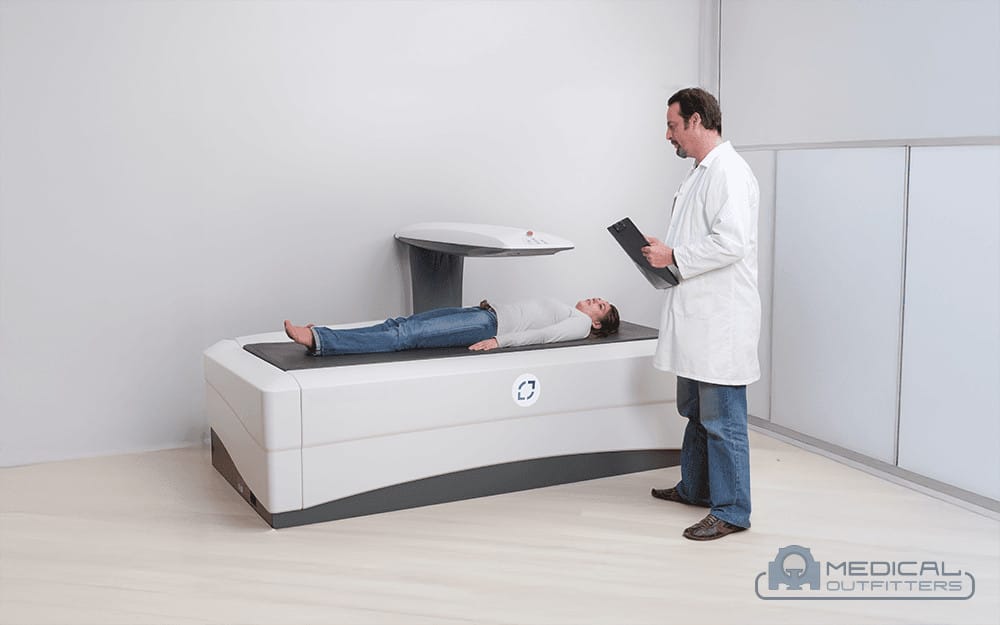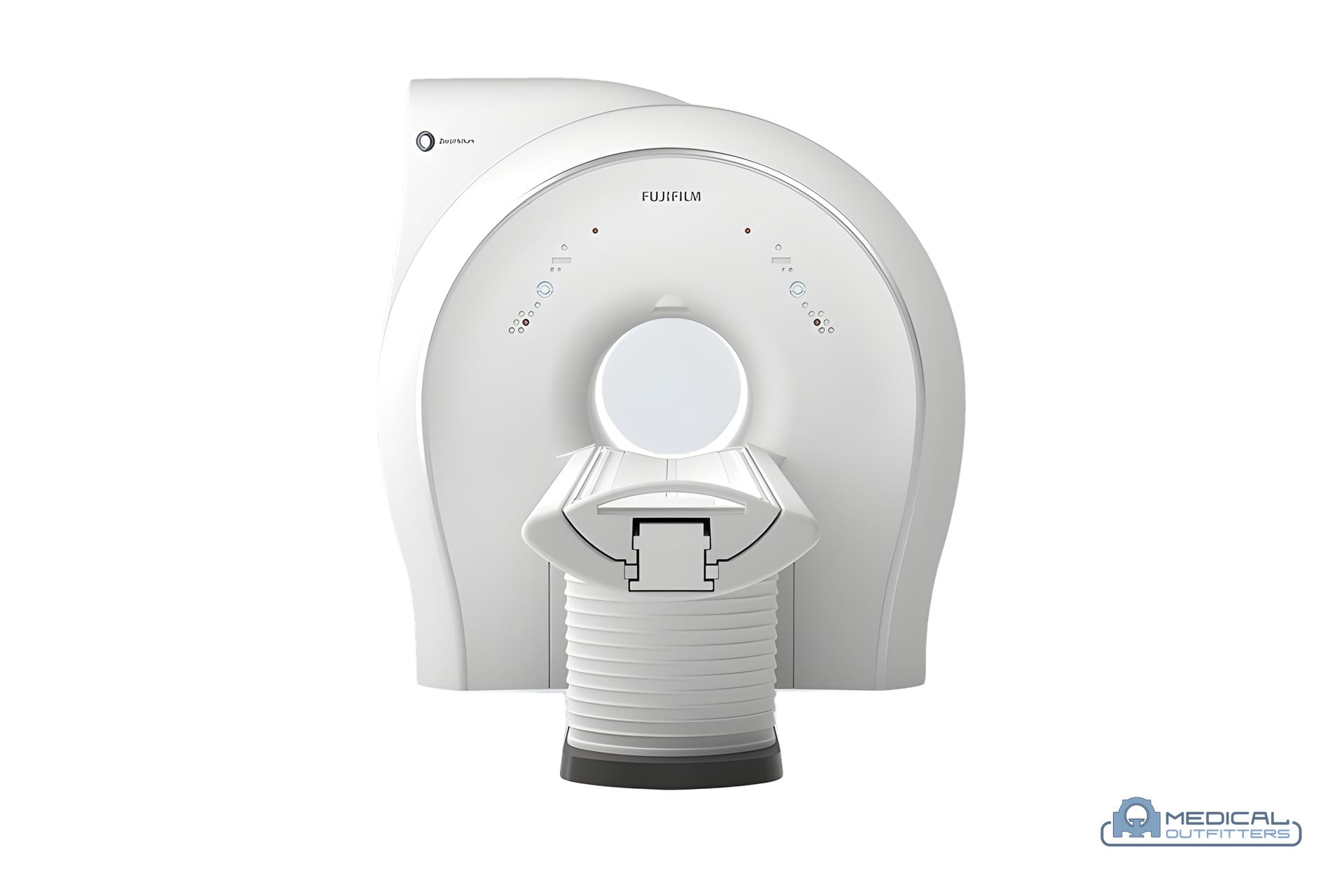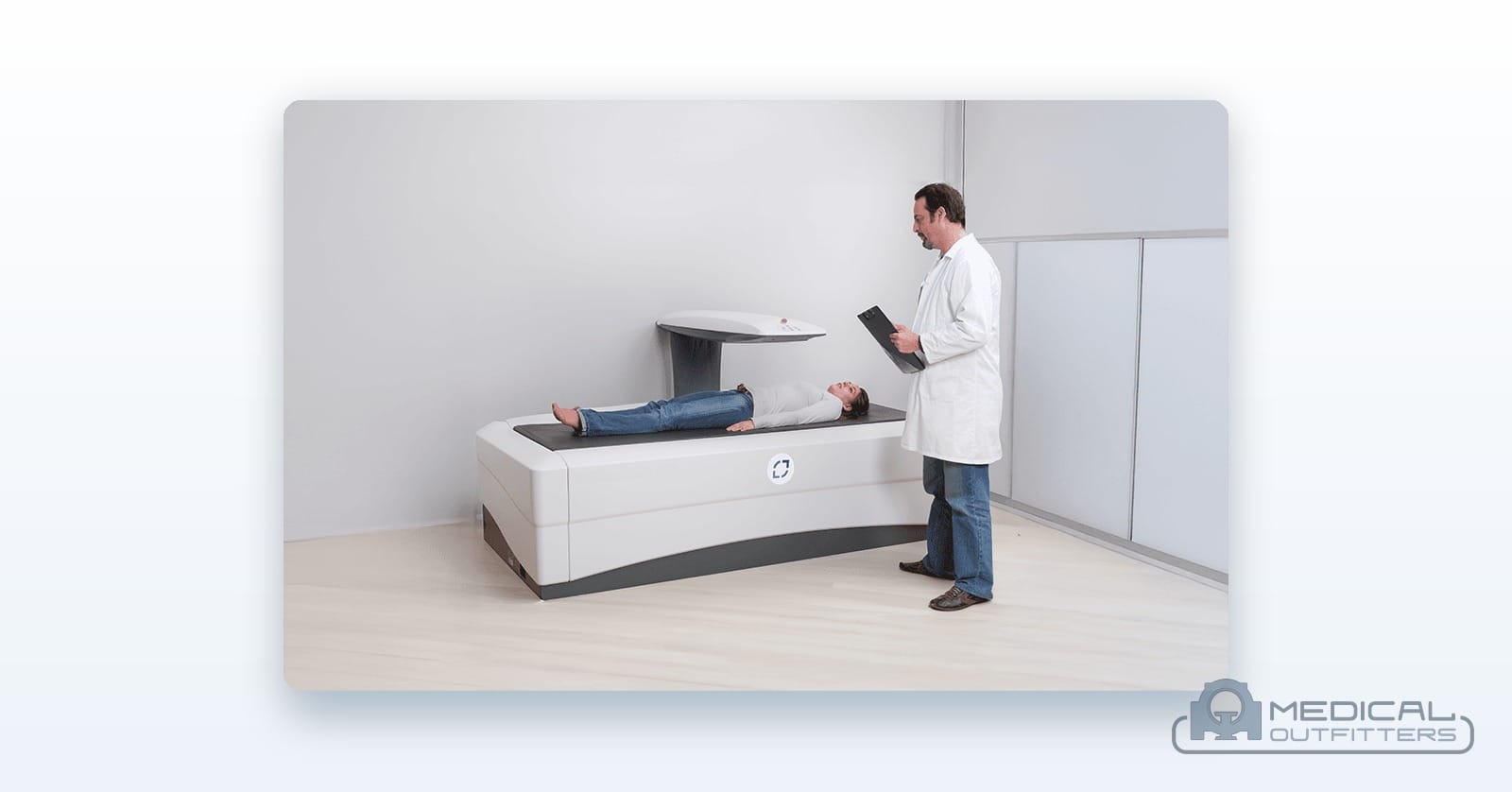
Two DEXA scanner brands, Hologic and GE Lunar, dominate bone densitometry and the used market that comes with it. A third, DMS Imaging with its Stratos line, is the value choice for a practice buying a new bone densitometer. Norland, Osteosys and a few others serve budget and research niches. Choosing between them is mostly about the reference database your readers know, the service network in your area, and the options your program bills for. Buying any of them used comes down to a one-hour inspection: phantom, precision, tube, software licences and paperwork.
Bone densitometry is a mature technology, which is good news for a buyer. The physics has not changed in two decades, the systems last 10 to 15 years, and the used DEXA market is deep enough that a clinic can equip an osteoporosis program for a fraction of the cost of a new fan-beam scanner. The bad news is the same maturity: a used DEXA scan machine can hide an unsupported operating system, a tired tube or licences that do not transfer, and none of it shows in the listing photograph.
This guide compares the DEXA scanner brands, explains what separates pencil-beam from fan-beam systems and what the options actually do, covers what a DEXA scan machine costs new and used, and then walks through the fourteen checks Medical Outfitters runs before it puts a used bone densitometer up for sale.
- Hologic and GE Lunar lead the market; their reference databases differ, so a program should stay on one brand or re-baseline patients.
- DMS Stratos is the new-system value choice: pencil-beam and fan-beam models, body composition and low running costs at a lower price.
- Used DEXA scanners are a good buy when the phantom, precision and tube checks pass and the software and licences transfer.
- The operating system, not the scanner, retires most DEXA units. Ask which Windows version the console runs before anything else.
Medical Outfitters sells new DMS Imaging Stratos bone densitometers as an authorized supplier and sources used DEXA scanners on request, delivered and installed across the United States, Puerto Rico and the Caribbean. The systems are on our DEXA scan machines and bone densitometers for sale page and the ranges are in the DEXA and bone densitometer cost guide.
DEXA Scanner Brands Compared
The figure compresses a market that is easier to describe as three tiers. At the top, Hologic and GE Lunar sell fan-beam systems with every option and the widest service networks, and their older models, the Hologic Discovery and QDR series and the GE Lunar Prodigy and DPX series, make up most of the used DEXA market. In the middle, DMS Imaging’s Stratos line brings modern detectors and software to a lower price point and is the value choice for a practice buying new. Below that, Norland (sold as Norland at Swissray) and Osteosys sell capable systems at lower prices with thinner US support, which is the first thing to check.
Pencil Beam, Fan Beam and What the DEXA Options Do
Every DEXA scanner measures how much of two X-ray energies the bone absorbs, subtracts the soft tissue and reports bone mineral density in grams per square centimetre and as T- and Z-scores against a reference population. The differences between bone density machines are how the beam is shaped and what the software does with the data.
Pencil beam
A pencil-beam scanner moves a single narrow beam and a single detector across the region in a raster pattern. Older pencil-beam systems were slower, three to five minutes for a spine or hip, while current digital pencil beams finish a site in seconds. It is accurate, geometrically simple and easy on the X-ray tube. Pencil-beam tubes run at lower output and are generally expected to last longer, which is one reason older pencil-beam systems are so common on the used market, and the design is nearly free of the magnification effects a fan beam has to correct for. The DMS Stratos and the compact Stratos C are current pencil-beam systems, built around a fast digital pencil beam that finishes a site in seconds rather than minutes.
Fan beam
A fan-beam scanner spreads the beam across an array of detectors and sweeps the region in a single pass, cutting a spine scan to under a minute and enabling options such as vertebral fracture assessment. Hologic’s Horizon and Discovery and GE Lunar’s Prodigy and iDXA are fan-beam systems, with GE using a narrow fan and a cadmium telluride photon-counting detector. The trade is throughput and options against a harder-working tube and higher purchase and service costs. The DMS Stratos DR is the current fan-beam entry from DMS, a 2D fan beam with a 256-element detector.
The options that matter
- Vertebral fracture assessment (VFA). A lateral spine image for detecting vertebral fractures during the same visit. Requires a model and software licence that support it (Hologic IVA on Horizon A, W and C, GE vertebral assessment, DMS DVA), so check the model, not just the beam type.
- Body composition. Whole-body scans reporting fat, lean and bone mass, used by sports medicine, bariatric and research programs. Available on most current systems, fan-beam and pencil-beam alike, usually as a licensed option.
- Trabecular bone score (TBS). A texture analysis of the spine scan that adds fracture-risk information. A third-party licence on Hologic and GE systems.
- Hip structural analysis and pediatric databases. Program-specific; verify they are licensed to the serial number you are buying.
- 3D DXA. On the DMS Stratos DR and Stratos C, an optional three-dimensional model of the femur built from the standard 2D scan.
What Each DEXA Brand Is Known For
Hologic: Horizon, Discovery, QDR
Hologic is the market leader in the United States, with fan-beam systems from the Horizon A, W and Wi down to the compact Horizon C and Ci. The earlier Discovery A, W and C and the QDR 4500 series are the backbone of the used market. Strengths are throughput, the full option set including VFA, TBS and body composition, and the widest service network. Like every manufacturer, Hologic uses the NHANES III reference for the hip and its own database for the spine, and most US readers were trained on Hologic reports.
GE Lunar: Prodigy, iDXA, DPX
GE Lunar’s Prodigy and Prodigy Advance are the most common competitor to Hologic in the used market, with the iDXA as the high-end research and body-composition system and the DPX series from the pencil-beam era still in service. Strengths are the narrow-fan geometry, the CoreScan visceral-fat option and strong research pedigree. GE’s spine database and calibration differ from Hologic’s, and raw BMD values run roughly 10 to 15 percent higher on GE Lunar systems. ISCD is explicit that bone density measurements from different devices cannot be compared directly, so a patient followed over time should stay on one brand or be cross-calibrated.
DMS Imaging: Stratos, Stratos DR, Stratos C
DMS, a French manufacturer, sells the Stratos line through dealers including Medical Outfitters. The Stratos DR is the high-throughput model: a 2D fan-beam system with a 256-element detector that scans a site in about 15 seconds, with body composition and optional 3D DXA. The Stratos is the standard pencil-beam system with full body composition, and the Stratos C is the compact pencil-beam version for small rooms, also with 3D DXA available. Strengths are price, tube life and running cost, which is why a clinic or group practice buying new often chooses it over a used Hologic or GE.
Norland, Osteosys and others
Norland’s XR-800 and Elite (now under Swissray) and Osteosys’ Dexxum and Primus lines sell at budget prices and appear in research and small-clinic settings. They measure bone density perfectly well. Before buying one, new or used, confirm the parts supply and the nearest trained service engineer, because those are what separate a bargain from a paperweight in year six.
DEXA Scan Machine Cost, and Where to Find a DEXA Machine for Sale
How much is a DEXA scan machine? A new pencil-beam system such as the DMS Stratos sits at the accessible end of the market, with the fan-beam Stratos DR a step above it; a new Hologic Horizon or GE Lunar iDXA with the full option set sits at the top; and a used DEXA scanner from either leader typically sells for a fraction of its new price, with the number driven by model year, tube condition, software licences and whether a warranty is included. The DEXA machine cost that matters over ten years is the total: purchase, service or time-and-materials, the periodic physicist survey and QC phantom, and the occasional tube, and on that measure pencil-beam systems are the cheapest to keep and fan-beam systems the most capable. Medical Outfitters quotes each unit individually; our DEXA scan machine cost guide gives the broad industry ranges for new and used systems.
Where to find a DEXA machine for sale depends on what you want. New Stratos systems and inspected used Hologic and GE Lunar units are on our bone density machines for sale page, and every bone density machine for sale there is delivered and installed with a warranty. Auction sites and private listings carry the same brands cheaper and without the inspection, transport, installation or warranty, which the checklist below is designed to replace. And if you are on the other side, our note on who buys used medical imaging equipment explains how we value a bone density machine you want to sell.
What to Check When Buying a Used Bone Densitometer
A used or refurbished DEXA scanner is a good purchase when it passes the inspection below. Every check is quick, most can be done in an hour on site, and together they catch nearly everything a listing can hide.
Accuracy and precision
Run the daily quality-control scan on the seller’s phantom and confirm it passes. Scan the spine phantom and compare the reported BMD with the phantom’s nominal value; it should be within about 1.5 percent. If the seller has a precision study on file, review it; spine and hip coefficients of variation should be under 2 percent. If not, scanning one volunteer twice with repositioning is only a sanity check, and a real precision study needs 15 patients scanned three times or 30 scanned twice (ISCD). Watch the arm and table move through a full scan and listen for anything that grinds.
Hardware
Ask for the tube’s age and scan count; fan-beam tubes work harder and cost more to replace than pencil-beam tubes. Check the detector and collimator for error codes in the service log. Inspect the table, arm, cables and connectors for wear and fraying, and confirm the positioning laser and the pads and positioners are present.
Software and licences
This is where used DEXA purchases go wrong. Confirm the software version and the Windows version on the console, and whether the manufacturer still supports either; a console on an unsupported operating system is one the IT department may refuse to network. Confirm that VFA, body composition, TBS and any other options are licensed to this serial number and that the licences transfer with the sale. Confirm the reference database matches your patient population, and test the export to PACS and to your EMR.
Paperwork
Ask for the full service history and the last calibration and physicist survey. Confirm the state X-ray registration and what the new site needs to register the unit. A seller with the paperwork in order is usually a seller whose scanner is in order too.
The one-question test. Ask the seller which Windows version the console runs and when the software was last updated. A clear answer with a supported version is a green light. A pause is the reason to have your IT department on the call before you wire the money.
New Stratos, Refurbished Hologic or GE, or Private Sale
| Path | What you get | Best for | Watch for |
|---|---|---|---|
| New DMS Stratos | Current software, long tube life, body composition, dealer warranty and support | Clinics and group practices starting or replacing a program | Readers trained on Hologic or GE will want a database orientation |
| Used Hologic or GE Lunar, dealer-refurbished | Fan-beam throughput, full options, inspected with warranty terms in writing | Higher-volume practices and programs that already read on that brand | Tube age, operating system, licence transfer |
| Used, private sale or auction | Lowest price; no inspection, transport or installation | Buyers with their own service engineer | Everything on the checklist above, at your risk |
The refurbished versus OEM certified guide explains what a dealer refurbishment of a DEXA scan machine includes, and our service and repair team keeps both new and refurbished bone densitometers on their QC schedule after the sale. DEXA sits alongside the rest of an imaging program, and the same team supplies X-ray, ultrasound or mammography for the same site. Contact Medical Outfitters for a quote on a new Stratos or an inspected used Hologic or GE Lunar, delivered and installed in Florida and across the United States, Puerto Rico and the Caribbean.
- DEXA scan machines and bone densitometers for sale
- DMS Stratos DR bone densitometer (new)
- DMS Stratos C compact DEXA
- DMS Stratos bone densitometer
- DEXA scan machine cost and buying guide
- Refurbished medical imaging equipment
- Refurbished vs OEM certified equipment
- Sell your bone density machine to us
- DEXA service and repair
- DEXA machines for sale in Florida
- Request a DEXA quote
DEXA Scanner Brands and Used Bone Densitometers: Common Questions
What are the main DEXA scanner brands?
Hologic (Horizon and Discovery) and GE Lunar (Prodigy and iDXA) lead the market and dominate the used market. DMS Imaging's Stratos line is the value choice in new systems, and Norland (Swissray) and Osteosys serve budget and research niches.
Which DEXA brand is best?
For a high-volume hospital, Hologic or GE Lunar. For a clinic or group practice buying new, the DMS Stratos DR offers a fan-beam class of accuracy, body composition and low running costs at a lower price. The best brand is the one your radiologists can read and your service partner can maintain.
Are Hologic and GE Lunar DEXA results comparable?
Not directly. Each manufacturer uses its own spine reference database and calibration, so raw BMD values differ by roughly 10 to 15 percent between brands, and ISCD is explicit that measurements from different devices cannot be compared directly. A patient tracked over time should stay on one brand or be re-baselined when the practice changes scanners.
How much does a used DEXA machine cost?
A used DEXA scanner from Hologic or GE Lunar typically sells for a fraction of a new system, with price driven by model year, tube condition, software licences and whether a warranty is included. Our DEXA cost guide covers the broad industry ranges; Medical Outfitters quotes each unit individually.
What should I check before buying a used bone densitometer?
Run the daily QC and a spine phantom scan, confirm precision, check the tube age and scan count, verify that the software version and Windows operating system are supported, make sure the VFA and body composition licences transfer, and obtain the service history and state registration paperwork.
How long does a DEXA scanner last?
A DEXA scanner lasts 10 to 15 years. Pencil-beam tubes run at lower output and are generally expected to last longer than fan-beam tubes, so ask the seller for the figure in writing. The limiting factors are usually the computer and operating system support, which a refurbisher can refresh, rather than the scanner mechanics.
Related Articles