A CT abdomen with contrast is one of the most commonly ordered scans in medicine, and it is also one of the most confusing to read on an order or a bill, because the same exam comes in three versions: without contrast, with contrast, and without followed by with. Most of the time the abdomen and the pelvis are scanned together in one pass, which is why the order usually reads CT abdomen and pelvis. This guide explains in plain terms what the scan looks at, what the three versions are and why a doctor picks one over another, what oral and IV contrast do, how imaging centers describe the preparation, how long the visit takes and what the exam costs in 2026 by setting. It closes with the equipment side: the slice count and speed of the scanner behind the exam, and what that scanner costs.
Medical Outfitters sells new Fujifilm imaging systems as an authorized dealer and refurbished GE, Siemens, Philips, Canon and Hitachi systems through MO Select, and installs and services CT scanners across the United States, Puerto Rico and the Caribbean. We wrote this for patients who have an abdominal CT scan on the calendar and for the imaging centers, clinics and hospital managers who run the scanner and set the price. Nothing here is medical advice. Every statement about the exam names its source, and the instructions that count are the ones from your own doctor and your own imaging center. For the wider picture of pricing, see our guide to how much a CT scan costs.
- Three versions: without contrast (CPT 74176), with contrast (74177), and without followed by with (74178). The order names one of them.
- Time: MedlinePlus says the scan itself should take less than 30 minutes; oral contrast, when a center uses it, adds waiting time before the scan.
- Medicare rate: $183.04, $300.61 and $338.35 for the three versions in an office or imaging center in 2026, per the American College of Radiology.
- Cash price: MDsave lists the with-contrast exam at $246 to $1,624, with an MDsave average of $617.
- The scanner: the Medical Outfitters CT guide places routine abdomen work in the 16 to 32-slice class, at $85,000 to $185,000 refurbished, and 64-slice systems at $175,000 to $375,000 refurbished.
What a CT of the Abdomen and Pelvis Looks At
RadiologyInfo, the patient site of the Radiological Society of North America and the American College of Radiology, describes CT of the abdomen and pelvis as a diagnostic imaging test that doctors typically use to help find the cause of abdominal or pelvic pain and to diagnose diseases of the internal organs, small bowel and colon (page last reviewed June 15, 2026). Its list of common uses includes:
- Infections such as appendicitis, diverticulitis, pyelonephritis and abscesses.
- Inflammatory bowel disease such as ulcerative colitis or Crohn’s disease, and pancreatitis.
- Looking for or following cancers of the liver, bowel, kidneys, pancreas, adrenal gland, uterus, ovaries and bladder, as well as lymphoma and melanoma.
- Kidney and bladder stones.
- Abdominal aortic aneurysms.
- Injuries to the spleen, liver, kidneys and other organs after trauma.
The same page says doctors also use the scan to guide biopsies and abscess drainages, to plan and check surgery, and to plan radiation treatment and follow the response to chemotherapy. MedlinePlus, the patient encyclopedia of the National Library of Medicine, adds that in many cases an abdominal CT is done together with a pelvis CT, which is why the two regions so often share one order and one billing code.
RadiologyInfo is also plain about the limits. CT of the abdomen may not see gallstones well, and ultrasound is the best test for that. For some liver, kidney, pancreatic, uterine or ovarian problems, MRI may be preferable. And a very large patient may not fit the opening of a conventional scanner or may be over the weight limit of the moving table, which RadiologyInfo puts at usually 450 pounds. That last point is an equipment specification, and we come back to it in the scanner section.
CT Abdomen With Contrast, Without Contrast, or Both: What the Order Means
The order, the appointment and the bill all name one of three versions of the exam, each with its own CPT code. The three versions below follow the descriptors Medicare.gov prints for each code.
| Version (CPT) | What happens | Typical reason, per our CT contrast guide |
|---|---|---|
| Without contrast (74176) | One scan, no injection | Kidney stones: stones are dense and show without contrast |
| With contrast (74177) | One scan after an IV contrast injection | Pain, infection and cancer: organs, bowel and lymph nodes separate from one another |
| Without, followed by with (74178) | A plain scan, then the injection and further scans | Characterizing a liver, pancreas or kidney mass, where the change between scans is the finding |
Sources: Medicare.gov Procedure Price Lookup for the code descriptors; the Medical Outfitters guide to CT scan with contrast vs without for the usual protocols, which also notes that protocols vary between departments and that the referring question always decides.
A CT abdomen without contrast is not a lesser exam. For a suspected kidney stone it is the usual choice, and RadiologyInfo’s kidney stone page calls abdominal and pelvic CT the most rapid scanning method for locating a stone (last reviewed June 1, 2026). Our contrast guide lists the with-contrast version as the usual protocol for pain, infection and cancer, because the contrast makes organs, bowel and lymph nodes stand apart.
A CT scan of abdomen and pelvis with and without contrast means two or more passes through the scanner in one visit. It costs more, as the price tables below show, and it roughly doubles the radiation. RadiologyInfo’s radiation dose table lists an abdomen and pelvis CT at about 7.7 millisieverts, comparable to 2.6 years of natural background radiation, and the same exam repeated with and without contrast material at about 15.4 millisieverts, comparable to 5.1 years. That is why the two-part exam is ordered for specific questions and not by default. If your order says with and without and you are not sure why, the ordering doctor is the person to ask; a patient or a front desk should not change it.
For billing staff, the pairing matters as much as the contrast. A CT abd and pelvis without contrast is one code, 74176, and not an abdomen code plus a pelvis code. The abdomen-only codes (74150, 74160 and 74170) and the pelvis-only codes (72192, 72193 and 72194) exist for exams of one region alone.
Oral and IV Contrast: What Each One Does
IV contrast. Abdominal CT scan contrast comes in two forms, one injected and one swallowed. The injected contrast is iodine-based and goes into a vein. RadiologyInfo’s contrast materials page (last reviewed August 25, 2024) explains that contrast materials are not dyes that permanently discolor organs; they temporarily change the way X-rays interact with the body, so that blood vessels and organs holding the contrast look different on the images. The same page says patients may feel a warm, flushed sensation and a metallic taste in the mouth that lasts for a few minutes, and that it is a good idea to drink more fluids afterward to help clear the contrast. The American College of Radiology’s Manual on Contrast Media, 2026 edition, describes today’s low-osmolality contrast as having a very low incidence of acute adverse events, most of them not life-threatening, and cites single-institution studies with overall acute reaction rates of 0.2 percent and 0.7 percent. It puts the historical rate of serious acute reactions at approximately four in 10,000.
Oral contrast. Some centers also ask the patient to drink contrast before the scan to mark the stomach and bowel. RadiologyInfo says barium sulfate is the most common contrast taken by mouth and that iodine-based contrast is substituted in some situations. The ACR manual adds that plain water is the least expensive, safest and most accessible neutral contrast and that sorbitol or mannitol drinks are commonly used for CT enterography, a dedicated small bowel exam. MedlinePlus describes the drink as chalky, sometimes flavored, and says it passes out of the body in the stool; RadiologyInfo adds that after barium, bowel movements can be white for a few days. Whether you get oral contrast at all, and how long before the scan you drink it, is each department’s policy, and our CT contrast guide covers the clinical side in more depth.
Who needs extra care. RadiologyInfo asks patients to tell the doctor about previous reactions to contrast, allergies, and any history of heart disease, diabetes, kidney disease or thyroid problems. The ACR manual calls a prior allergic-like reaction to iodinated contrast the most substantial risk factor for another one, and it describes concern about kidney injury as a relative, not absolute, reason to avoid IV contrast in patients with acute kidney injury or an estimated glomerular filtration rate below 30. On the diabetes medicine metformin, MedlinePlus says people taking it may have to stop for a while before the test, while the ACR manual says patients with no acute kidney injury and an eGFR of 30 or above do not need to stop it. Centers differ on this, so follow the instruction your own center gives you. On abdominal CT contrast and breastfeeding, RadiologyInfo says that in general there is no need to stop breastfeeding after a CT scan.
Preparation and How Long the Visit Takes
Preparation instructions differ from one imaging center to the next, and the published sources show why. MedlinePlus says that if contrast is used, you may be asked not to eat or drink anything for 4 to 6 hours before the test, and RadiologyInfo says your doctor may tell you not to eat or drink for a few hours beforehand. The ACR Manual on Contrast Media, on the other hand, states that fasting is not required before routine intravascular contrast administration; it cites a 2012 analysis of 13 studies and 2,001 patients that found no cases of aspiration pneumonia attributable to iodinated contrast, and it notes that fasting has downsides of its own, including low blood sugar in patients with diabetes. The manual also notes that some practices still ask patients to fast. The instruction that applies to you is the one your imaging center gives you.
The rest of the preparation is consistent across sources. RadiologyInfo says to tell your doctor if there is any chance you are pregnant, to discuss recent illnesses, medications and allergies, to leave jewelry at home and to wear loose, comfortable clothing, and that you may be asked to change into a gown. MedlinePlus adds that patients who weigh more than 300 pounds should ask whether the CT machine has a weight limit.
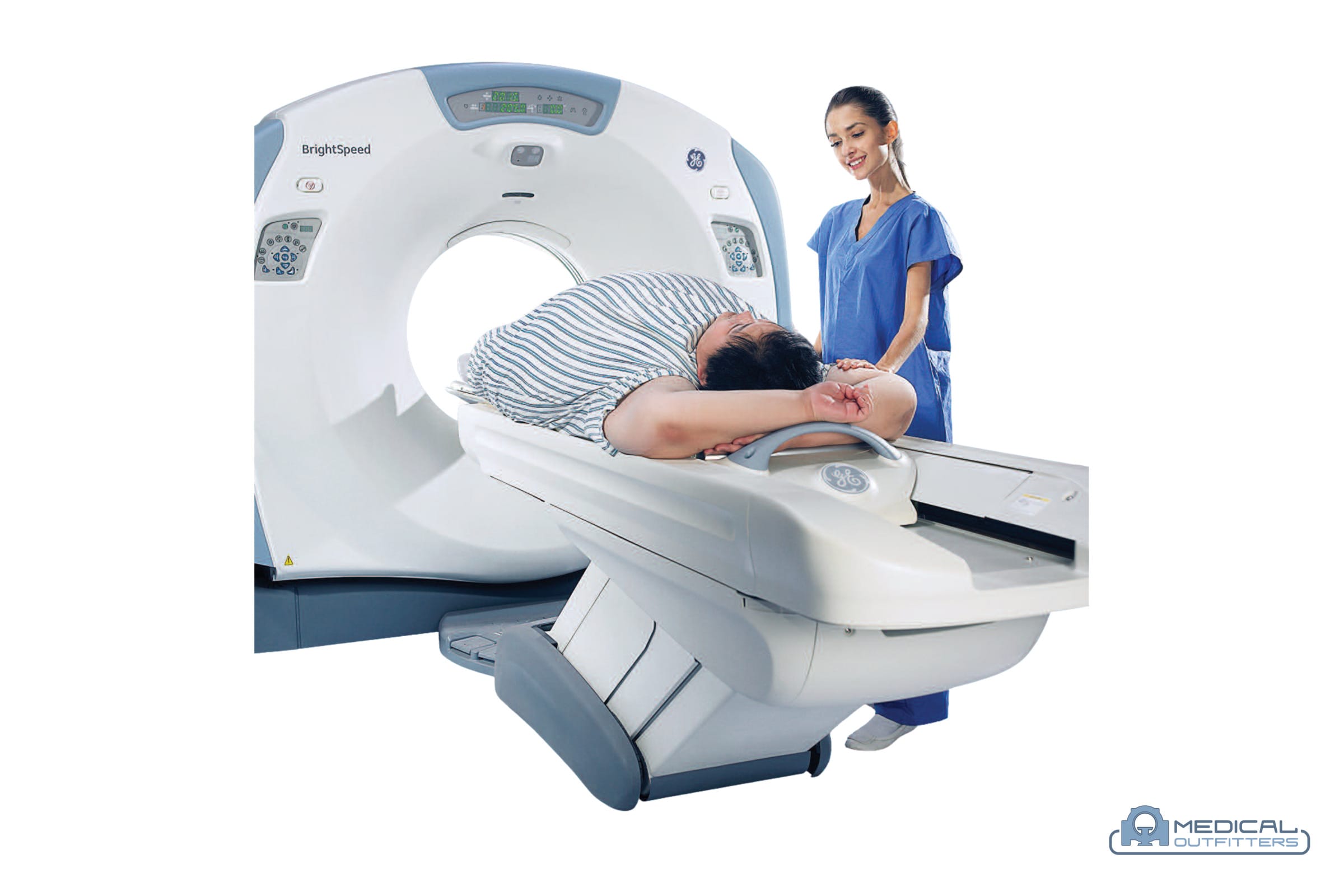
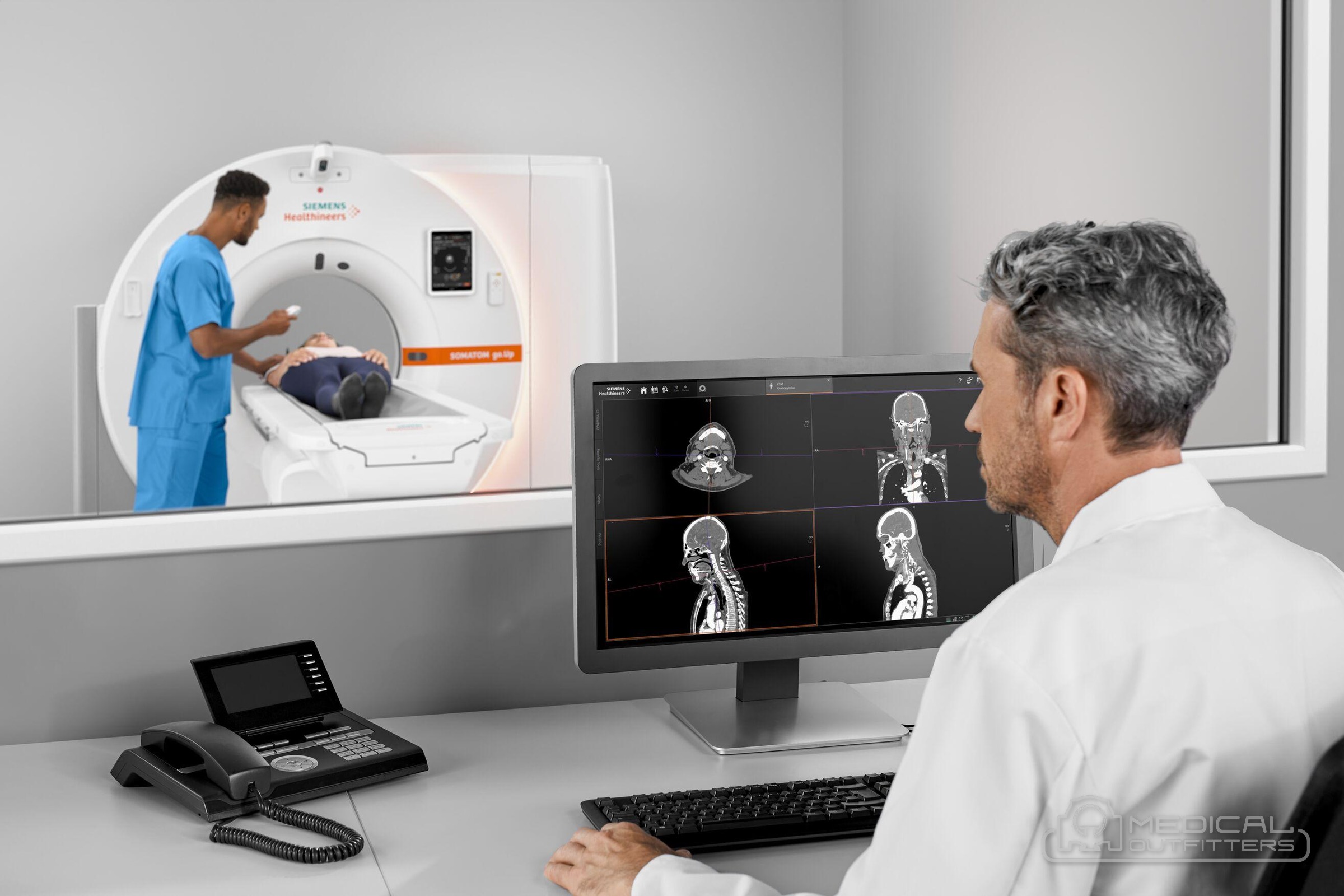
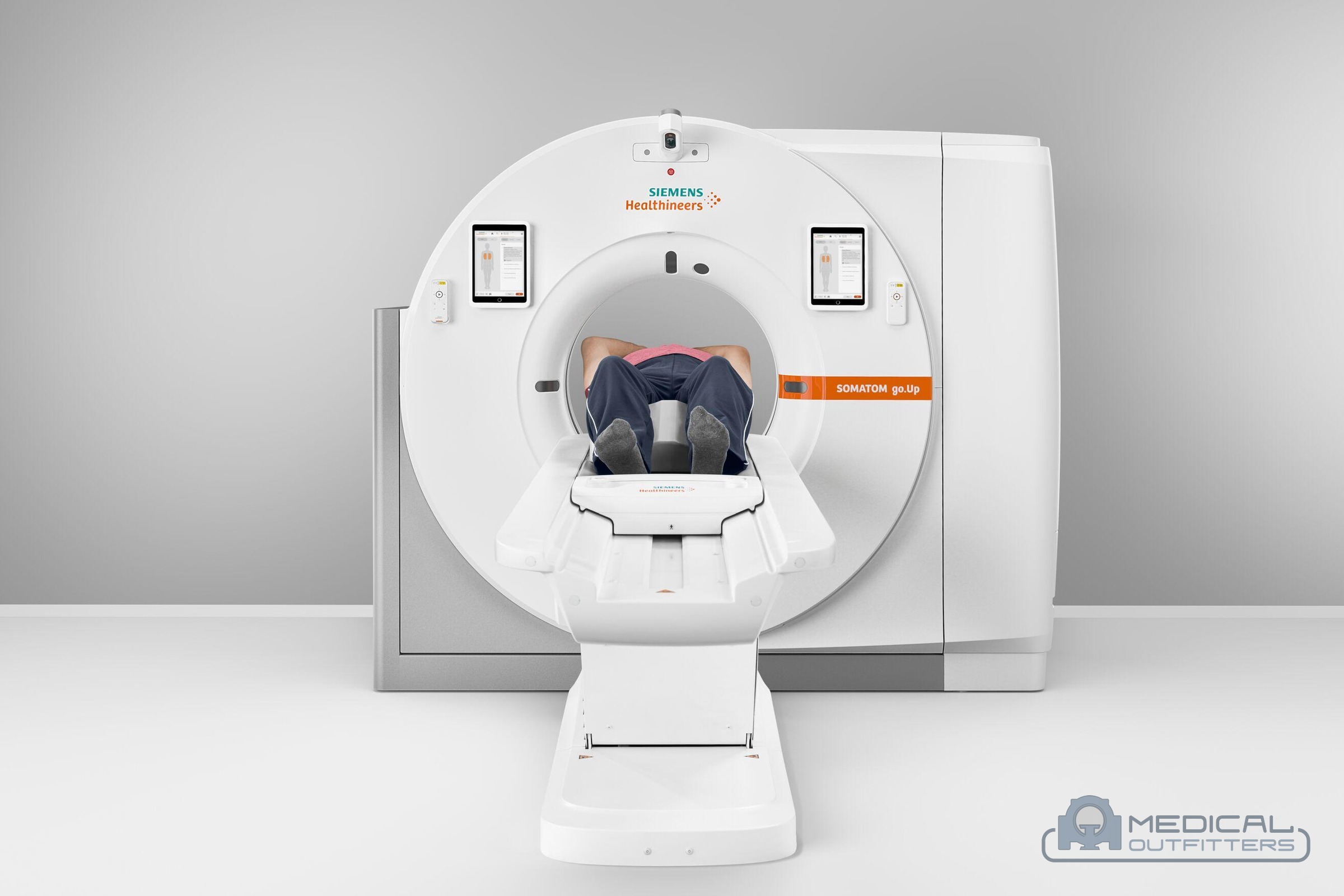
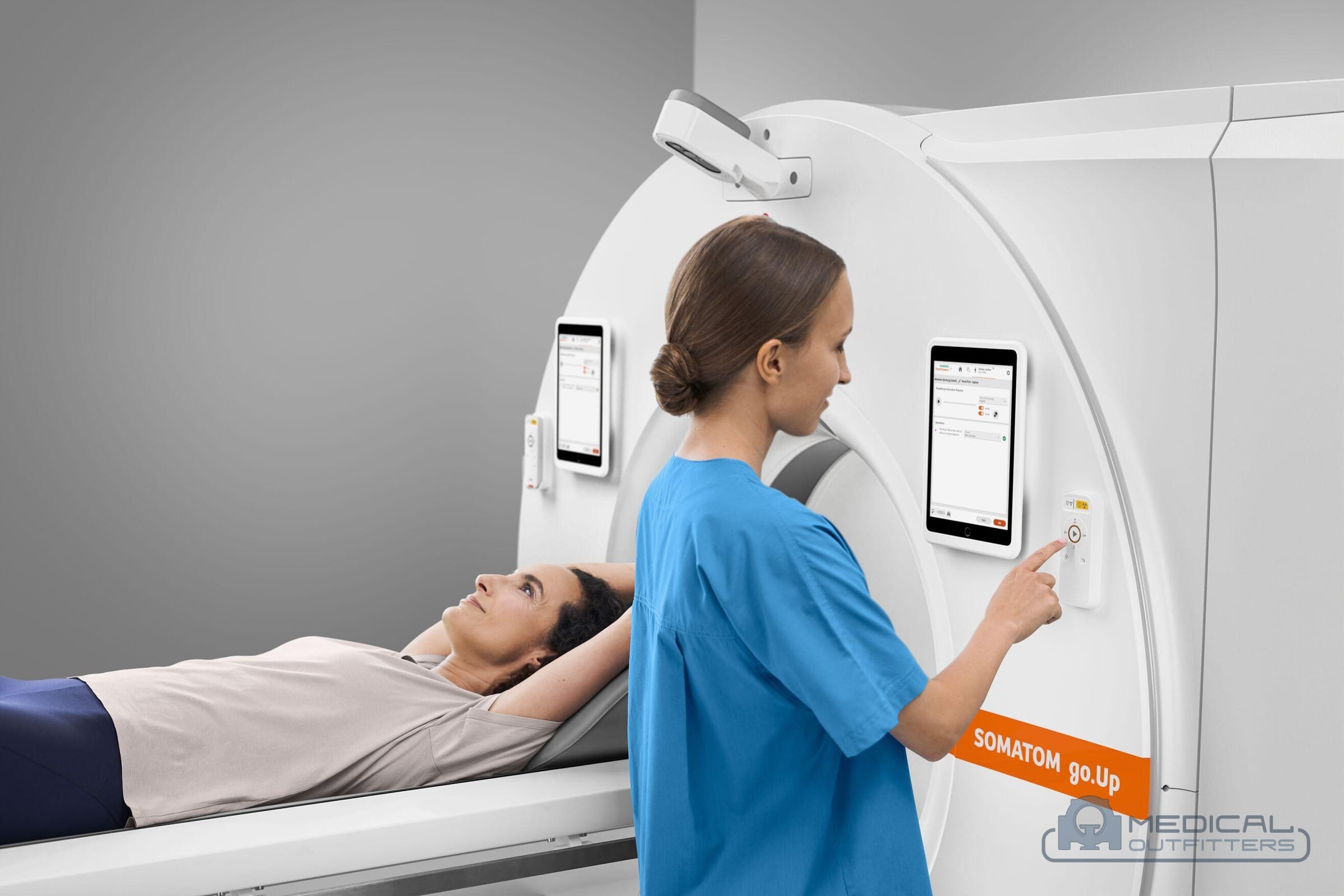
In the room. MedlinePlus describes the scan this way: you lie on a narrow table that slides into the center of the scanner, most often on your back with your arms raised above your head; the X-ray beam rotates around you; you must be still, and you may be told to hold your breath for short periods. Modern spiral scanners perform the exam without stopping, and there is very little noise. If you have any trouble breathing during the test, tell the operator right away; MedlinePlus notes that scanners have an intercom so the operator can hear you at all times.
How long. How long does a CT abdomen and pelvis take? MedlinePlus says an abdominal CT scan should take less than 30 minutes. The scanning is the short part: the A.D.A.M. patient encyclopedia published by UCSF Health says complete scans most often take only a few minutes and that the newest scanners can image the entire body in less than 30 seconds. What stretches the visit for a CT scan on abdomen with contrast is everything around the scan: check-in, the screening questions, placing the IV line and, where a center uses it, the time spent drinking oral contrast and waiting for it to move through the bowel. Ask your center how early to arrive; the answer depends on its oral contrast policy.
Afterward. RadiologyInfo says that if you have not been sedated, no recovery period is needed and you can return to your usual activities and normal diet right away. A radiologist reads the images and sends an official report to the doctor who ordered the exam, and that doctor gives you the results.
What a CT Abdomen and Pelvis Costs in 2026: The Medicare Numbers
Any answer on abdominal CT scan cost starts with Medicare, whose rates are the reference point for the rest of the market. In a physician office or independent imaging center the exam is paid as one global fee, which can be split into a technical part (the scanner, the room, the technologist and the contrast) and the radiologist’s reading. The American College of Radiology’s CY2026 impact table lists the national rates. In a hospital outpatient department or an ambulatory surgical center, Medicare pays the facility separately, and Medicare.gov’s Procedure Price Lookup shows national average totals for those two settings.
| Exam (CPT) | Office or imaging center, global (ACR) | Technical part | Reading | Hospital outpatient total (Medicare.gov) | Surgical center total (Medicare.gov) |
|---|---|---|---|---|---|
| Without contrast (74176) | $183.04 | $103.21 | $79.83 | $426 | $286 |
| With contrast (74177) | $300.61 | $216.77 | $83.84 | $656 | $492 |
| Without, then with (74178) | $338.35 | $245.50 | $92.85 | $694 | $530 |
Sources: American College of Radiology, CY2026 MPFS Final Rule Impact Tables, 7xxxx series; Medicare.gov Procedure Price Lookup, national averages based on Medicare’s 2026 payments, read November 20, 2026.
Three things stand out. First, contrast adds $117.57 to the office rate, the gap between $183.04 and $300.61, and nearly all of it sits in the technical part, which covers the contrast and the injection; the reading fee moves only from $79.83 to $83.84. Second, the two-part exam costs only $37.74 more than the with-contrast exam at $338.35, so the bigger step in price is adding contrast at all. Third, the rates barely moved from 2025: the ACR table shows $180.82, $297.26 and $332.85 for the three codes last year, increases of 1.2, 1.1 and 1.7 percent.
Scanning the abdomen alone pays less. The same ACR table lists a CT of the abdomen only at $136.28 without contrast (74150), $230.47 with contrast (74160) and $243.49 without and with (74170), and a CT of the pelvis only at $132.60, $225.79 and $235.48 (72192, 72193 and 72194).
In a hospital outpatient department, Medicare.gov lists a facility fee of $356 for the with-contrast exam and for the two-part exam and $243 for the exam without contrast. Those figures line up with the 2026 hospital outpatient rates in the ACR’s summary of the final rule: $356.43 for Level 2 Imaging with Contrast and $243.77 for Level 3 Imaging without Contrast. In a surgical center the facility fees shown are $192 and $103. One caution on the totals: Medicare.gov’s doctor fee line for 74177 is $300, the same as the full office rate, while the ACR table lists the reading alone at $83.84. Neither source explains the difference, so treat the Medicare.gov totals as the upper figure.
What a Medicare patient pays. Medicare.gov shows an average patient share of $131 in a hospital outpatient department and $98 in a surgical center for the with-contrast exam, $84 and $56 for the exam without contrast, and $138 and $105 for the two-part exam. In an office or imaging center, Part B pays 80 percent of the approved amount after the annual deductible, which CMS set at $283 for 2026, so the 20 percent share of $300.61 is $60.12, our arithmetic.
Cash Prices and What Insured Patients Pay
Outside Medicare, the price depends on the building and on who pays. MDsave, a marketplace where providers post bundled self-pay prices, listed the three versions as follows when we read it on November 20, 2026:
| Exam | MDsave price range | MDsave national average | MDsave’s estimated national average |
|---|---|---|---|
| Abdomen and pelvis without contrast | $200 to $1,254 | $471 | $940 |
| Abdomen and pelvis with contrast | $246 to $1,624 | $617 | $1,276 |
| Abdomen and pelvis with and without contrast | $256 to $1,772 | $667 | $1,302 |
The estimated national average is MDsave’s own comparison figure, not a price paid. The cash market follows the same order as Medicare: without contrast is the cheapest, and a CT scan abdomen and pelvis with and without contrast is the most expensive, by a smaller step.
CareRoute, a price aggregator, estimates that independent imaging centers often offer cash rates of $400 to $800 for the with-contrast exam and that insurers’ negotiated rates usually run $450 to $900. It reports an average provider charge of $1,049.94 from 2023 CMS utilization data, and it warns that when the scan is done in an emergency room, a separate facility fee of $500 to $1,500 can apply. Those are aggregator estimates and we name them as such. Our own CT scan cost guide lists an abdomen and pelvis CT at $350 to $900 at imaging centers and $1,200 to $3,000 at hospitals, from the same kind of published summaries.
For an insured patient, what you owe depends on where you are against your deductible, not on the list price. As CareRoute describes it, a patient on a high-deductible plan pays the full negotiated rate until the deductible is met and a coinsurance or copay after that, and most plans require prior authorization for an outpatient CT, so confirm that it is in place before the appointment. If you are paying cash, the No Surprises Act requires a provider that schedules a service for an uninsured or self-pay patient to give a written Good Faith Estimate, and a bill $400 or more above it can be disputed through the federal process, per CMS.
One practical check applies to every payer: make sure the code on the estimate and on the bill matches the exam you had. If no contrast was injected, the exam is 74176, not 74177. Where the scan is done is a decision for you and your doctor. An emergency is an emergency, and nobody should delay urgent care to shop for a price.
The Scanner Behind the Exam: Slice Count, Speed and Cost
Every price above is revenue to the facility that owns the CT scanner, and an abdomen and pelvis exam is routine work for any modern multislice system. The Medical Outfitters CT scanner cost and price guide lists routine head, chest, abdomen, spine and extremity CT as the job of its first tier, the 16 to 32-slice class, for clinics, urgent care centers, emergency departments and lower-volume sites that do not need cardiac work. More detector rows cover more of the body with each rotation, which shortens the breath-hold and the time on the table, and our explainer on CT scanner types by slice count covers how the classes differ.
The guide’s bands, each delivered, installed and warrantied, are:
- 16 to 32-slice: $85,000 to $185,000 refurbished.
- 64-slice: $175,000 to $375,000 refurbished and $625,000 to $975,000 new. The guide calls this the versatile workhorse for most hospitals and imaging centers.
- 128-slice: $350,000 to $625,000 refurbished, the tier for high throughput and advanced cardiac, vascular and low-dose imaging.
The guide lists freight, rigging, installation, calibration, image-quality testing, applications training and a written warranty in those bands, and it quotes the contrast injector, shielding, electrical work and the first service contract per project. The injector matters here: a site that offers the with-contrast exam needs a power injector and the supplies that go with it, and a site that scans only without contrast does not. Our used CT scanner buying guide covers tube life, detector condition and the software licenses to check on a refurbished system, and what is a CT scan machine explains the parts.
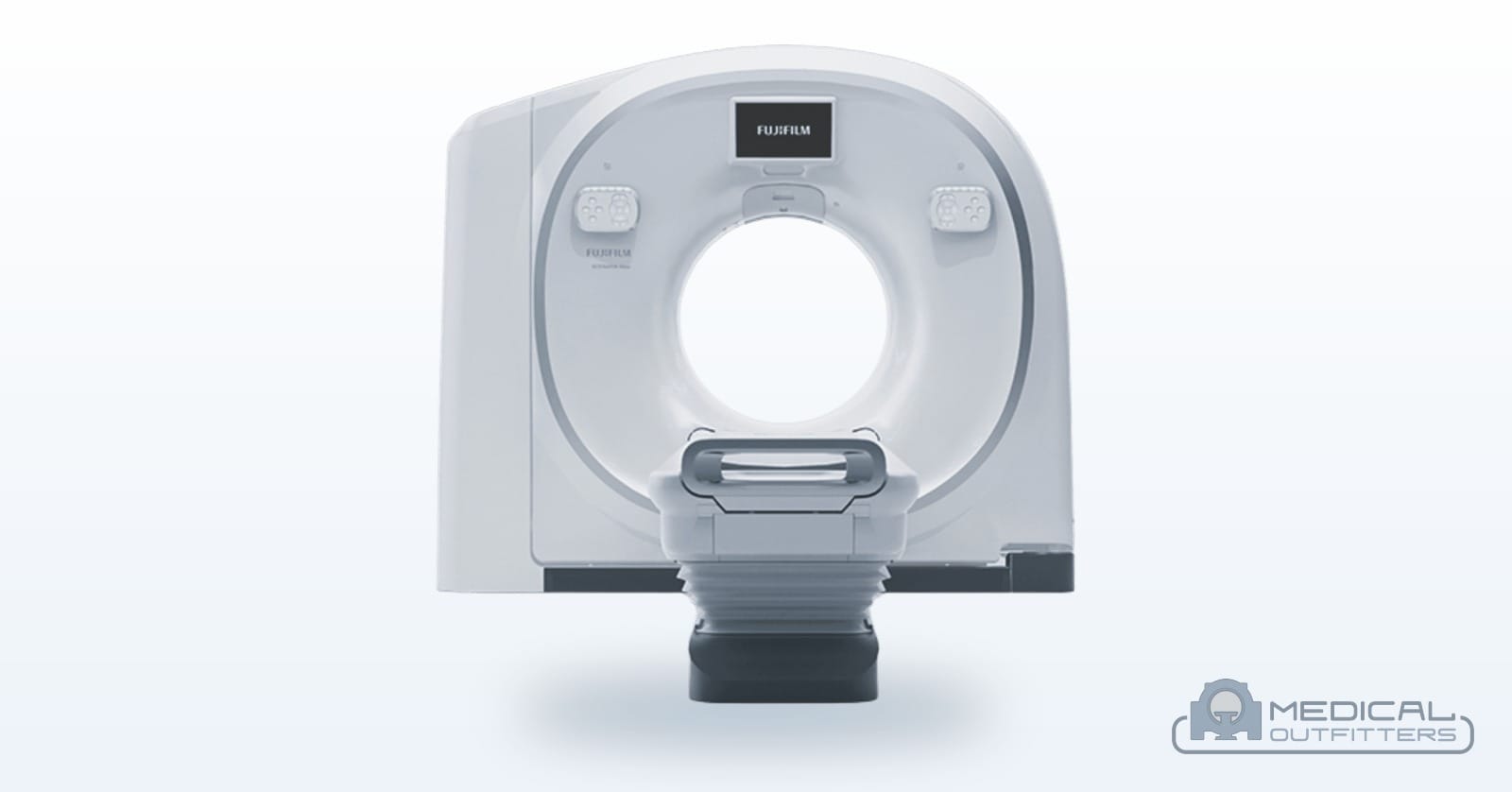
Two patient-side facts from earlier in this guide are equipment decisions for a buyer. The table weight limit, which RadiologyInfo puts at usually 450 pounds, and the size of the gantry opening decide which patients a site can scan, so ask for both numbers on any quote. And the CT guide says a quote should state which dose-reduction licenses are included, which bears on where a site lands against the 7.7 millisievert figure RadiologyInfo quotes for a typical exam.
On the revenue side, Medicare’s 2026 technical payment for the with-contrast exam is $216.77 in an office or imaging center, per the ACR table, and commercial and cash rates run higher. The CT guide works one payback example: a refurbished 64-slice system at $275,000, the middle of its band, is recovered after about 1,830 exams at a blended net revenue of $150 per exam, which is roughly nine months at ten exams a day, five days a week. Put your own exam mix and net revenue into that arithmetic before you buy.
Pricing the Scan and the Scanner With Medical Outfitters
If you came here as a patient, the short version is this: check which of the three versions your doctor ordered, follow the preparation your own imaging center gives you, ask how early to arrive, and if you are paying yourself, ask for the all-in price in writing before the appointment. Whether a CT abdomen with contrast is the right exam for you is your doctor’s call. If you came as an imaging center, clinic or hospital manager, the prices on this page are your revenue side and our guides are the cost side: the CT scanner cost guide for the bands, the CT category for current systems, and the refurbished imaging equipment page for the MO Select standard. Our CT scanner service team supports systems across the United States, Puerto Rico and the Caribbean, and the terms on a CT quote are collected in our glossary of CT scanner acronyms. For another CT exam priced the same way, see our guide to calcium score test cost. Send us the exams you plan to offer and the room you have, and we will price a specific system, delivered, installed and warrantied: contact Medical Outfitters.
- RadiologyInfo.org (RSNA and ACR), Abdominal and Pelvic CT, last reviewed June 15, 2026: uses, preparation, risks and limitations: https://www.radiologyinfo.org/en/info/abdominct
- RadiologyInfo.org, Contrast Materials (last reviewed August 25, 2024), Radiation Dose, and Kidney and Bladder Stones (last reviewed June 1, 2026): https://www.radiologyinfo.org/en/info/safety-contrast , https://www.radiologyinfo.org/en/info/safety-xray and https://www.radiologyinfo.org/en/info/stones-renal
- MedlinePlus (National Library of Medicine), Abdominal CT scan, review date July 15, 2024: how the test is performed, preparation and time: https://medlineplus.gov/ency/article/003789.htm
- UCSF Health, CT scan (A.D.A.M. Medical Encyclopedia, reviewed July 15, 2024): scan times: https://www.ucsfhealth.org/care/medical-tests/ct-scan
- American College of Radiology, ACR Manual on Contrast Media, 2026: fasting, reaction rates, kidney function, metformin and oral contrast: https://edge.sitecorecloud.io/americancoldf5f-acrorgf92a-productioncb02-3650/media/ACR/Files/Clinical/Contrast-Manual/ACR-Manual-on-Contrast-Media.pdf
- American College of Radiology, CY2026 MPFS Final Rule Impact Tables, 7xxxx series: 2025 and 2026 global, professional and technical rates: https://edge.sitecorecloud.io/americancoldf5f-acrorgf92a-productioncb02-3650/media/ACR/Files/Medicare-Medicaid/MPFS/CY2026-MPFS-Final-Rule-Impact-Tables-7xxxx-series.pdf
- American College of Radiology, CY 2026 HOPPS Final Rule Preliminary Summary: hospital outpatient imaging rates: https://edge.sitecorecloud.io/americancoldf5f-acrorgf92a-productioncb02-3650/media/ACR/Files/Medicare-Medicaid/HOPPS/CY2026-HOPPS-Final-Rule-Preliminary-Summary.pdf
- Medicare.gov, Procedure Price Lookup, codes 74176, 74177 and 74178 (read November 20, 2026): https://www.medicare.gov/procedure-price-lookup/cost/74177/
- MDsave, CT Scan of Abdomen and Pelvis with Contrast, without Contrast, and with and without Contrast (read November 20, 2026): https://www.mdsave.com/procedures/ct-scan-of-abdomen-and-pelvis-with-contrast/d781f5c4
- CareRoute, CPT 74177 cost page (price aggregator): cash and negotiated rate estimates: https://www.careroute.ai/costs/cpt/74177
- CMS, 2026 Medicare Parts A and B Premiums and Deductibles, and No Surprises Act key responsibilities for providers: https://www.cms.gov/newsroom/fact-sheets/2026-medicare-parts-b-premiums-deductibles and https://www.cms.gov/files/document/nsa-key-responsibilities-providers.pdf
- CT scanner cost and price guide (2026)
- CT scanners
- How much does a CT scan cost?
- CT scan with contrast vs without
- CT scanner types by slice count
- Used CT scanner buying guide
- What is a CT scan machine?
- CT scanner acronyms explained
- Calcium score test cost
- CT scanner service, repair and maintenance
- Refurbished medical imaging equipment
- Price a CT scanner for your facility
CT Abdomen and Pelvis With Contrast: Common Questions
What is a CT abdomen with contrast?
A CT abdomen with contrast is a CT scan of the belly taken after an iodine-based contrast injection into a vein, and it is usually ordered together with the pelvis as CPT 74177. MedlinePlus says the scan should take less than 30 minutes. Medicare's 2026 office rate is $300.61, per the American College of Radiology, and MDsave lists cash prices from $246 to $1,624, with an MDsave average of $617.
How long does a CT of the abdomen and pelvis with contrast take?
MedlinePlus says an abdominal CT scan should take less than 30 minutes, and the A.D.A.M. encyclopedia published by UCSF Health says complete scans most often take only a few minutes. The rest of the visit is check-in, screening questions, placing the IV line and, at centers that use it, drinking oral contrast and waiting. Ask your imaging center how early to arrive, because the answer depends on its oral contrast policy.
What is the difference between a CT abdomen and pelvis with and without contrast?
They are three billing versions of one exam. Without contrast is CPT 74176, a single scan with no injection, the usual choice for kidney stones. With contrast is CPT 74177, a single scan after an IV injection. Without followed by with is CPT 74178, two or more passes. RadiologyInfo lists about 7.7 millisieverts for one abdomen and pelvis CT and about 15.4 when it is repeated with and without contrast material.
Do I need to fast before an abdominal CT with contrast?
It depends on your imaging center. MedlinePlus says you may be asked not to eat or drink for 4 to 6 hours before the test if contrast is used, and RadiologyInfo says a few hours. The American College of Radiology's Manual on Contrast Media states that fasting is not required before routine intravascular contrast, while noting that some practices still ask for it. Follow the instruction your own center gives you.
Do you have to drink contrast for an abdominal CT?
Not always. Oral contrast marks the stomach and bowel, and whether it is used is each department's policy. RadiologyInfo says barium sulfate is the most common contrast taken by mouth, with iodine-based contrast substituted in some situations. MedlinePlus describes the drink as chalky, sometimes flavored, and says it passes out of the body in the stool. Your imaging center will tell you whether you need it and when to drink it.
How much does a CT abdomen and pelvis with contrast cost?
Medicare's 2026 office rate for CPT 74177 is $300.61, per the American College of Radiology, and Medicare.gov shows national average totals of $656 in a hospital outpatient department and $492 in a surgical center. For cash payers, MDsave lists $246 to $1,624, with an MDsave average of $617. CareRoute, a price aggregator, estimates $400 to $800 at independent imaging centers. Ask for an all-in price in writing.
What does a Medicare patient pay for a CT abdomen and pelvis?
Medicare.gov shows an average patient share of $131 in a hospital outpatient department and $98 in a surgical center for the with-contrast exam, CPT 74177, and $84 and $56 for the exam without contrast. In an office or imaging center, Part B pays 80 percent after the annual deductible, which CMS set at $283 for 2026, so the 20 percent share of the $300.61 rate is $60.12.
What CT scanner does an abdomen and pelvis exam need?
The Medical Outfitters CT scanner cost guide lists routine abdomen CT as the work of its 16 to 32-slice class, priced at $85,000 to $185,000 refurbished, delivered, installed and warrantied. Refurbished 64-slice systems, which the guide calls the workhorse for most hospitals and imaging centers, run $175,000 to $375,000. A site that offers the with-contrast exam also needs a power injector, which the guide quotes per project.
Related Articles
More scan cost guides: How much does a CT scan cost? · Calcium score test cost · MRI scan cost · PET scan cost · Ultrasound cost · X-ray cost