How long does it take to get MRI results? The scan itself is short, 15 to 45 minutes for most exams according to RadiologyInfo, the patient site of the American College of Radiology and the Radiological Society of North America, but the answer the patient is waiting for comes later, from a radiologist who reads the images, compares them with earlier studies and signs a report. The time between the scan and that report depends on how urgent the question is, how busy the reading radiologists are, whether a subspecialist or prior studies are needed, how the facility routes its studies, and how the report travels to the ordering doctor and the patient portal. This guide walks through each step, quotes the published turnaround figures from named providers and studies, explains the federal rule that put reports into patient portals faster, and then turns to the equipment and IT side that sets the speed inside a facility: the scanner, the PACS, the worklist and remote reading.
Medical Outfitters sells and installs MRI systems, new Fujifilm and Esaote and refurbished GE and Siemens through its MO Select line, with installations in Oklahoma City, Stuart (Florida), San Sebastian, Humacao and Caguas (Puerto Rico) and MRI service across the United States, Puerto Rico and the Caribbean. This article is written for patients who want to know what happens to their scan and for the administrators, radiology managers and owners who run the scanners and want reports to move faster. It explains a process; it is not medical advice, and a question about a specific result belongs with the doctor who ordered the scan.
- Typical wait: up to a few days for a routine outpatient MRI per Cleveland Clinic; 1 to 2 weeks per the NHS in England.
- Urgent findings: the ACR practice parameter calls for expedited, documented, direct communication to the ordering clinician.
- Patient portals: since the information blocking rules applied on April 5, 2021, most reports are released without a blanket delay.
- Why it takes longer: reading workload, complex or contrast studies, missing priors, subspecialty reads and weekends.
- The facility side: scanner uptime, PACS and worklist connections and remote reading coverage decide how fast a study reaches a radiologist.
How Long Does It Take to Get MRI Results?
There is no single national standard for MRI report turnaround in the United States, so the honest answer comes from what providers and studies publish. The figures below are the ones we could trace to a named source; each describes a different setting, and the ordering doctor’s office is always the best place to ask what applies to a specific scan.
| Source | What it says | Setting |
|---|---|---|
| RadiologyInfo (ACR and RSNA) | Most MRI exams take 15 to 45 minutes; some take 60 minutes or longer. A radiologist reviews the images and sends a report to the ordering physician; many facilities release a copy to the patient portal. | US, general |
| Cleveland Clinic | The radiologist’s analysis of the images “can take up to a few days”, and the report goes to the patient’s healthcare provider. | US health system, outpatient |
| NHS (England) | It usually takes between 1 and 2 weeks to get MRI results; patients who hear nothing after a few weeks should contact the referring doctor. | UK public system |
| Pollock et al., AJR 2024 (Mayo Clinic) | After Cures Act compliance, the median time from a final report to its release in the portal fell from 36.0 hours to 0.4 hours, across 1.19 million exams. | US multicampus health system |
Read together, the figures show that how long MRI results take is really three clocks added together, and the MRI report turnaround time a radiology department measures is only one of them.The first is the scan, measured in minutes. The second is the read, which for a routine outpatient study is usually measured in hours to a few days and depends on the queue in front of the radiologist. The third is delivery: how long the signed report takes to reach the ordering doctor, and the patient. That third clock used to add a day or more on its own in many US systems, and it is the one federal rules have shortened most.
Inpatient and emergency department studies run on a different clock again. They are flagged as urgent or stat when they are ordered, they sit at the top of the radiologist’s worklist, and the findings that matter are telephoned, not left in a queue. A routine outpatient knee or lumbar spine MRI, by contrast, joins the general worklist with the rest of the day’s studies and is read in turn.
What Happens Between the Scan and the Report
From the patient’s side the scan ends when the table slides out. From the facility’s side several steps follow before anyone can read the result.
The images leave the scanner. When the technologist closes the exam, the scanner sends the series to the facility’s picture archiving and communication system, the PACS, using the DICOM standard. The study arrives already attached to the patient and the order, because the scanner pulled that information from the radiology information system’s worklist before the scan began. If the worklist entry was wrong or missing, the study can land unmatched and has to be corrected by hand before it appears on a radiologist’s list, which is one of the quiet causes of a delayed report.
The study joins a worklist. The PACS or a separate worklist system places the study in front of the radiologists who read that kind of exam, sorted by priority. Emergency and inpatient studies go first, then outpatient work. Some practices route by subspecialty, so a brain MRI waits for a neuroradiologist and a knee for a musculoskeletal radiologist.
The radiologist reads it. An MRI is not one picture. A routine exam contains several sequences, each a stack of images in one or more planes, and the radiologist reviews them all, compares them with the patient’s earlier studies, and correlates them with the reason for the exam written on the order. RadiologyInfo describes the radiologist as a doctor trained to supervise and interpret radiology exams; the read is the clinical heart of the test.
The report is dictated and signed. Most radiologists dictate into speech recognition software, edit the draft and sign it. Signing makes the report final, and the final report is what flows to the ordering doctor’s inbox, the electronic health record and, in most US systems today, the patient portal.
The ordering doctor acts on it. RadiologyInfo tells patients to follow up with their doctor even when the portal shows the report, because the ordering physician puts the findings in the context of the symptoms and decides what happens next, which may include a follow-up exam.
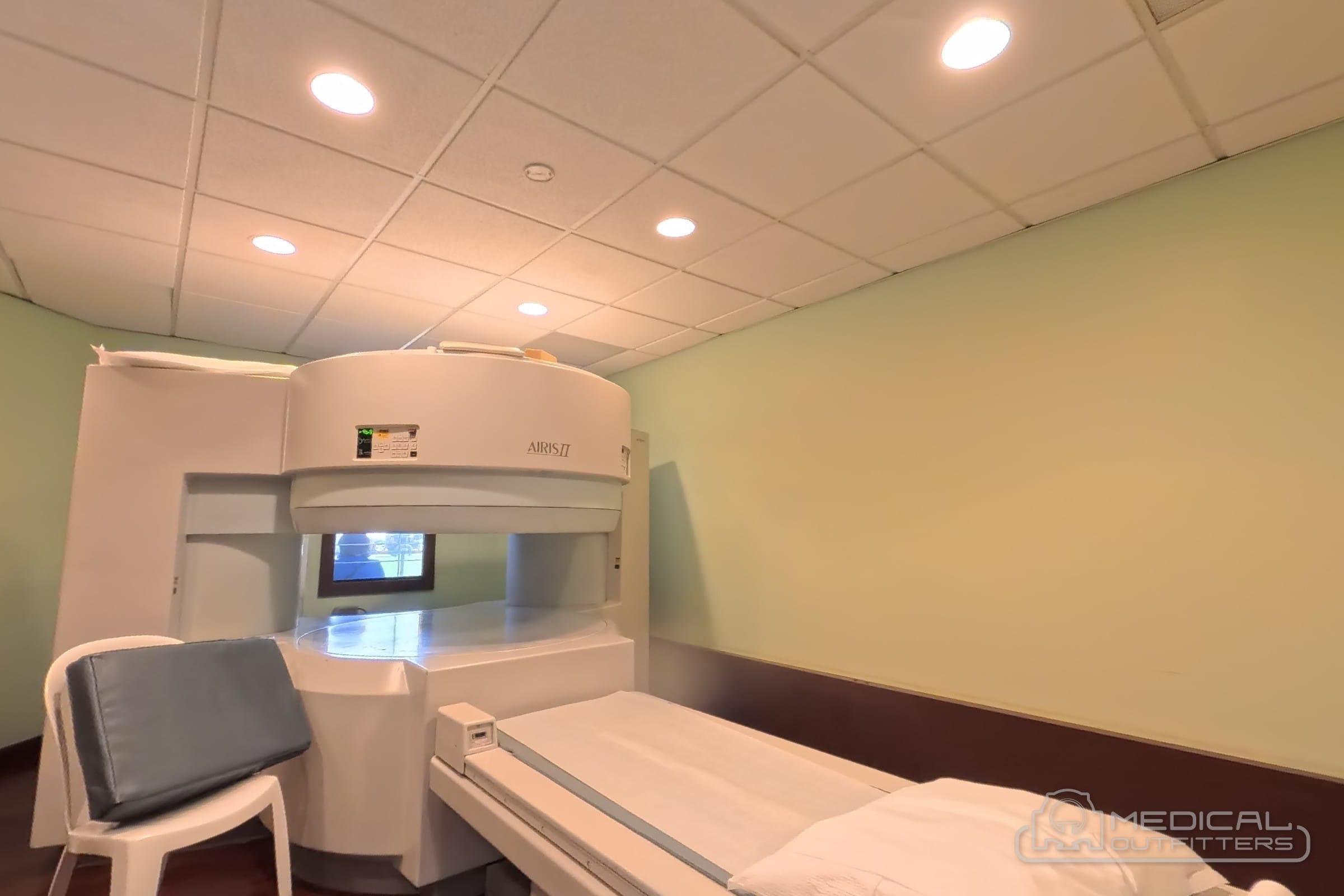
Routine Reports and Urgent Findings: What the ACR Expects
The American College of Radiology sets out how imaging findings should be communicated in its Practice Parameter for Communication of Diagnostic Imaging Findings, most recently revised in 2025 (Resolution 9). It is guidance rather than a law, but ACR accreditation programs expect facilities to have a system for it, and it is the reference most US radiology practices build their policies on.
Routine reports travel through the usual channels the facility has set up: the final report goes to the ordering clinician through the record, the inbox or an interface. That is the path for the large majority of outpatient MRI studies, and it is why the patient often hears nothing until the next appointment or a portal notification.
Nonroutine communication is for findings that cannot wait. As summarized by the medical liability insurer NORCAL, the parameter says communication should be expedited in emergent or other nonroutine situations, and its examples include findings that need urgent action, a final read that differs from a preliminary report, discrepancies found when a report is reviewed later, and findings the treating physician did not expect that could seriously affect the patient’s health. The radiologist calls the ordering clinician or the care team directly rather than relying on the report alone.
Documentation. The parameter recommends that every nonroutine communication be documented in the report, with the time, the method and the name of the person who received it, per the NORCAL summary. That line in a report, “discussed with Dr. X by telephone at 14:20”, is the trace of the faster path.
Preliminary and final reports. In emergency departments and overnight, a preliminary read, from a resident, an on-call radiologist or a teleradiology service, may guide care before the final report is signed. The ACR parameter treats a discrepancy between the preliminary and the final read as a reason for direct communication.
Self-referred patients. Where a patient has arranged an exam without a referring doctor, NORCAL’s summary of the parameter recommends that the imaging physician communicate the results directly to the patient and advise appropriate follow-up. In every other case the ordering doctor remains the person who explains what the result means.
For a patient, the practical meaning is that silence after a routine scan is normal and does not by itself signal anything. A finding that needs immediate action is meant to travel by phone, not by queue.
Why MRI Results Sometimes Take Longer
When a report takes more than a few days, the cause is usually one of a short list, most of them on the facility’s side rather than anything about the scan itself.
Reading workload. The volume of images per radiologist has grown much faster than the number of radiologists. A Mayo Clinic study by McDonald and colleagues in Academic Radiology (2015) found that cross-sectional studies at the institution rose from 84,409 in 1999 to 147,336 in 2010, and that the images each radiologist had to interpret per minute of the workday rose from 2.9 to 16.1, which the authors expressed as one image every 3 to 4 seconds over an eight-hour day. The growth came mostly from more images per CT and MRI exam, not from more exams. A long outpatient worklist is the most common reason a routine MRI waits.
Complex studies. A brain, spine or cancer staging MRI with contrast has more sequences, more comparison and more to describe than a single joint, and it takes longer to read and dictate.
Subspecialty reads and second opinions. Practices that route neuro, musculoskeletal, breast or cardiac MRI to a subspecialist trade a short wait for a more specialized read. Some studies are reviewed by a second radiologist before the report is final.
Prior studies from another facility. The comparison with earlier imaging is often the most useful part of the read. When the priors were done elsewhere, the radiologist may wait for them to be imported from a CD or an image exchange before signing.
Technical problems. A study that arrives unmatched to its order, a scanner that could not send to the PACS, or an incomplete exam that needs a repeat sequence all stop the clock until someone fixes them.
Weekends, holidays and coverage. A routine outpatient scan on a Friday afternoon may not be read until the next working day at a practice without weekend outpatient coverage.
State law holds. A small number of states require a short hold before some sensitive results reach the patient electronically. The law firm Reed Smith notes that Texas Senate Bill 922, effective September 1, 2025, bars electronic disclosure of certain sensitive test results before the third day after finalization, and that Kentucky’s KRS 333.152, enacted in 2022, imposes a similar 72-hour hold. The report still reaches the ordering doctor; the hold applies to the patient’s portal.
How Patients Usually Receive MRI Results
There are three common routes, and many patients get more than one.
From the ordering doctor. The traditional route: the radiologist’s report goes to the physician who ordered the scan, who calls, sends a message or discusses it at a follow-up visit. RadiologyInfo recommends this conversation even when the patient has already read the report, because the ordering doctor explains what the findings mean for that patient.
Through the patient portal. This is where the federal rules changed the timeline. The 21st Century Cures Act’s information blocking provisions, written into the Office of the National Coordinator for Health IT rule, became applicable on April 5, 2021, as the American Academy of Family Physicians reported at the time. ONC’s own guidance, presented in its February 2021 information blocking FAQ webinar, says the Preventing Harm exception does not allow a blanket delay in releasing lab or other test results so that the ordering clinician can review them first; withholding has to be an individual decision based on a risk of harm. Reed Smith adds that ONC has identified time-limited embargoes on portal access to reports as conduct likely to be considered interference.
The effect is measurable. In the study by Pollock and colleagues at Mayo Clinic, published in the American Journal of Roentgenology in 2024 and summarized by HealthDay, the health system’s compliance policies took effect on January 1, 2022. Across 1.19 million examinations in 388,921 patients in 2021 and 2022, the median time from report finalization to release in the portal fell from 36.0 hours to 0.4 hours, and the median time from release to the patient first opening it fell from 8.7 hours to 3.0 hours. The share of reports the patient opened before the ordering provider rose from 18.5 percent to 44.0 percent.
That last figure is the trade-off. Many patients now read their MRI report before their doctor has seen it, in the technical language radiologists write for other physicians. Some practices respond with plain-language summaries or a note that the doctor will follow up; the ACR and RSNA patient site, RadiologyInfo, is a common reference for the terms.
Directly from the imaging facility. Self-referred patients, and patients at facilities that hand out a copy of the images or report on request, may get results straight from the imaging center. A copy of the images on a disc or a download link is also how a patient carries the study to a specialist elsewhere, which is the prior that the next radiologist will want.
The Equipment and IT That Set the Speed
Every hour on the patient’s clock passes through equipment the facility owns or contracts for. For an administrator who wants reports out faster, these are the levers.
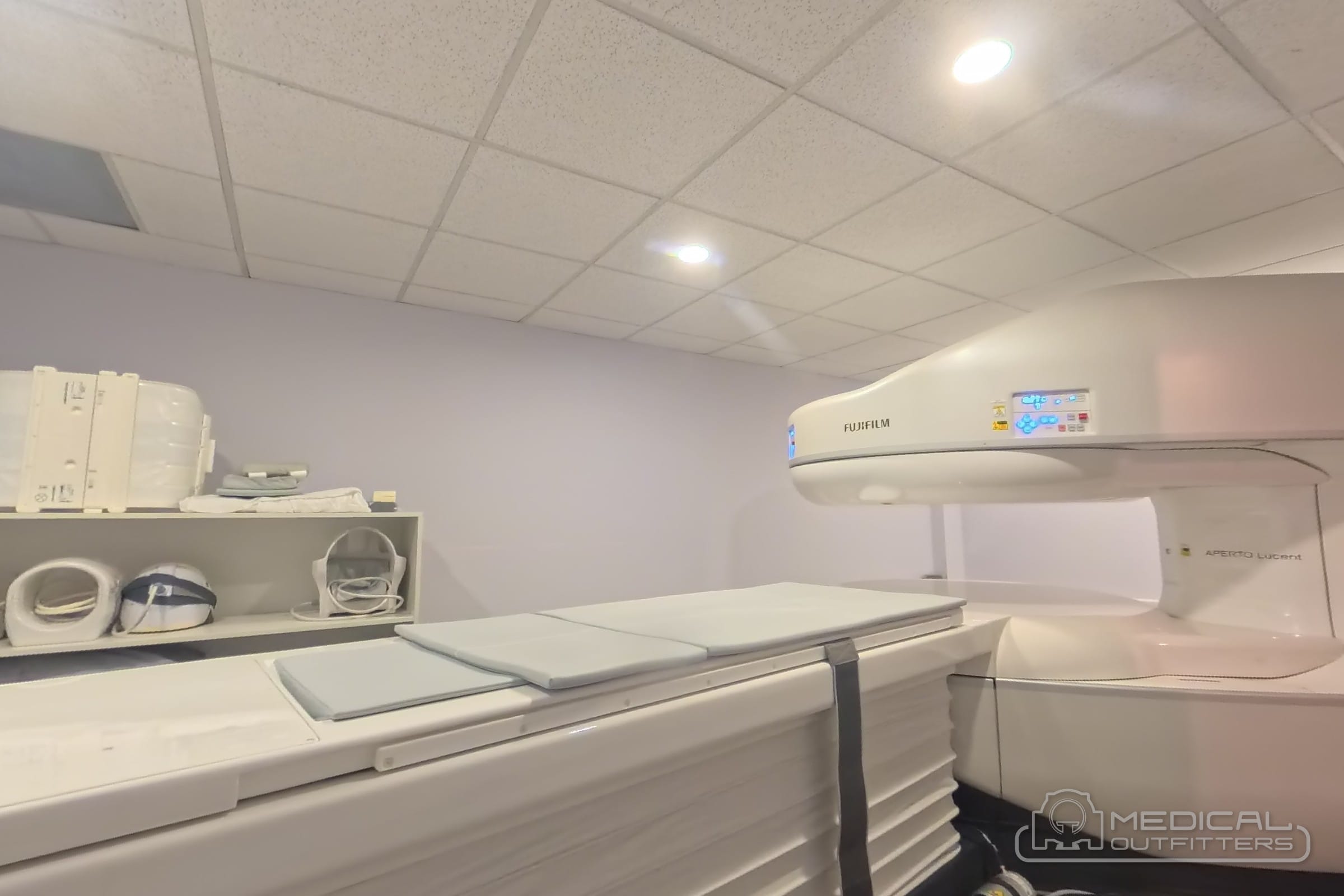
A scanner that stays up. A down magnet does not only delay reports; it cancels scans and pushes the whole schedule back. Uptime comes from preventive maintenance, cryogen and cold head care and a fast first response when something fails. The Medical Outfitters MRI service page states the commitment written into its contracts: remote response within 30 minutes and on-site service within 2 hours for local facilities on a contract, with engineers on call 24/7 and travel days planned for Puerto Rico and the Caribbean.
Clean PACS and worklist connections. The scanner pulls each patient from the modality worklist and sends each study to the PACS. When either connection breaks after a software update or a network change, studies arrive unmatched or not at all, and they wait for someone to notice. The preventive maintenance visit described on our MRI service page includes the console and software checks: error logs, backups, software patches and network connectivity to PACS and the worklist. The DICOM and HL7 terms that come up in those conversations are collected in our glossary of imaging acronyms.
Reading capacity and remote reads. The study only moves once a radiologist opens it. Facilities without enough on-site radiologists, rural sites, island sites and mobile units contract remote reading, teleradiology, so studies are read wherever the radiologist is. The images travel over the network to a reading workstation and the report comes back through the same systems. Remote reading extends coverage into nights and weekends, which is often the single biggest change a small center can make to its turnaround.
Diagnostic displays. Radiologists read on calibrated medical displays, and review stations for referring physicians use clinical review monitors such as the LG 27-inch 8MP clinical review monitor Medical Outfitters supplies.
Protocols that fit the question. A protocol that answers the clinical question in the fewest sequences scans faster and reads faster. Field strength, coils and software packages all shape what a scanner can do in a slot; our comparisons of 1.5T vs 3T MRI and wide-bore, open and closed MRI cover those trade-offs, and T1 vs T2 MRI explains the two sequences every exam starts from.
Mobile and satellite sites. A mobile MRI trailer or a satellite center depends entirely on its network link to send studies home for reading; our guide to mobile imaging trailers covers how those units connect and operate.
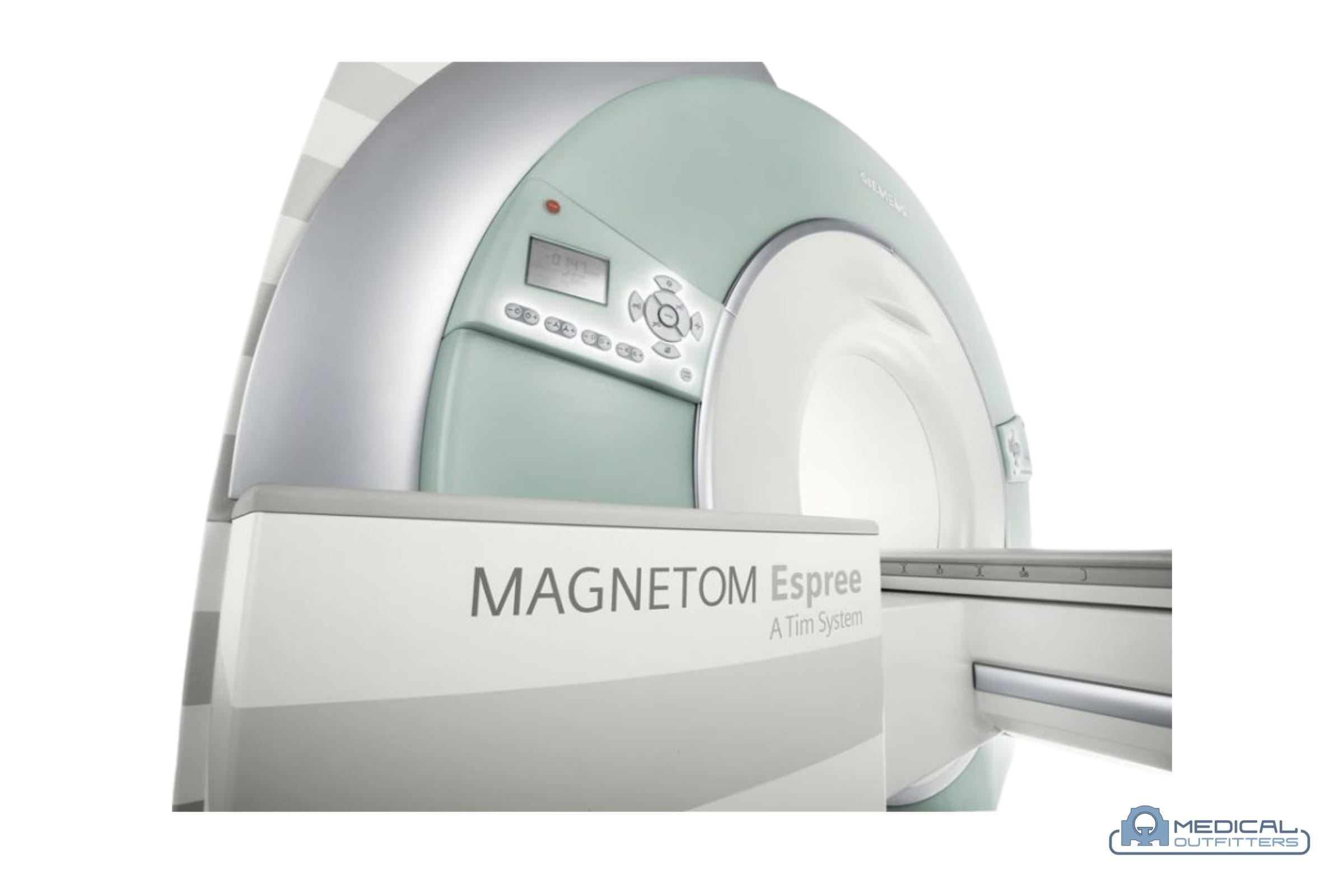
Faster MRI Reports Start With the Scanner: Medical Outfitters
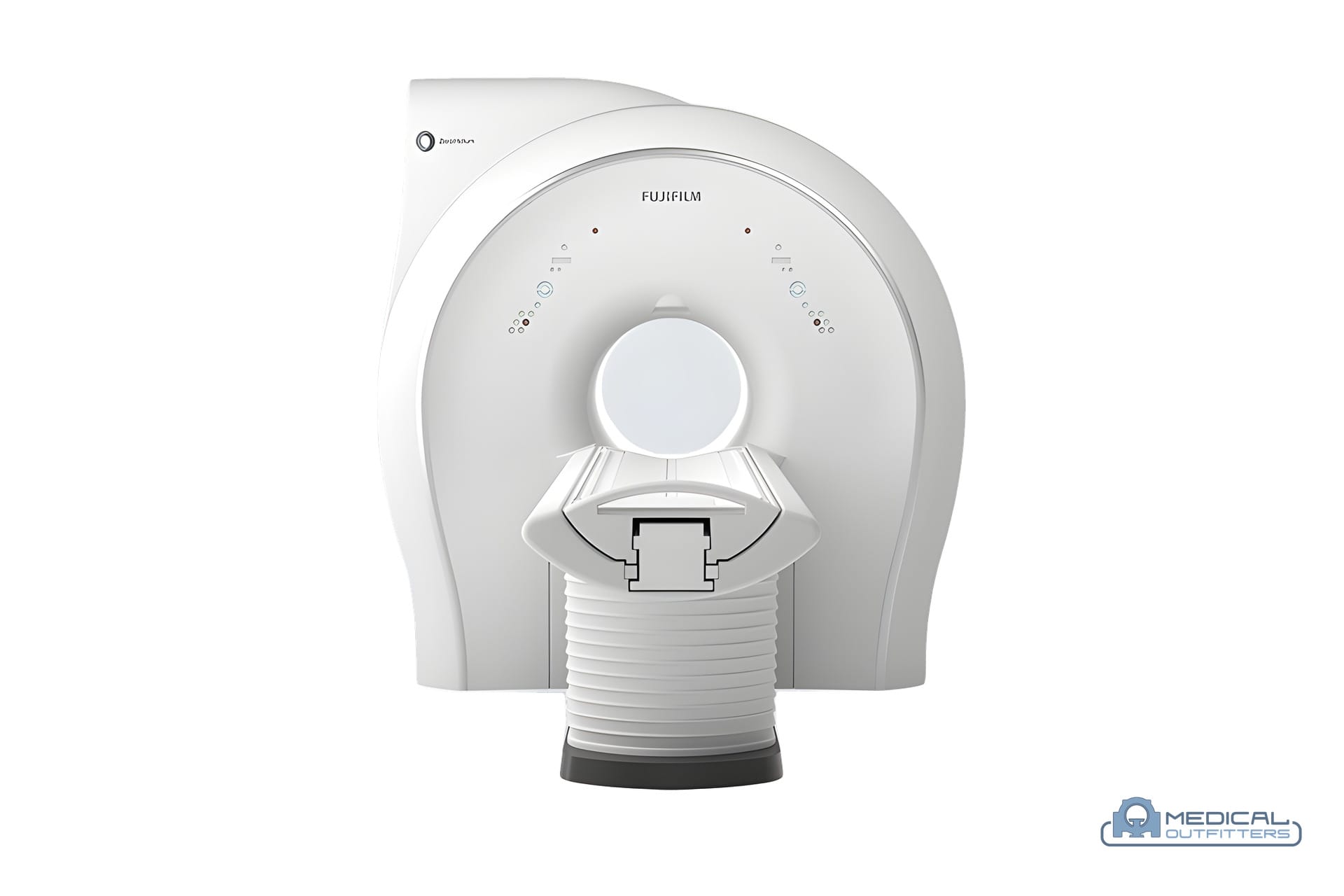
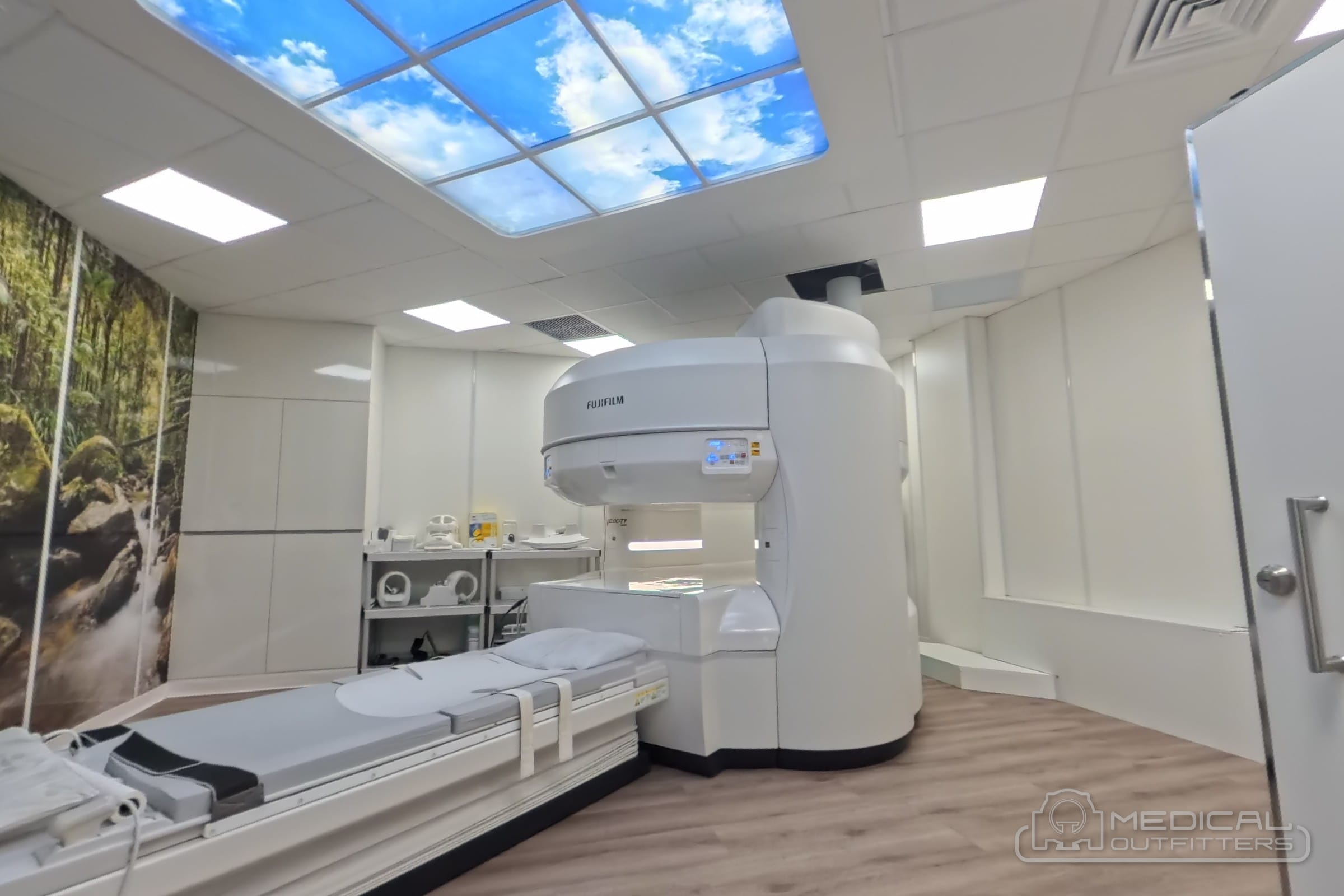
Most of the wait for MRI results happens after the scan, in the reading queue and the delivery of the report, but a facility controls more of that clock than it may think: a scanner that stays in service, connections to PACS and the worklist that do not break, and enough reading coverage for the volume. Medical Outfitters supplies new Fujifilm and Esaote and refurbished GE and Siemens systems through MO Select, listed on our MRI machines for sale page and in the MRI category, installs them with applications training as set out in our MRI machine cost and price guide, and keeps them running through MRI service across the United States, Puerto Rico and the Caribbean. For the patient side of the same scan, see how much an MRI scan costs and what an MRI machine is and how it works. To plan a new MRI suite, replace an aging scanner or put an existing one under a service contract, contact Medical Outfitters.
- RadiologyInfo (ACR and RSNA), Magnetic Resonance Imaging (MRI): exam length of 15 to 45 minutes, and who interprets the results: https://www.radiologyinfo.org/en/info/mr and https://www.radiologyinfo.org/en/info/bodymr
- Cleveland Clinic, MRI information for parents: the radiologist’s analysis can take up to a few days: https://my.clevelandclinic.org/health/diagnostics/16387-mri-information-for-parents
- NHS, MRI scan: results usually take 1 to 2 weeks: https://www.nhs.uk/tests-and-treatments/mri-scan/
- American College of Radiology, Practice Parameter for Communication of Diagnostic Imaging Findings, revised 2025 (Resolution 9): https://gravitas.acr.org/PPTS/GetDocumentView?docId=74; summary by NORCAL: https://www.norcal-group.com/library/communication-of-diagnostic-imaging-findings-by-radiologists
- Pollock JR et al., American Journal of Roentgenology 2024;222(6):e2330343, as summarized by HealthDay: https://www.healthday.com/healthpro-news/health-technology/cures-act-tied-to-quicker-release-access-of-imaging-reports
- American Academy of Family Physicians, ONC’s information blocking rule takes effect April 5: https://www.aafp.org/news/government-medicine/20210402infoblockimplement.html; ONC information blocking FAQ webinar, February 2021: https://www.healthit.gov/sites/default/files/2021-02/IB%20FAQs%20Webinar_02-02-2021_FINAL.pdf
- Reed Smith, Information blocking rules update: what diagnostic radiology groups should know (2026): https://www.reedsmith.com/our-insights/blogs/viewpoints/102nu5x/information-blocking-rules-update-what-diagnostic-radiology-groups-should-know-n/
- McDonald RJ et al., Academic Radiology 2015;22:1191 to 1198, as reported by Applied Radiology: https://appliedradiology.com/articles/the-radiologist-s-gerbil-wheel-interpreting-images-every-3-4-seconds-eight-hours-a-day-at-mayo-clinic
- MRI service, repair and maintenance
- MRI machine cost and price guide (2026)
- MRI machines for sale
- Used and refurbished MRI machines for sale
- MRI machines: new, refurbished and used
- How much does an MRI scan cost in 2026?
- What is an MRI machine and how does it work?
- Imaging acronyms explained: DICOM, MWL, MPPS and more
- 1.5T vs 3T MRI
- Wide-bore vs open vs closed MRI
- T1 vs T2 MRI
- Mobile imaging trailers explained
- MRI safety zones explained
- Plan an MRI suite or a service contract
MRI Results: Common Questions
How long does it take to get MRI results?
For a routine outpatient MRI, usually up to a few days. Cleveland Clinic says the radiologist's analysis can take up to a few days before the report goes to the ordering provider, and the NHS tells patients in England to expect 1 to 2 weeks. Urgent findings are communicated faster, by phone, under the ACR practice parameter, and many US patients now see the signed report in their portal within hours.
Why does it take so long to get MRI results back?
The usual causes are on the facility's side: a long reading worklist, a complex study such as a brain or spine MRI with contrast, a subspecialist or second radiologist reviewing it, prior studies from another facility being imported for comparison, a study that arrived unmatched to its order, or a weekend. A Mayo Clinic study in Academic Radiology found images per radiologist per minute rose from 2.9 in 1999 to 16.1 in 2010.
Who reads MRI results and sends the report?
A radiologist, a doctor trained to supervise and interpret radiology exams, reviews the images and sends a report to the physician who ordered the exam, according to RadiologyInfo, the ACR and RSNA patient site. Many facilities also release a copy of the report to the patient portal. The ordering doctor explains what the findings mean and decides on any follow-up, so a conversation with that doctor is still the next step.
Does a fast MRI result mean something is wrong?
Not by itself. Speed depends mostly on the worklist, the reading coverage and how the facility releases reports, and in most US systems a signed report now reaches the portal within hours. The ACR practice parameter does call for expedited, direct communication of findings that need urgent action, so a phone call from the radiology team is the signal of an urgent finding, not the speed of a portal notice.
Will I see my MRI results before my doctor?
Often, yes. Since the information blocking rules applied on April 5, 2021, providers may not hold back results with a blanket delay. In the Pollock study in the American Journal of Roentgenology, the share of reports patients opened before the ordering provider rose from 18.5 percent to 44.0 percent. A few states, including Texas and Kentucky, require a 72-hour hold on some sensitive results.
How long does the MRI scan itself take?
Most MRI exams take between 15 and 45 minutes, and some take 60 minutes or longer, according to RadiologyInfo. The length depends on the body part, the number of sequences the protocol calls for and whether contrast is given. The scan is the short part of the wait: the read and the delivery of the report take longer, usually from several hours to a few days for a routine outpatient study.
What is a preliminary MRI report?
A first read issued before the final report, usually in the emergency department or overnight, by a resident, an on-call radiologist or a teleradiology service, so care can continue while the final read is completed. The final, signed report is the one that goes into the record. The ACR practice parameter treats a final read that differs from the preliminary report as a reason for direct communication with the treating clinician.
Can an imaging center speed up MRI results?
Yes, mostly through equipment and IT. A scanner that stays in service, modality worklist and PACS connections that do not break after updates, remote reading for nights and weekends, subspecialty routing and importing outside prior studies before the read all shorten the clock. Medical Outfitters supplies, installs and services MRI systems across the United States, Puerto Rico and the Caribbean, with PACS and worklist connectivity checked on preventive maintenance visits.