If you are planning an imaging center or weighing a scanner purchase, “what is an MRI machine” is worth answering past the one line a patient needs. The machine is a superconducting magnet the size of a small car, cooled with liquid helium to near absolute zero, wrapped in gradient and radiofrequency hardware, sitting inside a copper shielded room with its own chiller, power and quench path. This guide explains what an MRI machine is, what it does, the parts it is built from, how it forms an image, the field strengths from open low field systems to 3 Tesla, the difference between open and closed designs, what it takes to site one, and the price classes Medical Outfitters works within.
Medical Outfitters sells, installs and services MRI systems across the United States, Puerto Rico and the Caribbean: refurbished GE and Siemens scanners through its MO Select line, new Fujifilm systems as an authorized dealer, and other platforms sourced refurbished on request. This article is written for the facility owner, administrator, radiology manager or clinician deciding what to buy and what the room around it has to do, not for the patient about to be scanned, though it answers their questions too.
- What it is: a scanner that images the body with a strong magnet and radio waves, no ionizing radiation.
- How it works: the magnet aligns protons, radio pulses excite them, gradients locate the signal, a computer builds the slices.
- The parts: the superconducting magnet and its helium, the gradient coils, the radiofrequency coils, the console and the support systems.
- The classes: open and low field systems, 1.5T closed and wide bore scanners, and 3T, each with its own use and price.
- The room: an RF shielded enclosure, a chiller, a power feed and a quench path, all quoted with the machine.
What Is an MRI Machine, and What Does It Do?
An MRI machine, short for magnetic resonance imaging, is a diagnostic scanner that produces detailed cross sectional pictures of organs, soft tissue, bone and blood vessels. Unlike an X-ray or a CT scanner, it uses no ionizing radiation at all: the FDA states plainly that MR images are made without using any ionizing radiation. Instead it combines three things, which the FDA describes as the elements of the MR environment: a strong static magnetic field, a magnetic field that changes with time, called the gradient field, and radiofrequency energy.
What the machine does, in one sentence, is measure the hydrogen in your body. Tissue is mostly water, and water is full of hydrogen protons that behave like tiny magnets. The scanner lines those protons up with its field, tips them with a radio pulse, and listens to the signal they give off as they settle back, which RadiologyInfo describes as a receiver inside the scanner picking up the signals that the applied radio energy produces. Because different tissues release that signal at different rates, the machine can tell muscle from fat, gray matter from white matter, and a healthy tendon from a torn one, which is why MRI is the first choice for the brain, the spine, joints and soft tissue.
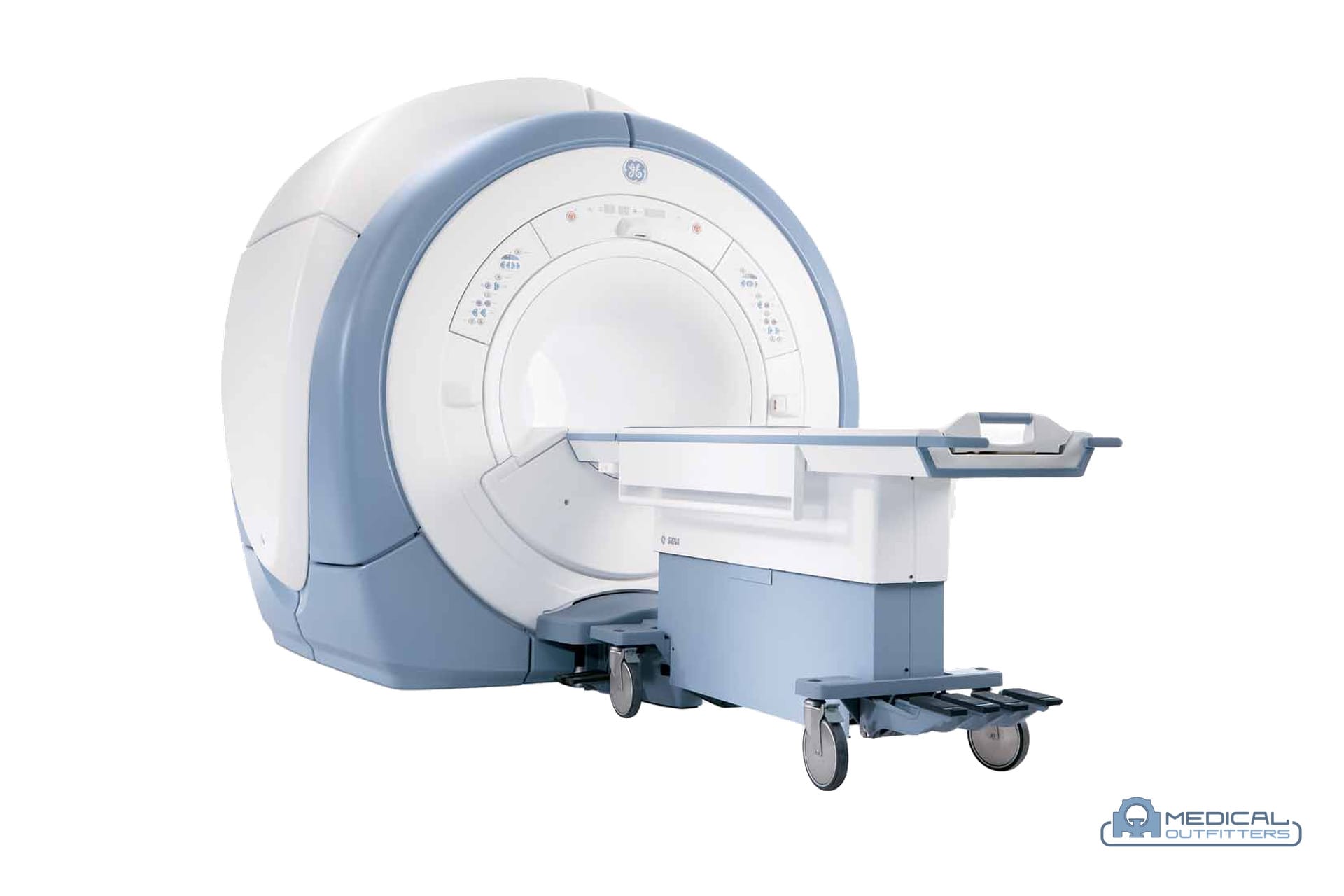
From the outside an MRI machine looks like a large box or tube with a bed that slides into an opening called the bore. RadiologyInfo notes the scanner is open on each end, and that it may make loud tapping, knocking or other noises during the scan, which is why patients are given earplugs. What that plain exterior hides is the engineering this guide is about: the magnet, the cooling and the coils that make the image, and the differences between the manufacturers that build them.
How an MRI Machine Makes an Image
The physics sounds abstract but the sequence is orderly. First, the main magnet aligns a small majority of the body’s hydrogen protons with its field. Second, the radiofrequency transmitter sends a pulse tuned to the protons’ resonant frequency, which tips them out of alignment. Third, when the pulse stops, the protons relax back and release the energy they absorbed as a faint radio signal. Fourth, the receive coils pick that signal up.
The trick that turns a signal into a picture is the gradient field. On its own, the main magnet would tell you only that hydrogen somewhere in the body gave off a signal, not where. The gradient coils solve that by making the field strength vary slightly across the patient in three directions, so that protons at the head end sit in a very slightly different field from those at the foot end, and left differs from right. Because a proton’s resonant frequency depends on the exact field it feels, the scanner can read position out of frequency and phase. A computer collects thousands of these signals and reconstructs them into the slices the radiologist reads, viewable in any plane.
Two features of the machine fall straight out of this. The loud knocking is the gradient coils themselves: switched on and off hundreds of times a second inside the powerful main field, they flex and vibrate, which is the banging patients hear. And the heat the FDA warns about comes from the radiofrequency energy, which can warm tissue, with the potential for heating greater during long examinations. Both are managed by design and protocol rather than eliminated, and both are reasons the room and the system are engineered together.
The Parts of an MRI Machine
The magnet. The heart of almost every modern MRI is a superconducting magnet: coils of wire wound into a cylinder, carrying a very large current with almost no resistance. They can do that only when very cold. The windings become superconducting when cooled to liquid helium temperature, about 4 kelvin, which is minus 269 degrees Celsius, so the magnet sits in a vessel of liquid helium inside layers of vacuum insulation. Once energized, the current circulates on its own and the field is on all the time, day and night, whether or not a patient is in the room.
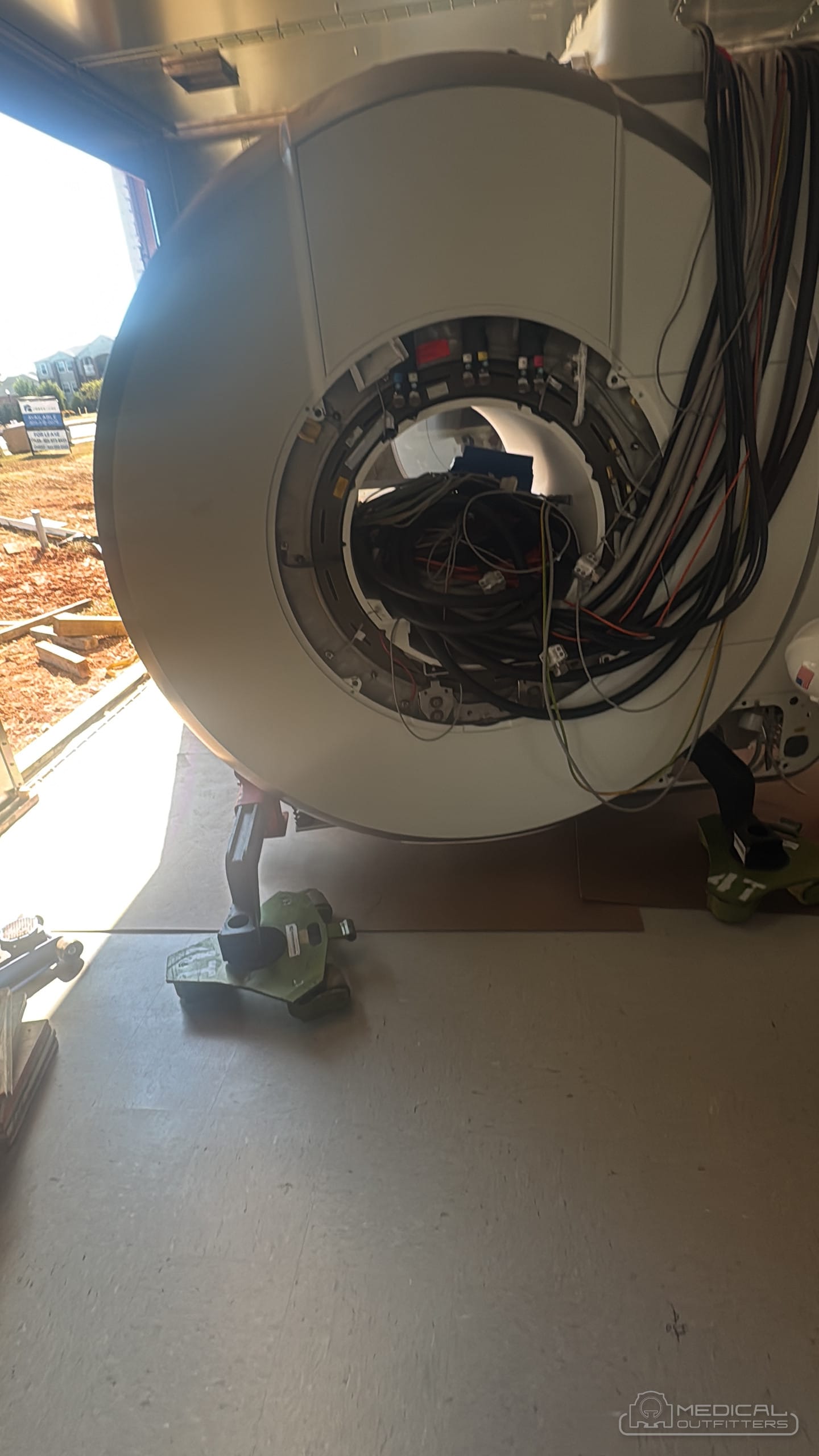
The cryogen system. Helium slowly boils off, so a cold head, a cryocooler mounted on the magnet, recondenses it, and the level is topped up over the system’s life. The sudden loss of that helium is a quench, which warms the magnet and stops the superconductivity, and is the event the quench and cold head both turn on. A pipe vents that helium safely outside.
The gradient coils. Wound around the bore inside the main magnet, these produce the controlled field variations in the three directions that encode position, and they are driven by large gradient amplifiers.
The radiofrequency coils. A body coil built into the bore transmits the radio pulse, and separate receive coils, shaped for the head, spine, knee or breast, sit close to the anatomy to pick up the faint return signal. The closer and better fitted the receive coil, the stronger the signal, which is why a scanner comes with a set of coils and why the coil set is a real part of a system’s value.
The console and computer. In the control room, outside the magnet, the operator console runs the scan, and the reconstruction computer turns the raw signals into images and sends them to the facility’s archive. The console, the magnet and the coils together are the machine; the room around them is the other half of the installation.
Field Strength: From Open Low Field to 3 Tesla
Magnetic field strength is measured in Tesla, and it is the single number that most defines an MRI machine. For scale, one Tesla equals 10,000 gauss, so a 1.5T magnet is 15,000 gauss, which Radiopaedia puts at roughly 30,000 times the strength of the Earth’s magnetic field. Most clinical scanners in service are 1.5T or 3T, while open and low field systems run from about 0.2T up to around 1.2T.
Higher field strength gives a stronger signal, which can mean more detail or faster scanning, and it is why 3T is favored for neurological, musculoskeletal and research work. It also costs more to buy, to site and to shield, and it is less forgiving of implants and motion. 1.5T remains the workhorse of general imaging because it handles nearly every exam well and is easier on the budget and the building. Low field and open systems trade some image detail for a shorter magnet, an open design and lower running costs, which suits claustrophobic, large or pediatric patients and lighter clinical loads. The trade is laid out in full in our guide to 1.5T versus 3T.
Field strength drives the weight, the shielding and the price, so it is the first decision a buyer makes. The heavier a magnet and the higher its field, the more the floor, the fringe field and the helium have to be managed, which is covered separately in our guide to how much an MRI machine weighs.
Open, Wide Bore and Closed MRI Machines
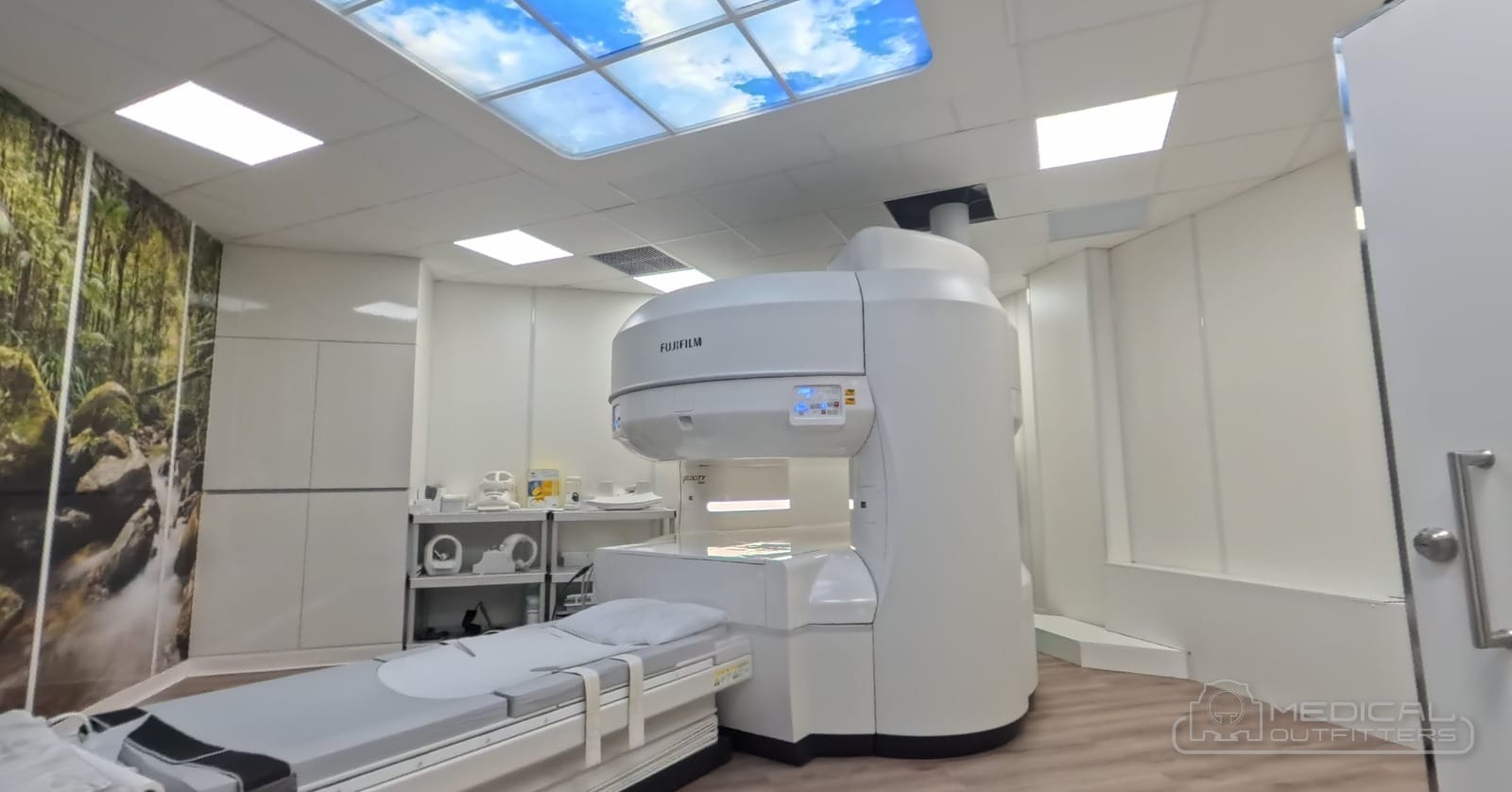
MRI machines come in three broad shapes. A conventional closed MRI is a cylinder with a bore of about 60 centimeters, the classic tunnel. A wide bore MRI keeps the closed, high field design but opens the tunnel to about 70 centimeters, which eases claustrophobia and fits larger patients while keeping 1.5T or 3T image quality. An open MRI replaces the tunnel with two flat poles and open sides, so the patient lies in a gap rather than a tube.
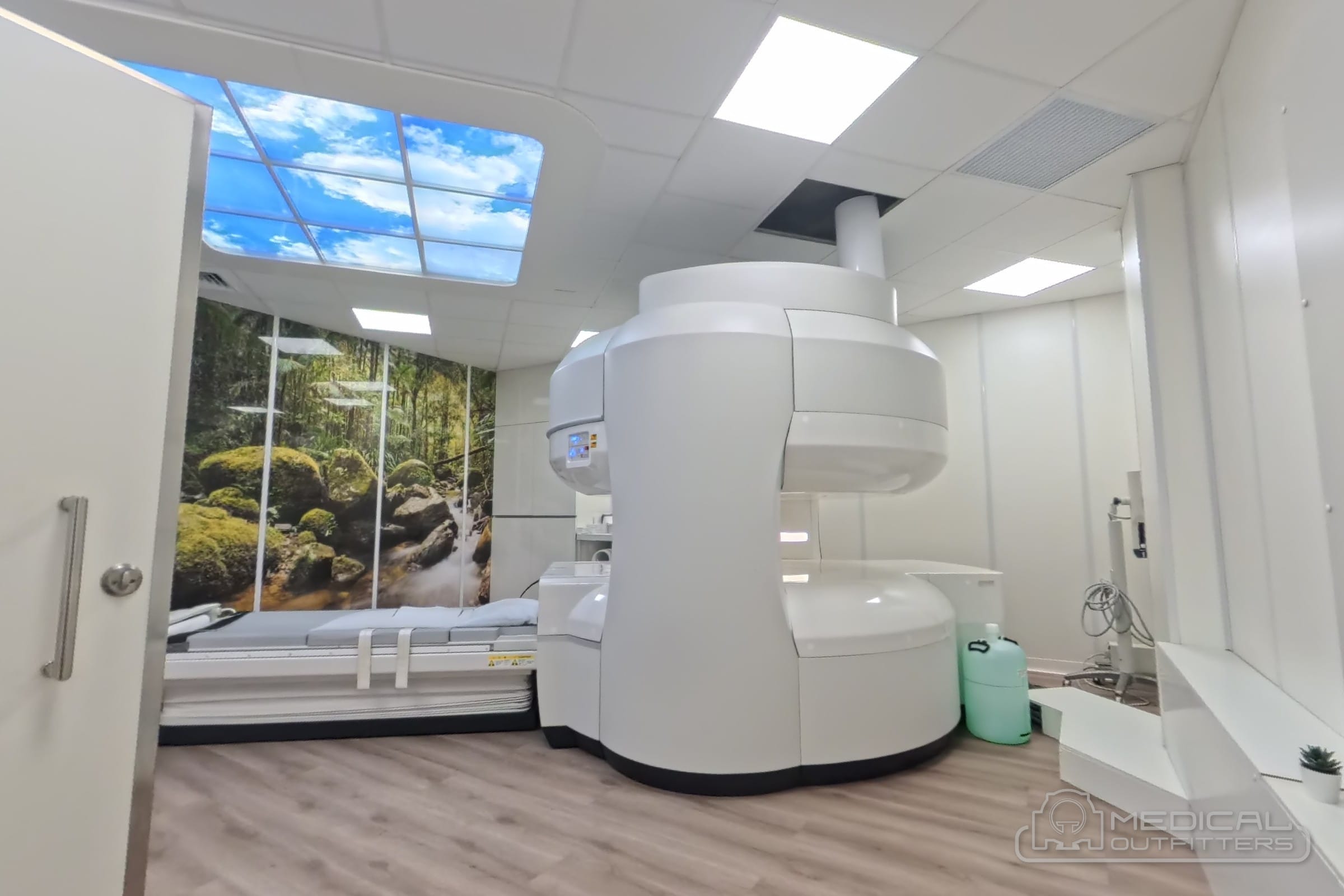
Open systems historically meant low field and softer images, but that has changed: high field open designs such as the 1.2T class now bring open comfort much closer to closed image quality. The choice is clinical and practical at once, a question of the patient population, the exams, the ceiling height and the budget, and it is the whole subject of our guide to wide bore versus open versus closed MRI. For a facility that scans anxious or bariatric patients, the wider bore or the open system is often what keeps those patients from being turned away.
Whatever the shape, the machine underneath is the same family of magnet, gradients and coils described above, and the same installation work applies. A larger or open magnet simply changes the room layout, the floor loading and sometimes the field strength on offer.
Siting an MRI Machine: The Room Around the Magnet
An MRI machine cannot simply be rolled into an exam room. Because the FDA warns that the strong static magnetic field attracts magnetic objects, which can turn an oxygen cylinder or a floor buffer into a projectile, and because the field reaches beyond the magnet, the machine lives in a controlled suite built for it. The magnet room is lined with a continuous copper or steel radiofrequency shield, a sealed box that keeps outside radio noise out of the faint signal and keeps the scanner’s own pulses in.
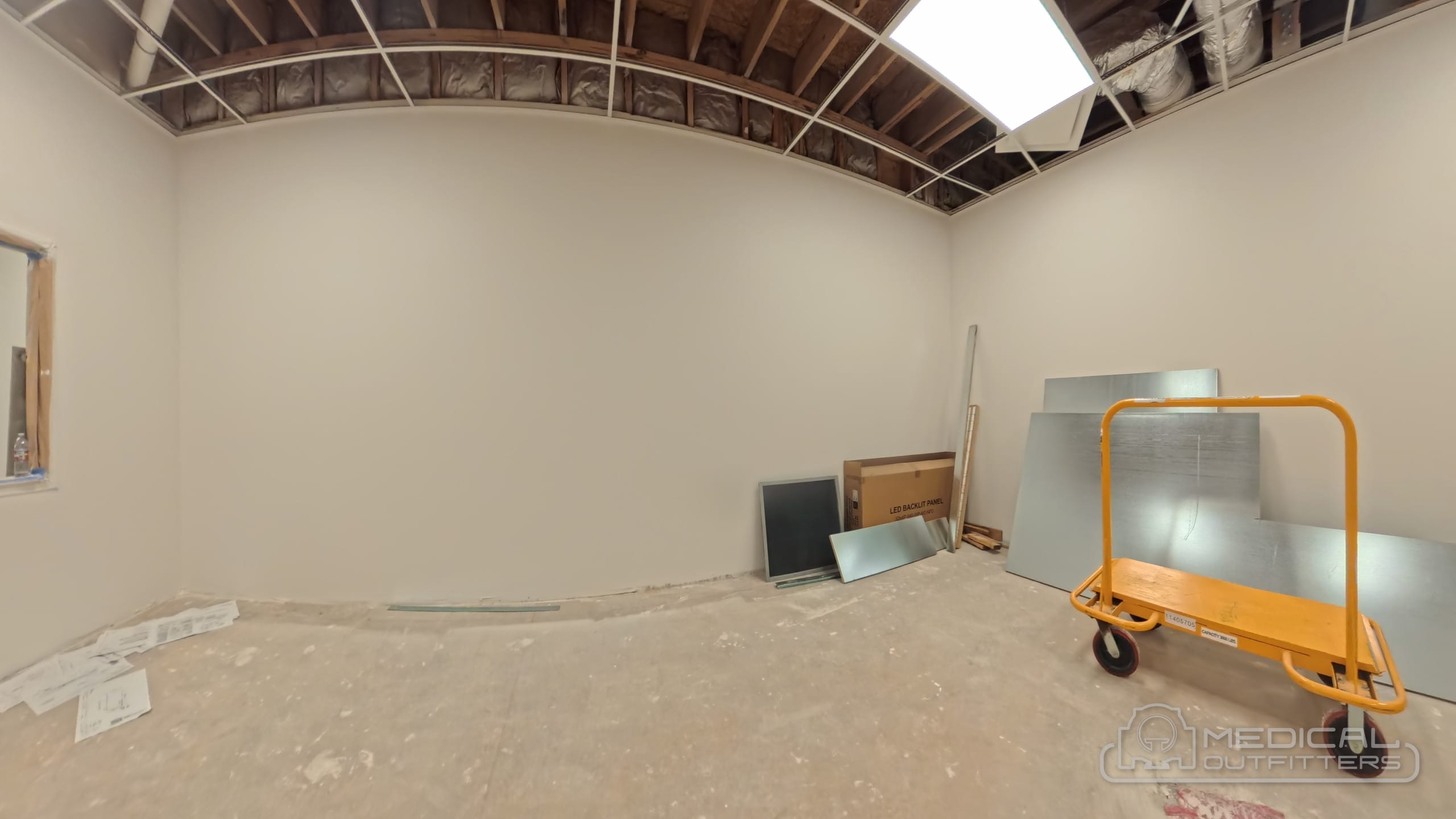
Around the shield sit the support systems: a chiller to cool the magnet and the gradients, a dedicated power feed, the quench pipe that vents helium outside, and the cold head’s compressor. The stray field, known by its 5 gauss line, has to be contained within the suite so that the public and sensitive devices stay clear of it, which the MRI room shielding requirements set out in detail. The magnet itself is heavy enough to need crane or rigging access and a floor rated for it.
All of this is why buying an MRI machine is buying a project, not a box. Medical Outfitters quotes the system all in, which covers de-installation of an old unit, freight, rigging, the RF shielded enclosure, mechanical and electrical work, the helium fill, installation, applications training and warranty, and designs the suite on the first site survey. The equipment is only part of what makes an MRI machine work in a building.
What an MRI Machine Costs
Price follows field strength and design more than anything else, and the figures below are Medical Outfitters all in bands from our MRI machine cost and price guide, delivered, installed and warrantied, not equipment only quotes. An open or low field system runs about $300,000 to $525,000 refurbished and $600,000 to $950,000 new. A 1.5T system, the most common class, runs about $475,000 to $975,000 refurbished, and new Fujifilm 1.5T systems run about $1,025,000 to $2,000,000. A 3T system runs about $1,000,000 to $1,900,000 refurbished.
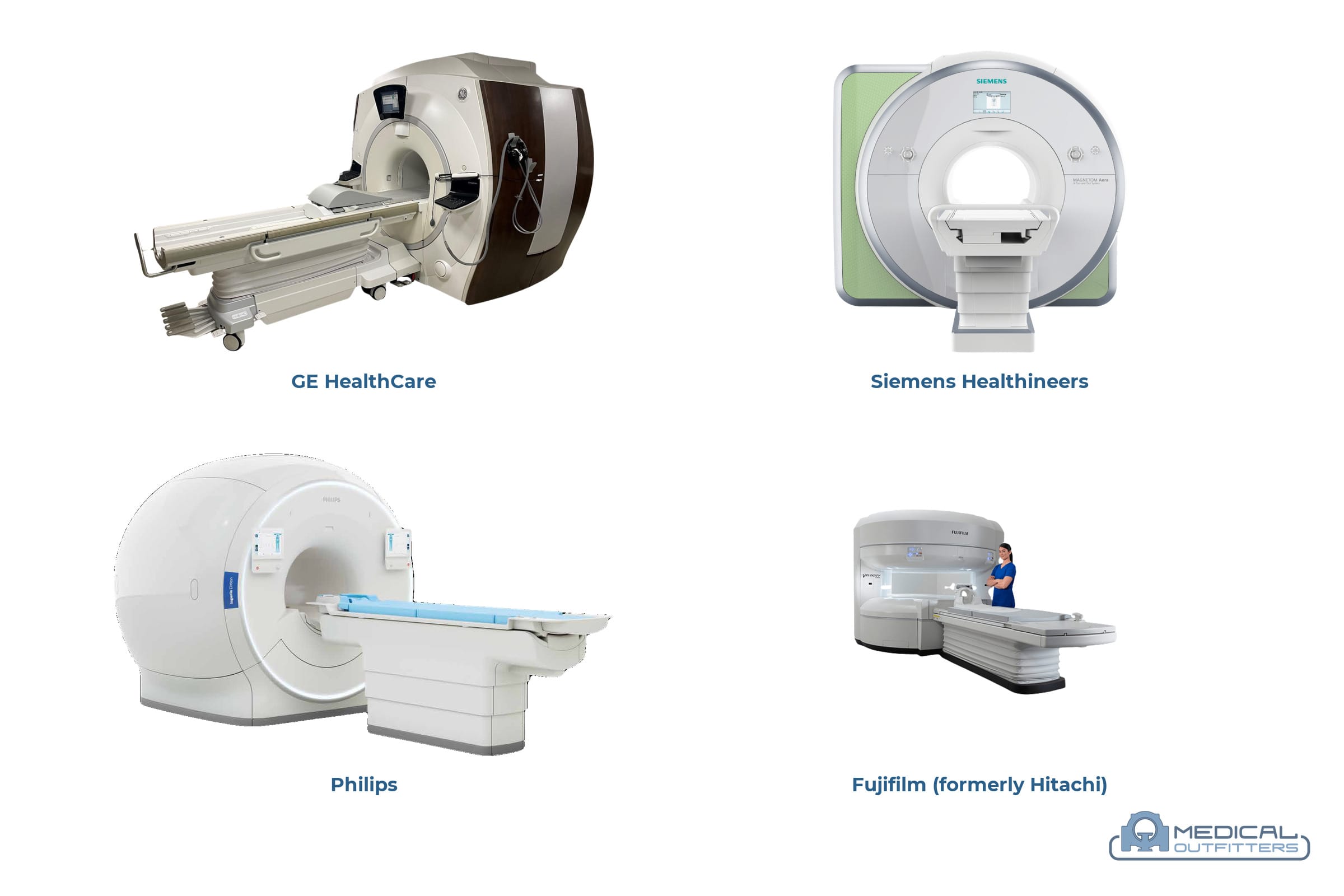
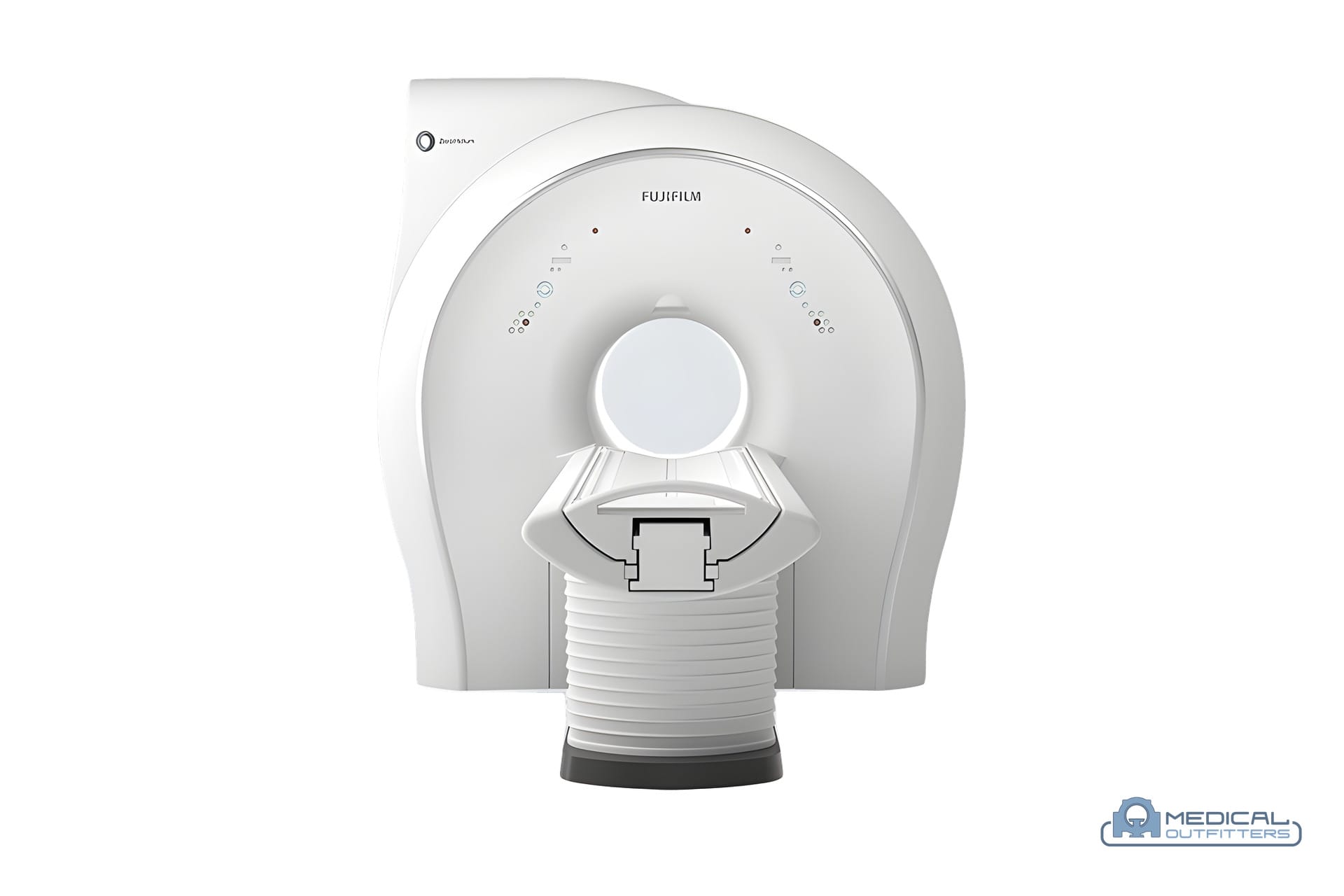
How Medical Outfitters sells each one matters to the number. GE and Siemens scanners come refurbished through the MO Select line, rebuilt, tested and warrantied, and are not sold new. Fujifilm systems are sold new as an authorized dealer. Philips and legacy Hitachi platforms are sourced refurbished on request. Medical Outfitters does not sell 3T systems new. A refurbished scanner from a strong platform, with a documented magnet, a fresh cold head and a full coil set, is how most new centers reach 1.5T or 3T imaging without the new system price, and the used and refurbished MRI listings show what is available.
Because the right machine depends on the exams, the patients, the building and the budget together, the bands are a planning tool, not a quote. The same 1.5T label covers a fifteen year old scanner and a nearly new one, and the age and remaining life of the system move the figure as much as the field strength does.
Buy or Service an MRI Machine With Medical Outfitters
Medical Outfitters helps facilities choose, buy, install and maintain the right MRI machine for their patients and their building. We sell refurbished GE and Siemens systems through our MO Select MRI line and new Fujifilm systems as an authorized dealer, with every refurbished scanner rebuilt, tested and delivered with a documented magnet and a tested coil set; see the current MRI machines for sale. Our engineers design the suite, run the installation and keep the system running afterward through MRI service and repair, including coil repair in house, across the United States, Puerto Rico and the Caribbean. To compare field strengths and designs, read our guides to 1.5T versus 3T and open versus closed MRI, and when you are ready to price a system or a suite, contact Medical Outfitters.
- U.S. Food and Drug Administration, MRI benefits and risks, on the magnetic field, radiofrequency heating, projectiles and the absence of ionizing radiation: https://www.fda.gov/radiation-emitting-products/mri-magnetic-resonance-imaging/benefits-and-risks
- RadiologyInfo.org (ACR and RSNA), MRI: how the scanner forms an image, the open ended design and scanner noise: https://www.radiologyinfo.org/en/info/mr
- Radiopaedia, MRI field strength and the Tesla to gauss conversion: https://radiopaedia.org/articles/58849
- HowEquipmentWorks, MRI physics: the superconducting magnet, liquid helium cooling and the gradient coils: https://www.howequipmentworks.com/?p=22424
- Medical Outfitters MRI Machine Cost and Price Guide, all in price bands by field strength: https://medicaloutfitters.com/mri-machine-cost-and-price-guide/
- MRI machine cost and price guide (2026)
- MRI manufacturers compared: GE, Siemens, Philips, Fujifilm and more
- 1.5T vs 3T MRI: which field strength should your facility buy?
- Wide-bore vs open vs closed MRI
- MRI machines: new, refurbished and used
- MRI machines for sale: refurbished GE and Siemens, new Fujifilm
- Used and refurbished MRI machines for sale
- MRI service, repair and maintenance
- How long does an MRI machine last?
- How much does an MRI machine weigh?
- MRI room shielding requirements: RF shielding and the 5-gauss line
- What is an MRI quench?
- What is an MRI cold head?
- Price an MRI system or a suite
MRI Machines: Common Questions
What is an MRI machine?
An MRI machine, short for magnetic resonance imaging, is a scanner that makes detailed images of the body using a strong magnetic field and radio waves, with no X-rays or ionizing radiation, as the FDA notes. A powerful magnet lines up the hydrogen protons in the tissue, radio pulses make them emit a signal, and a computer turns that signal into cross sectional images.
How does an MRI machine work?
The main magnet aligns the hydrogen protons in the body's water. A radiofrequency pulse then tips them out of alignment, and when it stops they relax and give off a faint radio signal that receive coils pick up. Gradient coils vary the field across the body so the scanner can read position from frequency, and a computer reconstructs thousands of these signals into slices the radiologist reads in any plane.
What are the main parts of an MRI machine?
The superconducting magnet, cooled by liquid helium, which makes the strong field. The cryogen system, a cold head and a quench pipe, that keeps the magnet cold. The gradient coils that encode position and make the loud noise. The radiofrequency coils that transmit the pulse and receive the signal. And the console and computer in the control room that run the scan and build the images.
What is MRI field strength, and what is a Tesla?
Field strength is how strong the scanner's magnet is, measured in Tesla. One Tesla equals 10,000 gauss, so a 1.5T magnet is about 30,000 times the Earth's magnetic field, per Radiopaedia. Most clinical scanners are 1.5T or 3T, while open and low field systems run from about 0.2T to 1.2T. Higher field means a stronger signal and more detail, at a higher price and heavier siting.
What is the difference between an open and a closed MRI?
A closed MRI is a tunnel, a cylinder with a bore of about 60 to 70 centimeters, and it offers the highest field strengths. An open MRI replaces the tunnel with two poles and open sides, which eases claustrophobia and suits larger and pediatric patients. Open systems were once low field with softer images, but newer high field open designs now approach closed image quality, so the choice balances comfort against detail.
Does an MRI machine use radiation?
No. The FDA states that MR images are made without using any ionizing radiation, which is the main difference from X-ray and CT. An MRI machine forms its images from a magnetic field and radio waves instead, measuring the hydrogen in the body's water. That is why MRI is used so heavily for the brain, spine, joints and soft tissue, and why it can be repeated without a radiation dose adding up.
Why is an MRI machine so loud?
The banging and knocking come from the gradient coils. They are switched on and off hundreds of times a second inside the powerful main magnetic field, and that switching makes them flex and vibrate against their mounts, which RadiologyInfo describes as the loud tapping and knocking a patient hears. The sound is a normal part of how the machine encodes position, which is why patients are given earplugs or headphones for the scan.
How much does an MRI machine cost?
Medical Outfitters all in bands, delivered, installed and warrantied, run about $300,000 to $525,000 refurbished for an open or low field system, about $475,000 to $975,000 refurbished for a 1.5T, and about $1,000,000 to $1,900,000 refurbished for a 3T. New Fujifilm 1.5T systems run about $1,025,000 to $2,000,000. Age, condition, options and the site work move the figure, so the bands are for planning, not a quote.